
Mountain Shelters By Filipe Pina | Sustainable Cabins in Belmonte, Portugal
Sustainable mountain shelters reinterpret vernacular choças, blending modular wooden architecture with dramatic Portuguese landscapes, panoramic views, and immersive nature-focused living experiences.


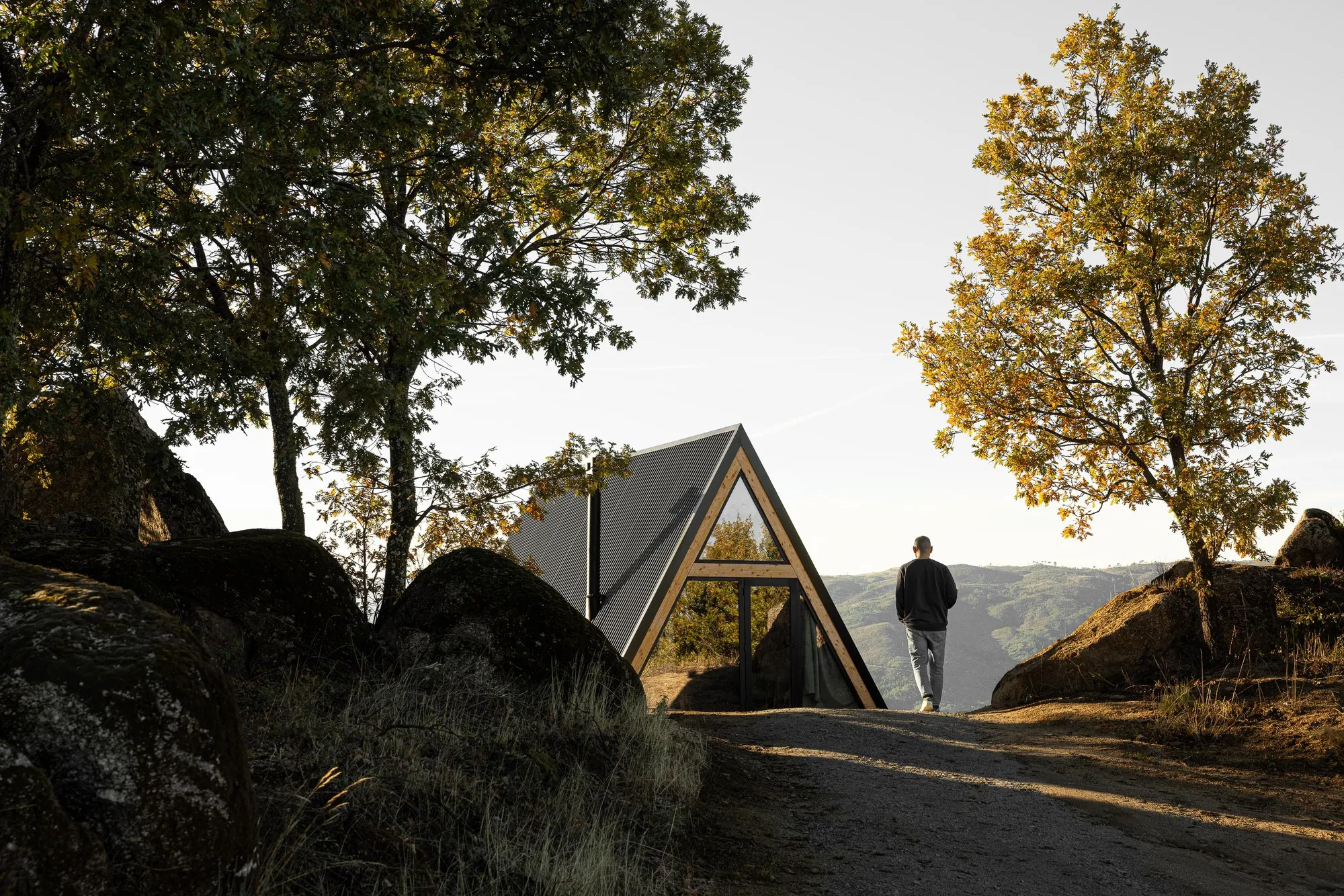
Nestled within the vast and untamed landscape of Belmonte, Portugal, the Mountain Shelters designed by architect Filipe Pina are a poetic response to place, memory, and sustainability. Part of The Vagar Country House development, this project occupies nearly 250 hectares of mountainous terrain in the Serra da Esperança, where architecture gently merges with nature rather than imposing upon it.
A Contemporary Interpretation of Vernacular Heritage
The core challenge of the project was to reinterpret the traditional shepherd shelters, locally known as Choças, translating their primitive logic and cultural symbolism into a contemporary architectural language. The result is a trio of compact shelters that draw inspiration from vernacular forms while embracing modern construction techniques, sustainability principles, and spatial clarity.
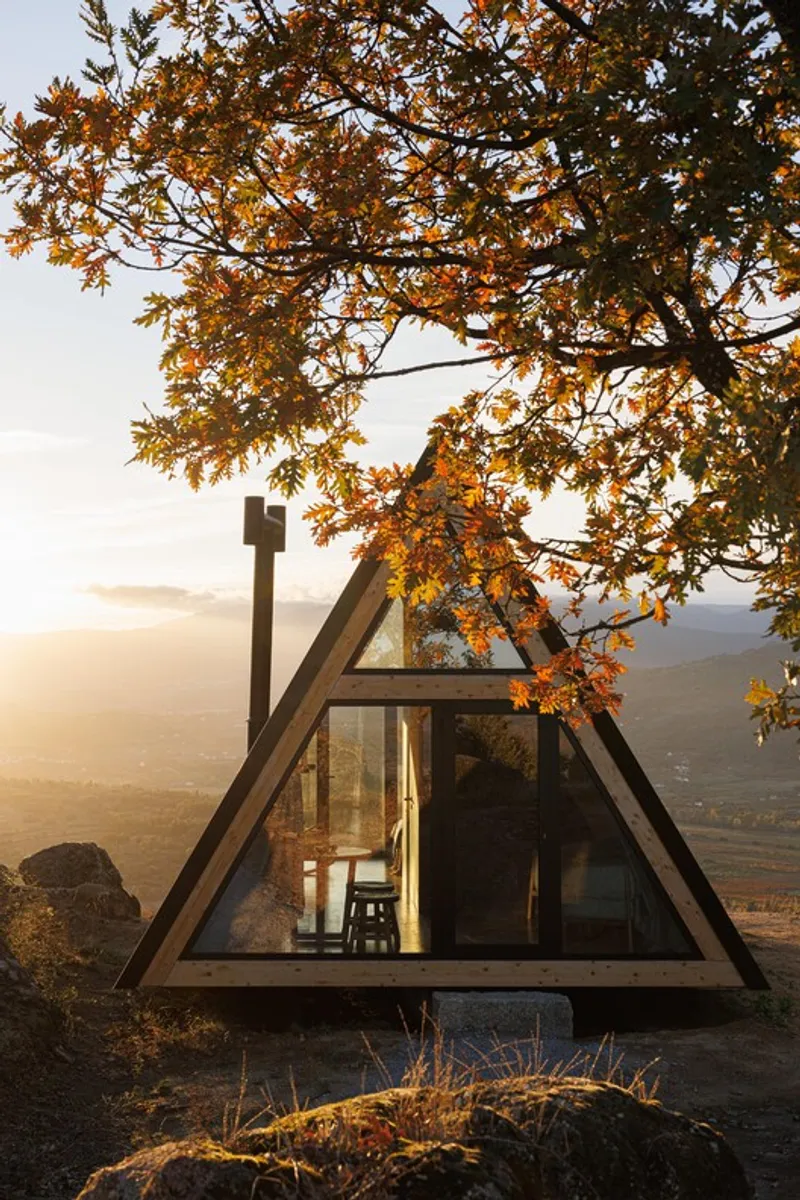
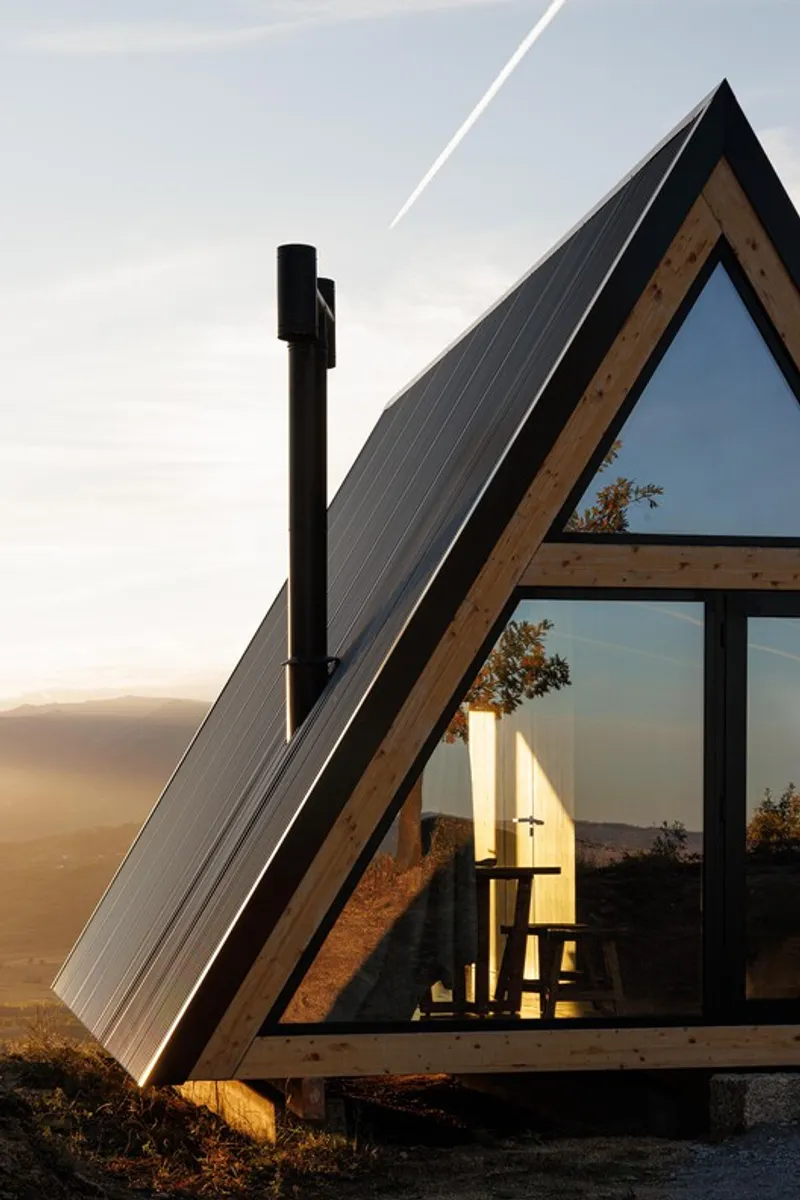
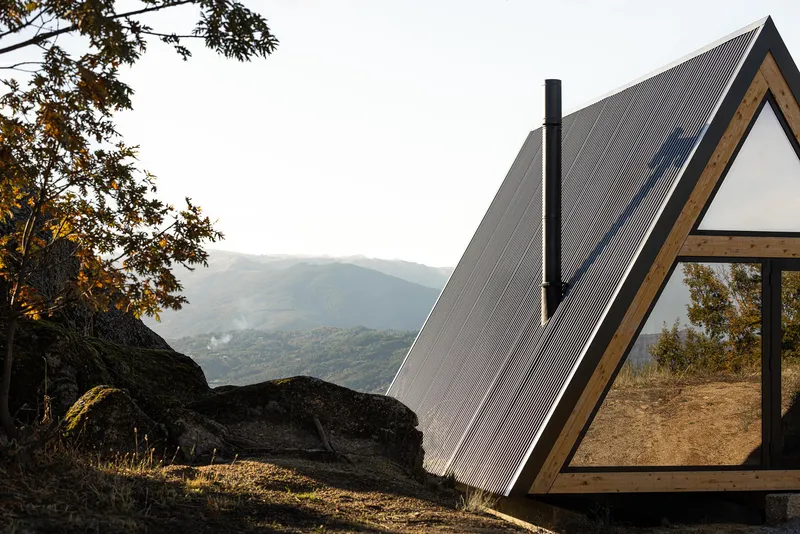
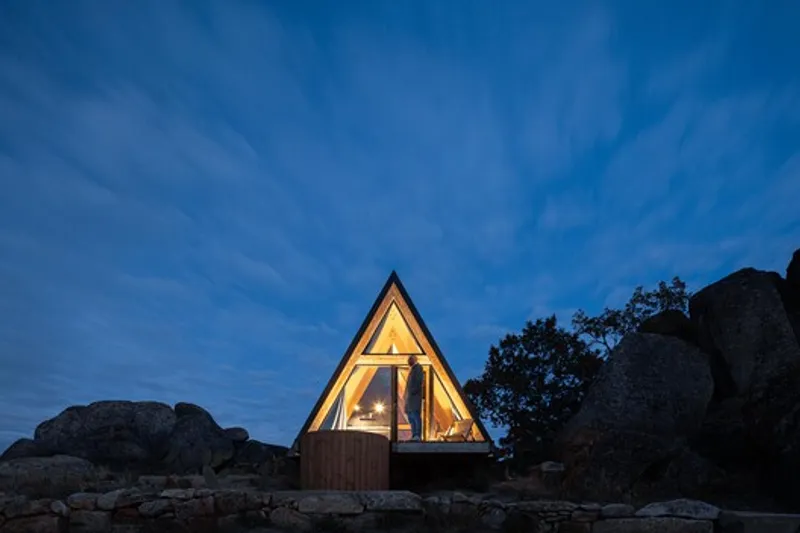
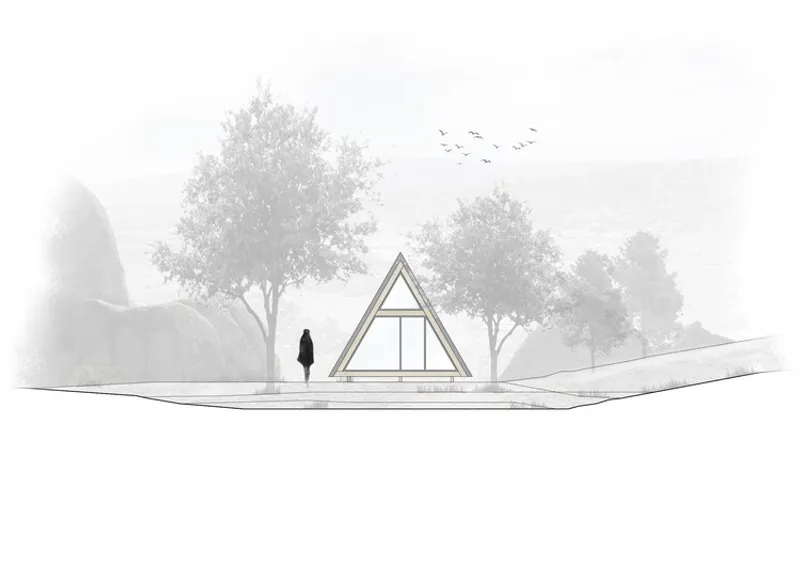
Conceptually, formally, and constructively, these shelters echo the simplicity and resilience of historic rural structures. Their equilateral triangular prism geometry references the archetypal shelter, reduced to its purest form. This minimal volume allows the buildings to sit lightly on the land, respecting the mountain’s topography and preserving the integrity of the existing landscape.
Strategic Placement and Landscape Integration
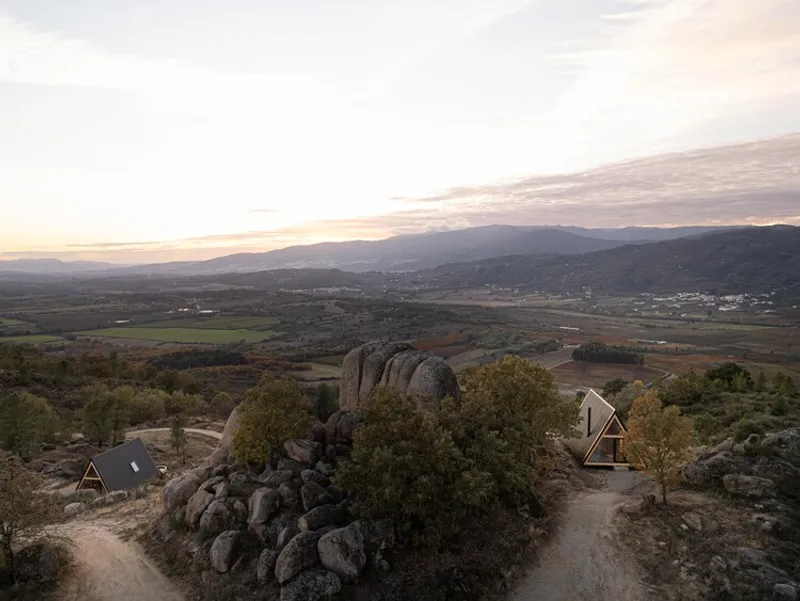
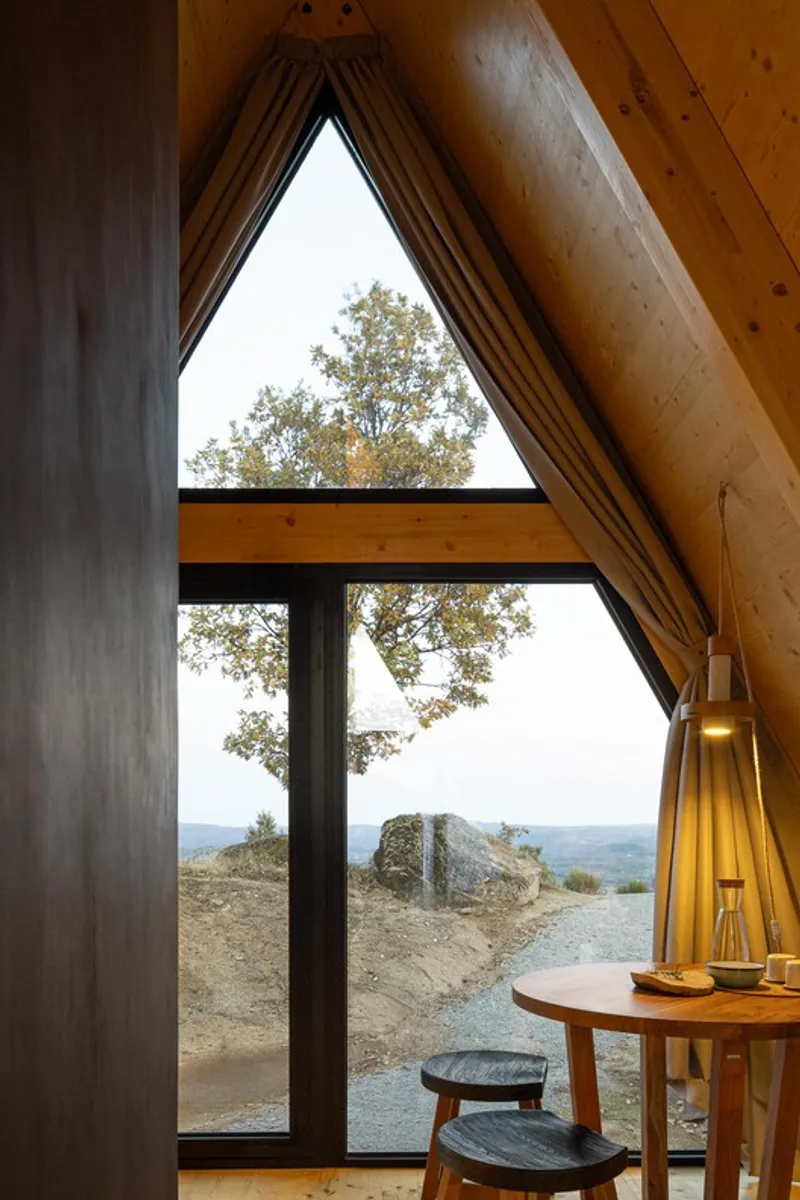
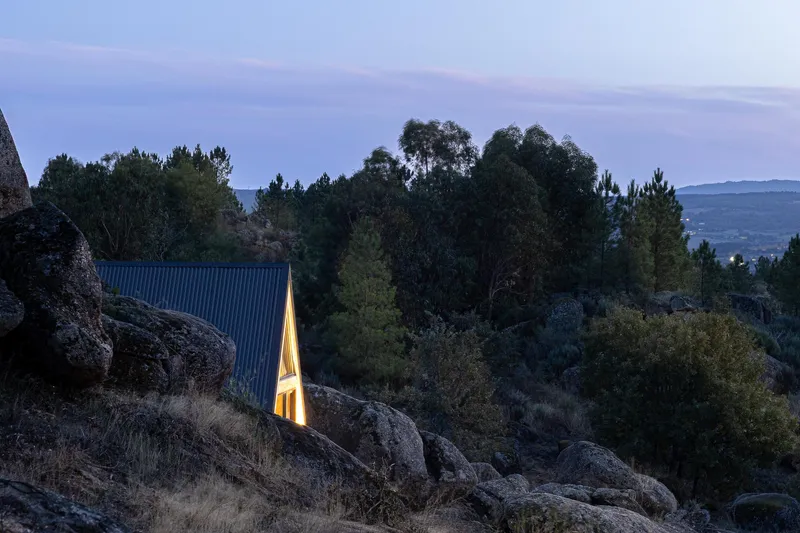
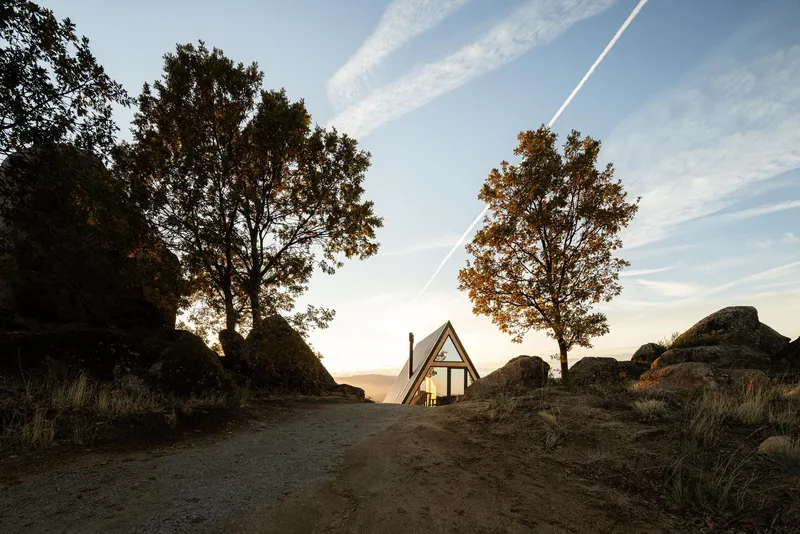
The three Mountain Shelters are carefully positioned at strategic viewpoints across the Serra da Esperança. Camouflaged among endemic vegetation and rocky outcrops, each shelter is oriented toward the Cova da Beira valley, offering uninterrupted views of the Serra da Estrela, the highest mountain range in continental Portugal.
Rather than reshaping the terrain, the project adapts to it. The shelters follow the natural slope of the mountain, ensuring minimal environmental impact while immersing occupants in panoramic landscapes rich in ecological and visual value. This sensitive placement reinforces the project’s commitment to conserving the region’s ecological and landscape heritage.
Modular Design and Spatial Efficiency
Each shelter is conceived as an independent modular unit, capable of functioning either as a private refuge for guests or as a secluded workspace. The compact footprint of 409 ft² is meticulously organized to maximize usability and comfort.
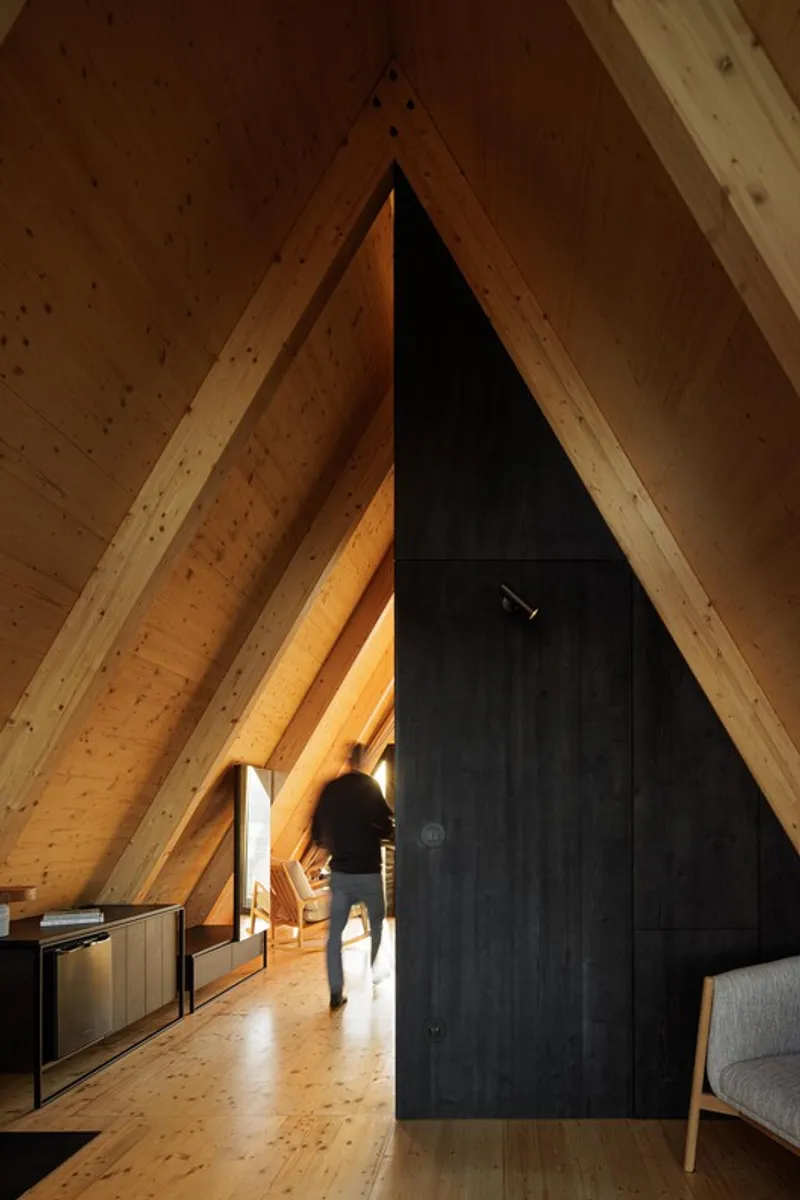
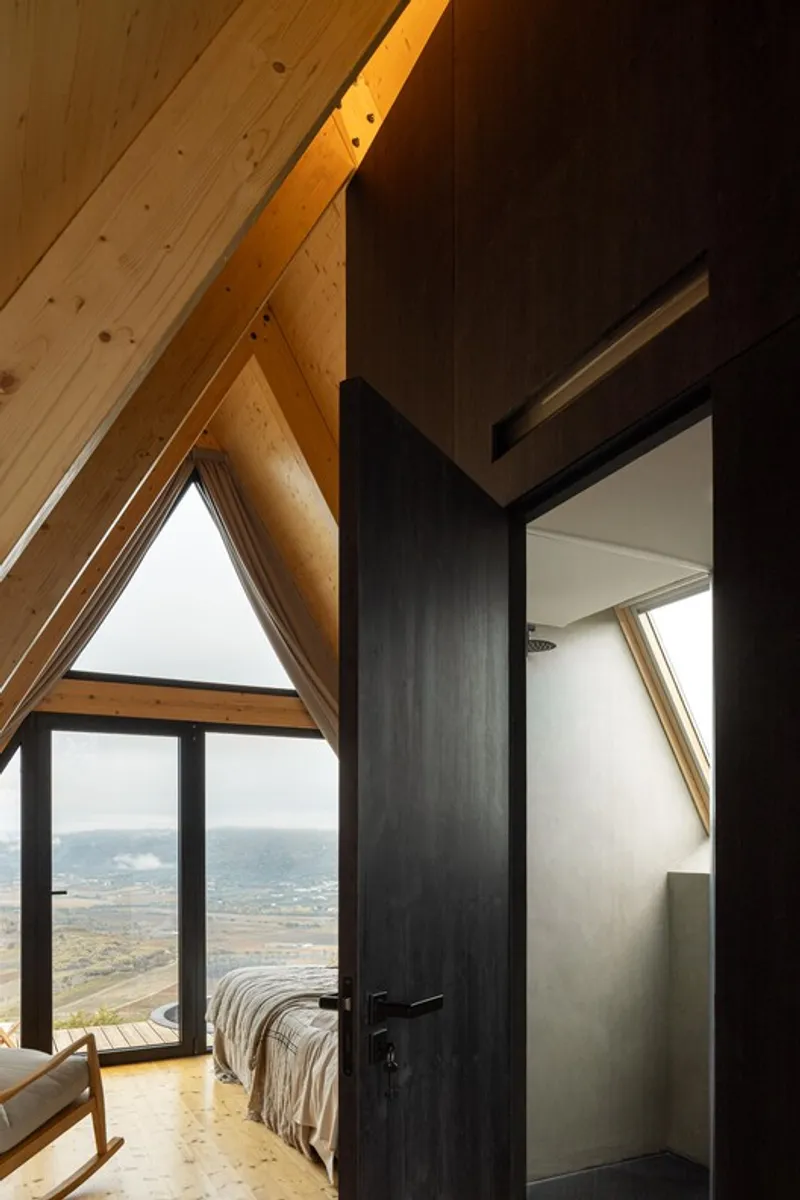
Internally, the shelters are divided into living and sleeping areas, subtly separated by a central volume that houses the bathroom and storage. This single internal core preserves spatial continuity while maintaining functional clarity. The open-plan layout strengthens the relationship between the interior and the surrounding landscape, ensuring that nature remains a constant presence.
Materiality, Light, and Atmosphere
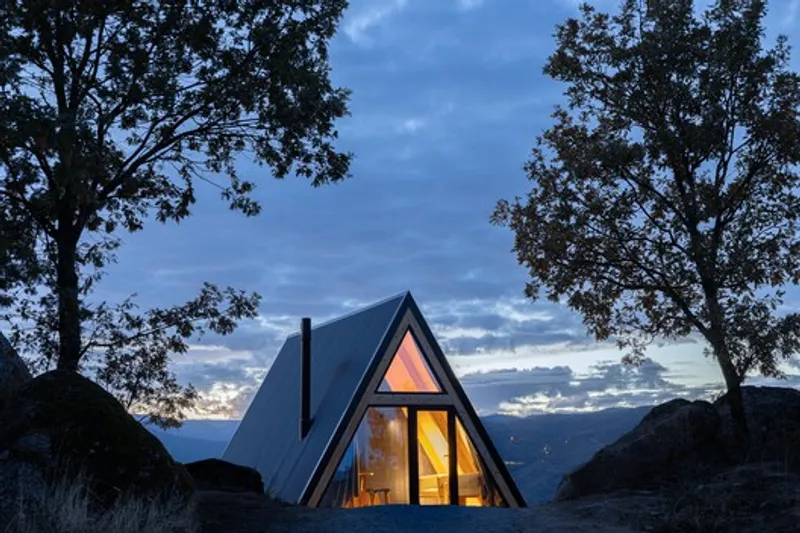
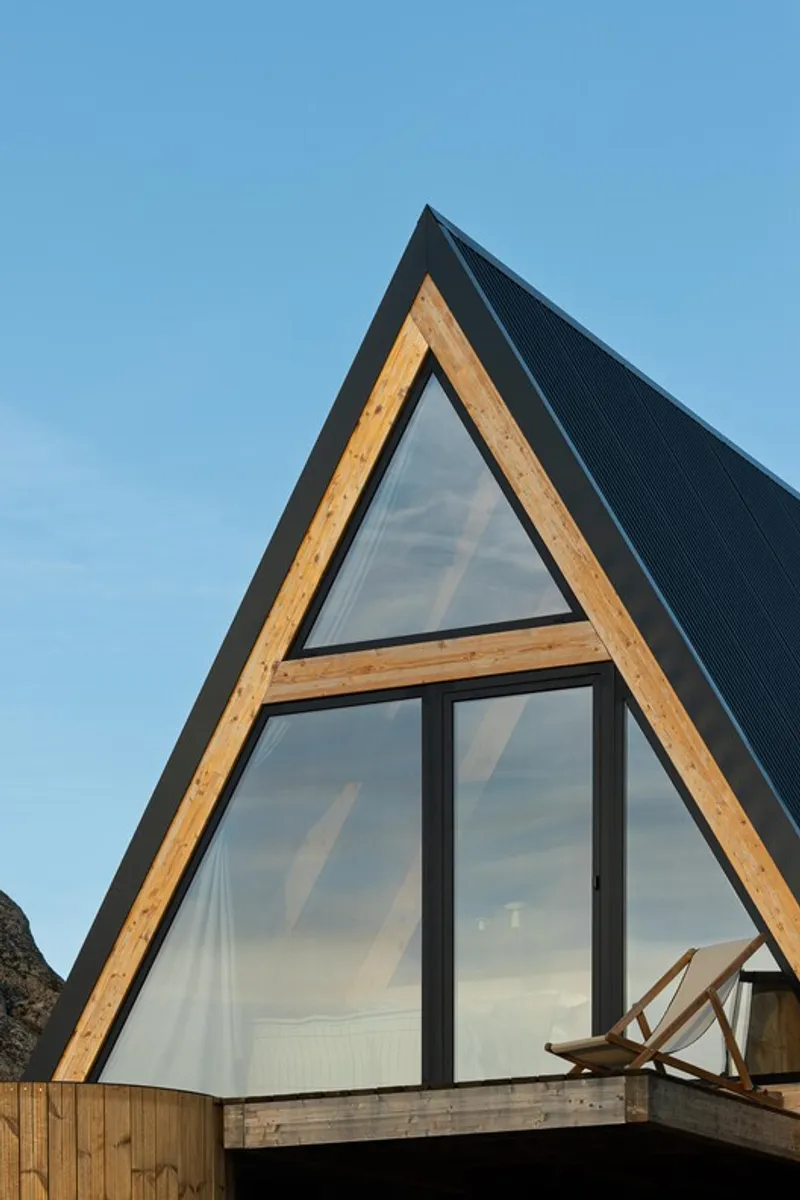
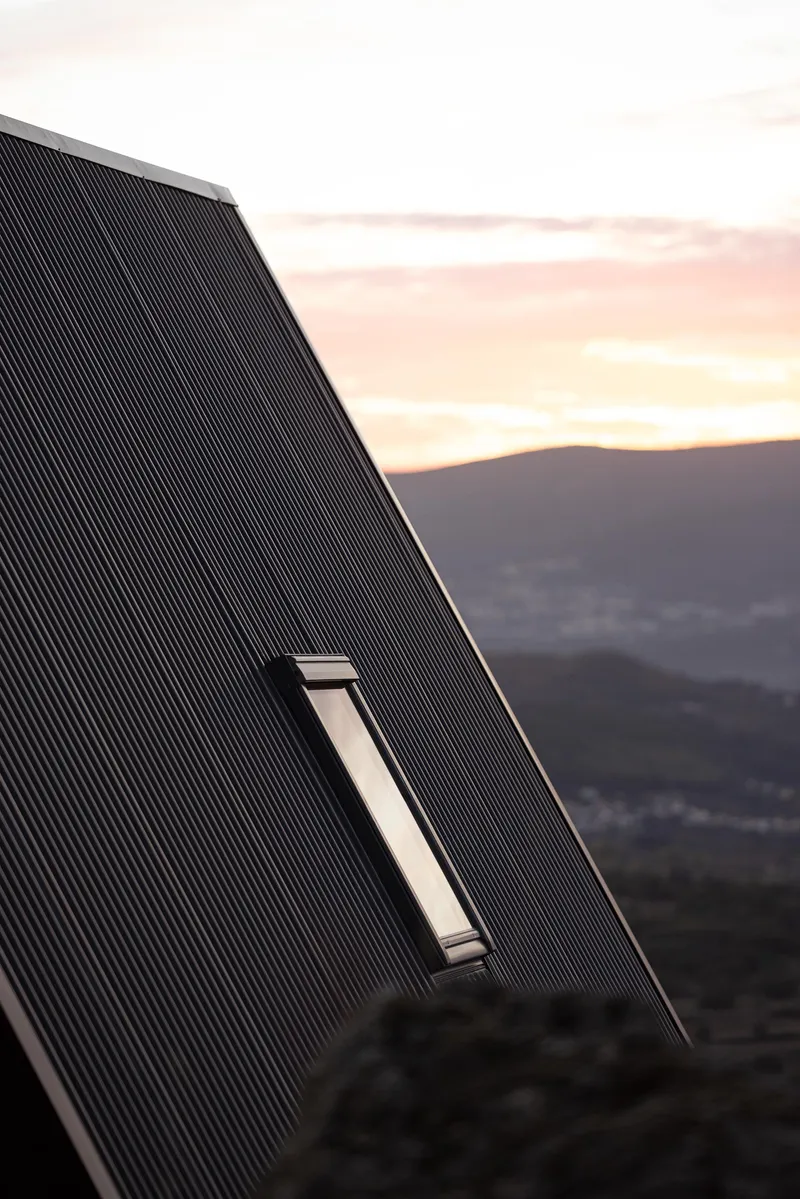
The construction relies on certified wood, chosen for its durability, sustainability, and natural aging qualities. Over time, the material weathers gracefully, allowing the shelters to further blend into their environment. Structural wooden beams are left exposed, reinforcing a sense of honesty and warmth within the interiors.
Large glazed openings and roof windows flood the spaces with natural light, dissolving the boundary between inside and outside. Throughout the day, shifting light conditions animate the interiors, creating an ever-changing dialogue between architecture and landscape.
Sustainability as Architectural Ethos
Sustainability is not treated as an accessory but as a foundational principle of the Mountain Shelters. The simplified modular assembly reduces construction impact and enables installation in remote locations with minimal disturbance. This approach allows the shelters to be deployed in other designated natural areas, adapting to diverse contexts while maintaining ecological sensitivity.
The project positions architecture as a tool for environmental awareness, demonstrating how design can promote the conservation of natural ecosystems while generating meaningful human experiences. By combining site-specific design, modular efficiency, and vernacular inspiration, the Mountain Shelters create new natural, social, and cultural landscapes rooted in respect for place.
A Refuge in Full Connection with Nature
Ultimately, the Mountain Shelters offer more than accommodation, they provide a deeply immersive experience. Here, architecture becomes a mediator between human presence and the natural world, allowing occupants to retreat, observe, and reconnect with the landscape in its purest form.


Popular Articles
Popular articles from the community


Co-life: Sustainable Architecture for Age-Friendly Community Living
Co-life reimagines sustainable architecture for seniors through courtyards, rammed earth, shared gardens, and spaces designed for belonging.

Lunar Spiral: Space Architecture Shaped by the Mathematics of the Universe
Lunar Spiral reimagines space architecture through Fibonacci geometry, lunar regolith, levitating habitats, and self-sustaining Moon living.

Riyadh For All: Intergenerational Urban Design for Active Aging in Rabat
Riyadh For All reimagines urban design in Rabat with intergenerational co-living, adaptive courtyards, and Moroccan cultural exchange today.

Co-Life: Senior Housing Design That Reconnects Older Adults With the City
Co-Life reimagines senior housing design through healing gardens, shared streets, workshops, and a sustainable community across generations.

Similar Reads
You might also enjoy these articles


Hodi-Mandai Geram
Project Function: Preservation and revitalization of the Intangible heritage and socio-spatial identity of the Hodi by Housing, Cultural Memory Center, Sacred Grove, landscape, local tourism economy


Olio Towers: A Mid-Rise for Performers That Fuses Housing, Rehearsal, and Stage
Located blocks from Houston's Theater District, this modular tower stacks living units around a central performance atrium.

Oasis: Modular Green Housing Carved into Dhaka's Urban Fabric
A shortlisted Plugin Housing entry reclaims unauthorized settlements in Dhaka with stepped concrete volumes, green roofs, and ventilation-driven design.

Black Hole: A Floating Megastructure for the Post-Physical Era
Emiliano Mazzarotto envisions a spherical, self-scaling arena where e-sports, digital hotels, and holographic stadiums replace traditional public space.


Explore Portable Shelter Competitions
Discover active competitions in this discipline



Challenge to reimagine the Iron Throne


Photograph architecture without architects


Illustrate the lost glory of Angkor Wat - Render Challenge


Design challenge to reuse E-waste
Comments (0)
Please login or sign up to add comments
No comments yet. Be the first to comment!