

Mouzinho da Silveira Building Renovation by Diana Barros Arquitectura
Sensitive renovation of a 19th-century Porto building, blending preserved heritage, contemporary interiors, mixed-use program, flexible housing, and refined material contrasts.


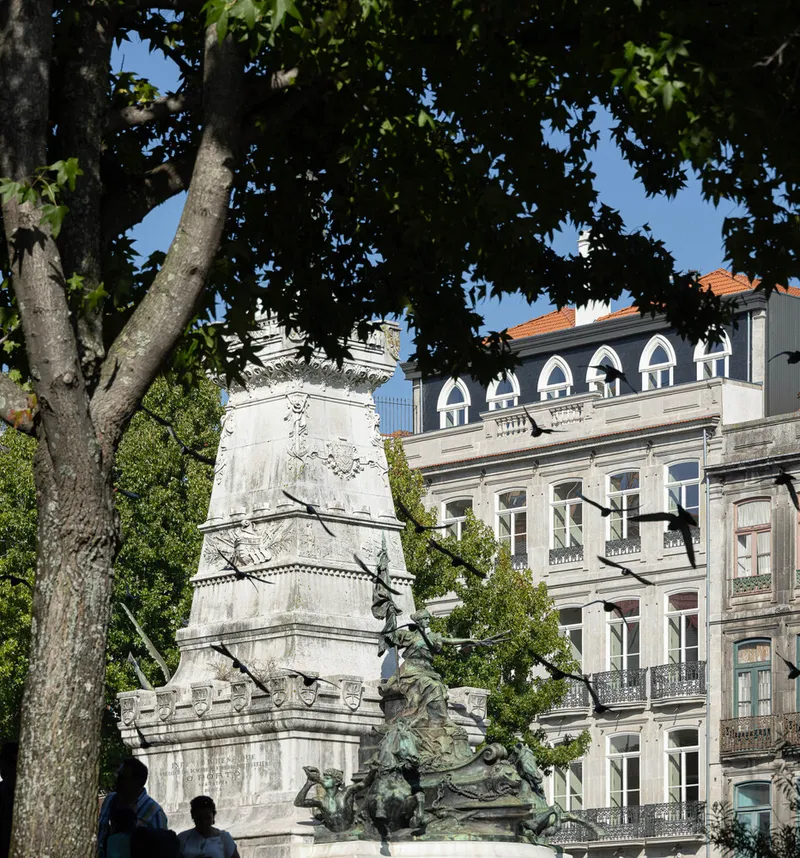
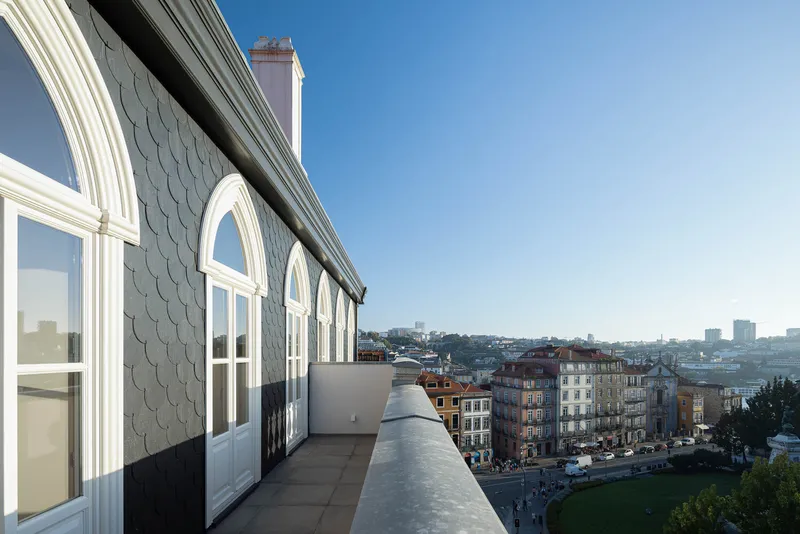
Located in the heart of Porto’s historic center, the Mouzinho da Silveira Building renovation by Diana Barros Arquitectura exemplifies a sensitive and contemporary approach to architectural rehabilitation within a consolidated urban fabric. Dating back to the late 19th century, the five-storey building stands along Rua de Mouzinho da Silveira, a street defined by a continuous urban frontage characterized by residential buildings with commercial programs on the ground floor.
Rather than imposing a disruptive transformation, the project embraces a strategy of urban continuity, reinforcing the coherence of the historic streetscape while responding to contemporary residential demands. The intervention carefully balances preservation and renewal, ensuring that the rehabilitated building contributes to the architectural quality and collective identity of Porto’s historic center.
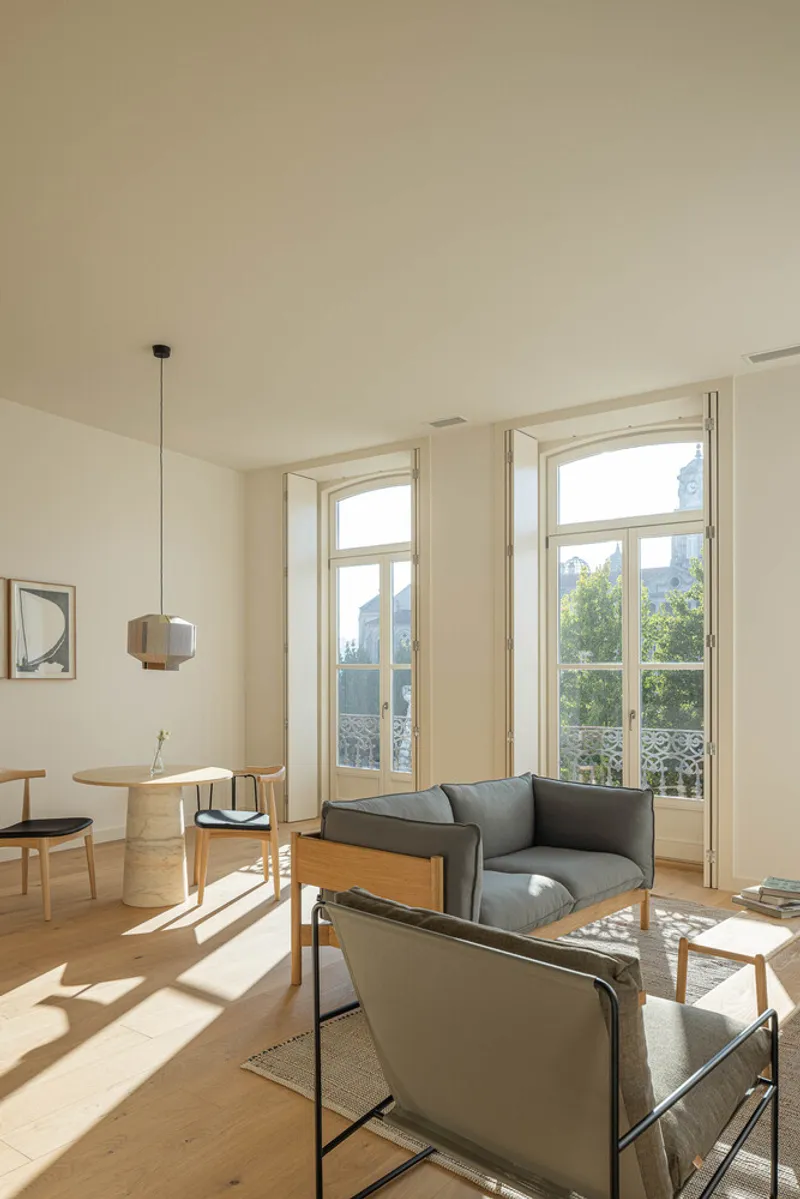
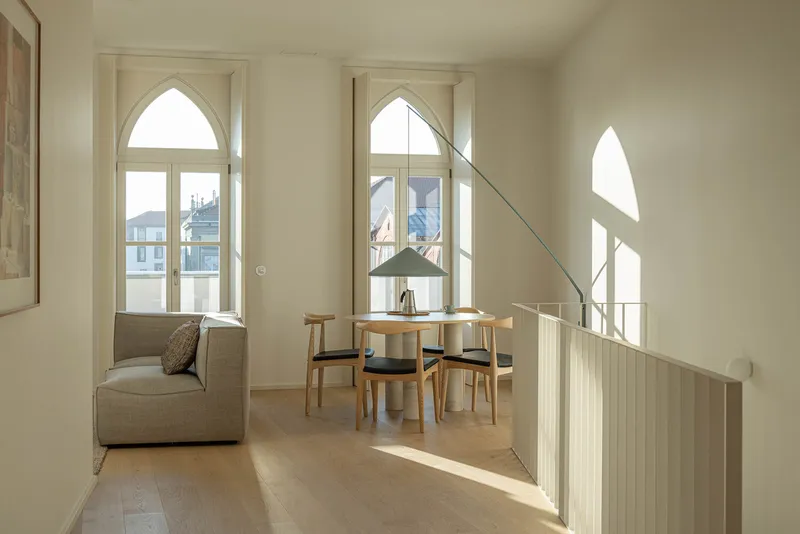
Urban Context and Programmatic Continuity
The building’s program follows the traditional typology of the area, with commercial space at street level and housing on the upper floors. This functional continuity strengthens the relationship between architecture and city life, maintaining the active character of the street while supporting residential occupation above. From an urban perspective, the project reinforces the rhythm, scale, and material presence of the existing façade, ensuring visual and morphological integration with the surrounding buildings.
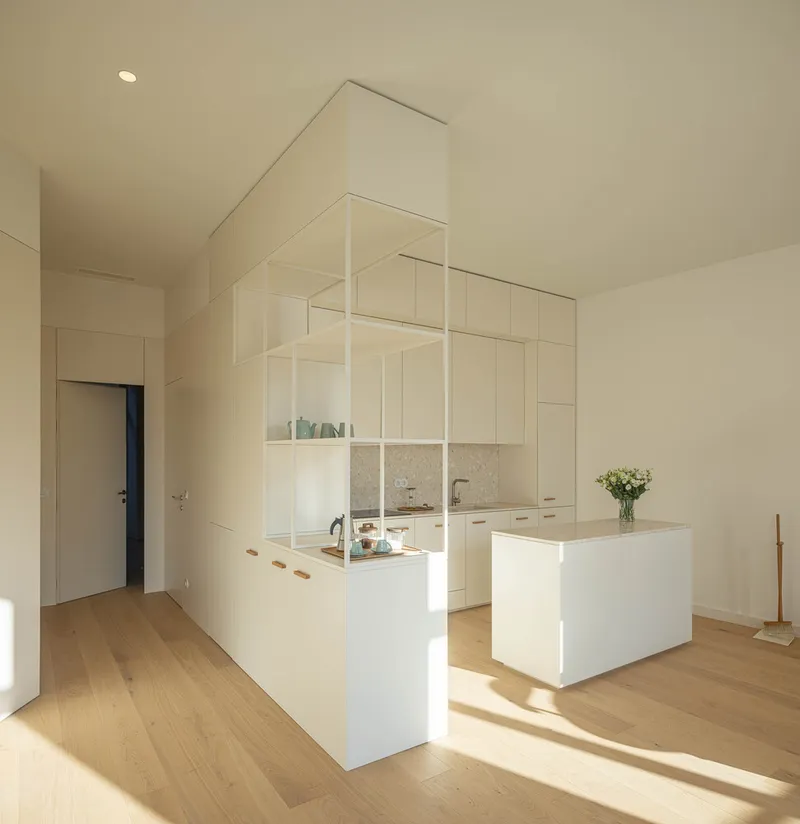
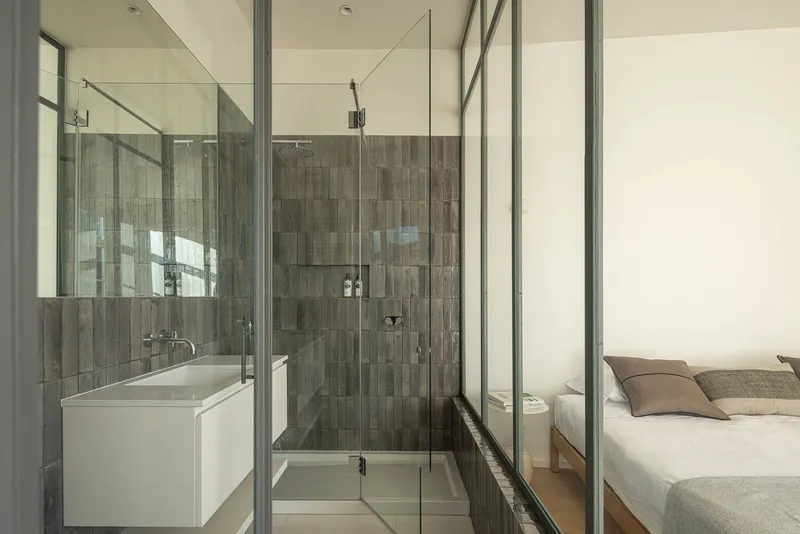
Conservation Strategy and Architectural Memory
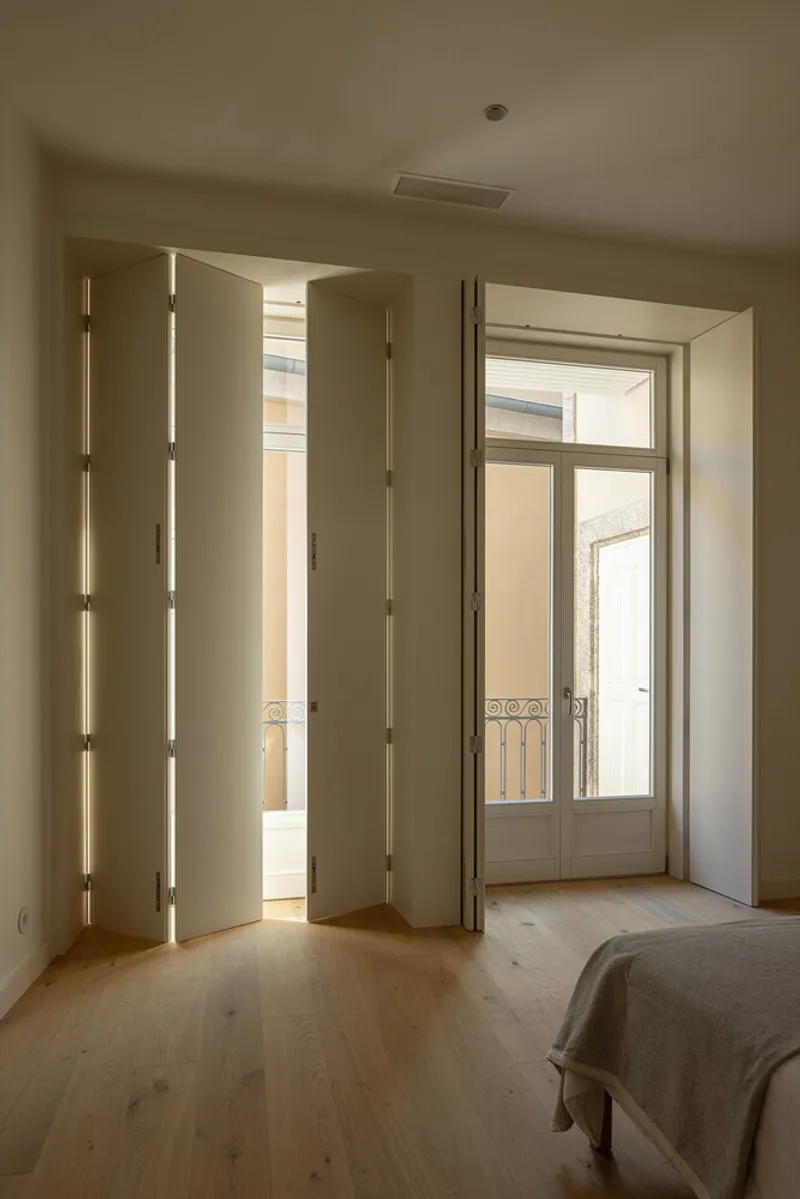
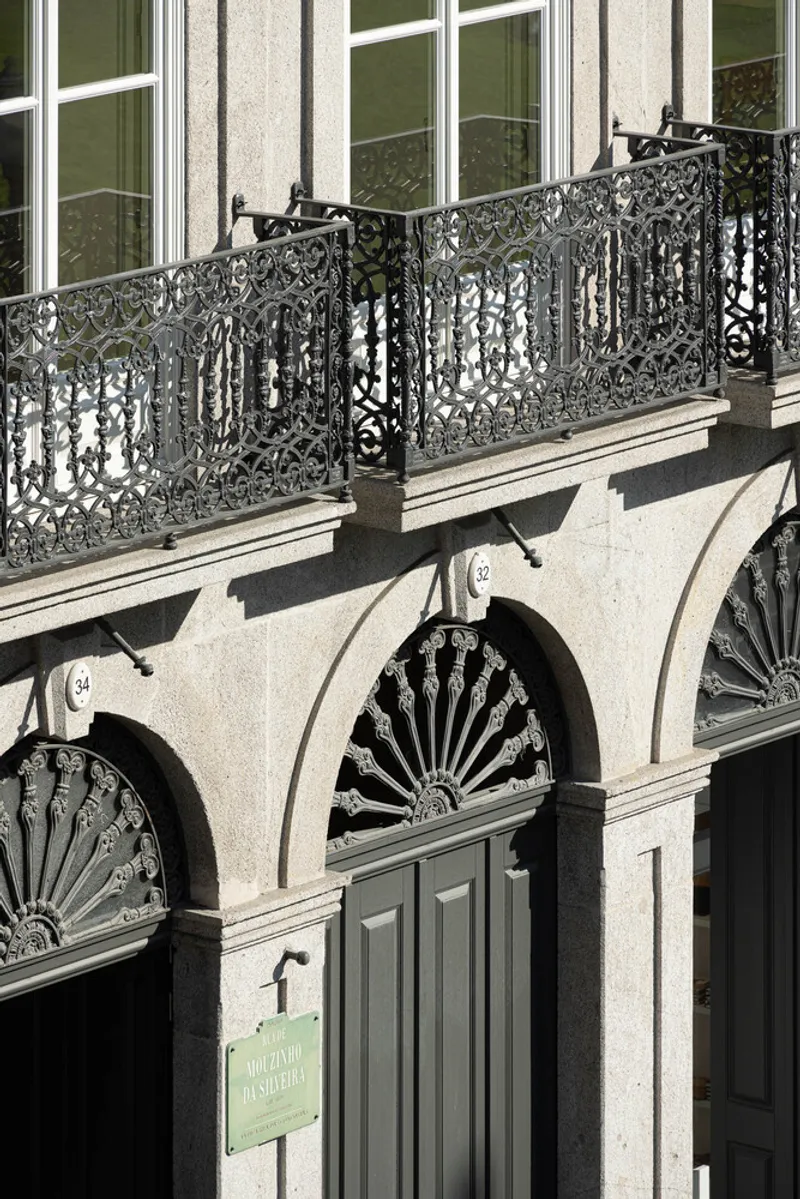
The nature of the intervention prioritizes the conservation and rehabilitation of architecturally significant elements, reinforcing the building’s uniqueness and historical value. Original features were preserved whenever possible, and when deterioration made rehabilitation unfeasible, new elements were carefully reproduced using the same materials, proportions, and construction logic. This approach preserves the building’s architectural memory while allowing it to evolve.
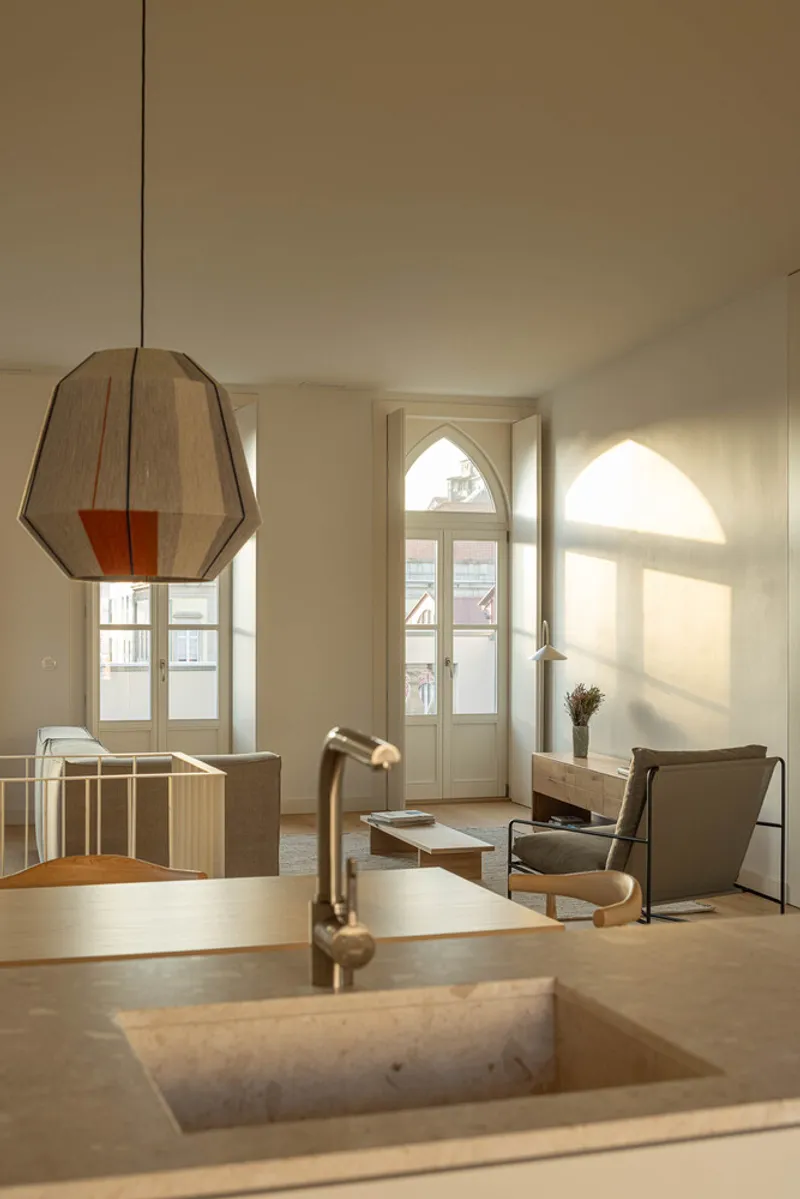
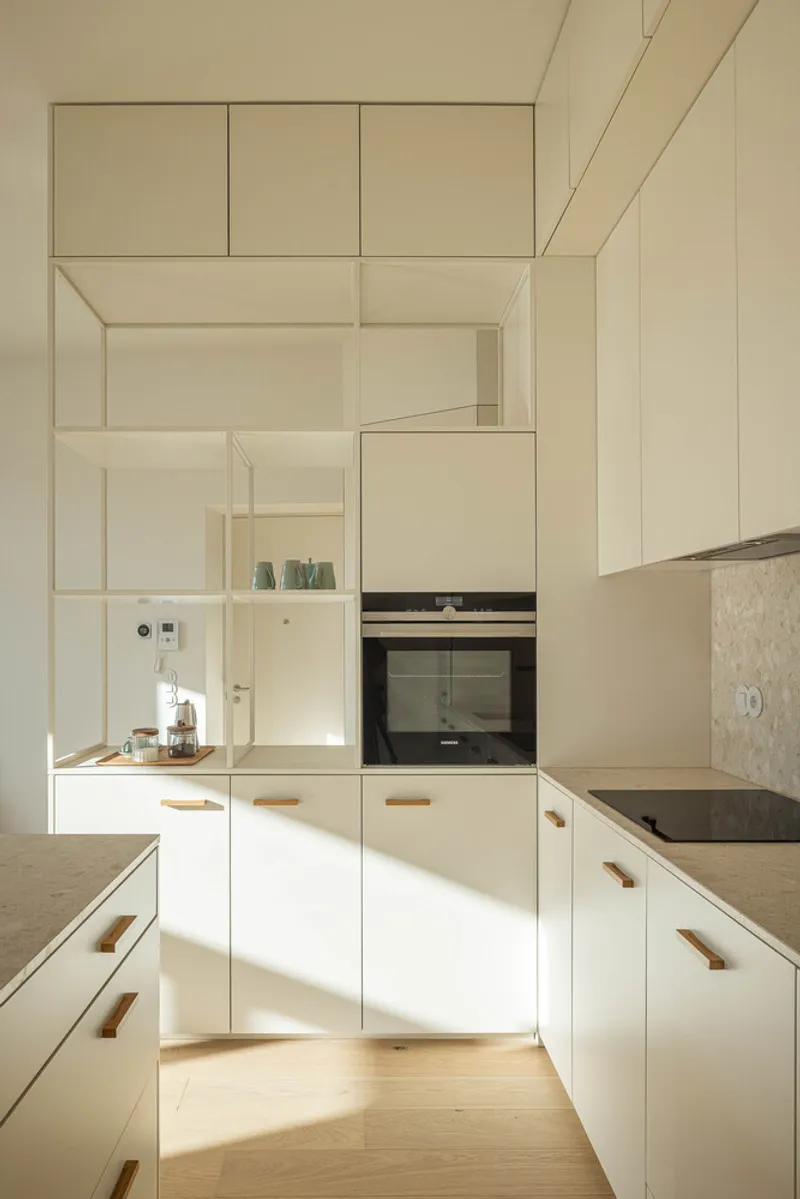
Internally, the project involved a complete reorganization of interior spaces, enabling contemporary living standards without compromising historical integrity. A clearly contemporary architectural language defines the new spatial layouts, fixed furniture, sanitary areas, and material transitions. The contrast between new interventions and preserved historical elements is deliberately expressed, allowing the past and present to coexist and reinforce one another.
Residential Typologies and Long-Term Resilience
A diversity of housing typologies was introduced across the upper floors, increasing the building’s adaptability and flexibility of use. This variety limits rigid occupation patterns and supports long-term resilience, allowing the building to respond to changing residential needs over time. The strategy enhances sustainability not only from a material perspective, but also through programmatic longevity and adaptability.

Materiality, Atmosphere, and User Appropriation
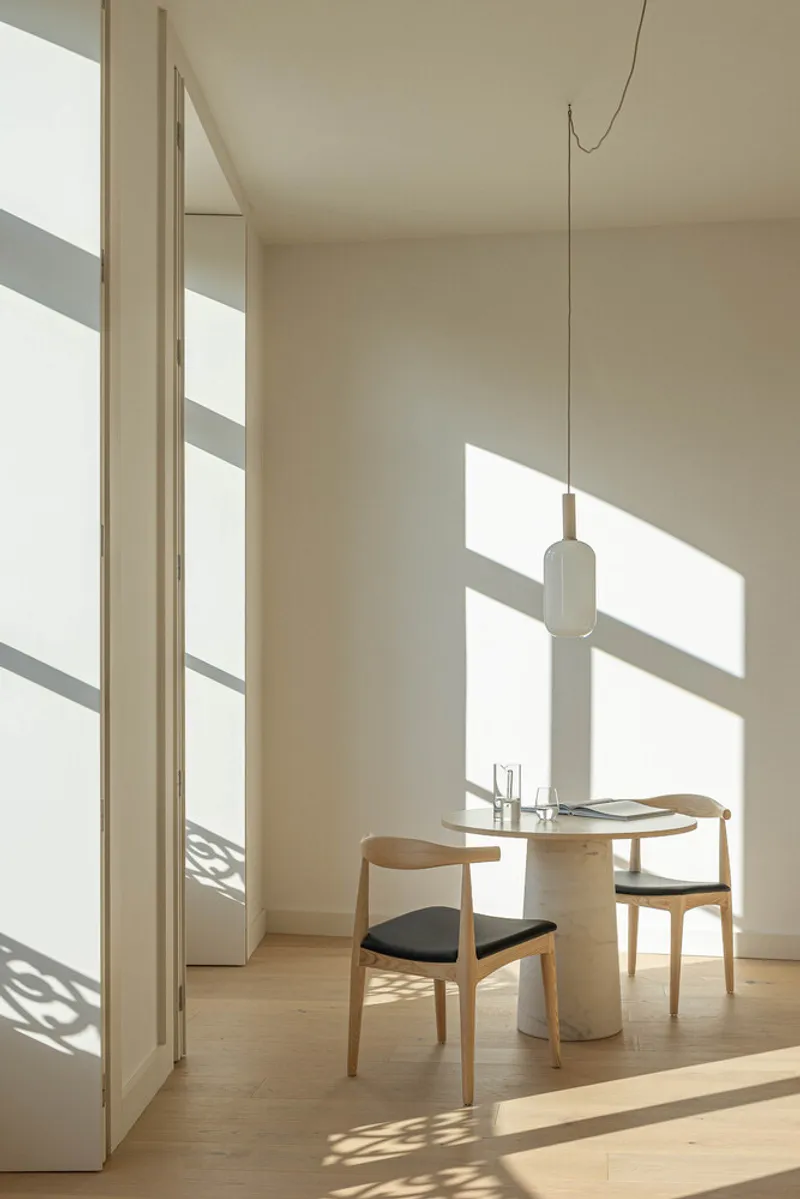
Material selection plays a central role in shaping the spatial experience. Within private residential units, cladding materials and color palettes establish a neutral and stable architectural framework, intentionally designed to accommodate the personal, decorative, and functional choices of future residents. This neutrality encourages appropriation and personalization, allowing individual identities to inhabit the architecture naturally.
In contrast, common areas adopt a more defined material expression through the use of wood and exposed concrete. Their texture, tone, and permanence give these shared spaces a distinct architectural character, reinforcing their collective and impersonal nature while maintaining material coherence throughout the building.
A Contemporary Approach to Historic Rehabilitation
The Mouzinho da Silveira Building renovation demonstrates how heritage rehabilitation, contemporary design, and urban responsibility can converge within a single project. By respecting historical layers, embracing modern architectural language, and enhancing spatial flexibility, Diana Barros Arquitectura delivers a project that strengthens Porto’s architectural legacy while ensuring its relevance for contemporary living.


Popular Articles
Popular articles from the community


Cloaked Colonization: A Mobile Underwater Habitat That Moves Like a Fish
Micah Abaya's shortlisted EHC Pacific entry reimagines ocean settlement as a dispersed network of self-sustaining architectural organisms.
Tsunami Convergenics: Turning Catastrophic Ocean Forces into Underwater Housing Infrastructure
A speculative underwater settlement off the coast of Onagawa, Japan, treats tsunamis and typhoons as energy sources rather than threats.

Manzana Morphosis: Stretching Barcelona's Grid into a Living Landscape for 2050
A radical reworking of the Eixample manzana turns density into a tool for generous public space, vertical ecology, and environmental performance.

Singing Woman: An Opera House That Performs Before the Curtain Rises
Ovidiu Cristian Pavel's conceptual opera house translates Estonia's choral identity into a sculpted waterfront landmark facing the Baltic Sea.

Similar Reads
You might also enjoy these articles


Hodi-Mandai Geram
Project Function: Preservation and revitalization of the Intangible heritage and socio-spatial identity of the Hodi by Housing, Cultural Memory Center, Sacred Grove, landscape, local tourism economy


Olio Towers: A Mid-Rise for Performers That Fuses Housing, Rehearsal, and Stage
Located blocks from Houston's Theater District, this modular tower stacks living units around a central performance atrium.

Oasis: Modular Green Housing Carved into Dhaka's Urban Fabric
A shortlisted Plugin Housing entry reclaims unauthorized settlements in Dhaka with stepped concrete volumes, green roofs, and ventilation-driven design.

Black Hole: A Floating Megastructure for the Post-Physical Era
Emiliano Mazzarotto envisions a spherical, self-scaling arena where e-sports, digital hotels, and holographic stadiums replace traditional public space.

Explore Diana Martins Interiores Competitions
Discover active competitions in this discipline

Challenge to design mud housing for contemporary communities

Challenge to reimagine the Iron Throne

Photograph architecture without architects

Illustrate the lost glory of Angkor Wat - Render Challenge
Comments (0)
Please login or sign up to add comments
No comments yet. Be the first to comment!