
Music Pavilion by Lorenz Bachmann & Atelier Void: A Sanctuary for Sound in Winterthur, Switzerland
The Music Pavilion by Lorenz Bachmann and Atelier Void combines acoustics, minimalist design, and nature, creating a harmonious music space.


The Music Pavilion designed by Lorenz Bachmann and Atelier Void is an architectural masterpiece that beautifully integrates music, nature, and design. Nestled in the lush garden of Winterthur, Switzerland, this 42 m² structure was commissioned by a pianist seeking a serene space dedicated to practicing and teaching music. In this article, we explore the innovative design and acoustical features of the Music Pavilion, a space where sound and architecture harmonize perfectly.
the Music Pavilion
The Music Pavilion was conceived as a place of tranquility, designed to offer a quiet and inspiring environment for music practice and teaching. The project, completed in 2020, stands as an architectural reflection of the client's needs and the surrounding landscape. Its minimalist design, coupled with sophisticated acoustics, makes it a unique addition to the Swiss architectural landscape.
A Blend of Simplicity and Innovation
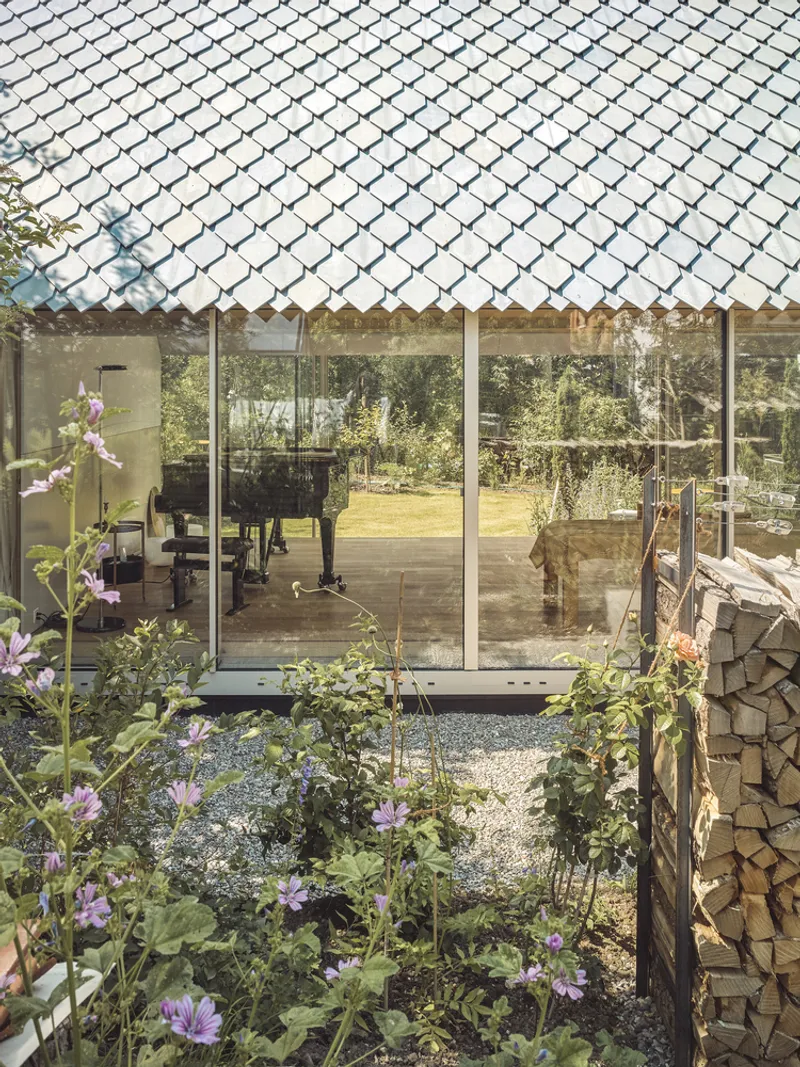
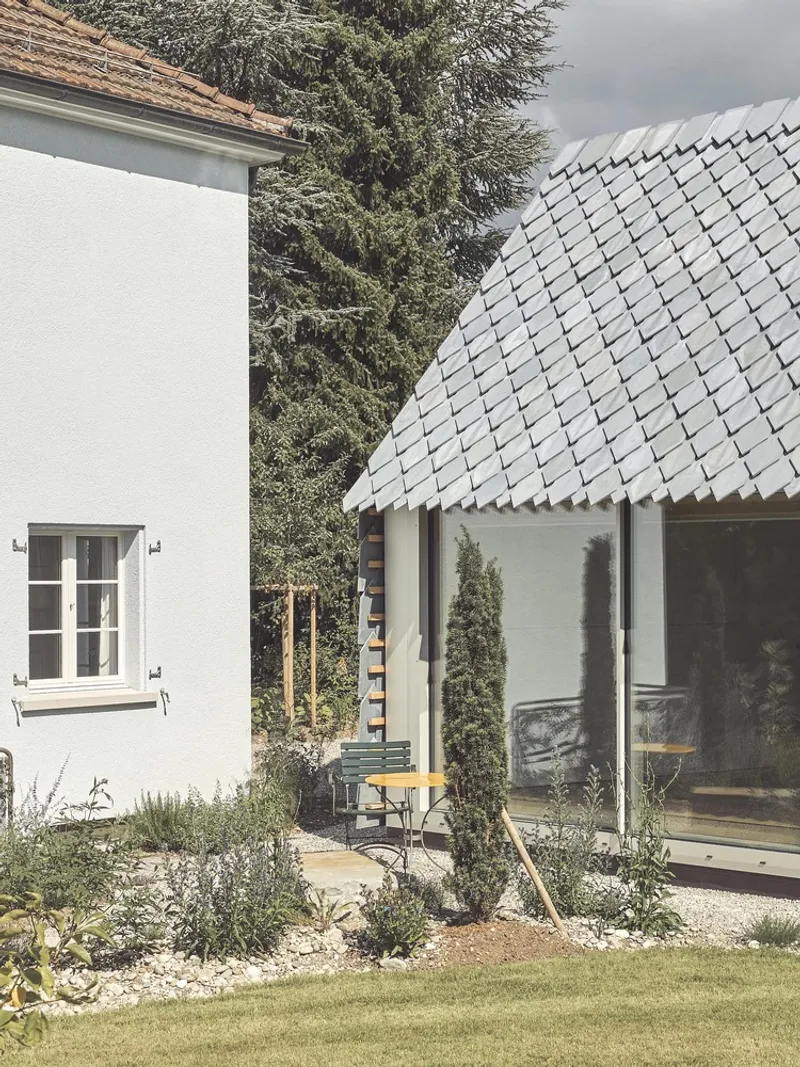
At its core, the Music Pavilion embodies the philosophy of "less is more." The structure is a single-story building supported by a simple concrete base, with walls and a pitched roof made from 12cm thick cross-laminated timber panels. The use of timber reflects the natural beauty of the surrounding garden while providing structural stability. The gabled roof, which rests at both ends of the pavilion, floats along the eaves, allowing the space to be completely open towards the garden on both longitudinal sides.
Exterior Design and Facade: A Shimmering Tribute to the Environment
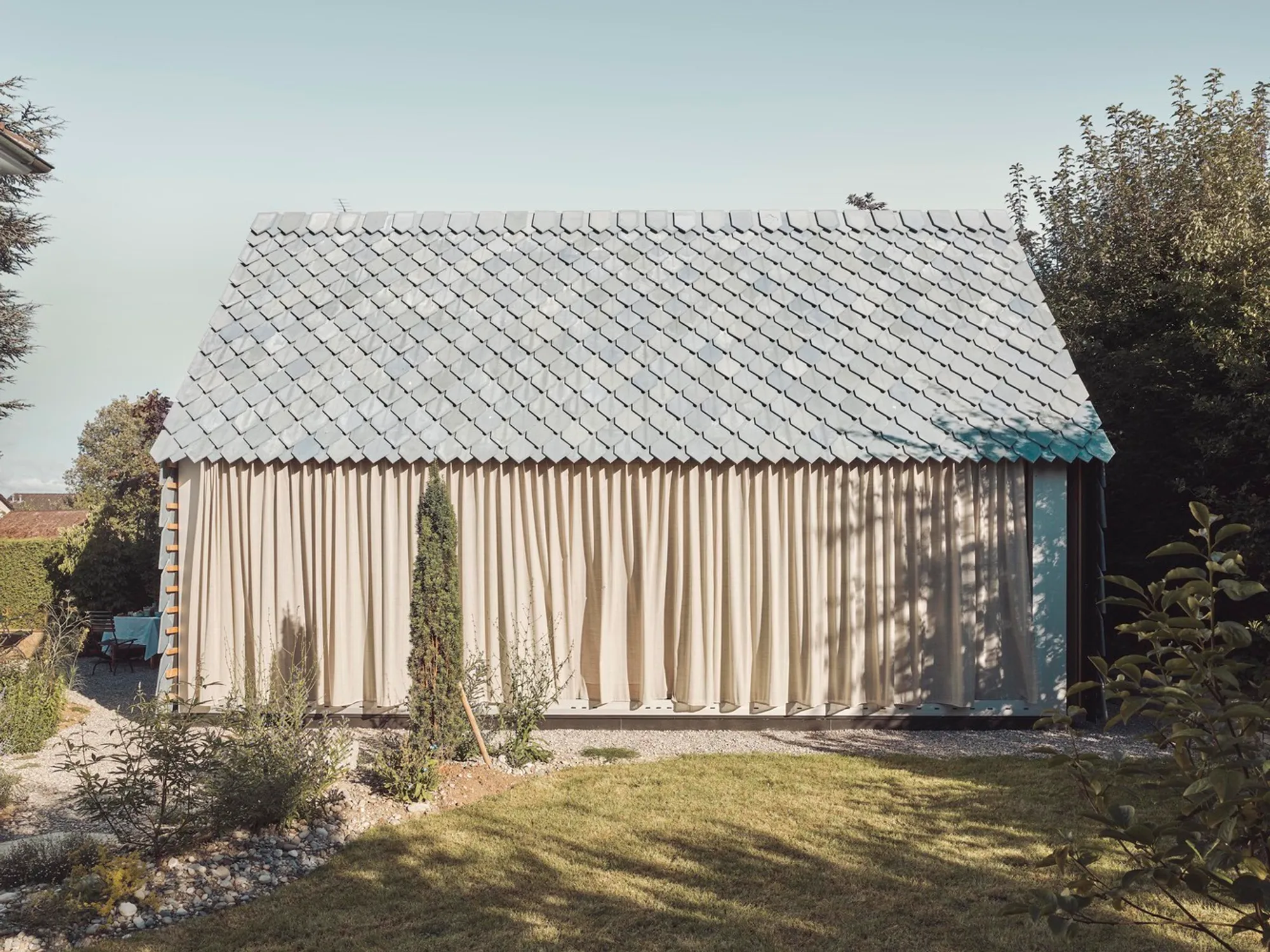
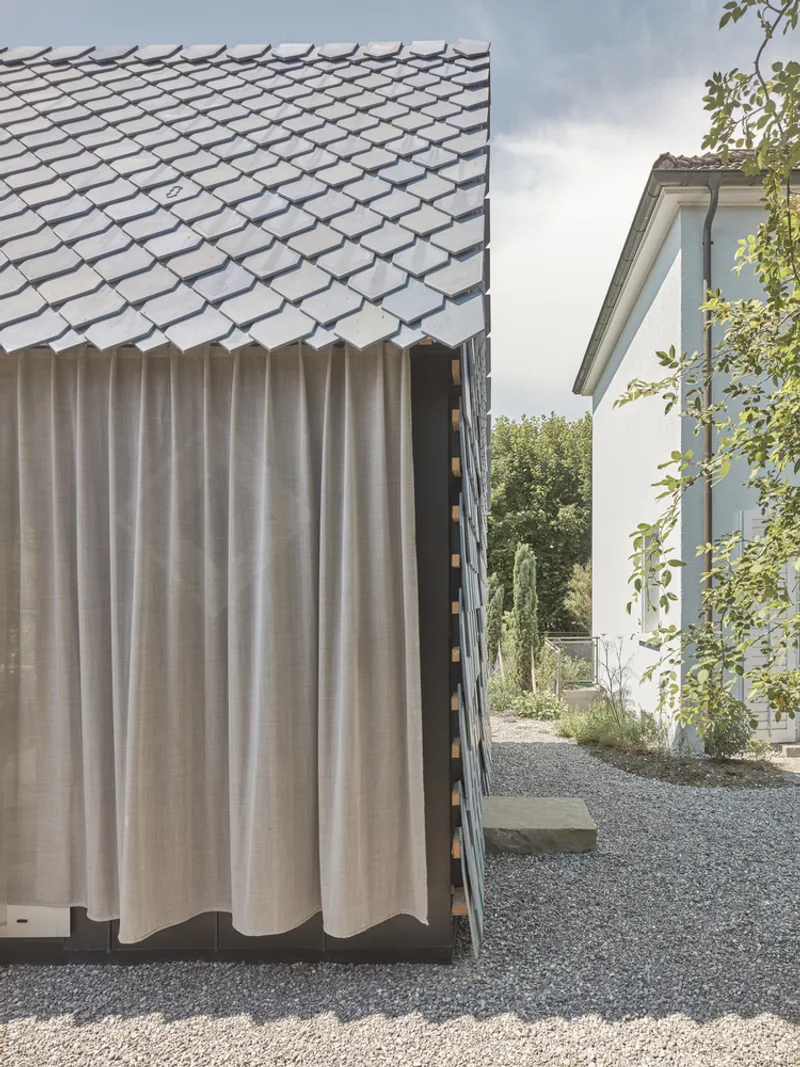
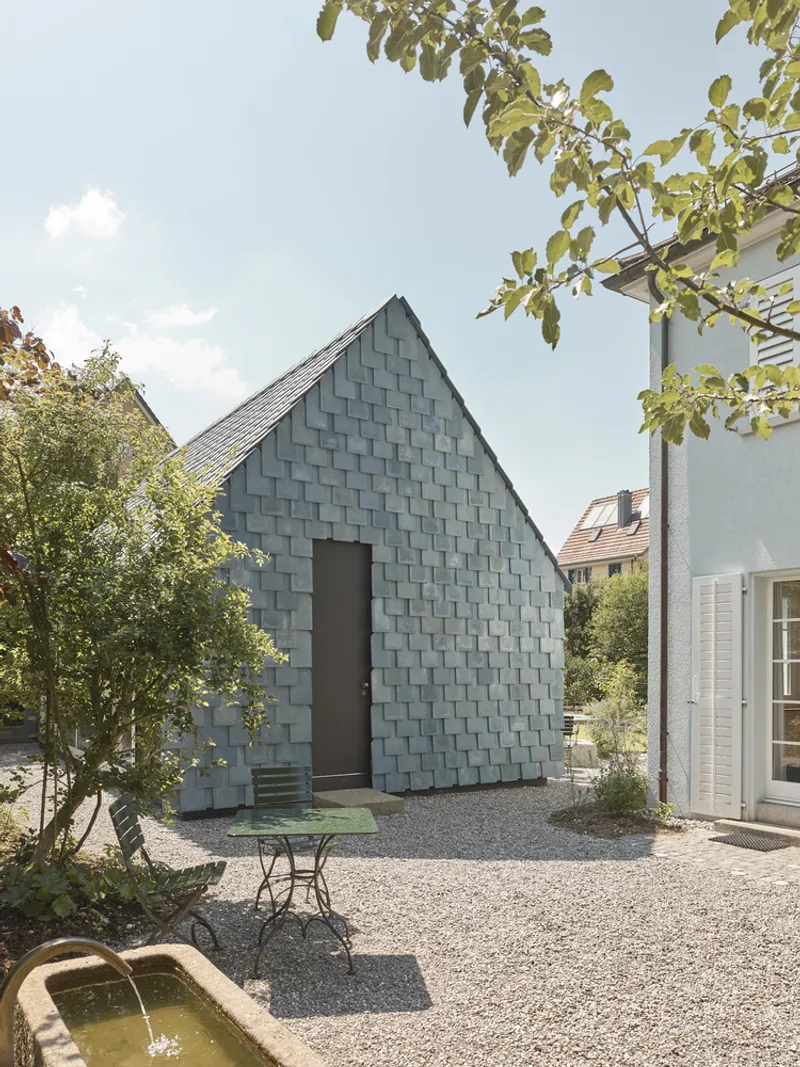
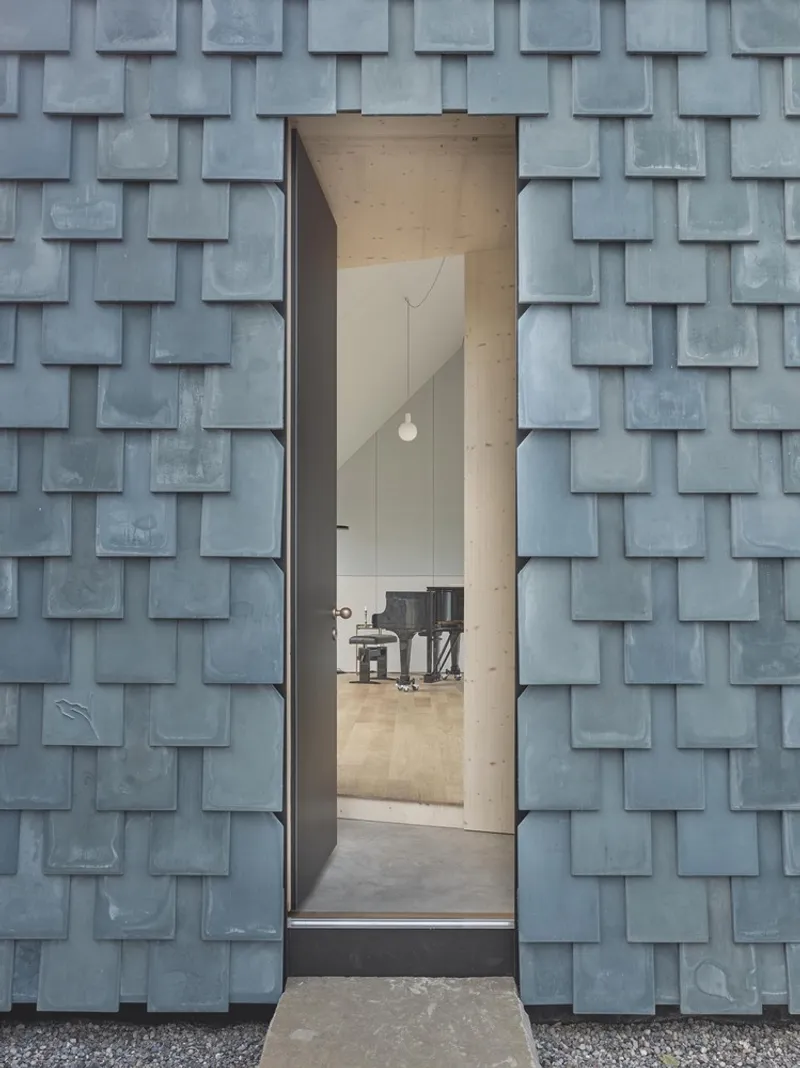
One of the standout features of the Music Pavilion is its stunning exterior, which is enveloped in a continuous dress of thick cement fiber boards. These boards shimmer in 21 different shades of blue, creating a dynamic, reflective surface that changes with the time of day and seasons. The shingled facade, developed in collaboration with architectural office SVNM, gives the pavilion a modern yet natural look. The installation of this facade was a collaborative effort, showcasing the dedication of the team and the importance of craftsmanship in the final design.
Materials and Texture: A Play Between the Concrete Base and Pinewood Panels
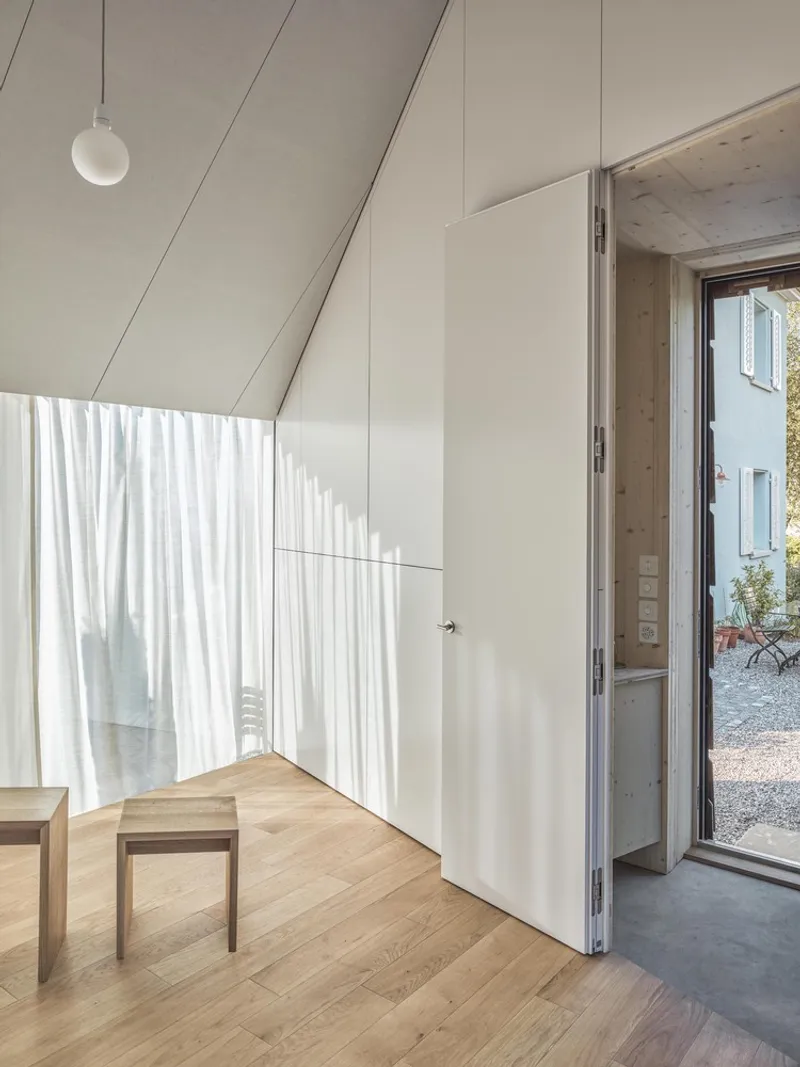
As one enters the pavilion, a small step leads to the music room, where the design takes on a more intimate feel. The service room, which includes an entrance, toilet, and storage, is hidden in the thickness of the gabled facade. This clever use of space allows the pavilion to function independently from the residential building. Inside, the exposed materials—concrete, fresh pinewood, and cross-laminated timber—create a natural, raw atmosphere, further enhancing the connection between the pavilion and its garden setting.
Acoustic Design: Crafting the Perfect Sound Environment
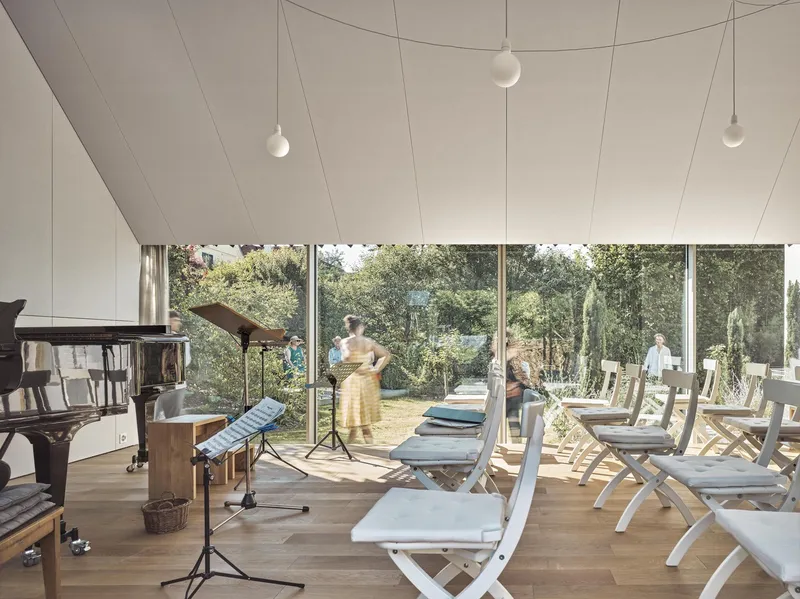
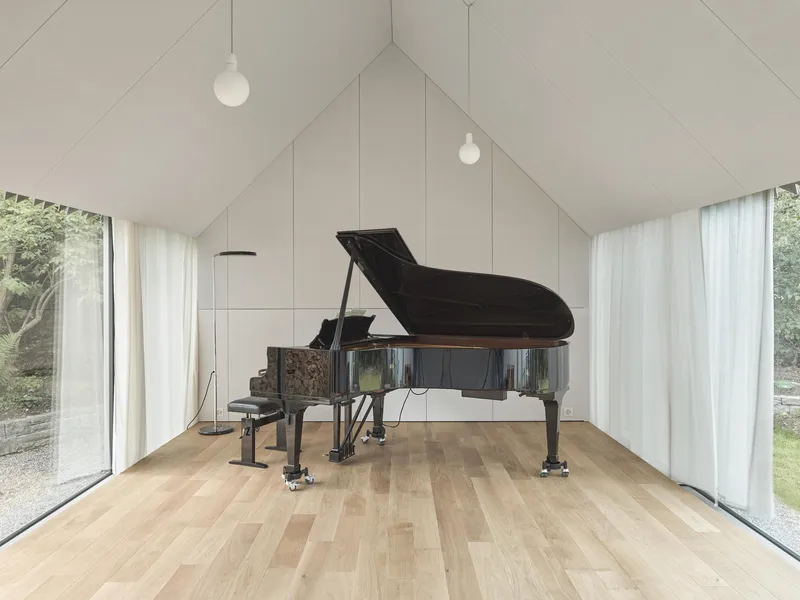
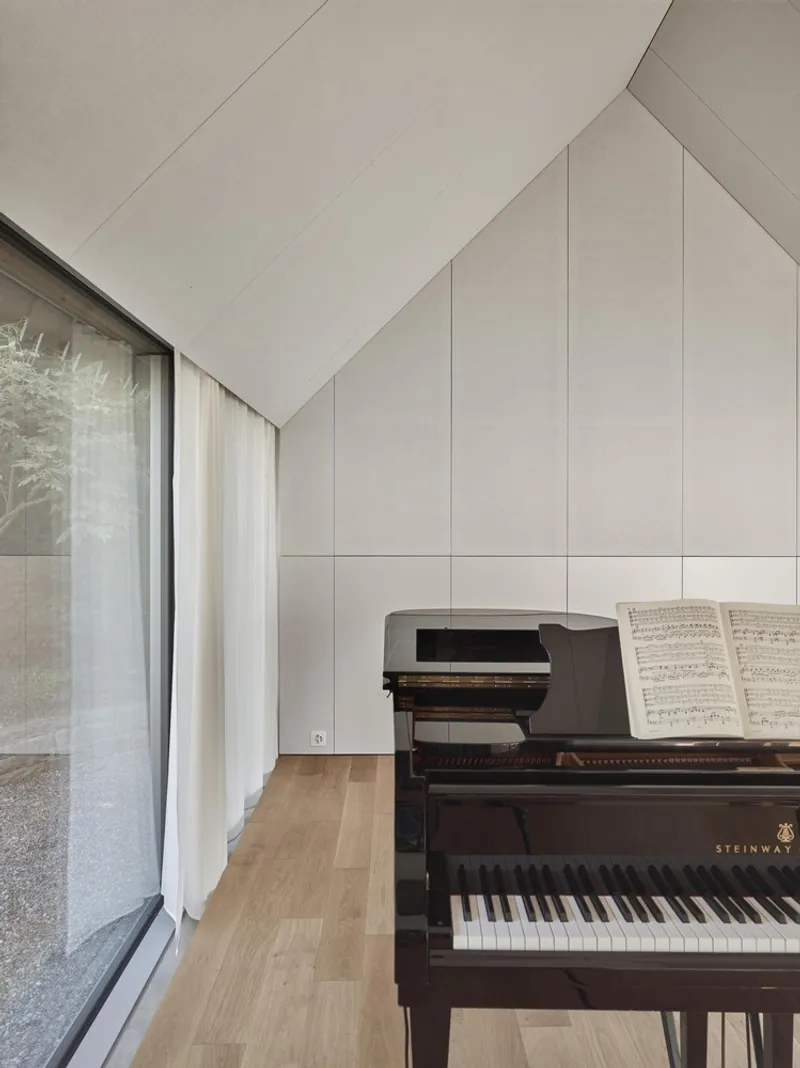
Acoustics play a crucial role in the Music Pavilion. The walls and ceilings of the space are covered in a sound-permeable fabric that integrates both absorbing and reflecting elements. This thoughtful approach ensures that sound can expand freely, providing the perfect environment for musicians to practice and perform. The high gable roof further contributes to the pavilion’s acoustical success, offering enough volume for sound to unfold while providing a sense of shelter and intimacy.
In designing a space dedicated to music, the architects worked closely with acoustics experts to fine-tune the environment. The result is a space where music is not only heard but felt, with every note resonating in harmony with the building’s unique structure. The Music Pavilion stands as a testament to the importance of acoustics in architectural design, showing that the built environment can elevate the experience of sound.
Integration with Nature: A Harmonious Relationship Between Space and Environment
The Music Pavilion is not just a building; it is an immersive experience. The structure is completely open on both sides, allowing the garden’s lush greenery to blend seamlessly with the interior. The white wooden and textile surfaces inside the pavilion reflect the changing light throughout the day, casting beautiful blue and green hues that mirror the colors of the garden. This integration of nature into the design allows for a fluid transition between the indoor and outdoor spaces, blurring the boundaries between architecture and the natural world.
The Pavilion's Role in the Community: "Pavillon Bleu" Concert Series
The Music Pavilion has become more than just a space for private music practice; it has also become a cultural hub. The pianist, who commissioned the building, began hosting a small concert series called “Pavillon Bleu.” This initiative offers local music lovers the opportunity to experience intimate performances within the pavilion, further connecting the space to the community. These concerts exemplify the pavilion’s dual purpose as a place for both personal practice and shared musical experiences.
A Sanctuary for Music, Sound, and Architecture
The Music Pavilion by Lorenz Bachmann and Atelier Void is a beautiful fusion of form, function, and acoustics. The thoughtful use of materials, combined with the pavilion’s seamless integration into the surrounding garden, makes it a true architectural gem. Its minimalist design emphasizes simplicity and elegance, while the careful attention to acoustics ensures that it is a space where sound can truly flourish.




Popular Articles
Popular articles from the community


The Ocean Hive: Sustainable Architecture for a Self-Sufficient Civilization at Sea
The Ocean Hive imagines sustainable architecture at sea, where modular habitats, algae, wave power and ocean waste sustain a growing colony.

Lunar Spiral: Space Architecture Shaped by the Mathematics of the Universe
Lunar Spiral reimagines space architecture through Fibonacci geometry, lunar regolith, levitating habitats, and self-sustaining Moon living.

Co-life: Sustainable Architecture for Age-Friendly Community Living
Co-life reimagines sustainable architecture for seniors through courtyards, rammed earth, shared gardens, and spaces designed for belonging.

Riyadh For All: Intergenerational Urban Design for Active Aging in Rabat
Riyadh For All reimagines urban design in Rabat with intergenerational co-living, adaptive courtyards, and Moroccan cultural exchange today.


Similar Reads
You might also enjoy these articles


Hodi-Mandai Geram
Project Function: Preservation and revitalization of the Intangible heritage and socio-spatial identity of the Hodi by Housing, Cultural Memory Center, Sacred Grove, landscape, local tourism economy


Olio Towers: A Mid-Rise for Performers That Fuses Housing, Rehearsal, and Stage
Located blocks from Houston's Theater District, this modular tower stacks living units around a central performance atrium.

Oasis: Modular Green Housing Carved into Dhaka's Urban Fabric
A shortlisted Plugin Housing entry reclaims unauthorized settlements in Dhaka with stepped concrete volumes, green roofs, and ventilation-driven design.

Black Hole: A Floating Megastructure for the Post-Physical Era
Emiliano Mazzarotto envisions a spherical, self-scaling arena where e-sports, digital hotels, and holographic stadiums replace traditional public space.


Explore Urban Design Competitions
Discover active competitions in this discipline



Challenge to reimagine the Iron Throne


Photograph architecture without architects


Illustrate the lost glory of Angkor Wat - Render Challenge


Design challenge to reuse E-waste
Comments (0)
Please login or sign up to add comments
No comments yet. Be the first to comment!