
MV024 Residence by CV ARCHITECTS + ASSOCIATES: Bioclimatic Living in Cyprus
Bioclimatic residence in Cyprus using passive design, stone base, adaptive facade, natural ventilation, and family-focused spatial connections for sustainable living.


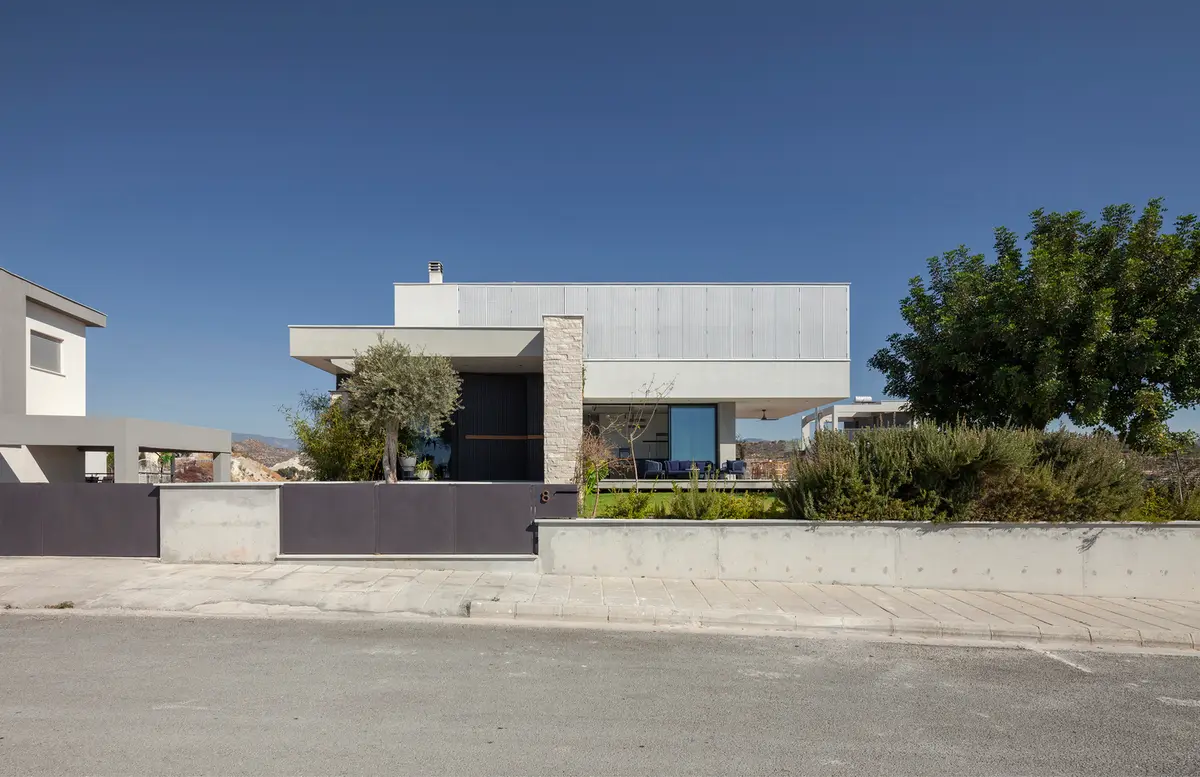
Located in Limassol, Cyprus, the MV024 Residence by CV ARCHITECTS + ASSOCIATES is a contemporary home designed with a strong emphasis on bioclimatic architecture. Spanning 310 m² and completed in 2020, the project explores how climate-responsive design can shape spatial organization, materiality, and everyday living.
Climate-Driven Architectural Concept
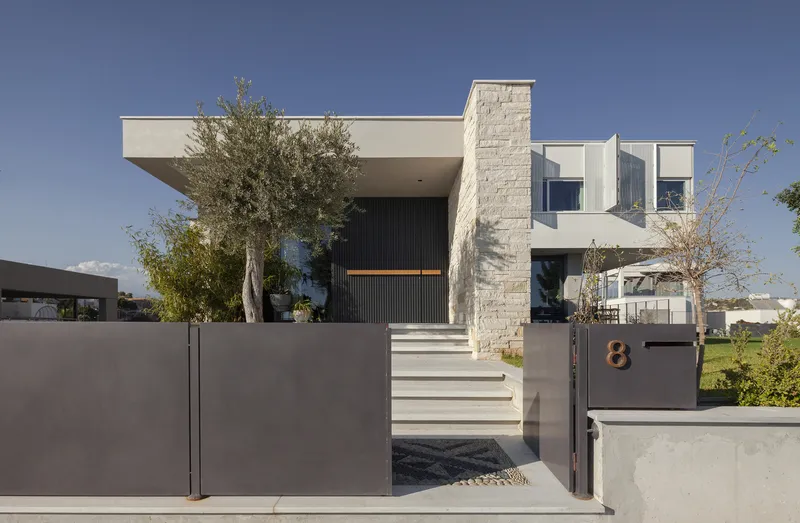
The central idea behind the MV024 Residence is the creation of a microclimate through architectural form. The design carefully responds to environmental factors such as orientation, prevailing winds, humidity, and temperature. By studying these site-specific conditions, the architects developed a house that not only adapts to but enhances its natural surroundings.
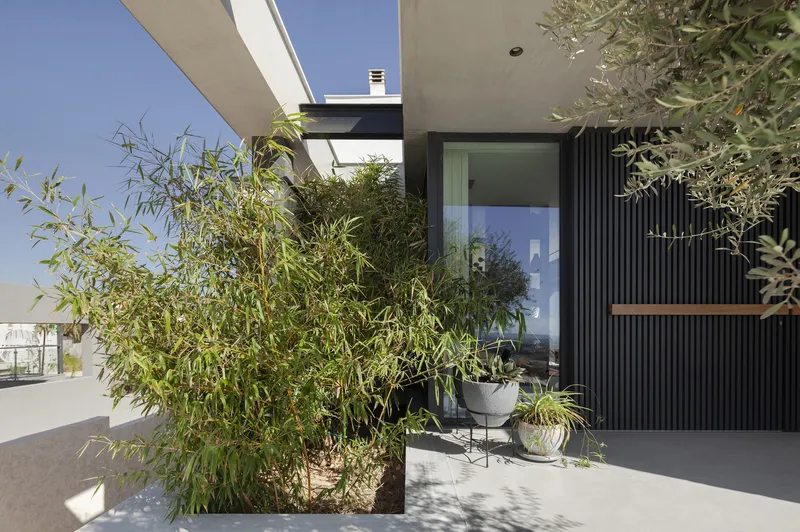
The strong north and west winds played a crucial role in shaping the building’s envelope. These facades remain largely solid and “blind,” acting as protective barriers. In contrast, the south and east sides open generously with large windows, allowing natural light to flood the interiors while maximizing solar gain during winter months.
Topography and Spatial Organization
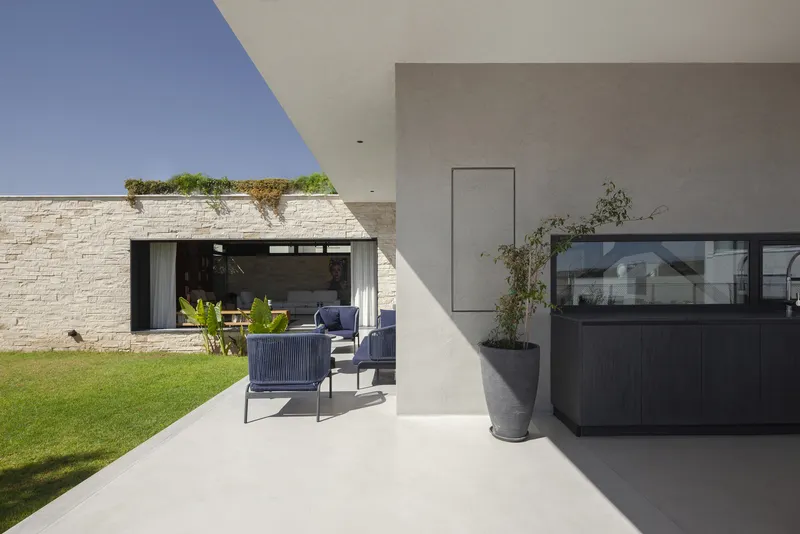
A two-meter difference in site elevation informed the vertical zoning of the house. Ancillary and service spaces are placed on the lower level, partially embedded into the الأرض, forming an underground zone that enhances thermal stability.
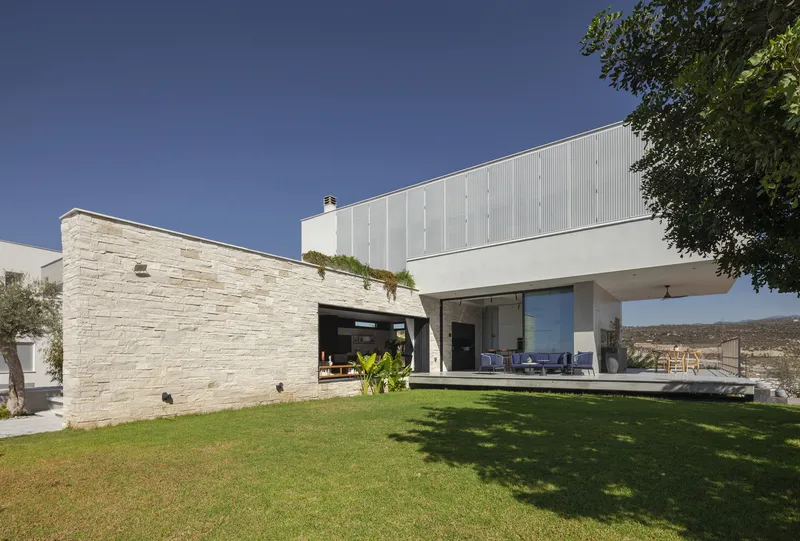
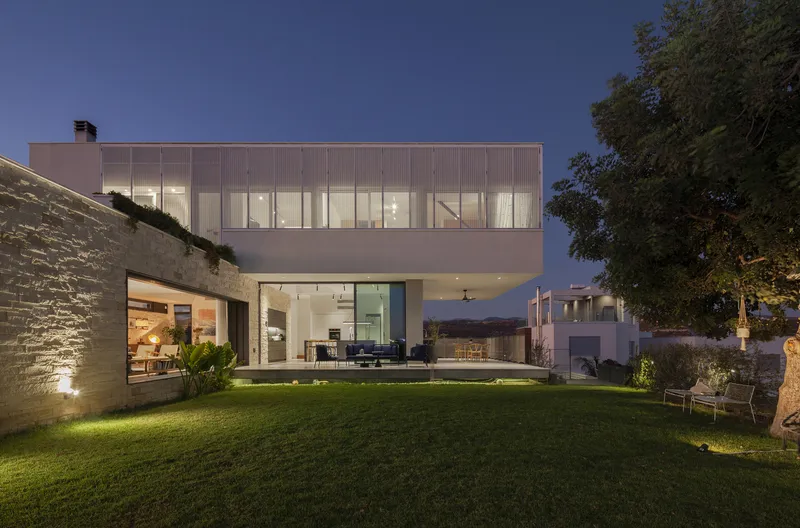
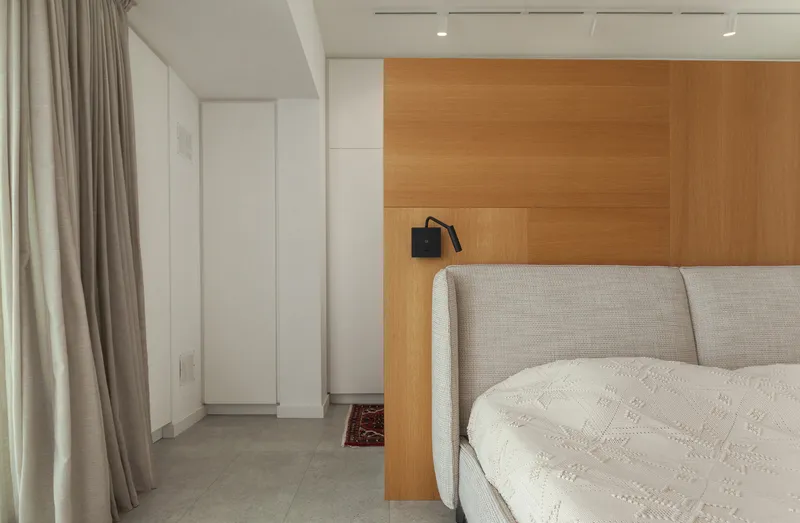
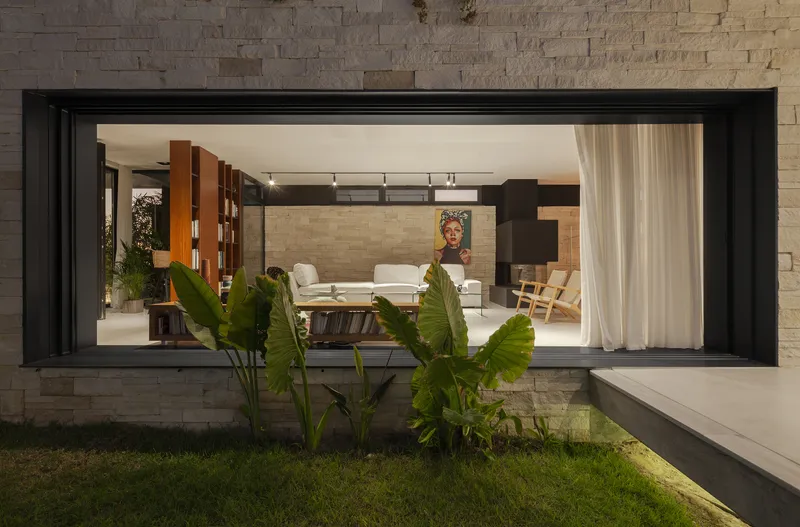
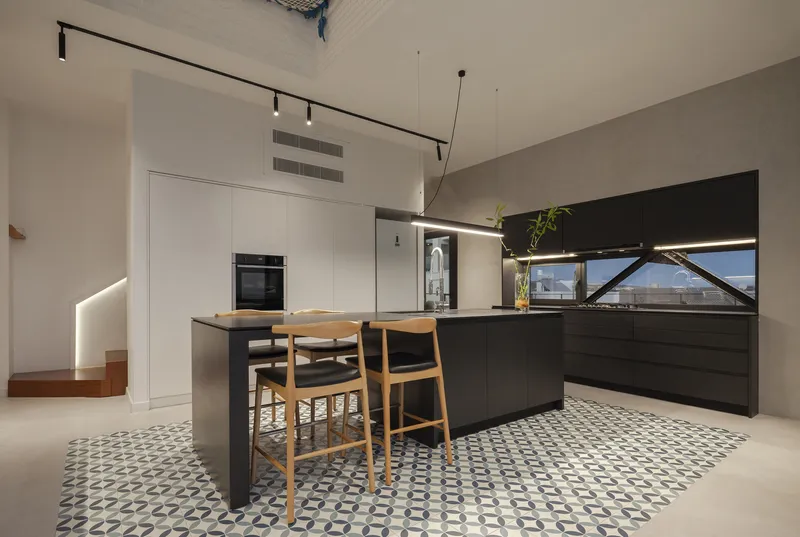
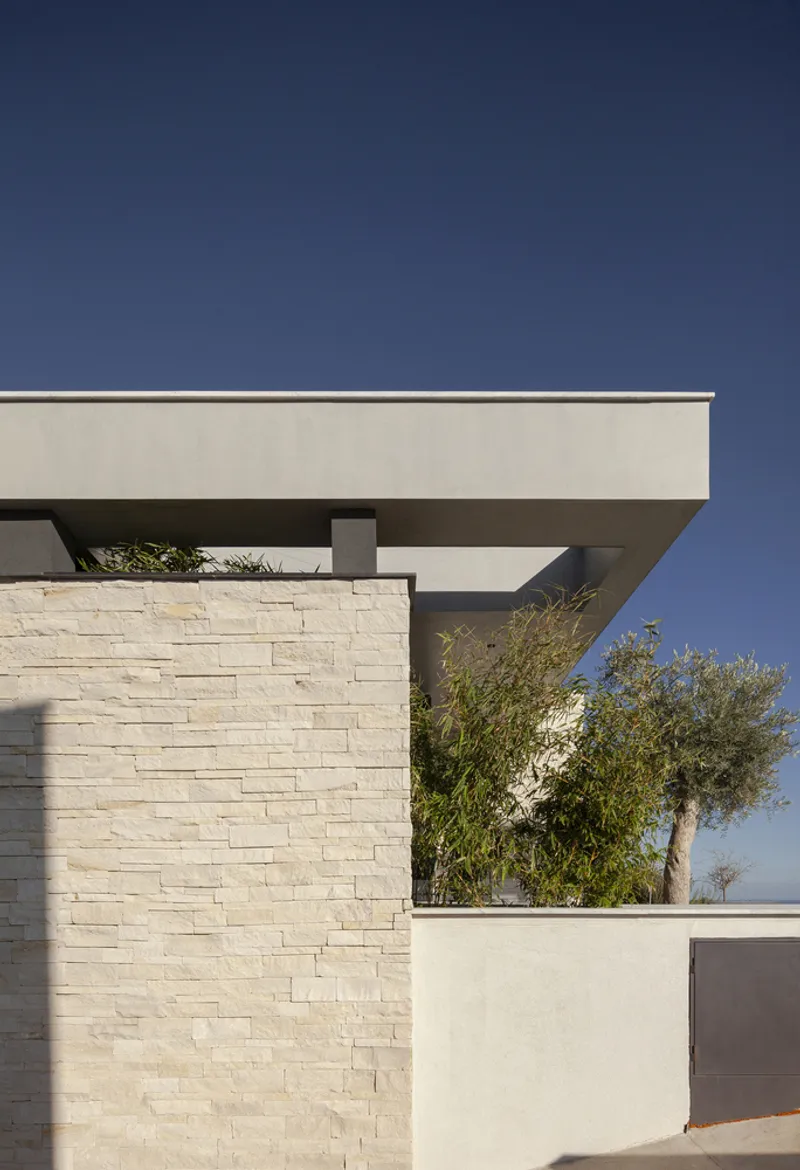
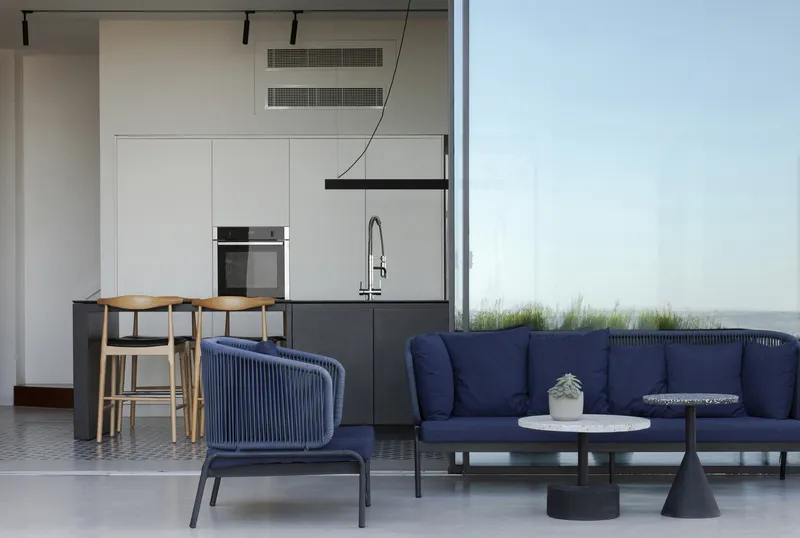
The ground floor acts as a solid base, constructed with thick walls clad in local stone. These walls integrate storage, kitchen cabinetry, and functional elements, reinforcing both structural and spatial clarity. Extending outward, the eastern stone wall ensures privacy and shields outdoor living areas from harsh winds.
First Floor: Light, Air, and Adaptive Facade
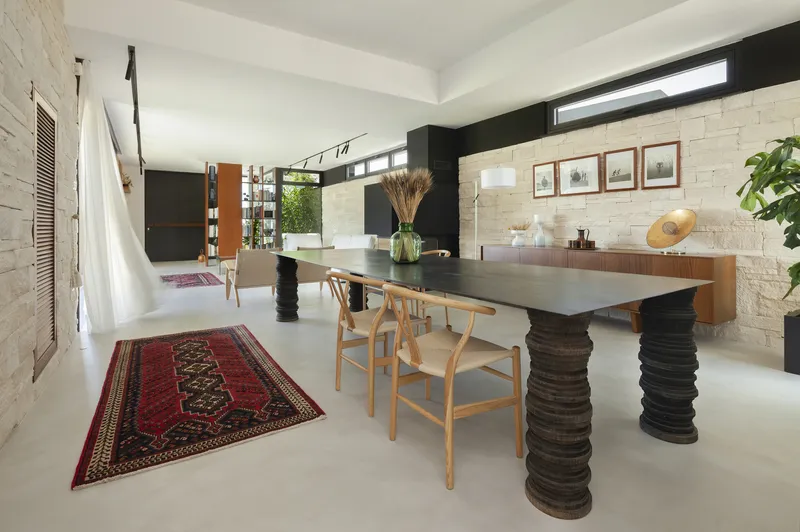
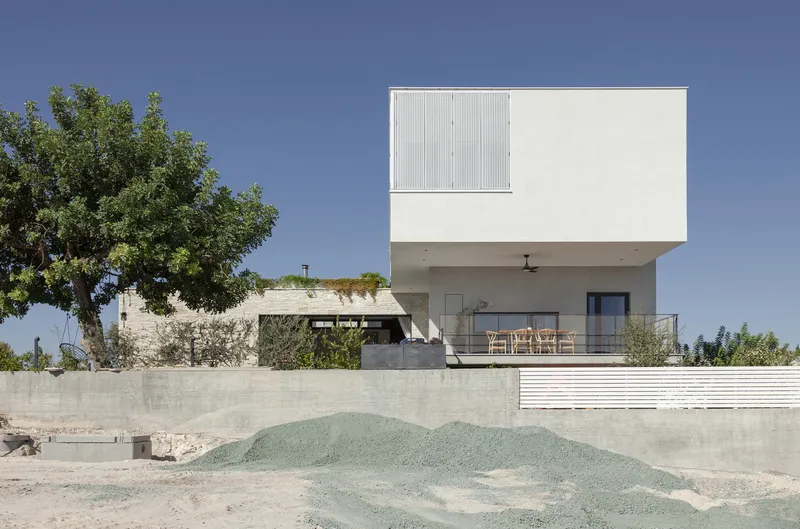
Above the stone base sits a clean, white volume that defines the first floor. This level incorporates a perforated façade with a movable shading system. The adjustable panels allow residents to control sunlight and heat gain throughout the year, maximizing warmth in winter and reducing overheating in summer.
The white exterior finish reflects solar radiation, minimizing heat absorption while maintaining brightness and visual lightness. This passive design strategy significantly contributes to the home’s energy efficiency.
Natural Ventilation and Indoor Comfort
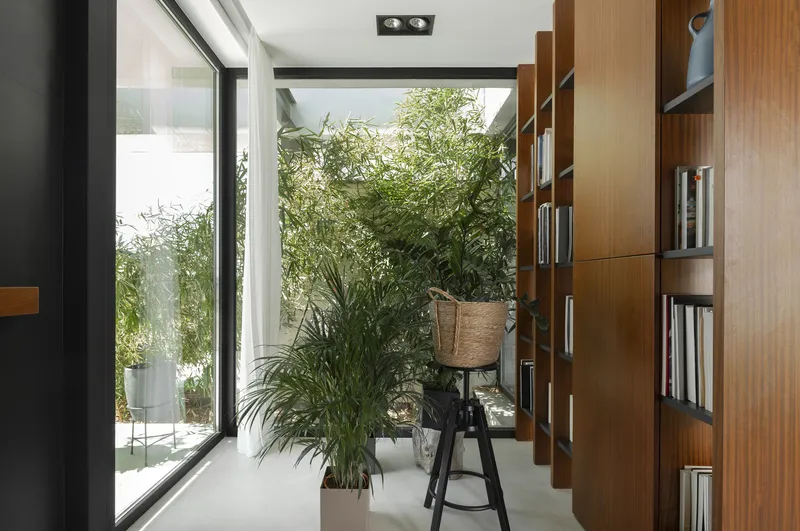
Cross ventilation is a key feature of the residence. Strategically placed fanlight windows on the west side promote airflow through the living and dining areas. Meanwhile, smaller and fewer openings on the north side help regulate internal temperatures and reduce exposure to cold winds.
This careful balance ensures a comfortable indoor climate without excessive reliance on mechanical systems.
Interior Connectivity and Family-Centric Design
The interior layout emphasizes interaction and visual connectivity. A standout feature is the void above the kitchen, creating a direct visual link to the children’s play area. This double-height space is enhanced with a playful net installation, fostering engagement and communication within the family.
The house is designed for a four-member family, with spaces that encourage both togetherness and privacy. The seamless connection between indoor and outdoor areas reflects the Cypriot lifestyle, where daily life often extends into open-air environments.
Materiality and Sustainability
Material selection reinforces the project’s sustainable approach. Local stone, combined with modern finishes and carefully chosen systems, creates a balance between tradition and contemporary living. The use of passive design strategies: such as solar orientation, shading, and natural ventilation, reduces energy consumption and environmental impact.
The MV024 Residence exemplifies how thoughtful, climate-responsive architecture can create a sustainable and comfortable living environment. By integrating bioclimatic principles with spatial innovation and material sensitivity, the project offers a refined interpretation of modern Mediterranean living.
All photographs are works of
Creative Photo Room by Maria Efthymiou


Popular Articles
Popular articles from the community


Opera on the Sea: Driftwood Logic Shapes a Timber Opera House on Estonia's Coast
Trevor Orgill's opera house translates the entangled drift of floating timber into a civic building where wood, water, and music converge.


graciastudio Turns a Viewless Tijuana Lot Inward Around a Courtyard of Concrete, Timber and Trees
In Tijuana, Jorge Gracia's GA2 House stacks a timber-clad private floor over exposed concrete and replaces a missing view with a planted interior patio.

Aquadapt: An Underwater Habitat That Rewrites Its Rooms by the Hour
Curved modules ring the seabed while one shell shifts from breakfast room to cinema, farm and football pitch as residents' needs change.

Cube Design Draws an Ecological Corridor Between Two Shenzhen Hills with the Nankai Building
Beside Shenzhen's container docks, the Nankai Building pairs stacked balconies with a climbing green screen to connect two hillsides across its height.

Similar Reads
You might also enjoy these articles
Cube Design Draws an Ecological Corridor Between Two Shenzhen Hills with the Nankai Building
Beside Shenzhen's container docks, the Nankai Building pairs stacked balconies with a climbing green screen to connect two hillsides across its height.

Praksis A and Studio Sted Bend a Red Timber Cabin Across the Granite of Norway's Southern Coast
On the southern Norwegian coast, a 105 m² cabin follows the rock on slender posts, pairing red cladding outside with pine, brick and plywood within.

David Ortega Stacks a Two-Story Mexico City Penthouse Around a Steel Stair and a Pergola-Shaded Roof Terrace
In Colonia Roma, a 300 m² penthouse uses oak joinery, a planted steel stair and a slatted roof pergola to make a new-build apartment feel like a house.

PARALELA and LB2 Thread a Public Walkway Through the Base of a Las Condes Residential Tower
In Las Condes, Santiago, the Hamlet Building gives its fenceless ground floor to a 70-metre wooded passage linking two streets and the metro.

Explore Architecture Competitions
Discover active competitions in this discipline

Challenge to reimagine the Iron Throne

Photograph architecture without architects

Illustrate the lost glory of Angkor Wat - Render Challenge

Design challenge to reuse E-waste
Comments (0)
Please login or sign up to add comments
No comments yet. Be the first to comment!