
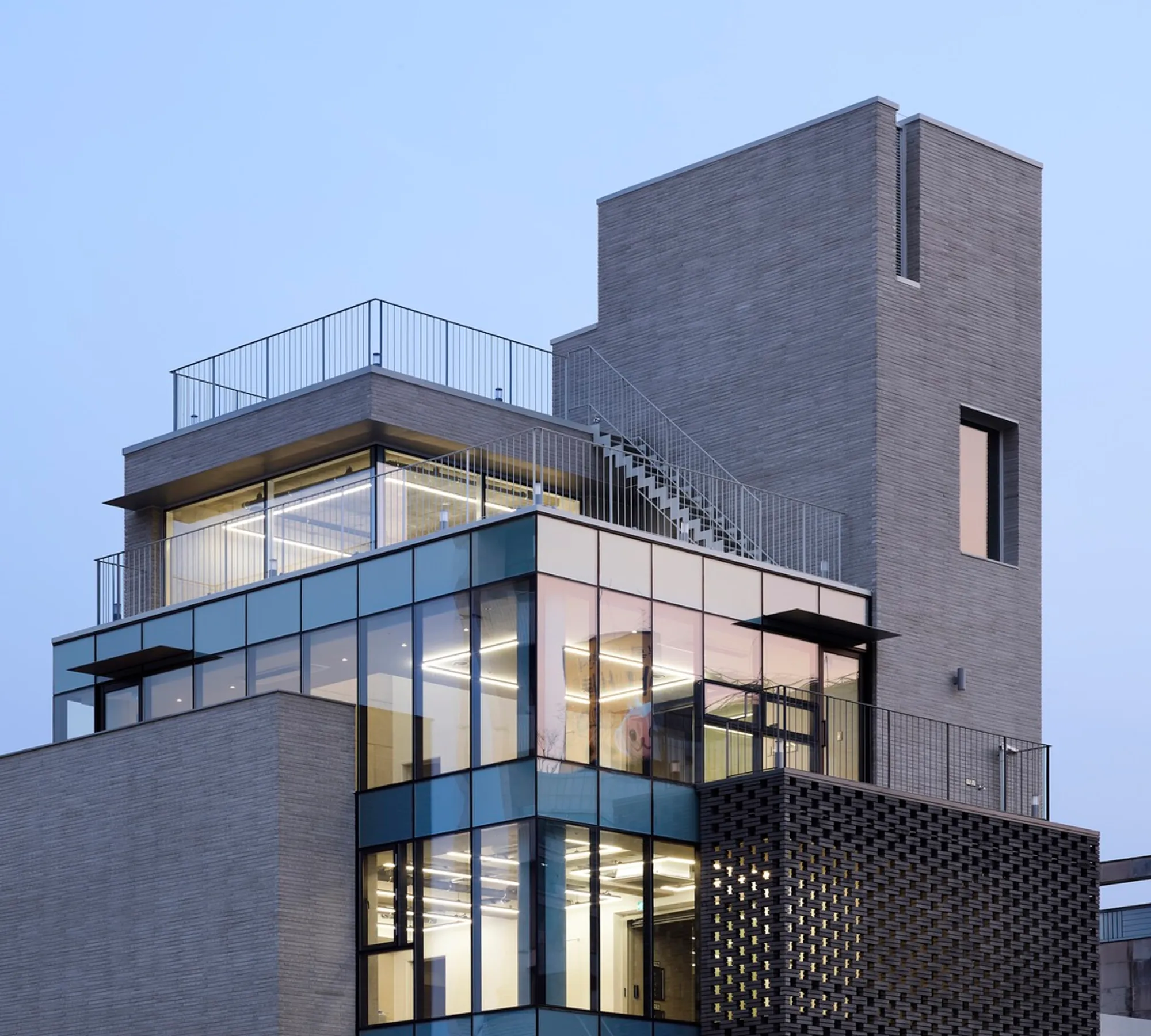
N3315 Commercial Facilities: A Contemporary Urban Workspace in Gangnam by Joh Sungwook Architects
Fragmented stacked volumes create terraces and daylight-filled workspaces, redefining commercial architecture with human-scaled design within Seoul’s dense Gangnam district.


Located in the vibrant district of Gangnam in Seoul, South Korea, N3315 Commercial Facilities designed by Joh Sungwook and the team at Joh Sungwook Architects represents a thoughtful response to dense urban conditions and evolving workplace expectations. Completed in 2022, this 793-square-meter commercial building explores the balance between productivity, comfort, and human-scaled spatial experience in a highly compact urban environment.
Situated within the dynamic urban fabric of Gangnam-gu, the project reflects a new approach to commercial architecture: one that integrates outdoor terraces, fragmented volumes, and natural light to enhance workplace wellbeing.
Urban Context and Design Strategy
The urban landscape of Seoul is characterized by large commercial towers facing major boulevards. However, stepping away from the main streets reveals a network of smaller, human-scale buildings lining quieter back roads. N3315 Commercial Facilities was designed to respond to this dual urban condition.
Rather than replicating the massive scale of nearby towers, the architects envisioned a building that blends into the finer grain of the neighborhood while still offering a contemporary architectural presence. The design aims to provide a comfortable environment where occupants can maintain a balance between work and relaxation, reflecting the changing priorities of modern workplaces.
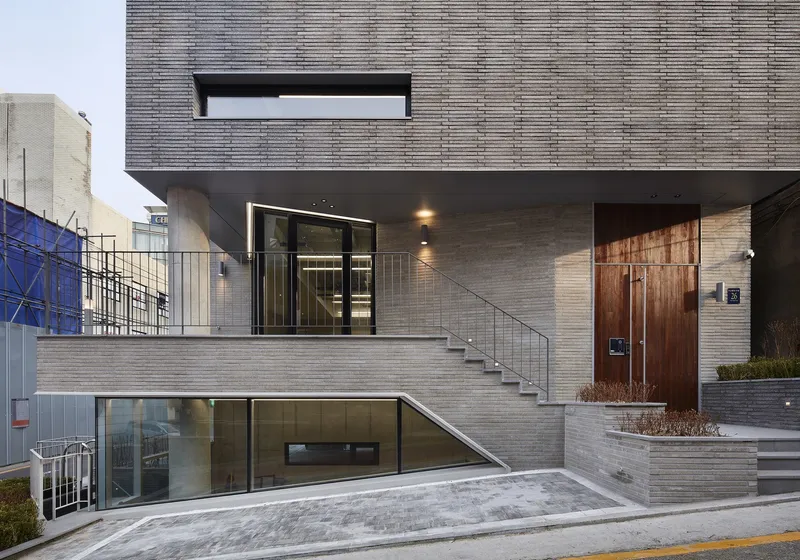
Fragmented Massing and Stacked Volumes
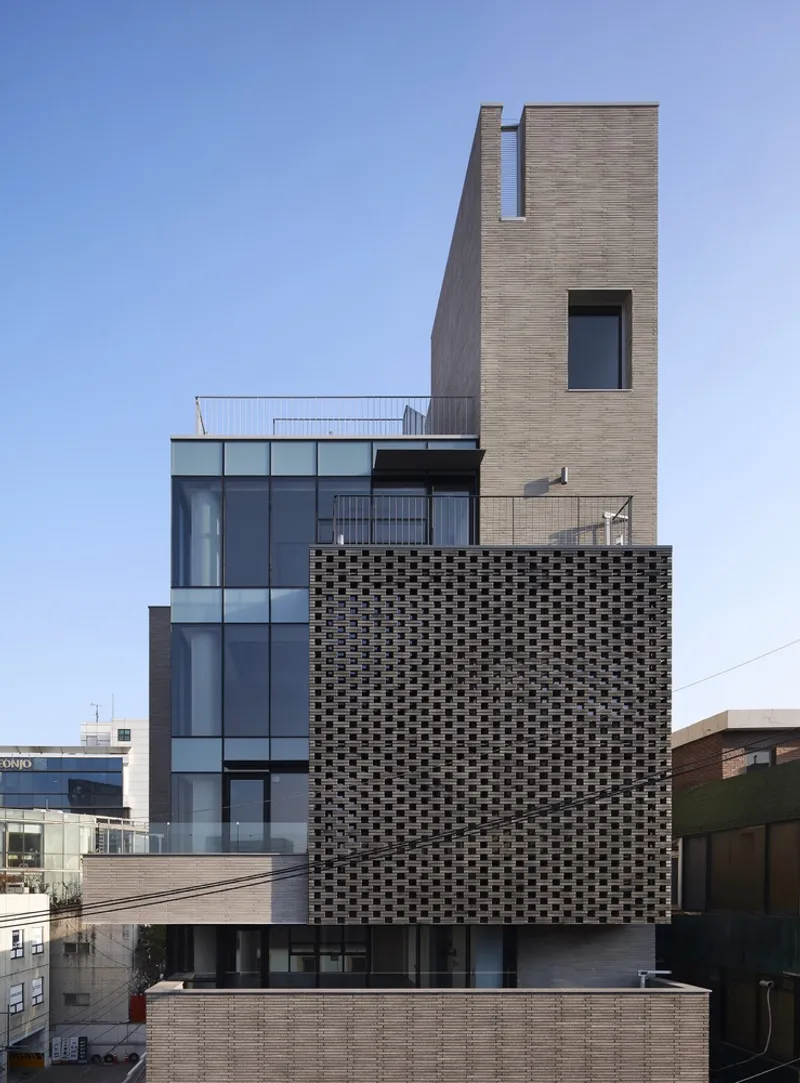
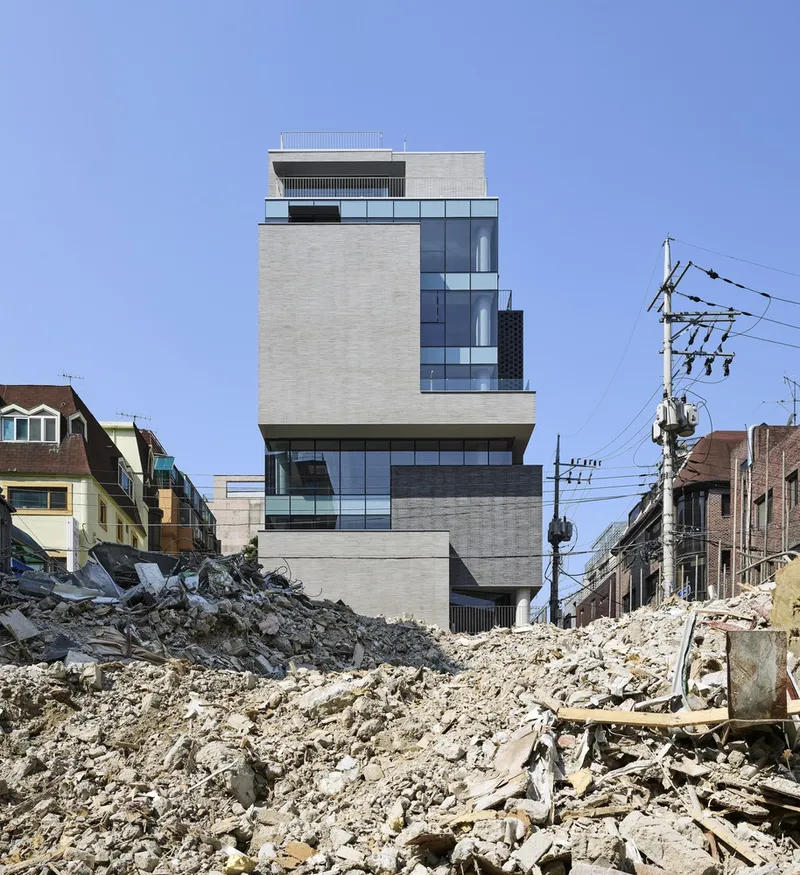
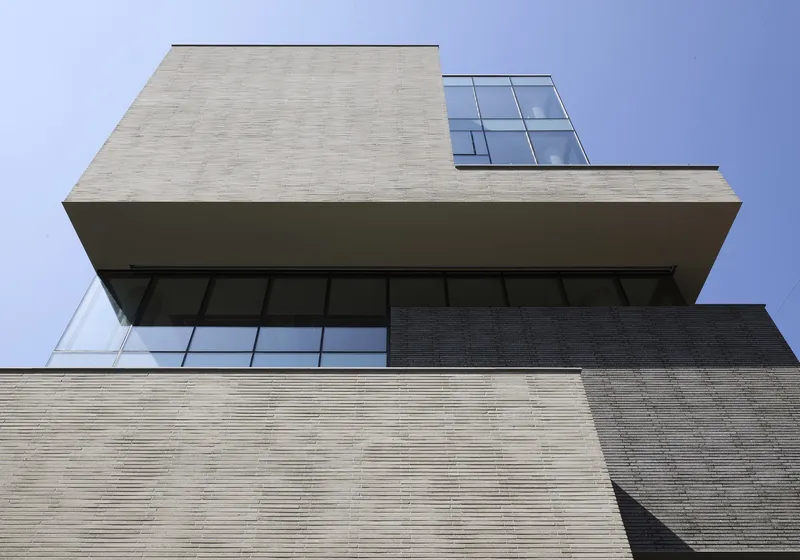
The design of the building begins with a simple cubic mass representing the maximum allowable volume on the site. Instead of keeping this form intact, the architects strategically fragmented the mass into smaller pieces that are stacked and shifted across different levels.
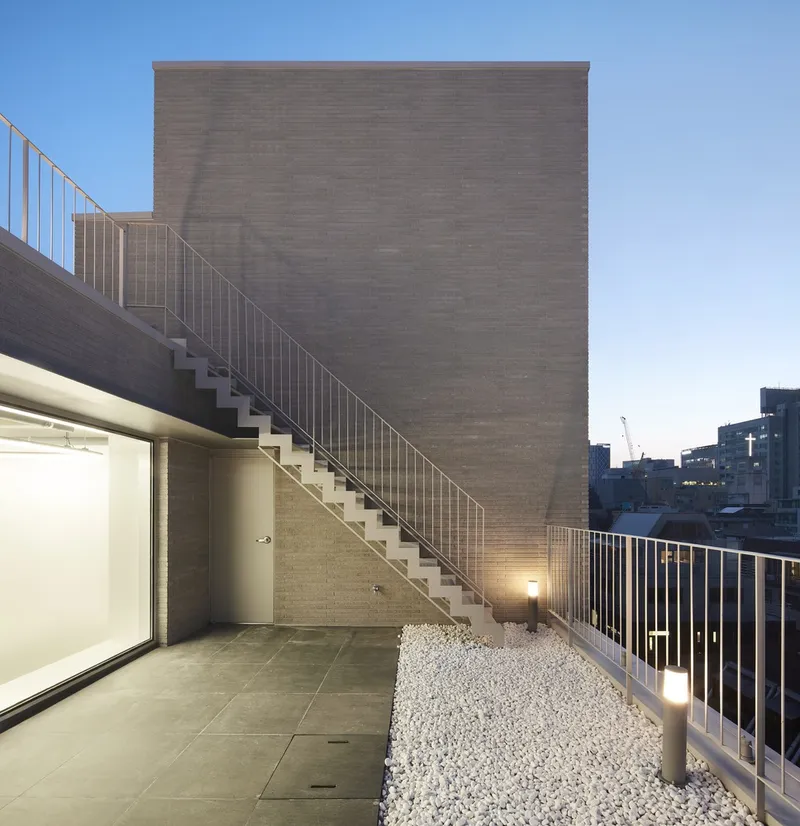
This approach creates a dynamic composition where each floor is slightly offset from the one below. The staggered arrangement generates a series of outdoor terraces with varying dimensions, orientations, and spatial qualities. These terraces act as extensions of the interior workspace, providing employees with opportunities to step outside, enjoy fresh air, and experience a more flexible work environment.
By breaking down the building’s mass, the project achieves both architectural dynamism and spatial diversity while maintaining efficient use of the site.
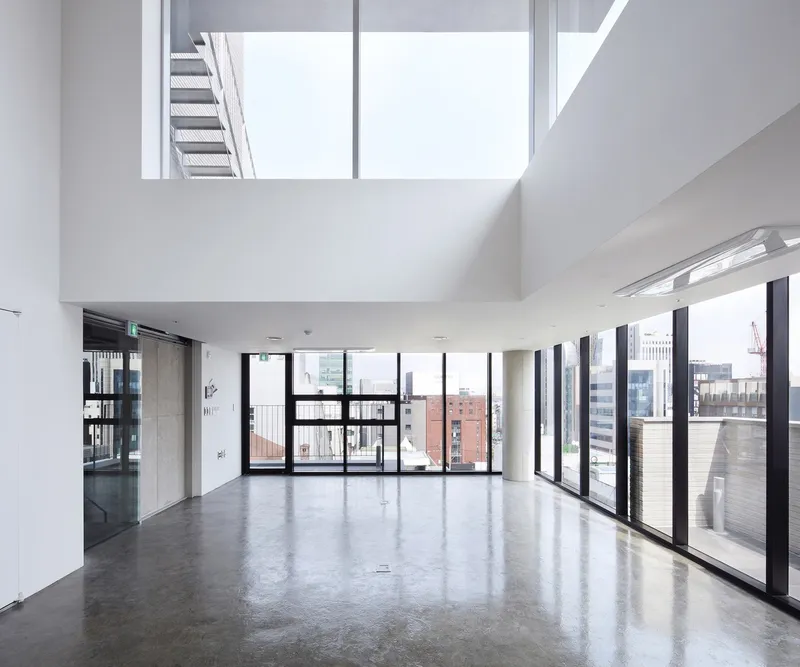
Outdoor Terraces and Expanded Workspaces
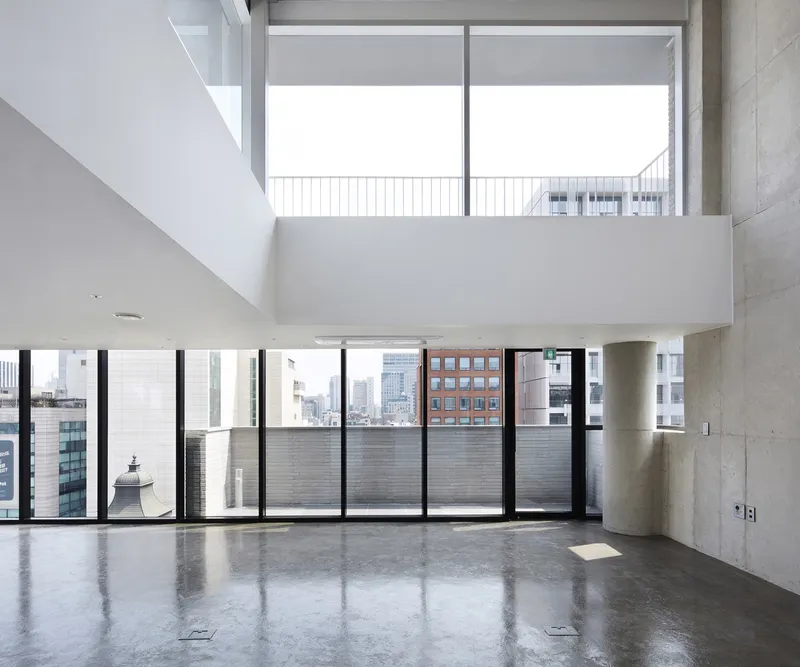
One of the most defining features of N3315 Commercial Facilities is its network of terraces. These outdoor spaces are organically formed by the shifting volumes and serve as transitional zones between interior and exterior environments.
The terraces expand the functional capacity of the building, allowing workers to move freely between indoor work areas and outdoor relaxation zones. In a dense commercial district where open space is limited, these terraces introduce valuable breathing room within the building’s compact footprint.
This design strategy not only enhances spatial quality but also contributes to employee wellbeing by integrating natural light, fresh air, and views into the daily work routine.
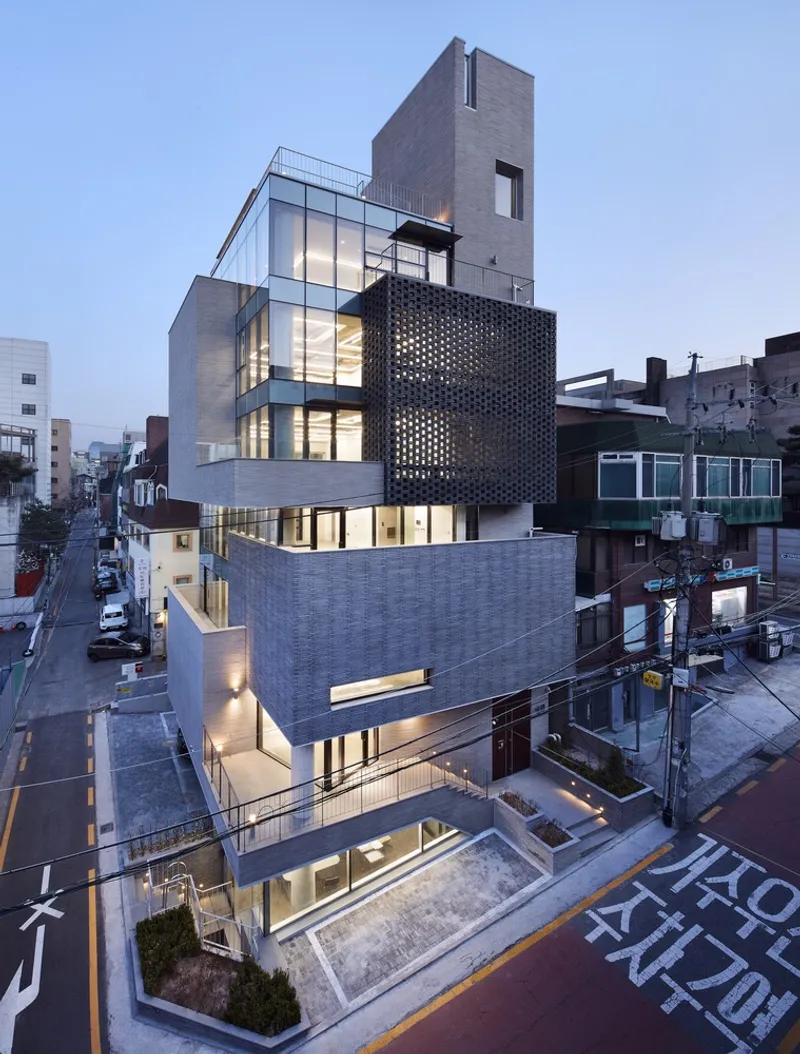
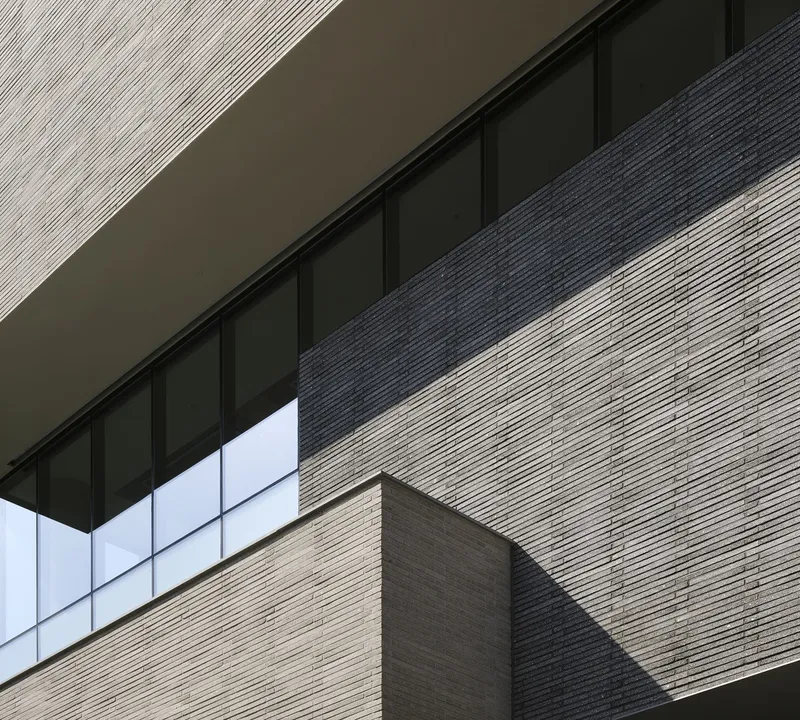
Responding to Site Topography
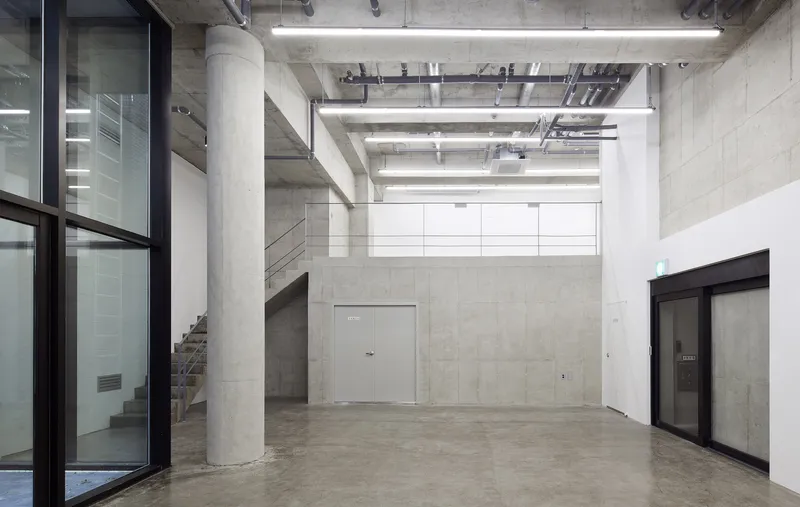
The building site sits along a steep road intersection, creating a one-floor height difference between the northern and eastern streets. Instead of viewing this condition as a limitation, the architects used it as an opportunity to create a unique spatial configuration.
Because of the elevation difference, the first basement level effectively functions as a ground floor when accessed from one side of the site. This clever adaptation maximizes accessibility and usability across multiple levels of the building.
Additionally, a sunken garden positioned at the corner of the site allows natural light to penetrate deep into the lower basement level. This feature improves environmental quality in underground spaces, ensuring that even the deepest floors benefit from daylight and visual connection to the outdoors.
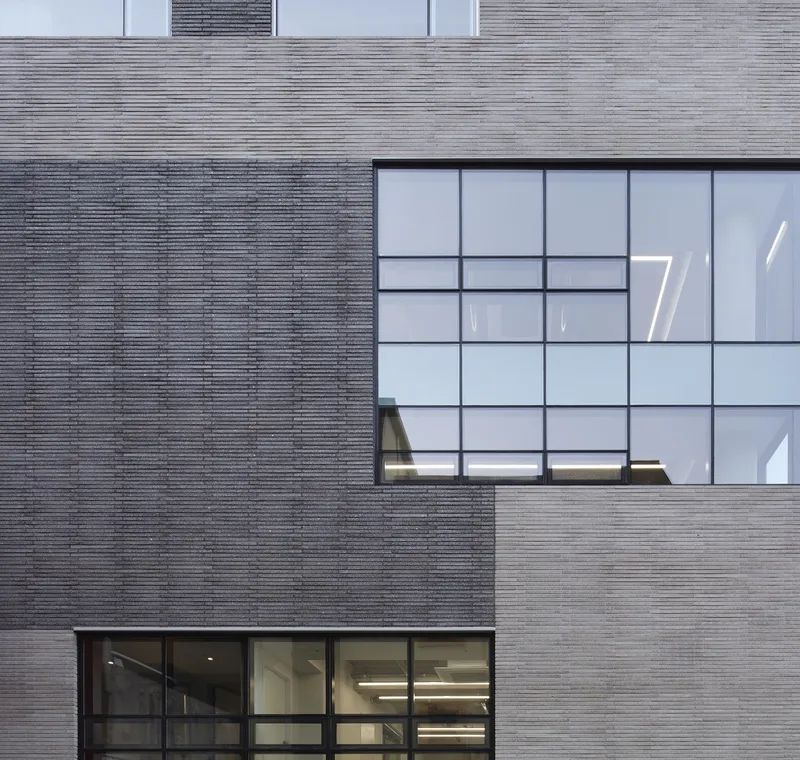
Facade Design and Privacy Considerations
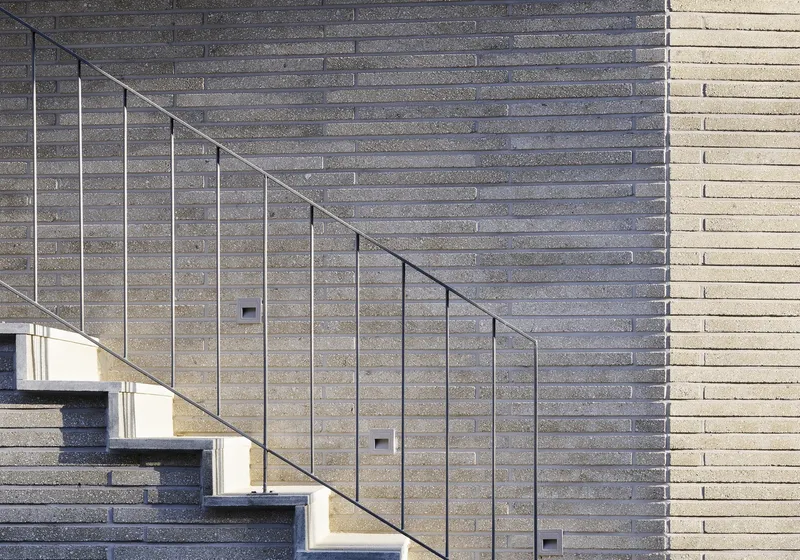
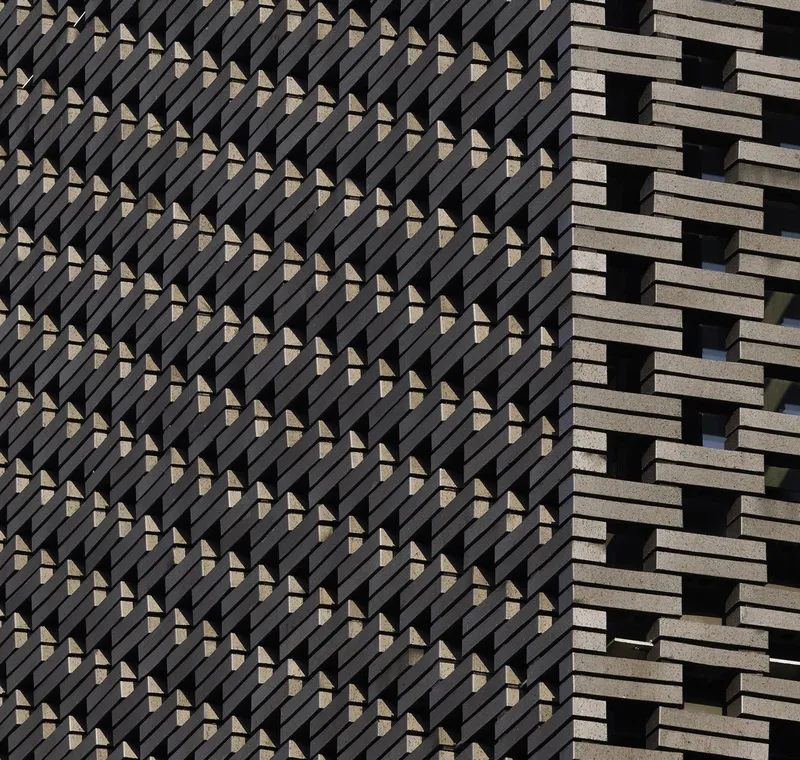
The facade of the building features carefully arranged brick patterns and window placements designed to balance openness and privacy. The surrounding neighborhood includes residential areas, requiring thoughtful architectural solutions to minimize direct visual intrusion.
To address this condition, windows are strategically oriented away from neighboring homes while still allowing sufficient daylight into the commercial spaces. The textured brick facade acts as a visual filter, softening views between the building and adjacent residential zones.
This material choice also contributes to the building’s contextual integration, reflecting the scale and character of the surrounding urban fabric while maintaining a contemporary architectural expression.
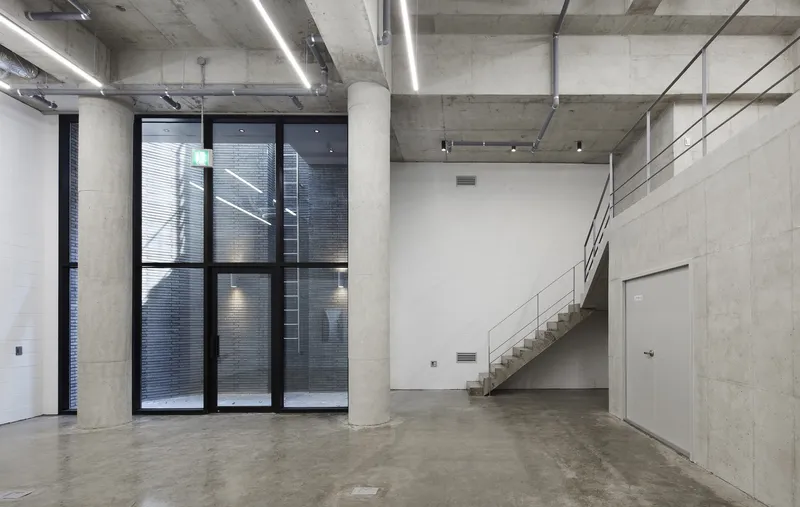
Architecture and Changing Workplace Values
The design philosophy behind N3315 Commercial Facilities reflects broader societal changes in the perception of work environments. In the past, commercial architecture often prioritized efficiency and economic performance above all else.
Today, however, the quality of the workplace environment has become equally important. Employees increasingly value spaces that support comfort, flexibility, and wellbeing.
By incorporating terraces, natural light, and adaptable spatial arrangements, the project responds to these evolving expectations. It demonstrates how architecture can shape healthier and more enjoyable work environments while remaining efficient within dense urban contexts.
N3315 Commercial Facilities stands as a compelling example of contemporary commercial architecture that prioritizes human experience within a dense city environment. Through fragmented volumes, outdoor terraces, and strategic site integration, the building creates a flexible workspace that supports both productivity and relaxation.
The project highlights how thoughtful architectural design can transform compact urban sites into vibrant, light-filled environments that respond to modern workplace culture and urban living.
All photographs are works of
Kim Yong Kwan, Sungwook Joh



Popular Articles
Popular articles from the community


Conexión: Biophilic Design Reimagines High-Rise Living in Hong Kong
Conexión reimagines high-rise living in Hong Kong through biophilic design, green facades, shared spaces, daylight, water and nature within.

The Musturak Paradise: Senior Living Architecture for a Connected Future in Temara, Morocco
The Musturak Paradise reimagines senior living architecture in Temara via private homes, social spaces, culture, community, and shared care.

Lunar Spiral: Space Architecture Shaped by the Mathematics of the Universe
Lunar Spiral reimagines space architecture through Fibonacci geometry, lunar regolith, levitating habitats, and self-sustaining Moon living.

Riyadh For All: Intergenerational Urban Design for Active Aging in Rabat
Riyadh For All reimagines urban design in Rabat with intergenerational co-living, adaptive courtyards, and Moroccan cultural exchange today.


Similar Reads
You might also enjoy these articles

FAMM Arquitectura Organizes Ten Villas Around Courtyards and Jungle in Nosara, Costa Rica
El Molino pairs two elongated volumes with deep overhangs and timber louvers to build a compact coastal community five minutes from the beach.
Oscar Niemeyer's Ibirapuera Park Pavilions Define São Paulo's Cultural Identity in Concrete and Curve
A constellation of modernist volumes set within São Paulo's most important urban park, conceived for the city's 400th anniversary in 1954.
How Henri Picq's 1889 Paris Pavilion Traveled 11,000 Kilometers to Become Santiago's Artequín Museum
A prefabricated iron and glass pavilion built for the Paris Universal Exposition found a second life as a children's art museum in Chile.
Sanjay Puri Architects Wraps a Jaipur Office Tower in Capsule-Shaped Green Buffers
A nine-level climate-responsive workplace near Jaipur Airport uses stacked planter terraces and aluminium screens to fight 40°C heat.

Explore Blocs Competitions
Discover active competitions in this discipline



Challenge to reimagine the Iron Throne


Photograph architecture without architects


Illustrate the lost glory of Angkor Wat - Render Challenge


Design challenge to reuse E-waste
Comments (0)
Please login or sign up to add comments
No comments yet. Be the first to comment!