
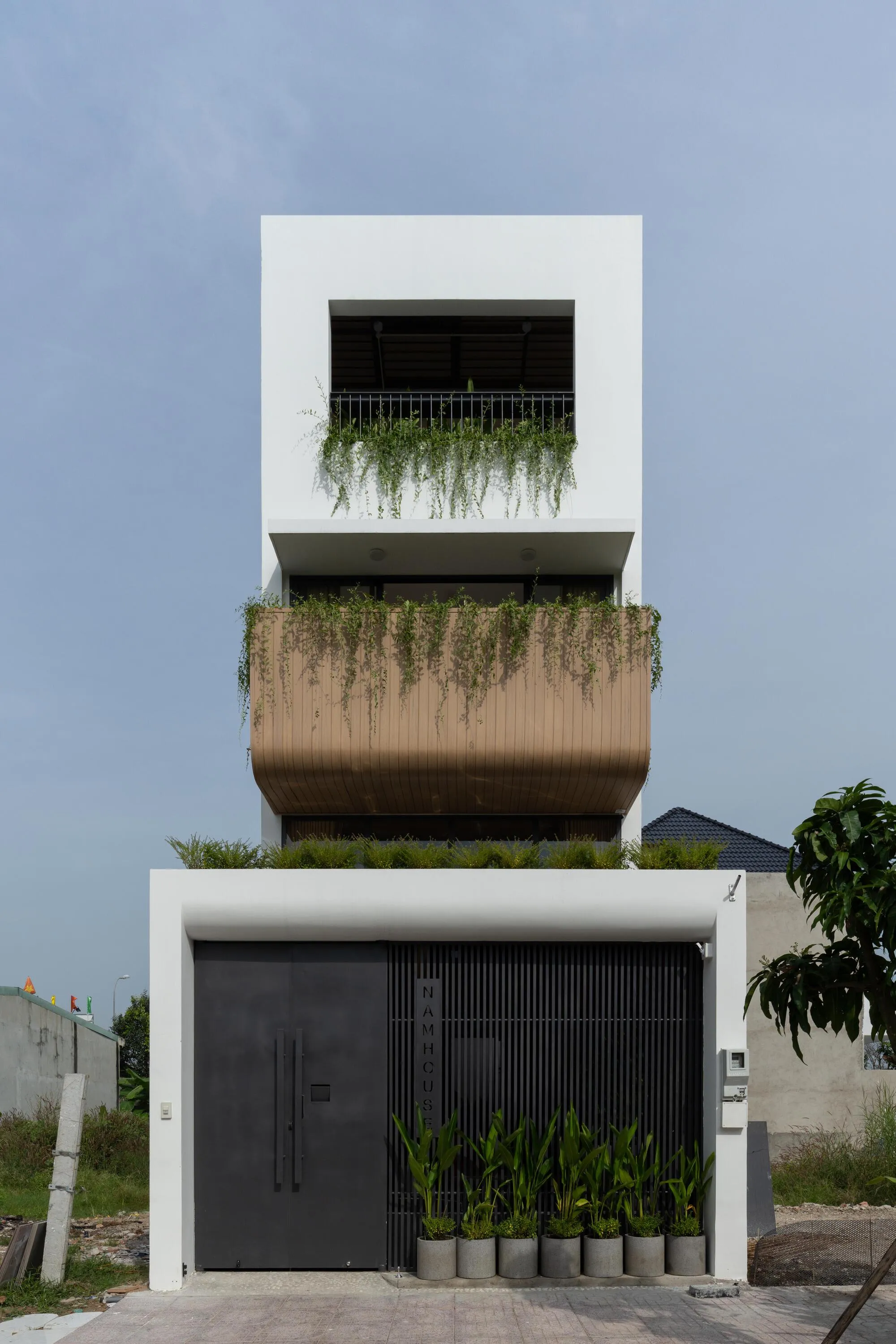
Nam House by 90odesign
A compact Vietnamese family home using courtyards, split levels, skylight, and layered greenery to create a naturally ventilated, light-filled living environment.


Located in Dong Nai, Vietnam, Nam House is a compact yet spatially rich family residence that demonstrates how thoughtful design can transform a narrow urban plot into a light-filled, climate-responsive home. Designed by 90odesign and completed in 2025, the 81-square-metre house balances privacy, openness, and environmental comfort through courtyards, split levels, and layered greenery.
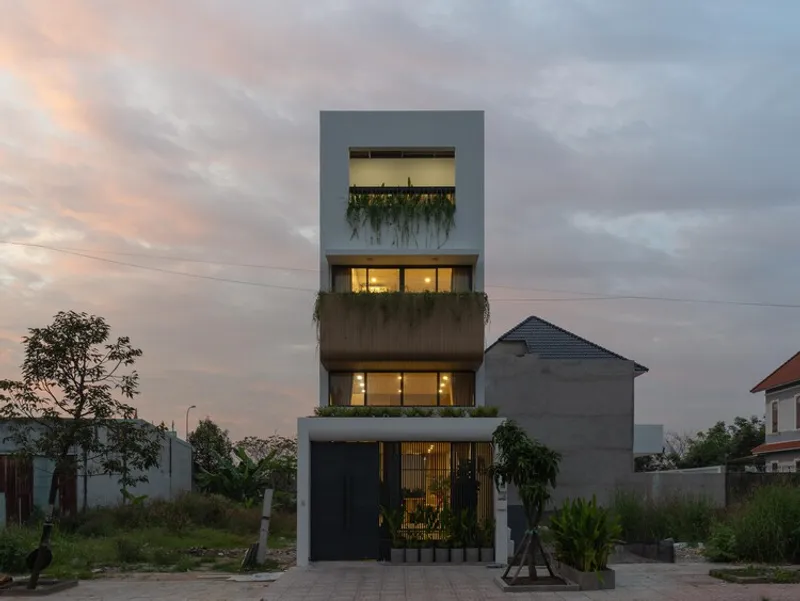
Set within a newly developed resettlement area where surrounding density remains relatively low, the house benefits from a generous green space directly in front of the site. This landscape condition became a key design driver, encouraging the architects to orient the home toward nature while safeguarding security and domestic intimacy.
Building on a Narrow Urban Plot
The site measures only 4.5 meters in width and 18 meters in depth, dimensions typical of many Vietnamese urban plots. Such proportions often result in deep, dark interiors and limited ventilation. Rather than treating these constraints as obstacles, 90odesign used them as catalysts for spatial innovation.
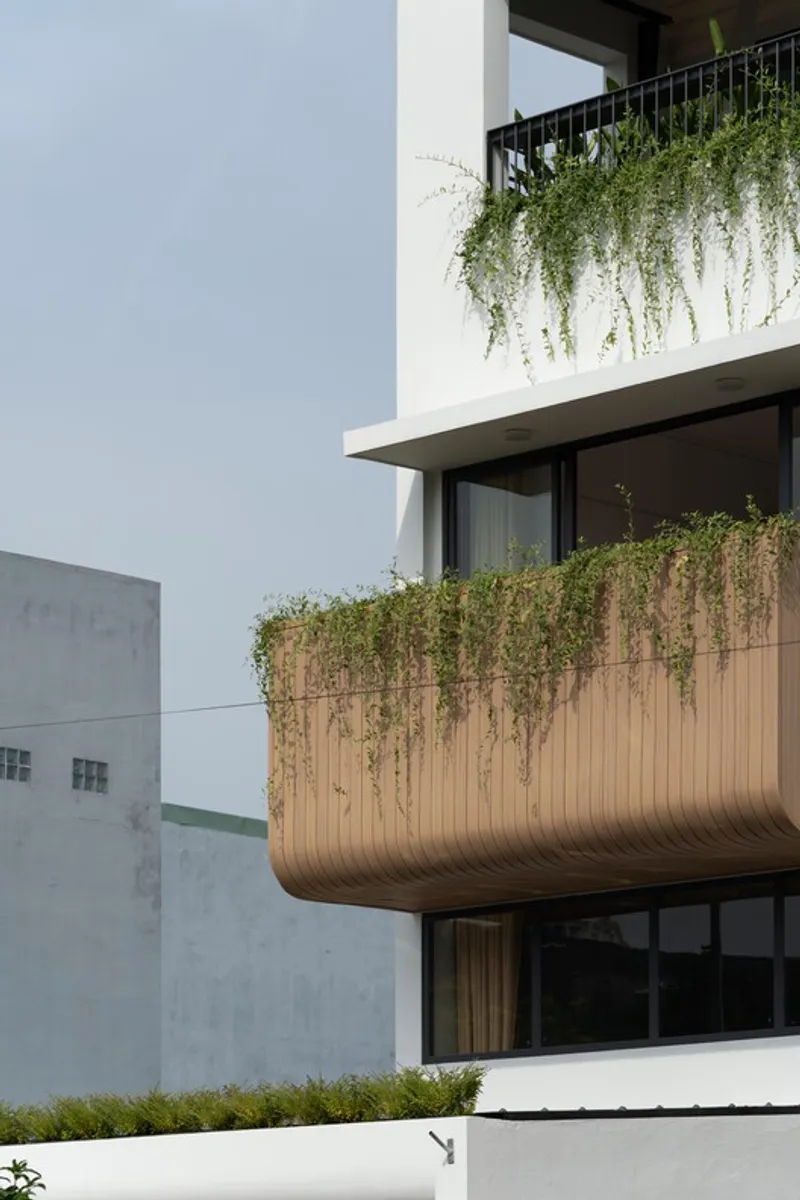
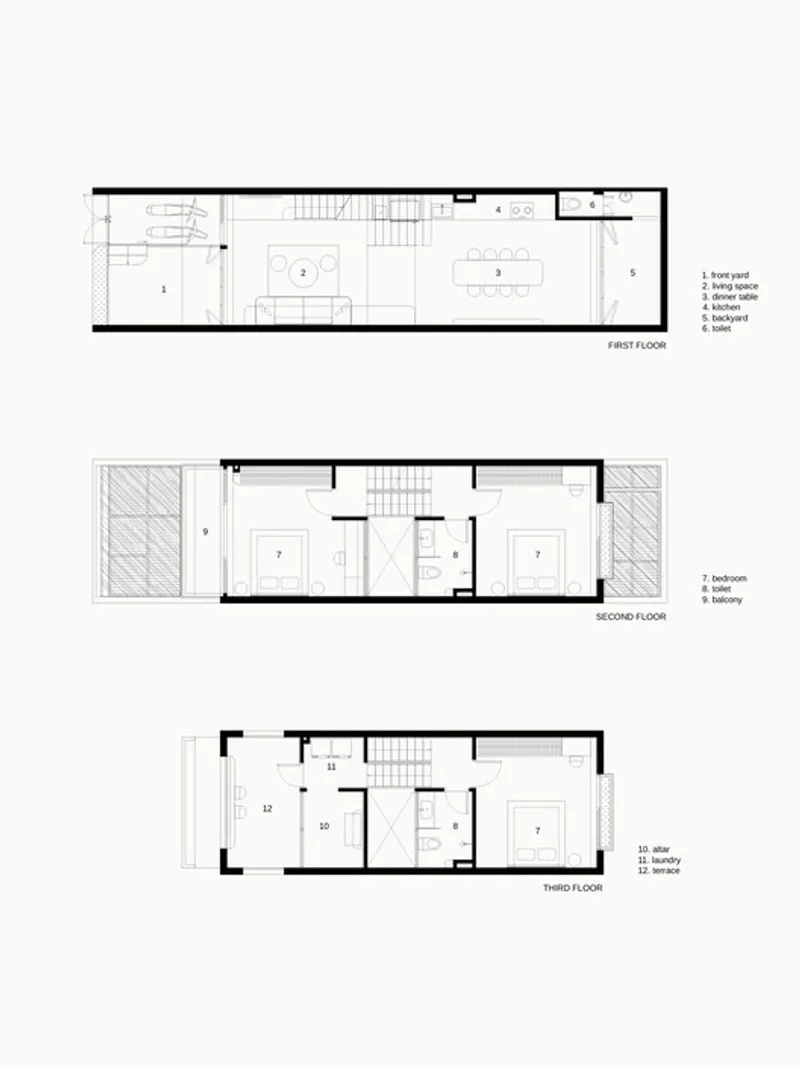
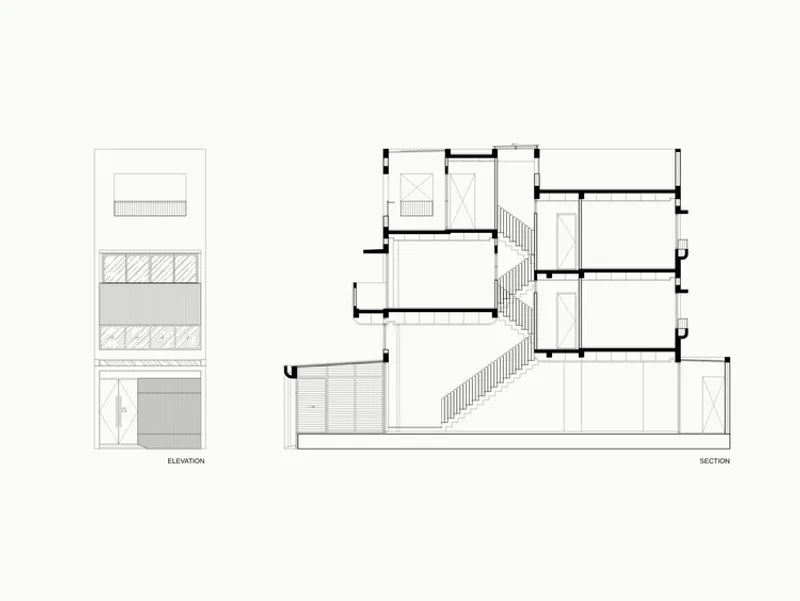
The main building volume is positioned centrally on the plot, creating two open courtyards at the front and rear. This strategy breaks the depth of the house into smaller, breathable segments and introduces natural light and air at multiple points.
These courtyards function as environmental buffers, filtering heat, noise, and dust while establishing visual connections with outdoor greenery.
Responding to Family Life
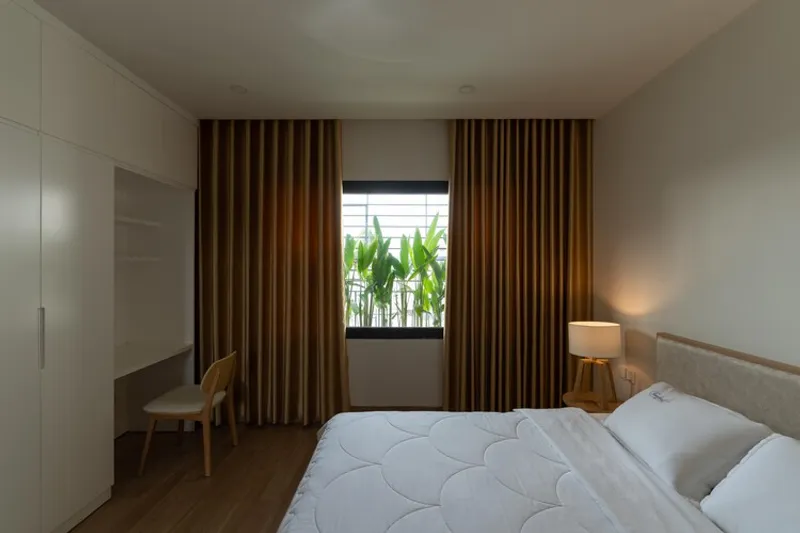
The house was designed for a family seeking both privacy and collective space. In addition to three comfortable bedrooms, the clients requested a large, open living and dining area suitable for extended family gatherings.
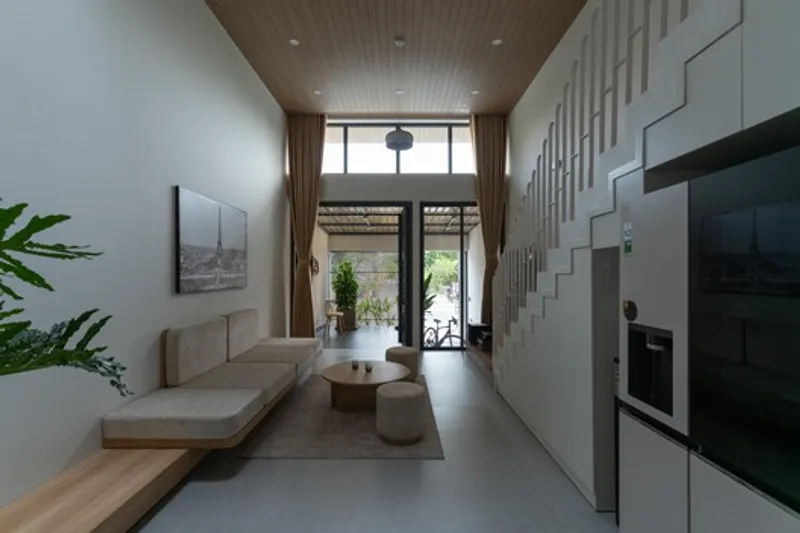
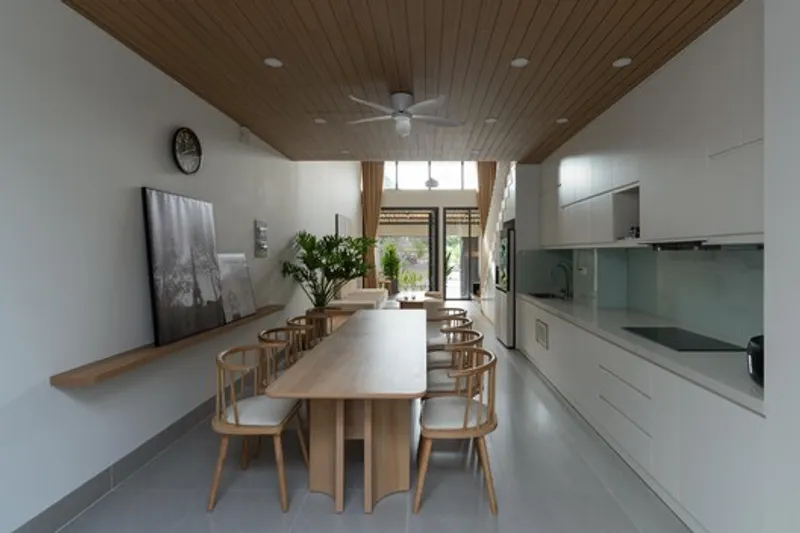
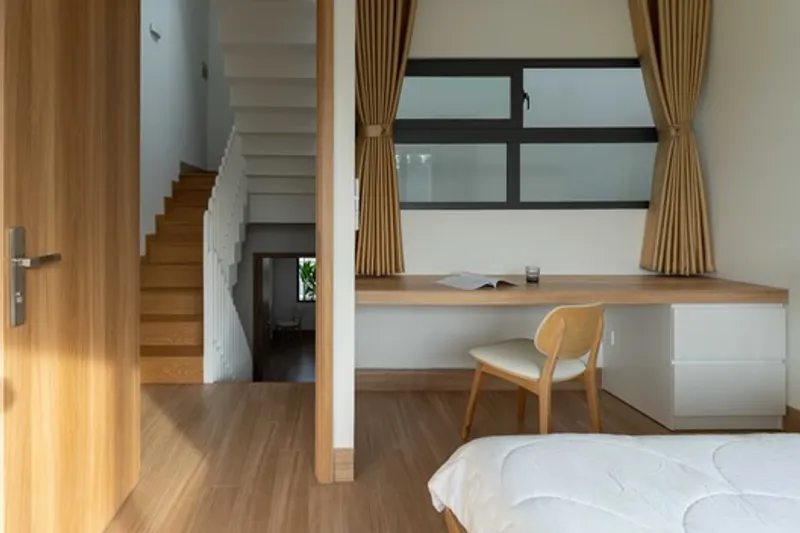
Rather than separating functions through rigid partitions, the architects adopted an open-plan layout enhanced by subtle level changes. This allows different activities to coexist while maintaining visual continuity.
Communal spaces are placed strategically to encourage interaction, while bedrooms are positioned to ensure acoustic and visual privacy.
Split Levels and Vertical Flow
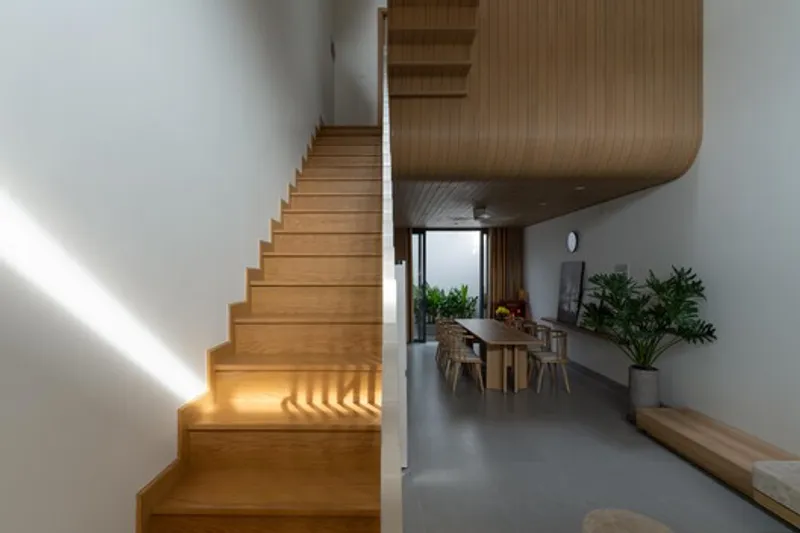
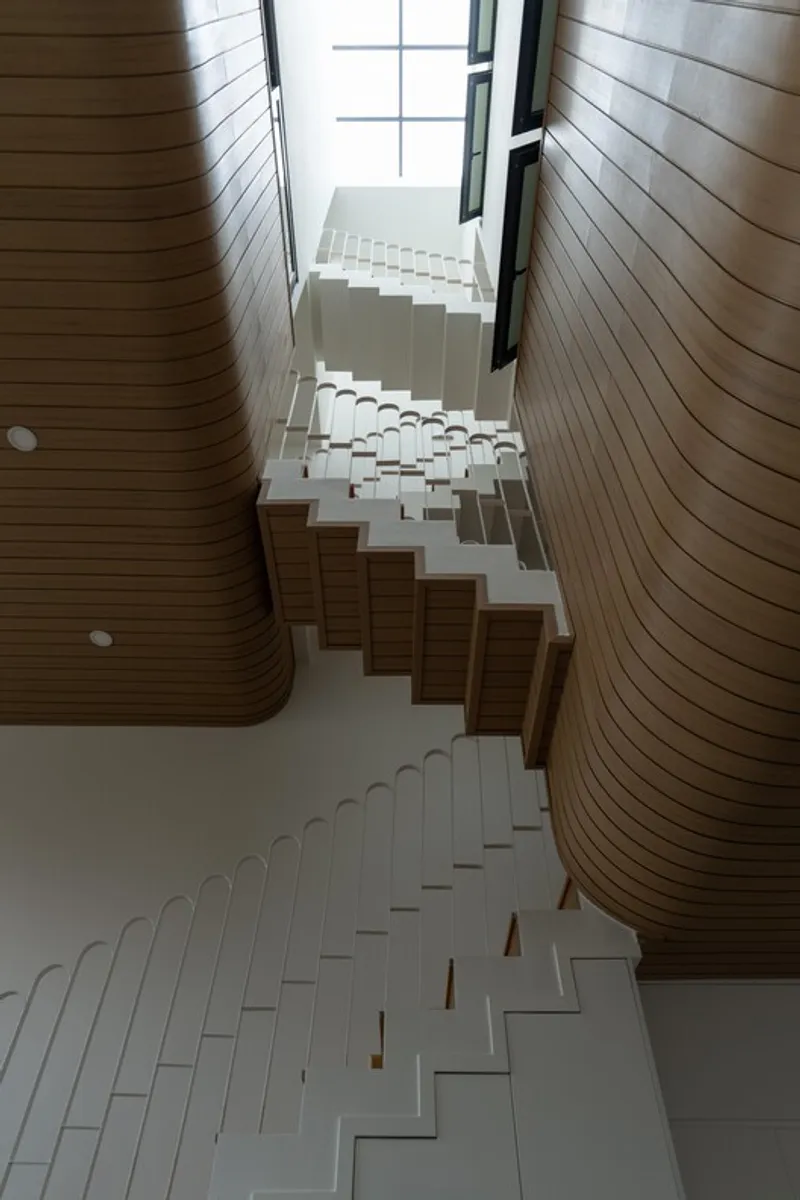
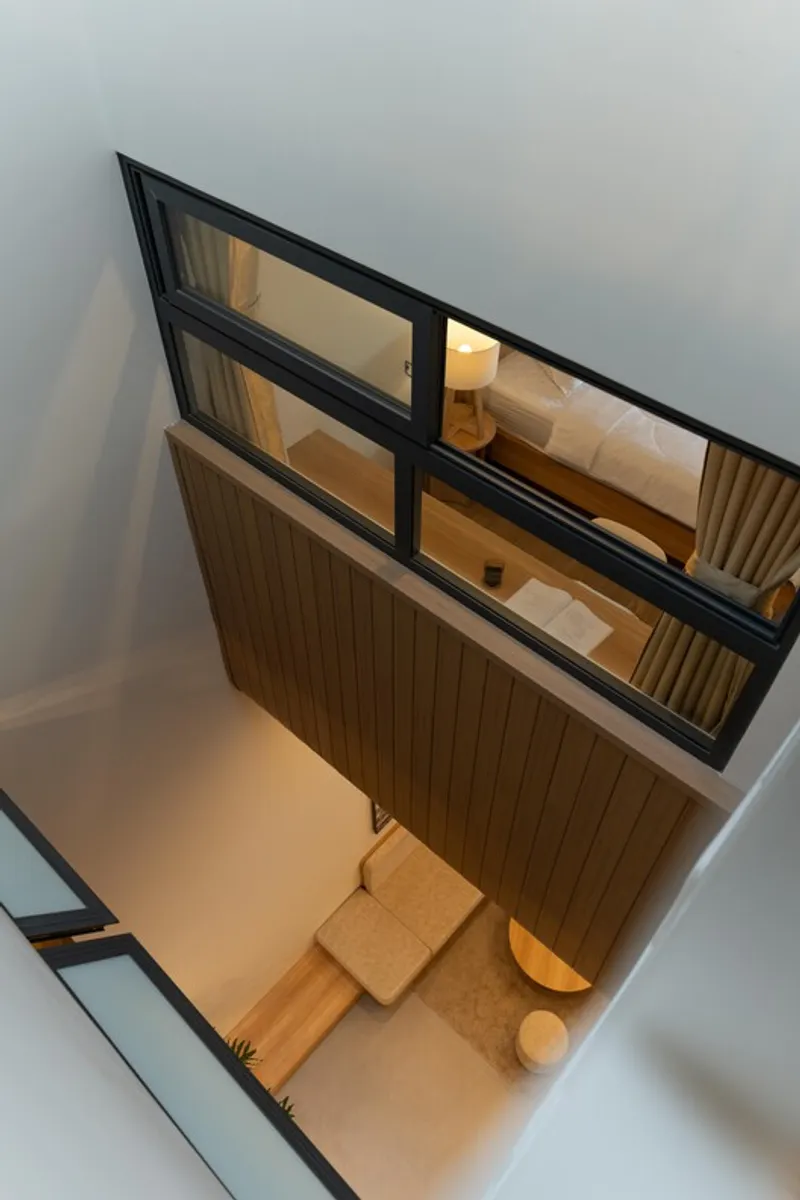
One of Nam House’s defining spatial features is its system of split-level floors. Instead of stacking rooms on conventional flat slabs, the architects introduced small vertical shifts between zones.
This sectional strategy offers several advantages. It increases spatial richness within a compact footprint, improves cross-ventilation, and allows daylight to penetrate deeper into the interior. It also creates a dynamic sense of movement, transforming circulation into an architectural experience.
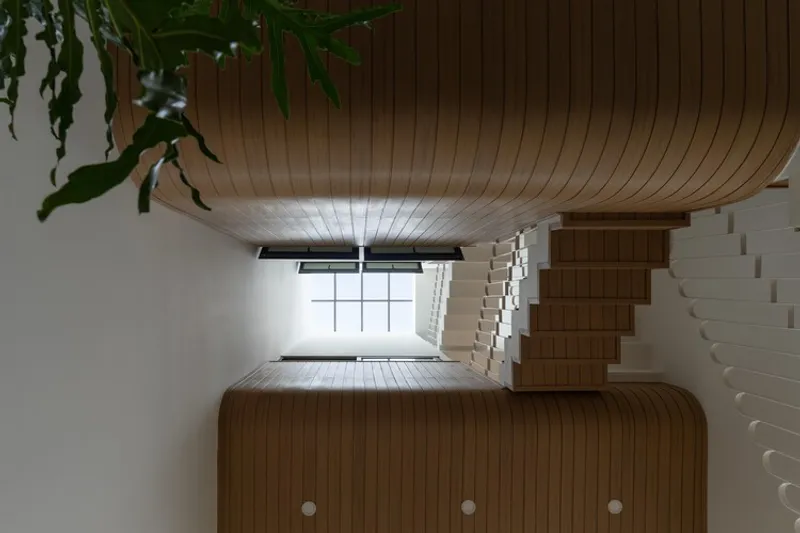
At the heart of this system is a large central skylight that acts as a vertical lung for the house. It draws daylight down through multiple levels and promotes stack ventilation, allowing warm air to escape naturally.
Organizing Circulation and Ventilation
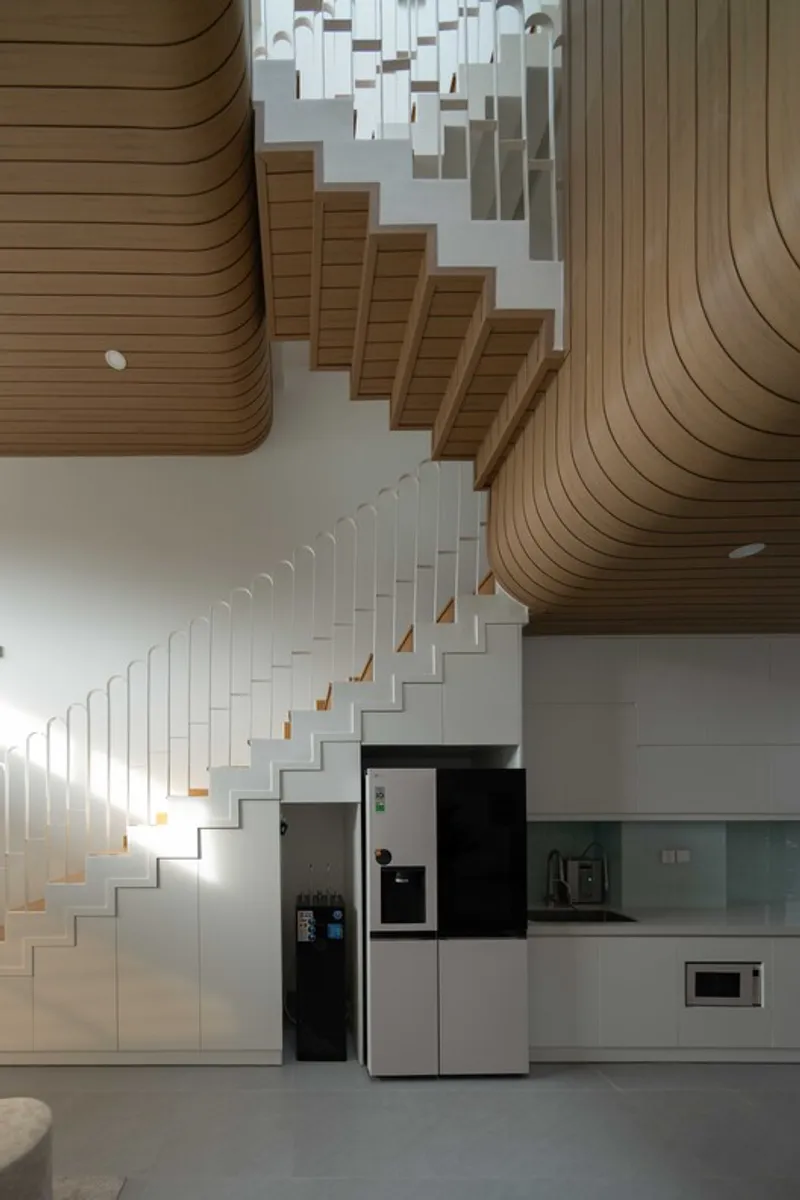
On the ground floor, the staircase and kitchen are placed along one side of the house. This linear arrangement leaves the remaining width open for airflow, enabling ventilation to travel freely from the front courtyard to the rear.
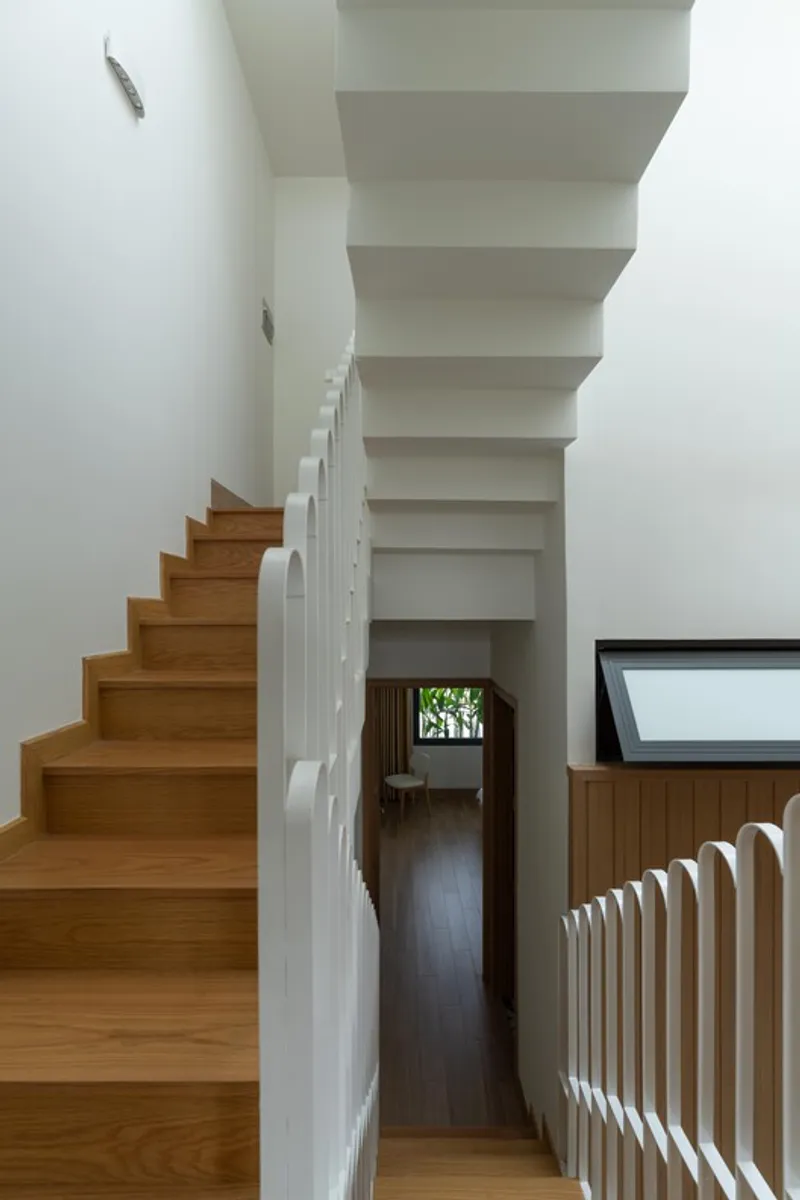
This configuration supports passive cooling, reducing reliance on mechanical systems. Throughout the house, windows, voids, and openings are carefully aligned to encourage cross-breezes and maintain thermal comfort in Vietnam’s tropical climate.
The result is an interior that feels fresh and breathable, even during hot seasons.
The Curved Wooden Ceiling
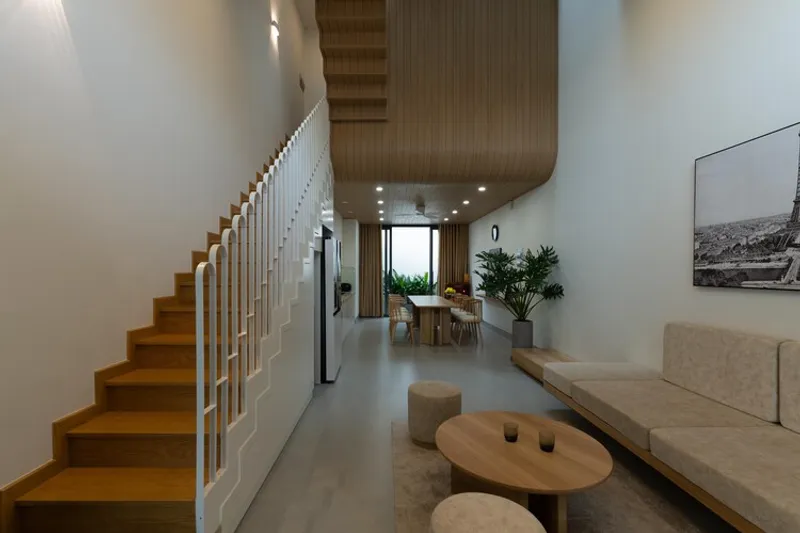
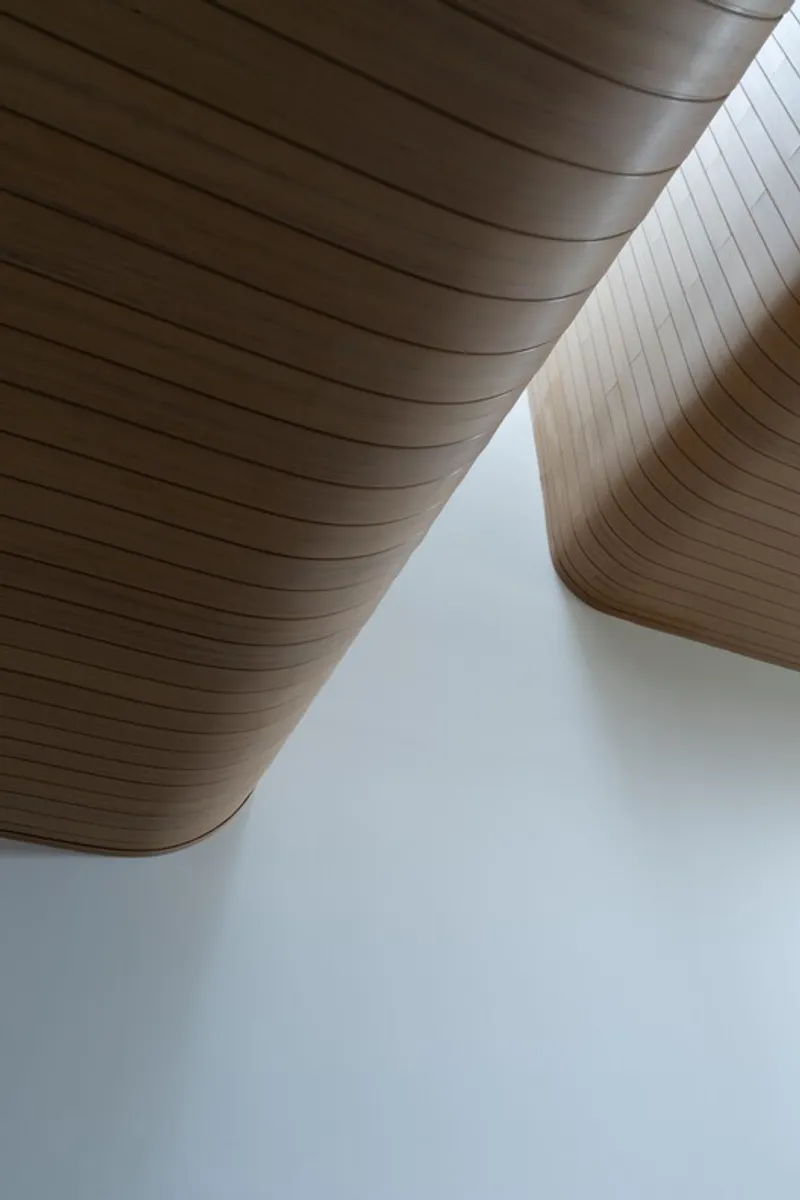
A signature element of Nam House is its curved artificial-wood ceiling, which flows continuously from the interior living spaces to the outdoor balcony. This gesture visually unifies inside and outside while softening the building’s geometry.
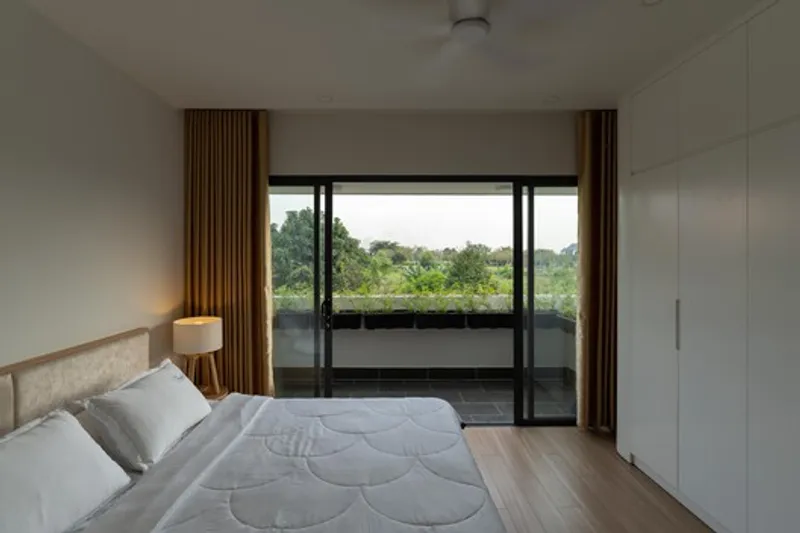
The ceiling introduces warmth and texture to the minimalist interior, counterbalancing the clean lines of walls and floors. Its curved form also enhances acoustics and creates a sense of shelter within open spaces.
By extending this element outdoors, the architects blur spatial boundaries and reinforce the house’s connection to its surroundings.
Layered Green Facades
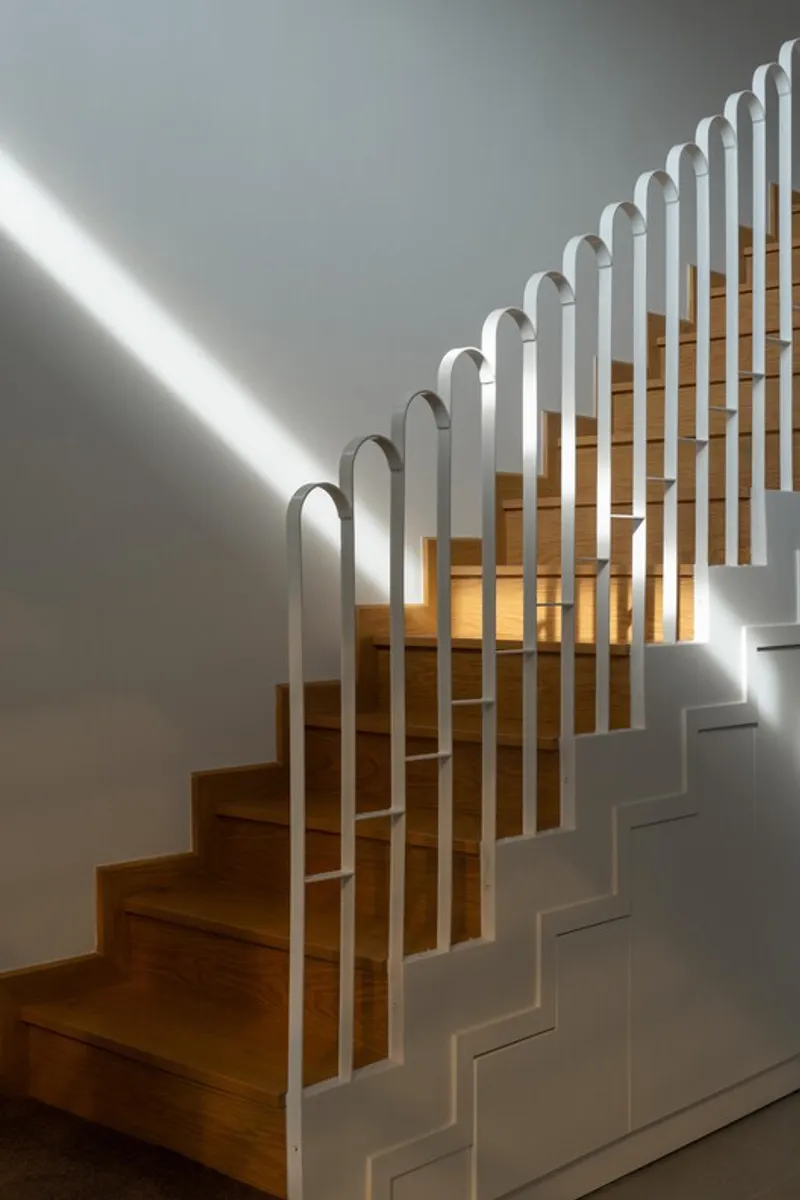
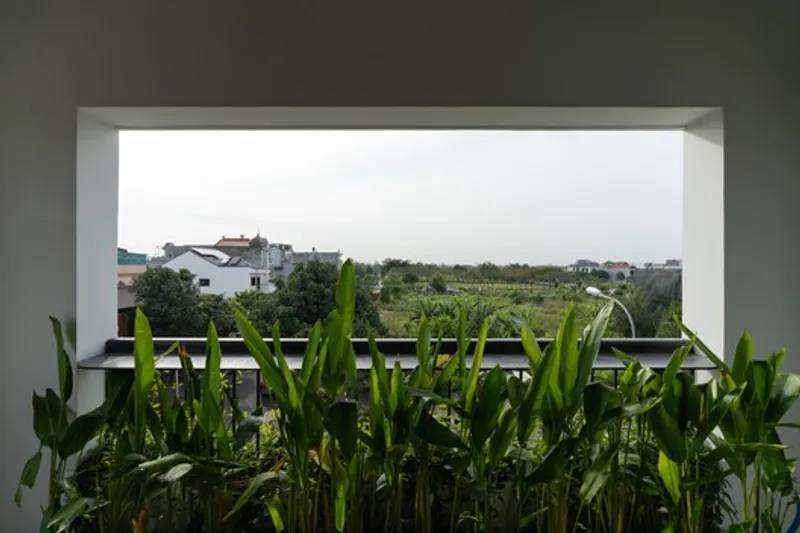
Greenery plays a central role in Nam House’s environmental strategy. The front façade incorporates layered planting at the entrance gate, balcony, and rooftop terrace, forming a vertical garden system that filters sunlight and cools incoming air.
At the rear, planting outside windows provides additional shading and privacy while enriching views from inside. These green layers act as living screens, reducing heat gain and creating a softer interface between the house and its context.
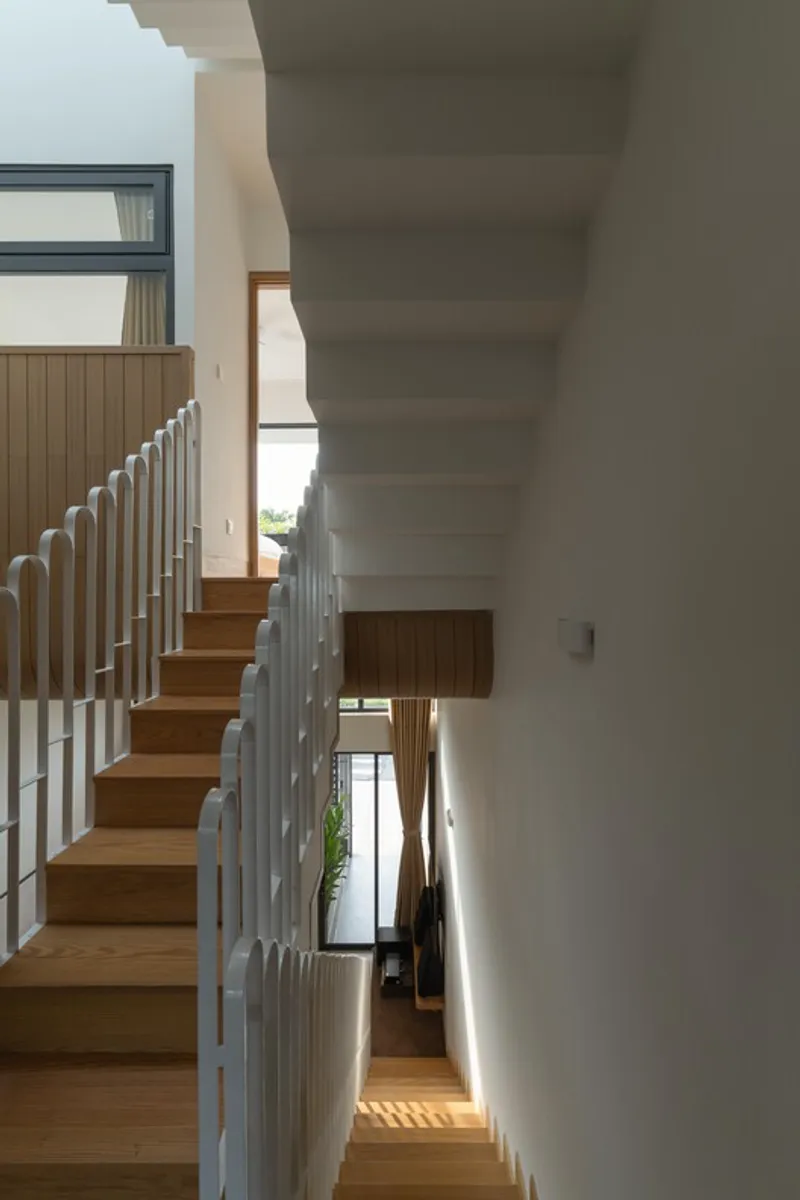
Beyond their climatic function, the plants introduce seasonal change and sensory richness, making nature an active presence in everyday life.
Material Simplicity and Warmth
The interior palette is restrained and tactile, dominated by wood finishes, neutral surfaces, and soft lighting. This simplicity allows natural light and greenery to remain the primary visual protagonists.
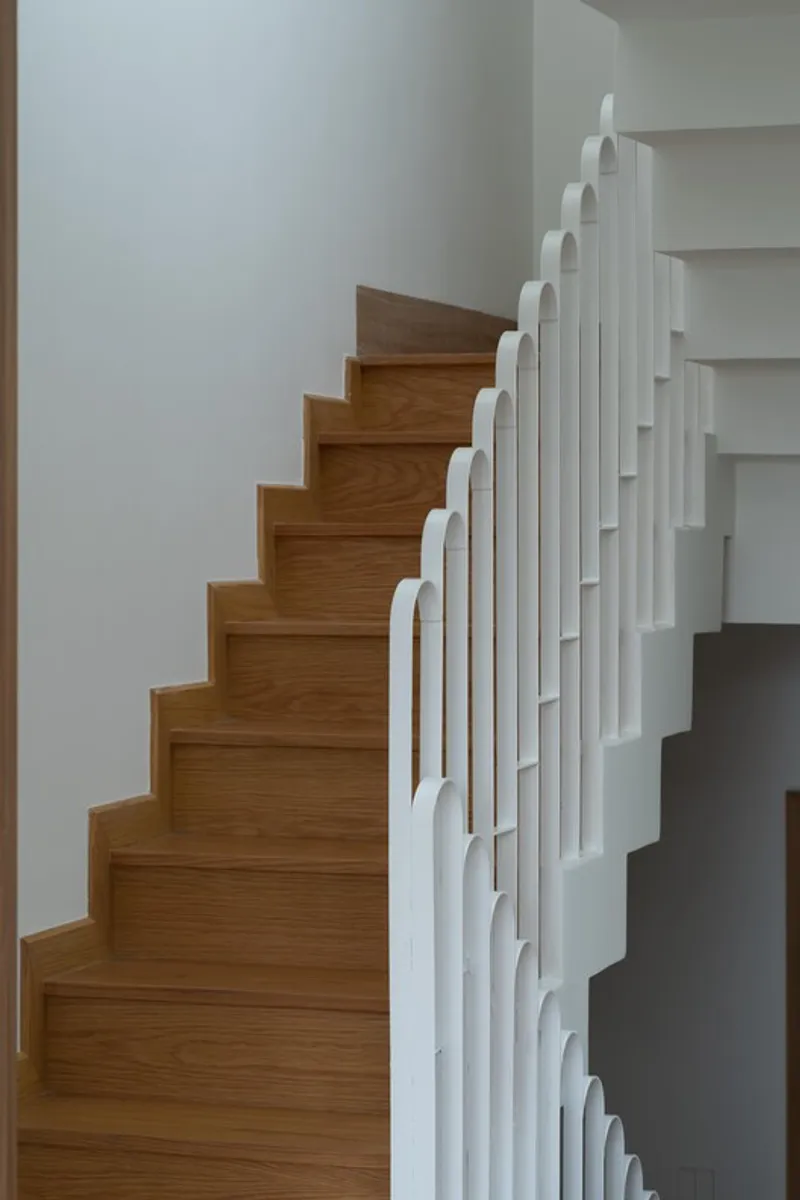
Wood is used extensively in staircases, ceilings, and built-in furniture, lending warmth and domestic comfort. Carefully integrated lighting enhances this atmosphere, highlighting textures and supporting different moods throughout the day.
Rather than relying on decorative excess, the design achieves character through proportion, material consistency, and daylight modulation.
Sustainability Through Passive Design
Sustainability in Nam House is rooted in passive strategies rather than technological display. Courtyards, skylights, split levels, and vegetation work together to regulate temperature, airflow, and lighting.
These systems minimize energy consumption while improving indoor comfort. The house remains well-lit during daytime, naturally ventilated, and thermally balanced, key qualities for long-term environmental performance.
Practicality also guided design decisions. Storage, circulation, and room sizes were carefully calibrated to match the family’s routines, ensuring that sustainability supports everyday usability.
A Contemporary Vietnamese Home
Nam House reflects a broader shift in Vietnamese residential architecture toward climate-responsive, human-scaled design. It demonstrates how modest homes can achieve spatial generosity and environmental resilience through thoughtful planning.
By combining traditional strategies, such as courtyards and cross-ventilation, with contemporary forms and materials, 90odesign creates a hybrid domestic language rooted in both culture and innovation.
The house neither isolates itself from its surroundings nor exposes itself entirely. Instead, it negotiates between openness and protection, offering a balanced model for suburban and peri-urban living.
All the Photographs are works of Quang Tran




Popular Articles
Popular articles from the community


The Ocean Hive: Sustainable Architecture for a Self-Sufficient Civilization at Sea
The Ocean Hive imagines sustainable architecture at sea, where modular habitats, algae, wave power and ocean waste sustain a growing colony.

Lunar Spiral: Space Architecture Shaped by the Mathematics of the Universe
Lunar Spiral reimagines space architecture through Fibonacci geometry, lunar regolith, levitating habitats, and self-sustaining Moon living.

Co-Life: Senior Housing Design That Reconnects Older Adults With the City
Co-Life reimagines senior housing design through healing gardens, shared streets, workshops, and a sustainable community across generations.

The Musturak Paradise: Senior Living Architecture for a Connected Future in Temara, Morocco
The Musturak Paradise reimagines senior living architecture in Temara via private homes, social spaces, culture, community, and shared care.


Similar Reads
You might also enjoy these articles


Hodi-Mandai Geram
Project Function: Preservation and revitalization of the Intangible heritage and socio-spatial identity of the Hodi by Housing, Cultural Memory Center, Sacred Grove, landscape, local tourism economy


Olio Towers: A Mid-Rise for Performers That Fuses Housing, Rehearsal, and Stage
Located blocks from Houston's Theater District, this modular tower stacks living units around a central performance atrium.

Oasis: Modular Green Housing Carved into Dhaka's Urban Fabric
A shortlisted Plugin Housing entry reclaims unauthorized settlements in Dhaka with stepped concrete volumes, green roofs, and ventilation-driven design.

Black Hole: A Floating Megastructure for the Post-Physical Era
Emiliano Mazzarotto envisions a spherical, self-scaling arena where e-sports, digital hotels, and holographic stadiums replace traditional public space.


Explore Housing Competitions
Discover active competitions in this discipline



Challenge to reimagine the Iron Throne


Photograph architecture without architects


Illustrate the lost glory of Angkor Wat - Render Challenge


Design challenge to reuse E-waste
Comments (0)
Please login or sign up to add comments
No comments yet. Be the first to comment!