
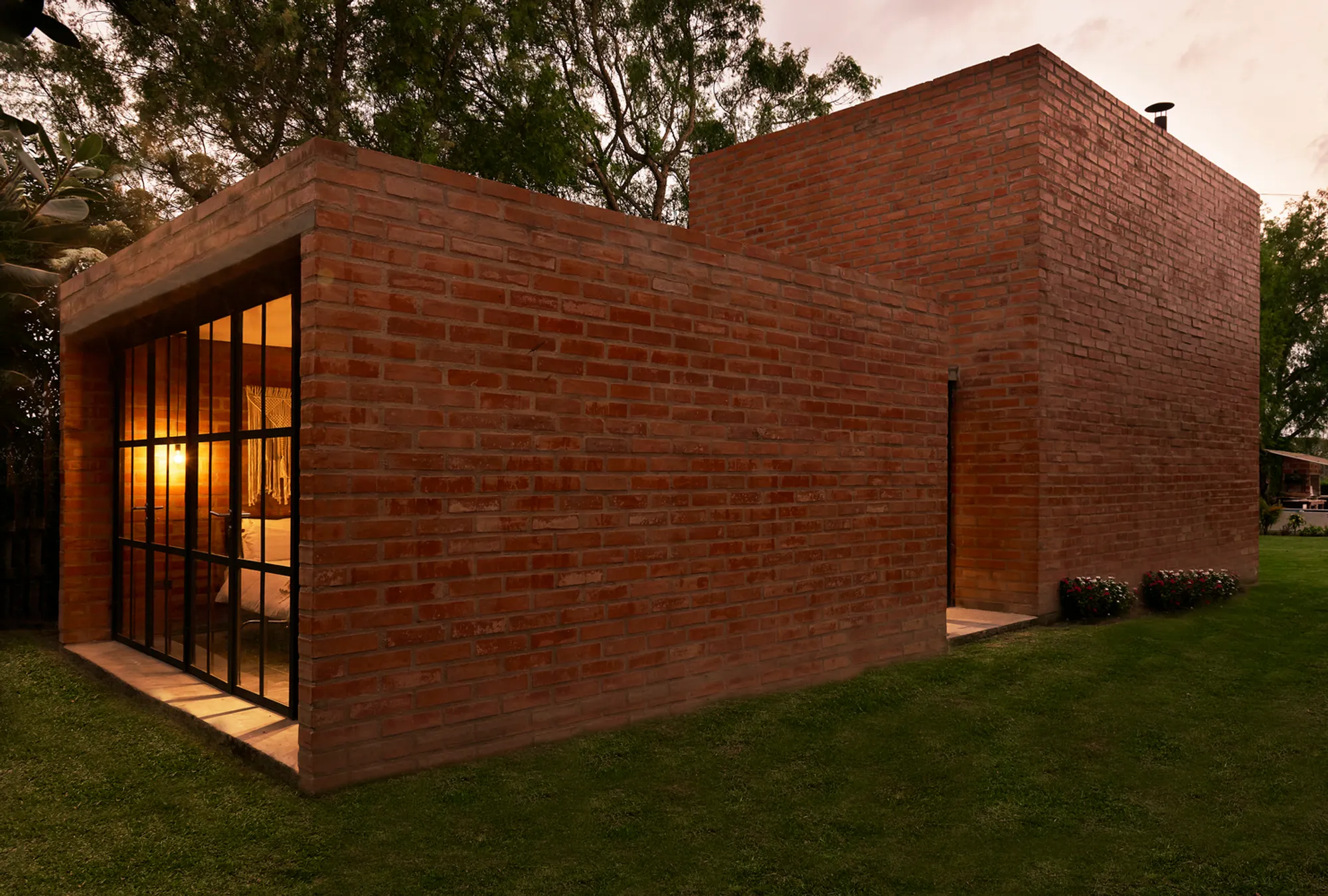
Napoles House by PJCArchitecture: A Sustainable Retreat in Quito, Ecuador
Napoles House by PJCArchitecture is a 700 ft² sustainable Ecuadorian retreat, blending local materials, passive solar design, and light-filled, open interiors.


Nestled in the scenic hills just an hour outside Quito, Ecuador, Napoles House by PJCArchitecture is a masterclass in compact, sustainable design. At only 700 square feet (65 square meters), this weekend retreat embraces simplicity while celebrating the vernacular architecture of its surroundings. Completed in 2022, the home merges local materials, skilled craftsmanship, and thoughtful design strategies to create a functional yet visually striking hideaway.
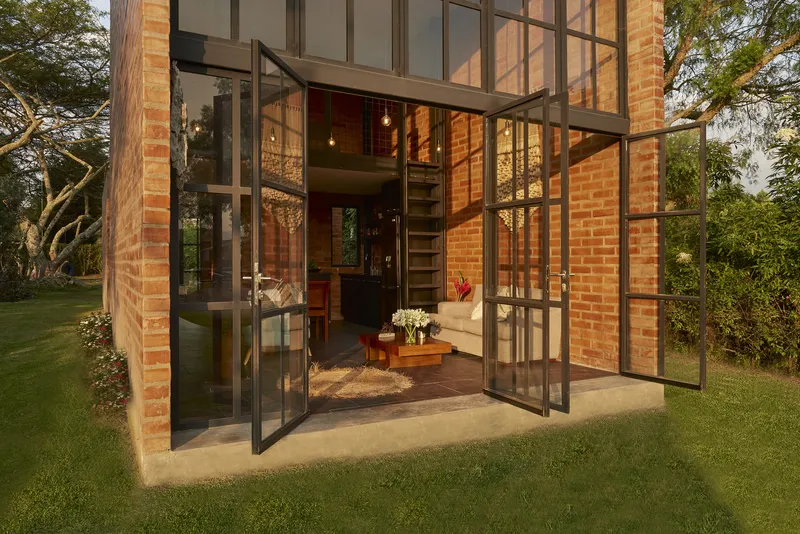
Minimalist Design with Local Materials
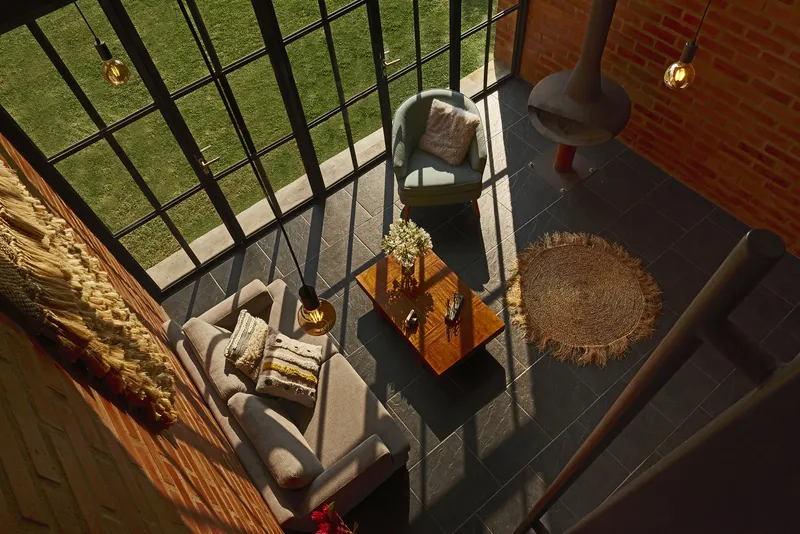
The residence prominently features four primary materials: locally sourced brick, steel, concrete, and glass. These materials interact seamlessly through clean, geometric forms, creating spaces illuminated by a delicate play of natural light and shadow. Beyond material choice, the project employed local craftsmen and a design-build team from Make Estudio, the Ecuadorian division of PJCArchitecture, ensuring that the construction process strengthened local expertise and celebrated traditional building techniques.
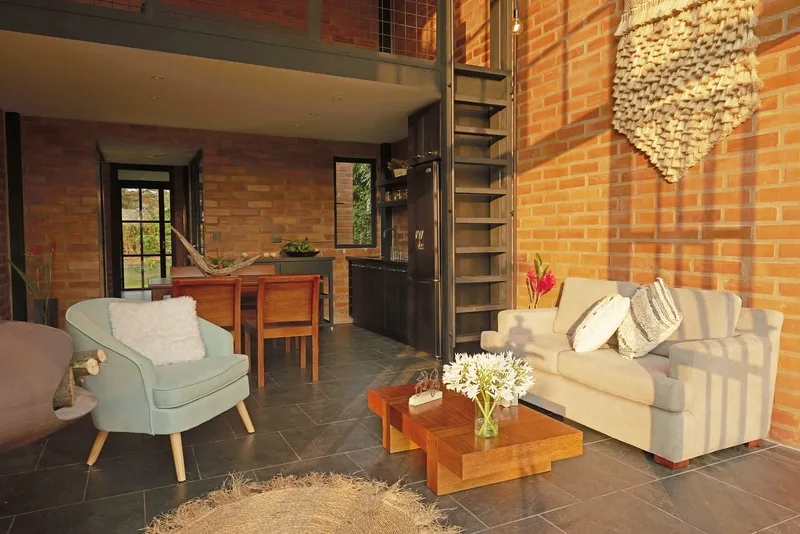
Compact Yet Open: Spatial Planning
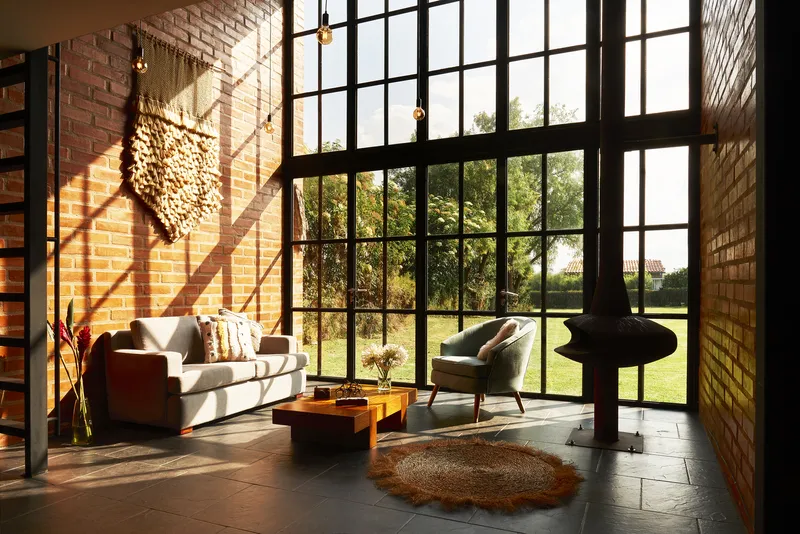
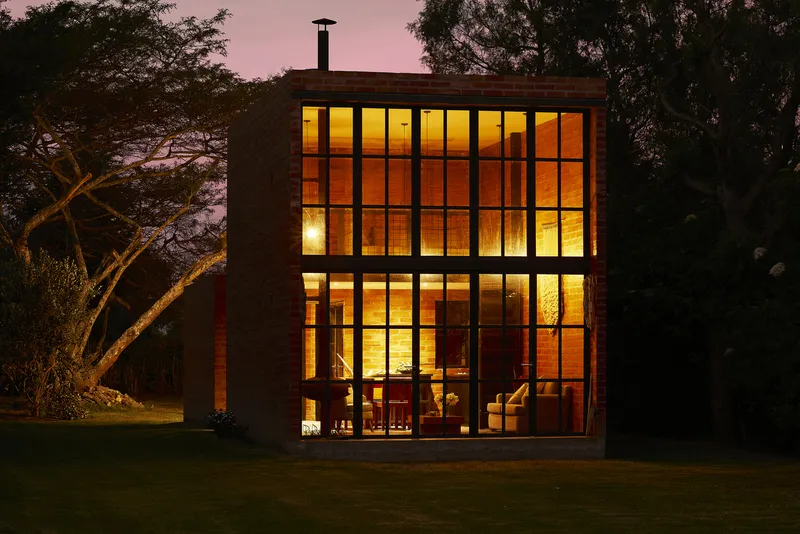
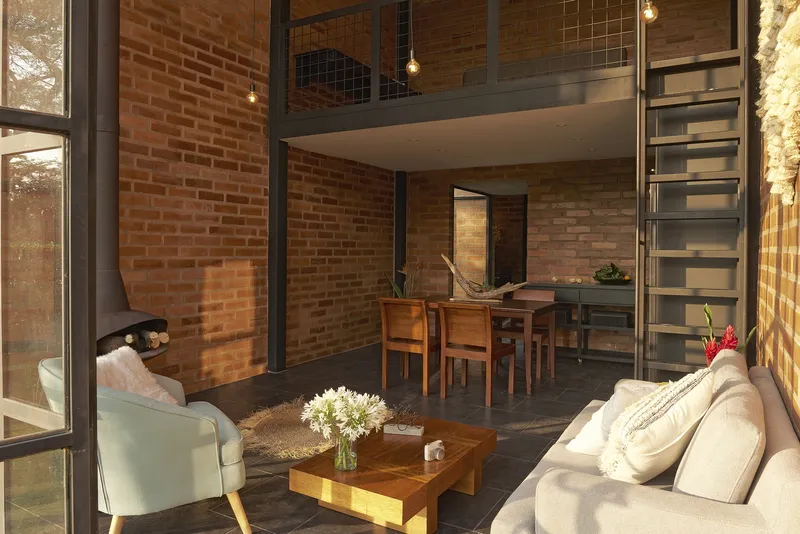
Despite its modest footprint, Napoles House cleverly balances intimacy and openness. The home is divided into two simple forms connected by a glass bridge, incorporating one bedroom, one bathroom, and a flexible loft space that can serve as an office or guest area. By conceptualizing the design in both plan and section, PJCArchitecture achieved a double-height living area, extending the interior and framing panoramic views of the nearby mountains and the city of Quito.
The main structure hosts the living room, dining area, kitchen, and loft, all accentuated by floor-to-ceiling custom glass and metal doors. These elements blur the line between indoors and outdoors, optimizing natural light, enhancing ventilation, and creating a sense of spaciousness. A sculptural bronze fireplace serves as a centerpiece, adding warmth and a focal point to the living area.
Innovative Bathroom and Privacy Features
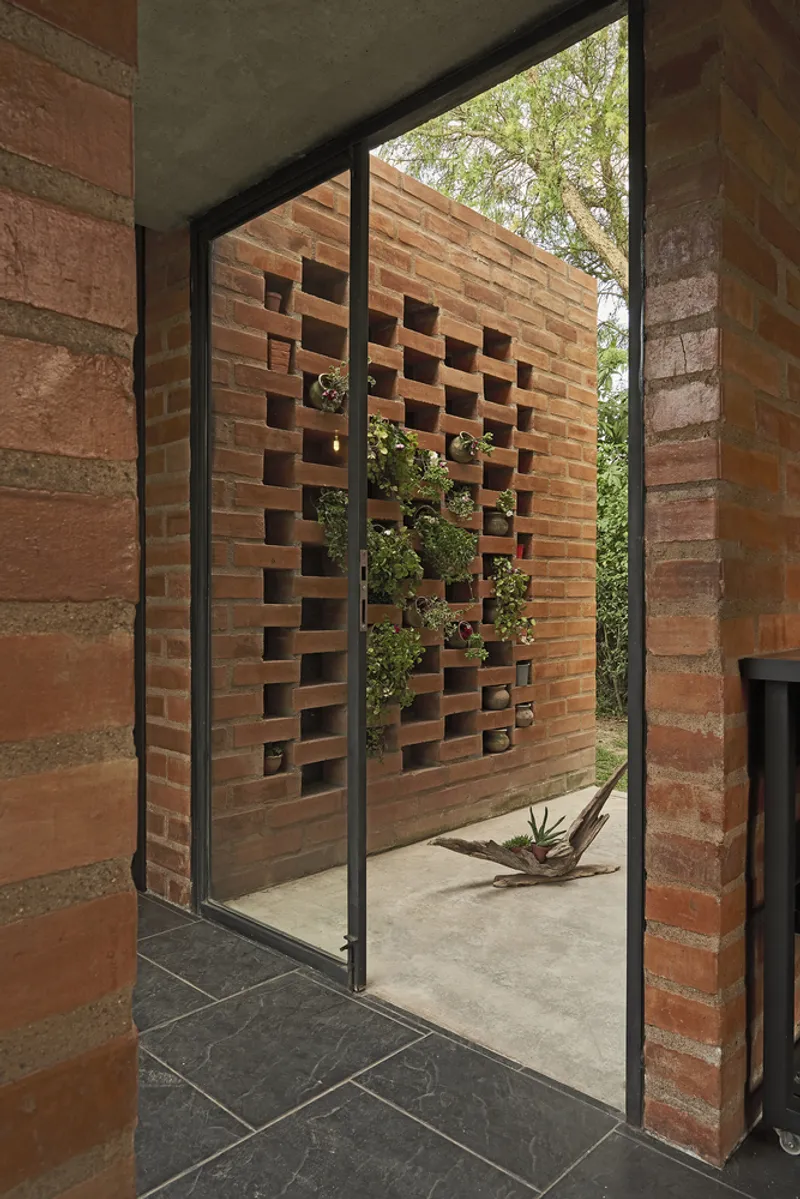
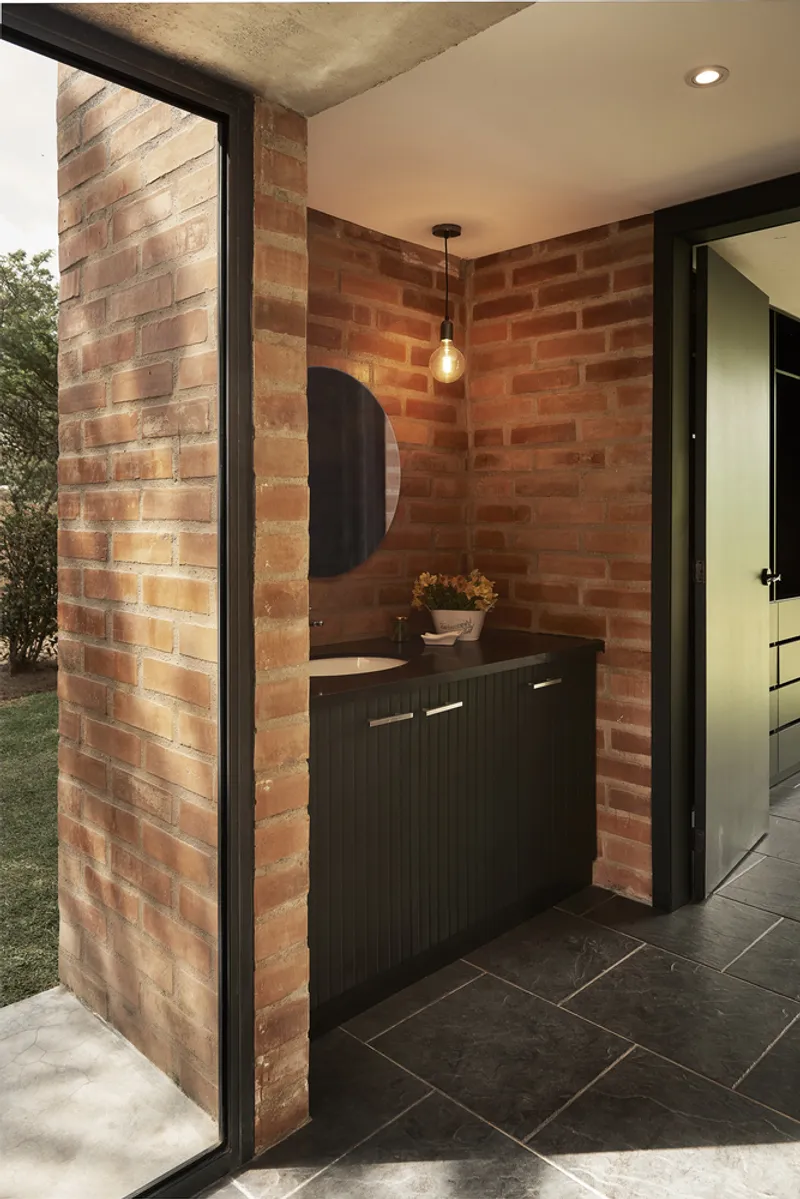
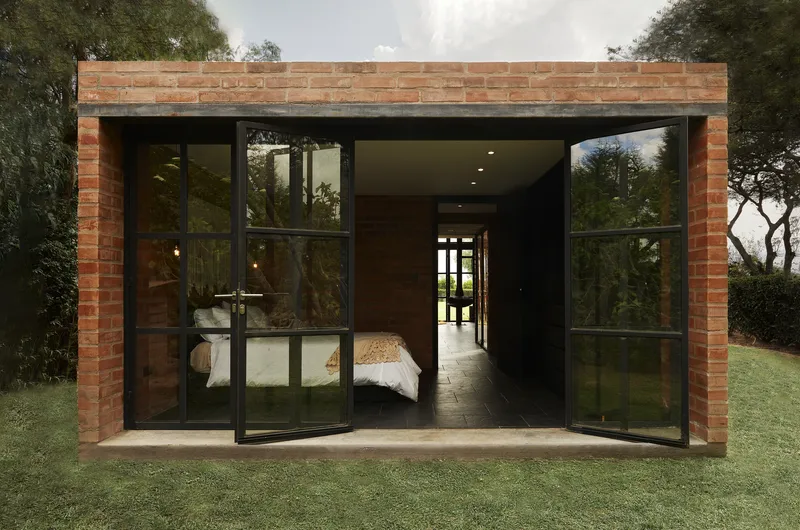
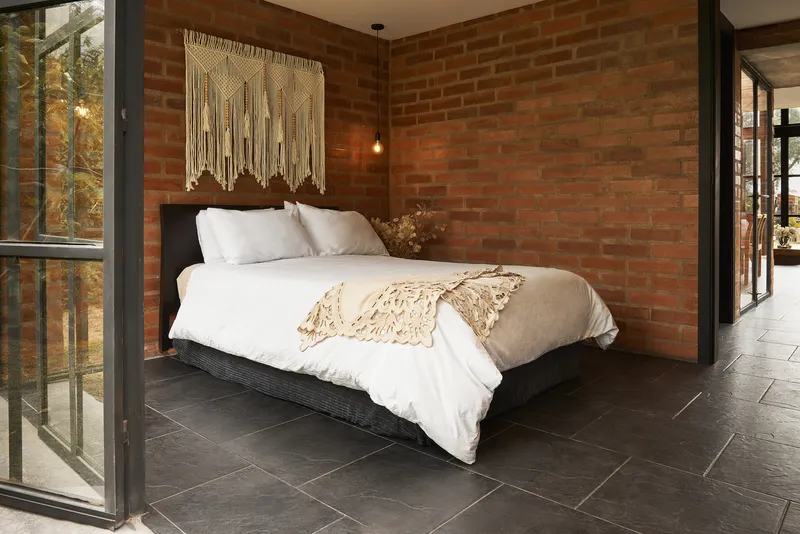
The smaller structure houses the bedroom and bathroom, designed for both functionality and aesthetic appeal. The bathroom is cleverly divided into two zones—a private section for the shower and toilet, and an open sink area. An innovative perforated brick wall with glass inserts provides a unique interplay of light and shadow while maintaining privacy. On the exterior, a perforated brick façade integrated with plantings further enhances privacy while introducing greenery that softens the architectural presence.
Passive Solar Design and Climate Responsiveness
Situated at 2,800 meters above sea level, the Napoles House experiences highly variable weather, from mild mornings to hot midday temperatures. To address this, PJCArchitecture incorporated a passive solar design strategy. Brick walls absorb daytime heat and release it during cooler evenings, while strategically positioned operable windows and doors enable cross-ventilation, eliminating the need for air conditioning or heating. These strategies provide comfort throughout the year while maintaining energy efficiency and environmental responsibility.
Integration of Craftsmanship and Locale
Throughout the design and construction process, local craftsmen played an integral role, contributing to both the technical execution and the creative evolution of the project. This collaborative, on-site communication ensured that the final home is not only a comfortable retreat but also environmentally responsive and deeply connected to its local context.
All photographs are works of Juank Parades Photography



Popular Articles
Popular articles from the community


Riyadh For All: Intergenerational Urban Design for Active Aging in Rabat
Riyadh For All reimagines urban design in Rabat with intergenerational co-living, adaptive courtyards, and Moroccan cultural exchange today.

Co-life: Sustainable Architecture for Age-Friendly Community Living
Co-life reimagines sustainable architecture for seniors through courtyards, rammed earth, shared gardens, and spaces designed for belonging.

Conexión: Biophilic Design Reimagines High-Rise Living in Hong Kong
Conexión reimagines high-rise living in Hong Kong through biophilic design, green facades, shared spaces, daylight, water and nature within.

The Musturak Paradise: Senior Living Architecture for a Connected Future in Temara, Morocco
The Musturak Paradise reimagines senior living architecture in Temara via private homes, social spaces, culture, community, and shared care.


Similar Reads
You might also enjoy these articles


Hodi-Mandai Geram
Project Function: Preservation and revitalization of the Intangible heritage and socio-spatial identity of the Hodi by Housing, Cultural Memory Center, Sacred Grove, landscape, local tourism economy


Olio Towers: A Mid-Rise for Performers That Fuses Housing, Rehearsal, and Stage
Located blocks from Houston's Theater District, this modular tower stacks living units around a central performance atrium.

Oasis: Modular Green Housing Carved into Dhaka's Urban Fabric
A shortlisted Plugin Housing entry reclaims unauthorized settlements in Dhaka with stepped concrete volumes, green roofs, and ventilation-driven design.

Black Hole: A Floating Megastructure for the Post-Physical Era
Emiliano Mazzarotto envisions a spherical, self-scaling arena where e-sports, digital hotels, and holographic stadiums replace traditional public space.


Explore Housing Competitions
Discover active competitions in this discipline



Challenge to reimagine the Iron Throne


Photograph architecture without architects


Illustrate the lost glory of Angkor Wat - Render Challenge


Design challenge to reuse E-waste
Comments (0)
Please login or sign up to add comments
No comments yet. Be the first to comment!