

Negrelli Bridge by ARGE Negrelli: Industrial Elegance and Urban Connectivity in Zurich
Negrelli Bridge by ARGE Negrelli in Zurich blends industrial warmth, sweeping curves, textile-effect balustrades, panoramic city views, and seamless urban connectivity.


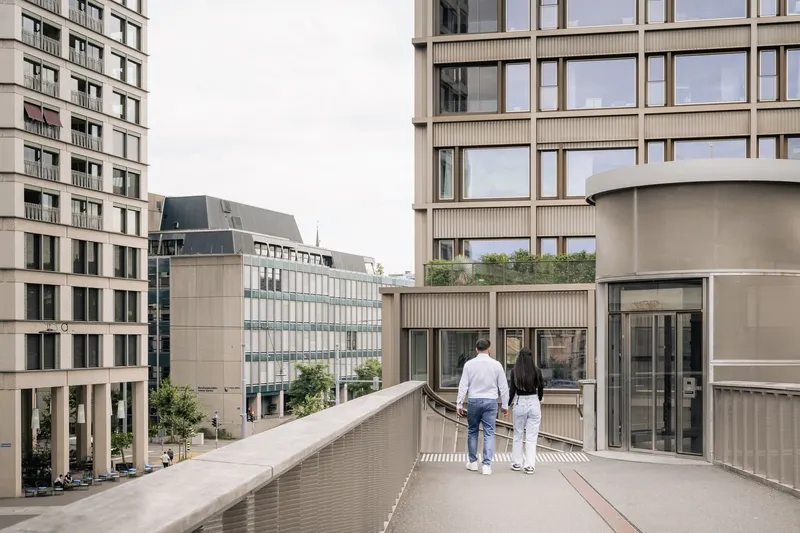
Located in the heart of Zurich, Switzerland, the Negrelli Bridge designed by ARGE Negrelli exemplifies a masterful fusion of industrial character and urban warmth. Completed in 2021, this footbridge spans the dense railway network, linking city districts 4 and 5 while offering a unique vantage point over Zurich’s urban fabric. Despite its industrial materials, the bridge exudes a welcoming atmosphere, embodying what the architects describe as “industrial warmth.”
Urban Integration and Panoramic Views
As Zurich undergoes densification along the Zollstrasse and Europaallee developments, the Negrelli Bridge provides an essential pedestrian link over the open track field. Its elevated position offers unobstructed panoramic views of the surrounding cityscape, creating a rare urban pause where pedestrians can experience the rhythm of trains against the backdrop of Zurich’s concrete and architectural textures. The bridge serves as both a functional pathway and a visual landmark, standing out amidst the flickering activity of the railway installations.
Architectural Design and Movement
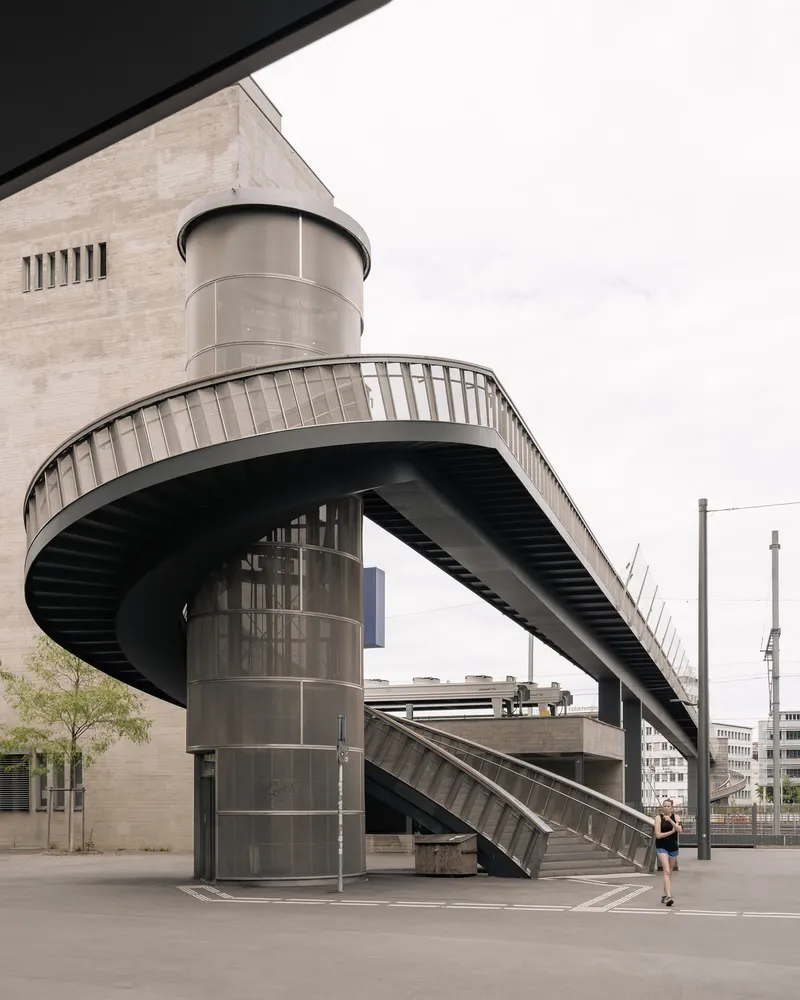
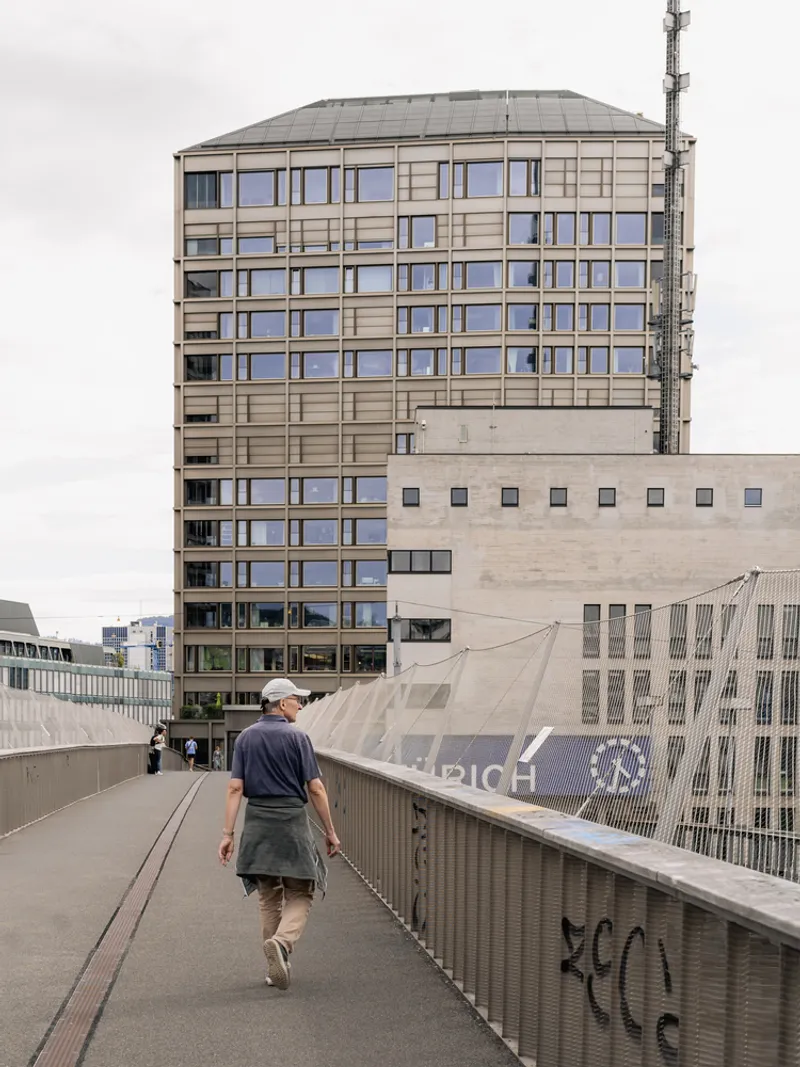
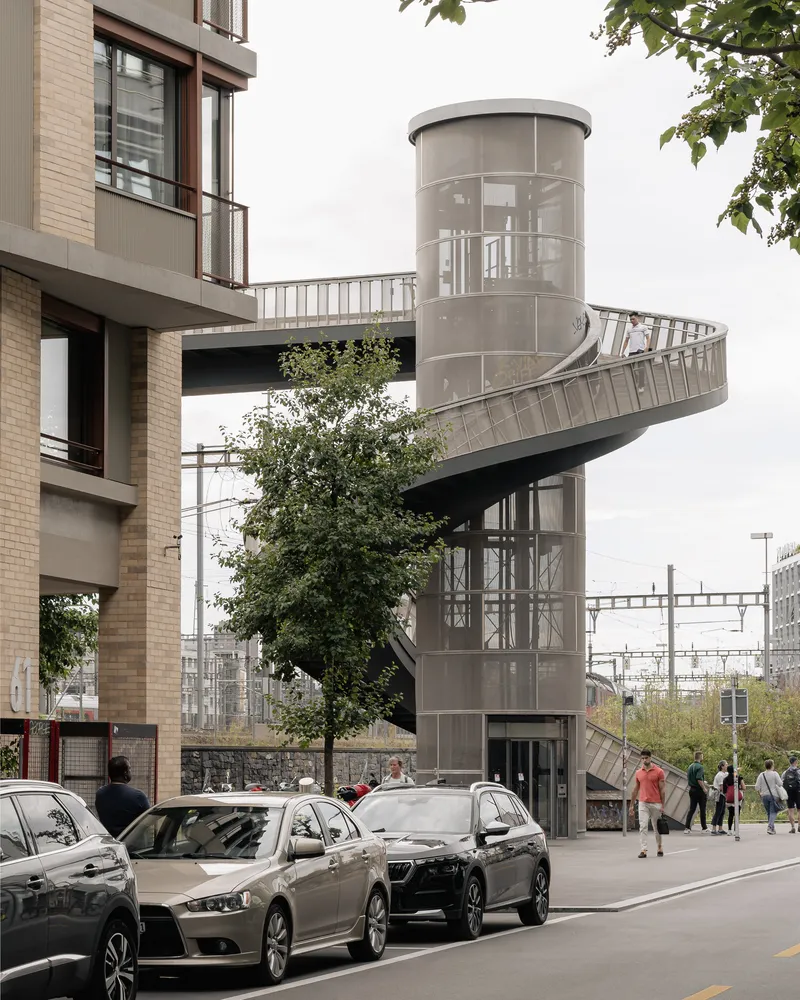
The bridge’s design emphasizes fluidity and connection. The lateral bridge brow integrates seamlessly with the curved cheeks of the spiral staircases, forming a sweeping arch that symbolically unites the city’s two sides. The bridge walkway curves gracefully around the cylindrical lift towers, freeing pedestrians from the rigid cubic constraints of neighboring structures. This geometry maximizes open space on both ends, enhancing urban circulation while emphasizing the bridge’s sculptural presence.
Innovative Balustrade and Lighting
A distinctive feature of the bridge is its textile-effect balustrade. Dense metal mesh woven between upper and lower chord elements creates a fabric-like appearance, simultaneously providing safety and visual lightness. The lift towers are accentuated through fabric-like paneling, making them visually prominent yet unobtrusive within the urban space.
Lighting design on the Negrelli Bridge is both functional and atmospheric. Integrated handrail lighting alternates between inward and outward distribution, providing warm, uniform illumination for pedestrians while preventing glare for passing trains. External grazing lights highlight the undulating parapet and lift towers, creating a harmonious nocturnal presence and enhancing the bridge’s landmark quality.


Structural Elegance and User Comfort
The underside of the bridge features a continuous central girder, supported by double columns aligned with the descending railway ramps. Spiral staircases contribute structural resilience, while the lift towers remain visually detached for aesthetic clarity. Steps are designed with gentle inclines and wide landings to ensure comfortable pedestrian flow, and the bridge itself slopes slightly toward the center for effective drainage.
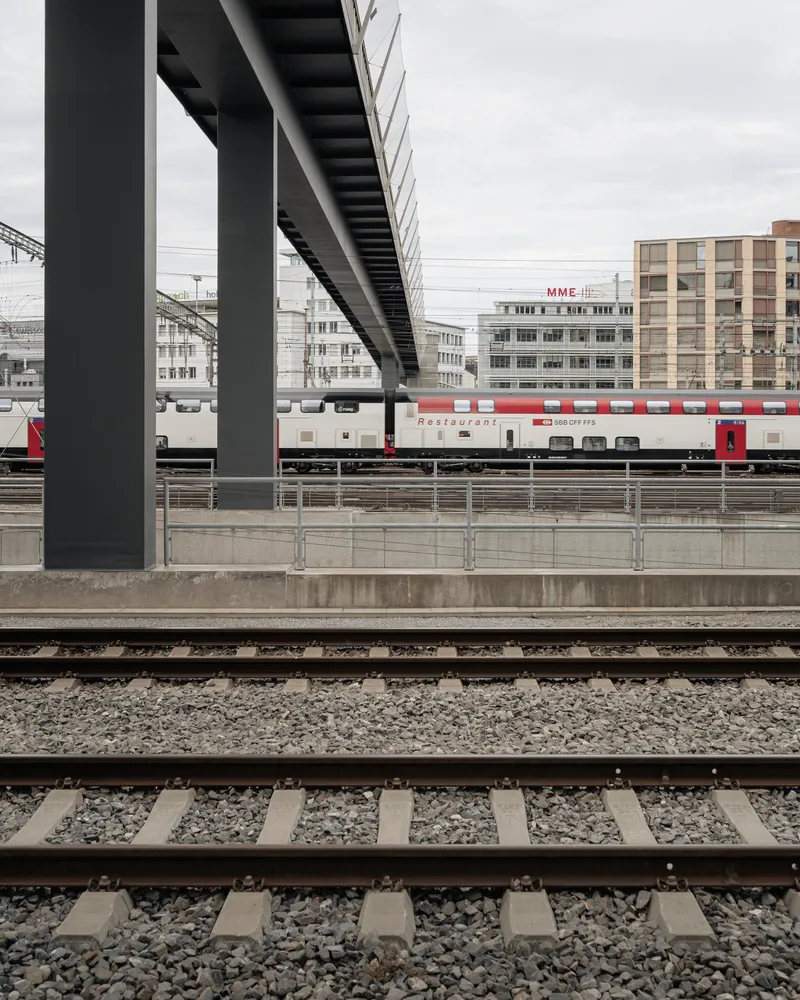
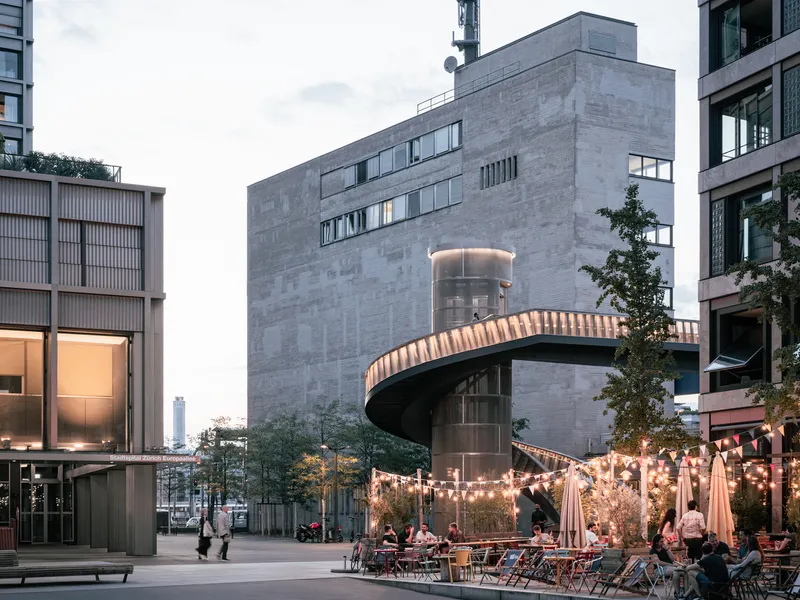
The Negrelli Bridge is more than a pedestrian crossing: it is a symbol of urban connectivity, industrial beauty, and thoughtful design. By balancing functional infrastructure with sculptural elegance, ARGE Negrelli has created a space where movement, observation, and architectural expression converge. From sunset vistas over accelerating trains to the tactile experience of its textile balustrades, the bridge offers a distinctly Zurich experience, proving that industrial environments can be warm, inviting, and visually captivating.
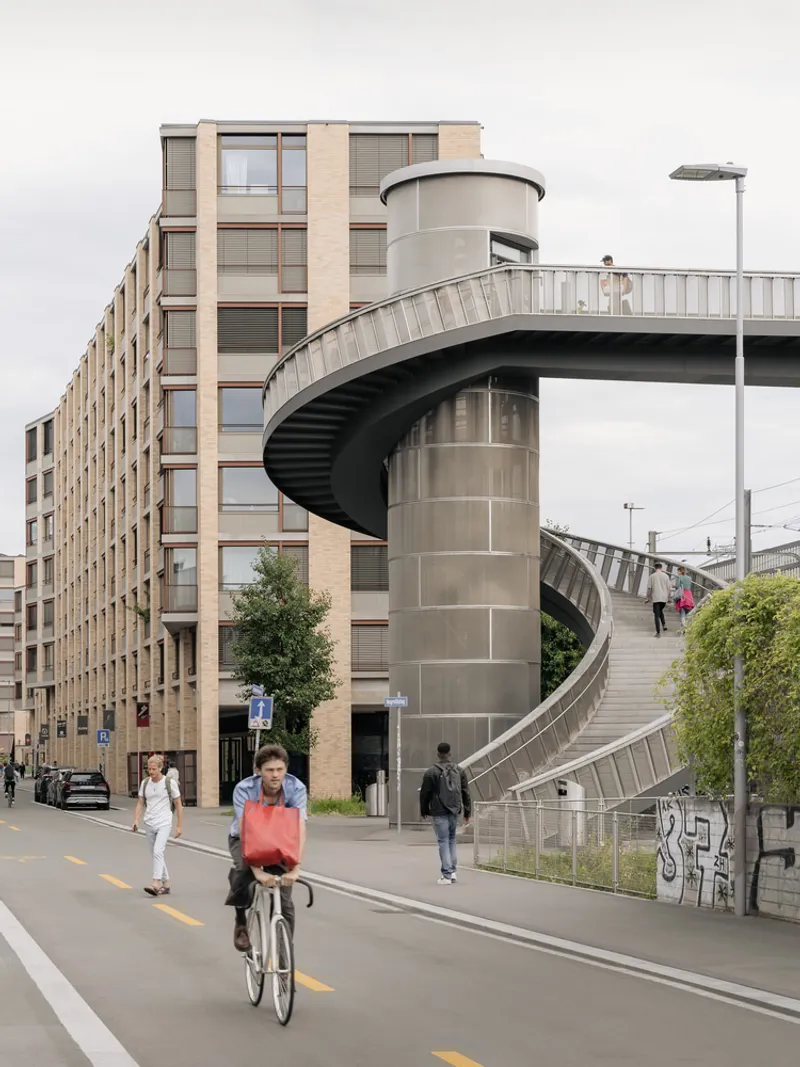

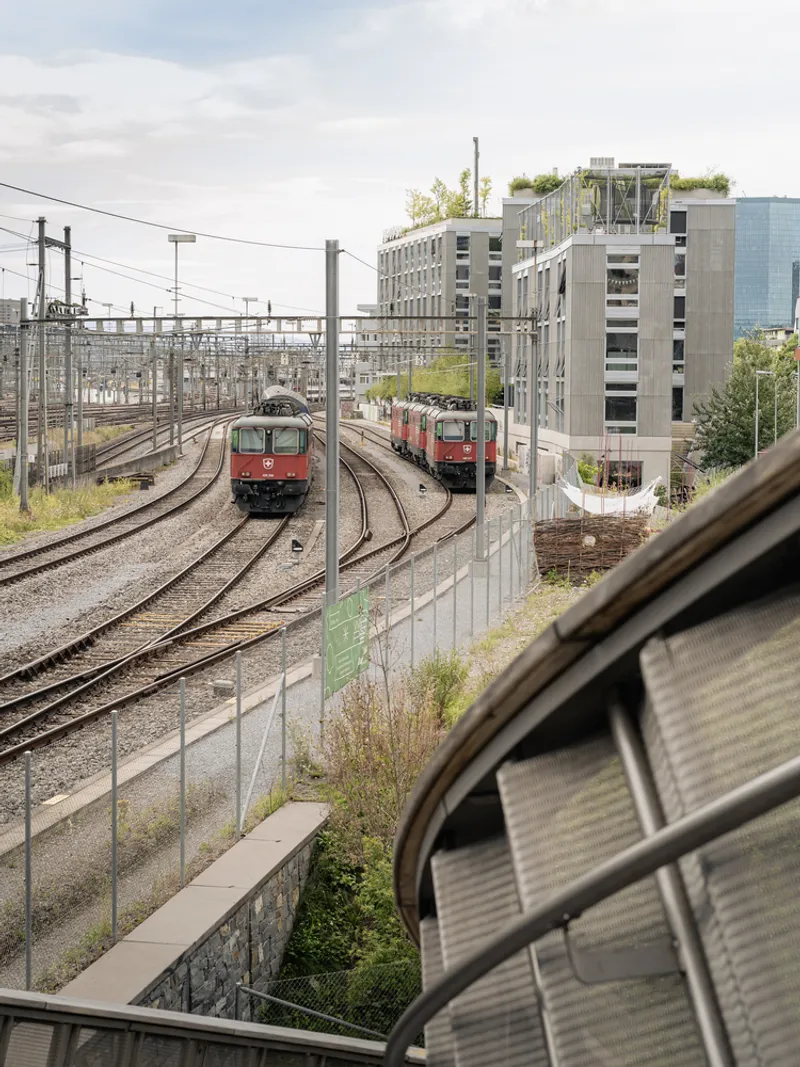

All photographs are works of
Skarka Studios
.
.
.
.
.
.
.
.


Popular Articles
Popular articles from the community


ETEH Reworks the Shared Spaces of São Domingos School in Brazil Around Timber, Color and Hanging Plants
At São Domingos School in Brazil, 436 m² of hall, refectory and library are recast with timber joinery, a yellow and blue code and trailing greenery.

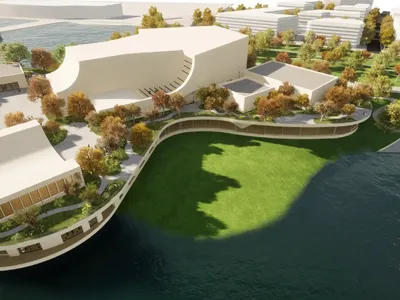
The Amber Palace Opera: A Geological Fiction Surfaces on Tallinn's Baltic Waterfront
Pierre Brillard reimagines a Baltic legend as a public landscape, opera house, and waterfront promenade rooted in Tallinn's coastal identity.

Opera on the Sea: Driftwood Logic Shapes a Timber Opera House on Estonia's Coast
Trevor Orgill's opera house translates the entangled drift of floating timber into a civic building where wood, water, and music converge.

Aquadapt: An Underwater Habitat That Rewrites Its Rooms by the Hour
Curved modules ring the seabed while one shell shifts from breakfast room to cinema, farm and football pitch as residents' needs change.

Similar Reads
You might also enjoy these articles

Cube Design Draws an Ecological Corridor Between Two Shenzhen Hills with the Nankai Building
Beside Shenzhen's container docks, the Nankai Building pairs stacked balconies with a climbing green screen to connect two hillsides across its height.

Praksis A and Studio Sted Bend a Red Timber Cabin Across the Granite of Norway's Southern Coast
On the southern Norwegian coast, a 105 m² cabin follows the rock on slender posts, pairing red cladding outside with pine, brick and plywood within.

David Ortega Stacks a Two-Story Mexico City Penthouse Around a Steel Stair and a Pergola-Shaded Roof Terrace
In Colonia Roma, a 300 m² penthouse uses oak joinery, a planted steel stair and a slatted roof pergola to make a new-build apartment feel like a house.

PARALELA and LB2 Thread a Public Walkway Through the Base of a Las Condes Residential Tower
In Las Condes, Santiago, the Hamlet Building gives its fenceless ground floor to a 70-metre wooded passage linking two streets and the metro.

Explore Architecture Competitions
Discover active competitions in this discipline

Challenge to reimagine the Iron Throne

Photograph architecture without architects

Illustrate the lost glory of Angkor Wat - Render Challenge

Design challenge to reuse E-waste
Comments (0)
Please login or sign up to add comments
No comments yet. Be the first to comment!