
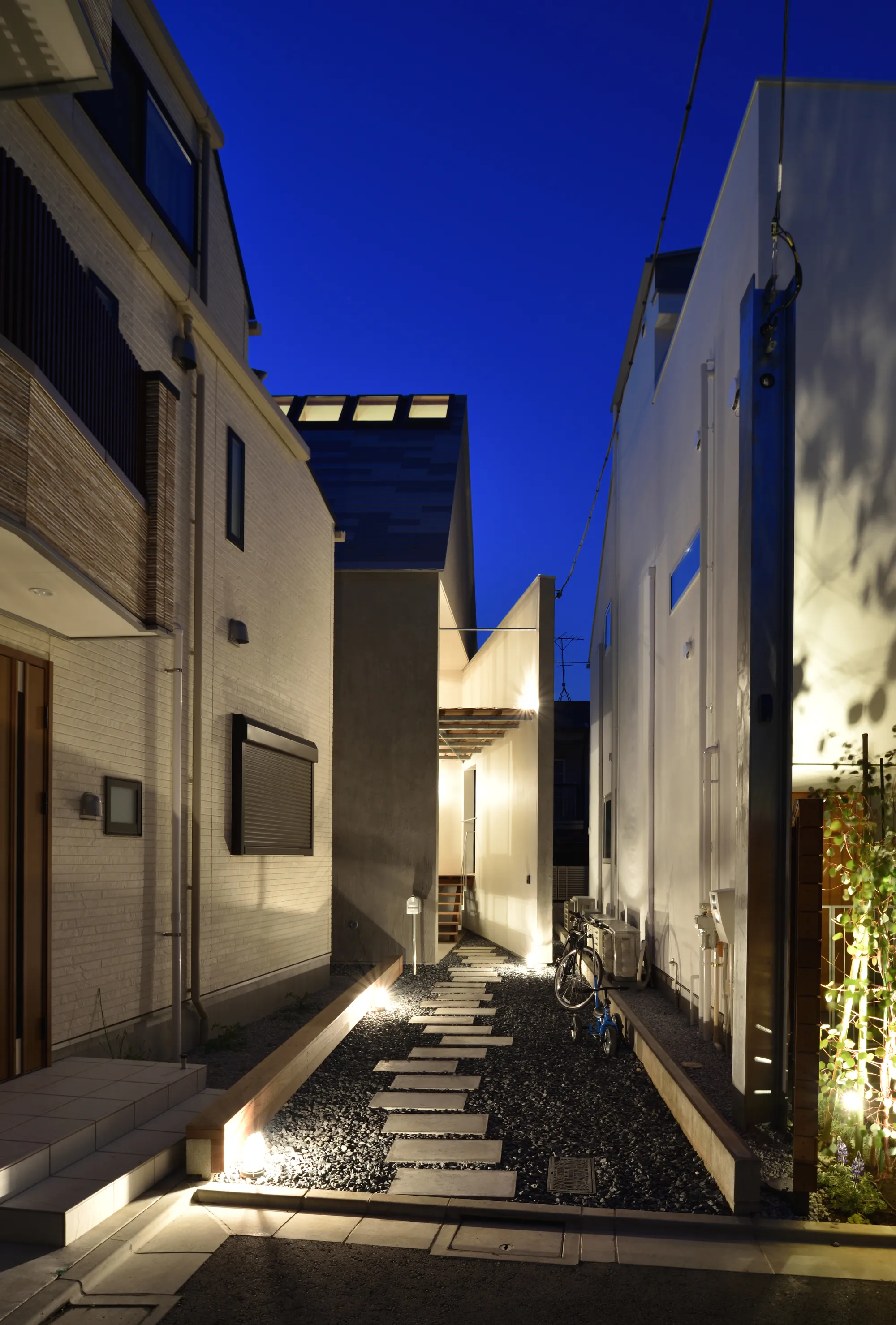
Niji Architects Carves Light into a Flag-Lot-Within-a-Flag-Lot in Tokyo's Meguro Ward
An 89-square-meter house for a young family finds sky, air, and hospitality on one of Tokyo's most constrained urban sites.


A flag lot is already a compromise. A flag lot carved from another flag lot is something closer to a dare. In Meguro, one of Tokyo's dense residential wards, a developer subdivided an already recessed parcel, leaving a 74-square-meter site accessible only through a narrow pole-shaped approach, surrounded on all sides by neighboring houses. Niji Architects, led by Masafumi Harada and Maiko Taniguchi, took the commission from a young couple with two children who wanted not just shelter but a home generous enough to host guests. That ambition, on this site, is the project's central tension.
The result, completed in 2017, is a house whose guiding image is disarmingly simple: the sensation of light and air flooding softly inward the moment a door is opened. Every constraint on the site, from the setback regulations on the north side to the narrow horizontal band of visible sky to the south, is treated not as a limitation but as a parameter that generates form. The volume is tidy, almost inevitable, and the architecture lives in the calibration of openings, materials, and section.
Arriving Through the Slot
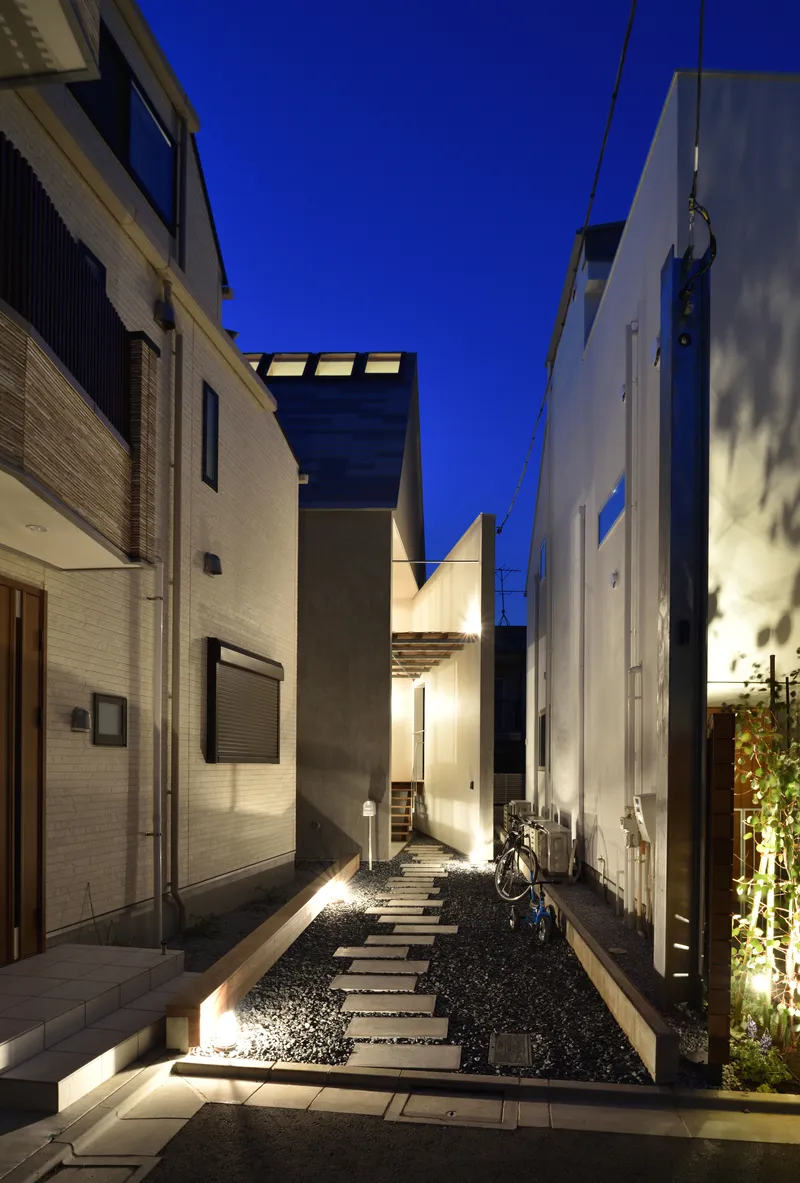

The approach sequence is the house's first act. A stepping-stone path threads through black gravel along a narrow alley before the white volume reveals itself at twilight. The gravel courtyard, the slatted wood soffit overhead, the linear lighting: these elements slow you down, compress space, and prepare you for the openness inside. It is a distinctly Japanese spatial technique, the compressed entry that makes the destination feel expansive by contrast, but Niji Architects execute it with materials that feel contemporary rather than nostalgic.
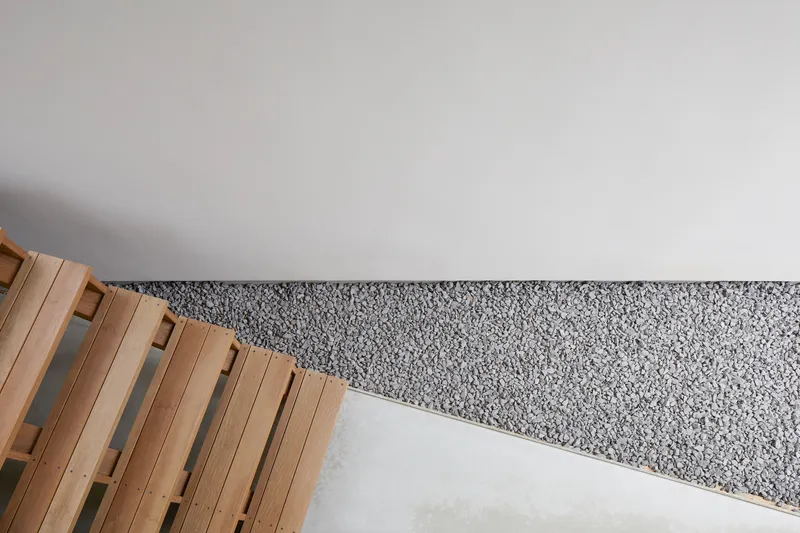
A timber stair descends through the courtyard, connecting the gravel ground plane to the house's threshold. The detail of timber deck meeting gravel beside a white rendered wall reads as a miniature landscape, precise and deliberate. On a site this tight, every square centimeter of outdoor space is doing double duty as garden, threshold, and buffer from neighbors.
Concrete Below, Timber Above
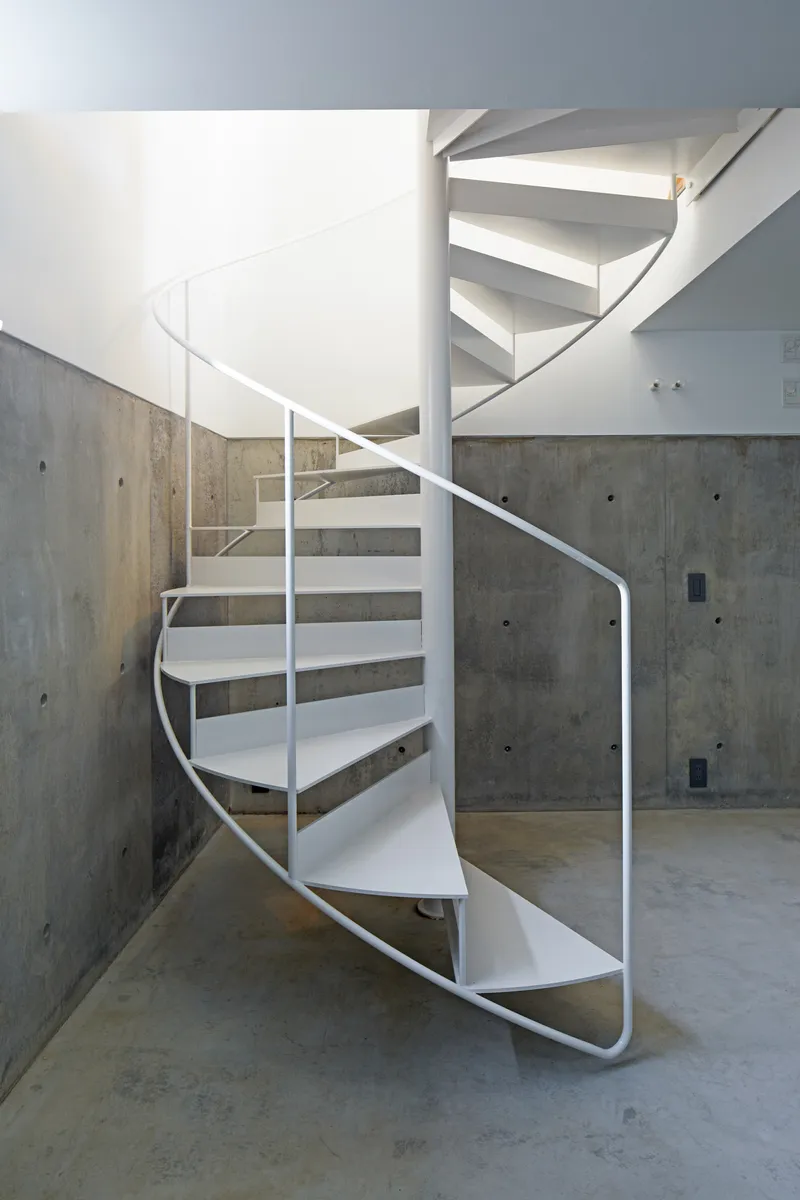
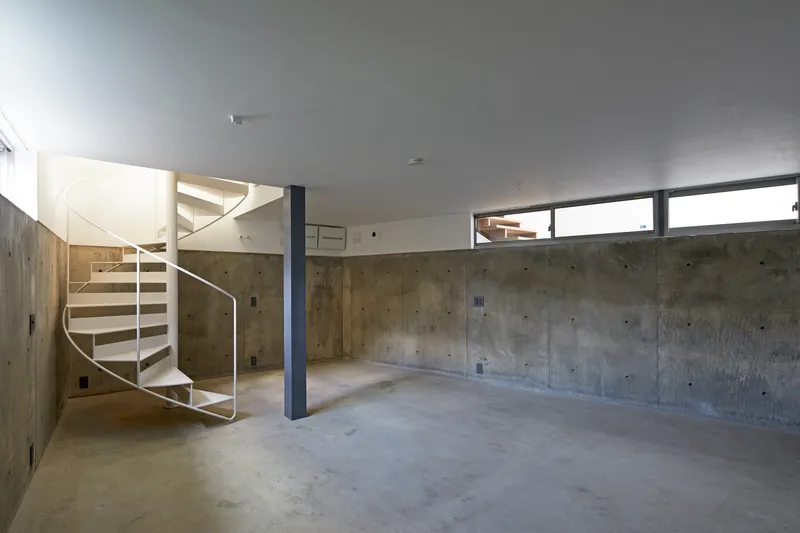
The lower level is defined by board-formed concrete walls with visible tie holes, a steel column, and clerestory windows that pull light down into what could easily have been a dark basement. The material palette here is raw and structural, giving the base of the house a grounded, almost civic weight. One exterior wall functions as both structural element and fire wall, doing the work of two systems in one plane.
A white metal spiral staircase threads through this concrete volume, its lightness a deliberate counterpoint to the heaviness of the walls around it. The board-formed texture catches raking light from the clerestory, turning a pragmatic construction method into the room's primary ornament.
The Spiral as Spine
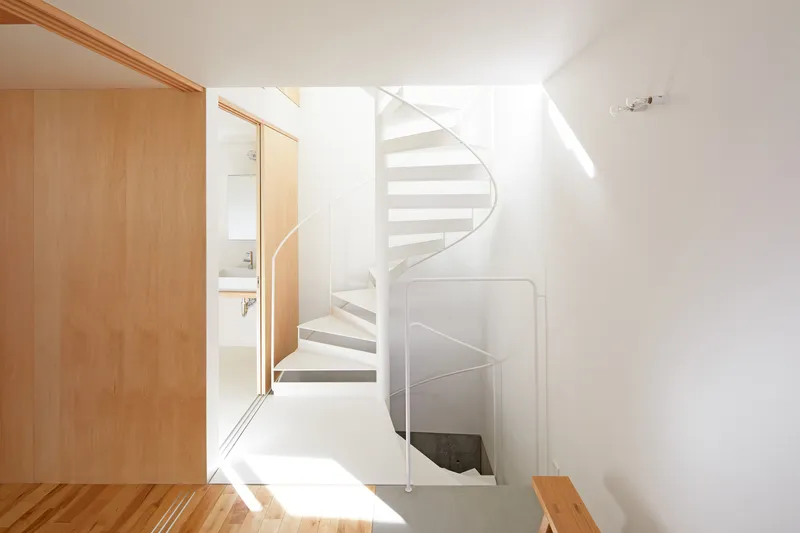
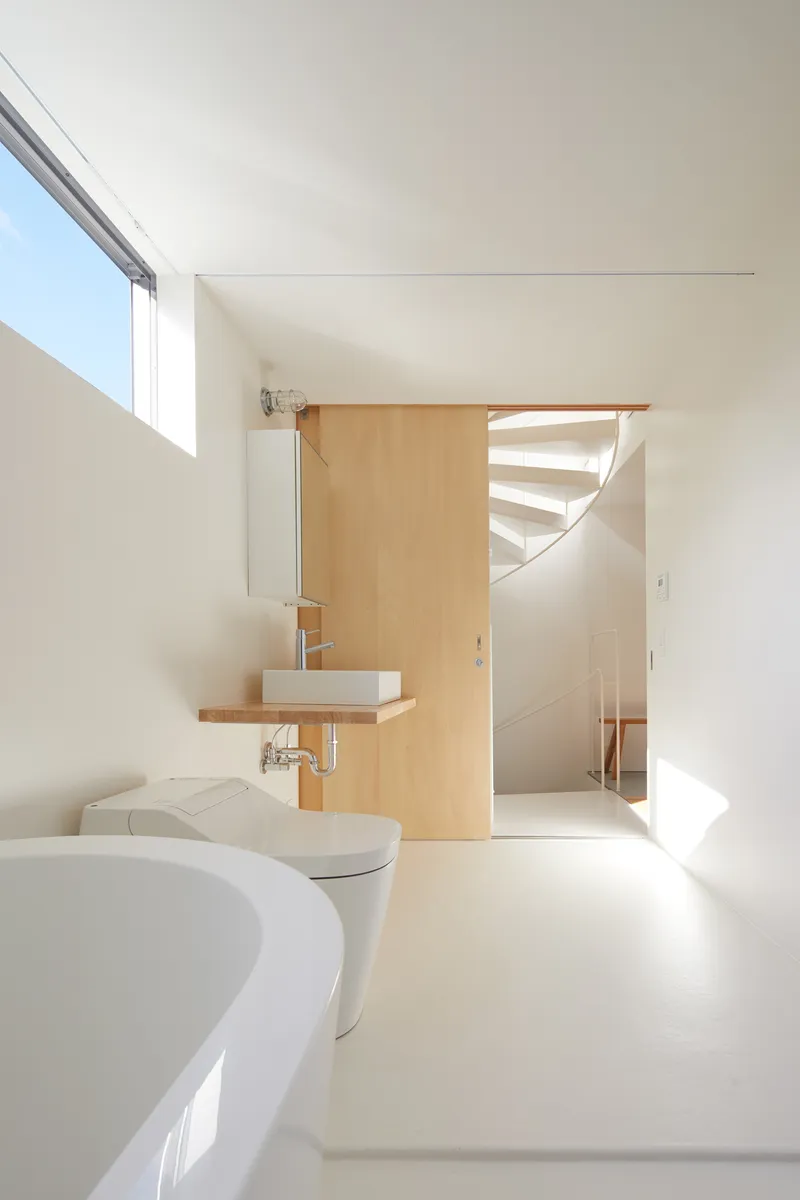
On a plan this compact, the stair is not circulation so much as architecture. The white spiral staircase appears repeatedly across the house's three levels, framed by timber doorways and glimpsed through plywood partitions. It organizes sight lines as much as movement, connecting the concrete base to the timber-framed upper rooms while keeping floor plates open and unencumbered.
The bathroom, visible in one shot with its floating sink and timber partition, looks directly toward the spiral stair beyond. Privacy in this house is managed not by corridors but by depth of field, by the layering of thresholds so that spaces feel distinct without being sealed off from one another.
Capturing the Sky to the South
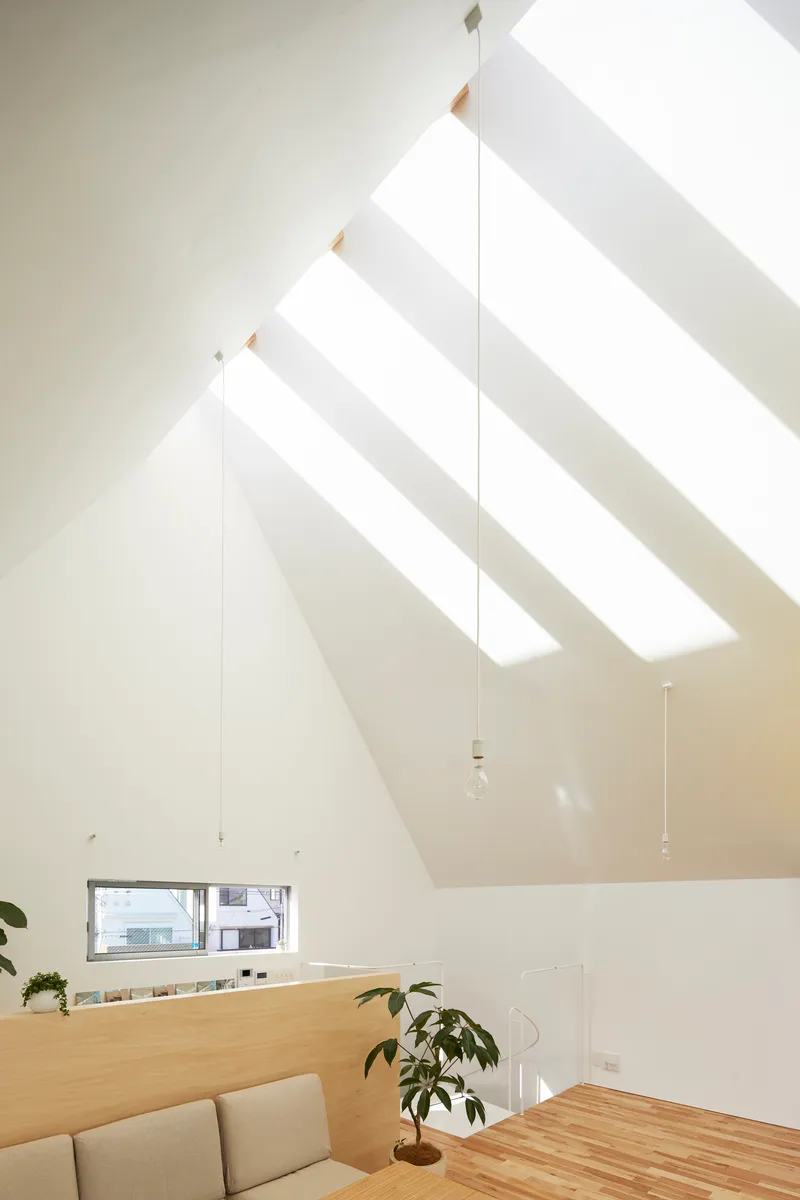
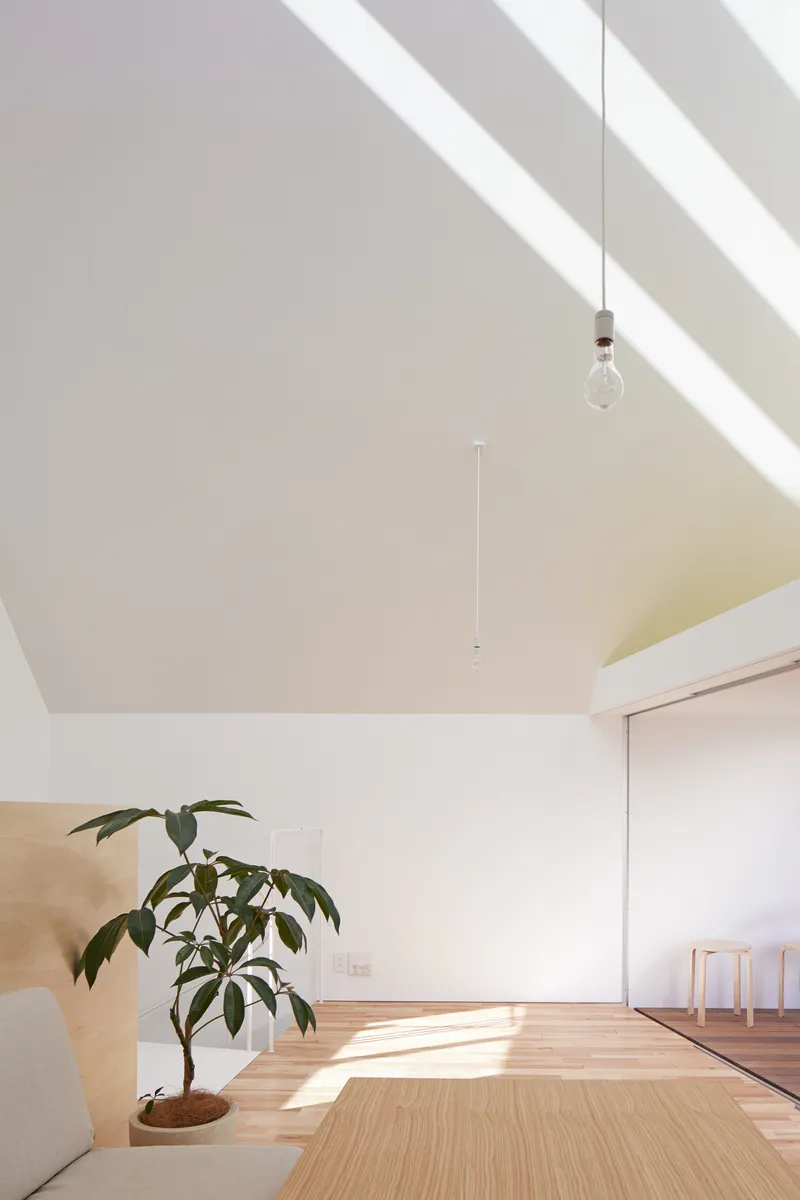
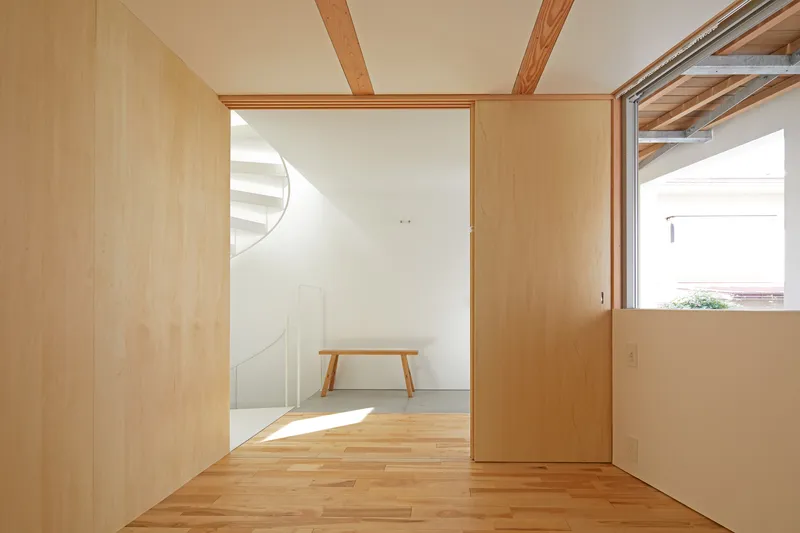
The pitched ceiling with exposed rafters and strategically placed skylights is where the house's passive design strategy becomes most legible. Skylights face the southern sky, oriented toward a direction where future construction is unlikely to block them. The diagonal shadows they cast across white walls are not decorative accidents; they are evidence that the architects mapped the surrounding building mass and found the one reliable aperture for daylight.
Higher in the section, vaulted white ceilings with pendant bulbs catch bands of sunlight that move throughout the day. Plywood-lined rooms with exposed timber beams feel warm but not precious. The material vocabulary is restrained: white plaster, structural plywood, raw timber. Nothing competes with the light, which is the real finish material of the upper floors.
Living Between Inside and Out
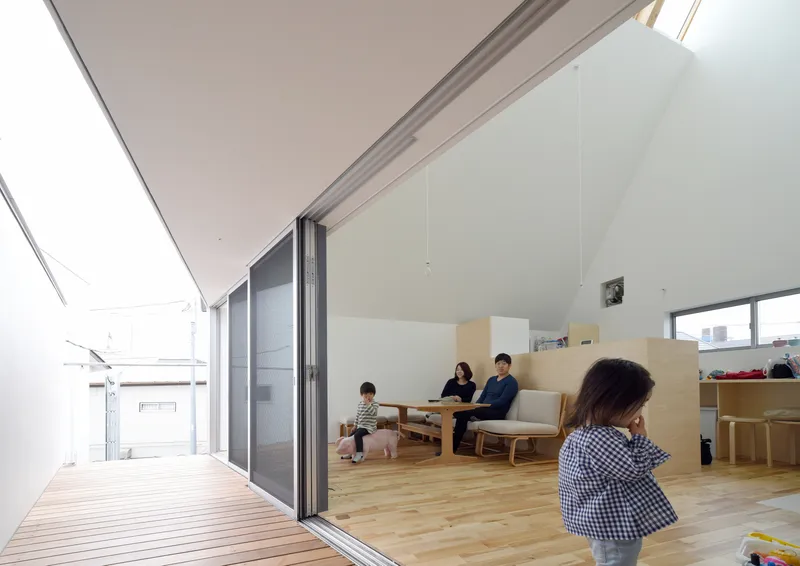
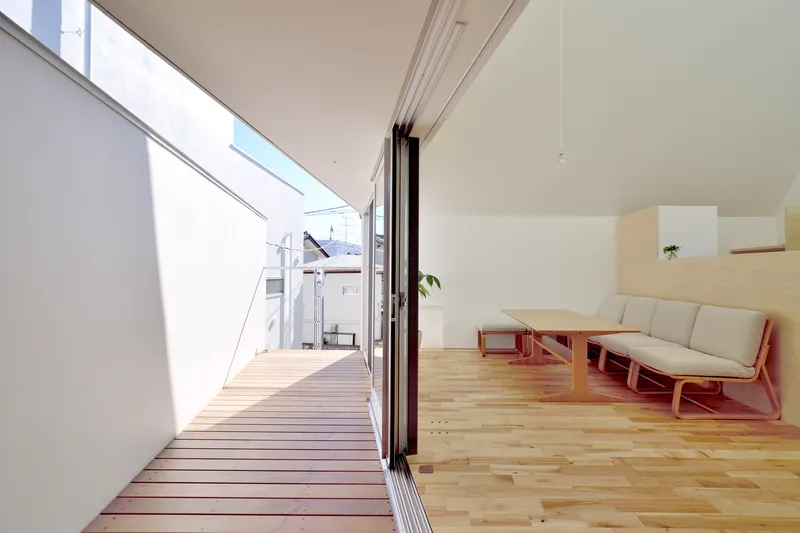
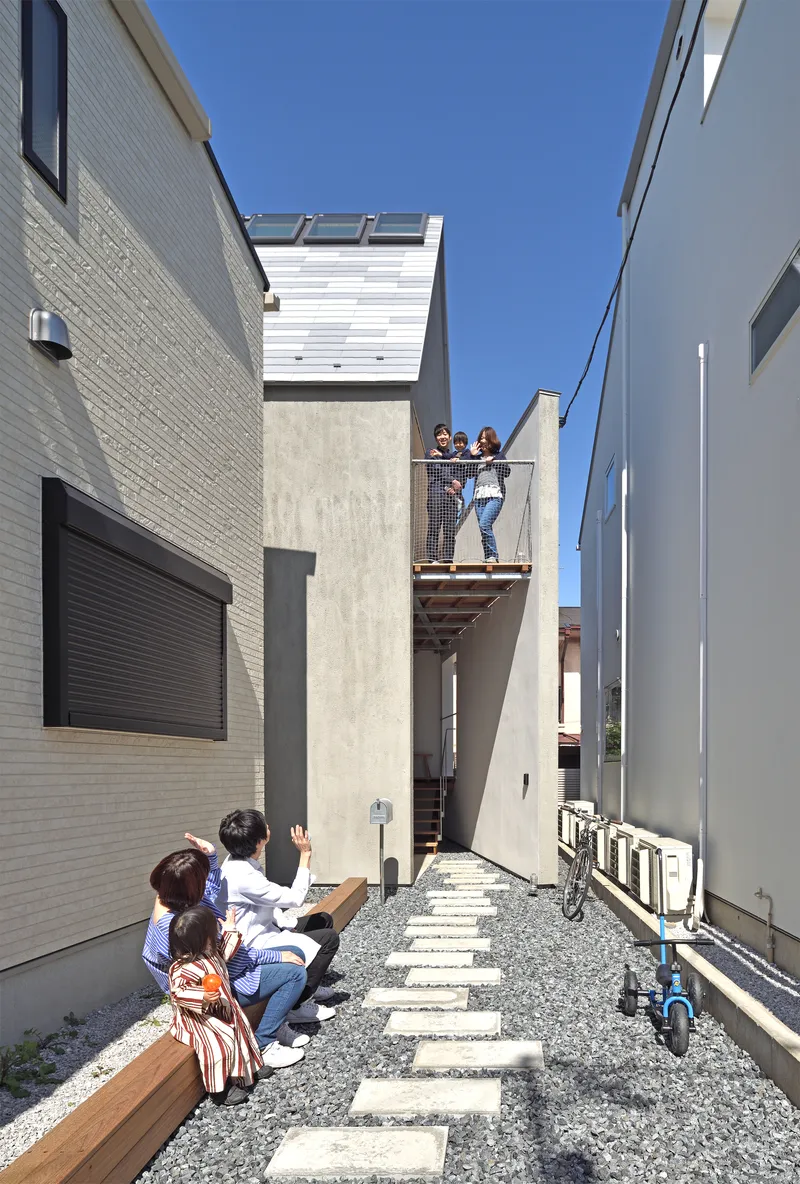
For a house that aspires to hospitality, the living area's relationship to the timber deck is critical. Sliding and folding glass doors dissolve the boundary between interior and courtyard, giving the family a way to extend their 89 square meters into the outdoor space when weather allows. The timber deck under skylights operates as a kind of covered terrace, neither fully inside nor fully outside, amplifying the perceived size of the house considerably.
The narrow side courtyard, where the family gathers beneath a cantilevered balcony, reveals how Niji Architects squeezed social space from residual gaps in the site plan. The stepping stone path doubles as a place to sit. The cantilevered volume above provides shade. These are small moves that make the difference between a house that feels tight and one that feels generous.
Plans and Drawings
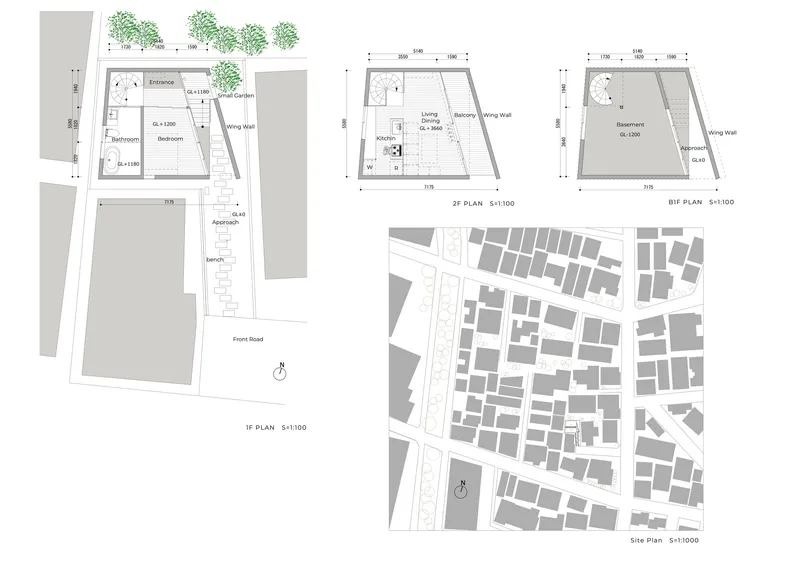
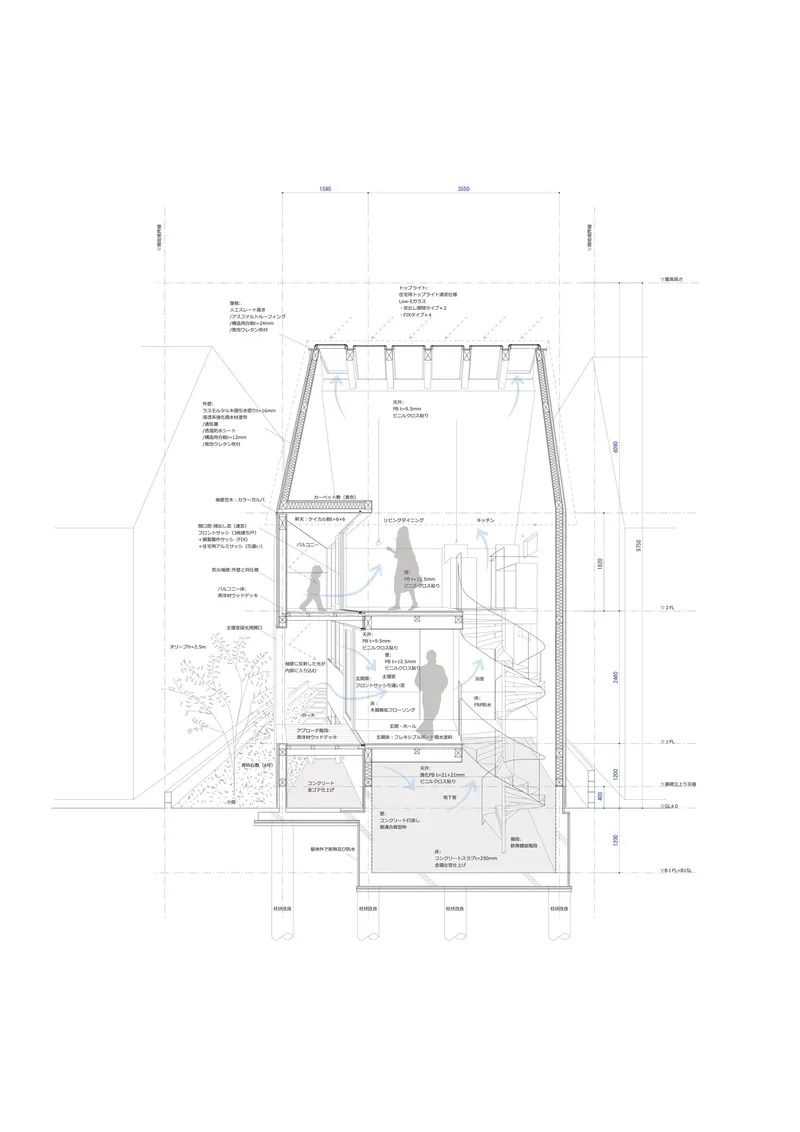
The floor plans reveal the site's absurd proportions: the house volume pushed to the rear of the lot, the pole-shaped approach stretching from the street like a lifeline. Ground floor, second floor, and third floor plans show how the courtyard and stair organize three compact levels into a sequence of interconnected rooms rather than a stack of isolated floors. The section drawing, annotated with human figures, makes visible the vertical ambition of the project: light enters from above, passes through skylights and voids, and reaches the concrete base below.
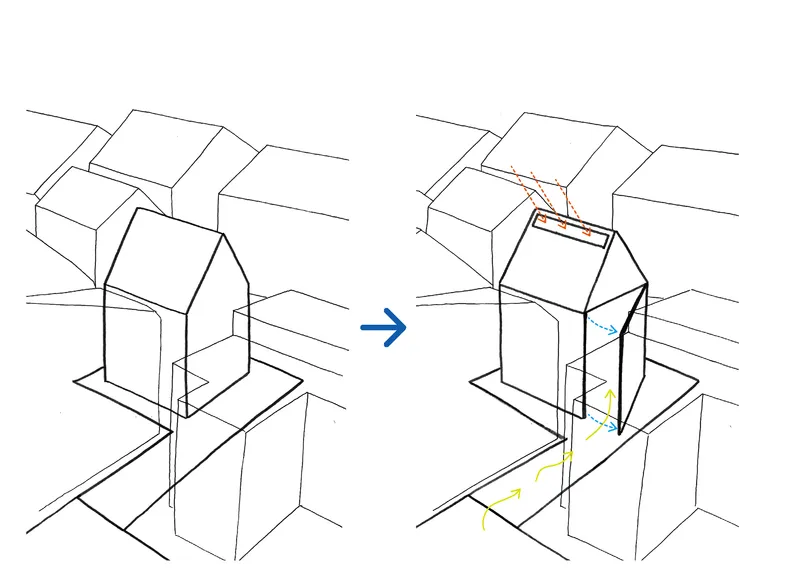
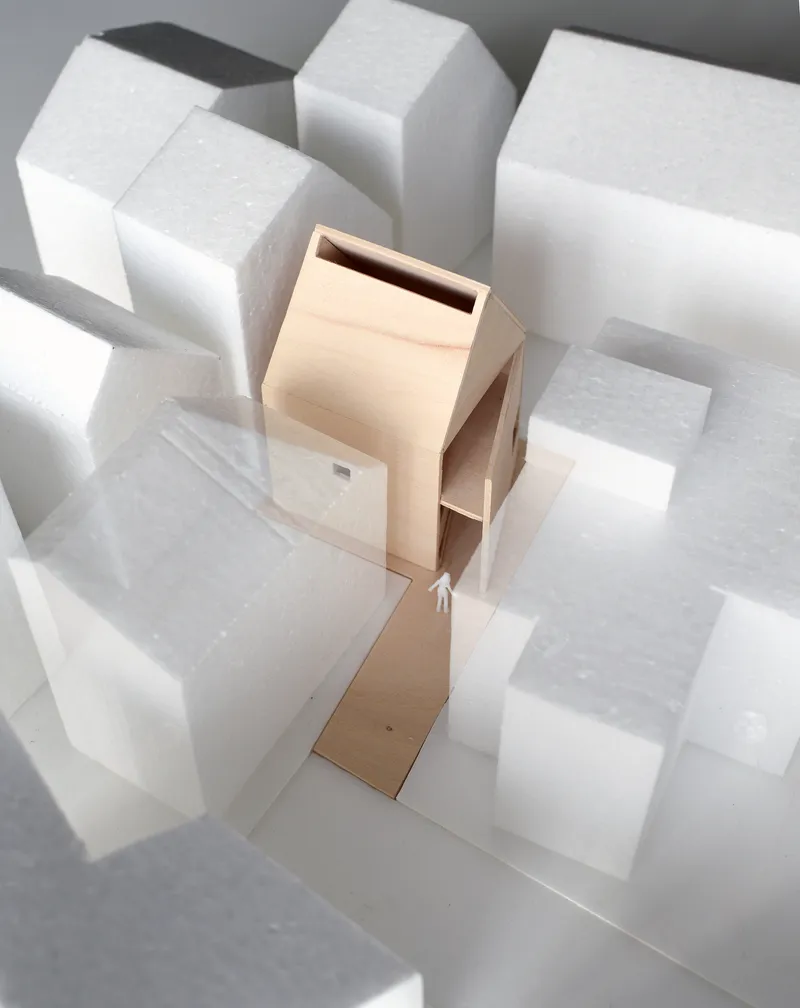
The axonometric sketch with colored annotations for light and ventilation is the most revealing drawing. It diagrams the house as a machine for capturing environmental forces, with arrows showing airflow paths and colored zones indicating where daylight penetrates. The physical model, surrounded by white foam massing blocks, confirms what the plans suggest: this is a slender timber form negotiating its survival among a tight cluster of neighbors.
Why This Project Matters
Door House is a quiet argument against the idea that extreme site constraints require extreme architectural gestures. Niji Architects did not produce a manifesto here. They produced a house, one that works for a family of four with room to invite friends over, on a site that most developers would consider barely buildable. The discipline is in the section, in the orientation of skylights, in the material transitions between concrete and timber, in the threshold sequence that turns a liability (the long, narrow approach) into the house's most memorable spatial experience.
What makes the project worth studying is its refusal to treat density as a problem to be solved with cleverness. Instead, it treats density as a given condition that shapes form, light, and program in productive ways. The setback regulations that dictated the building's tidy volume, the neighbor's rooflines that determined where skylights could go, the flag-lot geometry that created the processional entry: none of these were obstacles. They were the design brief. The house is better for having accepted them.
Door House, designed by Niji Architects (Masafumi Harada and Maiko Taniguchi), with structural design by Ohno JAPAN and construction by Sanryo Architects Office. Located in Meguro City, Tokyo, Japan. 89 m². Completed in 2017.
About the Studio
Share Your Own Work on uni.xyz
If projects like this are the kind of work you want to make, uni.xyz is a place to publish your own, find collaborators, and enter design competitions.




Popular Articles
Popular articles from the community


Hill & Cross Opera: Sculptural Opera House Architecture Shaped by Tallinn’s Landscape and Identity
Hill & Cross Opera reimagines opera house architecture in Tallinn through its sculptural hill, civic plaza, glass wave and a luminous cross.

The Musturak Paradise: Senior Living Architecture for a Connected Future in Temara, Morocco
The Musturak Paradise reimagines senior living architecture in Temara via private homes, social spaces, culture, community, and shared care.

AL-JANNAH: Sustainable Architecture and Permaculture for Afghan Widows
AL-JANNAH uses sustainable architecture and permaculture to create resilient oasis of housing, learning, work and renewal for Afghan widows.

Co-life: Sustainable Architecture for Age-Friendly Community Living
Co-life reimagines sustainable architecture for seniors through courtyards, rammed earth, shared gardens, and spaces designed for belonging.


Similar Reads
You might also enjoy these articles

Bao Huynh Watercolor Atelier: A Serene Art Retreat in Hội An
Bao Huynh Watercolor Atelier in Hội An blends multifunctional art spaces, sustainable design, local materials, and family-friendly living in a serene environment.

Atelier Macri Concept Store Interior Design by CASE-REAL
Atelier Macri store features a "ko" counter, walnut wood details, cork displays, blending retail, gallery, and seamless customer experiences.

Manuel Vargas Izquierdo Stadium and High-Performance Sports Center: Architectural Excellence in Jalpa de Méndez
The Manuel Vargas Izquierdo Stadium blends sustainable design, inclusive sports facilities, and cultural-inspired architecture, revitalizing Jalpa de Méndez’s public spaces.

KAKR Buluh Awar Hall: Revitalizing Community and Ecology Through Bamboo Architecture
Community built bamboo hall revitalizes Buluh Awar village, empowering youth, restoring ecology, celebrating vernacular craftsmanship through sustainable architecture and culture.




Comments (0)
Please login or sign up to add comments
No comments yet. Be the first to comment!