

Nikken Sekkei has unveiled the design of the competition for China's largest transport hub.
In June, Nikken Sekkei's joint venture was announced as the winner of China's largest transportation hub architectural competition by Shenzhen Metro Group.

The company is sharing the victory for the international competition on Shenzhen Xili Comprehensive Transportation Hub Urban Design and Core District Architectural Design Proposal with China Railway Siyuan Survey and Design Group, Nikken Sekkei, Shenzhen Architecture Design General Research Institute, and Shenzhen Urban Transport Planning Center as architects for the project.
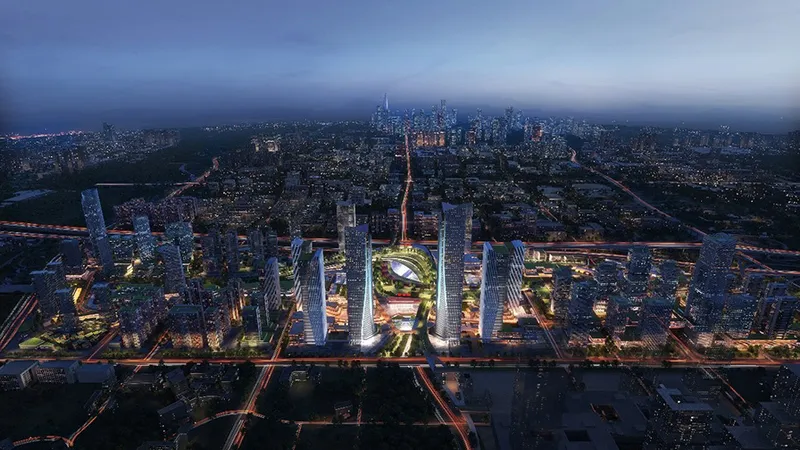 Bird's eye view of the station nightscape
Eliminating the boundaries between the railway station and the city with “TOD 4.0”
Shenzhen Xili is the first "TOD 4.0" project in China to propose the concept of "integrating station, city, people, and nature." This includes eliminating the boundaries between the railway station and the city, giving the station a new face, and working urban activities, functions, and the natural environment comprehensively into the station design.
We take our prior experiences and incorporate them into the planning of each individual project. For Shenzhen Xili, we adapted our plans to the actual conditions in China, from planning transit space circulation to urban-level connections. We enhanced the integration and connectivity of the station and the city under the concept of “Ribbon City”, exceeding conventional development methods.
A new TOD is beginning to sprout in Shenzhen, one of China’s most advanced cities.
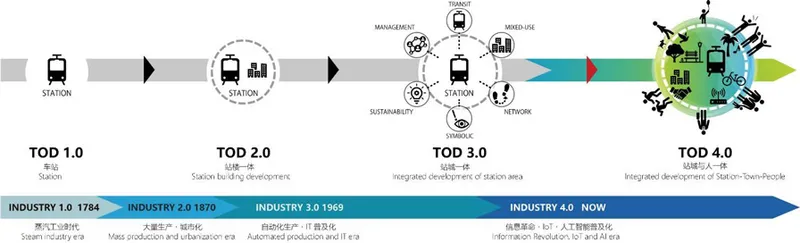 Evolution of the TOD concept

The Three Major Principles of the Xili Hub
Vision 01: A New Urban Land
“By eliminating and integrating station-city boundaries, further evolution of the ideal ‘station-area city’ will result.”
The project's goal is to improve urban areas and make them more lively, using a philosophy called TOD. This is based on making public transportation better and having it be the center of cities, with stations that are easy to link together. The benefits of the project would spread to other nearby areas as well.
The floor area ratio transfers and joint development scheme will help to break down the barriers between the station and its neighborhood, as well as between different developers. This will create a more next-generation hub where people, nature, and technology can all harmoniously coexist.
This project also sets forth three major strategies: CONNECT, BLEND, and BALANCE, along with 17 design principles. It represents China’s first effort to coordinate both the national strategy to expand the high-speed rail network and Shenzhen's goal of urban development through TODs, with the aim of realizing a “win-win” relationship.
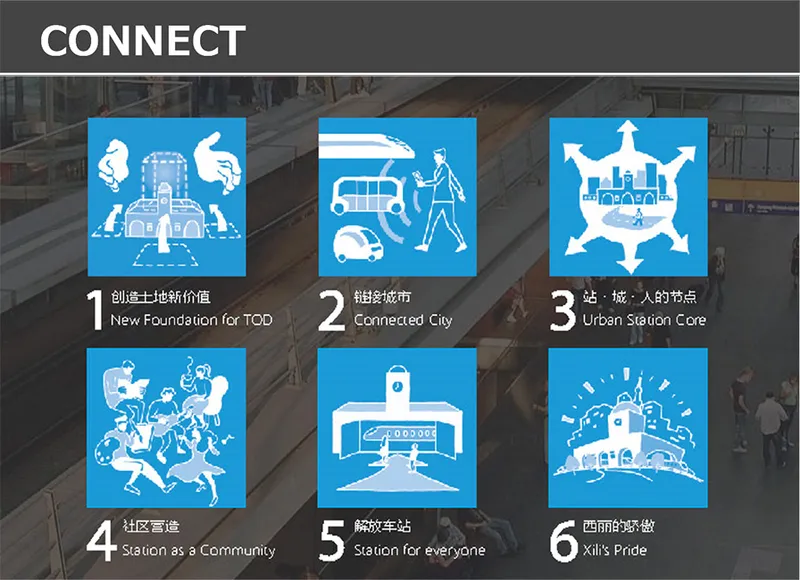
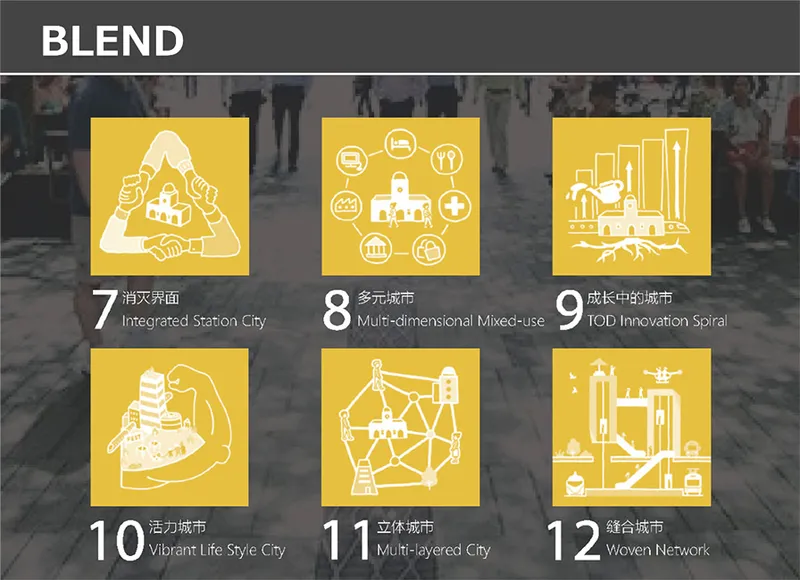
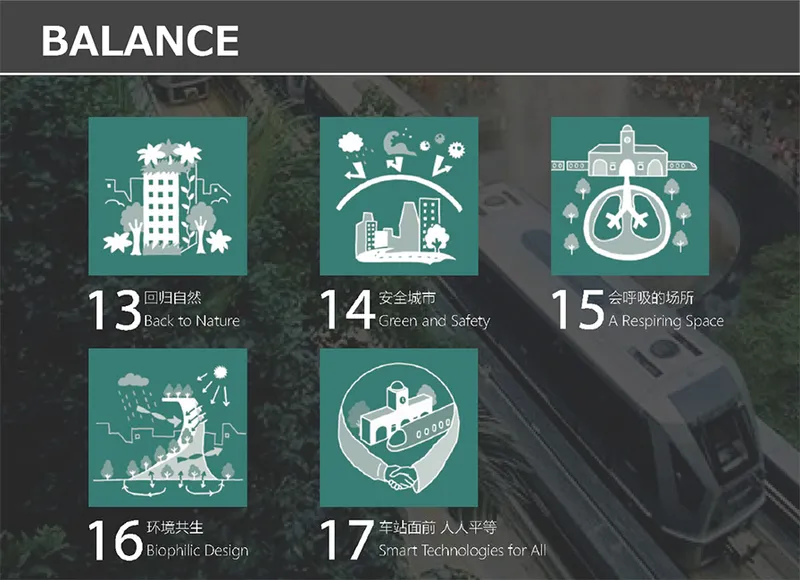 Three strategies & 17 principles for realizing TOD 4.0
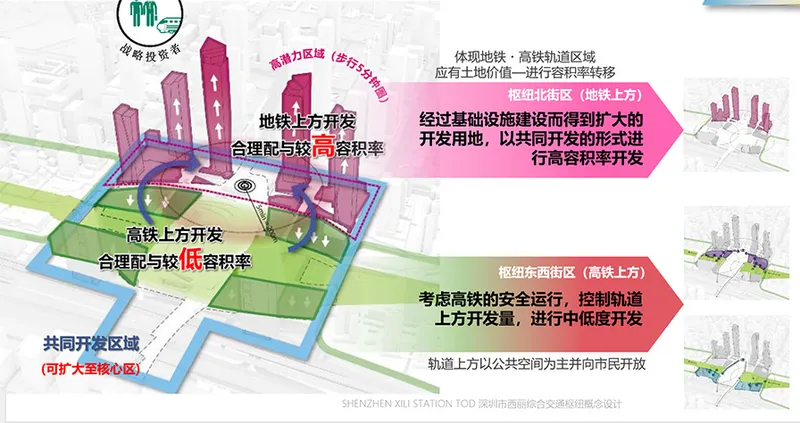 Public space acquisition via floor area ratio transfers
 Bird's eye view of the station’s north plaza
TOD, or comprehensive urban development, seeks to improve a city's architectural space and public areas around high-speed rail stations. Multiple stakeholders - developers, operators, managers, users, and citizens - work together to add value to the community as a whole.
Vision 02: An Urban Sense of Arrival
For long-distance passengers, a high-speed rail station in the center of the city is ideal. This will be realized with the Xili station.
The hub, located in Shenzhen's Nanshan District, is situated at the intersection of two urban landscape/industry development axes. It will serve as the most important integrated passenger transportation hub in the city, with 13 platforms and 25 tracks (including four high-speed rail lines). The 2,200m x 700m site will be Shenzhen’s largest railroad station.
Located to the north of the station, two intercity railroad lines will intersect with four subway lines at multiple levels. The transit space on the north side of the station where short- and long-distance lines merge is expected to become Shenzhen's largest transportation hub, with an average daily passenger count of more than 1.3 million people.
The north plaza and high-speed rail trackside waiting room at Xili station will be iconic hospitality spaces. Efficient traffic flow and rich natural scenery will welcome passengers and give them a sense of arrival for an uplifting travel experience.
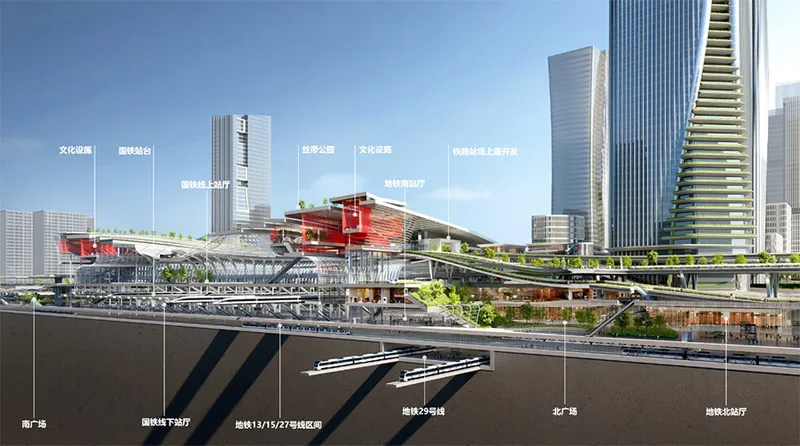 North-south cross-sectional view of the station
 Station north plaza and station building
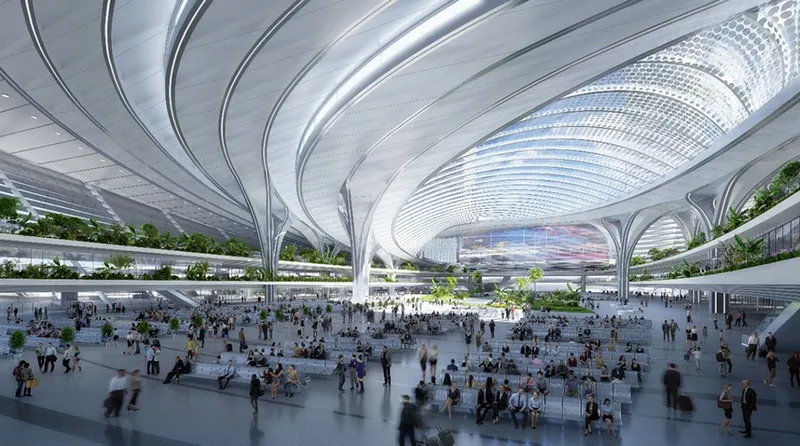 High speed rail line waiting room
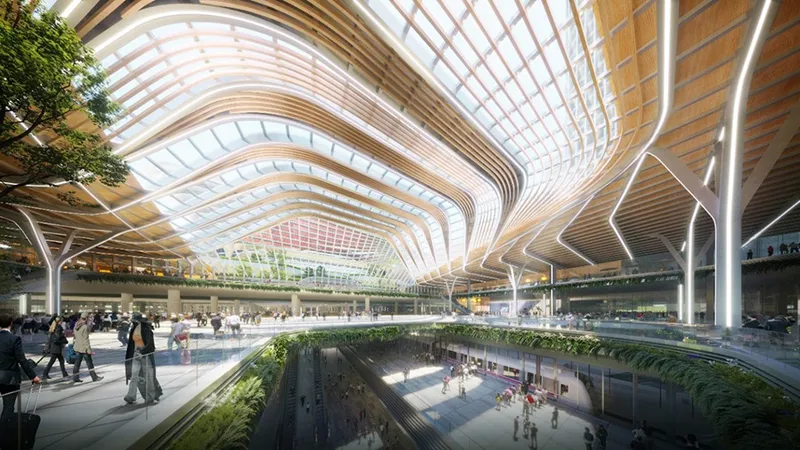 High speed rail line waiting room
 Station’s north plaza
Vision 03: Station, Town, and the Integration of People & Nature
This project aims to create a place that will serve as a gift (ribbon) to the people who live and toil every day in Shenzhen.
The most distinctive feature of this project is the "Ribbon City" landscape concept that connects the top of the station building with the city on both sides.
"Ribbon City" is a new type of city that is being planned. It is based on three concepts: "New Urban Land," "A Sense of Arrival," and "Integrating Station, City, People, and Nature." The city will be surrounded by a river system and vegetation, which will create a "water and greenery cycle." In order to avoid dividing the city with rails and railway-affiliated structures, a connecting pedestrian network will stretch above and below ground. Traffic arteries and station spaces will be thoughtfully integrated with the landscape, taking into account the climate and lifestyles of citizens to create an urban oasis. This organic network will connect north, south, east, and west.
 Ribbon City formation concept
 Bird's eye view of the station
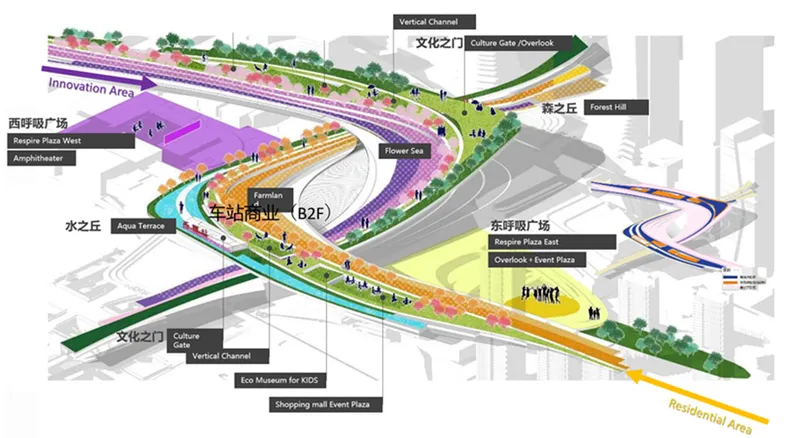 Ribbon City design concept
 Ribbon City, west side of the station
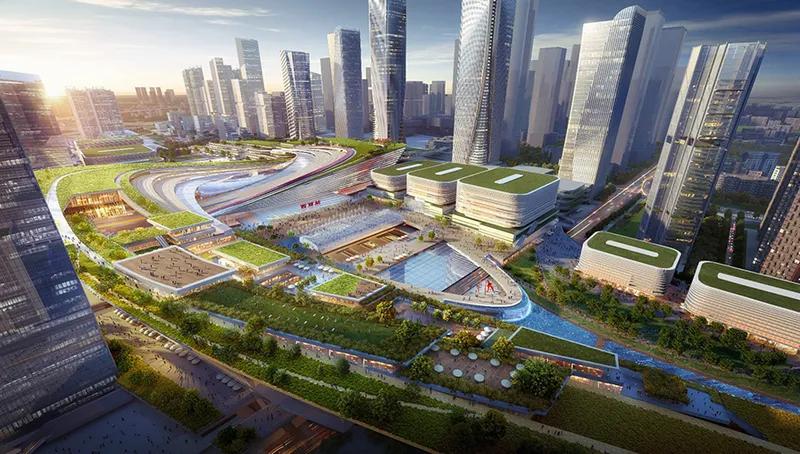 Ribbon City, east side of the station
A new kind of station that coexists with the city, evolving with it. ~A wish for a green, low-carbon future city ~
In planning this project, Nikken Sekkei has been in close communication with each of the companies in the JV consortium and project stakeholders. We will continue to work together to promote the project in order to realize next-generation TOD in Shenzhen.



Popular Articles
Popular articles from the community


Co-life: Sustainable Architecture for Age-Friendly Community Living
Co-life reimagines sustainable architecture for seniors through courtyards, rammed earth, shared gardens, and spaces designed for belonging.

Conexión: Biophilic Design Reimagines High-Rise Living in Hong Kong
Conexión reimagines high-rise living in Hong Kong through biophilic design, green facades, shared spaces, daylight, water and nature within.

The Earth Pod: 3D Printed Homes for Resilient Refugee Communities
The Earth Pod reimagines refugee housing through 3D printed homes made from clay, combining resilience, self-sufficiency, and rapid shelter.

The Ocean Hive: Sustainable Architecture for a Self-Sufficient Civilization at Sea
The Ocean Hive imagines sustainable architecture at sea, where modular habitats, algae, wave power and ocean waste sustain a growing colony.


Similar Reads
You might also enjoy these articles
116 Rokeby Building, Collingwood
Sustainable Collingwood office building featuring double-skin façade, natural ventilation, rooftop amenities, and carbon-neutral design focused on wellbeing and longevity.
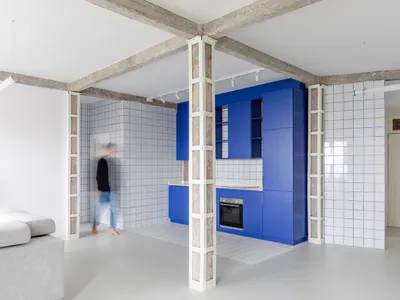
Contemporary Apartment Renovation in Spain: RV House by BIAN Opens Up to the Sea
A minimalist 1930s apartment in Santander is transformed into a flexible, sea-facing home through contemporary Spanish renovation.
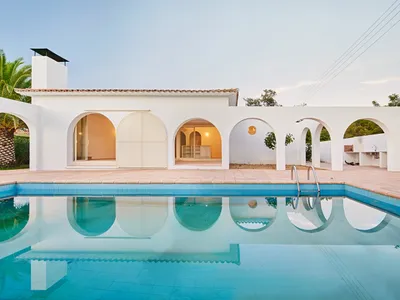
3 Marías House: A Contemporary Mediterranean Courtyard Retreat by Bajet Giramé + Burckhardt
Mediterranean courtyard home blending traditional architecture with modern design, terracotta flooring, flexible interiors, sustainable climate strategies, and garden integration.
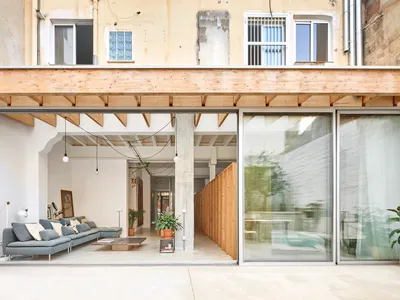
NZ10 Apartment by auba studio: Adaptive Reuse in Palma de Mallorca
Adaptive reuse apartment transforms bakery into light-filled home with patios, privacy layers, and wood interiors enhancing urban living experience.


Comments (0)
Please login or sign up to add comments
No comments yet. Be the first to comment!