
TSC Architects Scatters a Dental Clinic Across a Sloped Bamboo Grove in Toyohashi
A 263-square-meter clinic in Aichi Prefecture negotiates a three-meter grade change to preserve existing trees and calm anxious patients.

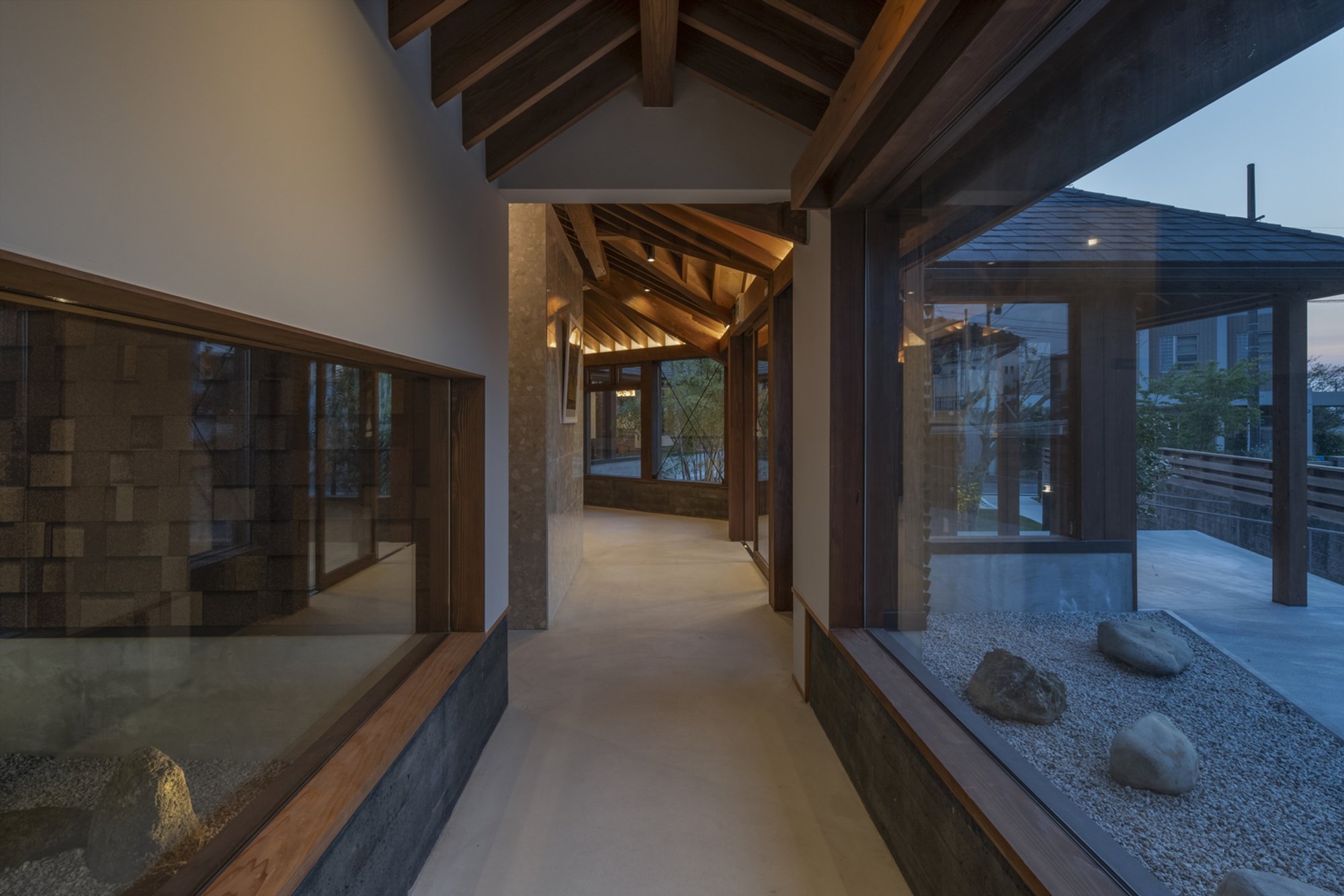
A dental clinic is one of the last building types you would expect to feel like a garden pavilion. TSC Architects, led by Yoshiaki Tanaka, took that improbability as a starting point for the Noda Dental Clinic in Toyohashi, Aichi Prefecture. Rather than leveling a long, narrow site with a three-meter elevation change, the firm broke the program into a constellation of small volumes stitched together by covered corridors that wind past a preserved bamboo grove and a mature loquat tree. The result is a 263-square-meter facility, completed in 2023, where the walk from reception to treatment chair doubles as a stroll through a garden.
What makes the project genuinely interesting is not the pastoral scenery alone but the architectural logic behind it. Every decision, from the scattered plan to the deep eaves to the walls that stop short of the ceiling, serves a dual purpose: it keeps the existing landscape intact and it defuses the anxiety most people associate with sitting in a dental chair. During construction, neighbors reportedly mistook the building for a café, which tells you everything about how far the design strays from the sterile white box that healthcare architecture defaults to.
A Clinic That Follows the Land
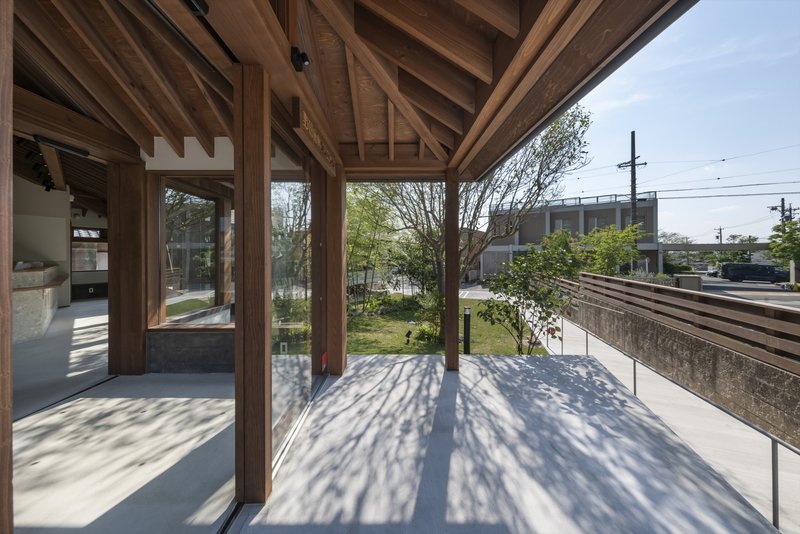
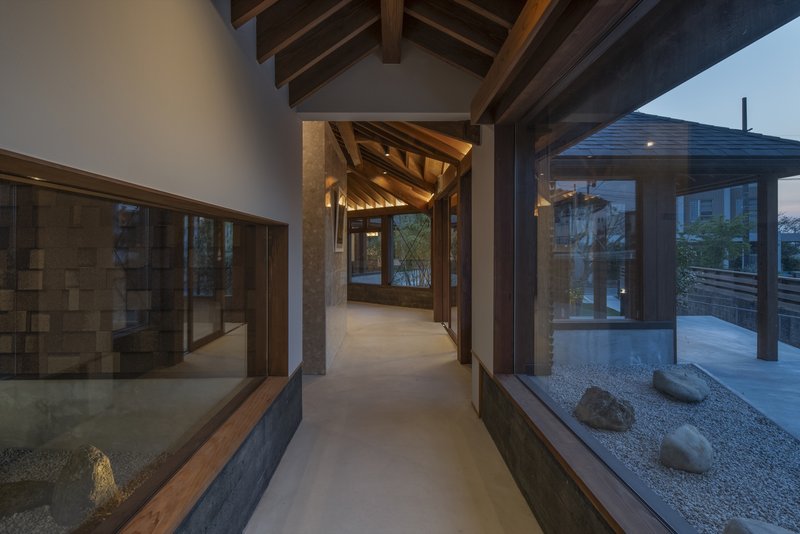
The site sits at the seam between a mountain landscape and a residential neighborhood, sloping sharply from one end to the other. Instead of cutting and filling to create a single flat floor plate, TSC Architects placed individual rooms at different elevations, letting the building step down the grade. Covered corridors between volumes act as transition zones: part circulation, part garden walk. Deep timber overhangs shade these paths and the small courtyards they border, creating a microclimate that feels cool even on hot Aichi summers.
The covered terrace at the upper end of the site looks out over lawn, trees, and the adjacent railway tracks, grounding the clinic firmly in its neighborhood context rather than walling it off. From here, the full length of the project reads as a loose sequence of roofs stepping downhill, their geometries varied enough to avoid monotony while staying materially unified.
Timber Structure as Interior Finish
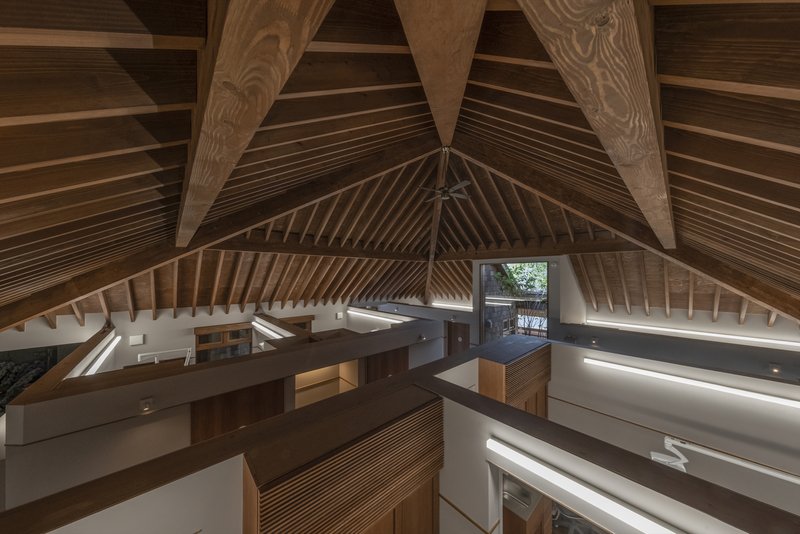
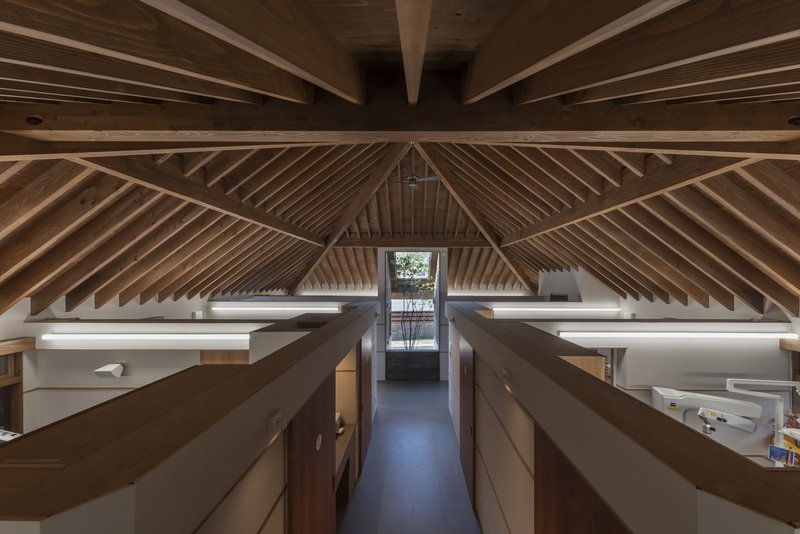
The roof structure is the dominant visual element in almost every room. Exposed timber trusses radiate from ridgelines, converge at central points, and fan outward over corridors, giving each space a distinct ceiling character even though the palette is consistent. In the loft area, beams spread from a central ridge with flanking desks tucked beneath, suggesting that the structure was sized not just for loads but for the spatial quality it would produce at eye level.
By leaving the framework visible, the architects sidestep the dropped ceilings and fluorescent panels that make most clinics feel institutional. The timber reads as warm, textured, and handmade. Combined with walls that stop short of the ceiling plane, it creates a layered sense of enclosure: you are inside a room, but you are also inside a larger roof landscape that connects all the rooms together.
Courtyards and the Art of Framing Green
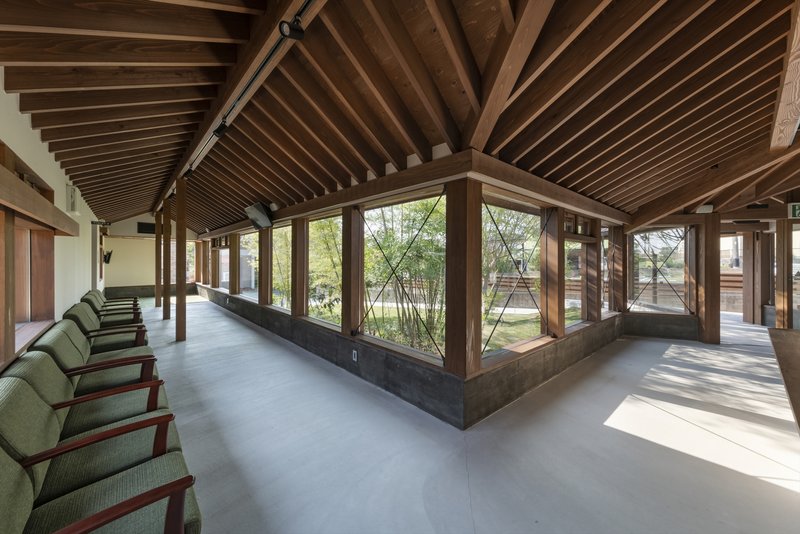
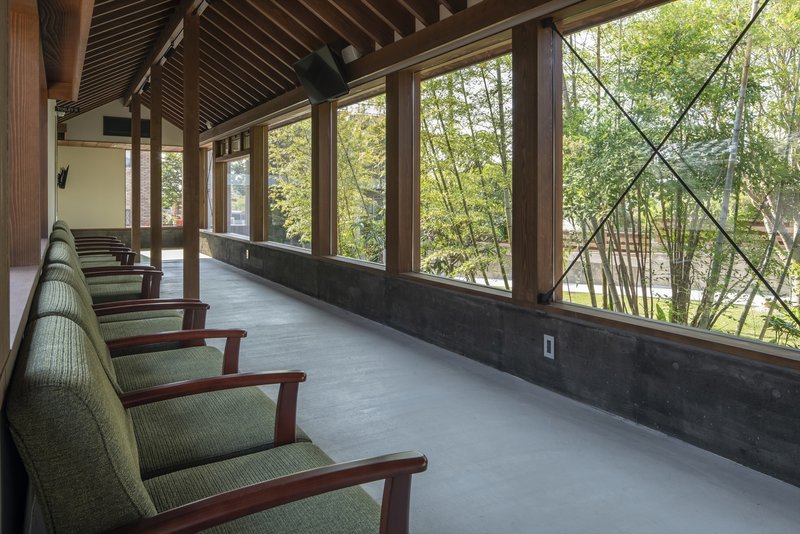
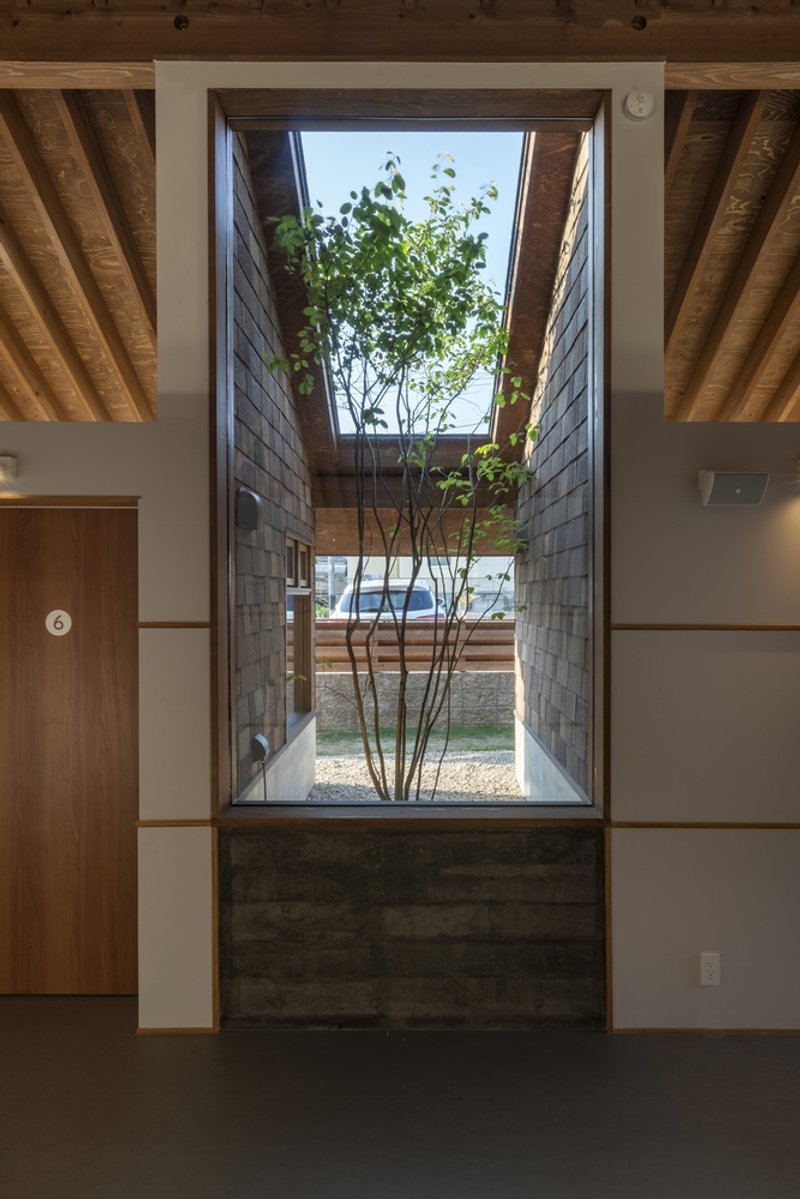
Nearly every corridor is glazed on at least one side, turning the bamboo grove and courtyard planting into a continuous visual presence. The waiting area lines patients up along a window wall with green upholstered seating that picks up the color of the bamboo outside. A narrow courtyard slot captures a single tree beneath a skylight framed by timber rafters, compressing the garden into a focused vertical composition.
These moves do real psychological work. Dental anxiety is measurable, and research consistently links views of nature and natural materials to lower stress responses. TSC Architects did not just make the clinic pretty; they weaponized greenery and daylight against the fight-or-flight instinct most patients bring through the door. The corridor where you wait is arguably the most important room in the building, and it feels more like a veranda than a queue.
Treatment Rooms and Reception
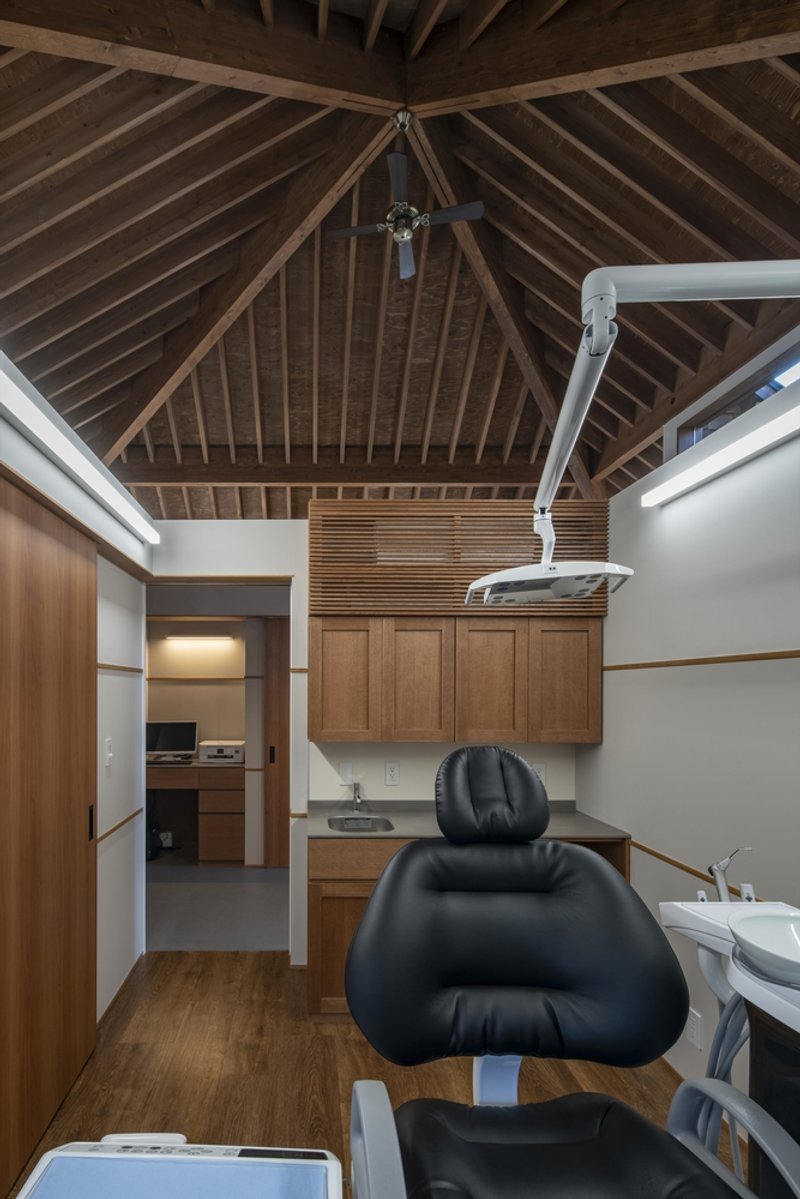
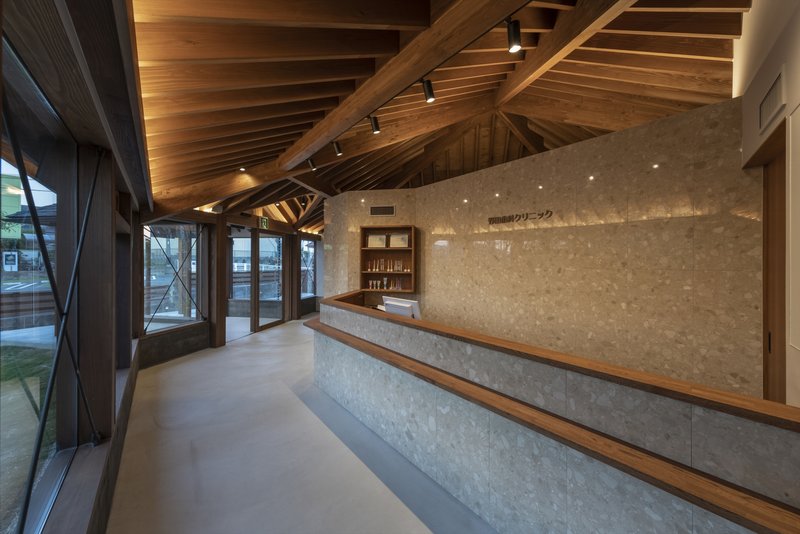
The treatment room is where the thesis gets tested. Patients reclined in a dental chair stare upward, so the vaulted timber ceiling above the operatory functions as the primary visual environment for the most stressful part of the visit. Wooden cabinetry along the walls reinforces the material warmth without sacrificing the clean surfaces that clinical hygiene demands.
At the reception desk, concrete panels provide a counterpoint to the pervasive timber, adding mass and coolness at the point of arrival. The gabled ceiling overhead is washed with track lighting, giving the space a domestic scale that reads as welcoming rather than transactional. These are deliberate tonal shifts: the entry is grounded and solid, the corridors are transparent and green, and the treatment rooms are enclosed but warm.
Material Tectonics and Tile Detailing
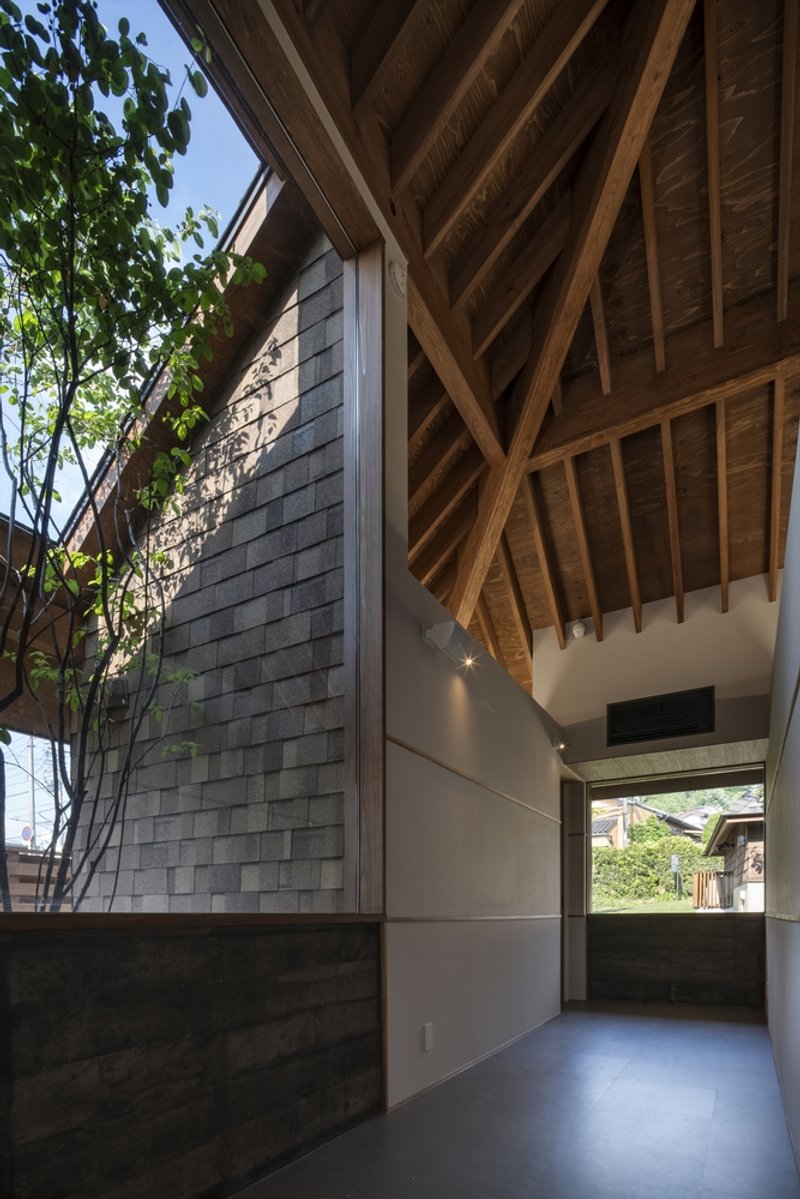
A grey tile wall in one of the interior passages introduces a third material register alongside timber and concrete. Different-sized tiles line portions of the roofs and walls, adding a tactile grain that rewards close looking. The palette is deliberately limited: wood, concrete, plaster, glass, and tile. Each material is left honest, without applied finishes, so the building ages into its setting rather than fighting time.
The narrow courtyard slot, where a single planted tree rises between tile and timber, is perhaps the clearest expression of the project's ethos. Architecture and vegetation occupy the same volume, neither dominating the other. Light enters from above through a skylight, travels down past the canopy, and hits the ground. It is a tiny space, but it carries the full weight of the design idea.
Why This Project Matters
Healthcare architecture in Japan, and everywhere else, tends to prioritize operational efficiency above all. Floors are flat, corridors are straight, finishes are wipeable, and nature exists only as a poster on the wall. Noda Dental Clinic demonstrates that those conventions are choices, not requirements. A clinic can follow the contour of its site, preserve existing trees, and use exposed timber structure without compromising hygiene, function, or budget at this scale.
More broadly, the project is a case study in how architecture can reshape the emotional context of an experience people dread. When neighbors mistake your dental clinic for a café, you have not just designed a good building; you have challenged a typology. TSC Architects prove that the smallest civic programs, the ones we visit reluctantly and forget quickly, deserve the same spatial ambition as museums and concert halls.
Noda Dental Clinic by TSC Architects. Toyohashi, Aichi Prefecture, Japan. 263 m². Completed 2023. Photography by Hiroshi Tanigawa.
About the Studio
TSC Architects,
Official website of TSC Architects,, one of the studios behind this project.
tsc-a.comShare Your Own Work on uni.xyz
If projects like this are the kind of work you want to make, uni.xyz is a place to publish your own, find collaborators, and enter design competitions.




Popular Articles
Popular articles from the community


gru.a Builds a 70 m² Timber Shelter That Opens Like a Farm Door in Brazil's Valley of the Vines
In the mountainous region near Rio de Janeiro, a compact retreat uses plywood panels and deep eaves to blur the line between inside and out.
IDIN Architects Wraps a Hua Hin Hotel Around a Private Courtyard to Escape the City
Dusit D2 Hua Hin turns an urban infill site in Thailand's family vacation heartland into a self-contained resort through courtyard planning.
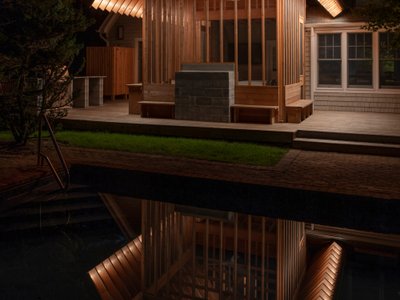
BLDUS Turns a 250-Square-Foot Screened Porch into a Pine Forest Temple in East Hampton
A gabled cedar pavilion mimics the rhythm of surrounding pines, anchoring a 1990s wooded home to its hollow in Long Island.
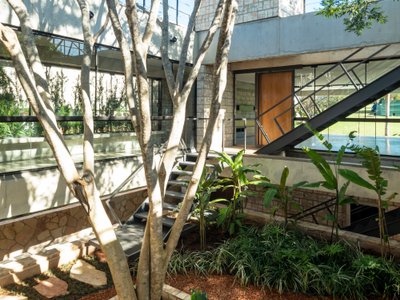
OMCM arquitectos Builds a Summer House in Paraguay from Quarry Waste Blocks and Three Sacred Trees
In the young hillside neighborhood of Altos, a 696-square-meter concrete volume hovers on six pillars around three preserved native Yvyraju trees.


Similar Reads
You might also enjoy these articles

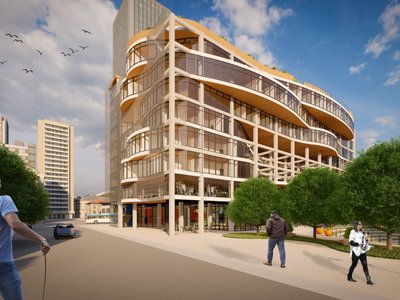
Olio Towers: A Mid-Rise for Performers That Fuses Housing, Rehearsal, and Stage
Located blocks from Houston's Theater District, this modular tower stacks living units around a central performance atrium.
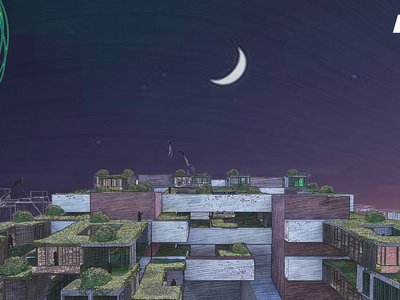
Oasis: Modular Green Housing Carved into Dhaka's Urban Fabric
A shortlisted Plugin Housing entry reclaims unauthorized settlements in Dhaka with stepped concrete volumes, green roofs, and ventilation-driven design.

Black Hole: A Floating Megastructure for the Post-Physical Era
Emiliano Mazzarotto envisions a spherical, self-scaling arena where e-sports, digital hotels, and holographic stadiums replace traditional public space.
Compact & Sustainable Living in Piraeus: A Four-Level Family Home Built Around Light and Air
A narrow townhouse in one of Greece's densest port cities uses a central atrium and passive strategies to house three generations under one roof.


Explore Architecture Competitions
Discover active competitions in this discipline




The International Standard for Design Portfolios


The Global Benchmark for Architecture Dissertation Awards


The Global Benchmark for Graduation Excellence


Challenge to design an Ayurvedic Treatment Center
Comments (0)
Please login or sign up to add comments
No comments yet. Be the first to comment!