

Nova Gorica Railway Station & Vrtača Underpass: A Cross-Border Transformation by SADAR + VUGA
A cross-border railway renewal uniting Slovenia and Italy through a bright underpass, restored heritage station, improved mobility, and vibrant public spaces.


The Nova Gorica Railway Station and Vrtača Underpass by SADAR + VUGA redefine the relationship between Slovenia and Italy through contemporary urban design, sustainable mobility, and sensitive architectural restoration. Located on the invisible border between Nova Gorica (Slovenia) and Gorizia (Italy), the project turns a historically divisive threshold into a welcoming, connective public realm that celebrates cross-border culture and European unity.
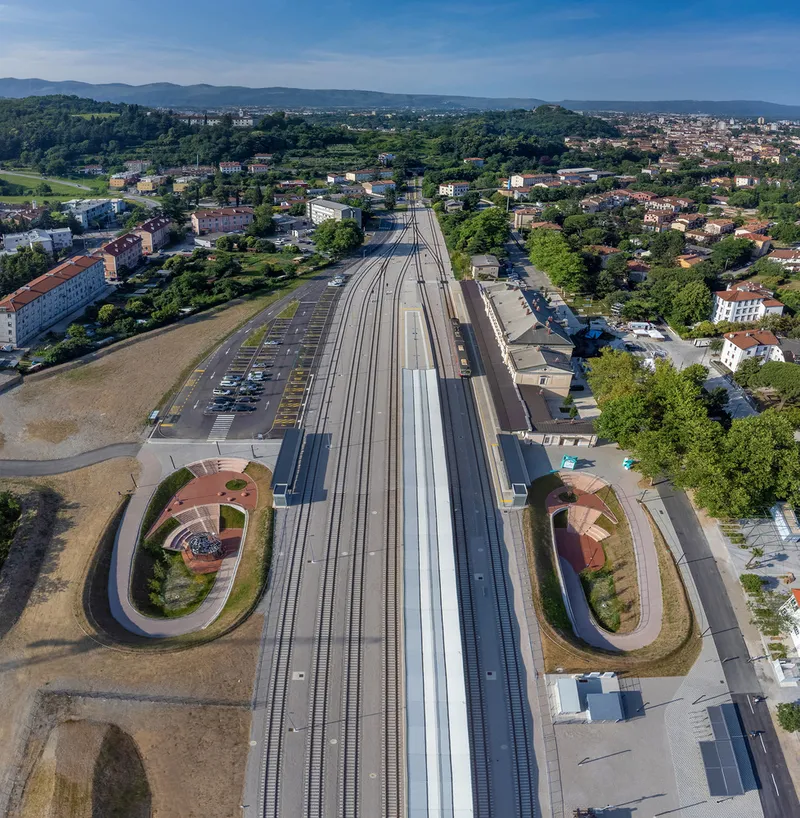
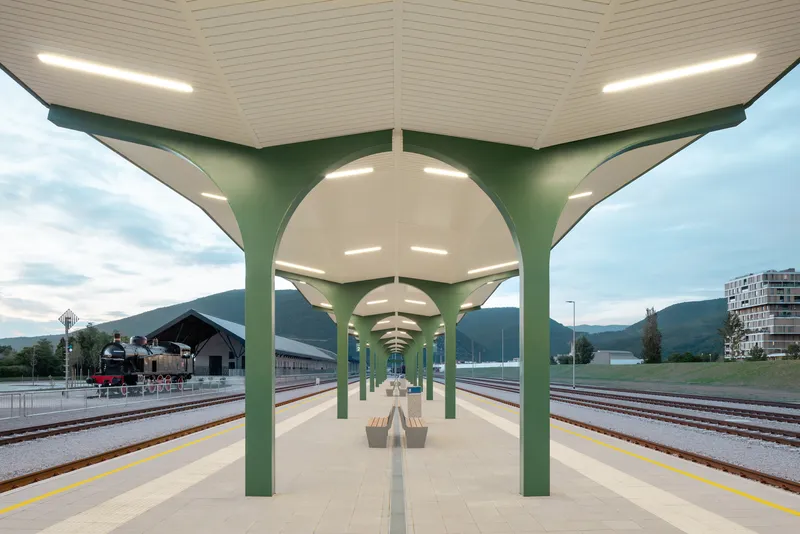
Originally completed in 1906, the historic Transalpina Railway Station long symbolized political separation. The new intervention transforms this once rigid boundary into a vibrant, accessible landscape of movement, encounter, and urban cohesion. Through architectural clarity, infrastructural renewal, and spatial generosity, SADAR + VUGA reposition the station district as a shared civic gateway for both cities.
A New Urban Connection Through Rail Infrastructure
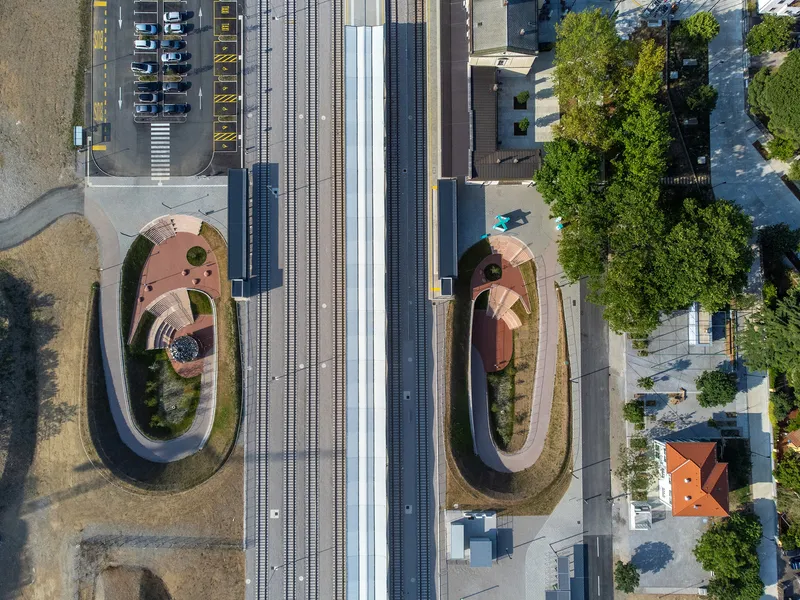
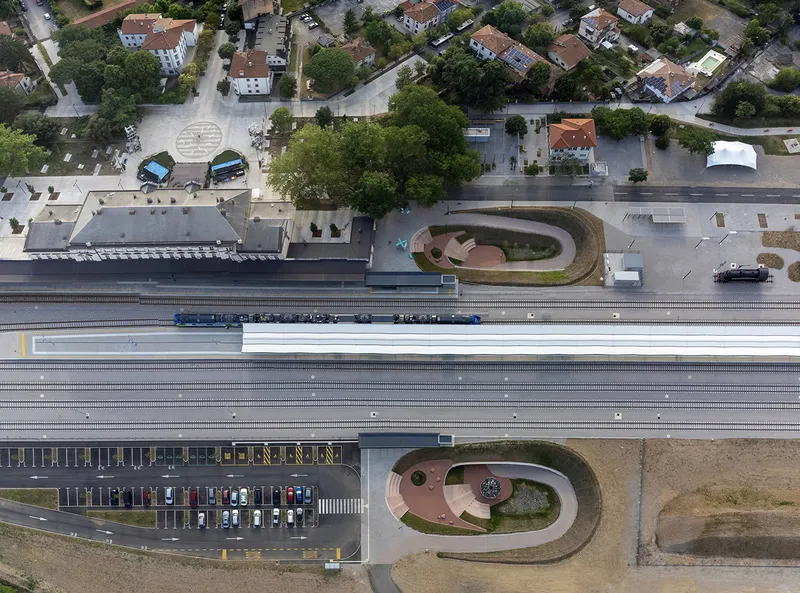
A crucial step in the redevelopment was reducing the former 14-track configuration to a streamlined system of six tracks and a central island platform. This reorganization freed significant space for the creation of the Vrtača Underpass, a newly built pedestrian and cycling corridor that finally provides a safe, direct connection between the two city centers.
More than a passageway, the Vrtača Underpass acts as a symbolic cross-border link, reinforcing accessibility and enhancing the public realm. Its design prioritizes openness and comfort, encouraging daily use by residents, commuters, and visitors.
Designing a Bright, Welcoming Underpass
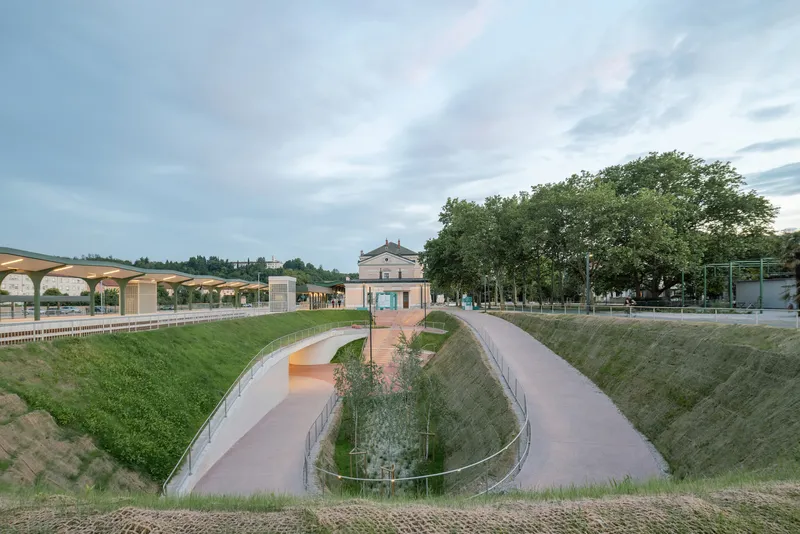
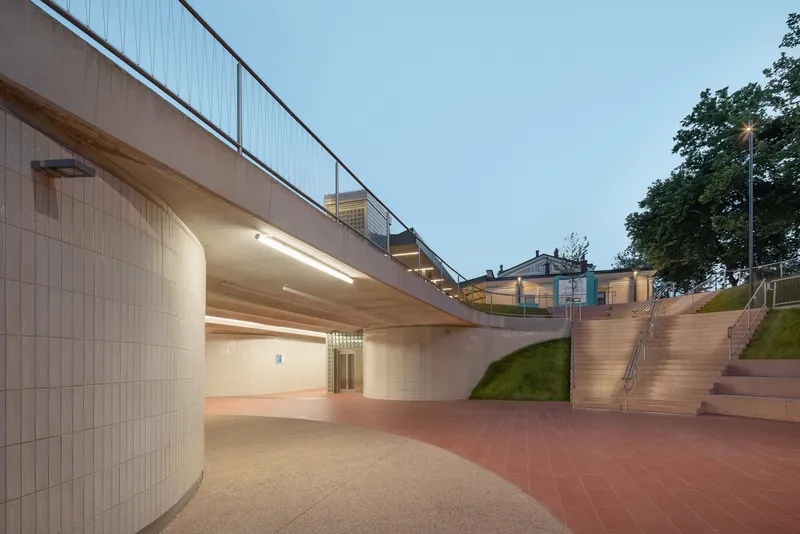
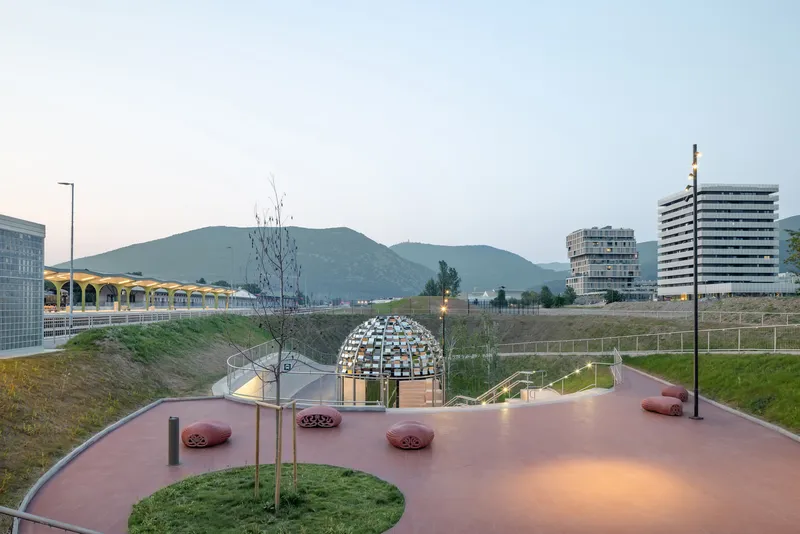
The underpass measures 36.6 meters in length and 8 meters in width, with clearly defined lanes—3.5 meters for cyclists and 4.5 meters for pedestrians. Each end opens into elliptical sunken plazas, known locally as “vrtače”, which function as informal gathering spaces. These sculpted ditches absorb daily flows while inviting people to sit, meet, relax, and observe life around the station.
Visitors access the main plateau via broad staircases or elegant spiral ramps designed for cyclists. The experience of moving through the underpass and ascending into the plazas creates a fluid transition between below-ground circulation and open-air public space.
Materiality, Light, and Landscape Integration
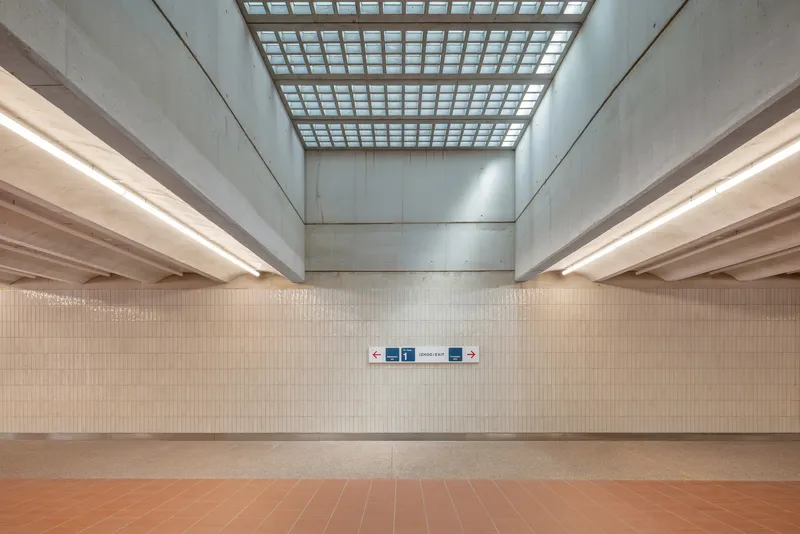
Material choices strengthen the identity of the new station district. Glossy white ceramic tiles line the underpass walls, amplifying natural daylight that enters from both ends and through a central skylight above the platform. The vivid brightness creates a sense of safety and spatial generosity.
The floor features two-tone brick-red ceramic tiles differentiating pedestrian and cycling flows. This warm, vibrant paving extends into the plazas, where it meets green planted slopes that visually soften the intervention. Rain gardens placed in the center of each plaza regulate water levels during heavy rainfall, contributing to sustainable stormwater management.
Together, these elements blend infrastructure with landscape, transforming the underpass into a civic experience rather than a utilitarian tunnel.
Restoring the Historic Transalpina Station
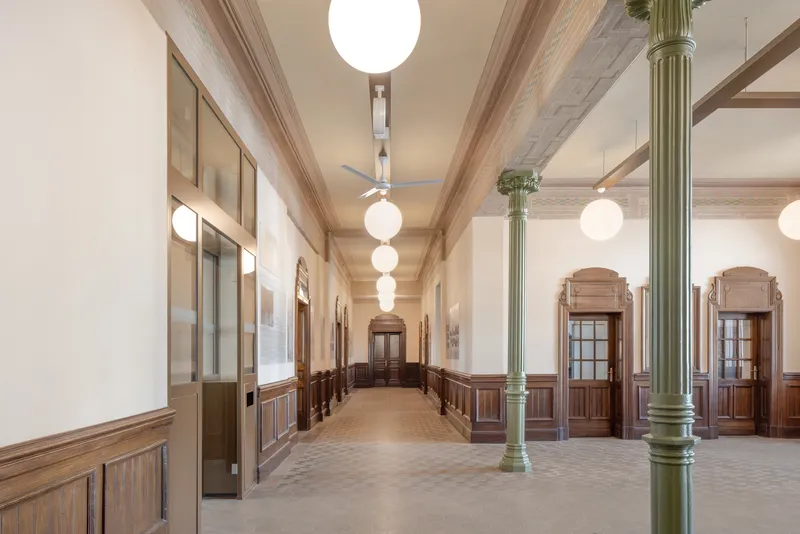
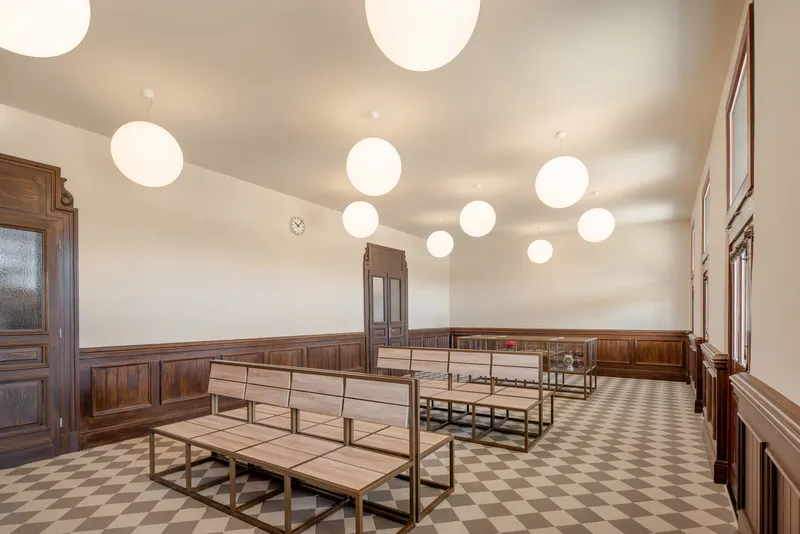
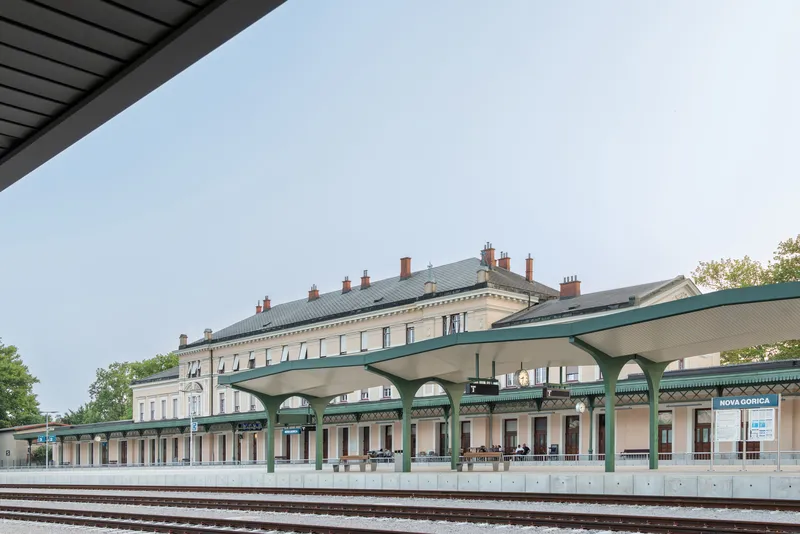
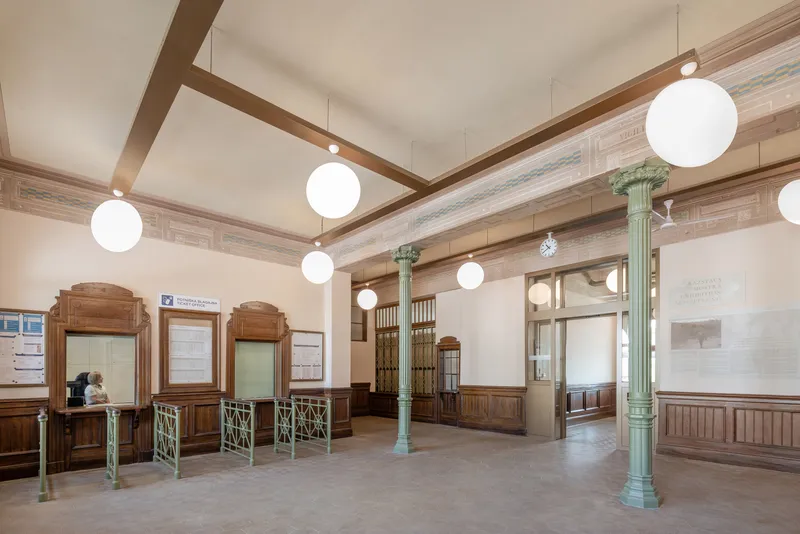
The project also includes a comprehensive renovation of the Transalpina Station building. SADAR + VUGA reimagined the interiors to meet contemporary demands while respecting heritage identity. Key enhancements include redesigned lobby areas, ticket counters, and a new waiting lounge.
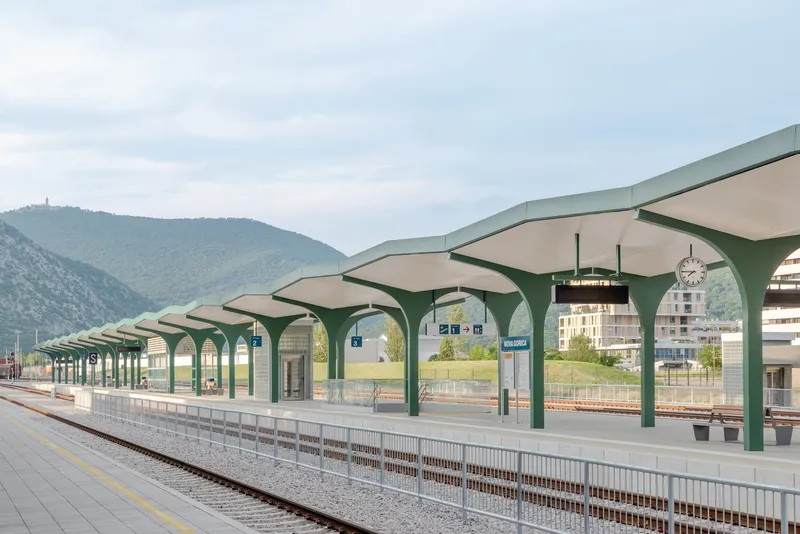
Original architectural features—historic paving, wooden wall paneling, beautifully uncovered frescoes, and the iconic side platform canopy—were carefully restored in collaboration with the Institute for the Protection of Cultural Heritage (ZVKDS). The result is a revitalized station that honors its past while embracing a forward-looking role.
A New European Model for Cross-Border Urbanism
Since its opening, the Vrtača Underpass has become a vital artery for the region’s everyday life. Cyclists, commuters, and residents now traverse the border with ease, redefining it not as a line of division but as a shared public space.
All photographs are works of Ana Skobe, Matjaž Prešeren


Popular Articles
Popular articles from the community


Architekt Andreas Gruber Scatters 23 Dark Timber Chalets Across a South Tyrolean Forest Edge
In Molini di Tures, Amonti Chalets breaks a resort into a hamlet of gabled timber houses, with parking, storage and services pushed into the slope.

Cube Design Draws an Ecological Corridor Between Two Shenzhen Hills with the Nankai Building
Beside Shenzhen's container docks, the Nankai Building pairs stacked balconies with a climbing green screen to connect two hillsides across its height.

David Ortega Stacks a Two-Story Mexico City Penthouse Around a Steel Stair and a Pergola-Shaded Roof Terrace
In Colonia Roma, a 300 m² penthouse uses oak joinery, a planted steel stair and a slatted roof pergola to make a new-build apartment feel like a house.

LT2A and OPEN Architectes Thread a Brick and Glass High School Through a Wooded Belgian Campus
In Braine-l'Alleud, a 3,000 m² wing for Collège Cardinal Mercier pairs pale brick with a glazed colonnade, deferring to a small chapel and a dense wood.

Similar Reads
You might also enjoy these articles


Hodi-Mandai Geram
Project Function: Preservation and revitalization of the Intangible heritage and socio-spatial identity of the Hodi by Housing, Cultural Memory Center, Sacred Grove, landscape, local tourism economy


Olio Towers: A Mid-Rise for Performers That Fuses Housing, Rehearsal, and Stage
Located blocks from Houston's Theater District, this modular tower stacks living units around a central performance atrium.

Oasis: Modular Green Housing Carved into Dhaka's Urban Fabric
A shortlisted Plugin Housing entry reclaims unauthorized settlements in Dhaka with stepped concrete volumes, green roofs, and ventilation-driven design.

Black Hole: A Floating Megastructure for the Post-Physical Era
Emiliano Mazzarotto envisions a spherical, self-scaling arena where e-sports, digital hotels, and holographic stadiums replace traditional public space.

Explore Architecture Competitions
Discover active competitions in this discipline

Challenge to design locus for the upliftment of human rights

Challenge to reimagine the Iron Throne

Photograph architecture without architects

Illustrate the lost glory of Angkor Wat - Render Challenge
Comments (0)
Please login or sign up to add comments
No comments yet. Be the first to comment!