
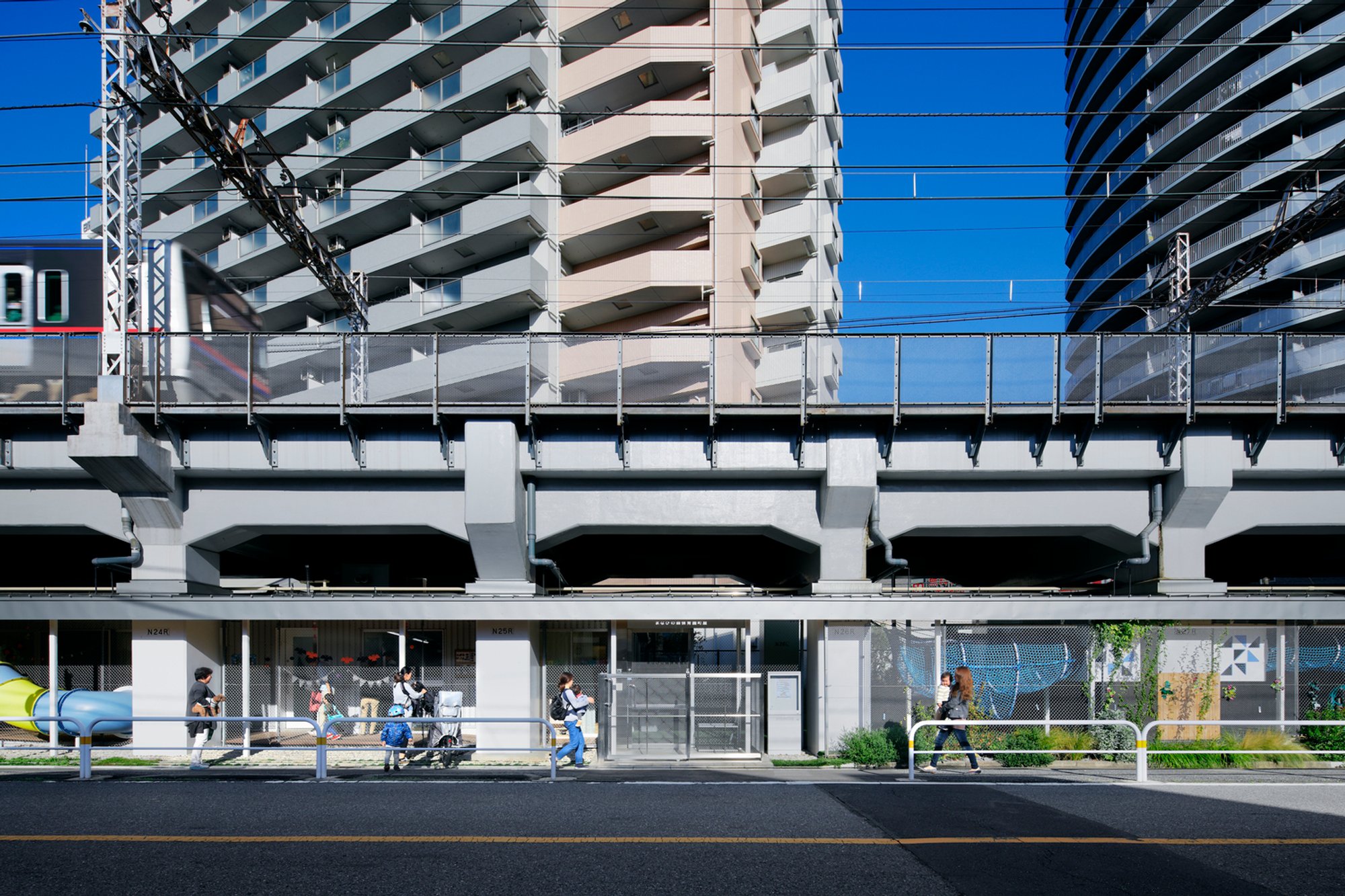
Nursery School Under Elevated Railway in Machiya
Innovative Tokyo nursery beneath elevated railway, transforming urban space into safe, playful, community-focused daycare with semi-outdoor classrooms and sustainable design.

Transforming Urban Infrastructure into Educational Space
The Nursery School Under Elevated Railway in Machiya is an innovative project that repurposes underutilized urban space into a vibrant daycare facility. Addressing the shortage of nursery schools in dense Japanese cities, this project showcases how thoughtful architecture can reconnect communities while providing safe, engaging environments for children.
Historical Context and Site Reuse
Originally built in 1931, the elevated railway supported shops and residences, creating a lively streetscape. After seismic reinforcement, the site remained vacant for years. By introducing the nursery school, the architects revitalized this urban space, reconnecting the neighborhood with its community life.
Design Concept: Open, Protective, and Community-Centric
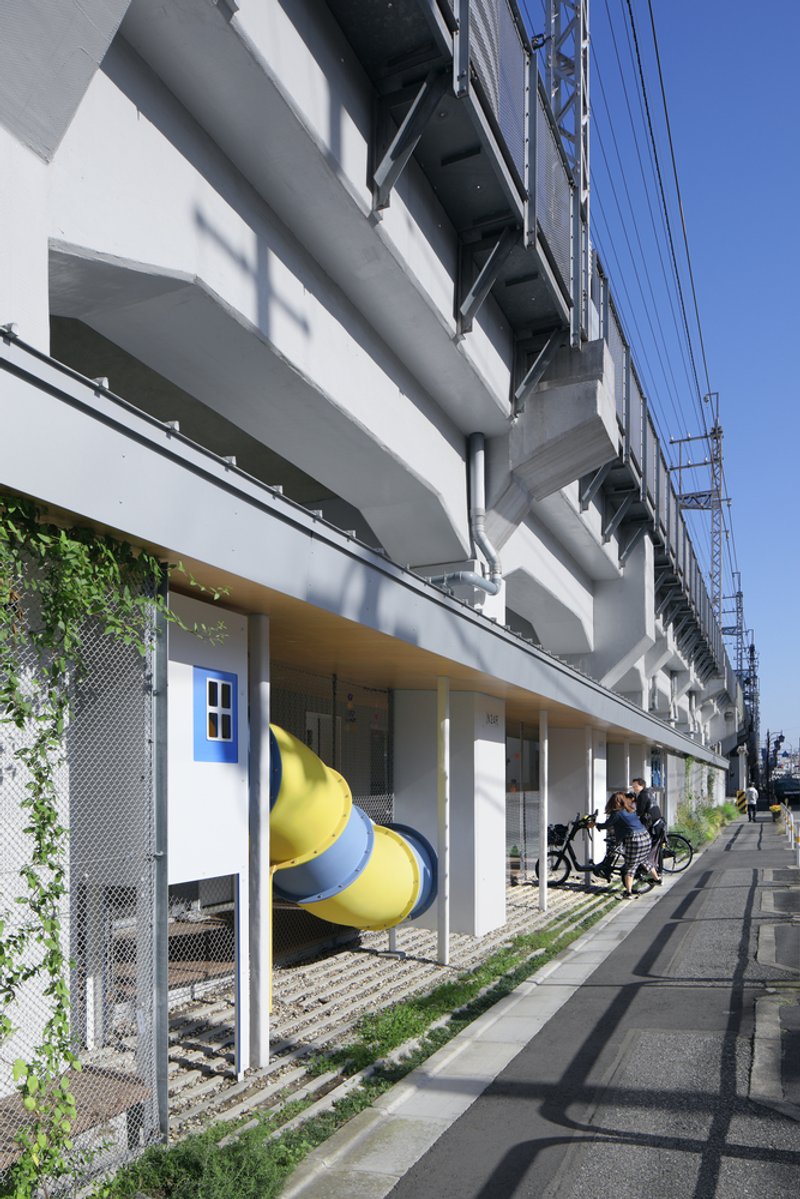
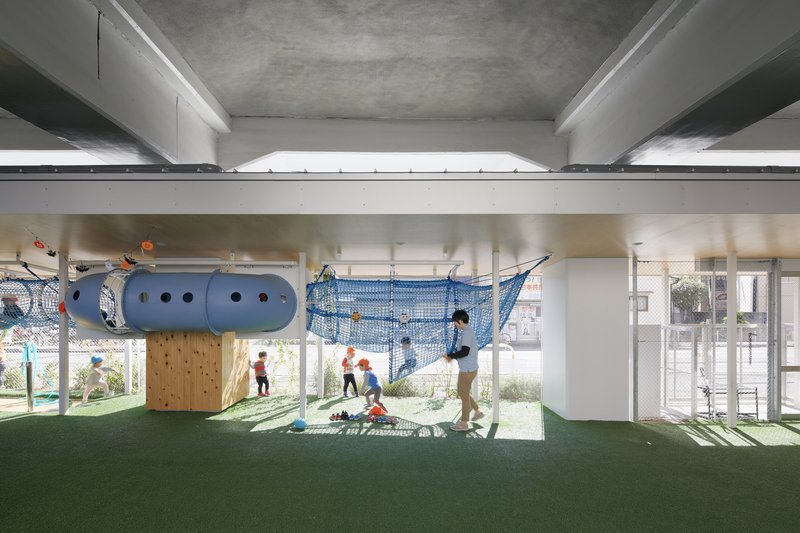
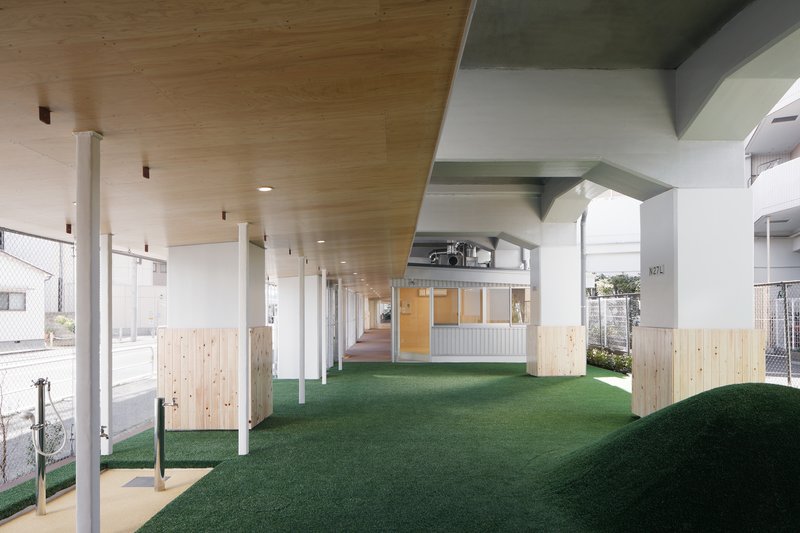
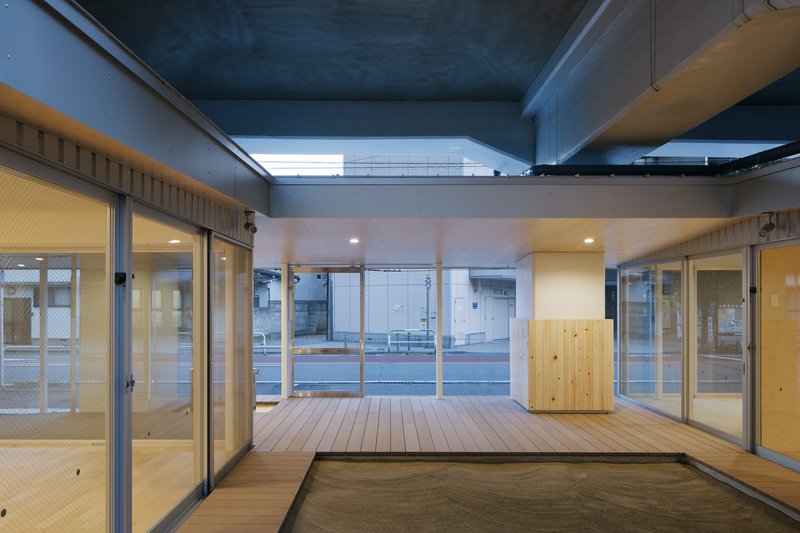
The nursery school is designed to be open to the town yet protective for children. A 67-meter-long horizontal roof harmonizes the scale of the low (3.9 m) elevated structure with the human scale of the nursery. This roof frames the street-facing facade and shelters interior spaces from the hustle of the station area. It also acts as a light shelf, reflecting natural sunlight into the semi-outdoor playground and activity areas.
Spatial Layout and Features
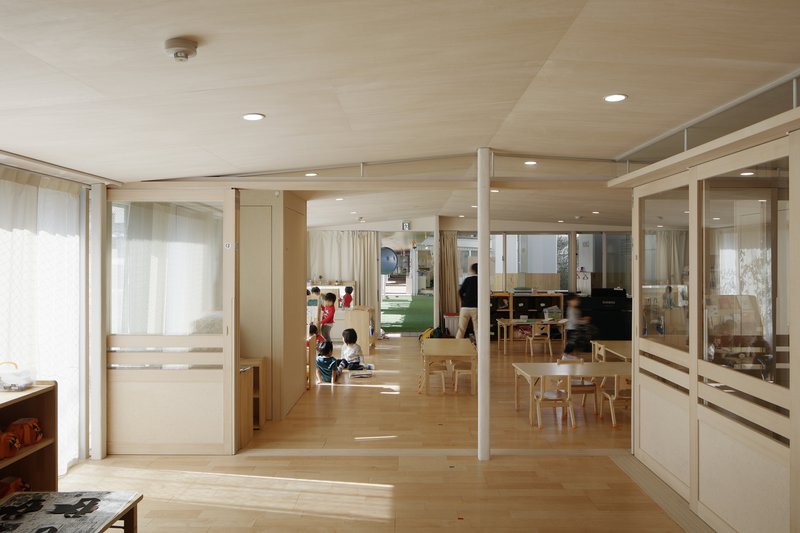
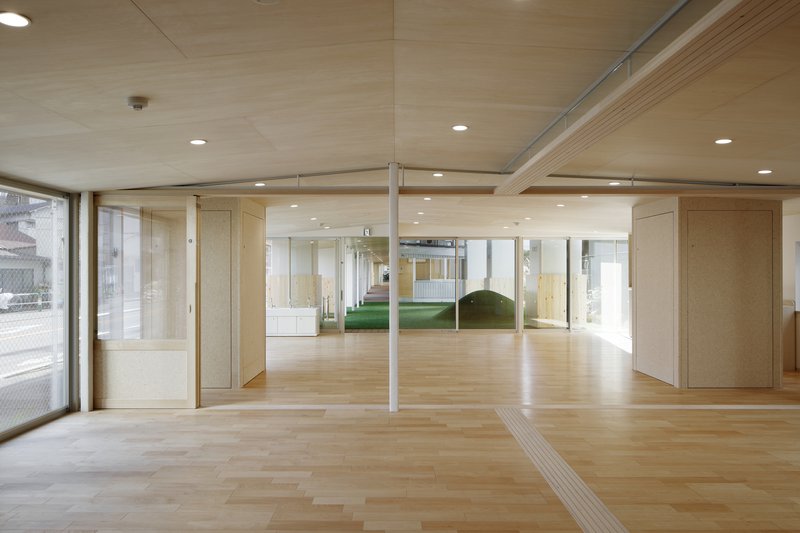
- Nursery rooms are arranged in three clusters across a central playground and sandpit.
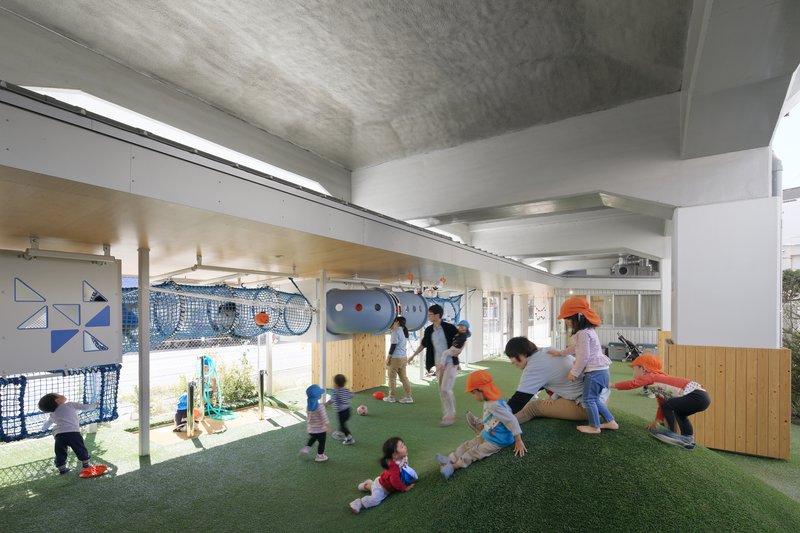
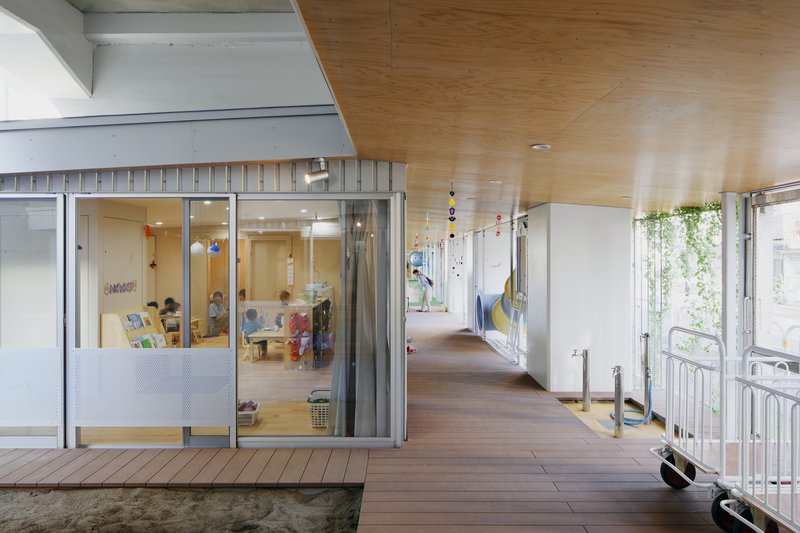
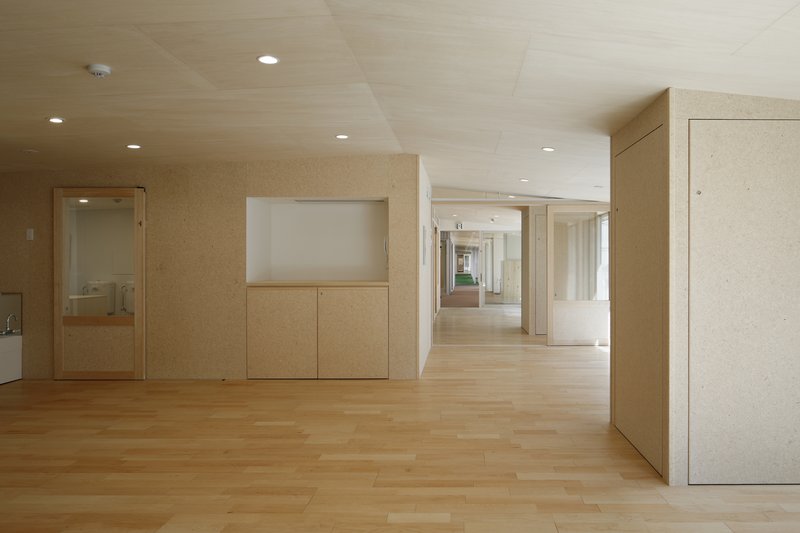
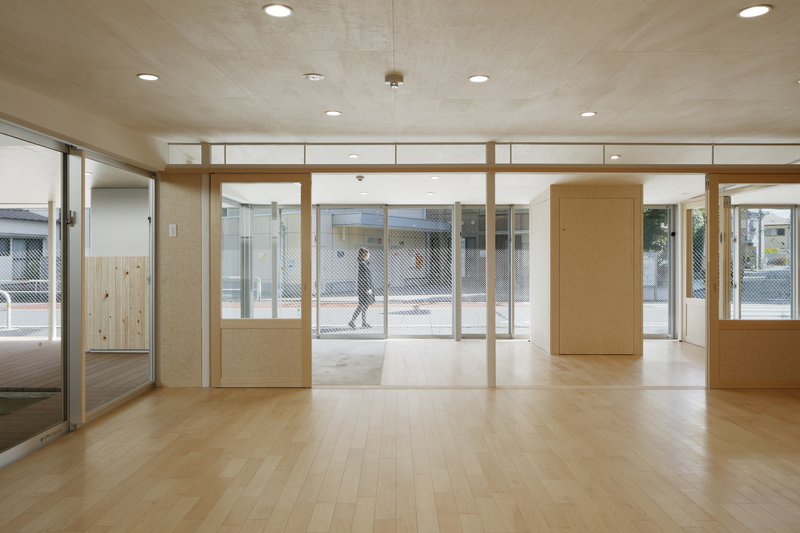
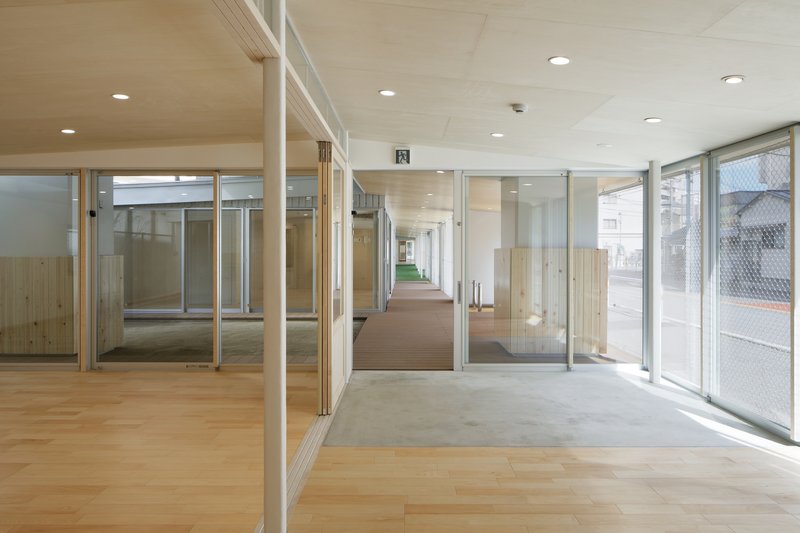
- Semi-outdoor spaces under deep eaves connect rooms and create a visible, engaging street presence.
- Functional areas include washing stations, play equipment, bicycle parking, and entrance porches.
- The 39-meter-long axis under the eaves encourages natural interaction between children and the town.
The design transforms the urban playground into a semi-outdoor environment that is protected from harsh sunlight and rain, while still encouraging community engagement.
Integration with Nature and Community
Deep eaves and seasonal greenery create a sense of security and openness, allowing townspeople to enjoy glimpses of the nursery’s daily life. The street-facing design turns the sidewalk into a living picture scroll, fostering interaction between the nursery and the community.
Sustainability and Urban Reuse
This project exemplifies sustainable urban architecture, turning unused city infrastructure into a functional, child-centric public space. By combining playful design, community engagement, and environmental consideration, it sets a benchmark for future urban daycare projects.
All Photographs are works of Atsushi Ishida




Popular Articles
Popular articles from the community

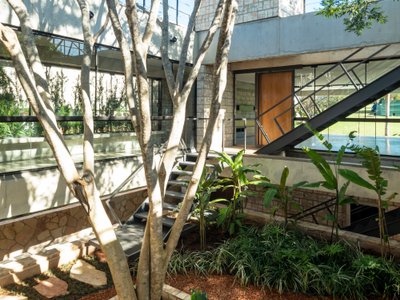
OMCM arquitectos Builds a Summer House in Paraguay from Quarry Waste Blocks and Three Sacred Trees
In the young hillside neighborhood of Altos, a 696-square-meter concrete volume hovers on six pillars around three preserved native Yvyraju trees.
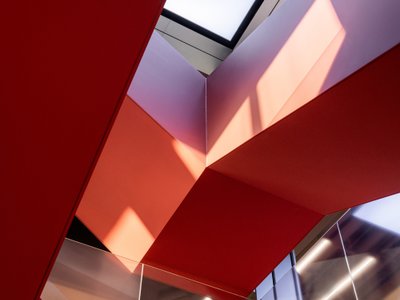
Ippolito Fleitz Group Identity Architects Turn Eight Floors in Shanghai into a Vertical Creative City
Publicis Groupe's new headquarters in Xintiandi reimagines the office as a courtyard-driven urban landscape stacked across eight floors.
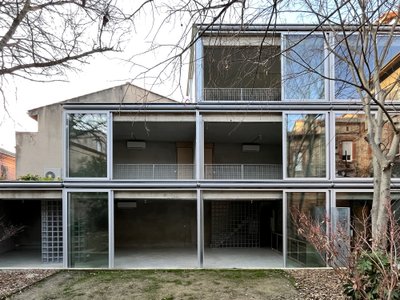
BAST Slots a Four-Story Glass House into a Narrow Gap Between Toulouse Townhouses
In the dense Bonnefoy district, a stepped infill building merges home and office while preserving a majestic hackberry tree.
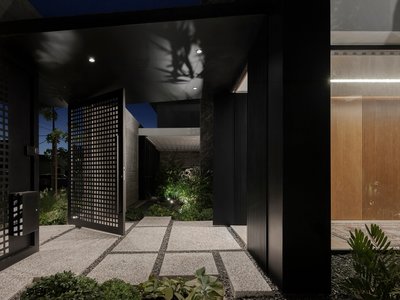
Constanti Architects Builds a Fortress of Privacy in Nicosia with House 345
A concrete and timber residence in Cyprus reinterprets the traditional introverted courtyard house for a new urban landscape.
Similar Reads
You might also enjoy these articles

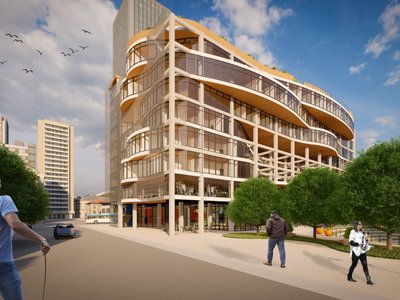
Olio Towers: A Mid-Rise for Performers That Fuses Housing, Rehearsal, and Stage
Located blocks from Houston's Theater District, this modular tower stacks living units around a central performance atrium.
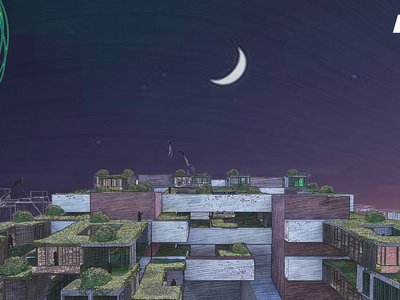
Oasis: Modular Green Housing Carved into Dhaka's Urban Fabric
A shortlisted Plugin Housing entry reclaims unauthorized settlements in Dhaka with stepped concrete volumes, green roofs, and ventilation-driven design.

Black Hole: A Floating Megastructure for the Post-Physical Era
Emiliano Mazzarotto envisions a spherical, self-scaling arena where e-sports, digital hotels, and holographic stadiums replace traditional public space.
Compact & Sustainable Living in Piraeus: A Four-Level Family Home Built Around Light and Air
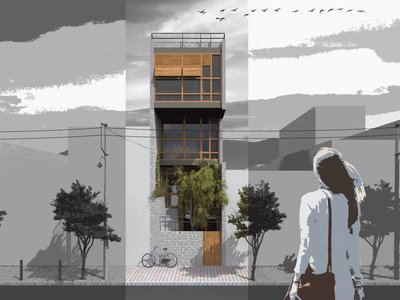
A narrow townhouse in one of Greece's densest port cities uses a central atrium and passive strategies to house three generations under one roof.


Explore Architecture Competitions
Discover active competitions in this discipline




The International Standard for Design Portfolios


The Global Benchmark for Architecture Dissertation Awards


The Global Benchmark for Graduation Excellence


Challenge to design public laboratory
Comments (0)
Please login or sign up to add comments
No comments yet. Be the first to comment!