
Odong Public Library by Unsangdong Architects: A Forest-Inspired Urban Refuge
Odong Public Library in Seongbuk, South Korea, features flowing bookshelf walls, natural light, forest-inspired design, and interactive, community-focused spaces.


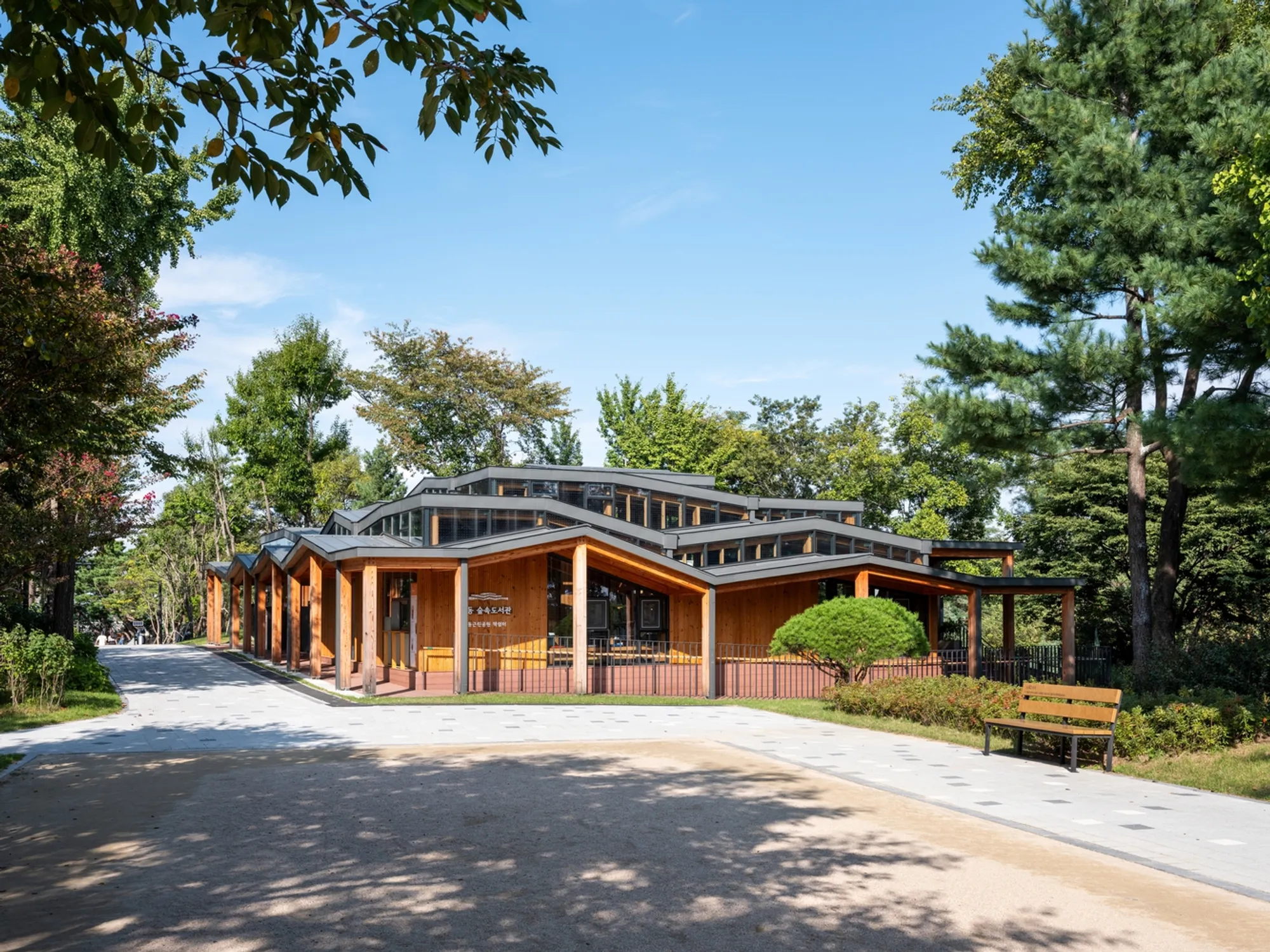
Located in the serene Seongbuk District, South Korea, the Odong Public Library is a remarkable fusion of architecture, community, and nature. Completed in 2023 by Unsangdong Architects under the leadership of Jang Yoongyoo and Shin Changhoon, this 431 m² public library reimagines the concept of learning spaces, offering residents a tranquil retreat amidst urban life.
Context and Vision
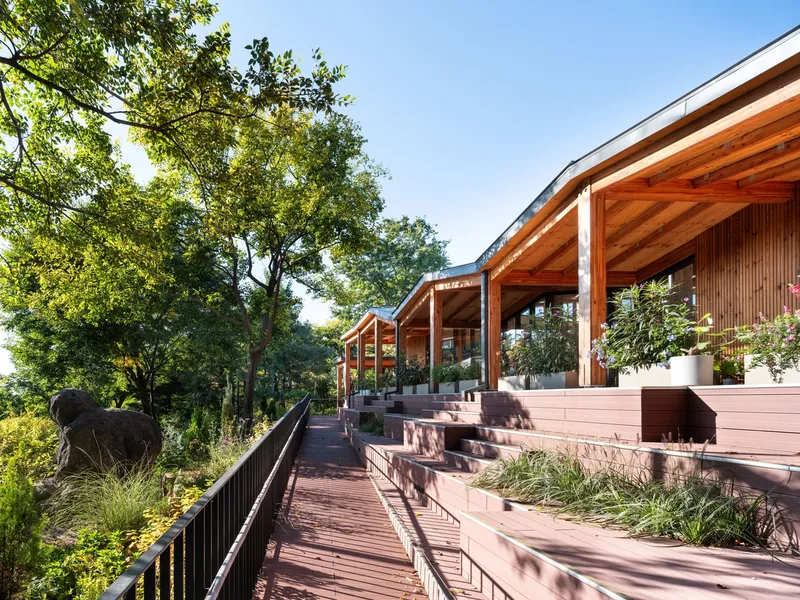
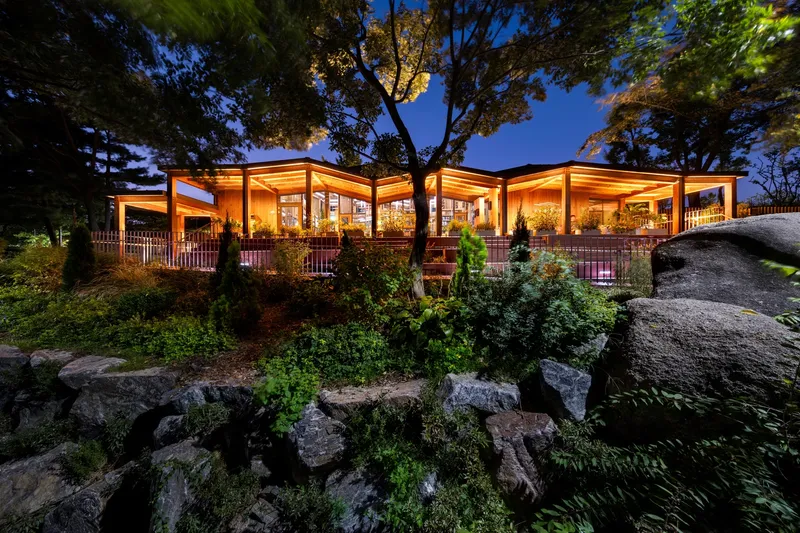
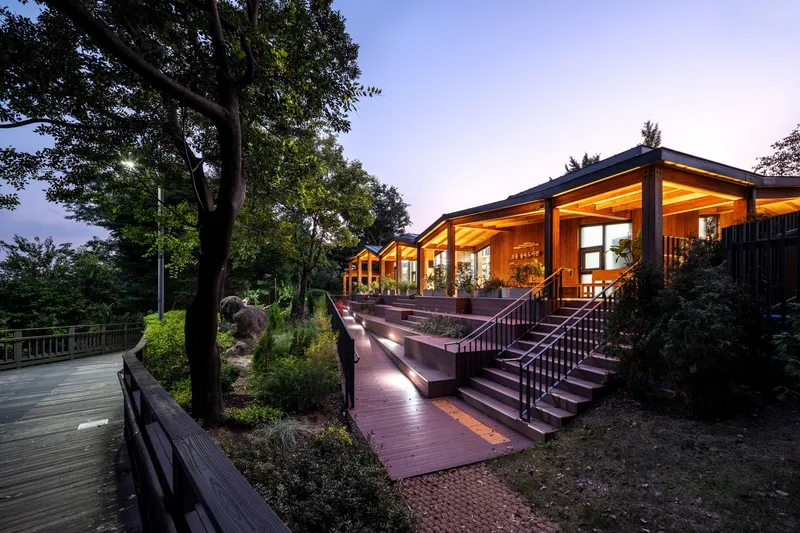
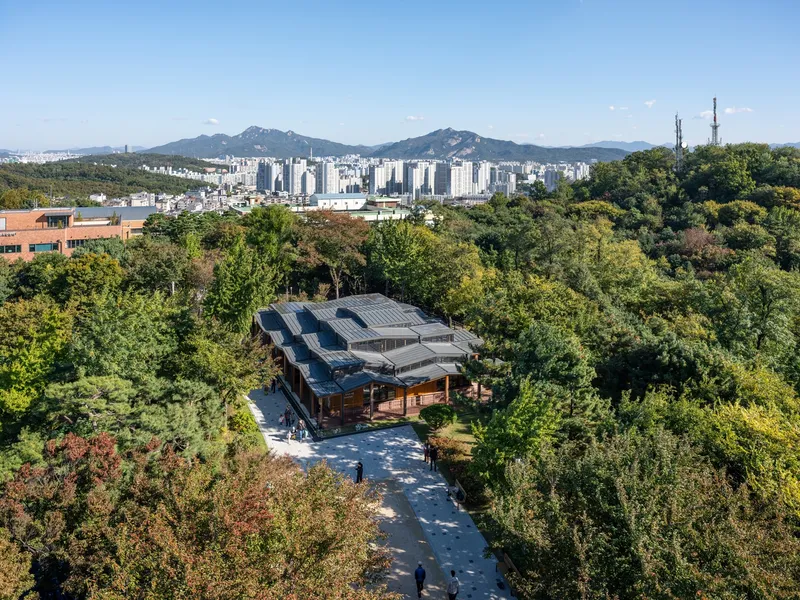
Situated adjacent to Odong Park, a popular urban green space with expansive sloping walkways, the library responds directly to community concerns. Locals had expressed discomfort over dust and noise from an unsightly wood-chopping area, highlighting the need for an innovative architectural solution. Unsangdong Architects envisioned a forest library, a serene environment where visitors could immerse themselves in books while enjoying natural light and greenery. The library acts as a gateway to the park, seamlessly integrating indoor and outdoor experiences.
Architectural Concept
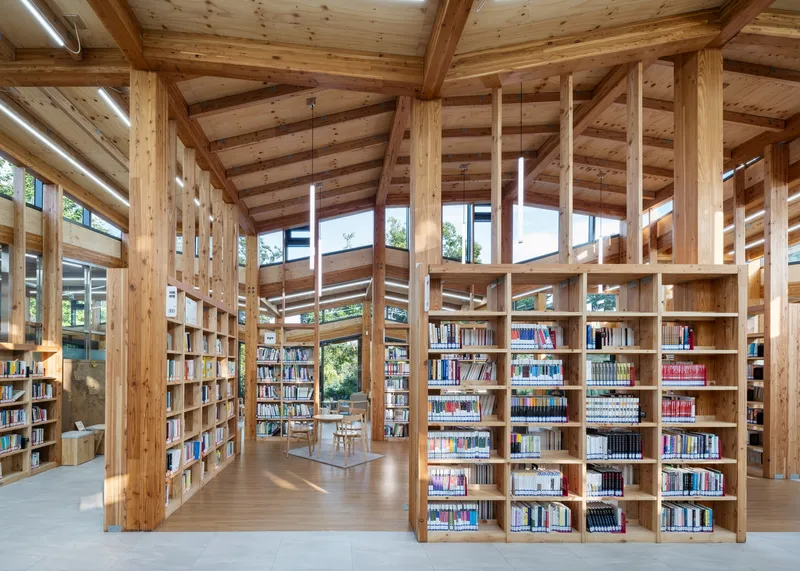
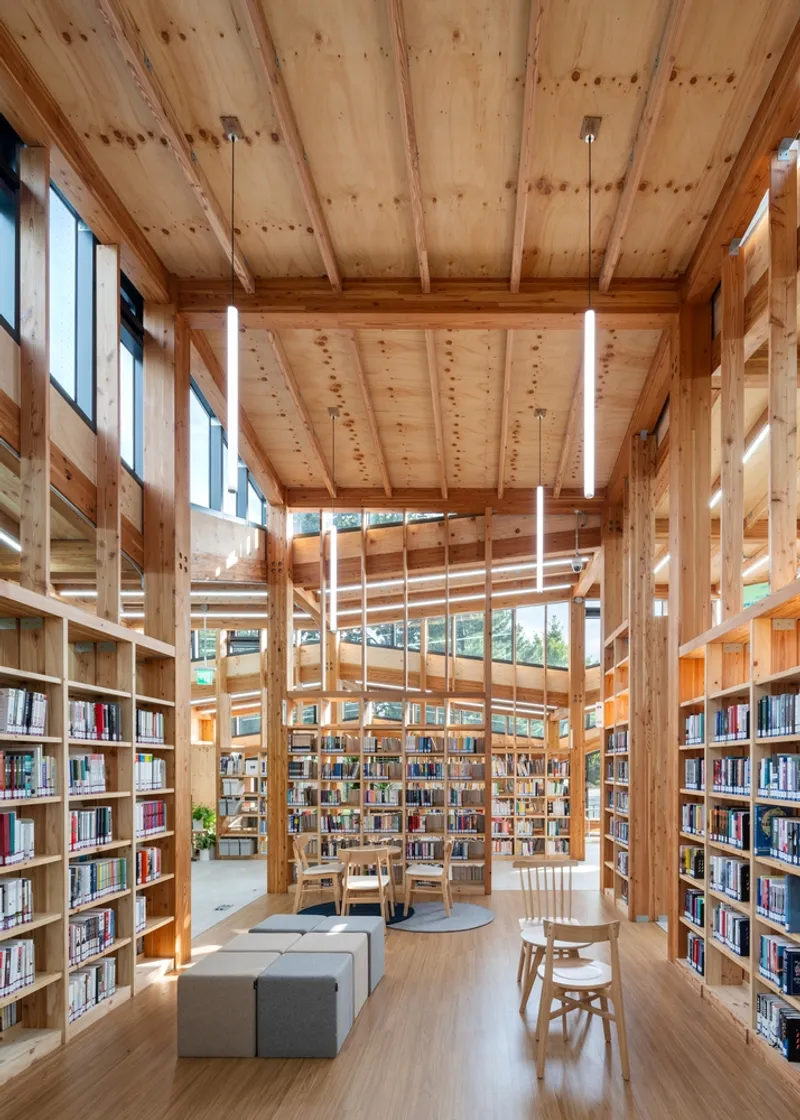
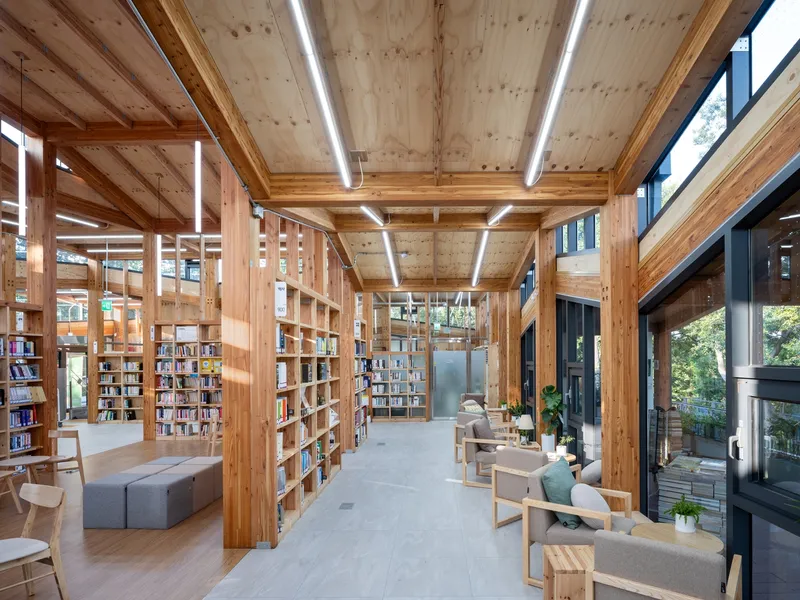
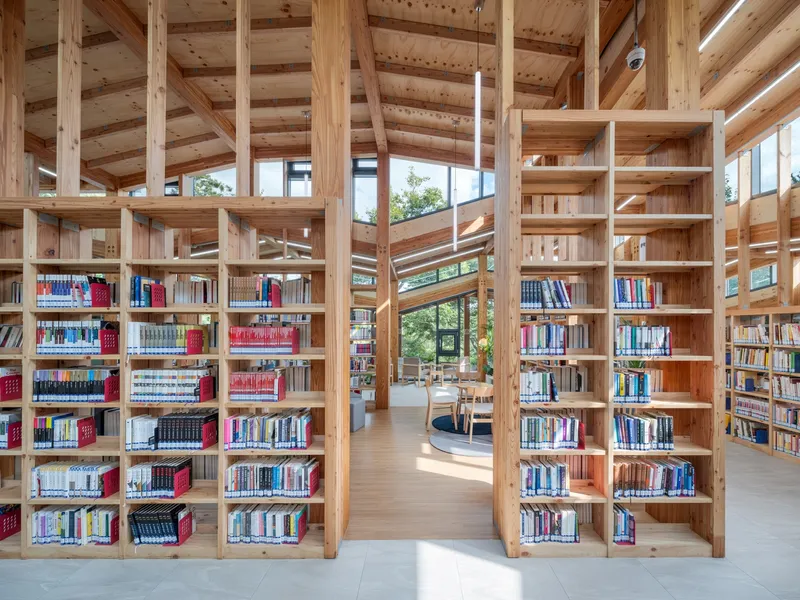
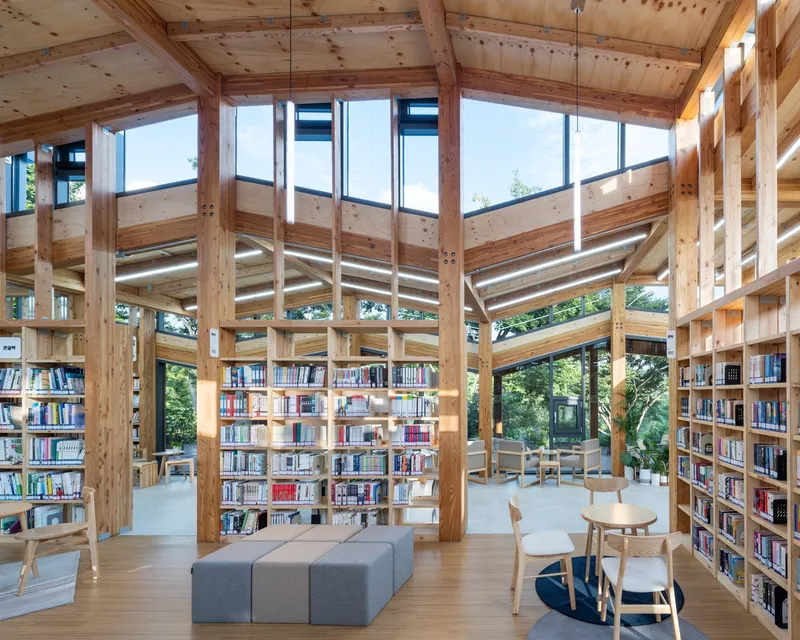
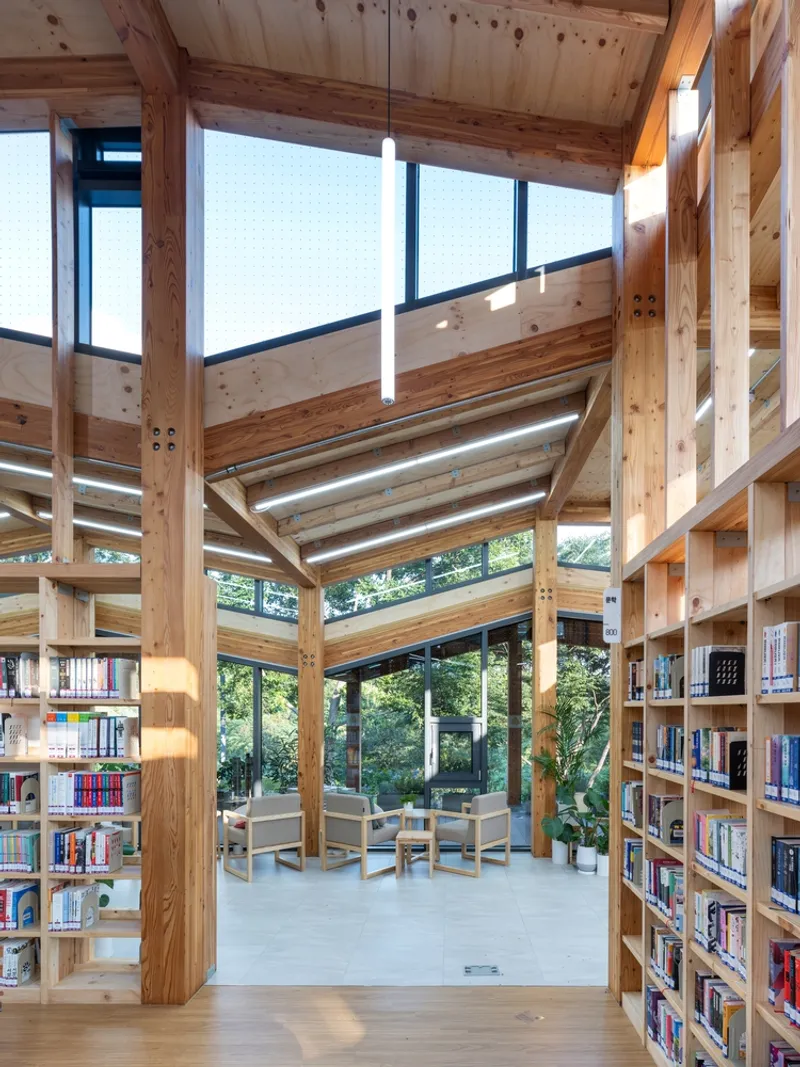
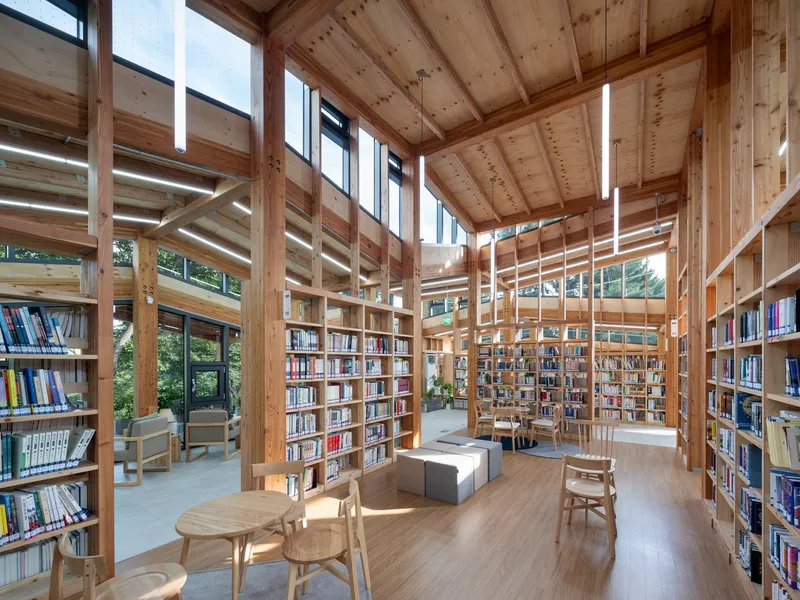
The library’s design revolves around a bookshelf wall structure, which serves both as furniture and as a spatial divider. This flowing wall system replaces traditional rigid partitions, creating an open, interconnected environment that balances autonomy and integration. The main reading hall, crowned by a spiral ceiling reminiscent of a mountain, benefits from varying roof heights and strategically placed openings that allow sunlight to penetrate the interior, enhancing a sense of semi-outdoor space.
The clever use of triangular roof frames, linear windows, and overlapping bookshelf arrangements not only introduces natural light but also visually connects visitors to the surrounding landscape. This interplay of light and structure encourages creativity, curiosity, and playful exploration, making the library a dynamic hub for both children and adults.
Spatial Experience
Despite its modest scale, the library transcends conventional size constraints. The flowing, circular spatial configuration fosters a sense of freedom and purpose, allowing visitors from different social backgrounds to navigate the space intuitively. Small rooms within the library acquire multiple functions, offering versatile experiences for reading, studying, and social interaction.
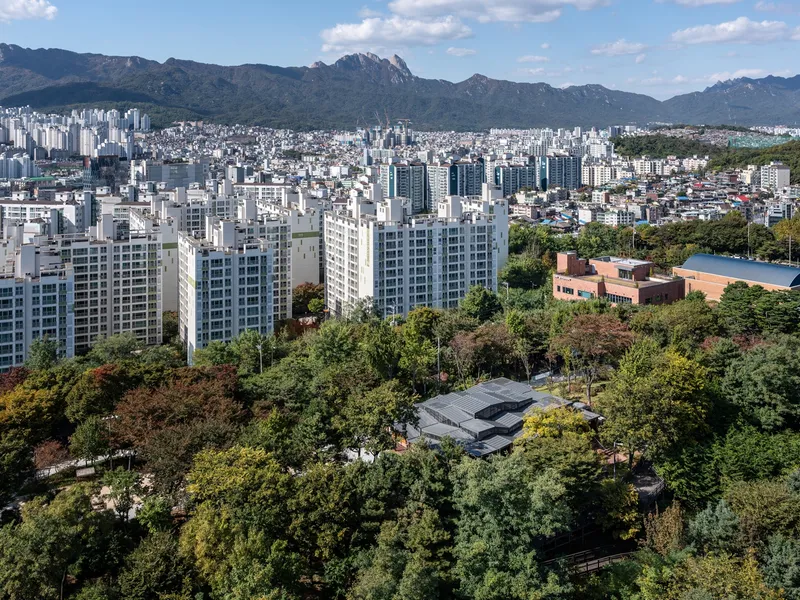
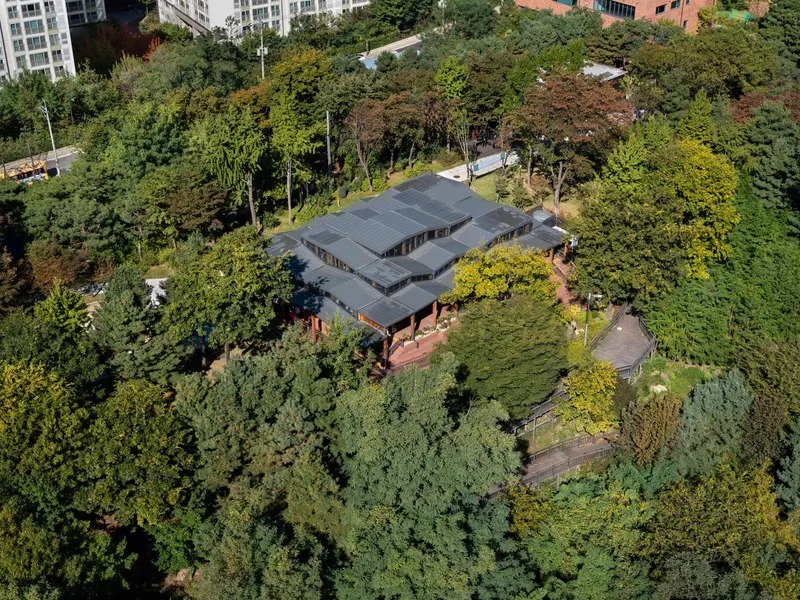
The dual maze structure of the bookshelf walls generates a stimulating environment, promoting interaction and discovery. Each path and nook encourages moments of reflection while maintaining cohesion with the larger architectural program. The library exemplifies how thoughtful spatial design can transform a compact area into a multi-layered public asset.
Materiality and Design Details
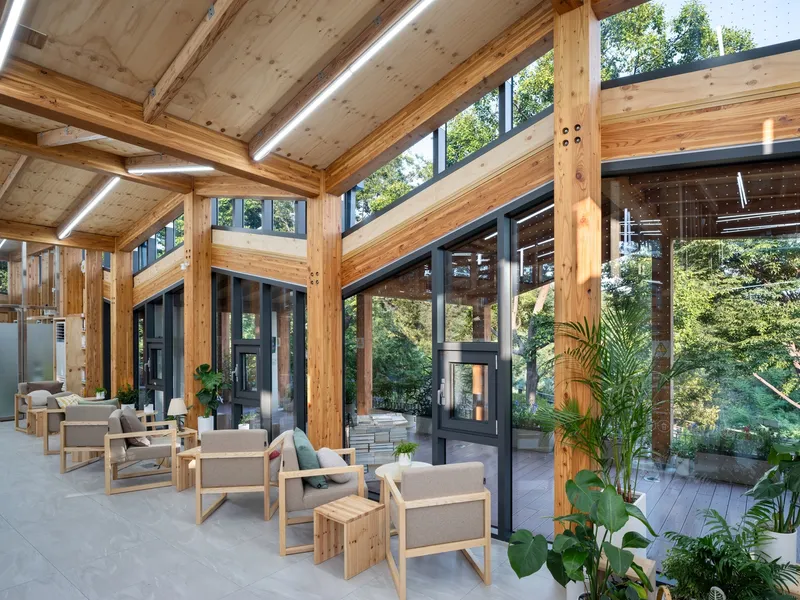
Natural materials dominate the library’s interior, with exposed wood beams, shelving, and furniture enhancing warmth and tactile appeal. The transparency of the roof and window openings ensures an abundance of natural light while providing visual continuity with Odong Park. This combination of materials and design strategies embodies a balance between structure, furniture, and spatial experience, emphasizing sustainability and human-centered design.
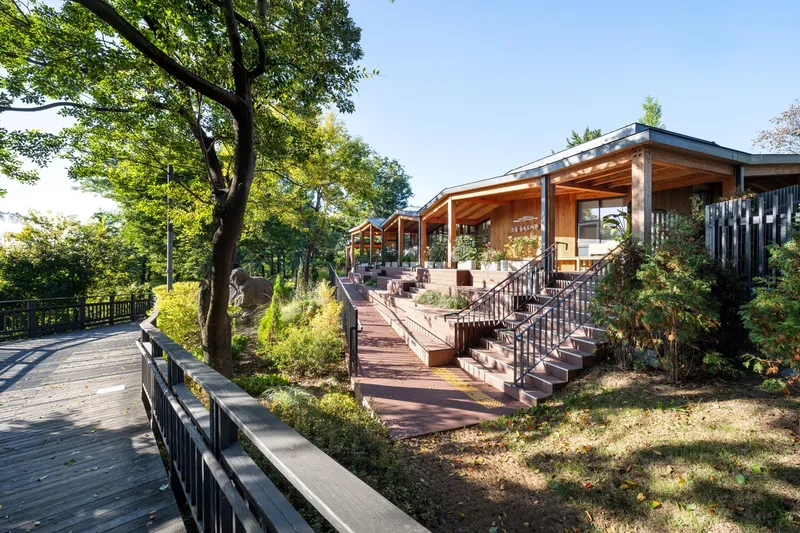
The Odong Public Library stands as a model of innovative public architecture, harmonizing community needs, environmental sensitivity, and contemporary design. By merging functionality, aesthetics, and playful spatial planning, Unsangdong Architects have created a library that is not only a center for learning but also a community landmark, enriching the urban fabric of Seongbuk District.
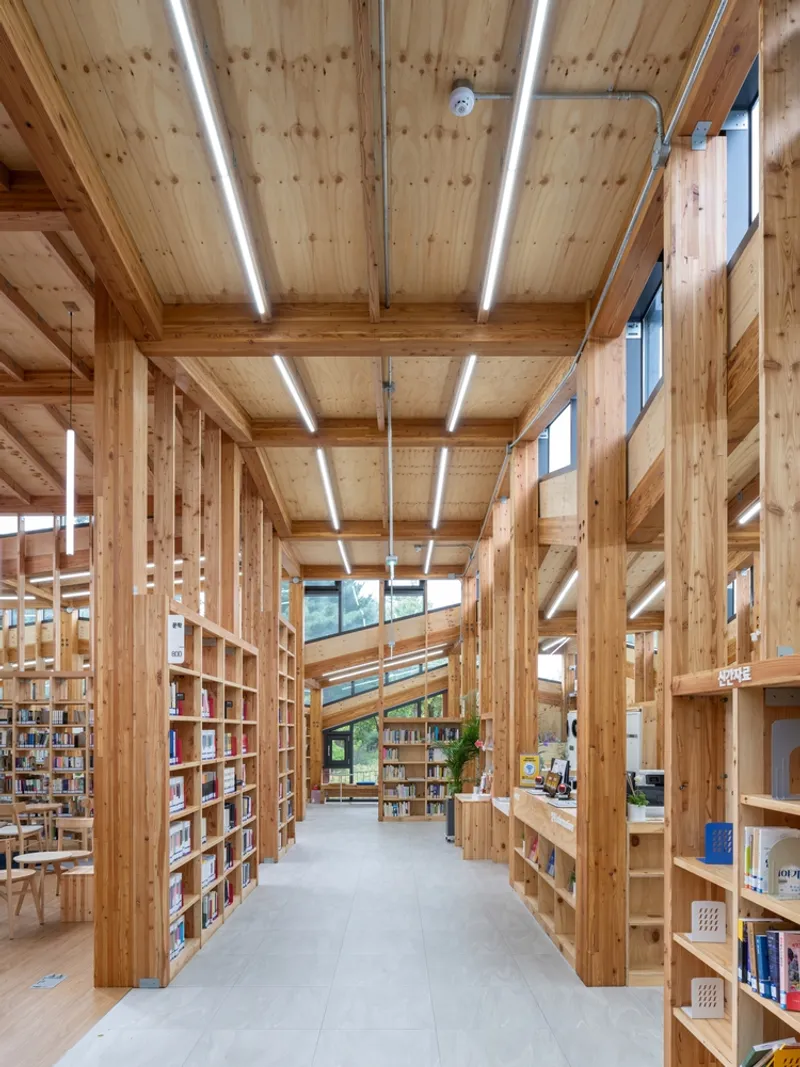
All photographs are works of
Namgoong Sun



Popular Articles
Popular articles from the community


Co-life: Sustainable Architecture for Age-Friendly Community Living
Co-life reimagines sustainable architecture for seniors through courtyards, rammed earth, shared gardens, and spaces designed for belonging.

Riyadh For All: Intergenerational Urban Design for Active Aging in Rabat
Riyadh For All reimagines urban design in Rabat with intergenerational co-living, adaptive courtyards, and Moroccan cultural exchange today.

Play: Fragments of Their World
Familiar architecture becomes modular playground design, creating safe spaces where displaced children can learn, connect, imagine and play.

Lunar Spiral: Space Architecture Shaped by the Mathematics of the Universe
Lunar Spiral reimagines space architecture through Fibonacci geometry, lunar regolith, levitating habitats, and self-sustaining Moon living.

Similar Reads
You might also enjoy these articles


FAMM Arquitectura Organizes Ten Villas Around Courtyards and Jungle in Nosara, Costa Rica
El Molino pairs two elongated volumes with deep overhangs and timber louvers to build a compact coastal community five minutes from the beach.

Oscar Niemeyer's Ibirapuera Park Pavilions Define São Paulo's Cultural Identity in Concrete and Curve
A constellation of modernist volumes set within São Paulo's most important urban park, conceived for the city's 400th anniversary in 1954.
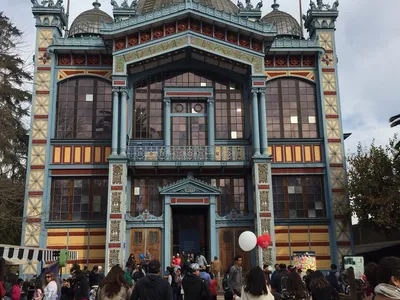
How Henri Picq's 1889 Paris Pavilion Traveled 11,000 Kilometers to Become Santiago's Artequín Museum
A prefabricated iron and glass pavilion built for the Paris Universal Exposition found a second life as a children's art museum in Chile.

Sanjay Puri Architects Wraps a Jaipur Office Tower in Capsule-Shaped Green Buffers
A nine-level climate-responsive workplace near Jaipur Airport uses stacked planter terraces and aluminium screens to fight 40°C heat.


Explore Educational Building Competitions
Discover active competitions in this discipline



Challenge to design public laboratory


Challenge to reimagine the Iron Throne


Photograph architecture without architects


Illustrate the lost glory of Angkor Wat - Render Challenge
Comments (0)
Please login or sign up to add comments
No comments yet. Be the first to comment!