

Old Printery: OFIS Architects Revives Slovenian Modernist Heritage
Old Printery in Slovenia, renovated by OFIS Architects, preserves Savin Sever’s modernist concrete design while adapting for creative, public use.


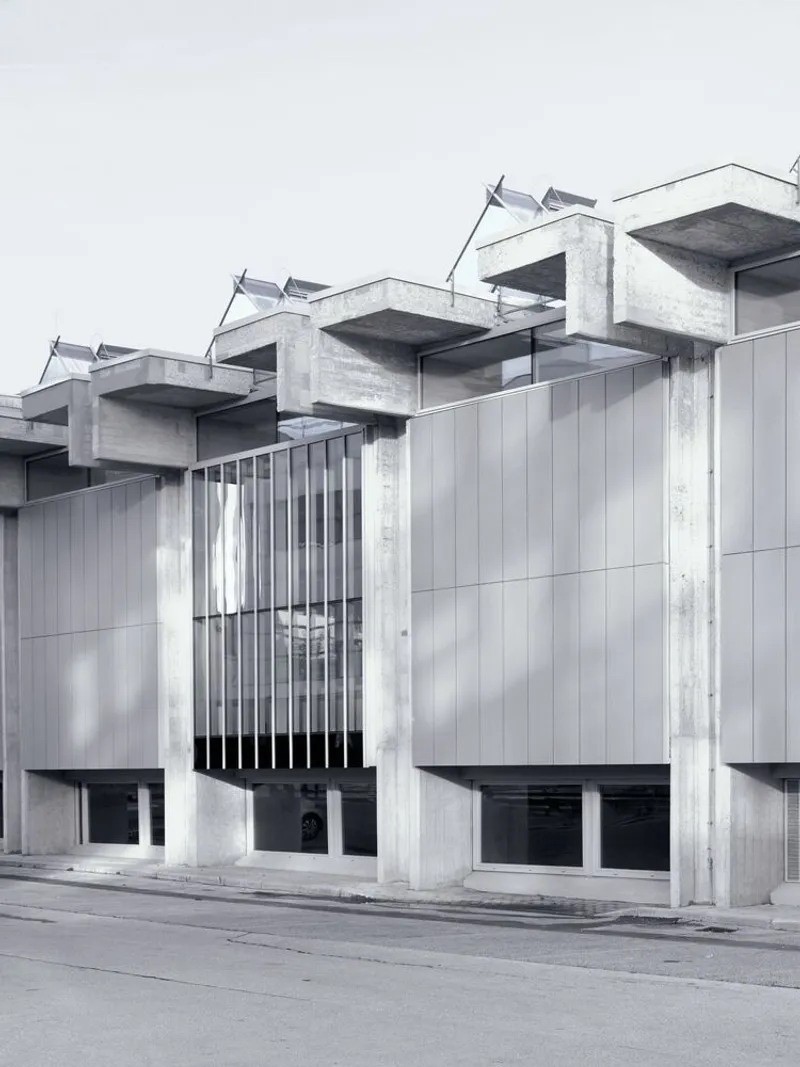
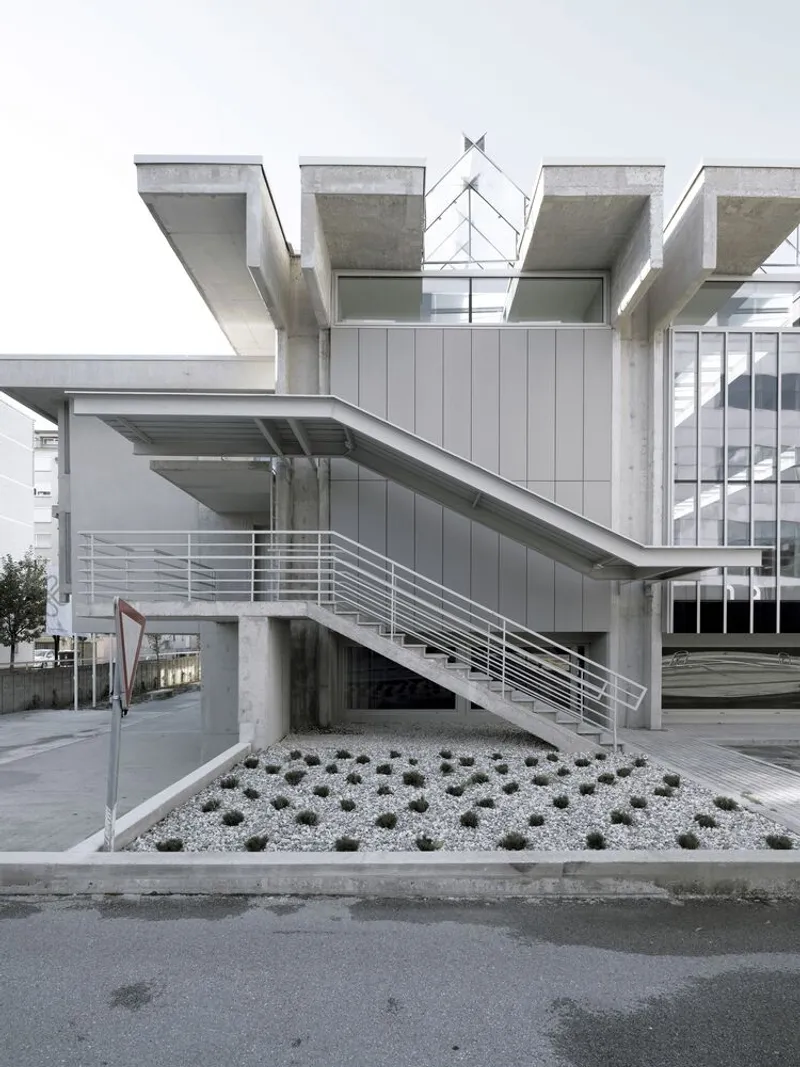
Located in Slovenia, the Old Printery is a landmark example of post-war modernist industrial architecture, recently revitalized by OFIS Architects. Originally designed in the 1960s by the prominent Slovenian architect Savin Sever, the Mladinska knjiga printing house was one of the most modern printing facilities of its era. Sever’s signature modular concrete construction and expressive structural elements reflected the principles of the Ljubljana school of architecture, influenced by Edvard Ravnikar and the modernist poetics of Le Corbusier.
From Industrial Hub to Creative Space
At the turn of the 21st century, the printing house underwent modernization with advanced machinery. However, rapid shifts in digital printing technologies rendered traditional processes obsolete, leading to the building’s closure and years of vacancy. Over time, the large industrial structure found new life as a hub for creative enterprises, generating renewed interest in its unique architectural identity.

Thoughtful Renovation and Preservation
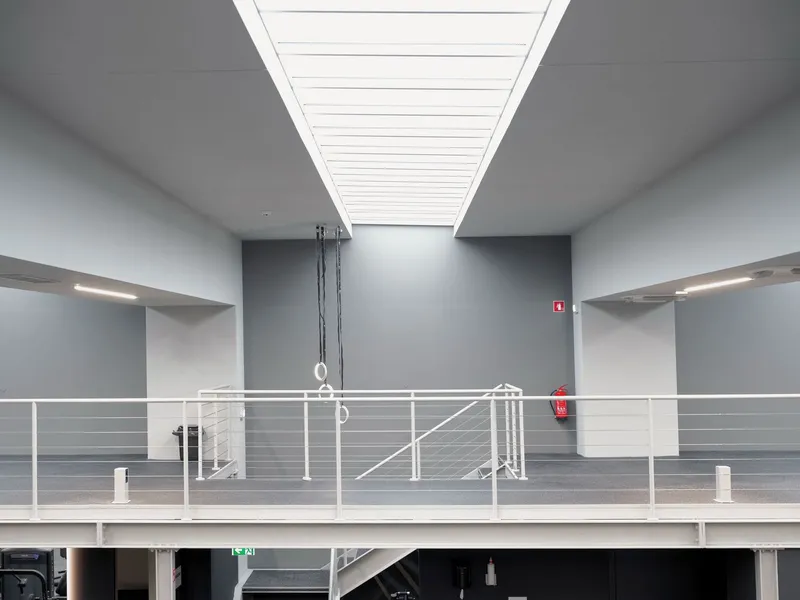
In 2022, the building was acquired by a new owner committed to preserving Sever’s architectural vision. The original concrete framework, dimensioned to support heavy machinery, allowed adaptive reuse without structural reinforcements. The renovation posed significant challenges, particularly regarding thermal insulation. The building’s original design, intended to dissipate heat from printing presses, needed a complete rethinking to meet modern climatic standards.
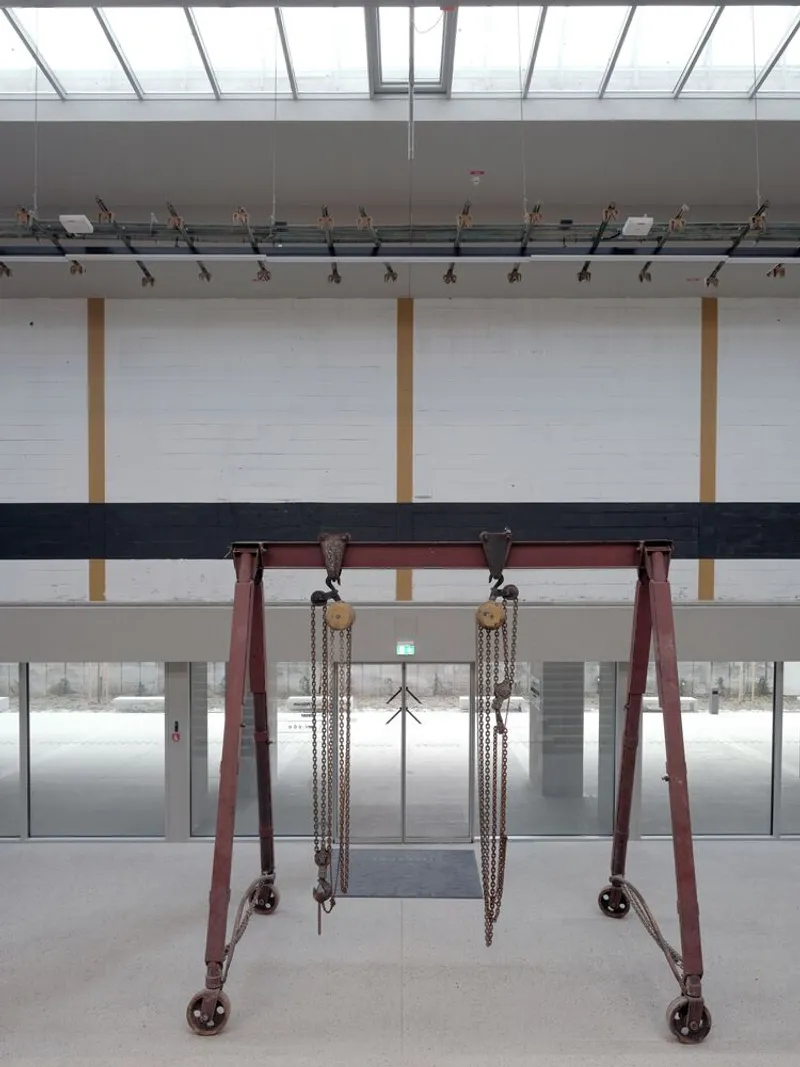
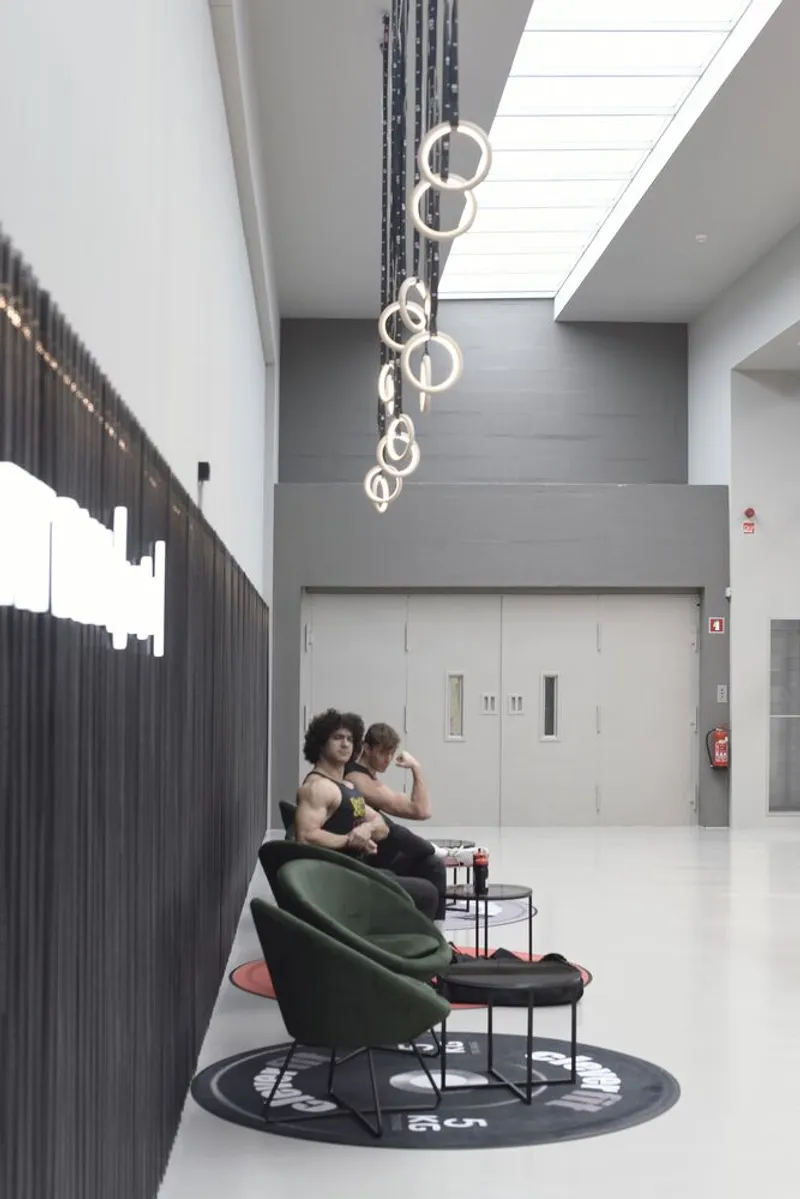
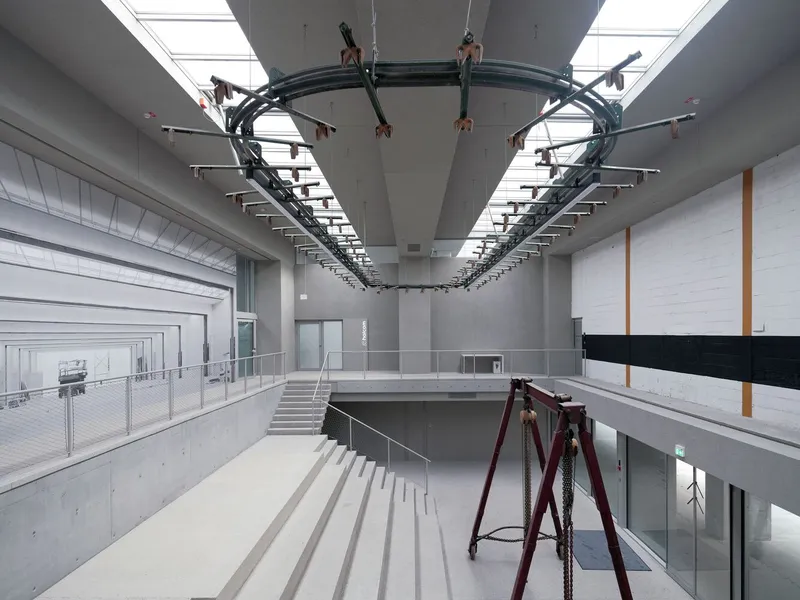
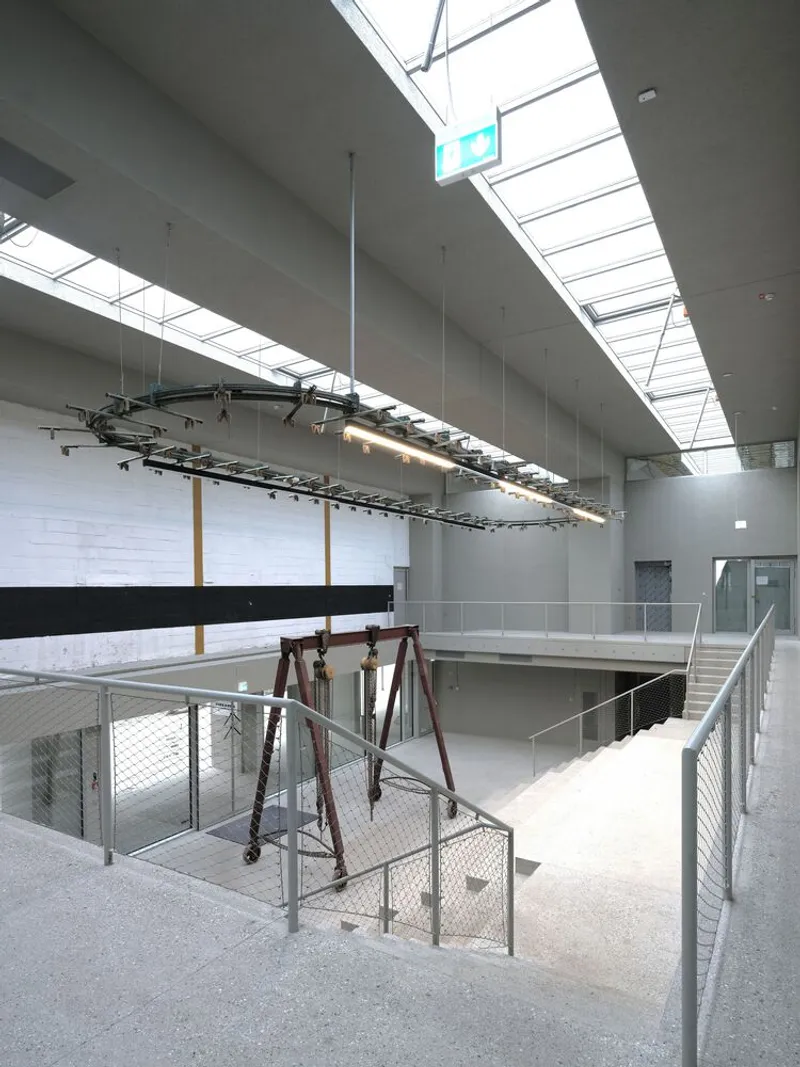
The architects addressed this by adding interior thermal insulation and enhanced glazing, preserving the original glass roof prisms that allow natural light to flood the interior. The façade was updated to reflect Sever’s initial vision of cement panels, which had been replaced with modular bricks during the building’s construction due to cost constraints. This reinstatement both honors the original design and facilitates technical upgrades.

Introducing a Monumental Entrance
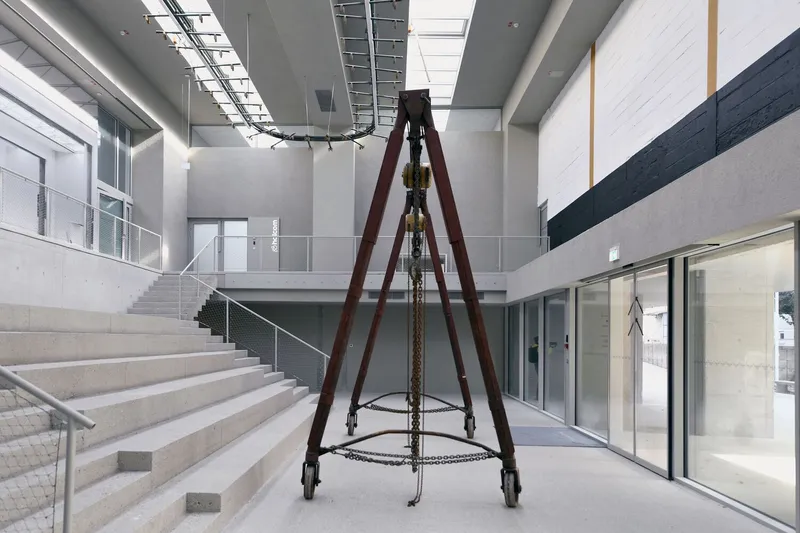
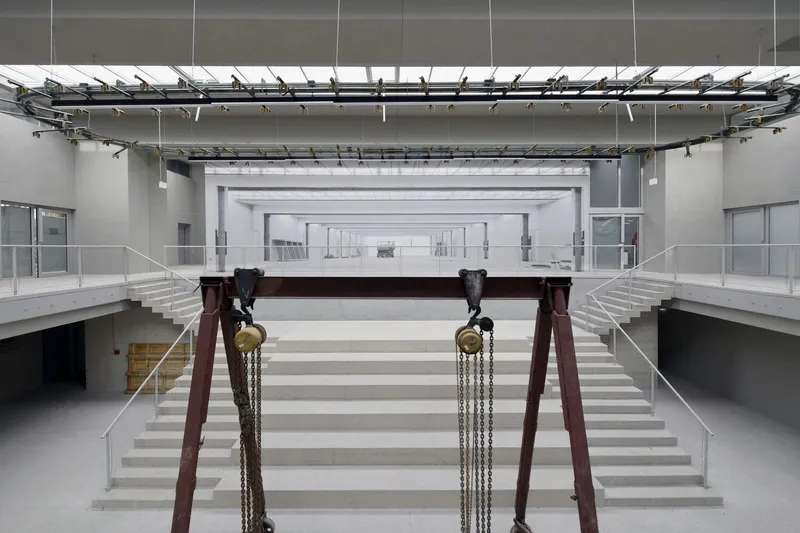
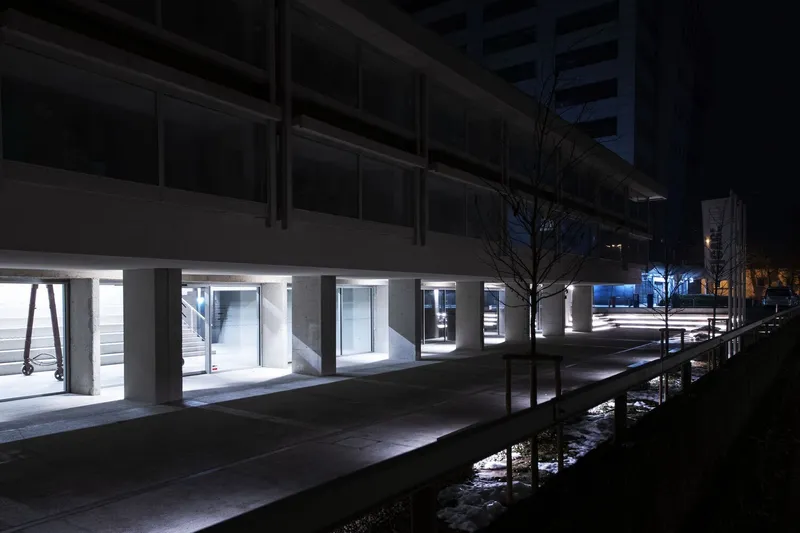
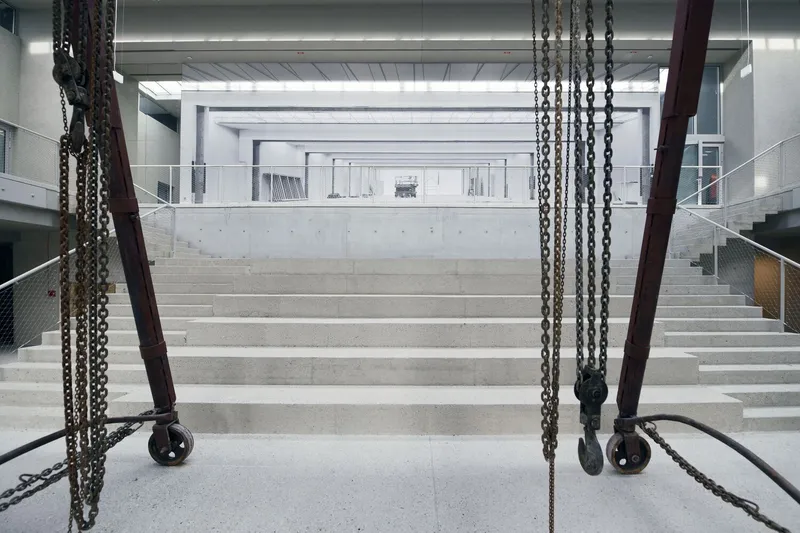
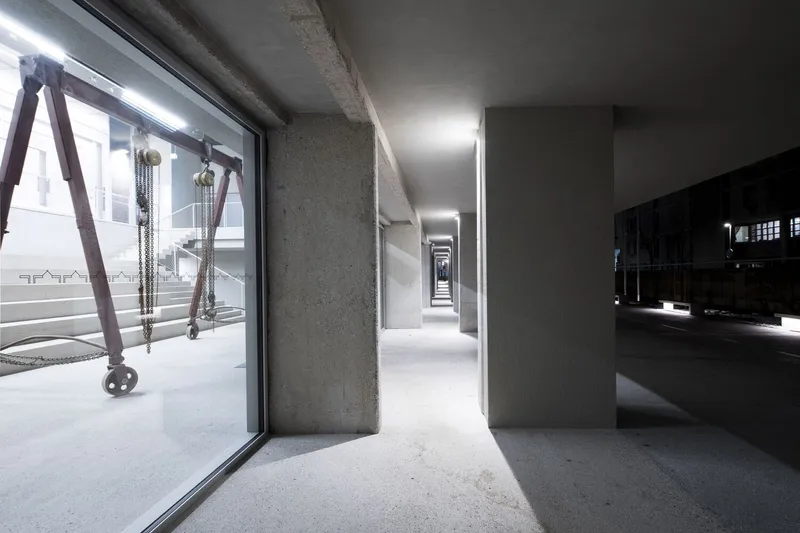
A key intervention in the renovation was the creation of a new southern entrance. Previously, workers accessed the building through office wing dressing rooms, which was unsuitable for the building’s new public and creative functions. The amphitheatrical staircase now forms an interior urban square, welcoming visitors while providing a flexible venue for events, performances, and gatherings. A preserved segment of the original printing machinery serves as a historical artifact, bridging the building’s industrial past with its contemporary use.
A Model for Industrial Heritage Preservation
While several of Sever’s works have been lost to demolition in recent decades, the Old Printery renovation stands as a model of respectful industrial heritage preservation. By integrating modern functionality within Sever’s original architectural framework, OFIS Architects has ensured that this modernist icon not only survives but thrives, serving as an inspiring example of adaptive reuse in industrial architecture.
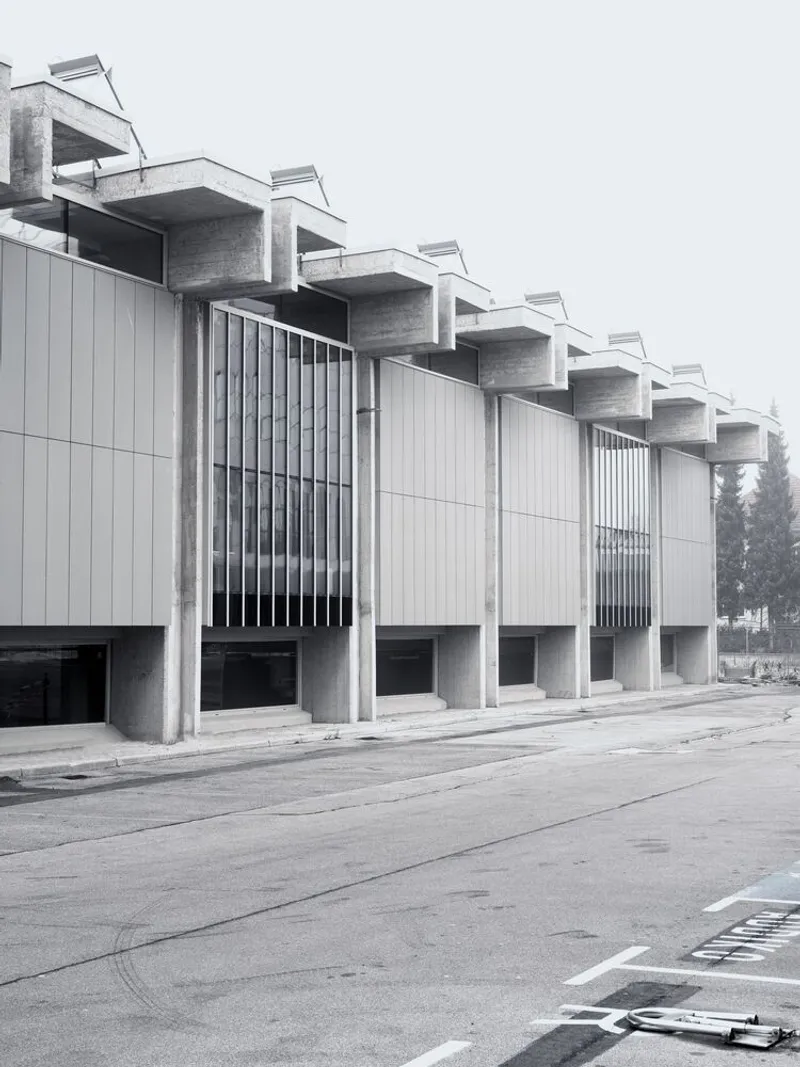
All photographs are works of
Tomaz Gregoric, OFIS Architects




Popular Articles
Popular articles from the community


Lunar Spiral: Space Architecture Shaped by the Mathematics of the Universe
Lunar Spiral reimagines space architecture through Fibonacci geometry, lunar regolith, levitating habitats, and self-sustaining Moon living.

Hill & Cross Opera: Sculptural Opera House Architecture Shaped by Tallinn’s Landscape and Identity
Hill & Cross Opera reimagines opera house architecture in Tallinn through its sculptural hill, civic plaza, glass wave and a luminous cross.

Conexión: Biophilic Design Reimagines High-Rise Living in Hong Kong
Conexión reimagines high-rise living in Hong Kong through biophilic design, green facades, shared spaces, daylight, water and nature within.

The Musturak Paradise: Senior Living Architecture for a Connected Future in Temara, Morocco
The Musturak Paradise reimagines senior living architecture in Temara via private homes, social spaces, culture, community, and shared care.

Similar Reads
You might also enjoy these articles

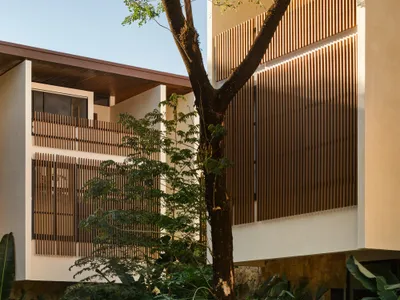
FAMM Arquitectura Organizes Ten Villas Around Courtyards and Jungle in Nosara, Costa Rica
El Molino pairs two elongated volumes with deep overhangs and timber louvers to build a compact coastal community five minutes from the beach.
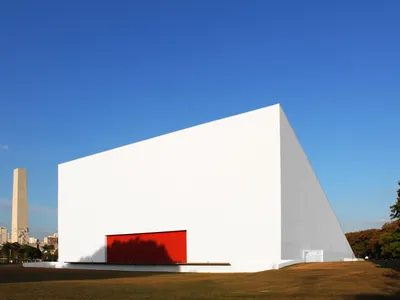
Oscar Niemeyer's Ibirapuera Park Pavilions Define São Paulo's Cultural Identity in Concrete and Curve
A constellation of modernist volumes set within São Paulo's most important urban park, conceived for the city's 400th anniversary in 1954.
How Henri Picq's 1889 Paris Pavilion Traveled 11,000 Kilometers to Become Santiago's Artequín Museum
A prefabricated iron and glass pavilion built for the Paris Universal Exposition found a second life as a children's art museum in Chile.
Sanjay Puri Architects Wraps a Jaipur Office Tower in Capsule-Shaped Green Buffers
A nine-level climate-responsive workplace near Jaipur Airport uses stacked planter terraces and aluminium screens to fight 40°C heat.

Explore Industrial Design Competitions
Discover active competitions in this discipline



Challenge to reimagine the Iron Throne


Photograph architecture without architects


Illustrate the lost glory of Angkor Wat - Render Challenge


Design challenge to reuse E-waste
Comments (0)
Please login or sign up to add comments
No comments yet. Be the first to comment!