
Olimpo Nômade by Langarita Navarro Arquitectos: A Portable City for Music, Myths, and Memory
A nomadic, inflatable installation by Langarita Navarro for festivals—offering modular dressing rooms, lounges, and reflective architecture on beaches.


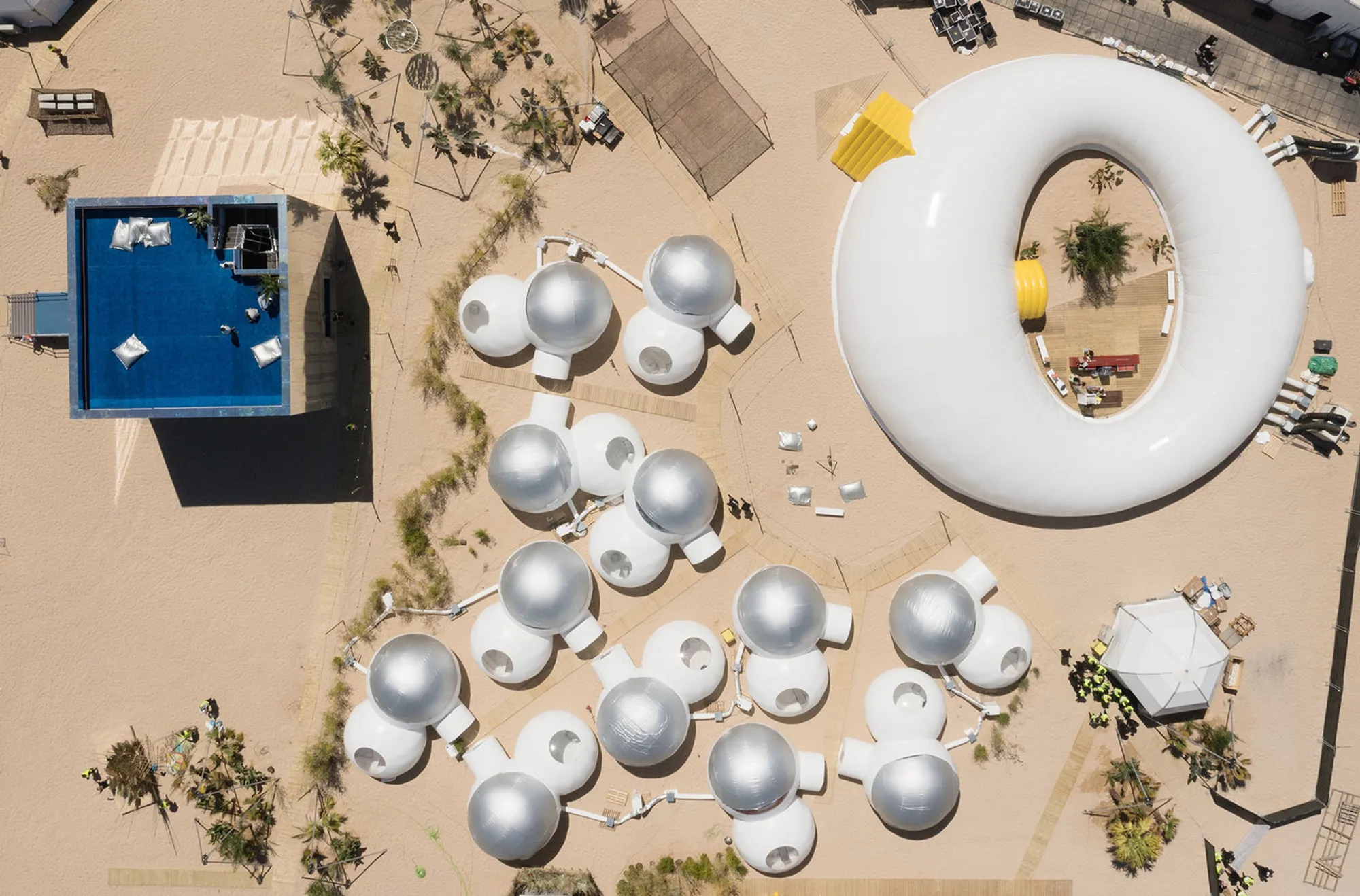
In 2022, Spanish architecture studio Langarita Navarro Arquitectos unveiled the Olimpo Nômade—a visionary, mobile city designed to host musicians and performers during music festivals. First deployed on the sun-soaked sands of Portimão beach in the Portuguese Algarve, the project offers a temporary but strikingly imaginative retreat for artists. Acting as both sanctuary and stage, Olimpo Nômade transforms ephemeral moments into mythic experiences.
A Temporary Urban Ecosystem for Festival Culture
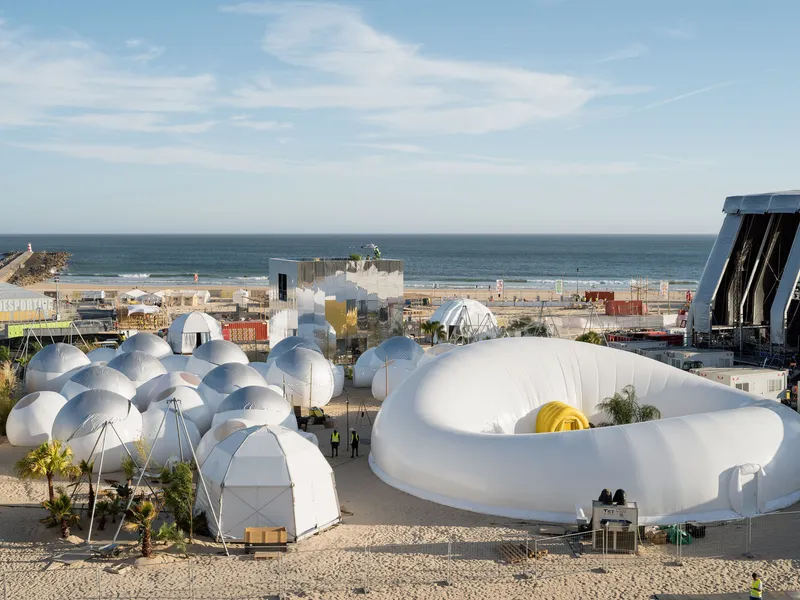
More than a backstage area, Olimpo Nômade operates as a self-contained temporary urban ecosystem. It blends modular design, lightweight structures, and symbolic geometry into a foldable, inflatable, and transportable infrastructure. This ephemeral architecture supports pre-show preparation, post-performance unwinding, and spontaneous social interactions among artists. Designed for quick assembly and minimal environmental footprint, it reflects a broader shift toward sustainable, adaptable event architecture.
Conceptual Elements: Donut, Bubbles, and a Reflective Palace
The installation’s design is composed of three main architectural gestures, each with its own symbolic and functional logic:
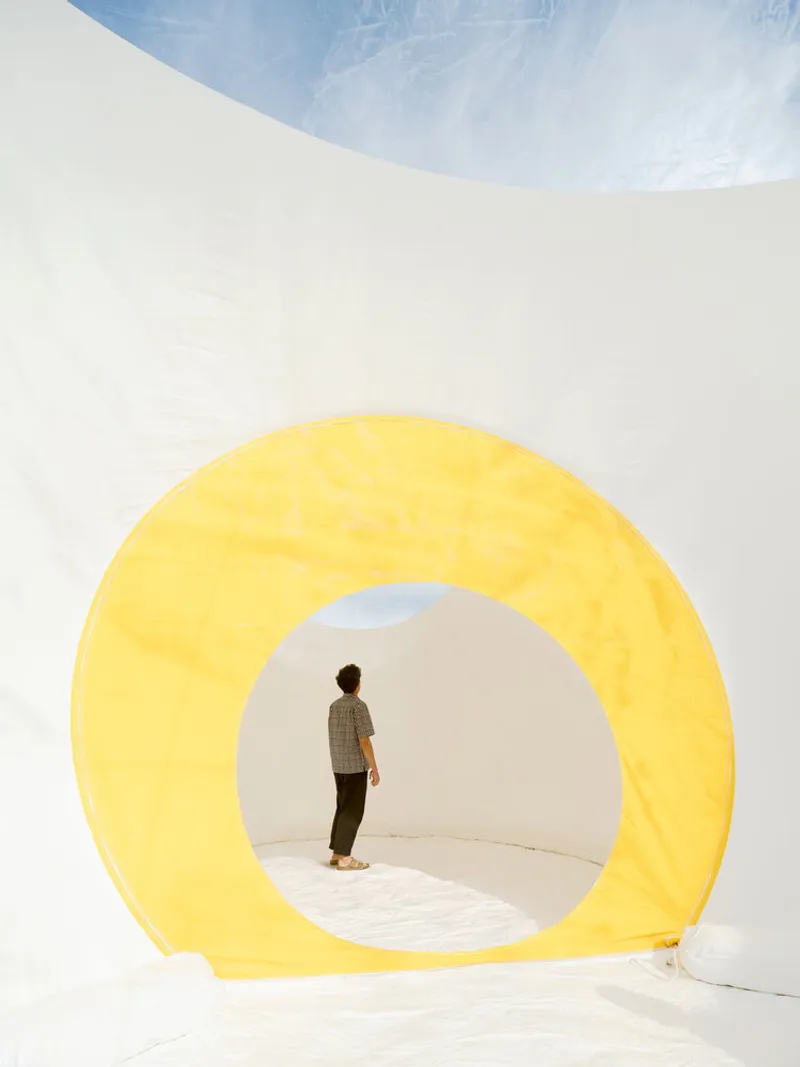
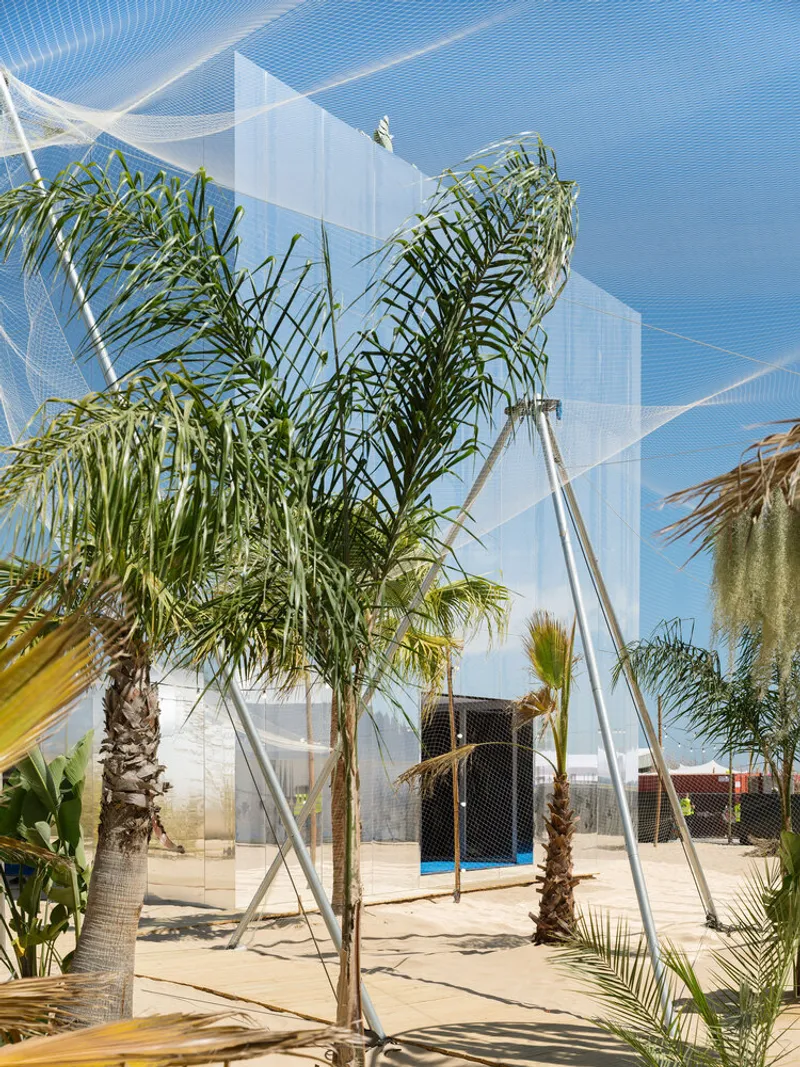
- The Donut: Serving as the central lounge or "salon," this 500 m² white inflatable ring creates a continuous, edgeless interior landscape. The ring is intersected by a cylindrical and a triangular prism structure, functioning as entrances and emergency exits. Inside, palm trees populate a tranquil central courtyard, reinforcing the theme of a desert oasis.
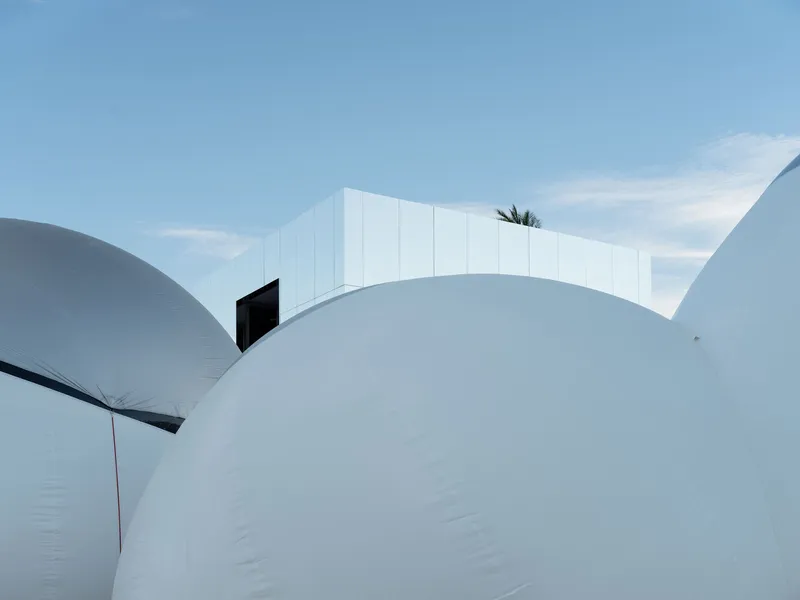
- The Bubble Camp: Designed as artist dressing rooms, these structures consist of paired inflatable spheres—one for personal preparation and the other for social engagement. The second bubble features a generous oculus, open to the sky, offering a sense of freedom before stepping into the spotlight.
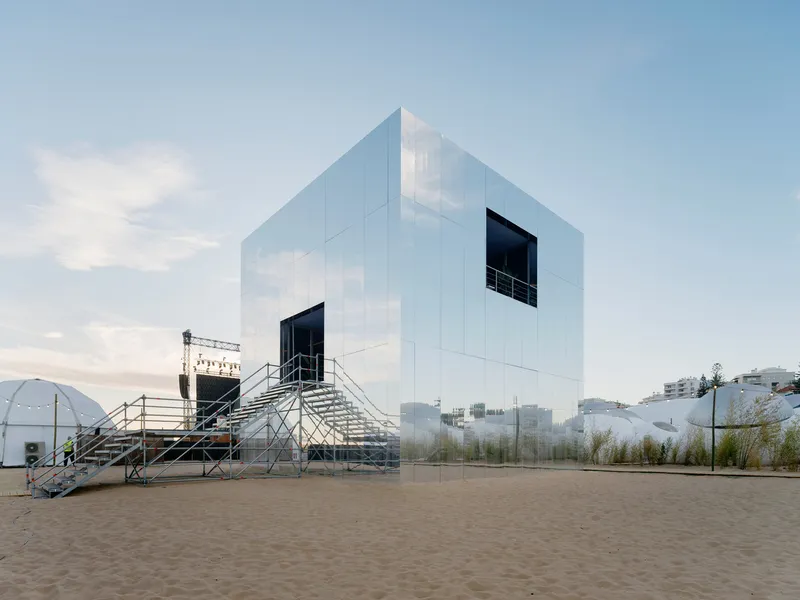
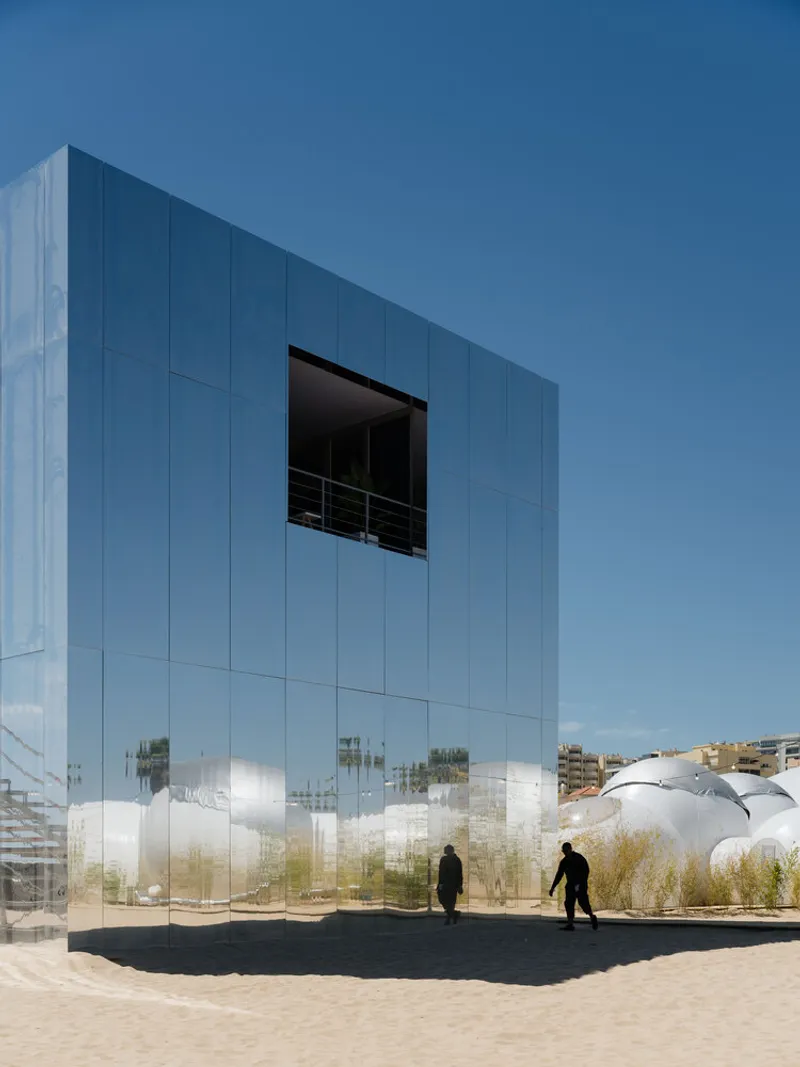
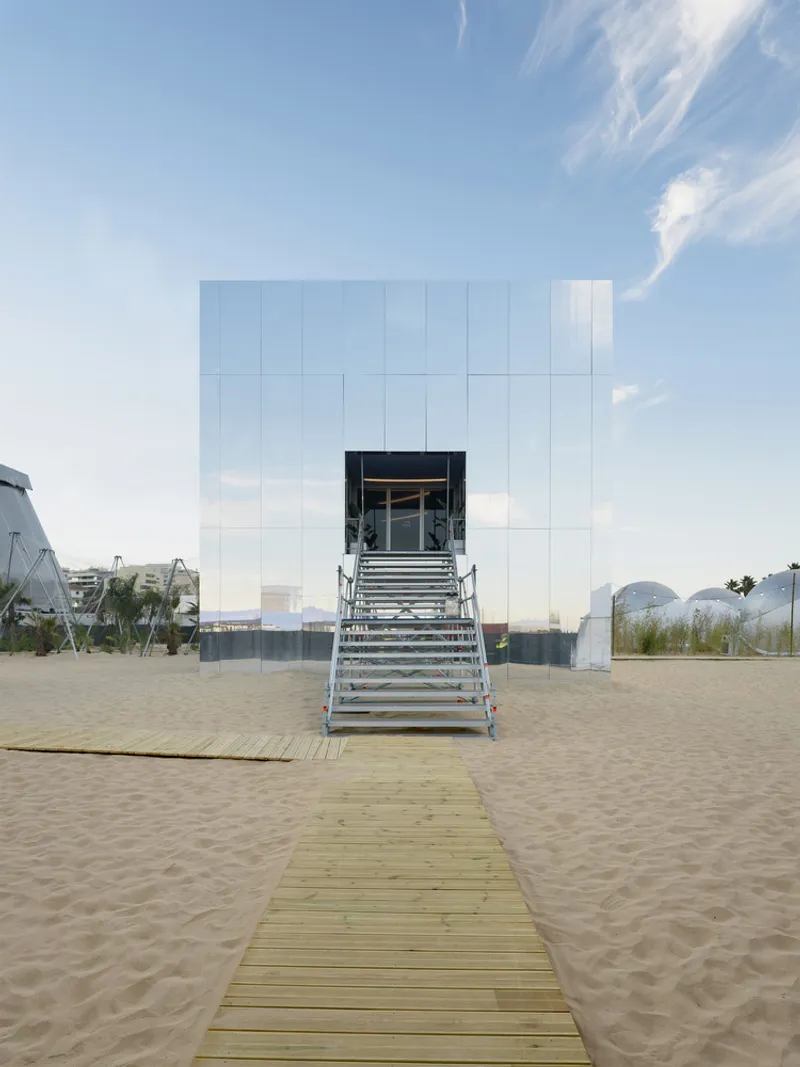
- The Reflective Palace: Reserved for festival headliners, this mirrored cube measures 9 x 9 x 9 meters and is elevated on a scaffold. Its reflective façade camouflages it within the coastal scenery. Each side is carved with private terraces (3 x 3 x 3 meters), while a rooftop deck—wrapped in blue carpet and shimmering railings—provides panoramic views. It stands like an alien object, monumental yet fleeting.

Architecture That Travels: Lightweight, Durable, and Iconic
The installation is engineered for portability, longevity, and monumentality. Every element is modular, collapsible, and container-ready, allowing it to be deployed at various festival sites globally. Despite its temporary nature, Olimpo Nômade asserts a lasting visual and cultural presence. It's a futuristic take on the classical Olympus—a portable temple for contemporary gods, where music, memory, and myth collide.




Popular Articles
Popular articles from the community


Riyadh For All: Intergenerational Urban Design for Active Aging in Rabat
Riyadh For All reimagines urban design in Rabat with intergenerational co-living, adaptive courtyards, and Moroccan cultural exchange today.

The Earth Pod: 3D Printed Homes for Resilient Refugee Communities
The Earth Pod reimagines refugee housing through 3D printed homes made from clay, combining resilience, self-sufficiency, and rapid shelter.

Co-life: Sustainable Architecture for Age-Friendly Community Living
Co-life reimagines sustainable architecture for seniors through courtyards, rammed earth, shared gardens, and spaces designed for belonging.

Play: Fragments of Their World
Familiar architecture becomes modular playground design, creating safe spaces where displaced children can learn, connect, imagine and play.


Similar Reads
You might also enjoy these articles


Hodi-Mandai Geram
Project Function: Preservation and revitalization of the Intangible heritage and socio-spatial identity of the Hodi by Housing, Cultural Memory Center, Sacred Grove, landscape, local tourism economy


Olio Towers: A Mid-Rise for Performers That Fuses Housing, Rehearsal, and Stage
Located blocks from Houston's Theater District, this modular tower stacks living units around a central performance atrium.

Oasis: Modular Green Housing Carved into Dhaka's Urban Fabric
A shortlisted Plugin Housing entry reclaims unauthorized settlements in Dhaka with stepped concrete volumes, green roofs, and ventilation-driven design.

Black Hole: A Floating Megastructure for the Post-Physical Era
Emiliano Mazzarotto envisions a spherical, self-scaling arena where e-sports, digital hotels, and holographic stadiums replace traditional public space.


Explore Digital Nomad Housing Competitions
Discover active competitions in this discipline


Challenge to design a portable theatre


Challenge to design a portable music platform


Challenge to design an open learning module for the elderly


Challenge to reimagine the Iron Throne
Comments (0)
Please login or sign up to add comments
No comments yet. Be the first to comment!