
Omah Tanah House by Budi Pradono Architects – Sustainable Coastal Living in Sukabumi
Omah Tanah House by Budi Pradono Architects blends sustainable rammed-earth construction, modern gable design, courtyards, and solar energy in coastal Sukabumi.


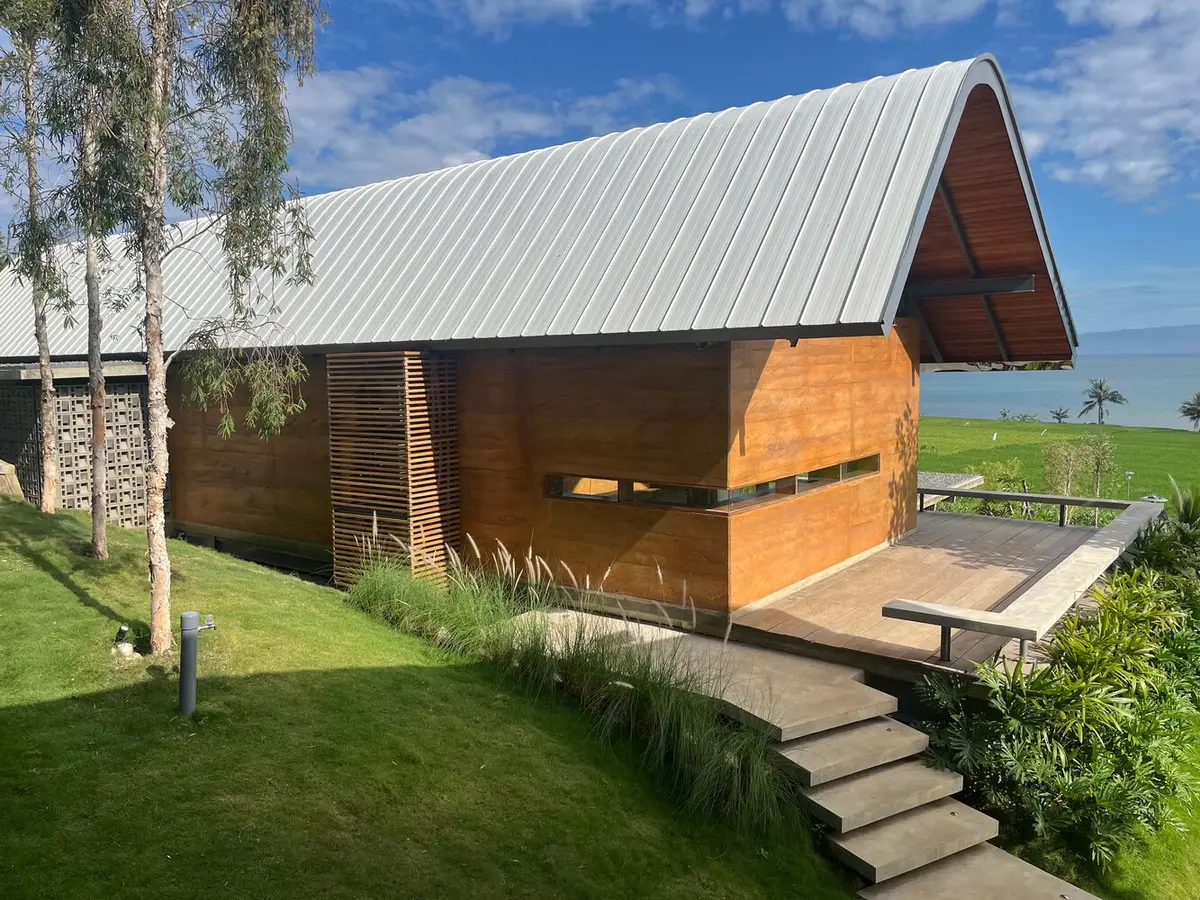
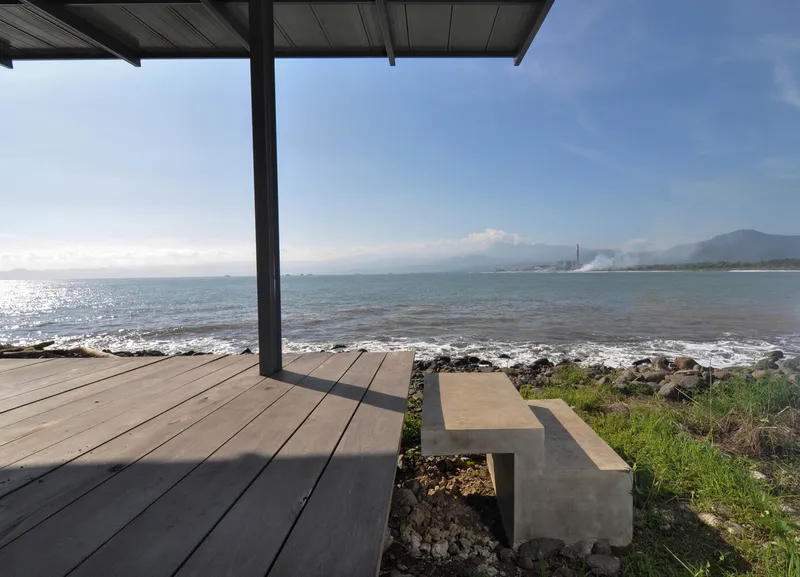
Omah Tanah House, situated near Lodji Beach in Sukabumi, Indonesia, is a striking reinterpretation of traditional Indonesian architecture with a contemporary lens. Nestled between rice fields and coastal sands, the site slopes gently from the main road toward the hills, offering panoramic views of the surrounding forest, terraces, and the distant industrial landscape.
Contextual Design Inspired by Local Heritage
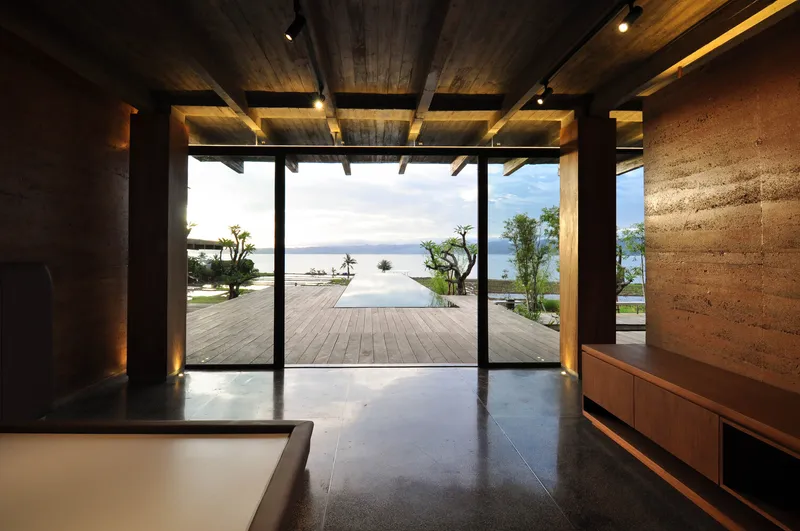
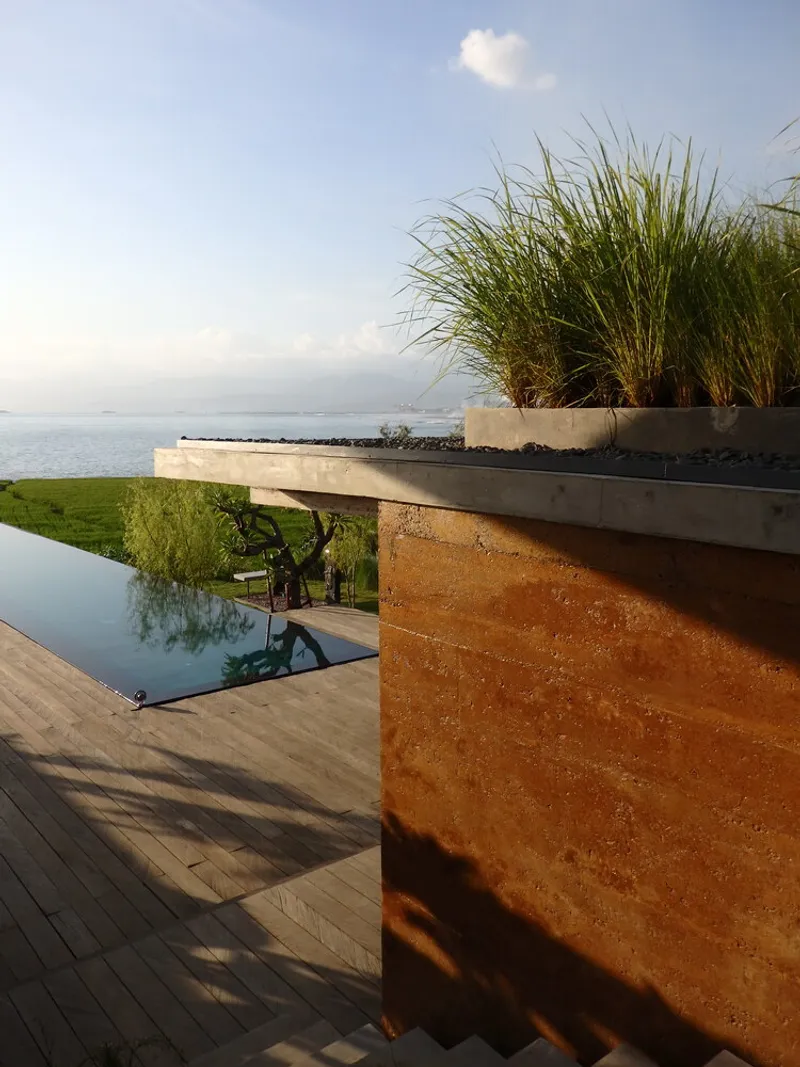
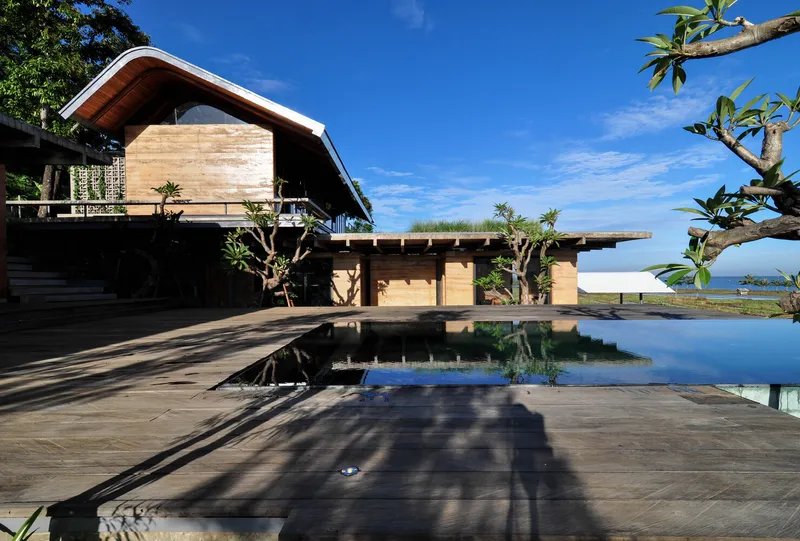
The design concept draws inspiration from the adjacent village houses, creating a modern reinterpretation of traditional Indonesian forms. The residence revolves around multiple courtyards: one functions as a parking space with solar-transparent roofing, while another hosts a swimming pool acting as the centerpiece and spatial datum for the home. The floating pool design minimizes the environmental footprint, preserving farmland for the local community.
Innovative Roof and Structural Solutions
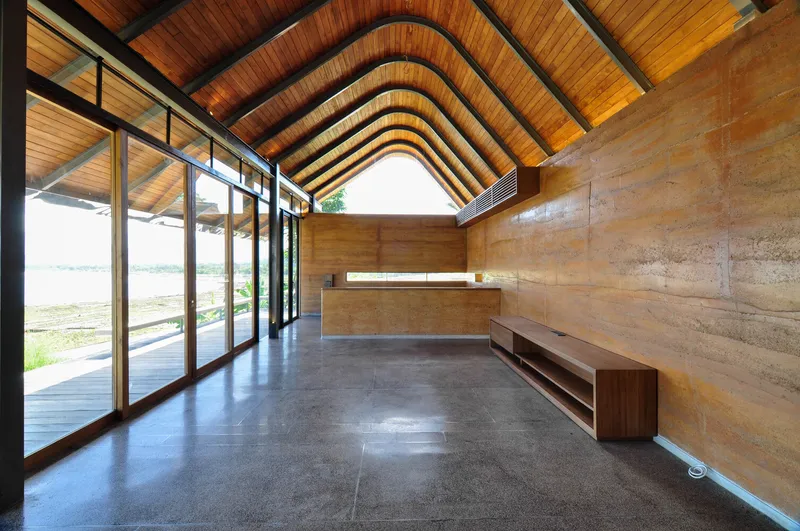
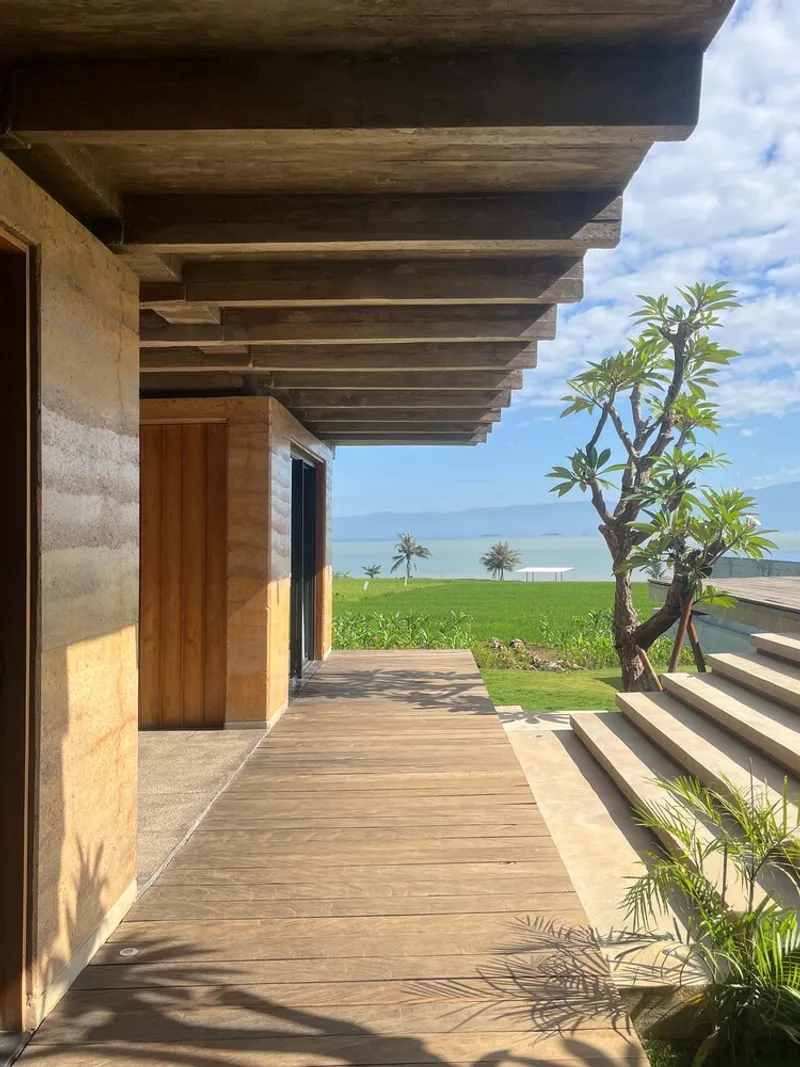
Omah Tanah House features a distinctive gable roof, elevated above traditional proportions and supported by an iron frame rafter system. This innovative approach maintains the natural breathability of the roof while allowing for modern construction techniques. While wood is traditionally used in Indonesian architecture, the architects employed concrete fins and interlocking systems to echo traditional methods in a contemporary context.
Rammed Earth Construction – Sustainable Materiality
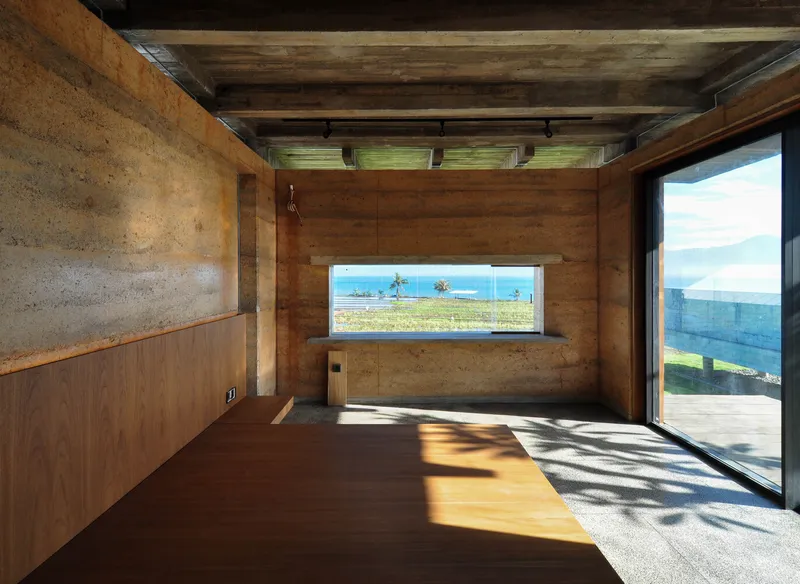
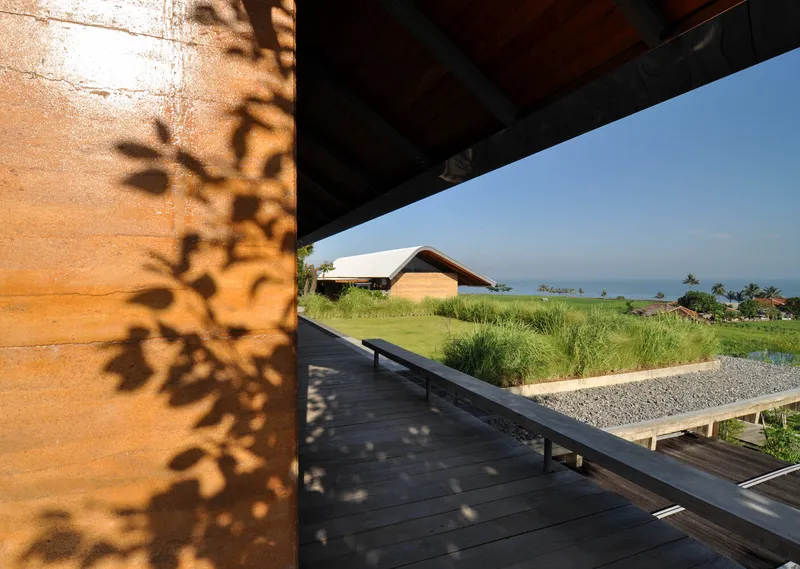
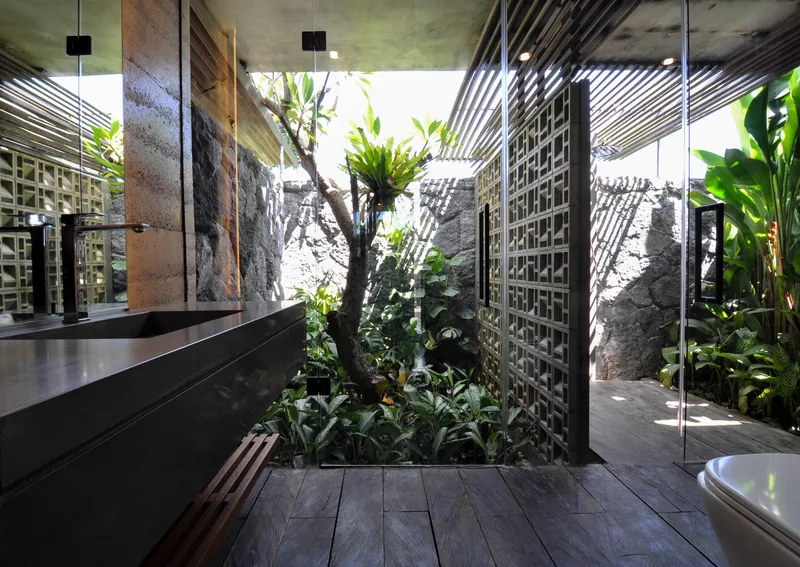
The house emphasizes soil as the primary building material, particularly rammed earth, connecting the design to local building traditions. Inspired by local brick-making practices, the architects sourced soil nearby, avoiding deforestation for fuel. Extensive research of soil strata up to 60 meters deep ensured structural integrity, with specially formulated soil hardeners enhancing durability. Wall construction involved layered compaction within iron-frame formworks, allowing the structure to dry efficiently in just 1–2 months despite coastal humidity.
Water and Energy Efficiency
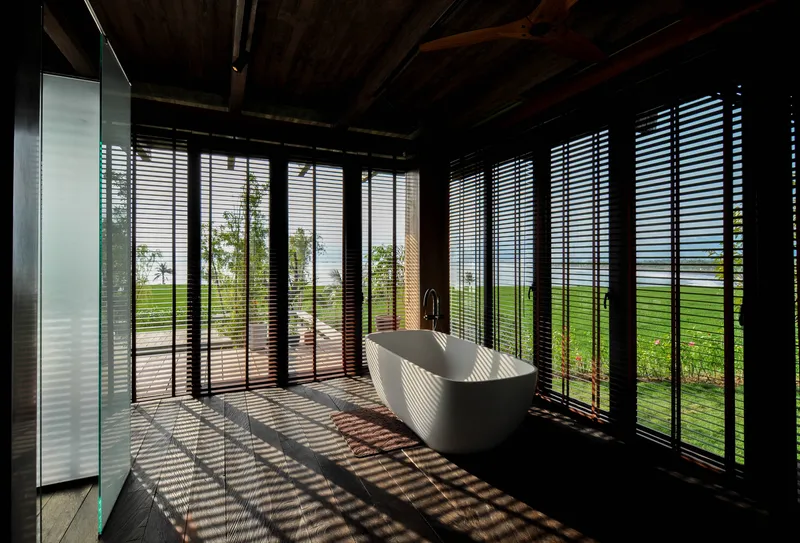
Sustainability is central to the project. Rainwater is collected and filtered for daily use, while solar panels installed on the garage and service room roofs maximize renewable energy utilization. These systems reflect a commitment to environmentally conscious coastal living.
Site Conservation and Community Integration
Only 30% of the 1.8-hectare site is occupied by the residence, leaving most of the land—primarily rice fields—available for local farming. The thoughtful stacking of buildings near the road, combined with minimal footprint elements like the floating pool, ensures the project respects the surrounding environment and empowers the local community.
Omah Tanah House exemplifies a harmonious blend of tradition, sustainability, and modern design, redefining residential architecture in Indonesia.


Popular Articles
Popular articles from the community


Aquadapt: An Underwater Habitat That Rewrites Its Rooms by the Hour
Curved modules ring the seabed while one shell shifts from breakfast room to cinema, farm and football pitch as residents' needs change.


FCC Arquitectura Expands a Portuguese Granite House with a Board-Marked Concrete Wing
In Portugal, JV House pairs a cleaned-up whitewashed and granite dwelling with a timber-shuttered concrete extension, courtyards and a garden pool.

Cube Design Draws an Ecological Corridor Between Two Shenzhen Hills with the Nankai Building
Beside Shenzhen's container docks, the Nankai Building pairs stacked balconies with a climbing green screen to connect two hillsides across its height.

The Amber Palace Opera: A Geological Fiction Surfaces on Tallinn's Baltic Waterfront
Pierre Brillard reimagines a Baltic legend as a public landscape, opera house, and waterfront promenade rooted in Tallinn's coastal identity.

Similar Reads
You might also enjoy these articles


Hodi-Mandai Geram
Project Function: Preservation and revitalization of the Intangible heritage and socio-spatial identity of the Hodi by Housing, Cultural Memory Center, Sacred Grove, landscape, local tourism economy


Olio Towers: A Mid-Rise for Performers That Fuses Housing, Rehearsal, and Stage
Located blocks from Houston's Theater District, this modular tower stacks living units around a central performance atrium.

Oasis: Modular Green Housing Carved into Dhaka's Urban Fabric
A shortlisted Plugin Housing entry reclaims unauthorized settlements in Dhaka with stepped concrete volumes, green roofs, and ventilation-driven design.

Black Hole: A Floating Megastructure for the Post-Physical Era
Emiliano Mazzarotto envisions a spherical, self-scaling arena where e-sports, digital hotels, and holographic stadiums replace traditional public space.

Explore Housing Competitions
Discover active competitions in this discipline

Challenge to reimagine the Iron Throne

Photograph architecture without architects

Illustrate the lost glory of Angkor Wat - Render Challenge

Design challenge to reuse E-waste
Comments (0)
Please login or sign up to add comments
No comments yet. Be the first to comment!