
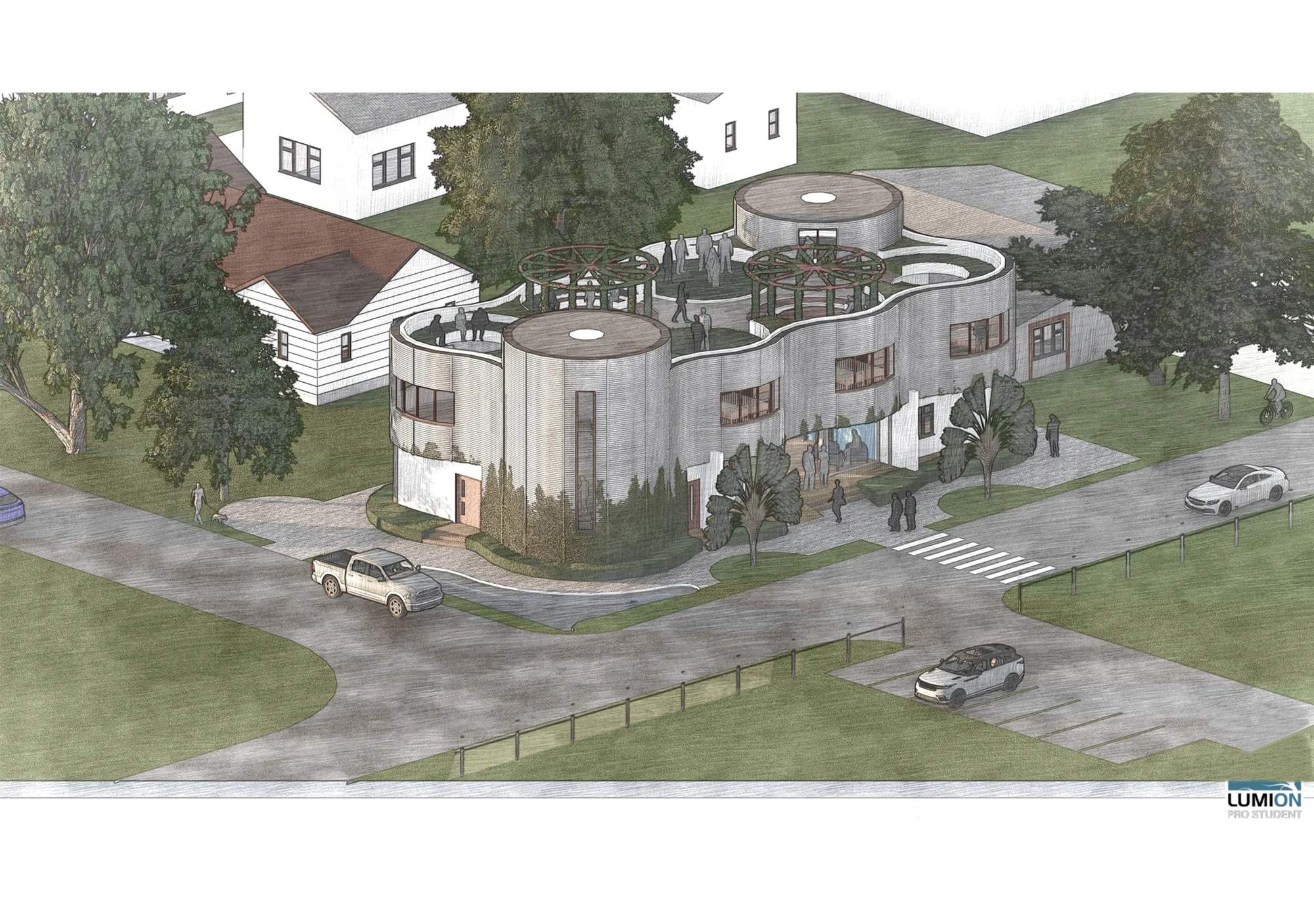
Open-Source, Open Minds
Osage City Farming Community & Wellness Hub Promoting wellbeing in the farming community

Competition: Re-Utility - 'Using Grain Bins to Find a New Purpose'
The following journal post provides an overview of the key conceptual themes which have guided our thinking throughout the design process while working on this competition.
Open Source Construction
Open-Source, Open Minds fosters Osage County’s history and culture of production through a new construction partnership cultivating its community, material resources, and businesses to revitalise and inspire a better future for Osage City.
To highlight the benefits of pooling resources our initiative aims not only to support visiting communities detailed in the brief, but also allows individuals and community groups elsewhere in the world to achieve similar outcomes through provision of a simple and sustainable, freely accessible ‘Open-Source’ blueprint for others to follow to deliver unique multifunctional building projects.
 Farming Mental Health Crisis
Mental health issues affecting people from farming communities due to intense financial pressures and problems of isolation is widely publicized globally.
Kansas is tied number one in the USA for having the most farmers filing for bankruptcy each year. This has led to a massive increase in suicide rates, almost double that of the national US average compared to any other profession. Calls to Farm Aid’s Crisis Hotline also doubled between 2017-2018.
Rising environmental impacts, decline in rural populations and lack of government assistance for new farmers is one of many areas of concern. Isolation and lack of interaction with other people and communities is both a cause and effect of the farming crisis.
Environmental Considerations
The global climate crisis urges us all, from all walks of life to embrace a different way of living. Plastic pollution, single use products, high carbon construction methods and burning fossil fuels, are having a devastating impact on the planet. Waste piles up in landfill and plastic pollution harms marine life across the oceans.
The key aim of this project is to address the issue of waste through promoting reuse and repurposing of materials. This building project recycles resources including plastic, steel, timber, rubber, glass, hay, soil and water.
Project Objectives
• To offer multi-functional accommodation and training facilities for visitors including trainees learning about agriculture
• To provide a family friendly facility for farming communities and the local community to get together to socialise, host forums and share knowledge
• To reduce suicide rates and deteriorating mental health within the local farming community through provision of facilities for counselling and talking therapy
• To provide a welcoming and inviting environment promoting social interaction and positive mental health
• To minimise impacts on the environment in the planning, construction and use of the facility through innovative design, re-utility and energy strategies
• To promote a culture of sharing resources through supply of a simple and sustainable open source blueprint for others to follow
• To reduce bankruptcies and poverty through support for local businesses and use of locally sourced materials, skills and labour and creation of employment opportunities
The Architecture of Osage
The Architecture of Osage is characterised by a clear division in style between public and private buildings.
Private houses are almost all constructed from timber. Each home is detached, generally one or two storeys, often colourfully painted and generally sitting within a spacious, grassed plot. Many contain numerous large mature trees. A familiar feature of Osage’s homes is the concept of ‘outside in’, where a veranda with outdoor seating is accommodated at the entrance.
Public buildings are almost all constructed from brick. This includes banks, churches, shops, library, schools, and the city hall.
Corrugated steel is a commonly used material in the construction of storage units and agricultural buildings within the city.
We have attempted to reflect some of the architectural characteristics of Osage through the spatial layout of our building and our choices of materials. The ground floor has been designed to reflect Osage City's public buildings through the use of (recycled plastic) bricks, whilst in private quarters of the building other materials have been utilised instead.
Design for Health
In developing our design concept, we have taken inspiration from Maggie’s Cancer Care Centres located throughout the UK which provide exceptional examples of how to design for health and wellbeing. Key design principles focus on maximising natural light, using a colour palette of pastel shades, maximising greenery and planting to create a calming atmosphere for users both inside and outside the building. There is also a strong emphasis on the need for good quality social spaces for a variety of activities but also on provision of areas offering privacy.
We wish to develop a design which looks to echo these principles to create a restorative, uplifting and healing environment promoting positive mental health for all its users.
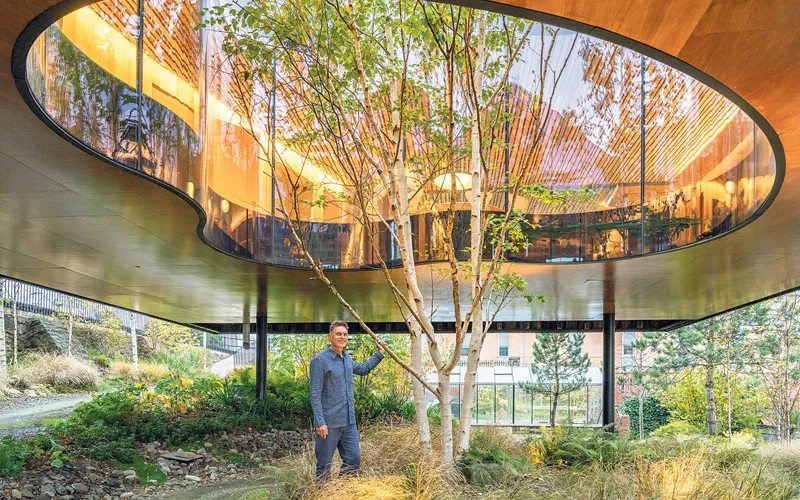 Maggie's Cancer Care Centres
 Maggie's Cancer Care Centres
Farming Community Education & Wellness Hub
We propose that Osage City is to become a social hub, educational incubator and restorative setting for regional agricultural communities to visit.
The catalyst for this will be construction of a unique new lodging centre & wellness hub with spaces designed for collaboration, learning, socialising, relaxation, and therapy.
The hub will host training workshops for local farmers to help boost production, introduce new technologies and educate communities on government incentive programmes. Farmer’s markets will offer direct opportunities for a new age of social farming, nurturing new income streams. The hub is designed to promote social interaction and positive mental health through passive (welcoming and inviting spaces) and reactive (counselling / therapy rooms) design interventions.
About Our Project
Design Iterations
In reaching our final design we explored numerous design iterations including early on exploring of the option of straightening out the corrugated steel to create flat surfaces. Research suggested this would be very difficult to achieve.
Our study of the local architectural context helped to provide some additional context and assisted us in defining our design approach.
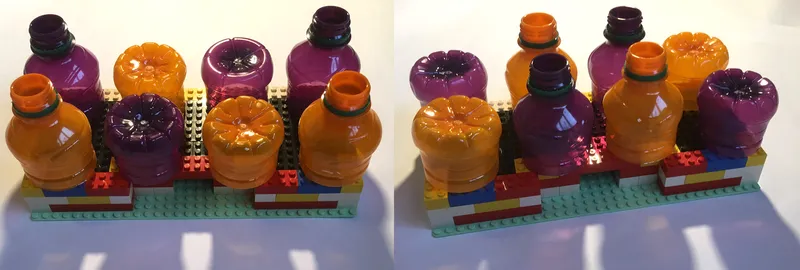 Design Development
Project Objectives
Setting our own set of objectives for the final outcome early in the project helped to focus our minds on what the final design needed to achieve and provided a useful sounding board when developing design ideas.
Urban Strategy
As outlined in our Urban Strategy we have tried to develop a sustainable construction partnership of local businesses providing skills, facilities, staffing and materials supplies to support this project and a number of future projects to revitalise Osage City long term.
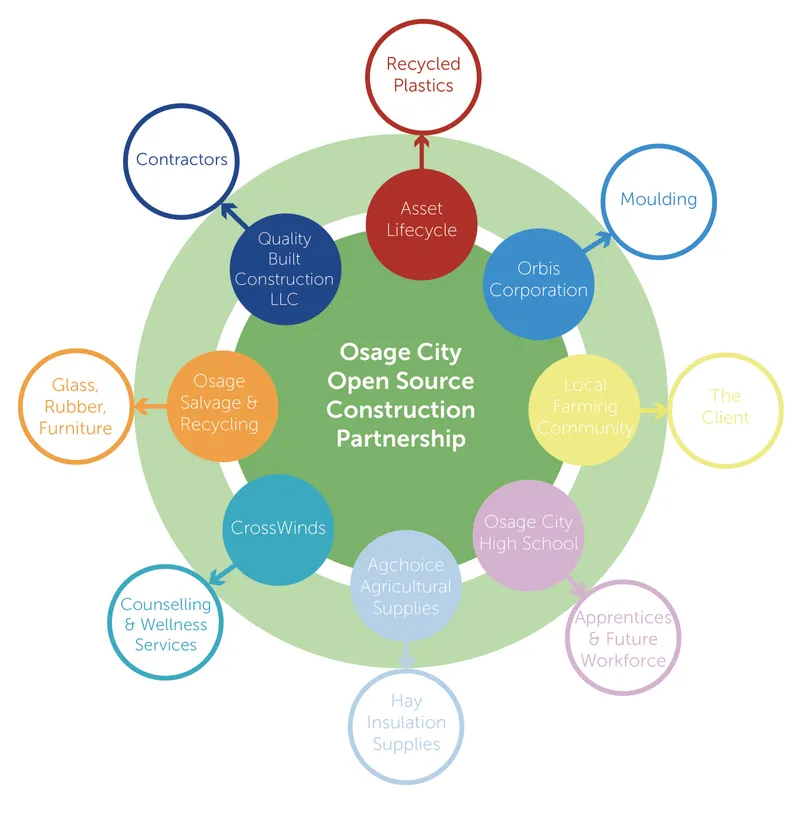 Construction Partnership Model


Popular Articles
Popular articles from the community

EW PARK: Sustainable Architecture Reimagines the Future of Urban Parking
EW PARK reimagines city parking as a modular wooden tower combining automation, solar energy, electric mobility, and adaptable urban design.

The Musturak Paradise: Senior Living Architecture for a Connected Future in Temara, Morocco
The Musturak Paradise reimagines senior living architecture in Temara via private homes, social spaces, culture, community, and shared care.

Co-Life: Senior Housing Design That Reconnects Older Adults With the City
Co-Life reimagines senior housing design through healing gardens, shared streets, workshops, and a sustainable community across generations.

Conexión: Biophilic Design Reimagines High-Rise Living in Hong Kong
Conexión reimagines high-rise living in Hong Kong through biophilic design, green facades, shared spaces, daylight, water and nature within.


Similar Reads
You might also enjoy these articles

Day and Night Park: A Time-Based Urban Newsstand in Beijing
A temporary urban newsstand in Beijing blending travel, light, and reading through poetic colors, compact form, and community-focused design.

Modernist Patio Renovation in El Masnou, Barcelona by Oliver Segura Arquitectura + Cebrià Arquitectura
Modernist patio renovation blending tradition and innovation with a movable pool, leveled floors, and Catalan materials in El Masnou.
Alto Residencial Coop: Cooperative Housing Development in Santiago de Compostela by Carbajo Barrios Arquitectos
A linear cooperative housing complex blending white volumes and perforated metal façades, enhancing community living, natural light, privacy, and urban integration.
Vil Genis School by BPA ARCHITECTURE – Massy, France
Vil Genis School in Massy, France, features sustainable design, south-facing classrooms, community integration, accessible spaces, and modern educational architecture.


Explore Urban Farm Competitions
Discover active competitions in this discipline




Challenge to reimagine the Iron Throne


Photograph architecture without architects


Illustrate the lost glory of Angkor Wat - Render Challenge


Design challenge to reuse E-waste
Comments (0)
Please login or sign up to add comments
No comments yet. Be the first to comment!