

Oppo Technology & Research Centre Tower in Chengdu: A Vertical Village for Innovation by Gianni Botsford Architects + RJWu & Partner
A dynamic vertical village in Chengdu blending innovation, daylight, and collaboration within a sculptural high-rise for Oppo’s headquarters.


A Landmark in Chengdu’s Innovation District
Located at the heart of the Singapore-Sichuan Hi-Tech Innovation Park, the Oppo Technology & Research Centre Tower stands as a defining landmark in Chengdu, the capital of Sichuan Province. Designed by Gianni Botsford Architects (UK) in collaboration with RJWu & Partner (Taiwan), the project was the result of a winning competition entry in 2014 and officially completed in 2023.
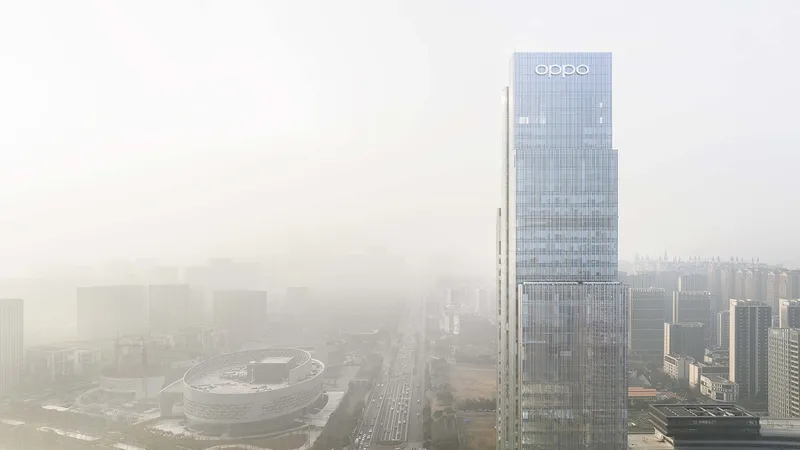
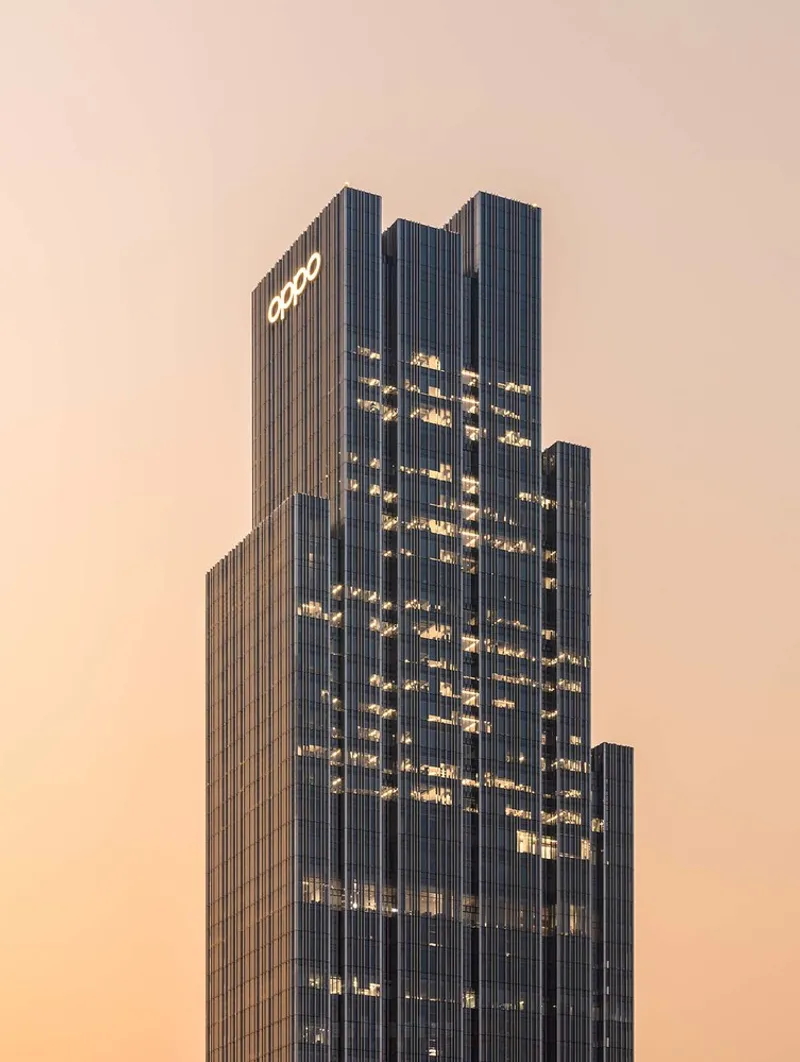
This 42-storey, 68,000 m² tower anchors the urban masterplan of the southern district and serves as a regional headquarters for Chinese tech giant Oppo. As one of China's top-tier cities with over 15 million urban residents, Chengdu provides a fitting backdrop for this architectural statement of technological innovation.
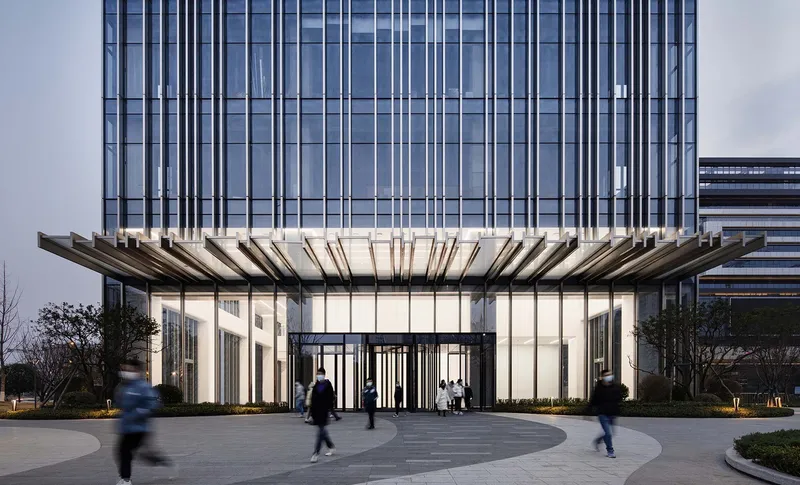
Vertical Village Concept: Humanizing the High-Rise
Rather than following a conventional corporate tower typology, the architects envisioned the Oppo Tower as a “vertical village” — an interconnected system of spaces that promotes collaboration, creativity, and well-being.
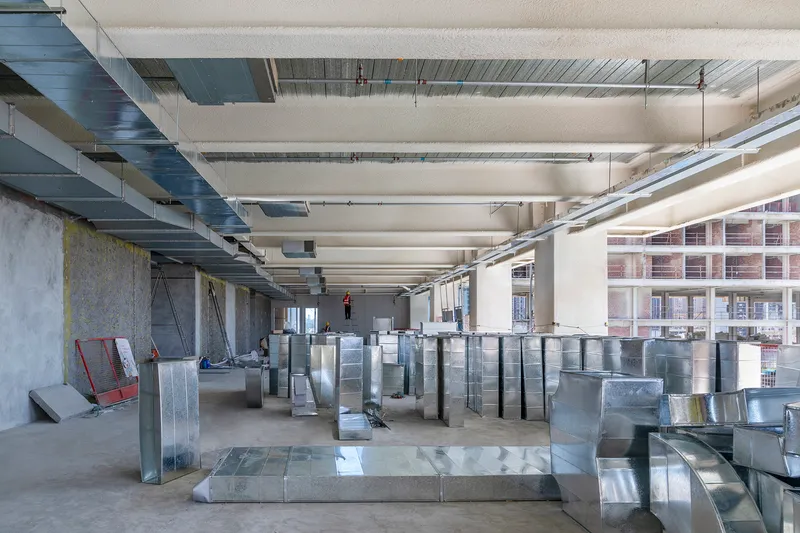
The tower accommodates over 5,000 engineers and support staff, offering diverse environments for work, informal interaction, leisure, training, and exhibition. Strategic voids and staggered floor plates create an internal rhythm that encourages movement and spontaneous encounters. These spatial punctuations also introduce variety in the plan, supporting Oppo’s vision of a dynamic and innovative work culture.
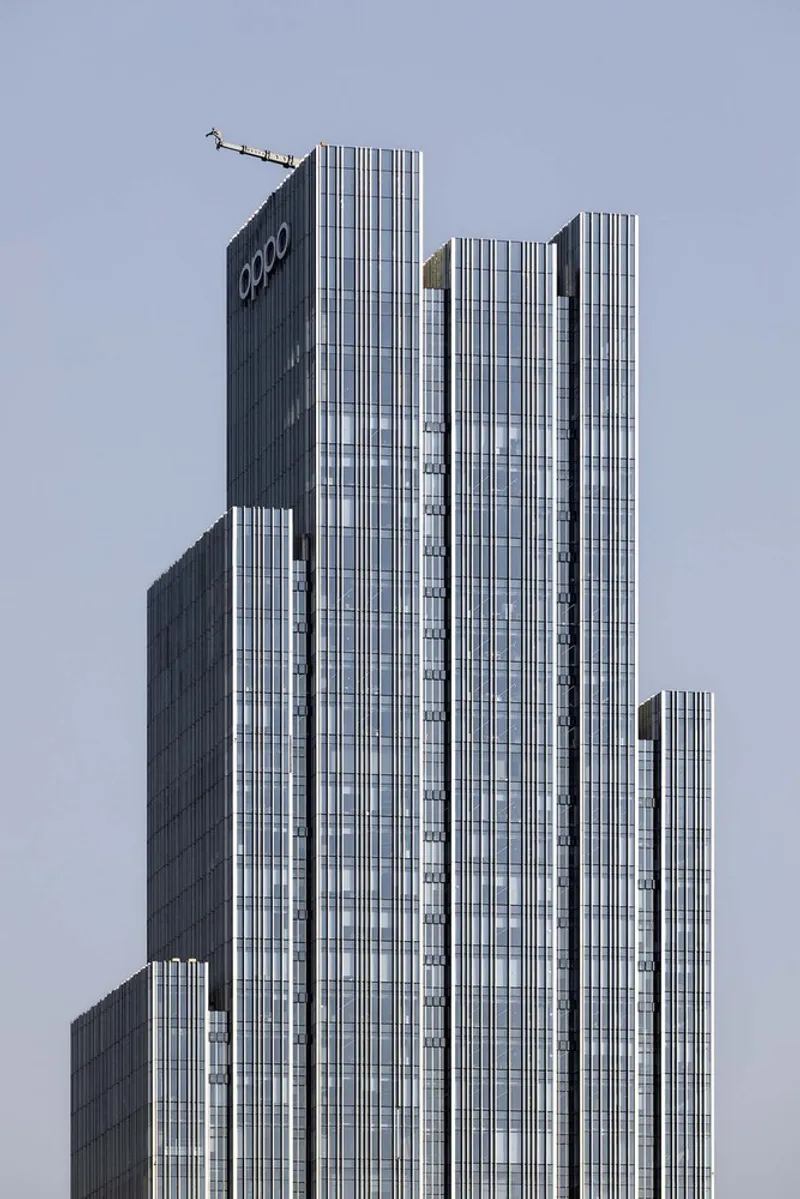
Massing and Daylight: Designing for Scale and Light
To counter the monumental scale of a typical high-rise, the tower is articulated through a series of shifting vertical volumes. These elements are offset both horizontally and vertically, creating a visually engaging silhouette and breaking the building into components more attuned to the human scale.
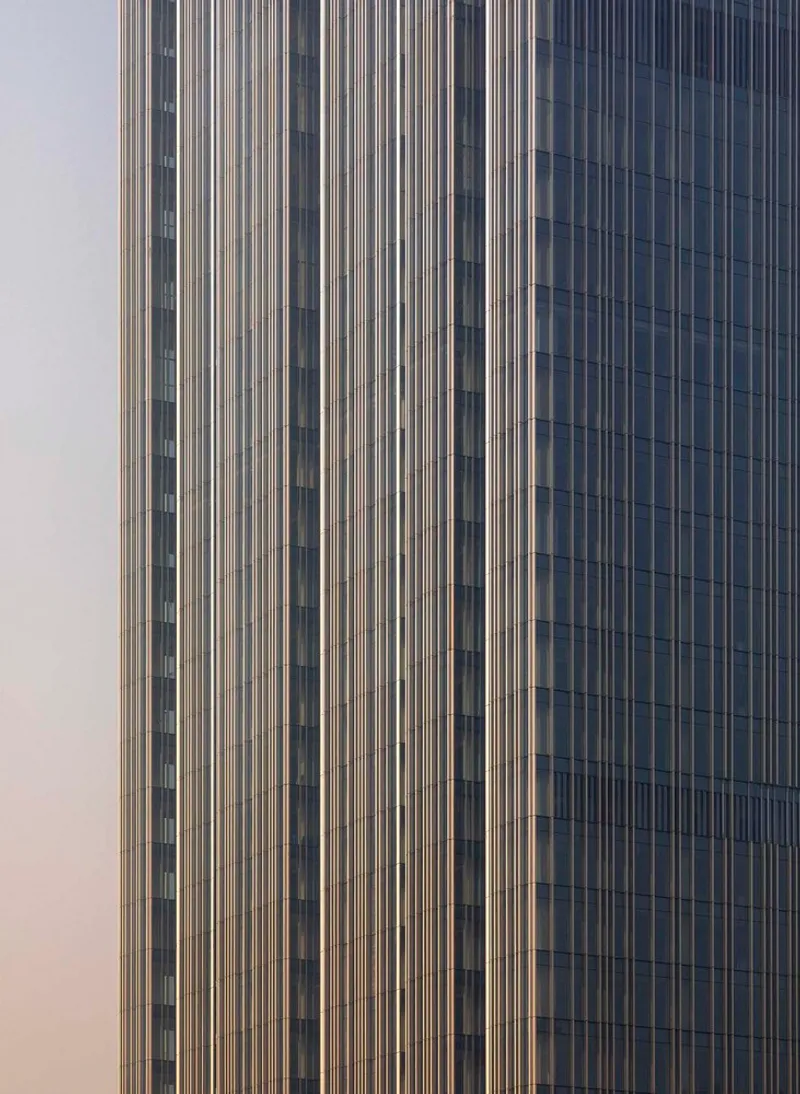
Each floorplate is designed as a “room with a view”, arranged around the perimeter to optimize natural daylight penetration and offer framed vistas of the city and surrounding park. This spatial strategy enhances both environmental performance and occupant experience.

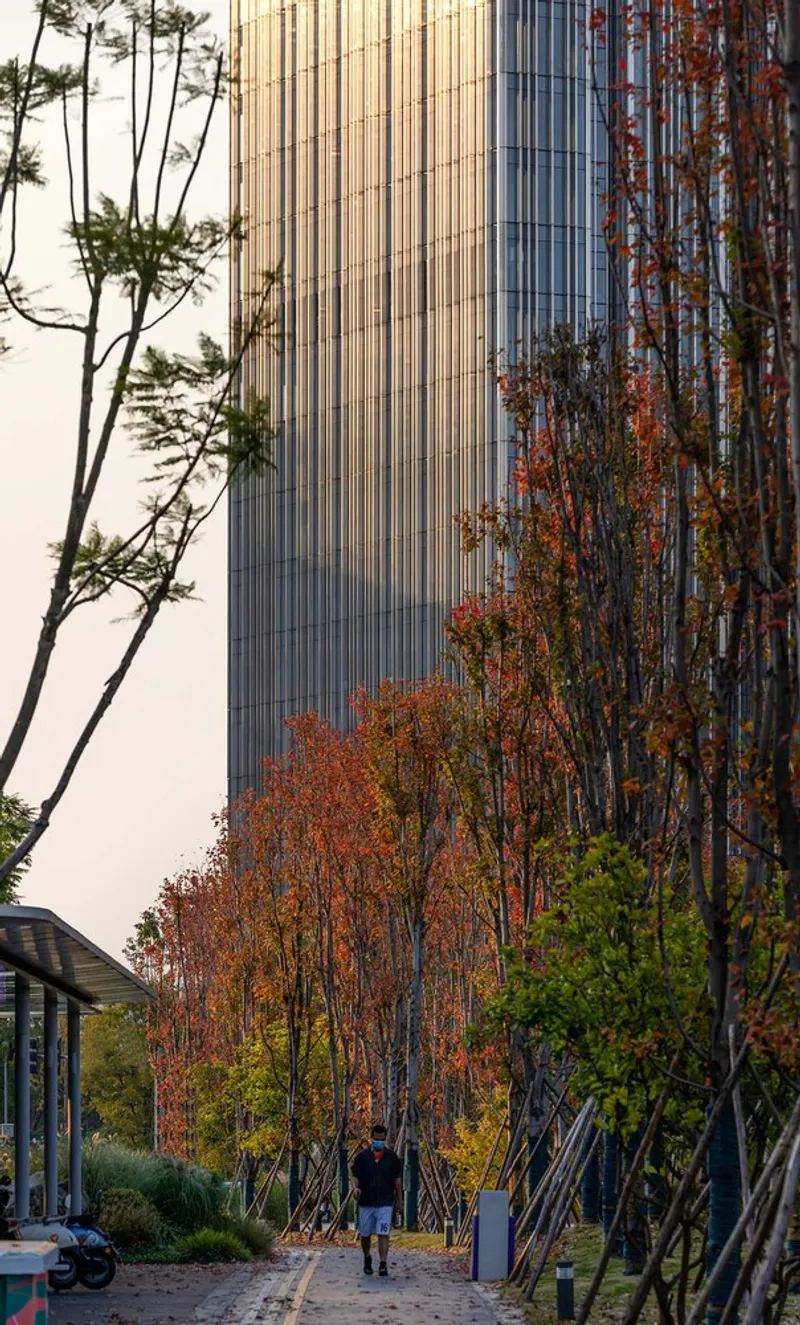
Façade and Regulation: A Dynamic Skin
A key innovation lies in the tower’s self-similar façade system, which applies the same shifting logic as the internal volumes. The façade achieves a delicate filigree effect that balances transparency with solid mass, responding effectively to Chengdu’s planning requirement of 30% solid façade coverage for high-rise buildings.
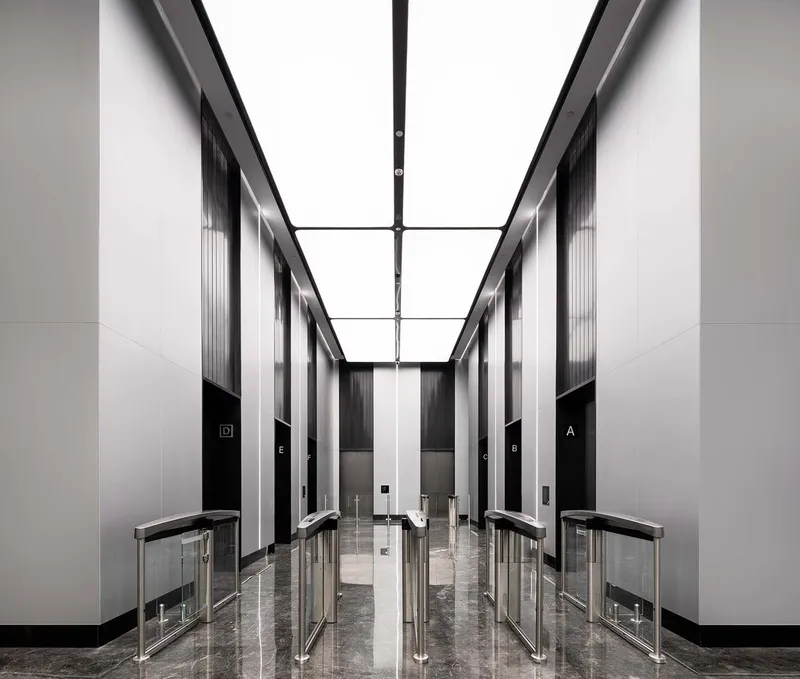
The external expression is as performative as it is aesthetic—regulating daylight, reducing glare, and providing visual dynamism across all elevations.
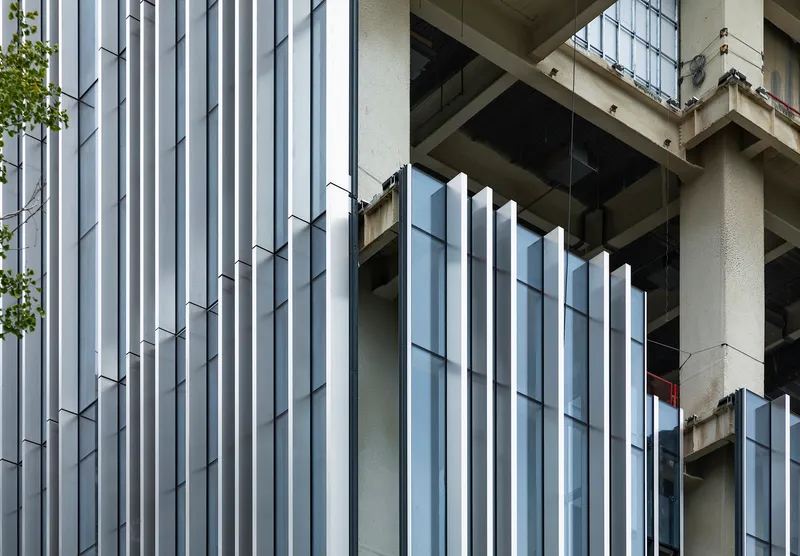
The Lantern Crown: Dissolving into the Sky
Capping each vertical volume is a triple-height lantern space, a luminous architectural gesture that allows the tower to dissolve into the skyline. These elevated voids introduce daylight deep into the structure, while also offering connective social zones between departments and disciplines.
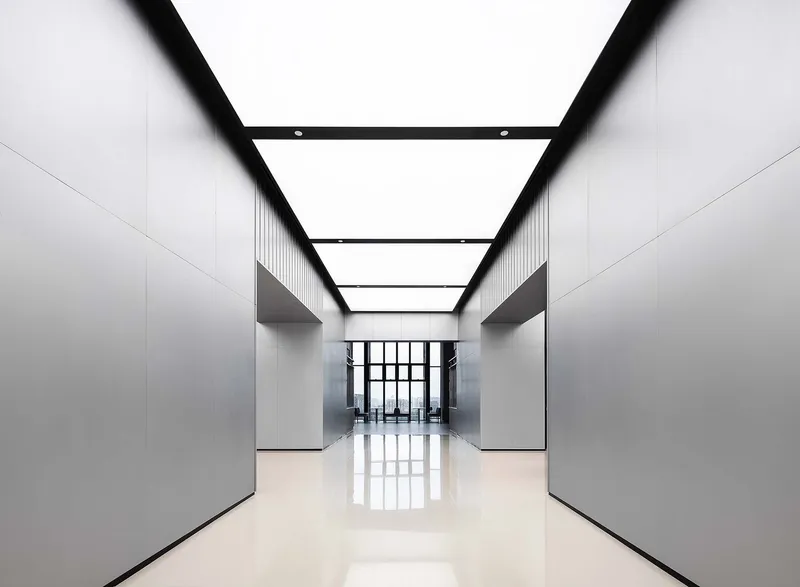
The lanterns reinforce the tower’s theme of openness and transparency, serving as metaphors for innovation, elevation, and clarity.
Masterplanning Integration: Vertical Meets Horizontal
The Oppo Tower is not an isolated object, but a carefully calibrated part of its larger urban ecosystem. Surrounded by low-rise horizontal buildings, the tower introduces verticality and legibility into the masterplan, acting as a visual anchor and a spatial connector between the landscape and city fabric.
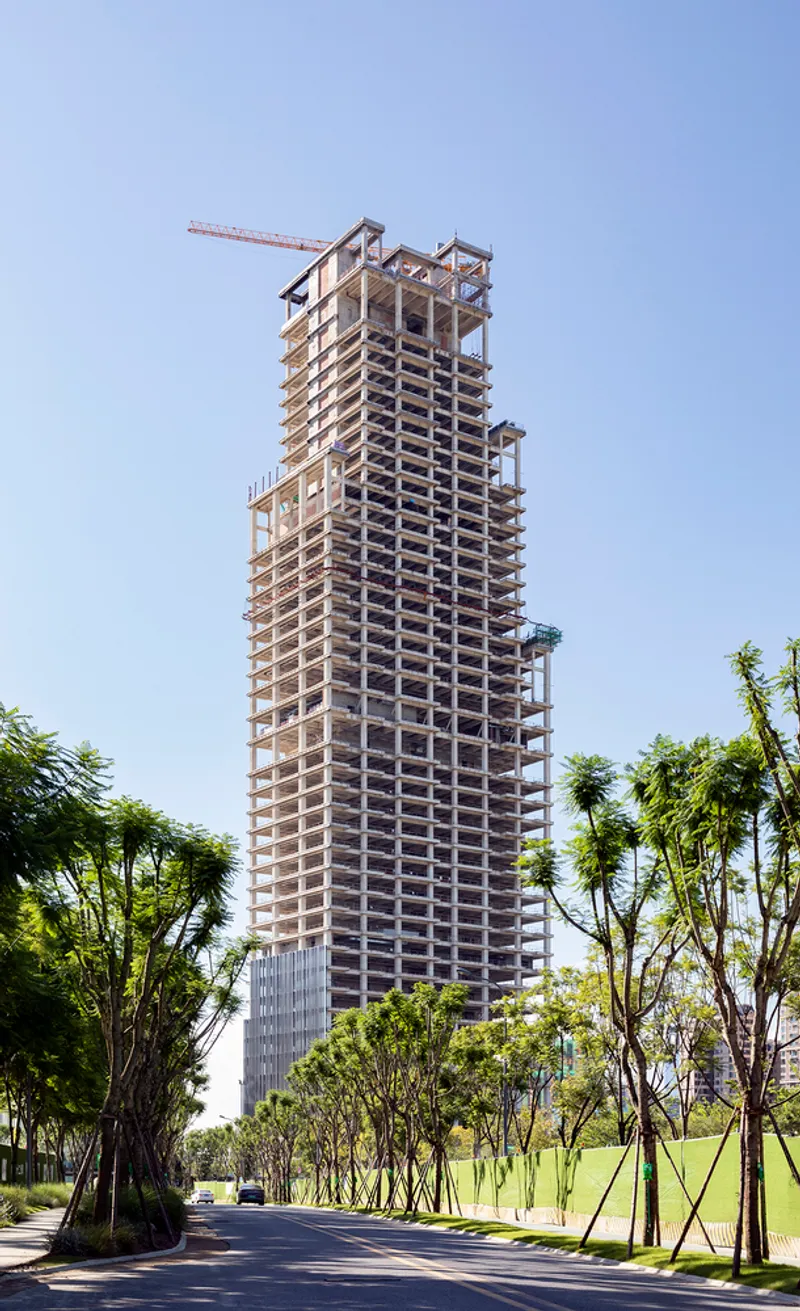
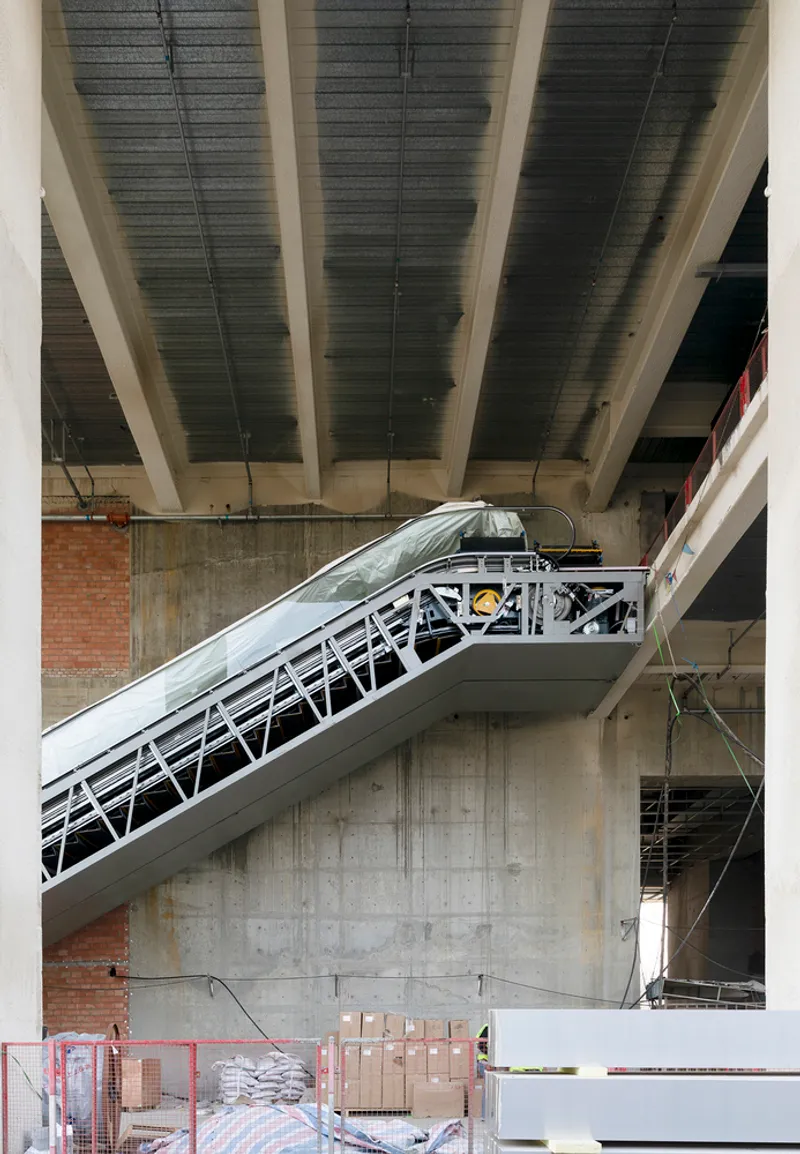
This integration enhances orientation, strengthens placemaking, and creates a legible architectural identity for the park.
A New Standard for High-Tech Headquarters
Blending architectural innovation, environmental sensitivity, and urban strategy, the Oppo Technology & Research Centre Tower marks a new era in corporate high-rise design in China. Its fusion of form, function, and future-focused programming makes it not just a place of work—but a living laboratory for creativity and collaboration.
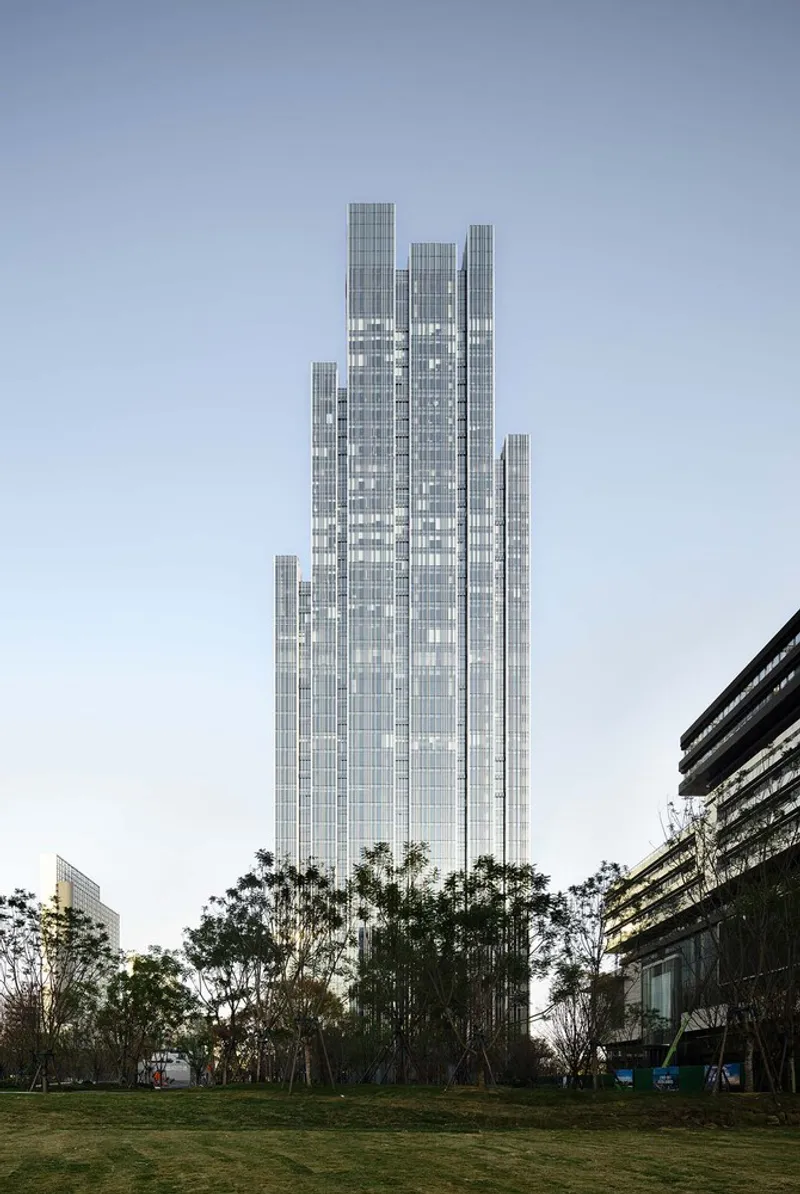
All Photographs are works of Shihao Xiao


Popular Articles
Popular articles from the community


Juan García Correa, John González and Claudia Rueda Sink a Circular Amphitheater into a Manizales Engineering Building
On the La Nubia campus in Manizales, Colombia, the S1 Building folds labs and offices into a hillside of ramped lawns that double as a campus route.

Jaramillo Van Sluys Arquitectura and Urbanismo Turn a Demolished Registry Lot in Quito into an Orchard Plaza
In Quito's Centro Histórico, a 2,800 m² plaza exposes the San Agustín convent wall and redraws its lost Augustinian orchard in volcanic stone.

U.GA Architects Wraps an Oval Rooftop Pool in Curved Board-Formed Concrete on Busan's Jeollidan-gil
In Busan's Jeonpo-dong, a 454 m² mixed-use block stacks a neighborhood facility, guest rooms and an oval rooftop pool inside spiraling concrete walls.

Architekt Andreas Gruber Scatters 23 Dark Timber Chalets Across a South Tyrolean Forest Edge
In Molini di Tures, Amonti Chalets breaks a resort into a hamlet of gabled timber houses, with parking, storage and services pushed into the slope.

Similar Reads
You might also enjoy these articles


Hodi-Mandai Geram
Project Function: Preservation and revitalization of the Intangible heritage and socio-spatial identity of the Hodi by Housing, Cultural Memory Center, Sacred Grove, landscape, local tourism economy


Olio Towers: A Mid-Rise for Performers That Fuses Housing, Rehearsal, and Stage
Located blocks from Houston's Theater District, this modular tower stacks living units around a central performance atrium.

Oasis: Modular Green Housing Carved into Dhaka's Urban Fabric
A shortlisted Plugin Housing entry reclaims unauthorized settlements in Dhaka with stepped concrete volumes, green roofs, and ventilation-driven design.

Black Hole: A Floating Megastructure for the Post-Physical Era
Emiliano Mazzarotto envisions a spherical, self-scaling arena where e-sports, digital hotels, and holographic stadiums replace traditional public space.

Explore Educational Building Competitions
Discover active competitions in this discipline

Challenge to design public laboratory

Challenge to reimagine the Iron Throne

Photograph architecture without architects

Illustrate the lost glory of Angkor Wat - Render Challenge
Comments (0)
Please login or sign up to add comments
No comments yet. Be the first to comment!