

Order Matter Distills an Entire Brand Identity into 39 Square Meters of Stone in Seoul
The ST01 flagship near Hakdong Station treats stone not as surface decoration but as the singular argument of the space.


Thirty-nine square meters is not a generous footprint for a flagship store, but Order Matter treats the constraint as a thesis statement. Designed by Youseok Cho and Oliver Chiu for the stone brand ST01, this ground-floor interior near Seoul's Hakdong Station sits among a cluster of architectural material shops where every neighbor is selling surfaces, textures, and finishes. The challenge was never about standing out with spectacle. It was about proving that one material, handled with discipline, can carry an entire retail concept without a single decorative concession.
ST01's motto is blunt: "Classic stone, nothing else." That phrase could easily become a branding platitude, but the space Order Matter has built actually honors it. Stone is not applied here. It is structured, framed, lit, and allowed to speak against a tightly controlled palette of dark metal, ribbed ceilings, and floor-to-ceiling glass. What makes the project worth studying is how architecture becomes the product display, collapsing the distinction between showroom and exhibit.
A Facade That Earns the Pause
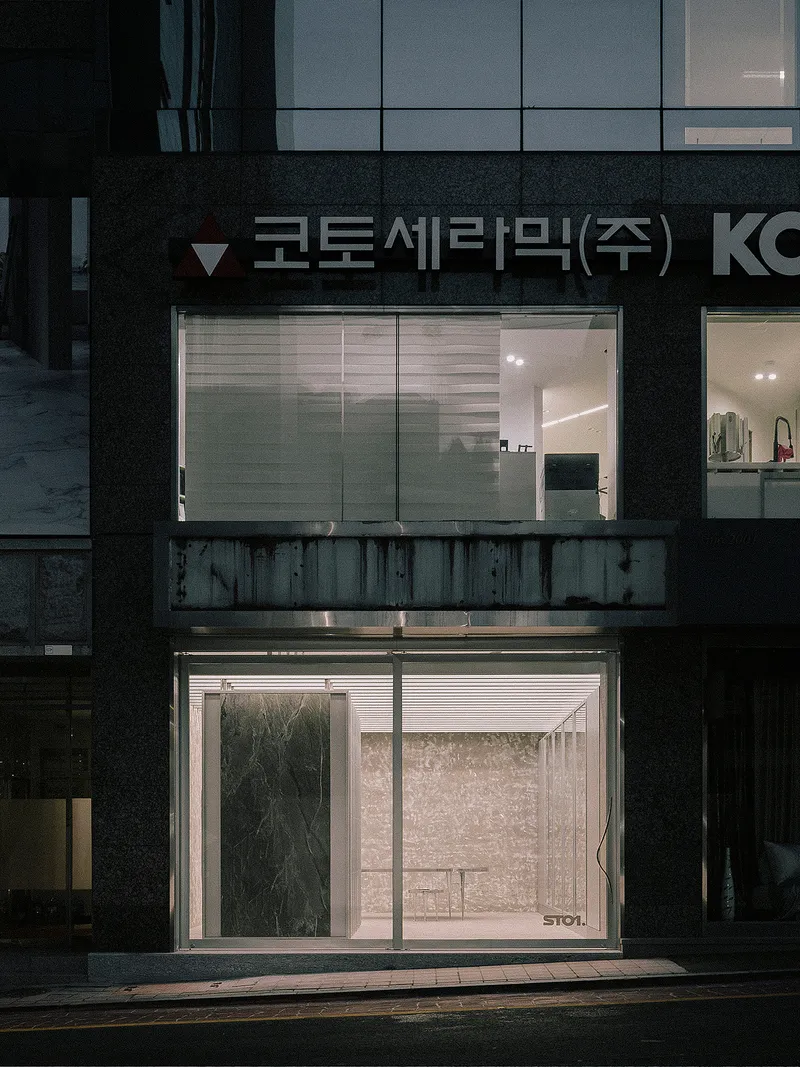
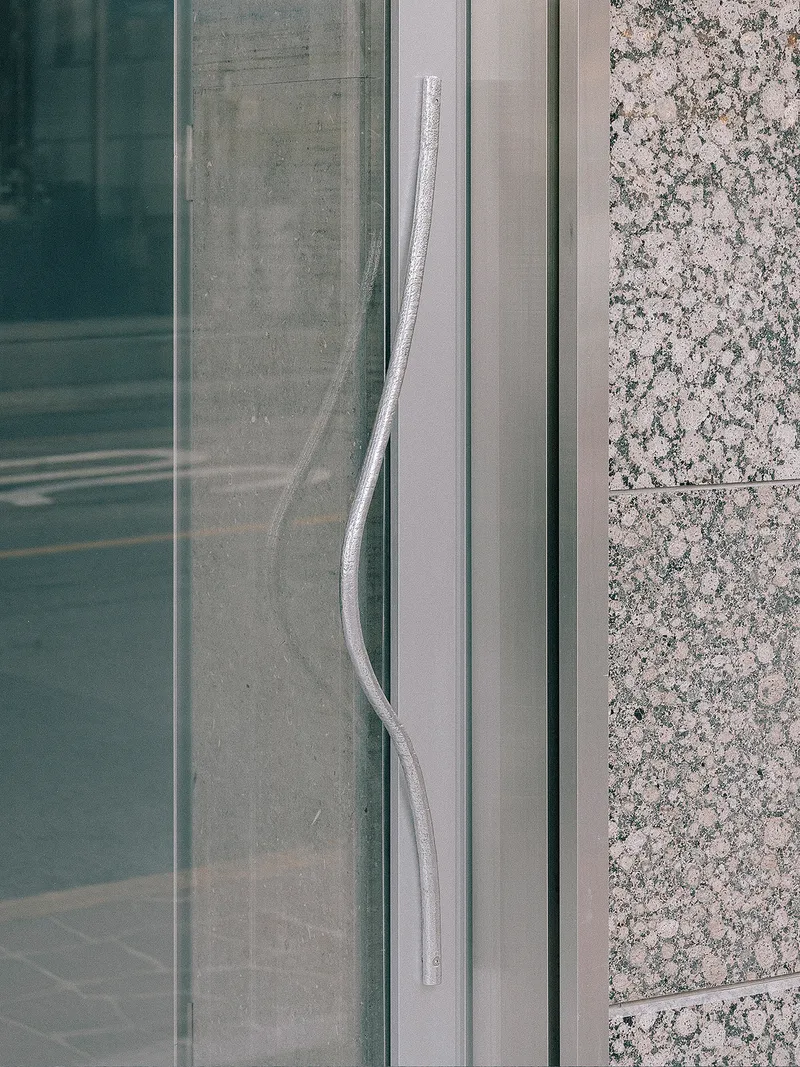
At dusk, the storefront glows through horizontal louvered glass, reading as a single band of warm light recessed into a dark facade. The effect is restrained but magnetic: the kind of shopfront that rewards pedestrians who slow down. Up close, details like a glass door pull mounted against granite cladding and a precise metal framing system reveal a level of craft that most retail interiors reserve for the interior alone. Order Matter clearly understood that in a street full of material showrooms, the threshold has to be architecture, not signage.
Stone as Structure, Not Wallpaper
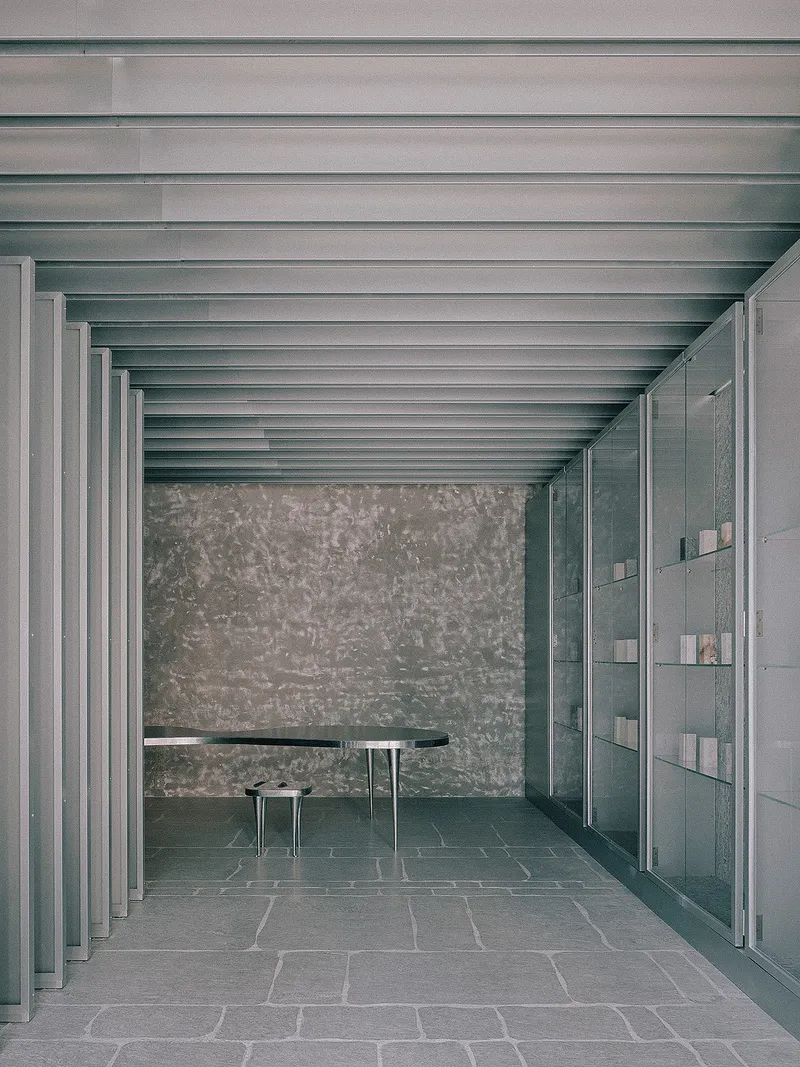
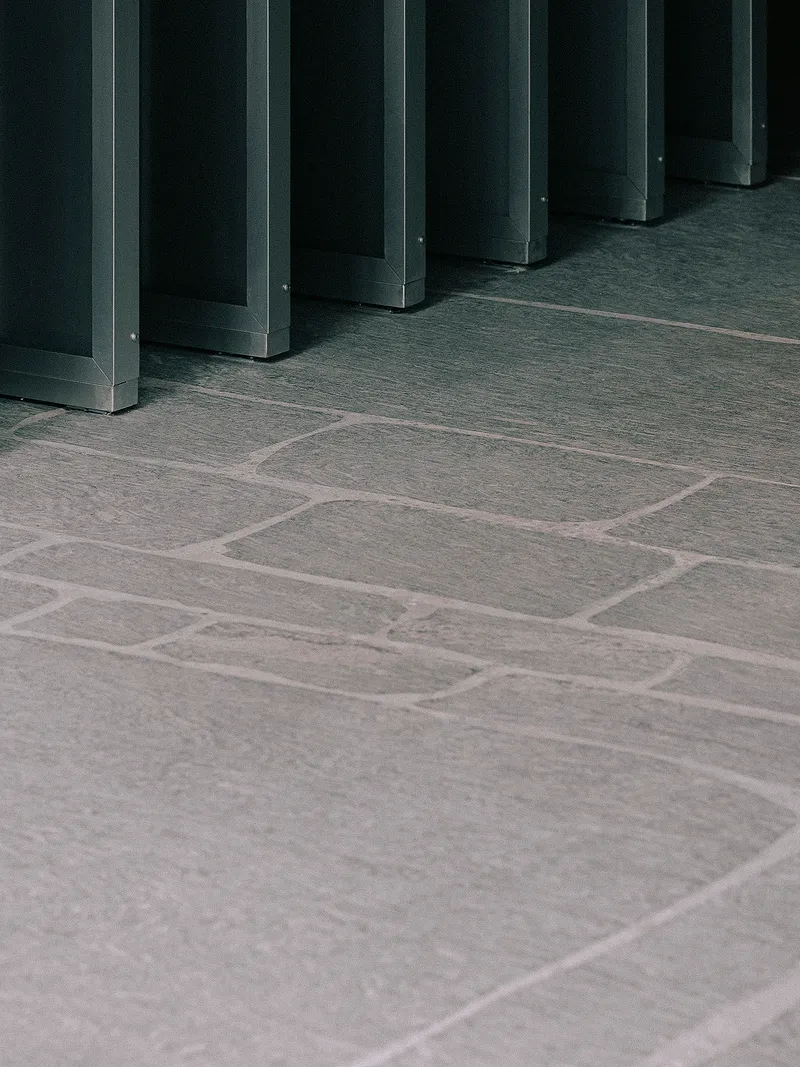
Inside, a colonnade of dark metal columns establishes rhythm in a space that could easily feel cramped. Textured stone walls run floor to ceiling, and stone tile flooring meets the base of each column in carefully resolved junctions. Nothing here reads as cladding tacked onto a shell. The stone and the metal framework appear co-dependent, each one giving the other a reason to exist.
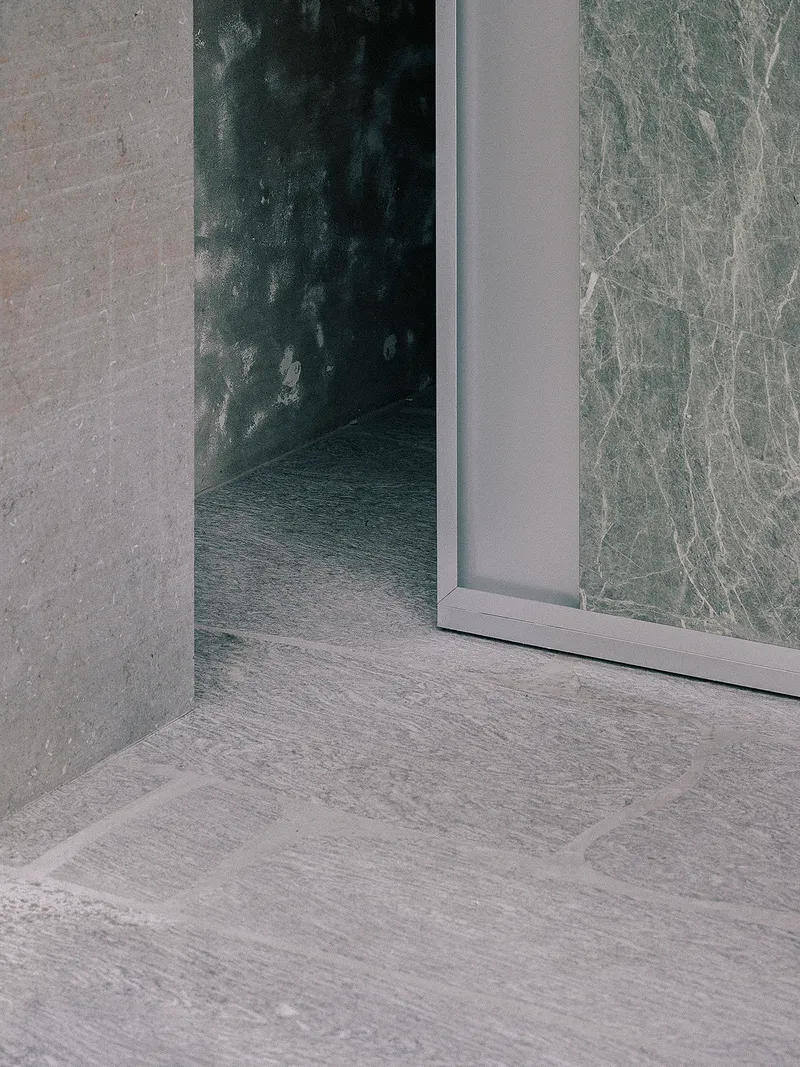
The corner threshold, where stone pavers meet a glass door and a textured wall, is worth a long look. It is a junction that many interiors would bury beneath a trim piece, but Order Matter leaves it exposed and legible. The floor and the wall argue for the same material world, and the glass simply gets out of the way.
Materiality in Close Focus

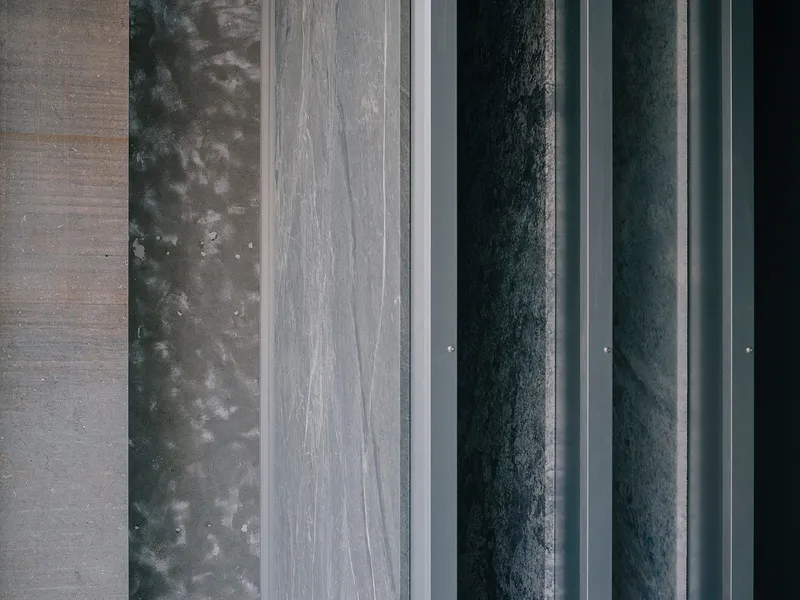
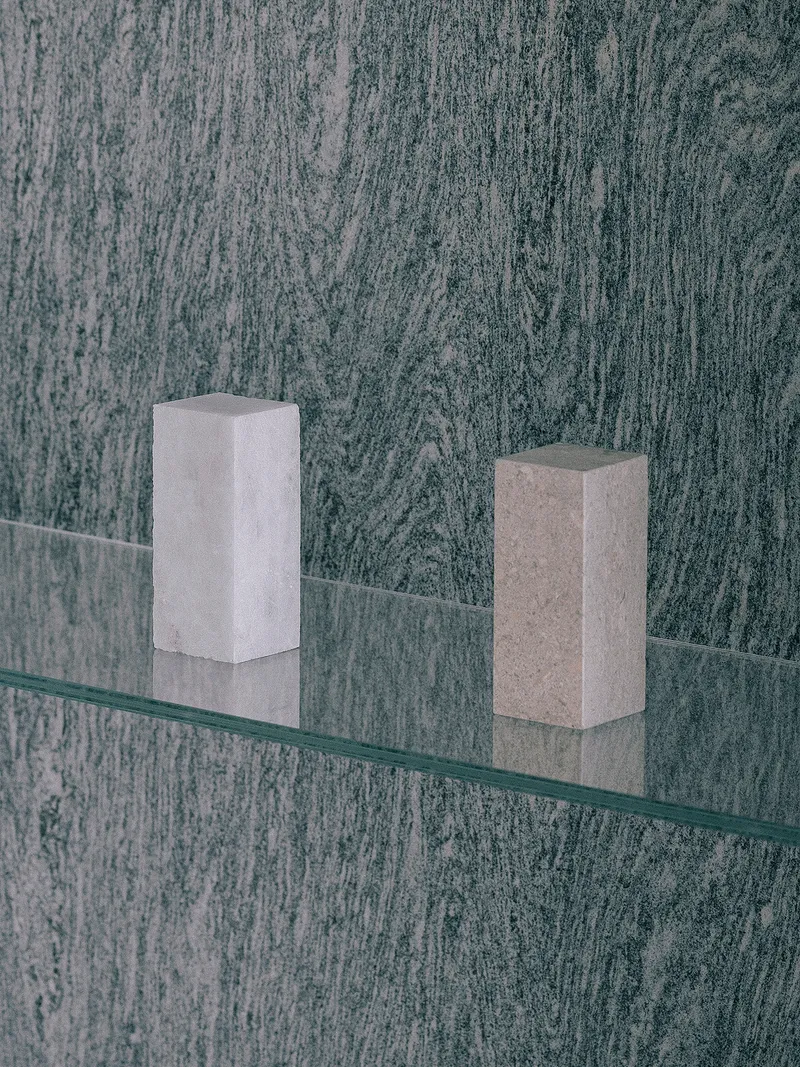
Some of the most compelling moments happen at the scale of a hand. Stepped metal louvers ascend against ribbed cladding in deep shadow, producing a geometry that shifts depending on viewing angle. An overhead shot reveals parallel bands of concrete, dark metal, and stone pavers laid side by side like a material library in built form. A glass shelf holds two stone blocks against a dark textured panel, staging the product with the formality of a museum vitrine.
This close-focus strategy makes sense for a brand that sells stone: the architecture constantly invites you to look at surfaces, edges, and grain. But it never tips into fetishism. Every detail also serves a spatial function, whether as threshold, screen, or display datum.
The Curved Desk and Its Counterpoints
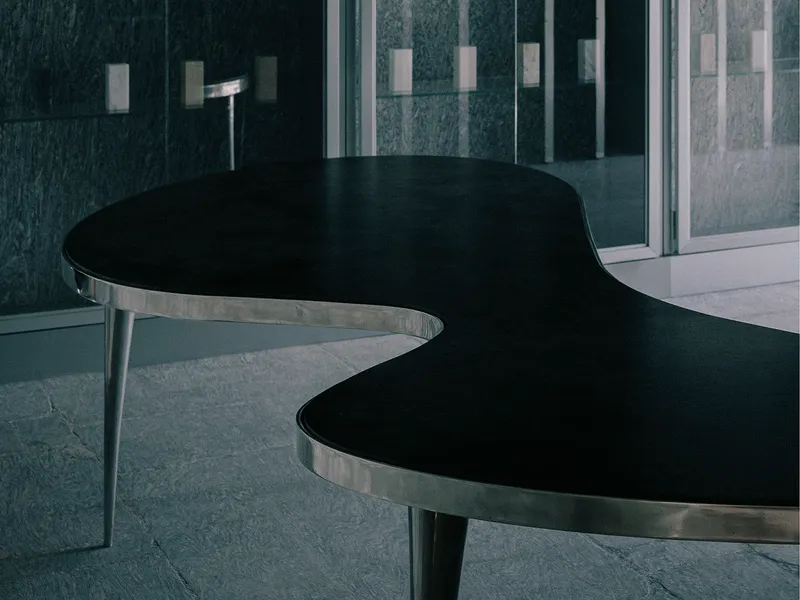
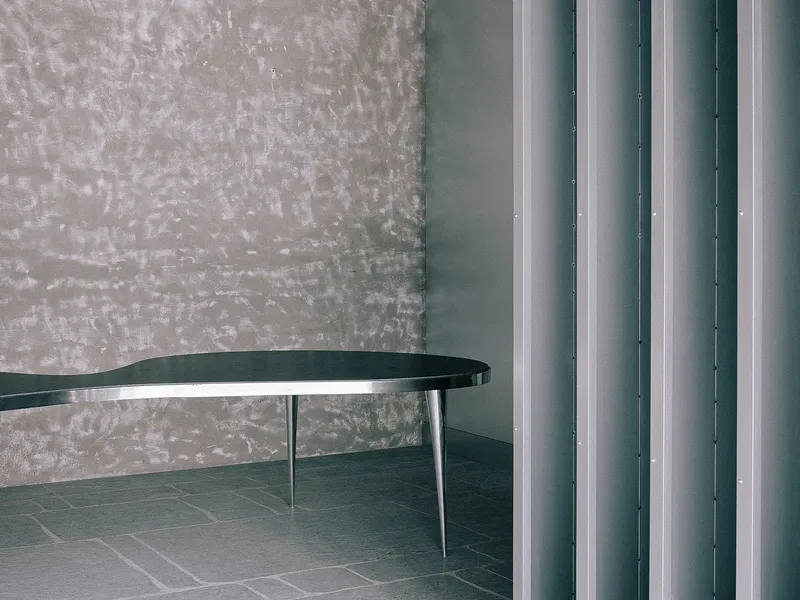
The only overt formal gesture in the space is a curved black reception desk with polished metal edging, positioned beside a glass partition. In a room governed by right angles and parallel lines, this single curve registers immediately. It softens the approach and creates a brief moment of hospitality within what is otherwise a rigorous material essay. The desk's dark surface plays well against the textured wall and vertical columns behind it, holding its own without competing.
Pivots, Louvers, and Controlled Light
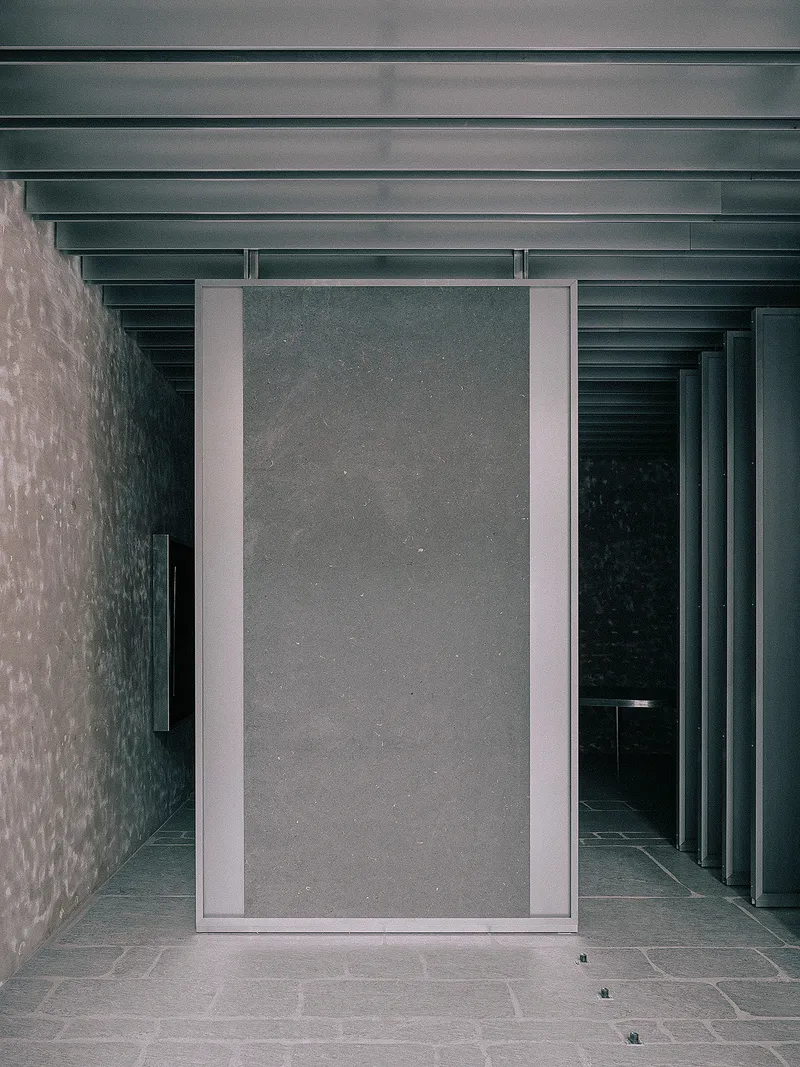
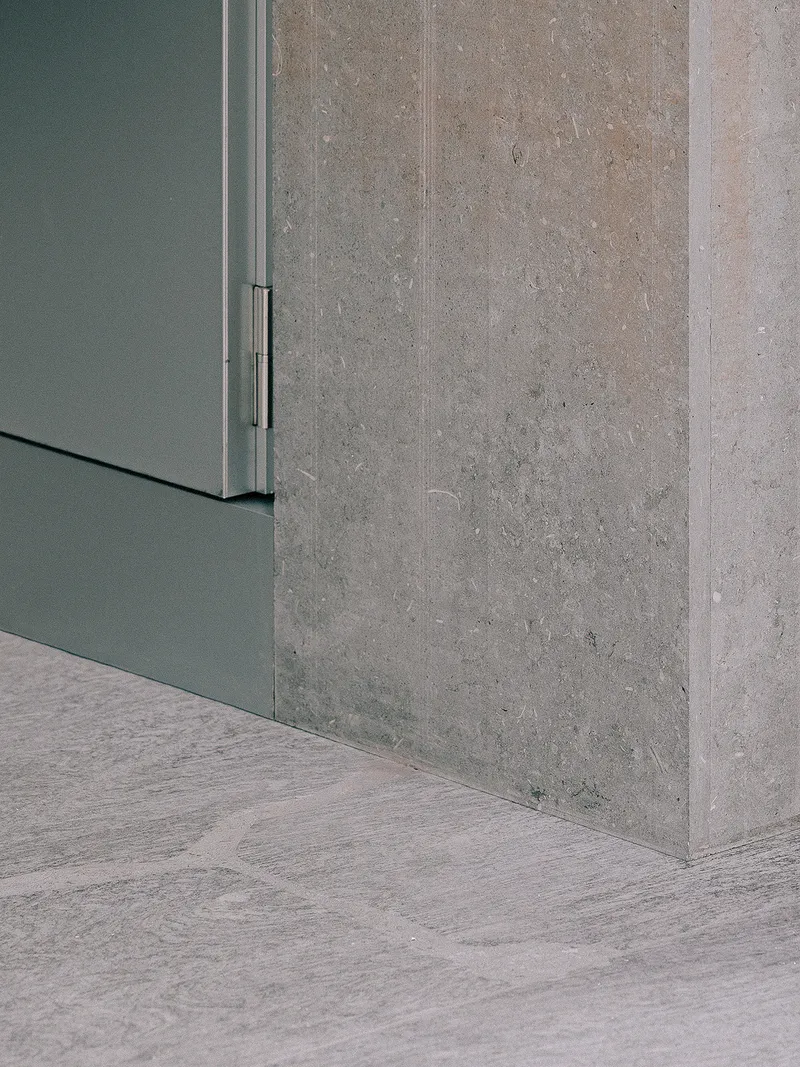
A pivoting metal-framed door panel sits between textured concrete walls beneath a ribbed ceiling, suggesting that nearly every surface in this interior was designed to modulate light or movement. Elsewhere, a grey metal cabinet meets a cast concrete wall beside wood flooring, introducing the only warm-toned material in the palette. These moments of contrast are deliberate: Order Matter keeps the dominant register cool and mineral, then punctuates it with just enough warmth to remind you this is a space for people, not just specimens.
Plans and Drawings
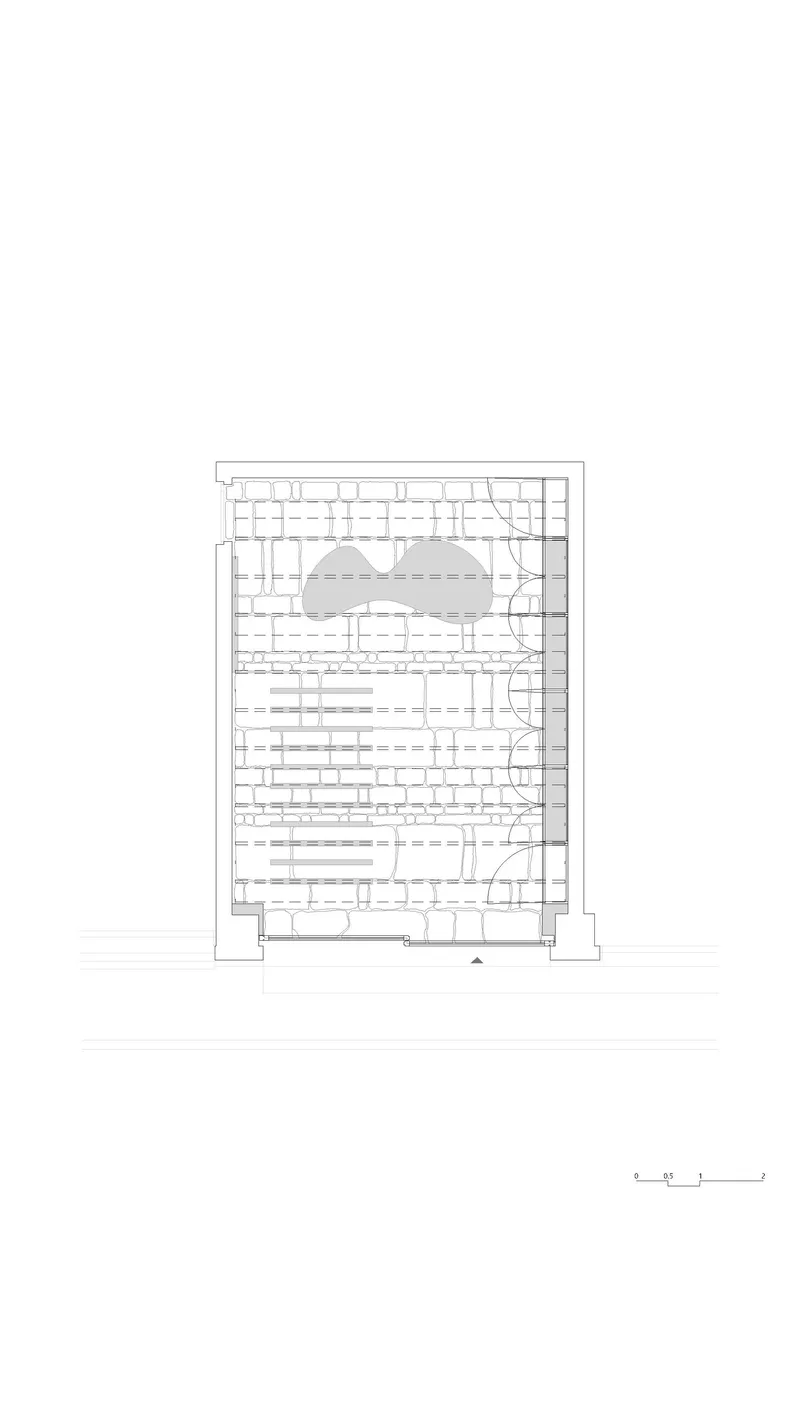
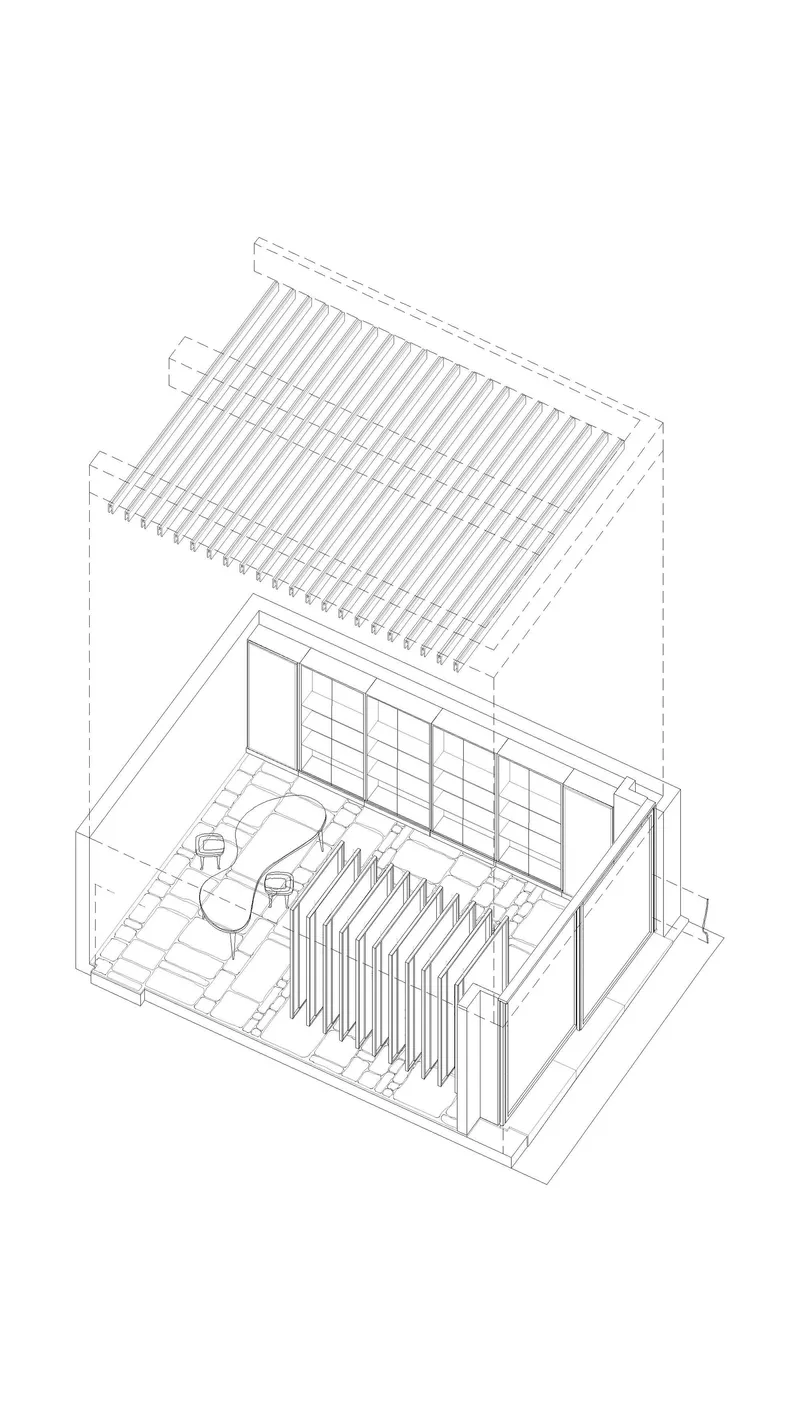
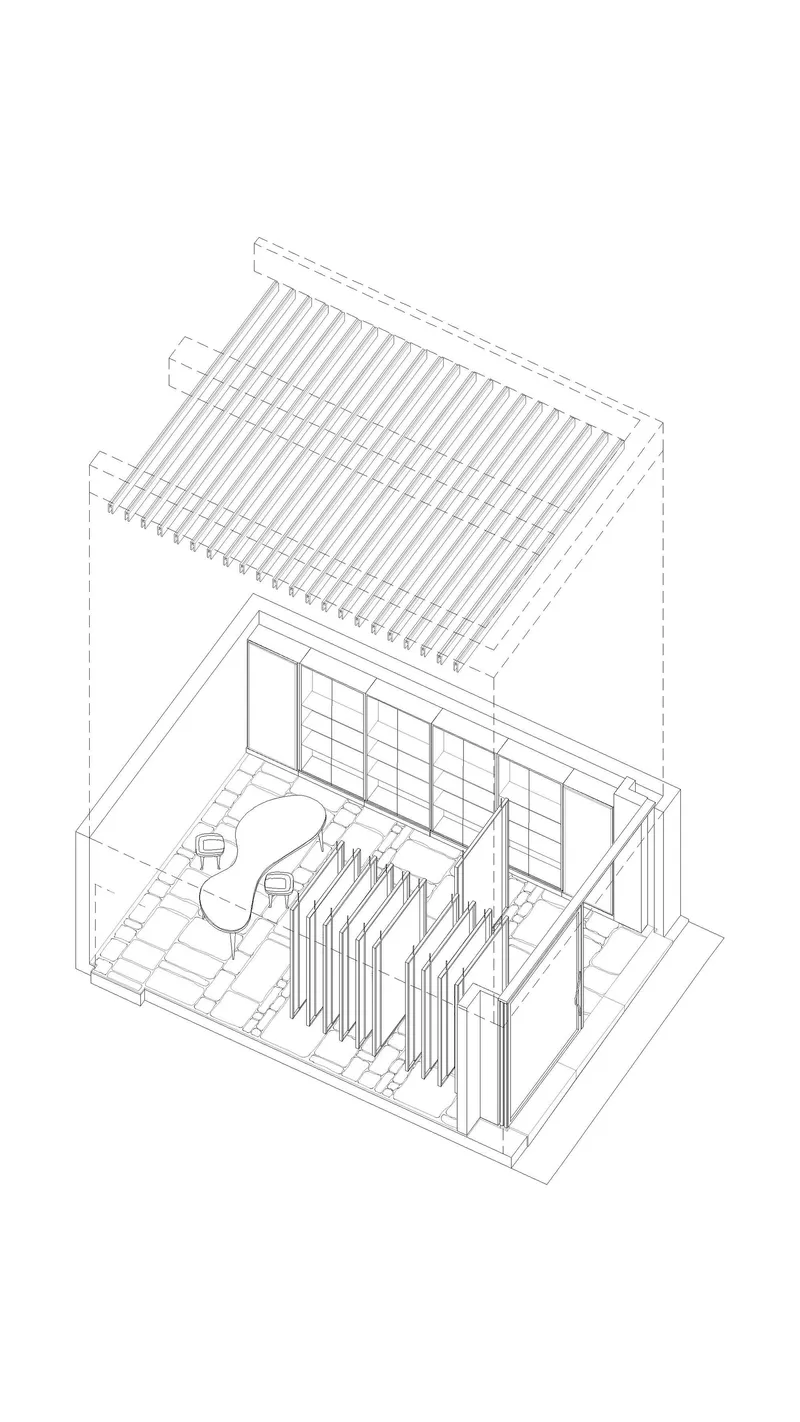
The floor plan reveals how Order Matter organized 39 square meters around a curved central void, with modular seating slotted into the perimeter. It is a classic small-space move: carve the center, load the edges. Two axonometric drawings show the vertical ambition of the project. Slatted roof louvers sit atop the column grid, and an exploded view separates the roof system from a gridded facade and what reads as a small courtyard or light well. For a single-story interior, there is a surprising amount of sectional invention.
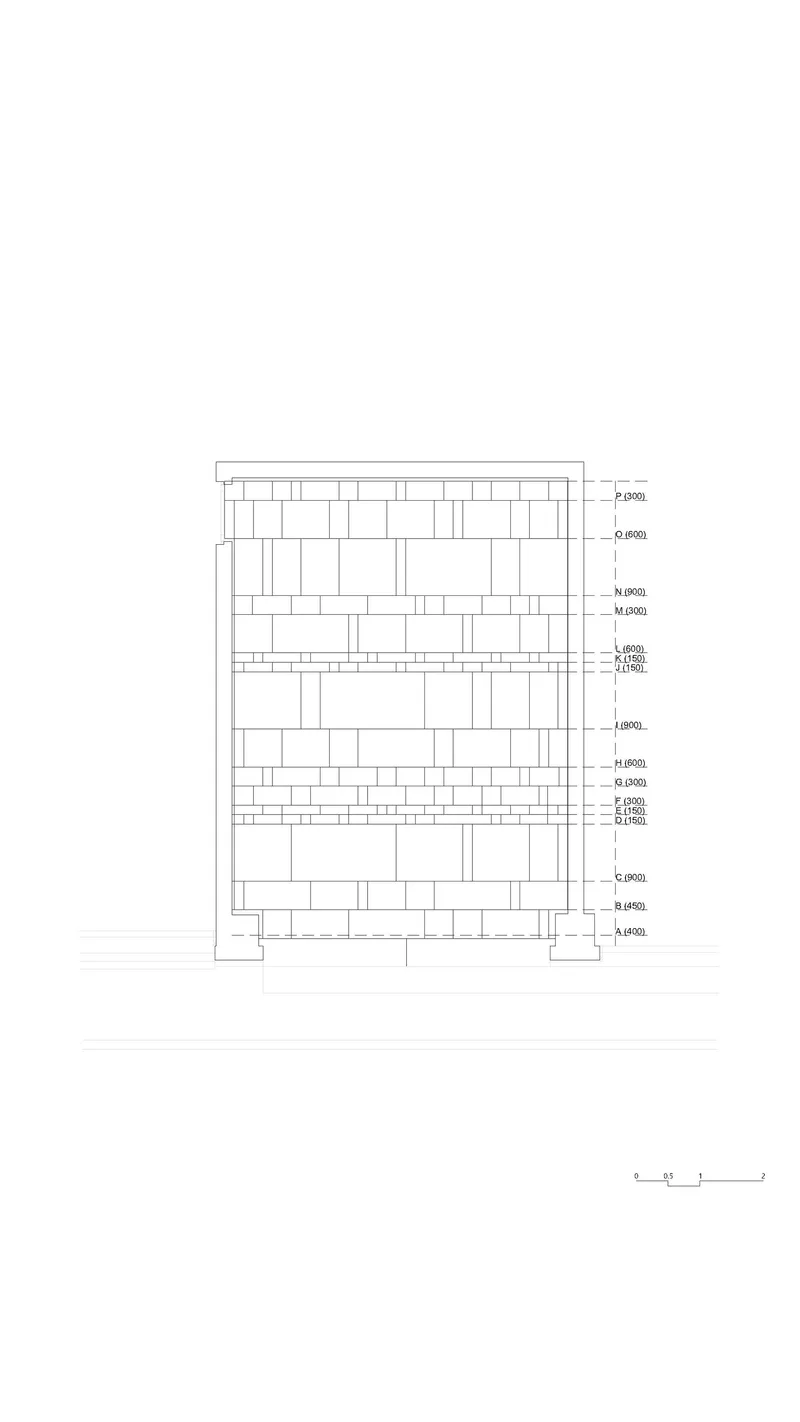
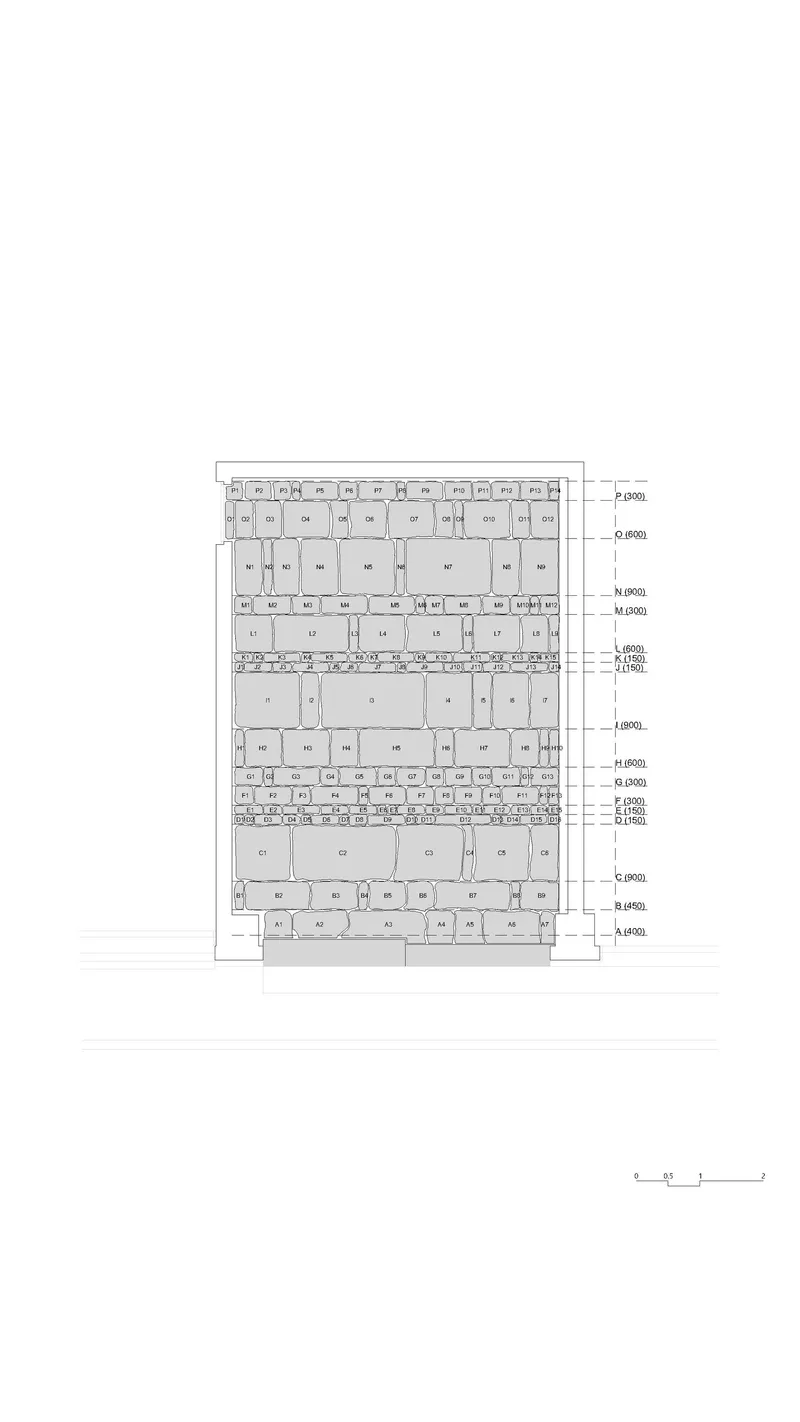
Two elevation drawings detail the masonry wall pattern with varied block sizes and annotated floor levels. The facade elevation shows a multi-story context with rectangular window openings, confirming that Order Matter's design negotiates a taller commercial building while asserting its own presence at ground level. The precision of the block layout, drawn at the scale of individual stones, reinforces how seriously the architects treated the wall as a design problem rather than a contractor's default.
Why This Project Matters
Retail interiors routinely promise brand identity and deliver mood boards. The ST01 flagship is interesting because it collapses branding into construction: the store's argument about stone is made with stone, not with graphics or storytelling overlays. In 39 square meters, Order Matter proves that a material showroom can function as a built manifesto if the architects are willing to give the product genuine spatial authority.
The project also offers a useful lesson about scale. Small spaces tempt designers into maximalism or minimalism, both of which can feel like evasion. Here, every square meter is loaded with intention but nothing is overwrought. Columns, stone walls, ribbed ceilings, and a single curve work together without redundancy. For any architect designing compact commercial interiors, this is a case study in how constraint, when accepted honestly, produces clarity.
ST01 Flagship Seoul by Order Matter (lead architects: Youseok Cho, Oliver Chiu). Seoul, South Korea. 39 m². Completed 2026. Photography by Yongbaek Lee.
About the Studio
Order Matter
Official website of Order Matter, one of the studios behind this project.
ordermatter.comShare Your Own Work on uni.xyz
If projects like this are the kind of work you want to make, uni.xyz is a place to publish your own, find collaborators, and enter design competitions.


Popular Articles
Popular articles from the community

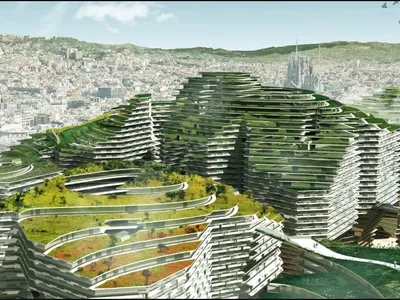
Manzana Morphosis: Stretching Barcelona's Grid into a Living Landscape for 2050
A radical reworking of the Eixample manzana turns density into a tool for generous public space, vertical ecology, and environmental performance.

Singing Woman: An Opera House That Performs Before the Curtain Rises
Ovidiu Cristian Pavel's conceptual opera house translates Estonia's choral identity into a sculpted waterfront landmark facing the Baltic Sea.


Cube Design Draws an Ecological Corridor Between Two Shenzhen Hills with the Nankai Building
Beside Shenzhen's container docks, the Nankai Building pairs stacked balconies with a climbing green screen to connect two hillsides across its height.

graciastudio Turns a Viewless Tijuana Lot Inward Around a Courtyard of Concrete, Timber and Trees
In Tijuana, Jorge Gracia's GA2 House stacks a timber-clad private floor over exposed concrete and replaces a missing view with a planted interior patio.

Similar Reads
You might also enjoy these articles

LAVA Architecten Gives Vocational Education a Sawtooth-Roofed Face on a Mechelen School Campus
In Mechelen, Belgium, a 2,053 m² STEM school on a 6×6 m grid turns workshops and classrooms into rooms that can be rearranged as teaching changes.

KEMA Studio Turns a Derelict Marvila Attic into a 60 m² Lighthouse Apartment Above Lisbon
In Lisbon's Marvila district, a rebuilt roof, four skylights and two plywood volumes turn an unlivable attic into a bright home facing the Tagus.

Pixel Gardens: One Repeated Module Stacked Into a Terraced Social Housing Tower for Famagusta
Salem Bader's shortlisted housing tower builds a vertical neighbourhood from one repeated module, offsetting units to carve terraces, light and air.

Bao Huynh Watercolor Atelier: A Serene Art Retreat in Hội An
Bao Huynh Watercolor Atelier in Hội An blends multifunctional art spaces, sustainable design, local materials, and family-friendly living in a serene environment.

Explore Local Stone Competitions
Discover active competitions in this discipline

Challenge to design luxury tourism on rails

VR headsets Storefront design competition

Designing a staircase for a client
Comments (0)
Please login or sign up to add comments
No comments yet. Be the first to comment!