

Organic Research and Training Centre by Sejpal and Raje Architects: Sustainable Tibetan Farming Hub in Bylakuppe
The Organic Research and Training Centre in Bylakuppe uses sustainable mud-brick architecture, courtyards, and rainwater harvesting for organic farming education.


Located in Bylakuppe, Karnataka, the Organic Research & Training Centre (ORTC) is a pioneering institution dedicated to promoting sustainable agriculture and organic farming practices within the Tibetan community. Designed by Sejpal & Raje Architects in 2021, this 670 m² facility was completed in 2023 and serves as a critical hub for research, training, and community engagement. Bylakuppe is the second-largest Tibetan settlement in India, home to numerous monasteries, temples, and universities, making ORTC a vital educational and cultural landmark.


A Gateway to Sustainable Agriculture
The ORTC campus reflects the ethos of organic farming, indigenous knowledge, and climate-responsive design. S&RA’s innovative architectural approach combines functionality with sustainability, creating spaces for research, development, administration, and training. The building is designed as a welcoming gateway to the campus, inspiring both staff and visitors with its thoughtful integration of environment, heritage, and modern design.
Climate-Responsive Design & Courtyard Planning
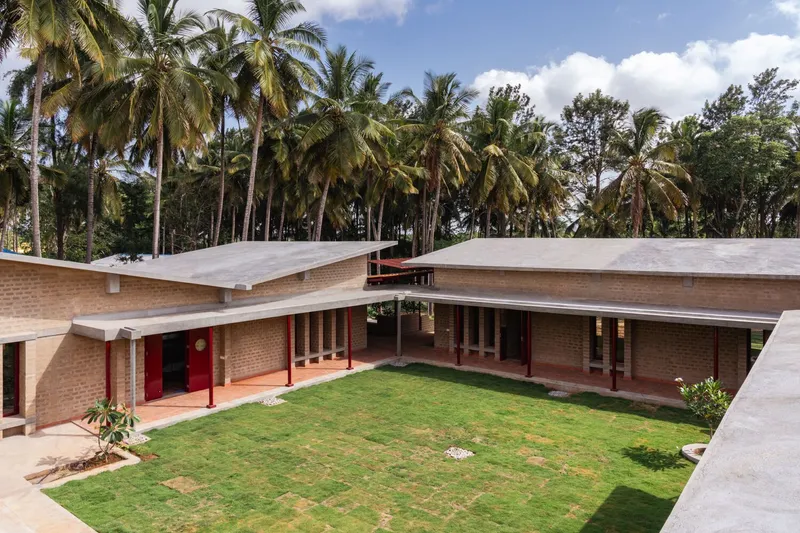
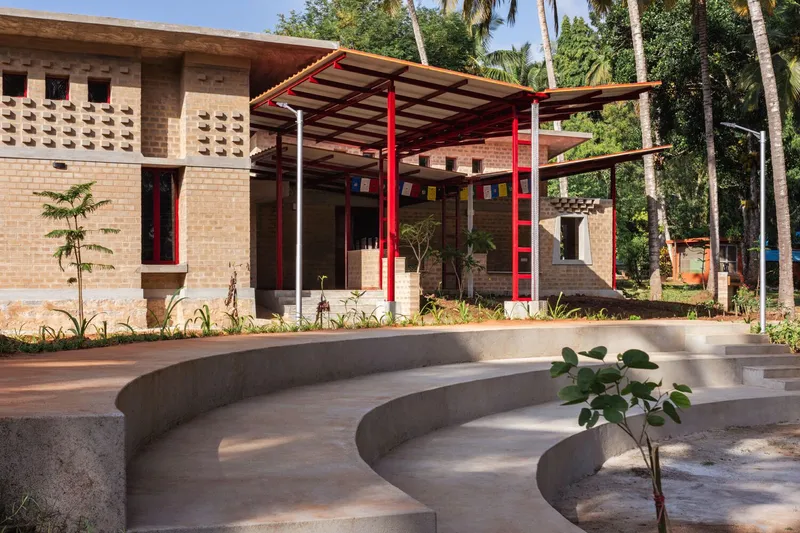
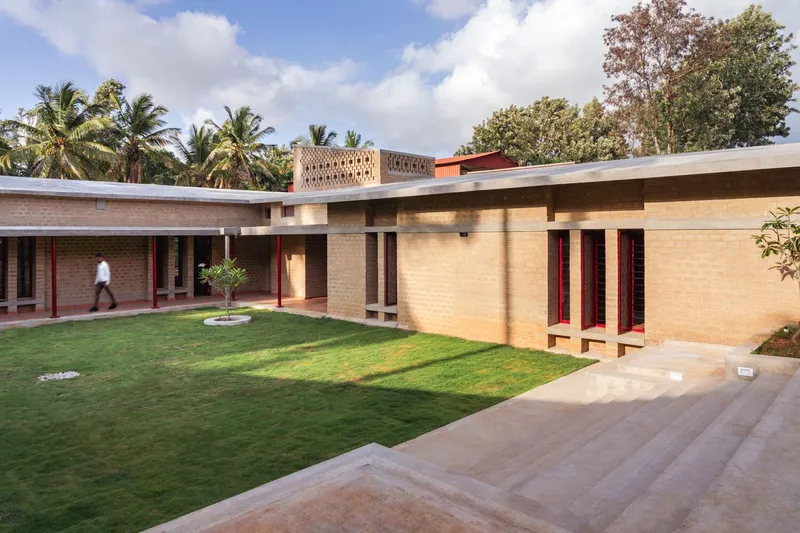
The Centre is organized around a lush internal courtyard, which functions as a natural ventilation system while providing serene green spaces for reflection and collaboration. Verandahs surround the courtyard, encouraging airflow and promoting a sense of community. Adjacent to the main road, an amphitheater set among coconut groves accommodates large events and serves as a gathering space for the broader Tibetan community. Both courtyard and amphitheater allow for communal activities, even when other parts of the building are closed.

Eco-Friendly Materials & Thermal Comfort
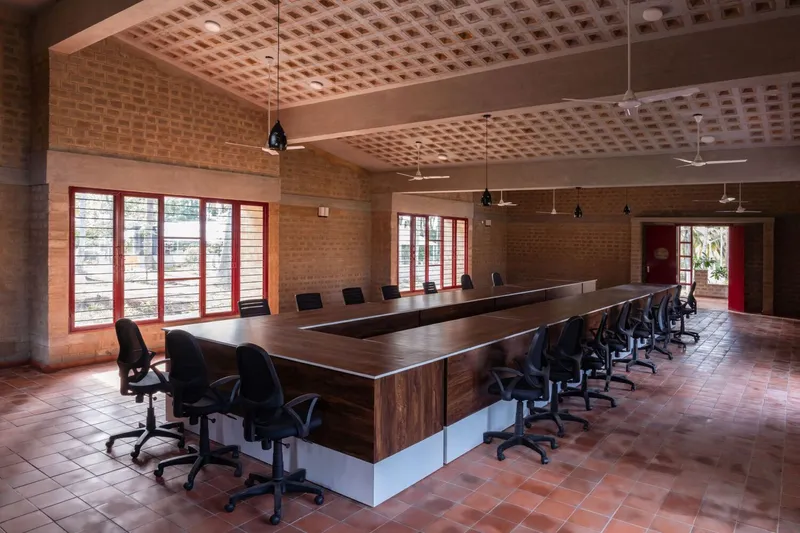
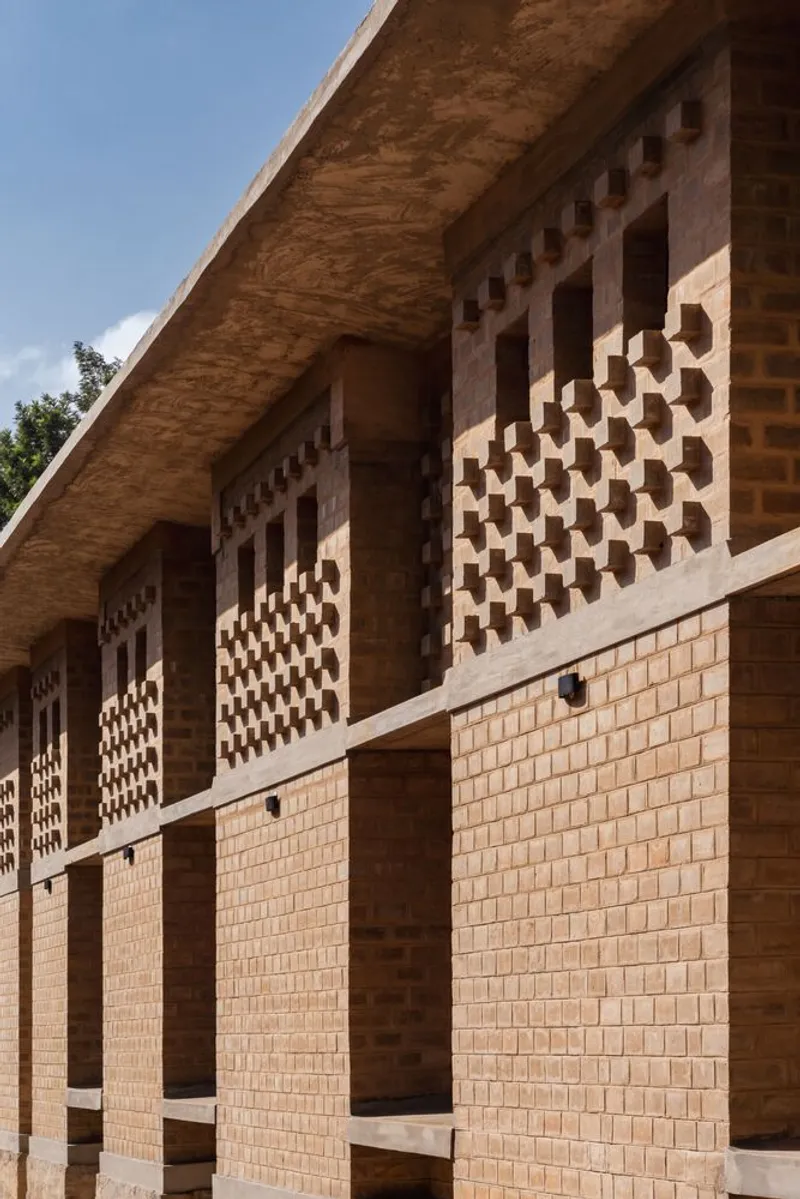
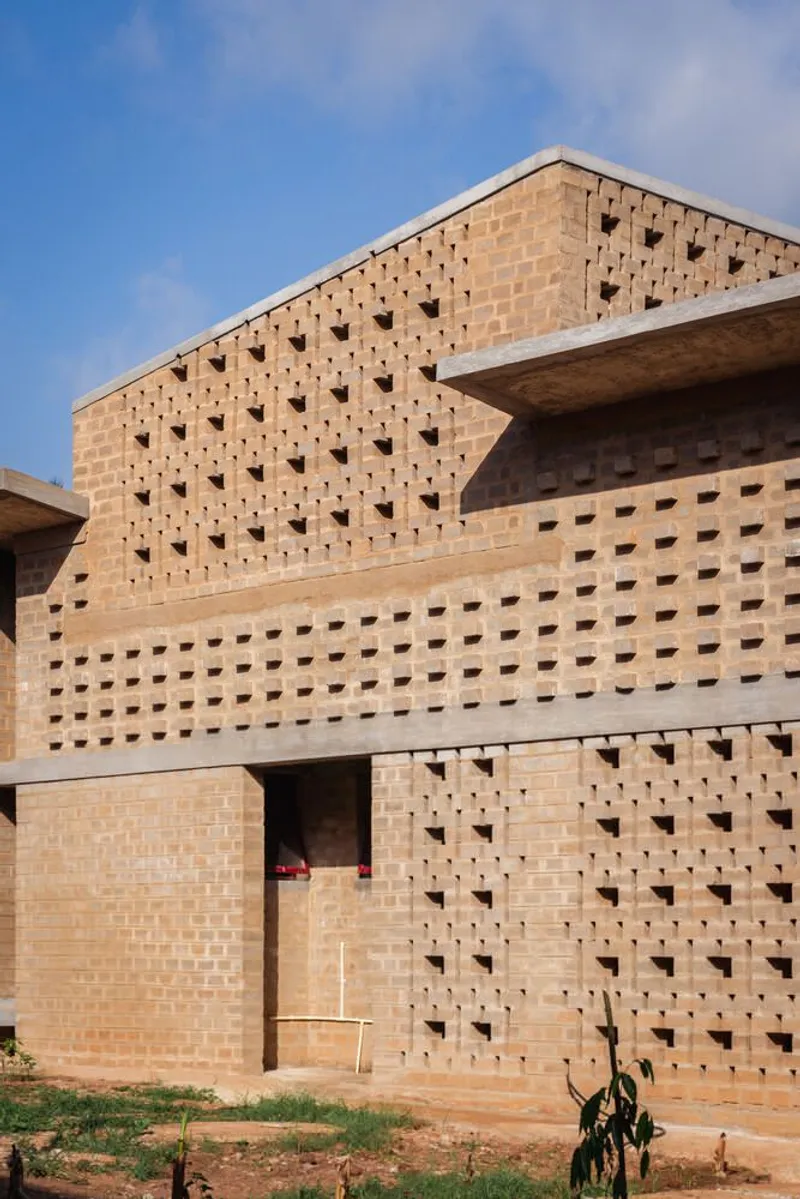
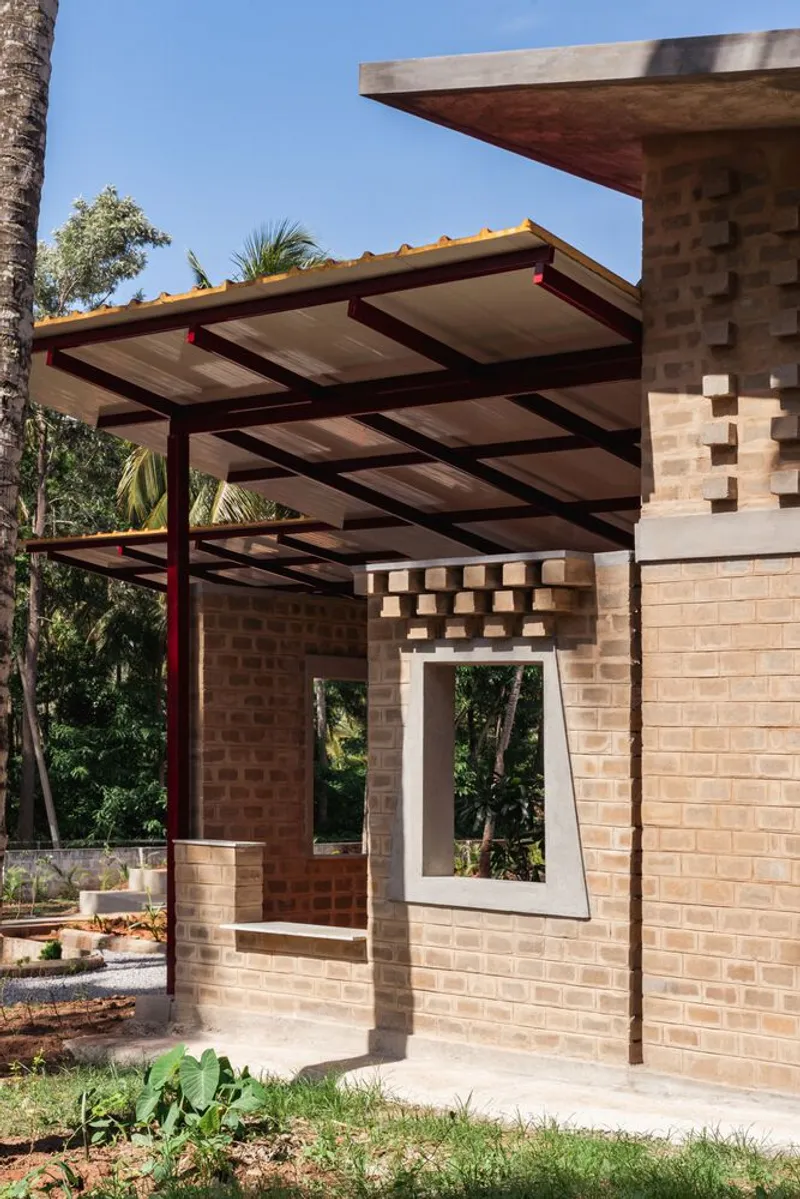
Central to the project’s sustainable design is the use of locally crafted mud bricks, forming the building’s core structure. These sun-dried, mud-stabilized bricks reduce the environmental footprint by minimizing cement and steel usage. Their porous nature enhances natural ventilation, while the stepped brick facades create dynamic patterns of light and shade. This approach not only provides thermal insulation but also introduces tactile textures that enrich the visual experience of the architecture.
Rainwater Management & Green Roofs
The Centre’s sloping roofs, supported on slender beams, manage the region’s heavy rainfall efficiently. Rainwater is guided through chain columns onto the surrounding lawns and planting beds, nurturing vegetation and supporting local biodiversity. This system reflects the architects’ commitment to eco-conscious water management while reinforcing the Centre’s green, regenerative identity.
A Hub for Community, Learning & Heritage
Beyond architecture, ORTC is a vibrant center for heritage seed conservation, sustainable livestock management, and organic farming education. The facility teaches younger generations about traditional Tibetan agricultural practices and their relevance in contemporary contexts. By blending modern architectural techniques with indigenous wisdom, ORTC fosters a holistic learning environment for trainees, researchers, and the local community.
Sejpal & Raje Architects, in collaboration with SAPA Architects, invite visitors to experience this sustainable green architecture, witness the Centre’s innovative programs, and engage with the dedicated local community members who make ORTC a thriving hub of knowledge and culture.


All photographs are works of
Santosh Kardak


Popular Articles
Popular articles from the community


LT2A and OPEN Architectes Thread a Brick and Glass High School Through a Wooded Belgian Campus
In Braine-l'Alleud, a 3,000 m² wing for Collège Cardinal Mercier pairs pale brick with a glazed colonnade, deferring to a small chapel and a dense wood.

Cube Design Draws an Ecological Corridor Between Two Shenzhen Hills with the Nankai Building
Beside Shenzhen's container docks, the Nankai Building pairs stacked balconies with a climbing green screen to connect two hillsides across its height.

Jaramillo Van Sluys Arquitectura and Urbanismo Turn a Demolished Registry Lot in Quito into an Orchard Plaza
In Quito's Centro Histórico, a 2,800 m² plaza exposes the San Agustín convent wall and redraws its lost Augustinian orchard in volcanic stone.

David Ortega Stacks a Two-Story Mexico City Penthouse Around a Steel Stair and a Pergola-Shaded Roof Terrace
In Colonia Roma, a 300 m² penthouse uses oak joinery, a planted steel stair and a slatted roof pergola to make a new-build apartment feel like a house.

Similar Reads
You might also enjoy these articles

Gil Mello Arquitetura Tilts a Single Roof Toward the Waterfalls on a Plateau Above Aiuruoca, Brazil
In Aiuruoca, Minas Gerais, a 200 m² house of local labor and reclaimed poles pairs a low valley veranda with a tall mountain one.

U.GA Architects Wraps an Oval Rooftop Pool in Curved Board-Formed Concrete on Busan's Jeollidan-gil
In Busan's Jeonpo-dong, a 454 m² mixed-use block stacks a neighborhood facility, guest rooms and an oval rooftop pool inside spiraling concrete walls.

Felipe Hess Arquitetos Turns a Blind Stone Wall to the Street and Opens a Brazilian House onto a Courtyard and Canal
A canal-front house in Brazil hides behind painted stone and planting, then opens to an olive-tree courtyard, a reed-ceilinged porch and a curving pool.

David Macias Steps a Doorless Stone and Plaster House Down a Tropical Colombian Hillside
In the humid hills of Colombia, Threshold House replaces the front door with an open void and terraces its 850 m² down the slope instead of fighting it.

Explore Sustainable Design Competitions
Discover active competitions in this discipline

Challenge to reimagine the Iron Throne

Photograph architecture without architects

Illustrate the lost glory of Angkor Wat - Render Challenge

Design challenge to reuse E-waste
Comments (0)
Please login or sign up to add comments
No comments yet. Be the first to comment!