

Pako Street Animal Social Life Campus by Mert Uslu Architecture
A humane campus in Izmir integrating animal care, rehabilitation, and community interaction through open architecture promoting human-dog connection and adoption.


A New Model for Human–Animal Interaction and Rehabilitation in Izmir
The Gökdere project in Bornova, Türkiye, designed by Mert Uslu Architecture, spans 29,916 m² and was completed in 2022. Integrating advanced structural, mechanical, and electrical systems, the design emphasizes functionality and sustainability. High-quality materials from Kale, Daikin, EGE, Novawood, and Weber enhance durability, while photography by Zeren and Mehmet Yasa captures its architectural finesse.

Rethinking Animal Welfare Architecture in Turkey
The Pako Street Animal Social Life Campus by Mert Uslu Architecture represents a pioneering step in Turkey’s approach to animal welfare architecture. Located in the Gökdere district of Bornova, Izmir, the 110,000-square-meter site serves not only as a temporary care center for stray and injured animals but also as a social campus dedicated to mutual rehabilitation between humans and dogs.
In Turkey, animal care practices primarily focus on medical treatment and temporary sheltering before releasing animals back into their natural environments. However, this project redefines that model — transforming the idea of a shelter into an interactive, educational, and therapeutic landscape where human-animal relationships are nurtured through design.

Architectural Vision: Integrating Care, Education, and Community
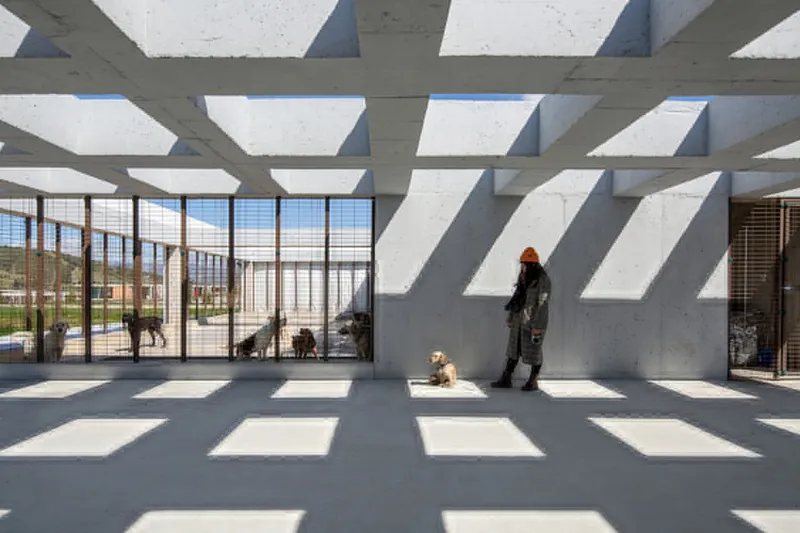
The masterplan of the Animal Social Life Campus emphasizes open and closed spatial relationships that foster interaction and transparency. The shelter units are arranged along the north and south edges, while a central axis organizes the amphitheater, administrative offices, and dedicated spaces for puppies and purebred dogs.
At the eastern edge, specialized zones house veterinary units, quarantine areas, and shelters for aggressive or rehabilitating dogs, ensuring safety and clear circulation for both staff and visitors. Each building responds to the specific needs of animals, addressing issues often neglected in traditional shelters — hygiene, accessibility, ventilation, and green space integration.
Through open-air enclosures, shaded areas, and natural landscaping, the campus blurs boundaries between built and natural environments. The design fosters both comfort and stimulation, crucial for animals’ psychological well-being.

Design Elements: Transparency, Light, and Comfort
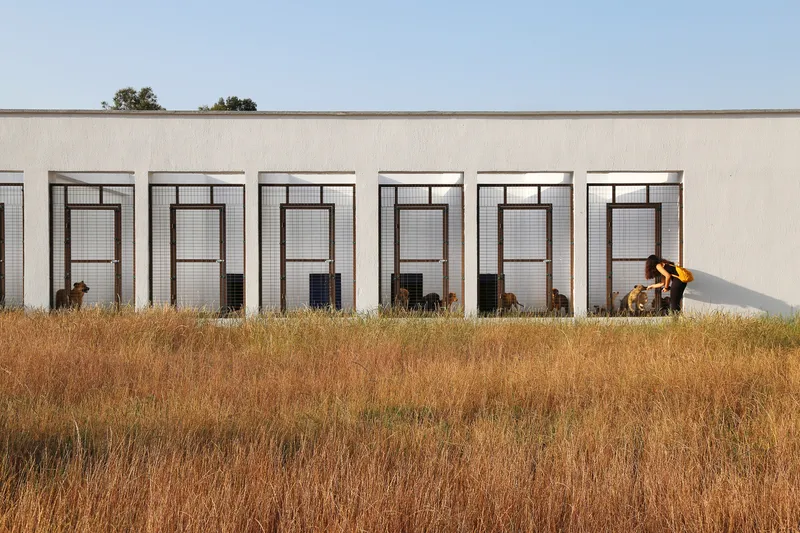
The spatial design of the shelter units prioritizes natural light, ventilation, and visual connectivity. Wire mesh screens and transparent partitions along the façades not only provide security but also encourage visibility and engagement — allowing visitors, staff, and animals to observe one another freely.
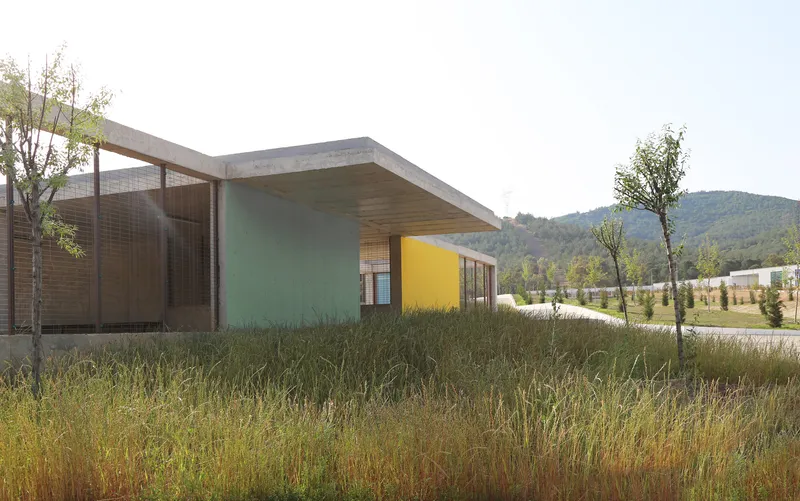
Soft scapes made from soil and greenery integrate the shelters with the surrounding landscape, while automatic watering systems and color-coded transparent elements contribute to a clean and comfortable environment.
Materials such as exposed concrete, wood, and steel are chosen for durability and aesthetic coherence, creating a balance between functionality and warmth. The design language reflects an architectural empathy, giving dignity to animal spaces while maintaining an inviting environment for people.


Education, Rehabilitation, and Social Engagement
The campus extends beyond animal care into community education and social awareness. Within the administrative area, seminar and workshop spaces offer programs on dog care, adoption processes, and responsible pet ownership.
In a particularly innovative approach, the facility partners with institutions supporting children with disabilities, enabling them to benefit from therapeutic human-dog interactions. This vision of reciprocal rehabilitation reinforces the project’s mission to create meaningful, emotional connections between species.
The central amphitheater serves as both a gathering and learning space — a focal point where families and potential adopters can spend time with dogs in a natural, engaging environment. The amphitheater embodies the project’s dual mission: education and empathy through architectural design.

Exposed Concrete as Communication and Shade
Exposed concrete elements play multiple roles within the campus. Beyond their structural and shading functions, they act as exhibition surfaces that display information about resident dogs — their breeds, personalities, and adoption status. This subtle integration of information design within architecture encourages visitors to learn, connect, and adopt responsibly.
A Prototype for Humane and Sustainable Shelter Design
The Pako Street Animal Social Life Campus is more than an animal shelter — it is a prototype for humane, sustainable, and socially engaged architecture. By merging environmental design with social ethics, the project sets a precedent for future urban animal welfare infrastructures across Turkey and beyond.
All photographs are works of Zeren Yasa, Mehmet Yasa


Popular Articles
Popular articles from the community


The Earth Pod: 3D Printed Homes for Resilient Refugee Communities
The Earth Pod reimagines refugee housing through 3D printed homes made from clay, combining resilience, self-sufficiency, and rapid shelter.

Hill & Cross Opera: Sculptural Opera House Architecture Shaped by Tallinn’s Landscape and Identity
Hill & Cross Opera reimagines opera house architecture in Tallinn through its sculptural hill, civic plaza, glass wave and a luminous cross.

The Musturak Paradise: Senior Living Architecture for a Connected Future in Temara, Morocco
The Musturak Paradise reimagines senior living architecture in Temara via private homes, social spaces, culture, community, and shared care.

Co-Life: Senior Housing Design That Reconnects Older Adults With the City
Co-Life reimagines senior housing design through healing gardens, shared streets, workshops, and a sustainable community across generations.

Similar Reads
You might also enjoy these articles


Hodi-Mandai Geram
Project Function: Preservation and revitalization of the Intangible heritage and socio-spatial identity of the Hodi by Housing, Cultural Memory Center, Sacred Grove, landscape, local tourism economy


Olio Towers: A Mid-Rise for Performers That Fuses Housing, Rehearsal, and Stage
Located blocks from Houston's Theater District, this modular tower stacks living units around a central performance atrium.

Oasis: Modular Green Housing Carved into Dhaka's Urban Fabric
A shortlisted Plugin Housing entry reclaims unauthorized settlements in Dhaka with stepped concrete volumes, green roofs, and ventilation-driven design.

Black Hole: A Floating Megastructure for the Post-Physical Era
Emiliano Mazzarotto envisions a spherical, self-scaling arena where e-sports, digital hotels, and holographic stadiums replace traditional public space.
Explore Sustainable Design Competitions
Discover active competitions in this discipline



Challenge to reimagine the Iron Throne


Photograph architecture without architects


Illustrate the lost glory of Angkor Wat - Render Challenge


Design challenge to reuse E-waste
Comments (0)
Please login or sign up to add comments
No comments yet. Be the first to comment!