
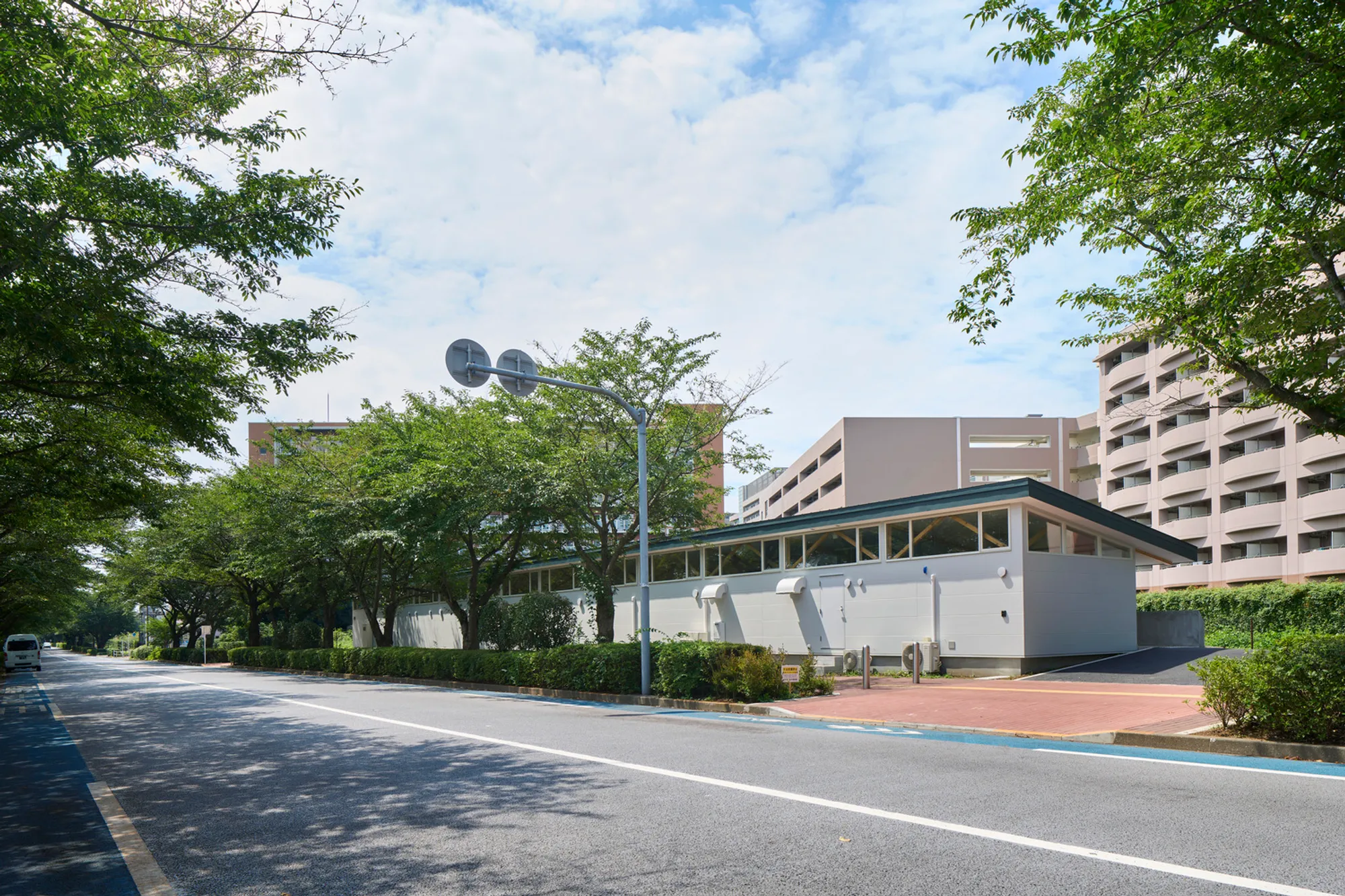
PAL International School at TUFS by Naf Architect & Design
Wooden nursery embedded in campus hillside transforms leftover terrain into a playful, ventilated learning landscape connecting childcare, community, and nature.


Located in Machida, Japan, PAL International School@TUFS is a compact yet conceptually ambitious nursery and after-school facility designed by Naf Architect & Design. Completed in 2022, the 238-square-meter wooden structure redefines early childhood education architecture by transforming an overlooked campus edge into a vibrant, community-oriented landscape for children.
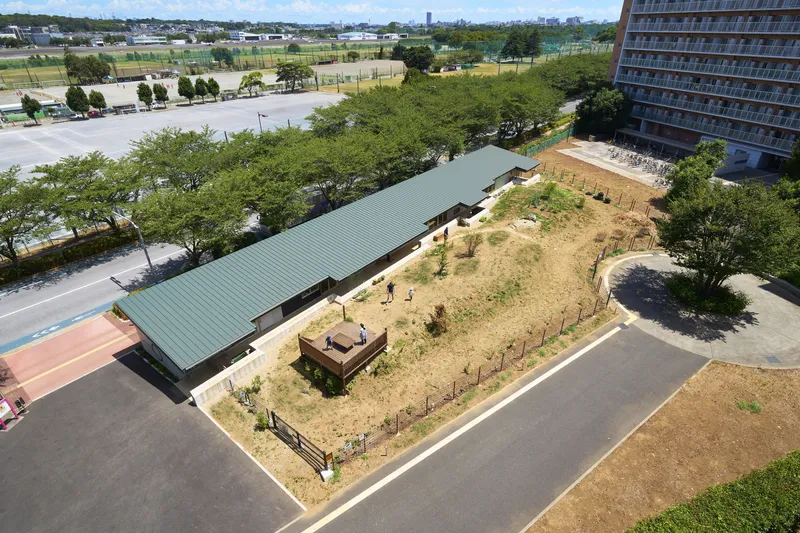
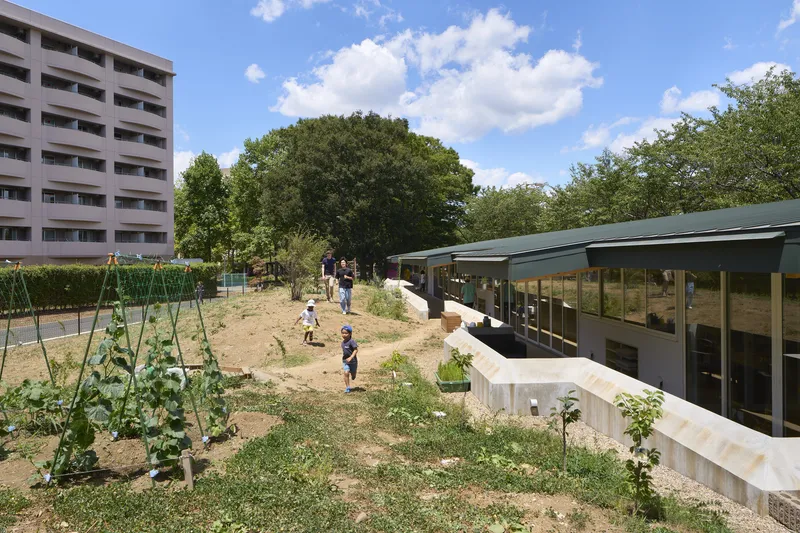
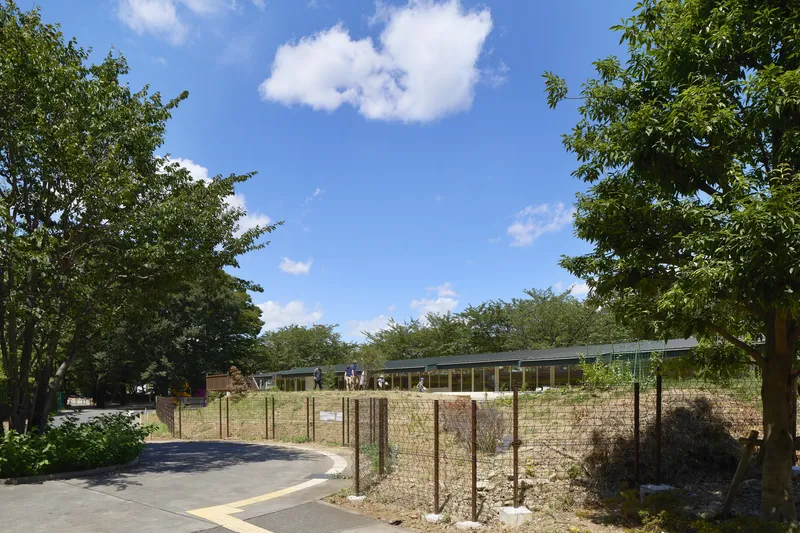
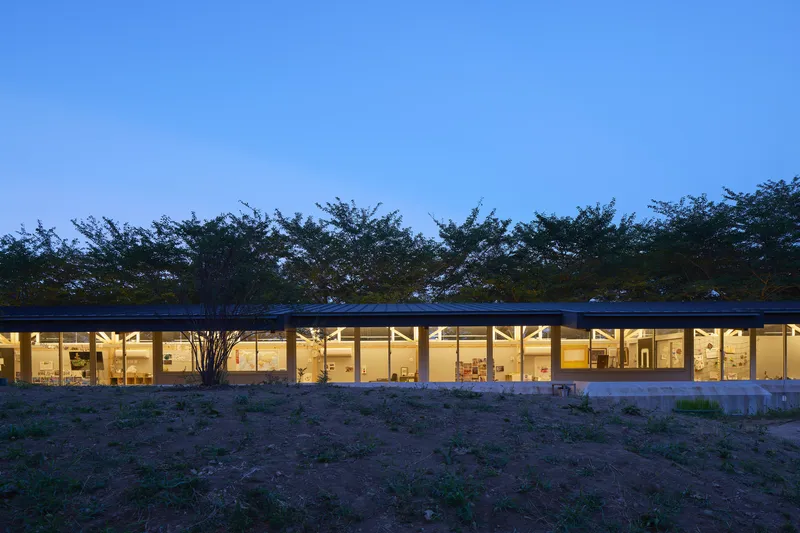
Positioned at the end of a tree-lined avenue extending from the central plaza of Tokyo University of Foreign Studies, the project occupies a small hill formed from leftover soil during adjacent dormitory construction. Once segregated by fencing and overgrown vegetation, the site appeared detached from campus life. However, the architects recognized its spatial and symbolic potential: rather than flattening the terrain, they embraced the existing topography as an opportunity to create a three-dimensional playground that stimulates imagination, movement, and discovery.
Reimagining the Artificial Hill: Landscape as Learning Environment
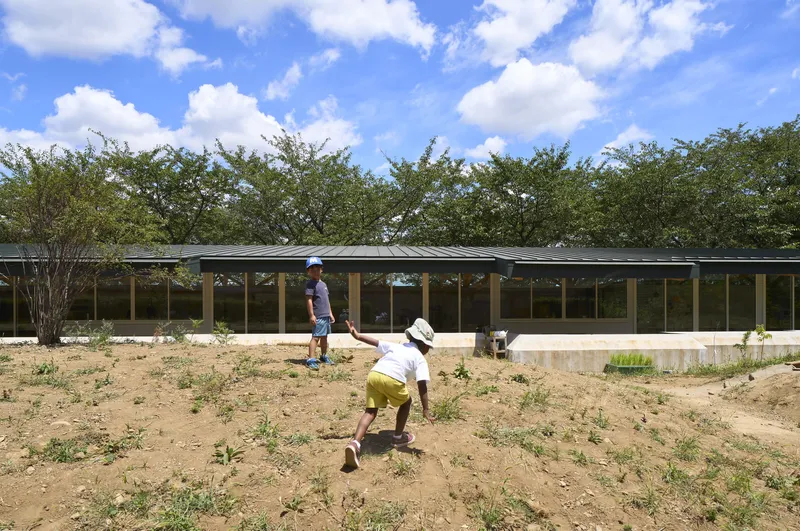
Instead of removing soil and leveling the site, the design strategy centered on preserving the hill as an “artificial landscape.” Nursery schools often build play mounds; here, the naturalized mound became the core educational device. The entire garden operates as a sculpted terrain that encourages climbing, running, and exploratory play, integrating landscape architecture into early childhood pedagogy.
To minimize excavation and environmental impact, the building was shifted toward the site’s edge, stretching 47 meters along the road lined with cherry blossom trees. Its low roofline ensures that children standing atop the hill can see the surrounding treetops and seasonal changes. This gesture reinforces the connection between childcare space and campus ecology, embedding environmental awareness into daily routines.
The Outdoor Corridor: A Flexible Threshold Space
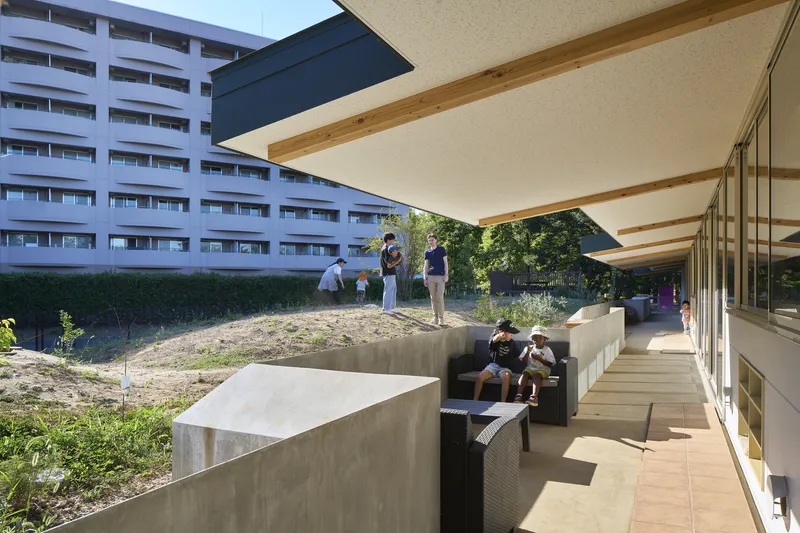
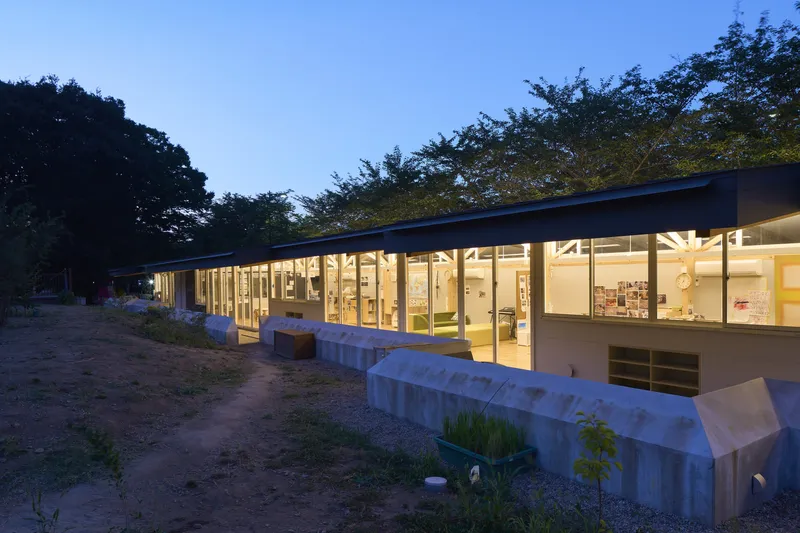
A defining architectural element is the outdoor hallway running beneath deep wooden eaves. Separated from the hill by a retaining wall, this transitional corridor functions as circulation, gathering space, and climatic buffer.
The retaining wall subtly “cranks” at seven points along the building’s length. This strategic modulation narrows the hallway where the hill rises and broadens it where more communal space is required. Areas near classrooms for infants (0 to 1 years old) are carefully scaled for safety, while wider zones accommodate sofas and social gathering. The result is a dynamic spatial rhythm that balances operational needs with terrain preservation.
The diagonal cut at the top of the retaining wall prevents rainwater intrusion, demonstrating careful environmental detailing. Such design solutions highlight the project’s sustainable construction logic, working with the land rather than against it.
Passive Design Strategies and Natural Ventilation
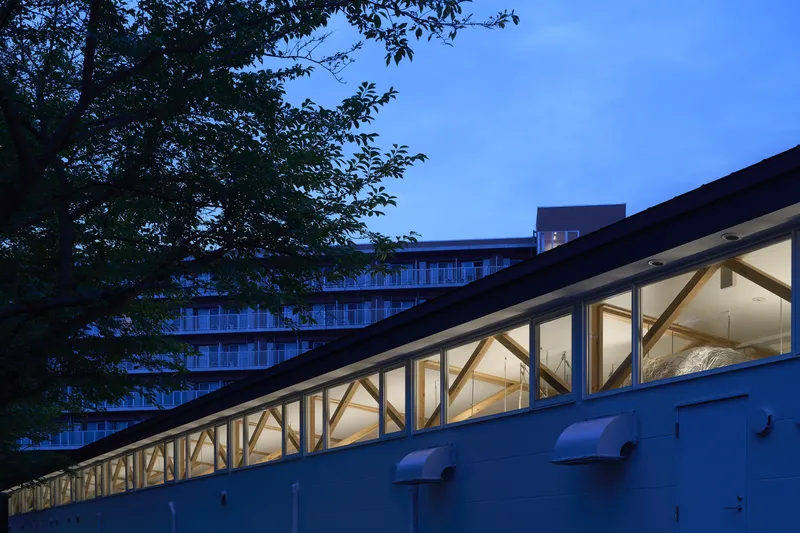
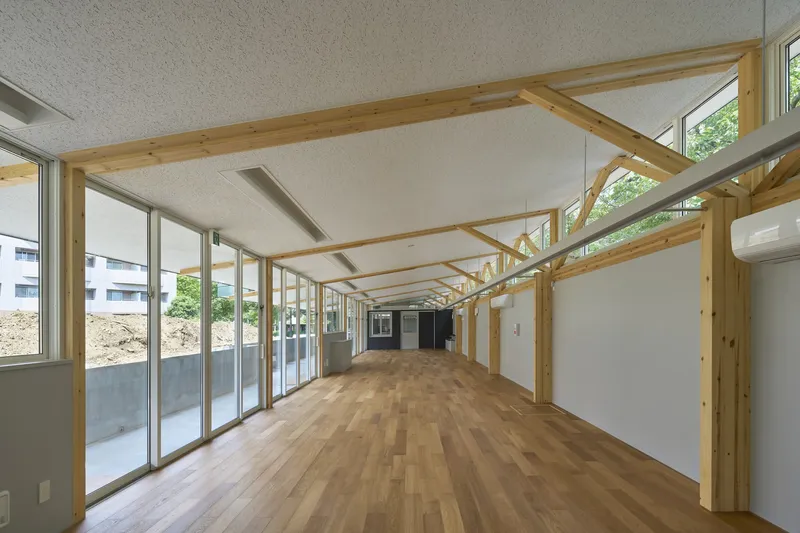
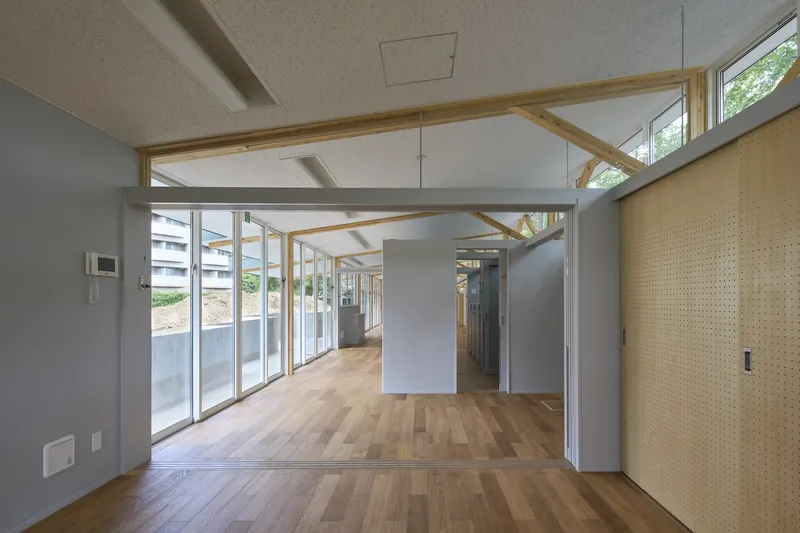
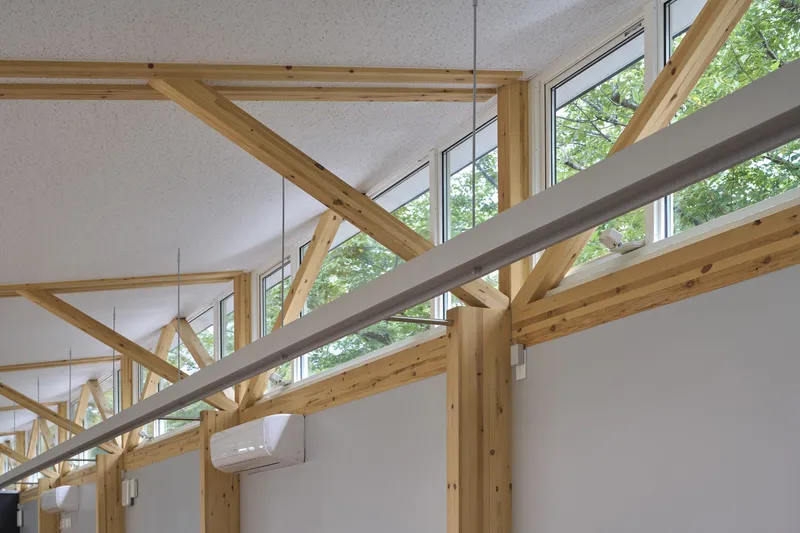
The building’s proportions, 47 meters long and just 4.5 meters wide, optimize cross-ventilation. Sliding door sashes facing the corridor and high window sashes on the roadside allow airflow across the narrow section. When opened, natural ventilation spans the entire width of the structure.
Seasonal adaptation plays a crucial role in the environmental strategy:
- In summer, cherry blossom trees filter the morning sun, providing natural shading.
- In winter, leafless branches allow sunlight to penetrate the interiors.
- Deep eaves and the adjacent dormitory block western glare and overheating.
This passive design approach reduces mechanical reliance while creating a healthy indoor learning environment, an essential aspect of contemporary sustainable school design.
Modular Wooden Structure and Interior Identity
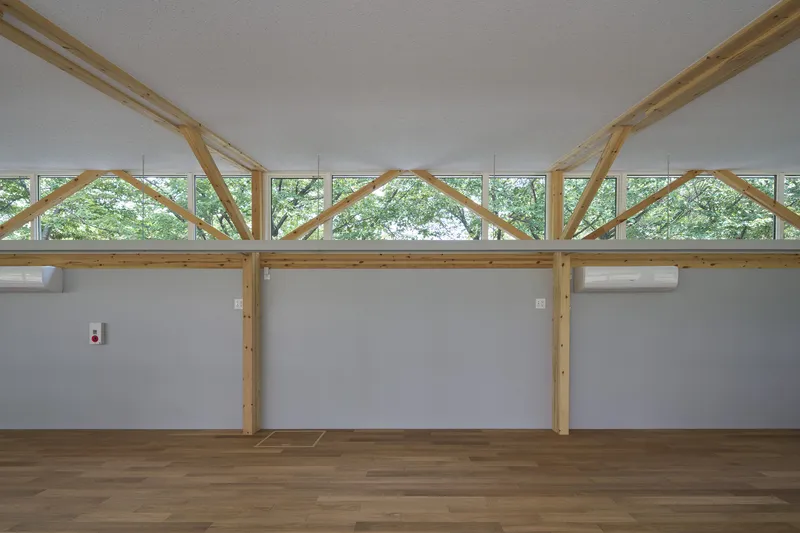
Constructed entirely in wood for cost efficiency and versatility, the structure adheres to residential-scale standards. A clever structural innovation allows beams at the eaves’ tip to slide, similar to a “chopstick gun”, adjusting length variations caused by the cranked façade.
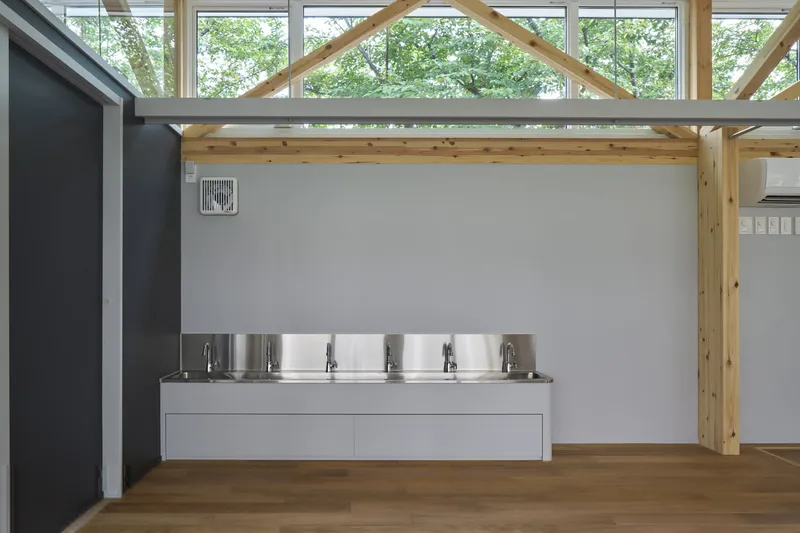
Fourteen structural units repeat along the building’s length, generating both structural coherence and interior character. Exposed beams become part of the architectural expression, fostering warmth and tactile familiarity appropriate for early childhood spaces.
The use of timber reinforces biophilic design principles, strengthening children’s sensory connection to natural materials.
Another Plaza: Expanding Campus Life
Conceptually, the nursery school was envisioned as “another plaza” extending from the university’s central plaza. While the main plaza serves as the hub for festivals and student life, this new childcare plaza introduces family-oriented activity into campus circulation.
The project encourages interaction between students, faculty, and families. Ideas such as delivering nursery-prepared lunches to students and involving education majors as childcare interns demonstrate how architecture can catalyze institutional integration. Over time, additional functions, food trucks, mobile tea rooms, overnight childcare campers, can “plug into” the site, expanding its social ecosystem.
At its first anniversary celebration, the school hosted food trucks and performances, drawing international families and local residents. The once-isolated hill became a lively civic landscape.
International Community and Cultural Exchange
Reflecting the university’s global focus, the nursery welcomes children and staff from countries including Senegal, Uganda, the United States, China, and South Korea. Even the school lunch program incorporates multicultural cuisine, reinforcing the institution’s international ethos from an early age.
The project embodies the vision of a “children-centered society,” aligning with Japan’s broader policy direction following the establishment of the Children and Families Agency in 2023. Its record-breaking crowdfunding campaign, achieving its funding target in just 17 seconds, demonstrates strong social demand for innovative childcare infrastructure.
Architecture Beyond Childcare
More than a nursery, PAL International School@TUFS represents a model for sustainable educational architecture, adaptive landscape integration, and community-driven campus design. By placing a low-height wooden structure within an abandoned hill and transforming childcare into a visible landscape activity, Naf Architect & Design has created a spatial narrative that bridges university life and early childhood education.
The project illustrates how small-scale architecture: just 238 square meters: can generate disproportionate cultural impact through thoughtful urban positioning, passive environmental strategies, and social inclusivity.
All photographs are works of
Toshiyuki Yano




Popular Articles
Popular articles from the community


Hill & Cross Opera: Sculptural Opera House Architecture Shaped by Tallinn’s Landscape and Identity
Hill & Cross Opera reimagines opera house architecture in Tallinn through its sculptural hill, civic plaza, glass wave and a luminous cross.

The Musturak Paradise: Senior Living Architecture for a Connected Future in Temara, Morocco
The Musturak Paradise reimagines senior living architecture in Temara via private homes, social spaces, culture, community, and shared care.

Conexión: Biophilic Design Reimagines High-Rise Living in Hong Kong
Conexión reimagines high-rise living in Hong Kong through biophilic design, green facades, shared spaces, daylight, water and nature within.

The Ocean Hive: Sustainable Architecture for a Self-Sufficient Civilization at Sea
The Ocean Hive imagines sustainable architecture at sea, where modular habitats, algae, wave power and ocean waste sustain a growing colony.


Similar Reads
You might also enjoy these articles

FAMM Arquitectura Organizes Ten Villas Around Courtyards and Jungle in Nosara, Costa Rica
El Molino pairs two elongated volumes with deep overhangs and timber louvers to build a compact coastal community five minutes from the beach.
Oscar Niemeyer's Ibirapuera Park Pavilions Define São Paulo's Cultural Identity in Concrete and Curve
A constellation of modernist volumes set within São Paulo's most important urban park, conceived for the city's 400th anniversary in 1954.
How Henri Picq's 1889 Paris Pavilion Traveled 11,000 Kilometers to Become Santiago's Artequín Museum
A prefabricated iron and glass pavilion built for the Paris Universal Exposition found a second life as a children's art museum in Chile.
Sanjay Puri Architects Wraps a Jaipur Office Tower in Capsule-Shaped Green Buffers
A nine-level climate-responsive workplace near Jaipur Airport uses stacked planter terraces and aluminium screens to fight 40°C heat.


Explore Educational Building Competitions
Discover active competitions in this discipline



Challenge to design public laboratory


Challenge to reimagine the Iron Throne


Photograph architecture without architects


Illustrate the lost glory of Angkor Wat - Render Challenge
Comments (0)
Please login or sign up to add comments
No comments yet. Be the first to comment!