

Parque de Mayo Pavilion by BRA - Bernardo Rosello Arquitectura
Sustainable pavilion in Bahía Blanca park revitalizes public space through adaptive reuse, modular design, and harmonious integration with natural surroundings.


Reviving Public Space through Adaptive Architecture
The Parque de Mayo Pavilion, designed by Bernardo Rosello Arquitectura (BRA), is a thoughtful architectural intervention situated in the heart of Parque de Mayo, the most significant urban park in Bahía Blanca, Argentina. This revitalization project forms part of a broader initiative by the local administration to renew the city’s public infrastructure through sustainable design and adaptive reuse.
Once home to four deteriorating gastronomic stalls—some abandoned entirely—the site required not just structural repair but a reimagining. BRA’s approach was rooted in two core principles: preservation and reversibility.
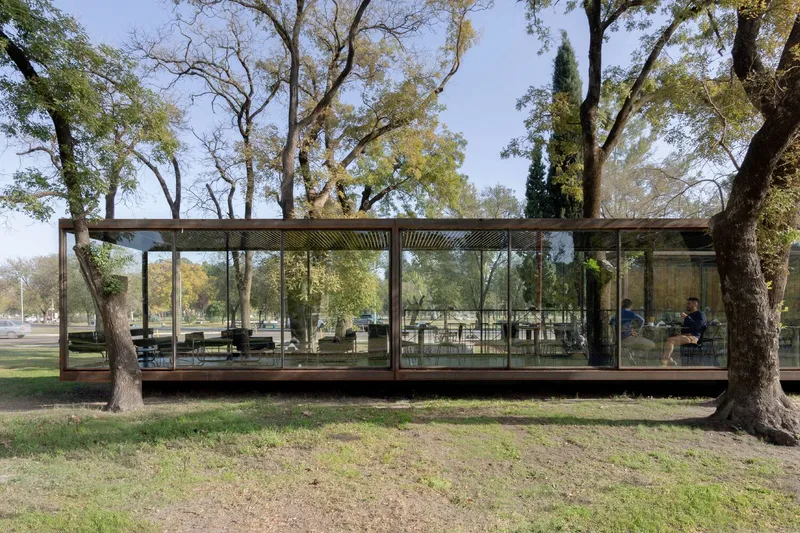
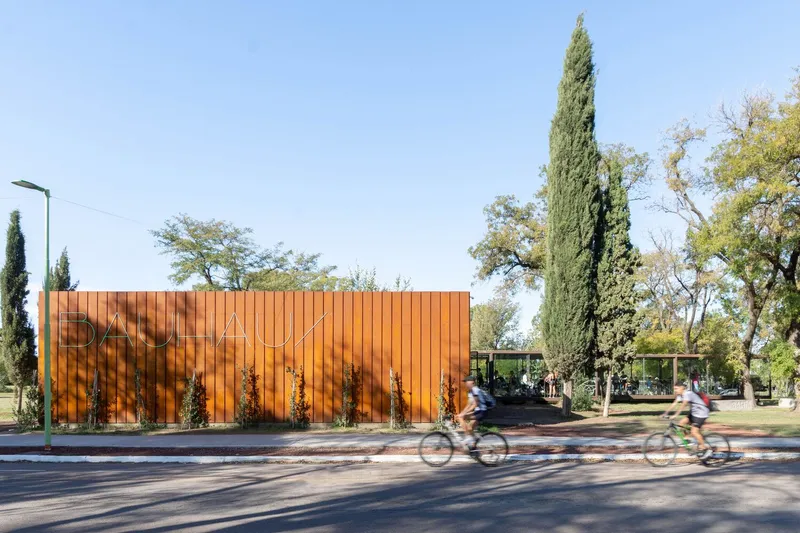
Adaptive Reuse: Preserving the Past for the Future
Rather than demolishing the old pavilions, the design team chose to repurpose and rehabilitate one of the existing structures. This decision responds not only to the local economic context but also to the contemporary architectural ethos of sustainability, material conservation, and cultural continuity.
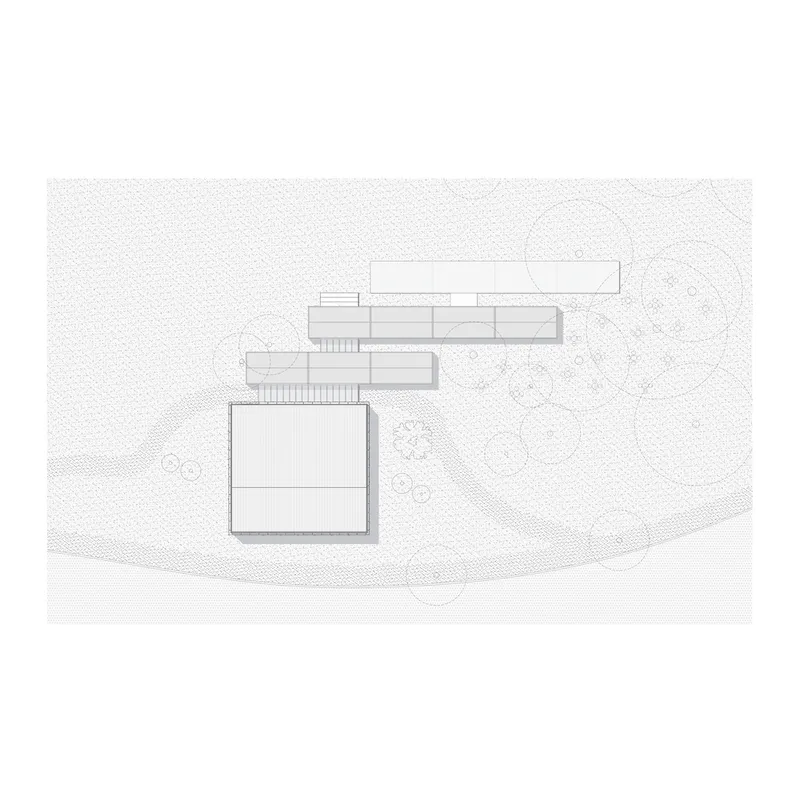
The old structure now houses all essential services—including restrooms, a kitchen, changing rooms, and storage—encased in a new modular metal skin. This clean and geometric cladding visually organizes the volume and provides a modern yet respectful contrast to its historic context.
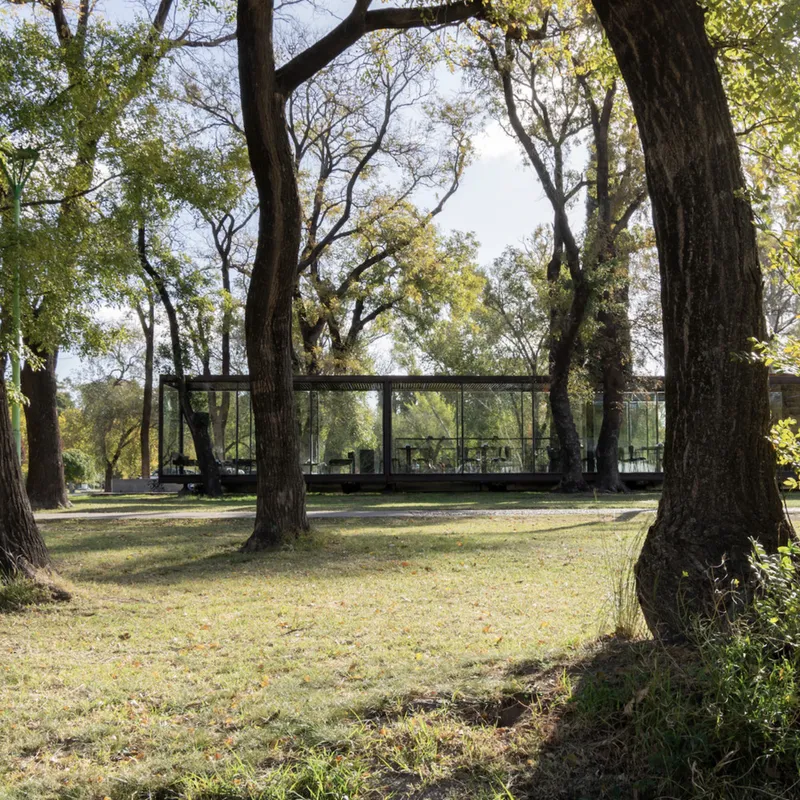
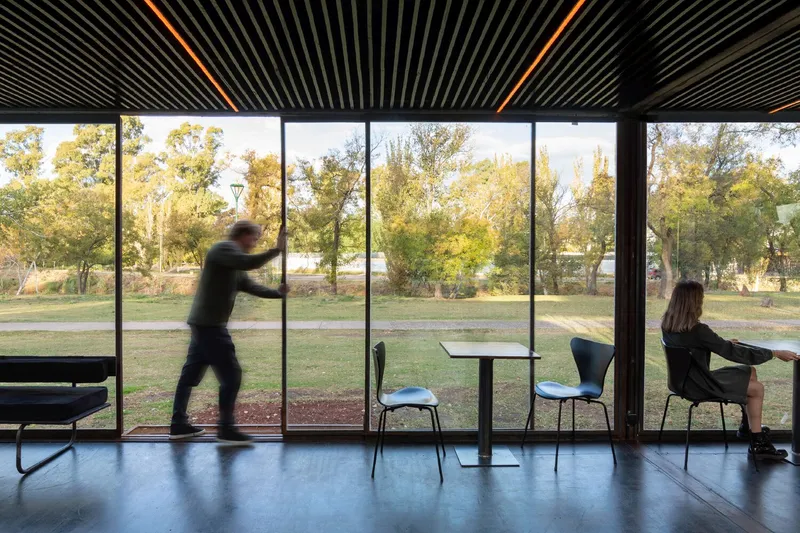
Prefabricated Modularity and Minimal Environmental Impact
To maintain the reversibility of the design, BRA introduced prefabricated, three-dimensional metal modules (3m x 6m) fabricated off-site. These units, easily transportable and installable, ensure minimal disruption to the natural terrain, echoing the architectural principle that public space must remain flexible and adaptable for future generations.
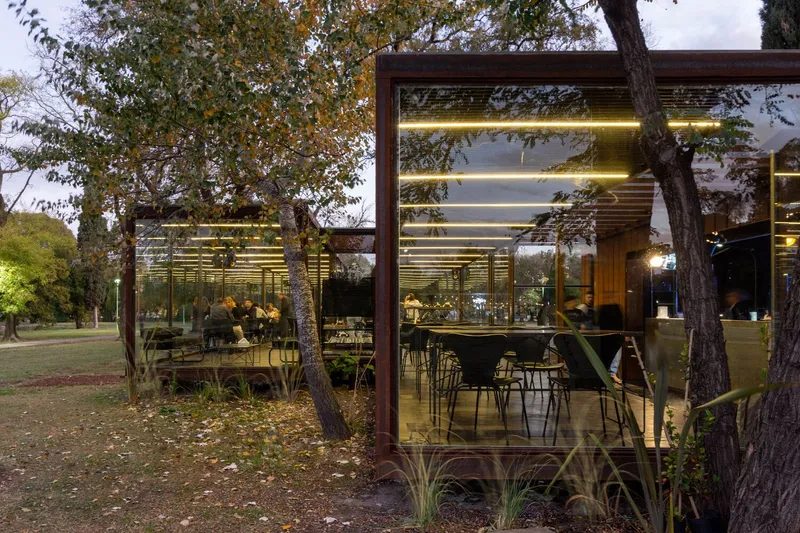
Each prefabricated unit was composed using catalog steel elements—UPN profiles, metal tubes, and angles—left untreated to let nature dictate their aging process. This deliberate material honesty reveals the passage of time and the organic interaction between architecture and environment.
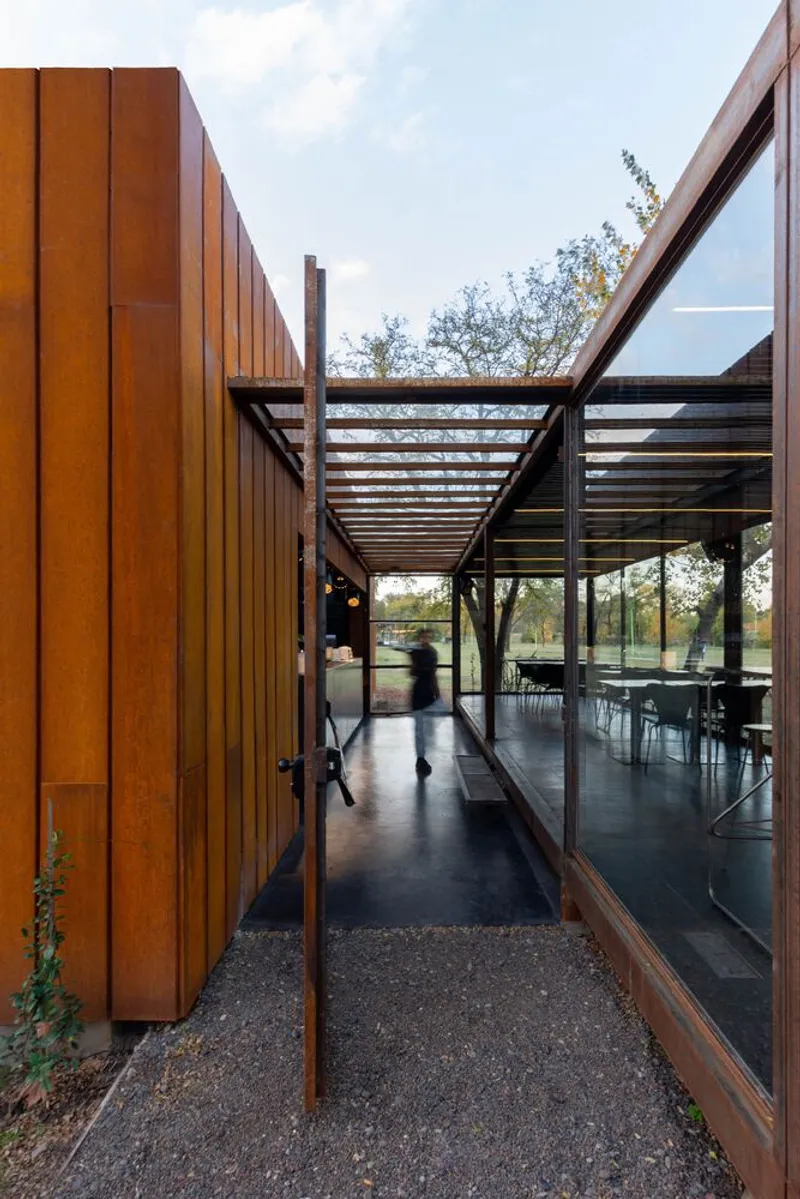
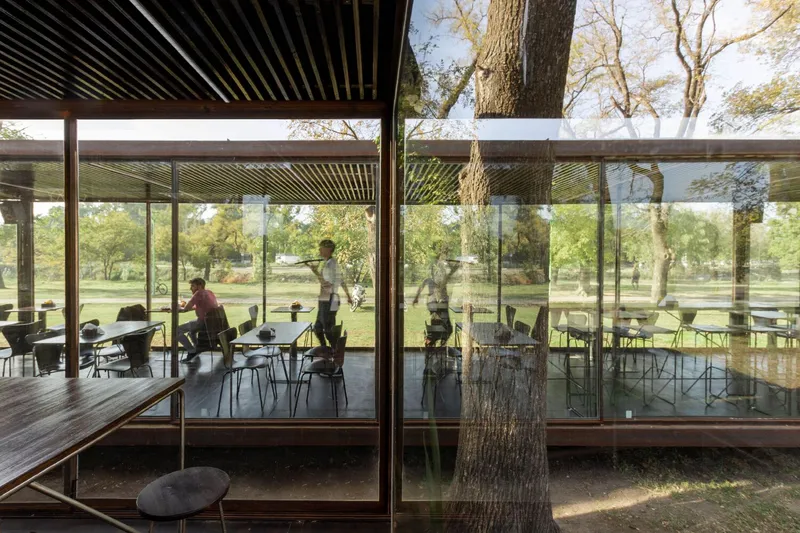
Blending Architecture with Nature
Positioned adjacent to a small forest within the park, the new pavilion meanders into the shade, visually connecting to the nearby stream and pedestrian paths. The careful siting of the modular strips among existing trees promotes a harmonious relationship between built form and landscape, enhancing the spatial and sensory experience of visitors.
Through this sensitive placement and scale, the pavilion doesn’t dominate the environment—it coexists, encouraging public interaction without overwhelming the park’s natural beauty.
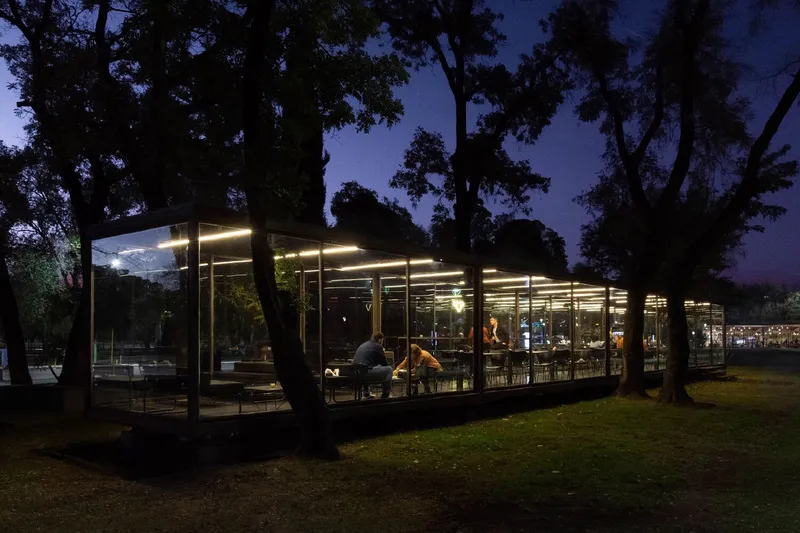

A Model for Urban Renewal
The Parque de Mayo Pavilion is more than a gastronomic space—it’s a contemporary architectural solution that balances function, context, and sustainability. It demonstrates how thoughtful design can preserve cultural heritage, revive urban ecosystems, and create inclusive public spaces with minimal ecological footprint.
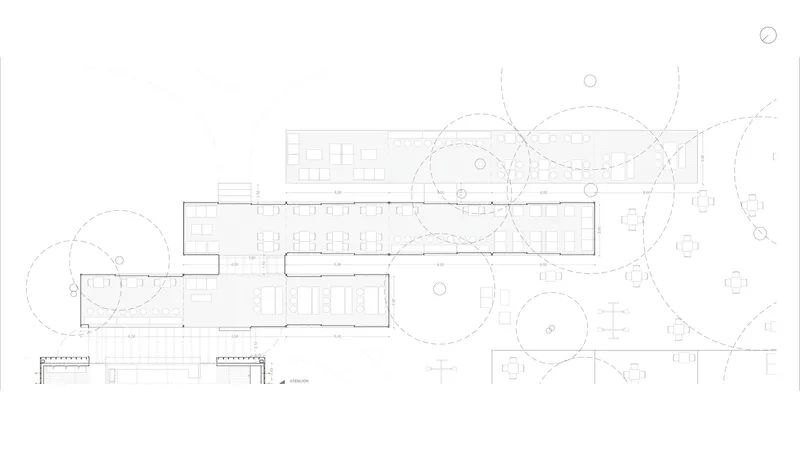
All the photographs are works of Nicolas Herrero - Fotografia de Arquitectura


Popular Articles
Popular articles from the community


U.GA Architects Wraps an Oval Rooftop Pool in Curved Board-Formed Concrete on Busan's Jeollidan-gil
In Busan's Jeonpo-dong, a 454 m² mixed-use block stacks a neighborhood facility, guest rooms and an oval rooftop pool inside spiraling concrete walls.

longwave studio Reorganizes a 112 m² Tainan Apartment Around the Daily Routines of a Family and Two Cats
In Tainan, Taiwan, birch plywood, rust-red furniture and a freestanding plaster wall link arrival, storage, work and family life in one apartment.

Cube Design Draws an Ecological Corridor Between Two Shenzhen Hills with the Nankai Building
Beside Shenzhen's container docks, the Nankai Building pairs stacked balconies with a climbing green screen to connect two hillsides across its height.

GROUP A Strips a 1969 Rotterdam Harbor Headquarters to Its Frame and Wraps It in Timber Louvers
In Rotterdam's M4H harbor district, Ferro Offices reuses a 1969 frame, adds one timber storey and reaches BREEAM-NL Outstanding.

Similar Reads
You might also enjoy these articles


Hodi-Mandai Geram
Project Function: Preservation and revitalization of the Intangible heritage and socio-spatial identity of the Hodi by Housing, Cultural Memory Center, Sacred Grove, landscape, local tourism economy


Olio Towers: A Mid-Rise for Performers That Fuses Housing, Rehearsal, and Stage
Located blocks from Houston's Theater District, this modular tower stacks living units around a central performance atrium.

Oasis: Modular Green Housing Carved into Dhaka's Urban Fabric
A shortlisted Plugin Housing entry reclaims unauthorized settlements in Dhaka with stepped concrete volumes, green roofs, and ventilation-driven design.

Black Hole: A Floating Megastructure for the Post-Physical Era
Emiliano Mazzarotto envisions a spherical, self-scaling arena where e-sports, digital hotels, and holographic stadiums replace traditional public space.

Explore Public Plaza Competitions
Discover active competitions in this discipline

Challenge to design a portable theatre

Challenge to design a portable music platform

Challenge to design an open learning module for the elderly

Challenge to reimagine the Iron Throne
Comments (0)
Please login or sign up to add comments
No comments yet. Be the first to comment!