
Pastry Club Woda by Znamy się: A Vibrant Fusion of Industrial Heritage and Contemporary Design in Bydgoszcz
Pastry Club Woda blends pastry shop and nightclub in a vibrant, cobalt-orange interior inspired by water, flow, and industrial heritage.


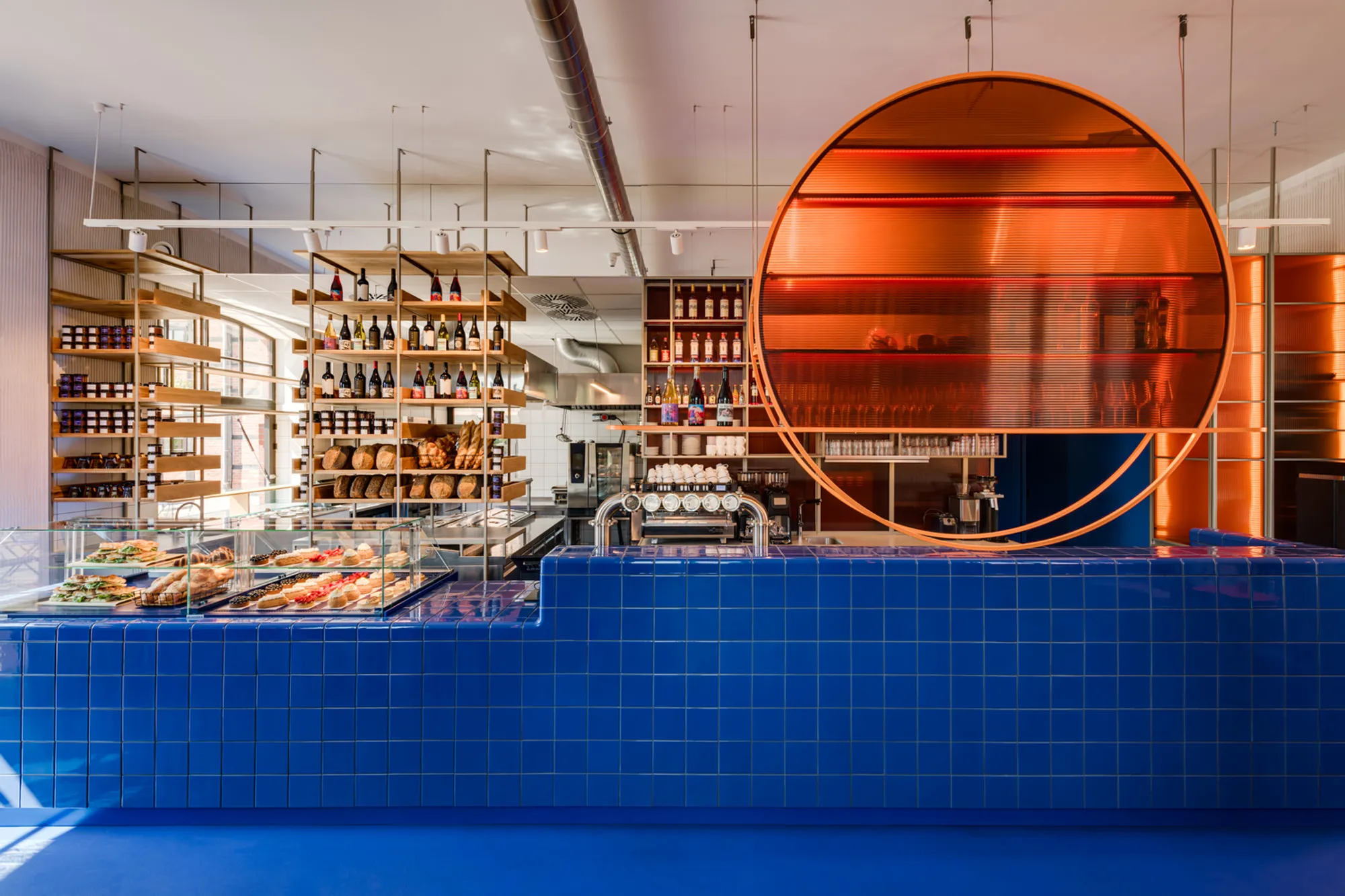
Located on the historic Mill Island in Bydgoszcz, Poland, Pastry Club Woda is a unique hybrid space that blends the refined artistry of a pastry shop with the dynamic energy of a night club. Designed by Znamy się, the 78-square-meter venue reimagines the interiors of a former boilerhouse within the iconic Rother’s Mill complex—a heritage site rich in industrial history related to grain transport and flour production.

A Conceptual Space Inspired by Water and Industry
Is it a club inside a pastry shop or a pastry shop inside a club? This duality defines the essence of Pastry Club Woda, a place where day transitions into night and function follows fluid form. Inspired by its surroundings—where canals and cultural vibrancy intersect—the design team embraced themes of water, flow, and industrial machinery to shape both layout and atmosphere.


The space pays tribute to its location’s historical use, where grain was milled and flour processed across multiple levels of the Rother’s Mills. The interior draws direct inspiration from these mechanical operations. Steel elements, open kitchens, and grooved plaster textures evoke the memory of millstones and flour sifters, creating a contemporary homage to past production processes.

A Cobalt and Orange Dialogue
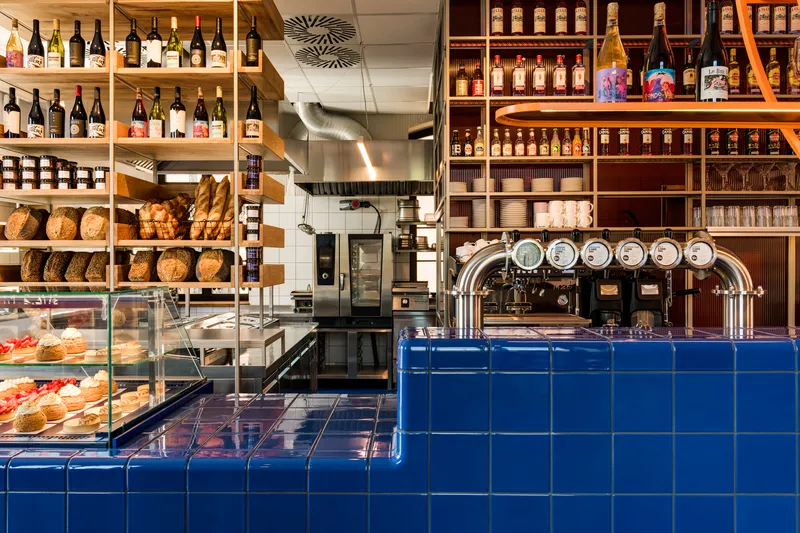
Color plays a pivotal role in defining the identity and mood of the interior. By day, cool cobalt tones dominate the space—the bar, the floors, and technical equipment all echo the depth and motion of water. This color, associated with industrial precision and fluidity, reflects the operational clarity of the pastry shop, allowing the vibrant pastries to take center stage in contrast.

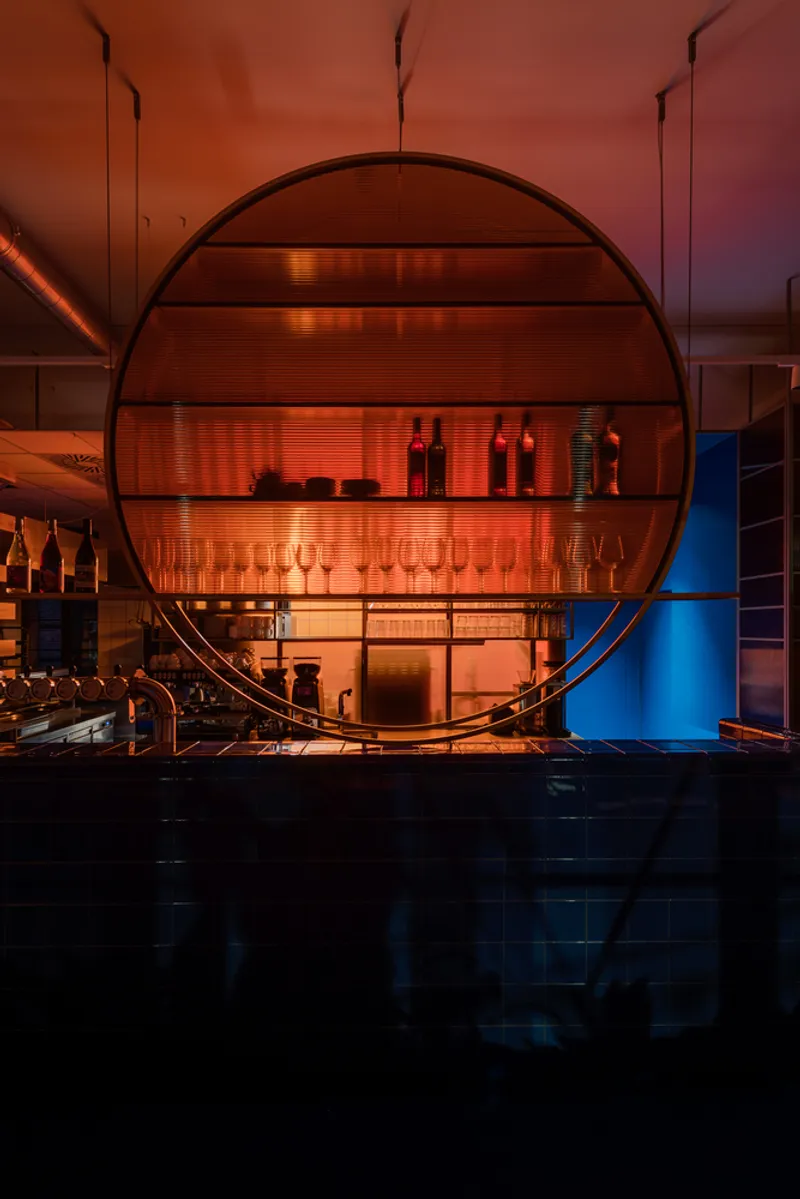
As the sun sets, warm orange hues begin to take over. The lighting transforms the space into an inviting lounge. Orange symbolizes warmth, fun, and the golden glow of the evening—seamlessly transitioning the venue into a social hub and club at night. This color metamorphosis, much like the reflective surface of water at dusk, brings an entirely new dimension to the space, blurring the boundaries between work and leisure, day and night.

Spatial Strategy: Navigating Through Flow
The layout is deliberately fluid. A streamlined cobalt bar cuts through the middle, directing the natural movement of guests. Customers “flow” through the space in a rhythmic way, guided intuitively by the interior’s design without interruption. Behind this seamless choreography lies a clear division between public and technological areas, ensuring that production remains visible yet functionally distinct.


With the open kitchen concept, visitors witness the baking process firsthand—an immersive experience that heightens the connection between the product and its preparation.
Architectural Heritage Meets Contemporary Design
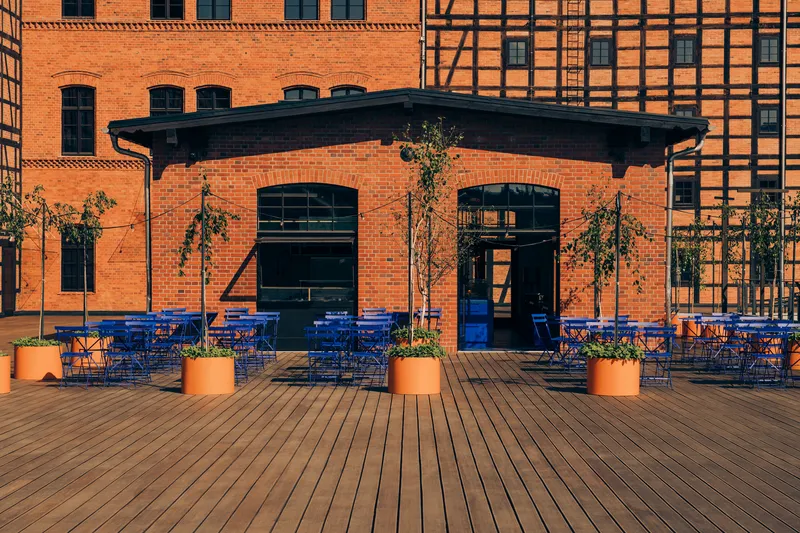
Set within the architectural legacy of the Rother’s Mill complex, Pastry Club Woda thoughtfully merges historic brick façades with minimalist, futuristic interiors. The structure preserves the raw materiality of the original building, while introducing sleek interventions like steel detailing, ceramic tiles by DTile, and modern furnishings from Fermob and Intermex.

The lighting, supplied by Labra, is integral to the transformation of the space—subtle during the day, ambient and evocative at night.
All the photographs are works of ONI



Popular Articles
Popular articles from the community


Riyadh For All: Intergenerational Urban Design for Active Aging in Rabat
Riyadh For All reimagines urban design in Rabat with intergenerational co-living, adaptive courtyards, and Moroccan cultural exchange today.

The Musturak Paradise: Senior Living Architecture for a Connected Future in Temara, Morocco
The Musturak Paradise reimagines senior living architecture in Temara via private homes, social spaces, culture, community, and shared care.

Lunar Spiral: Space Architecture Shaped by the Mathematics of the Universe
Lunar Spiral reimagines space architecture through Fibonacci geometry, lunar regolith, levitating habitats, and self-sustaining Moon living.

Play: Fragments of Their World
Familiar architecture becomes modular playground design, creating safe spaces where displaced children can learn, connect, imagine and play.

Similar Reads
You might also enjoy these articles


Hodi-Mandai Geram
Project Function: Preservation and revitalization of the Intangible heritage and socio-spatial identity of the Hodi by Housing, Cultural Memory Center, Sacred Grove, landscape, local tourism economy


Olio Towers: A Mid-Rise for Performers That Fuses Housing, Rehearsal, and Stage
Located blocks from Houston's Theater District, this modular tower stacks living units around a central performance atrium.

Oasis: Modular Green Housing Carved into Dhaka's Urban Fabric
A shortlisted Plugin Housing entry reclaims unauthorized settlements in Dhaka with stepped concrete volumes, green roofs, and ventilation-driven design.

Black Hole: A Floating Megastructure for the Post-Physical Era
Emiliano Mazzarotto envisions a spherical, self-scaling arena where e-sports, digital hotels, and holographic stadiums replace traditional public space.

Explore Architecture Competitions
Discover active competitions in this discipline



Challenge to reimagine the Iron Throne


Photograph architecture without architects


Illustrate the lost glory of Angkor Wat - Render Challenge


Design challenge to reuse E-waste
Comments (0)
Please login or sign up to add comments
No comments yet. Be the first to comment!