
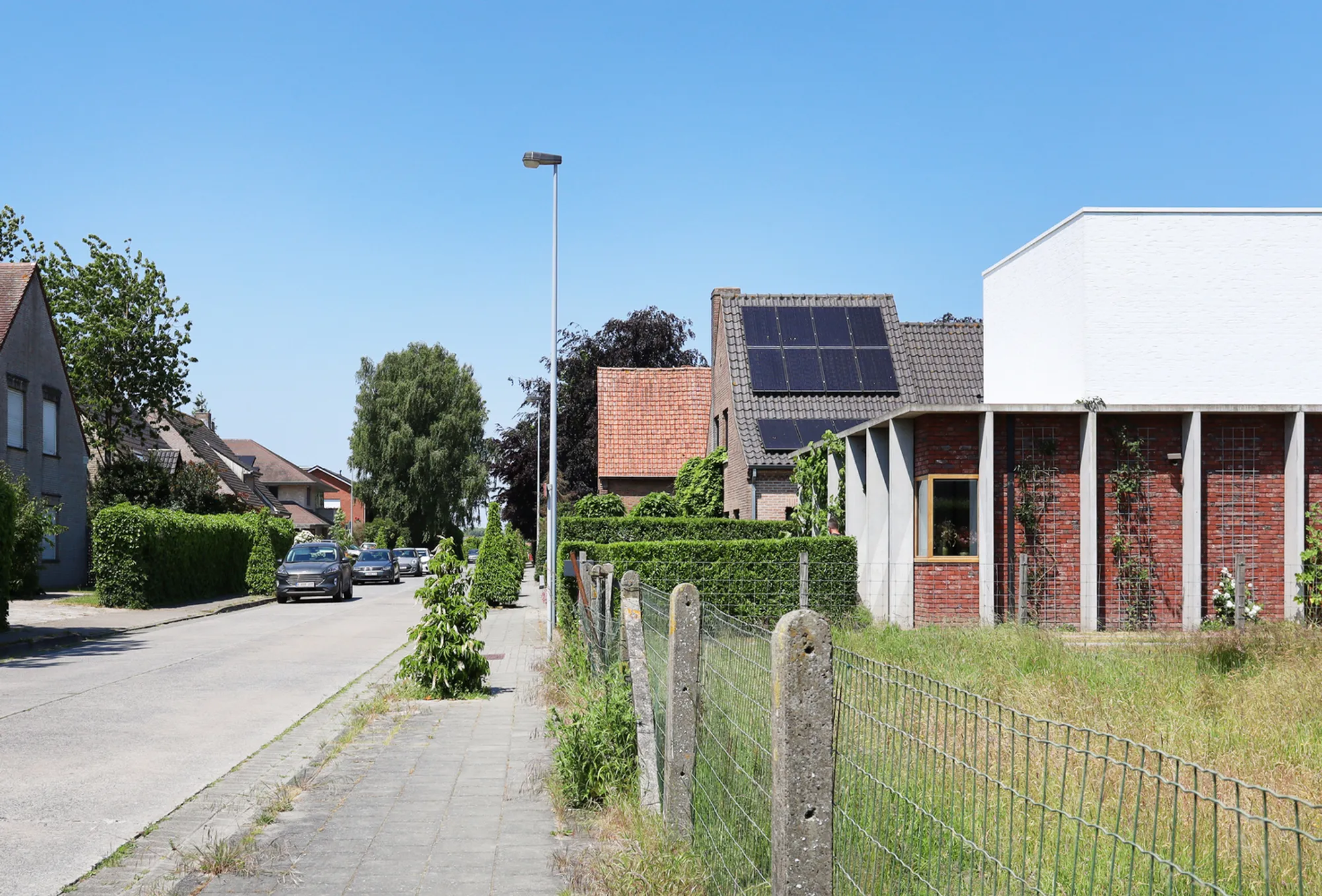
Paul and Monique House by Atelier Vens Vanbelle: A Retirement-Ready Brick and Concrete Sanctuary in Ghent
A retirement home blending brick, concrete, and garden spaces, offering privacy, daylight, and intimacy within a suburban Belgian allotment.


Located in the quiet outskirts of Ghent, Belgium, the Paul and Monique House by Atelier Vens Vanbelle redefines what it means to age in place through a thoughtful design rooted in functionality, material honesty, and spatial intimacy. Completed in 2023, this residential architecture project was tailored specifically to the evolving lifestyle of its owners—a retired couple preparing for a new phase of life after their children had left the family home.
A New Chapter: Designing for Aging Gracefully
Rather than adapting an existing house through piecemeal renovations, Paul and Monique envisioned a new home that could support comfortable aging, daily routines, and the enjoyment of family visits. The resulting design concentrates all essential living spaces on the ground floor—ensuring accessibility and long-term convenience—while reserving the upper floor for guest rooms, intended for visiting children and grandchildren.
This retirement home design integrates both the emotional and practical aspects of aging, creating a seamless blend of privacy, accessibility, and social engagement. Paul, a former independent contractor, personally undertook the challenge of constructing the house himself—a final gesture of craftsmanship and self-reliance before embracing full retirement.
Integrating Architecture and Allotment Living
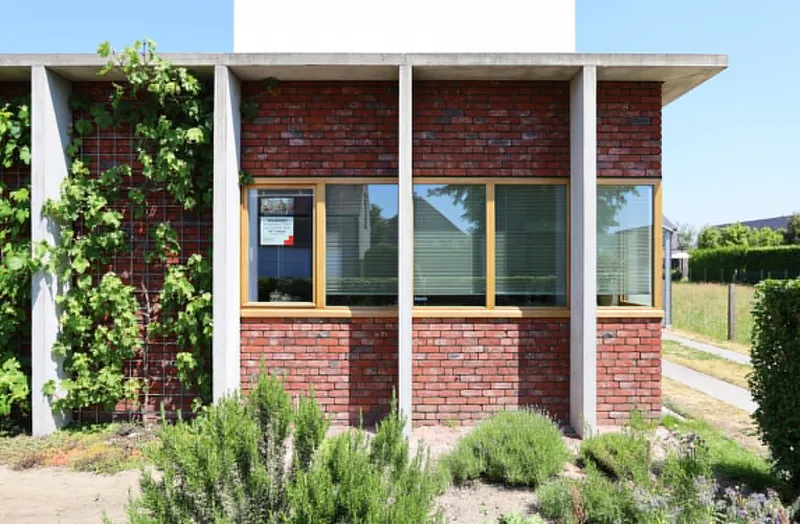
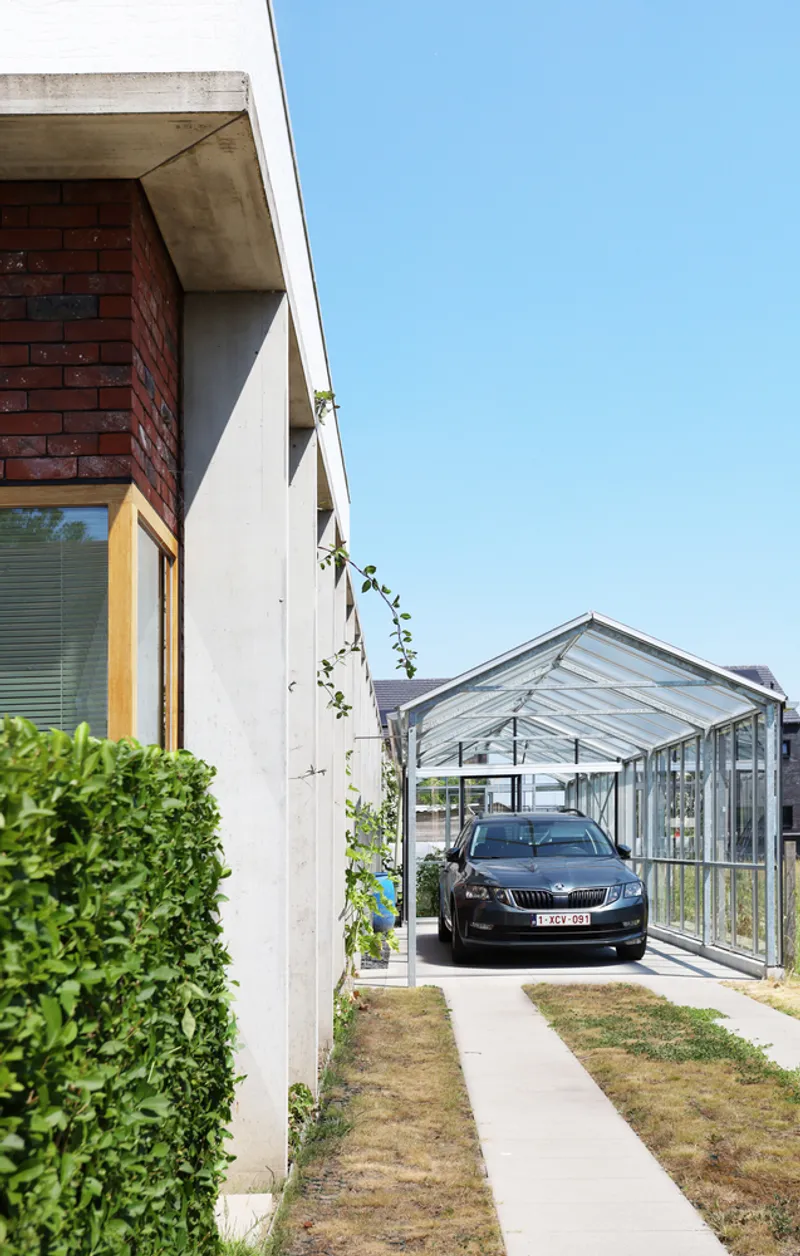
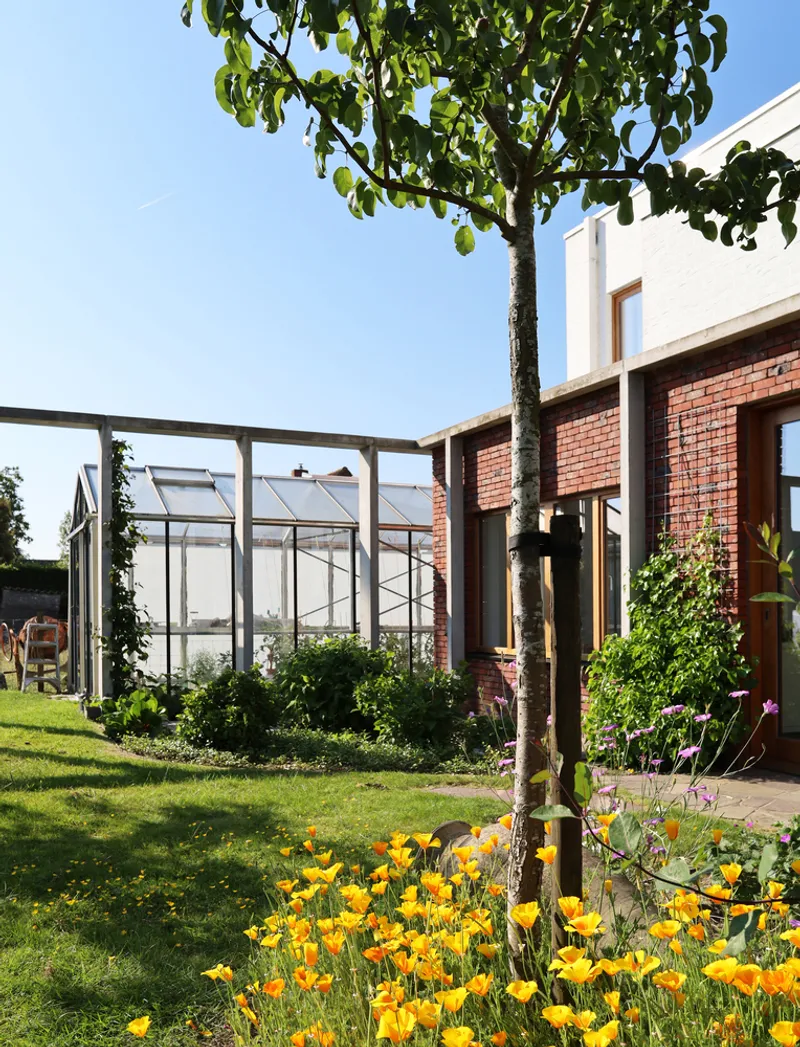
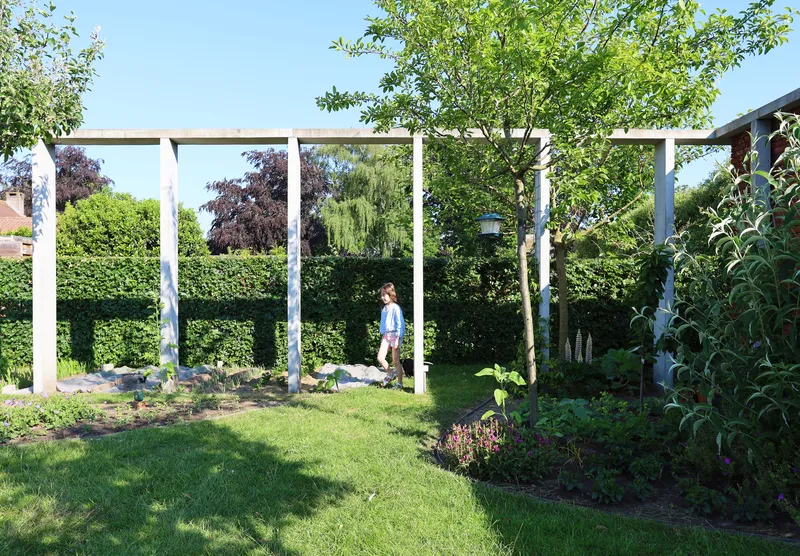
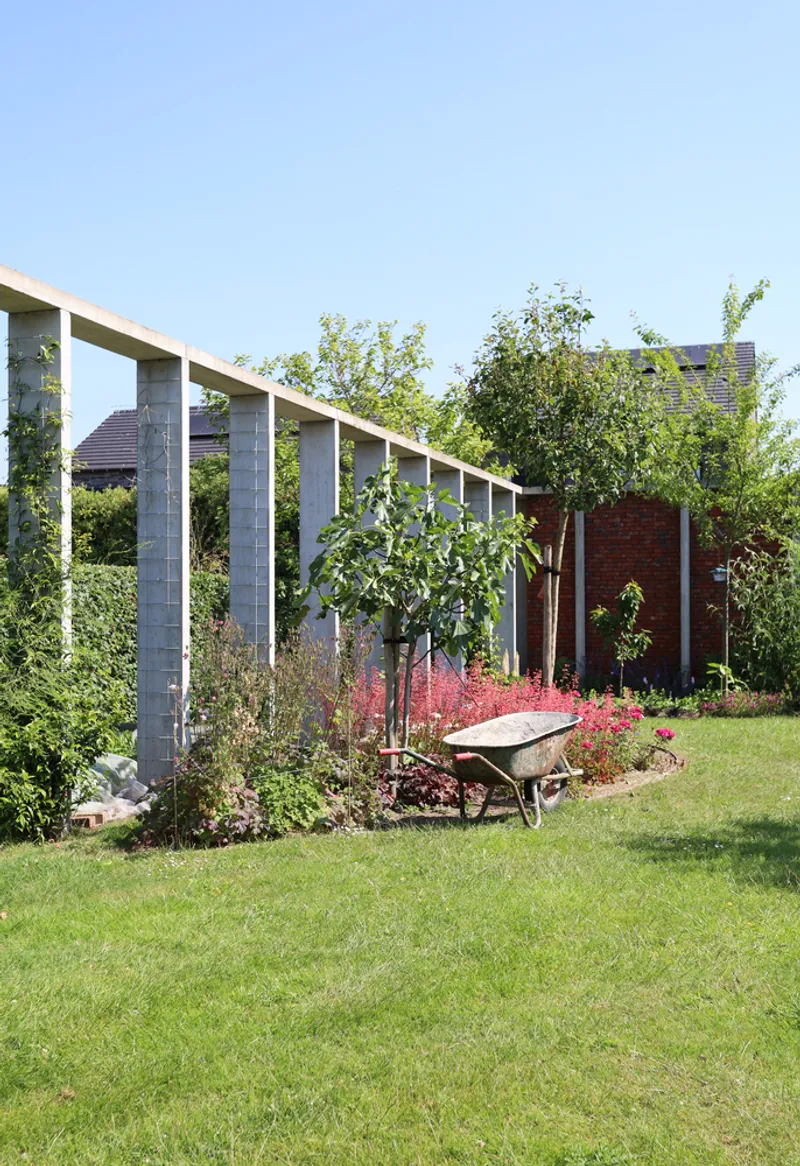
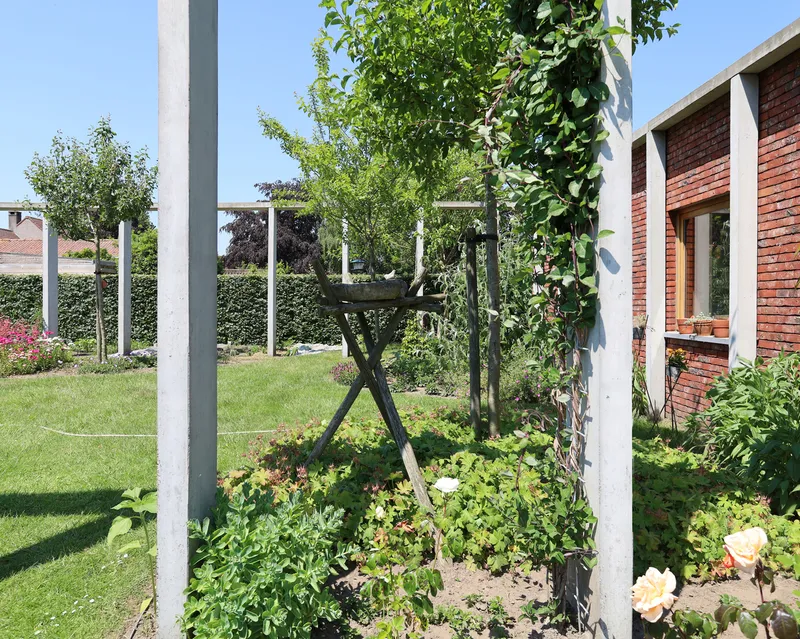
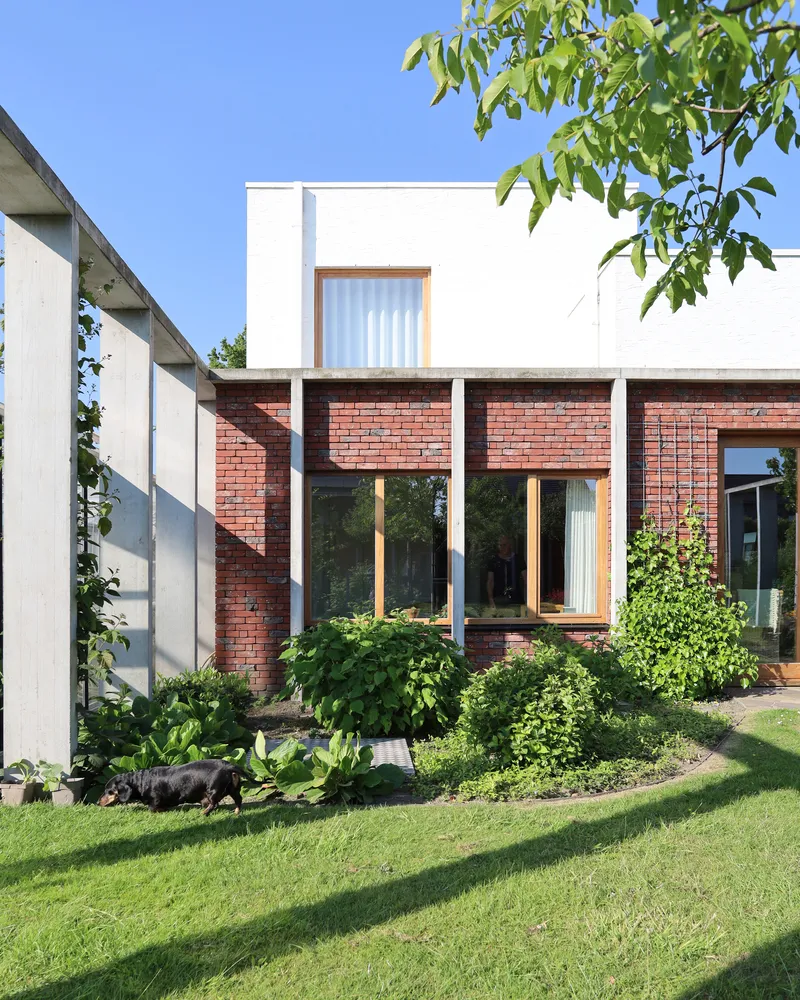
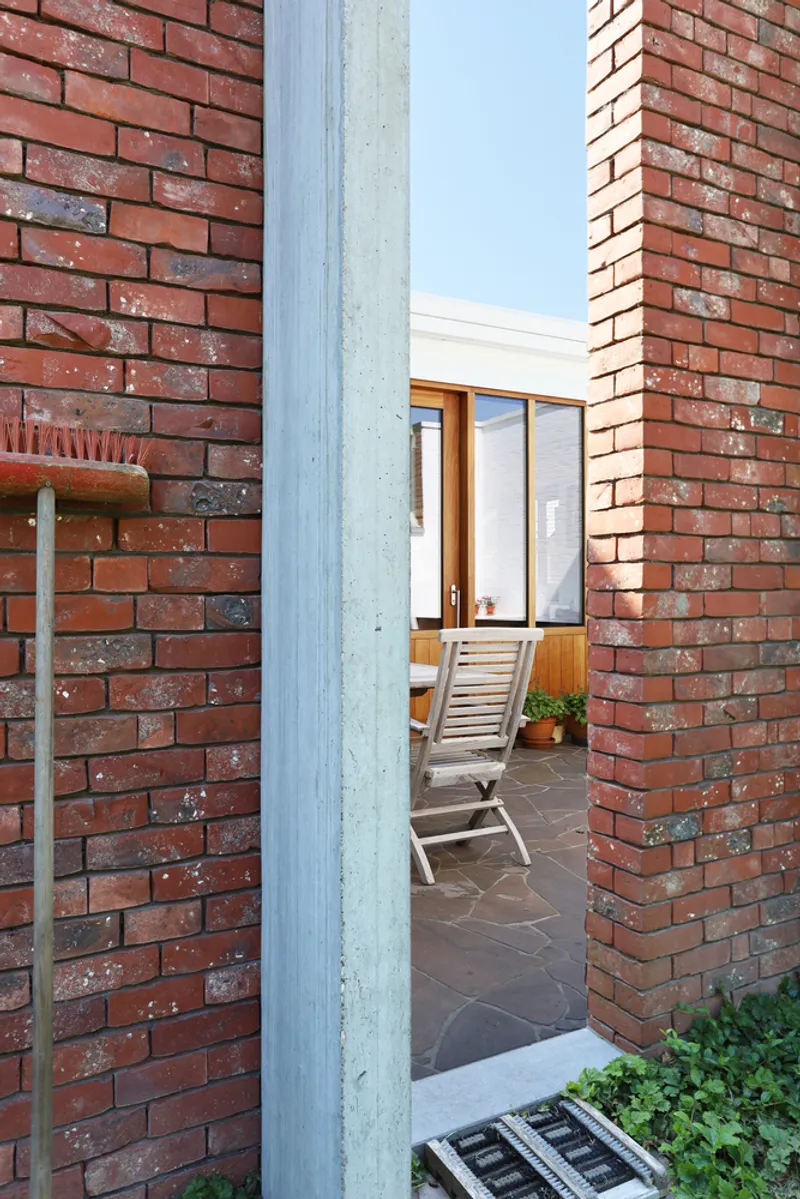
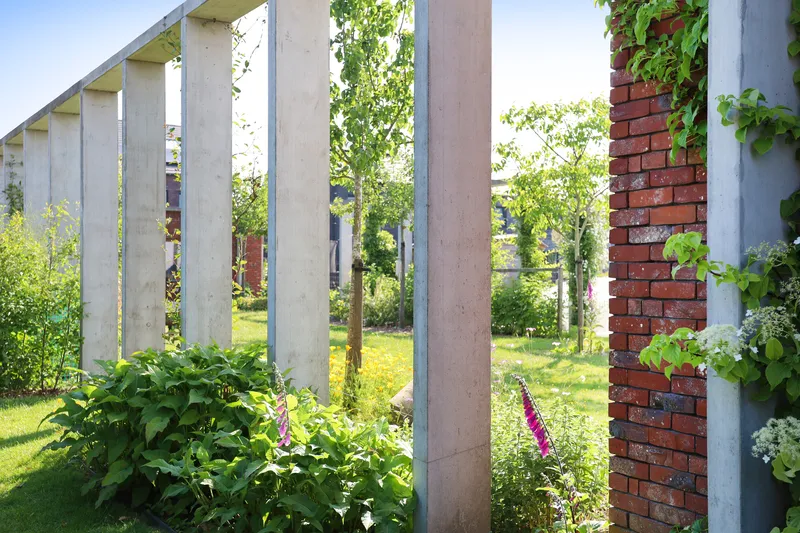
Although situated in a typical suburban allotment, the house makes a strong architectural statement with its monolithic use of brick and exposed concrete, challenging the conventional typology of front and back gardens bordered by fences or hedges. Instead, the architects designed two main volumes—Paul’s work studio and the main residence—connected by a minimalist concrete canopy. This creates a sheltered courtyard that offers a peaceful retreat, shielding the garden from neighboring views and redefining the spatial experience of suburban living.
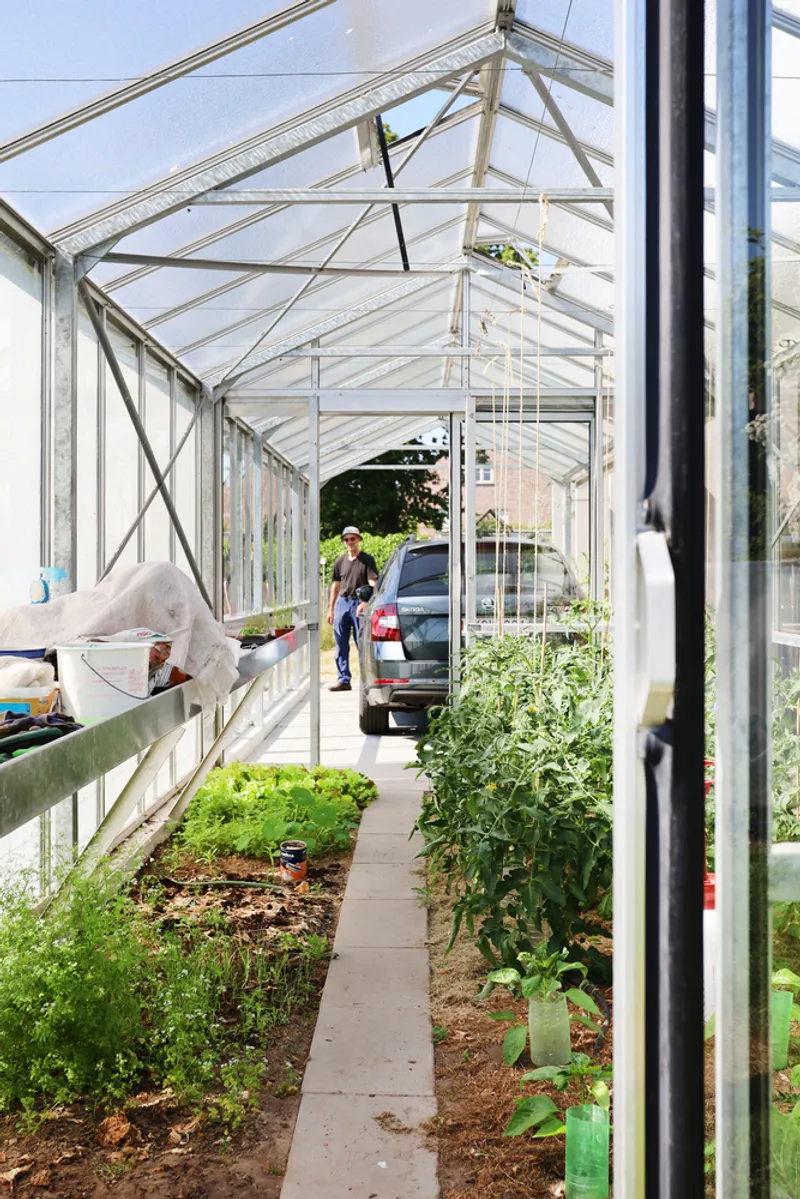
The surrounding outdoor functions—such as the carport, vegetable garden, conservatory, and beehives—are placed outside this core structure, removing visual clutter from the primary garden and creating a serene, inward-facing green space. This spatial strategy transforms the feeling of being in a dense neighborhood into one of private retreat and introspection.
Material Honesty and Inside-Outside Continuity
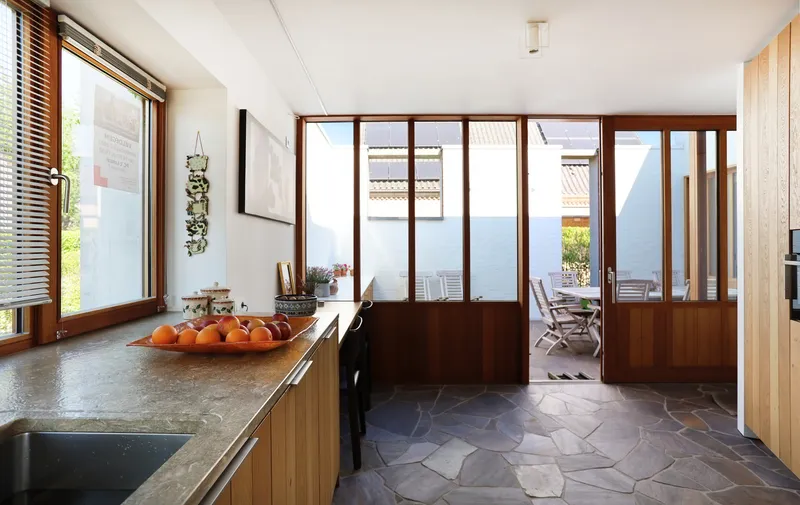
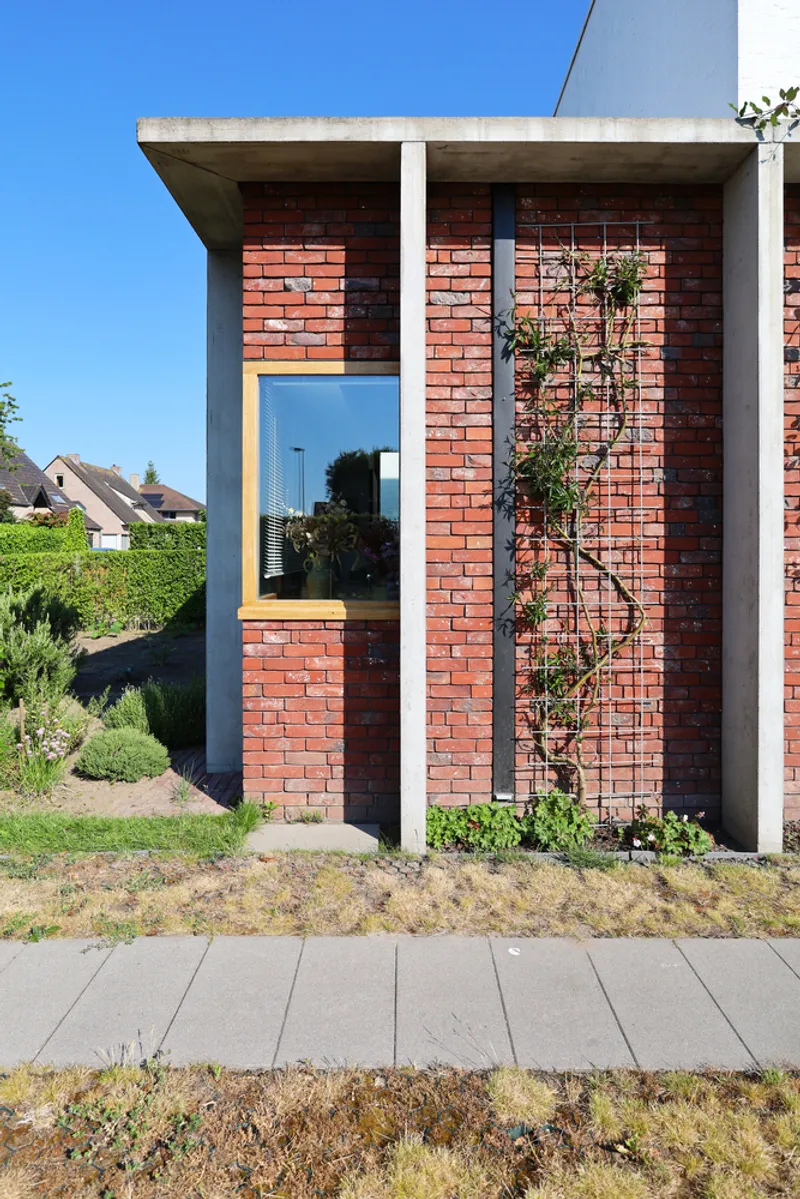
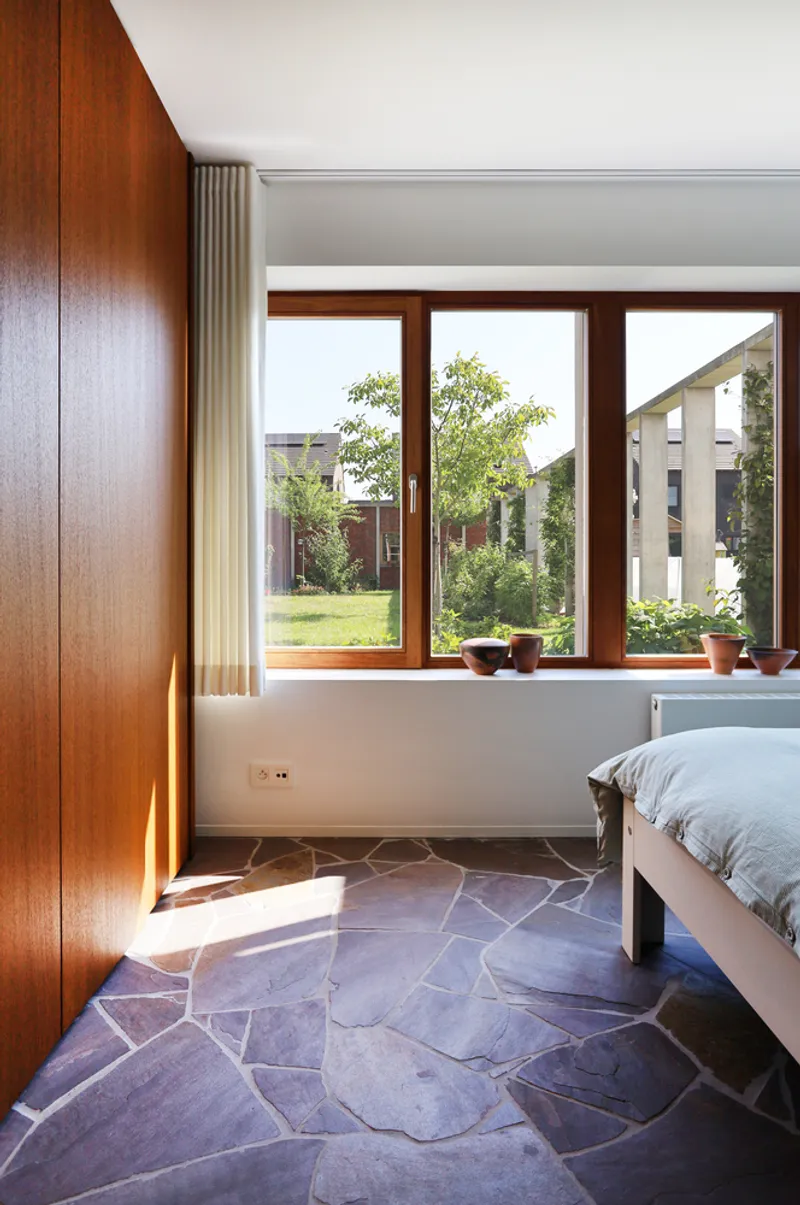
The material palette is raw yet harmonious: brick walls, exposed concrete beams, and natural stone flooring are expressed with clarity and continuity. The flagstone flooring extends from the interior to the exterior, visually and physically linking the spaces, while warm wooden elements—seen in the joinery and living room ceiling—introduce softness and tactile contrast to the hard surfaces.
Daylight enters subtly throughout the day via carefully positioned openings, especially from the central patio, which functions as a light well and outdoor living room during warmer seasons. Both the kitchen and living space open directly to this patio, blurring boundaries and inviting seasonal adaptability.
A House of Personalized Spaces
Rather than adhering to a singular open plan, the house offers a variety of cozy "spots" for the couple to retreat to—acknowledging the reality that spending every moment in the same room isn’t ideal for two retired individuals. The kitchen, located on the street side, allows Monique to stay visually connected to the village community, greeting familiar faces from her window while cooking. The living room, by contrast, is inward and tranquil, a private cocoon that opens to the garden.
On the ground floor, the master bedroom and bathroom are oriented toward the garden, offering natural views and peaceful ambiance. A staircase at the entry leads to two guest rooms upstairs, ensuring that the house remains welcoming without compromising the couple’s daily routines.
Contextual Yet Contemporary
Although the architecture may initially seem unconventional within its suburban context, it manages to both challenge and harmonize with its surroundings. The restrained palette, low profile, and landscape integration result in a building that feels deeply rooted in place, yet distinctly modern. The home is also within walking distance of the village center, allowing the residents to remain connected to local life.
This custom-built home for aging in place stands as a testament to how architecture can be both a deeply personal reflection and a functional response to life’s evolving needs. Paul and Monique's house exemplifies how compact, sustainable residential design can promote comfort, independence, and emotional wellbeing in later life.




Popular Articles
Popular articles from the community


Co-life: Sustainable Architecture for Age-Friendly Community Living
Co-life reimagines sustainable architecture for seniors through courtyards, rammed earth, shared gardens, and spaces designed for belonging.

The Earth Pod: 3D Printed Homes for Resilient Refugee Communities
The Earth Pod reimagines refugee housing through 3D printed homes made from clay, combining resilience, self-sufficiency, and rapid shelter.

Hill & Cross Opera: Sculptural Opera House Architecture Shaped by Tallinn’s Landscape and Identity
Hill & Cross Opera reimagines opera house architecture in Tallinn through its sculptural hill, civic plaza, glass wave and a luminous cross.

The Ocean Hive: Sustainable Architecture for a Self-Sufficient Civilization at Sea
The Ocean Hive imagines sustainable architecture at sea, where modular habitats, algae, wave power and ocean waste sustain a growing colony.


Similar Reads
You might also enjoy these articles


Hodi-Mandai Geram
Project Function: Preservation and revitalization of the Intangible heritage and socio-spatial identity of the Hodi by Housing, Cultural Memory Center, Sacred Grove, landscape, local tourism economy


Olio Towers: A Mid-Rise for Performers That Fuses Housing, Rehearsal, and Stage
Located blocks from Houston's Theater District, this modular tower stacks living units around a central performance atrium.

Oasis: Modular Green Housing Carved into Dhaka's Urban Fabric
A shortlisted Plugin Housing entry reclaims unauthorized settlements in Dhaka with stepped concrete volumes, green roofs, and ventilation-driven design.

Black Hole: A Floating Megastructure for the Post-Physical Era
Emiliano Mazzarotto envisions a spherical, self-scaling arena where e-sports, digital hotels, and holographic stadiums replace traditional public space.


Explore Housing Competitions
Discover active competitions in this discipline



Challenge to reimagine the Iron Throne


Photograph architecture without architects


Illustrate the lost glory of Angkor Wat - Render Challenge


Design challenge to reuse E-waste
Comments (0)
Please login or sign up to add comments
No comments yet. Be the first to comment!