PianOctave
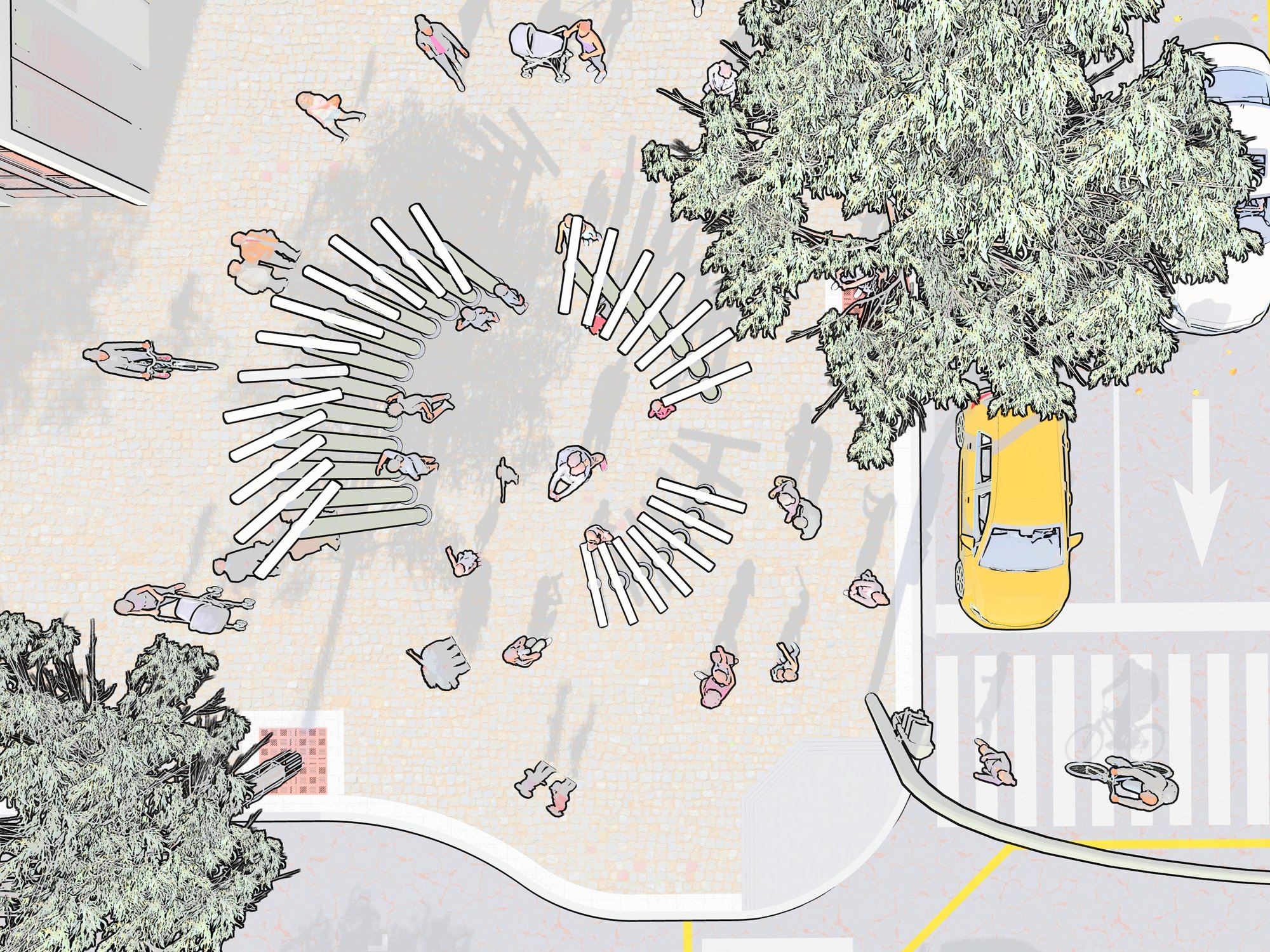
PianOctave is an installation that aims to provide interaction between individuals who are lonely around digital devices in line with technological developments, and to transform the space into a common experience area by including music within the framework of activating idle urban spaces.

Located in public spaces, this installation aims to activate urban and social relations by creating a common experience. In this context, the design focuses on music as an element that helps the city to revive its daily experiences.
Music, rhythm and dance, together with the visual components, are the main parameters that shape the installation. The improvisational nature of jazz music and the unexpected change of rhythm are associated with the dynamic nature of the installation. Although jazz was the music of entertainment, relaxation and escape from the tension of daily life in its early years, its tone, language and emotions specifically reflected what the audience was trying to escape from. It has been the expression of both alienation and attempts to overcome it (Hore, 1993). For this reason, jazz music melodies rise from the speakers placed on the columns.
The structure of sound frequency of the piano, which is a jazz instrument, which covers frequencies of many other instruments and human voices, has shaped the design, and the design is aimed to be inclusive for people of all ages and social status. The color and the lighting elements on the column heads are combined in a way reminiscent of a piano, and the order of columns are arranged to shape a soft form rising in an oval frame. In this context, the installation is named Pian O ctave, and it is aimed to reflect the main idea of the installation by combining the piano, which covers the frequencies of other instruments, and the octave, a term representing the sound range. The array of columns seems to present a solidified memory of a sound wave in motion. The permeability and multi-directional structure of the design activates the users who are sensory “blind” in the urban chaos.
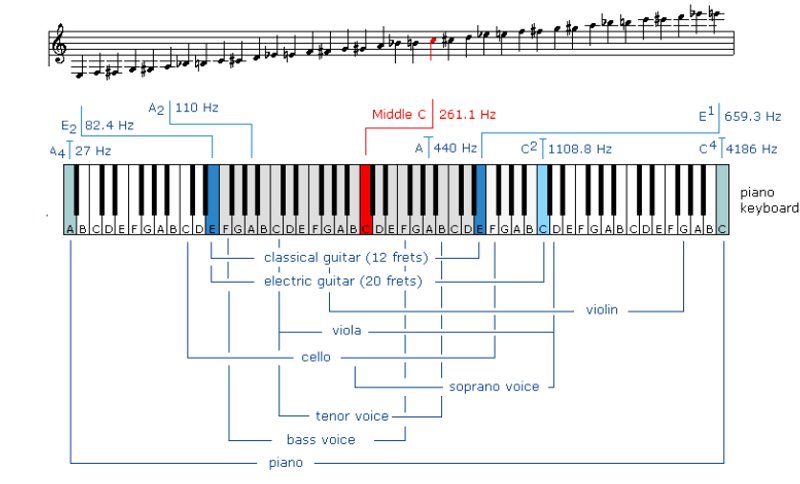 Frequencies of piano, some instruments and human voices (Yaman, 2015)
The most distinctive feature of jazz music is that each of the musicians plays at the same time and tries to make the instruments sound louder than the others. So, users can activate the sound production by touching the columns, each column produces a different jazz melody. The jazz type, which is expressed as the music of rebellion, appeals to the soul with its exciting infrastructure and enthusiastic style. The opportunity to experience a variety of beats and melodies as a group, rather than a small number of individual beats, encourages people to come together. Column heights are suitable for the experience of all age groups.
The installation gains meaning with the use of the body. The movement of the body within the physical, mental and perceptual relationship defines the fiction of the space. The body is not static in space, it is in the position of perceiving and responding.
The sound installation prioritizes the sense of hearing, but the spatial and dimensional features must appeal to the eye as well as the ear. The light and color used to strengthen the visual effect in the design make the installation the focus of the urban space. The installation draws attention even from a distance, through light and color as a visual sign, and people with a sense of expectation and curiosity are directed to the installation.
The irregularity of the light elements at the head of the columns creates a synthesis of jazz music and the chaos of the city. The different colors observed in the different columns after each touch enliven the colorless city life and turn the installation into an entertainment tool. The installation helps individuals to offer different visual experiences and to add a sense of innovation to the space. In addition, the intense illumination of the public space by the light helps to alleviate the feeling of insecurity in public spaces at night.
The installation is universal and structure-enhancing, and can be adapted to different locations with each column to be added or removed. In addition, the orientation of the light elements on the column heads is adjustable.
The installation's intervention in urban public spaces helps to change the urban space environment, to offer different visual experiences to individuals with its rich design, to attract attention and to add a sense of innovation to the space. By intervening in public spaces, installations change the way individuals passively participate in social life in the past.
REFERENCES
Hore, C. (1993). Jazz – a people’s music?. International Socialism, 61.
Yaman, O. (2015). Piyano ile eşlikleme becerisinin caz müziği armonisi ile birlikte geliştirilmesi üzerine aşamalı bir çalışma modeli önerisi. Master's thesis. Necmettin Erbakan University, Konya.