
Pineda Monedero Hollows Out a 1900 Sabadell Row House and Lets the Courtyard Back In
A party wall dwelling in Barcelona's industrial hinterland trades its overbuilt footprint for height, light, and a recovered garden.

Most renovation briefs for century-old Mediterranean row houses ask the architect to add space. Pineda Monedero did the opposite. Convent House in Sabadell, a dense industrial city just north of Barcelona, started as a two-storey dwelling whose courtyard had long been swallowed by extensions. The studio's strategy was to subtract: tear away the additions choking the patio, grow the house upward by one floor under an existing gable roof, and let the interior breathe through a single translucent staircase that connects all three levels. The result is 180 square metres that feel considerably larger, because nearly every room now opens to either the street or the recovered garden.
What makes the project worth studying is its refusal to choose sides in the old-versus-new debate. A Catalan vault on the ground floor is left exposed and unpolished. Wooden beamed slabs, a traditional regional technique, span the upper floors. But the windows are steel-framed ready-made artifacts that protrude from the facade like camera lenses, and the staircase is cut from perforated metal sheet so fine it reads as a veil rather than a wall. The contrast is deliberate, even theatrical, and it works because both registers share the same thinness and material honesty.
Street Presence and the Protruding Window
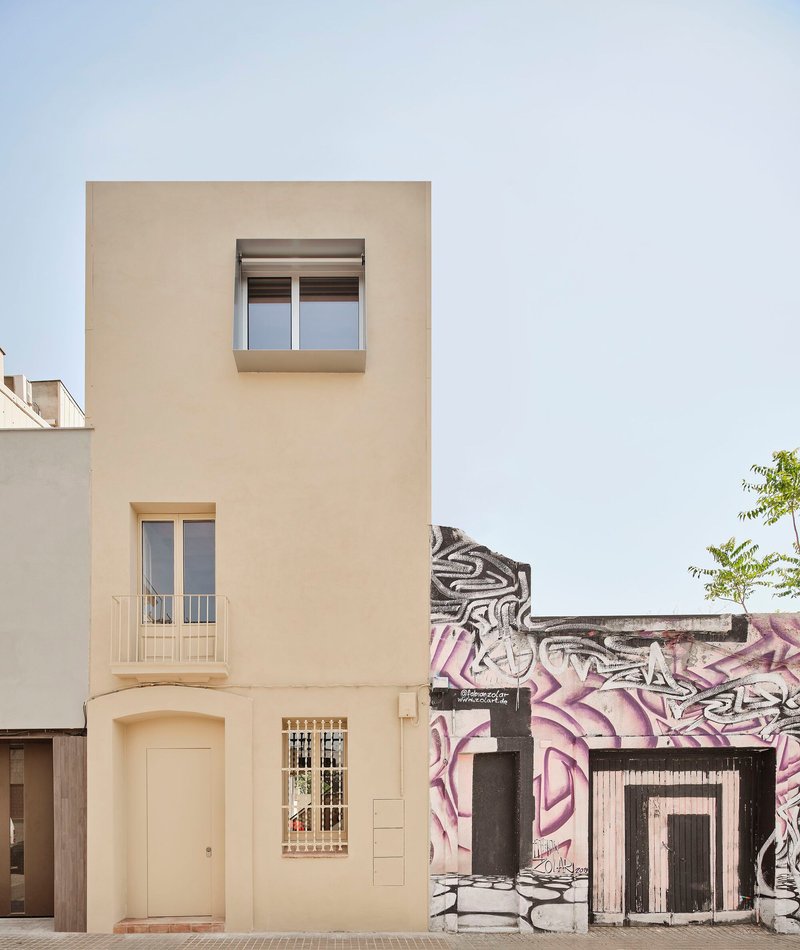
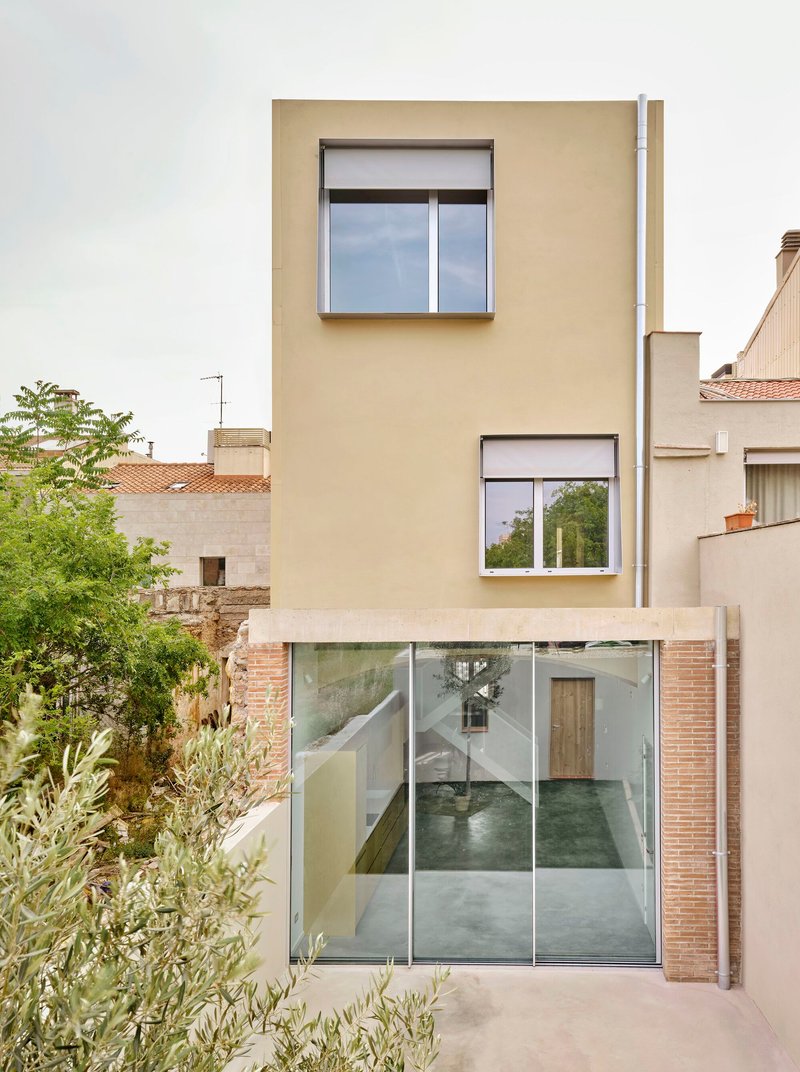
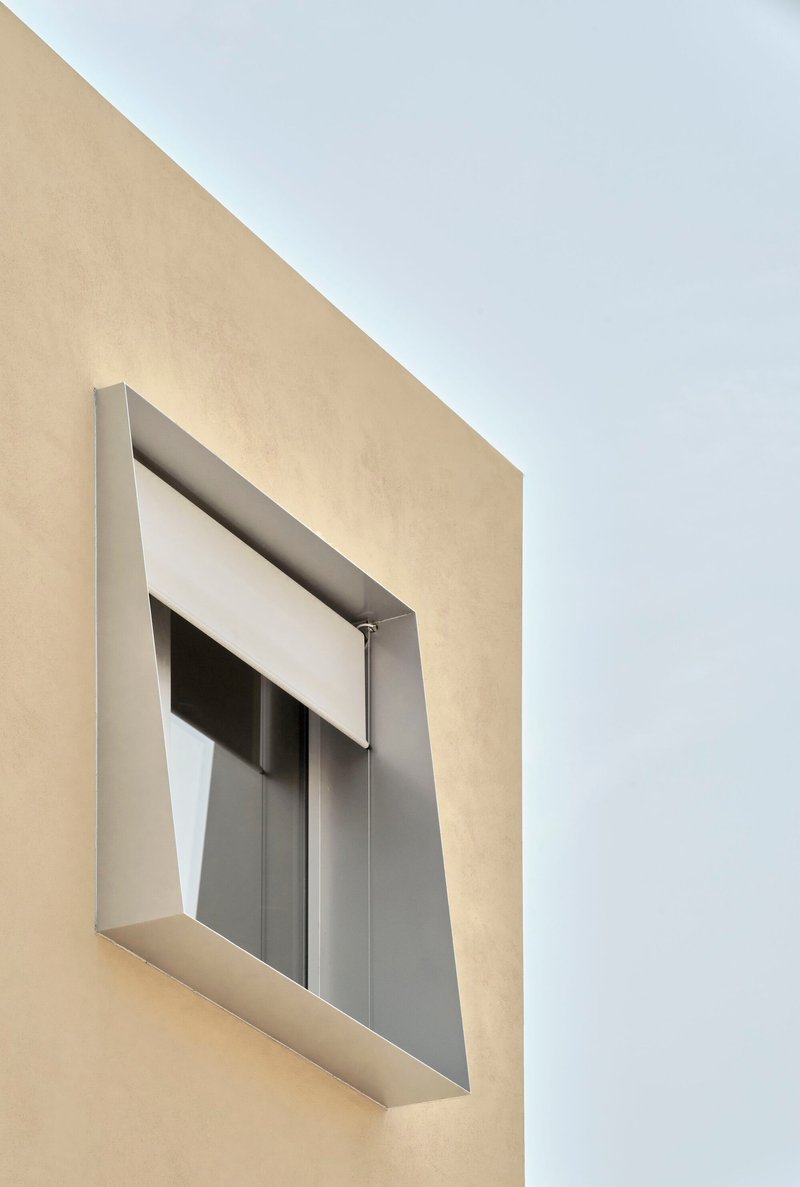
The street facade is narrow, cream-stuccoed, and almost prim, the kind of frontage that could vanish between its neighbors. Pineda Monedero gives it presence through a simple move: the new windows are not flush. They push outward in angled metal frames, each one catching light at a slightly different angle and casting its own small shadow on the plaster. At ground level a full-height glazed opening replaces what was once a conventional arched entry, exposing the herringbone brick vault behind it like a sectional drawing made real.
The detail of the roller shutters tucked inside the recessed window openings is worth noting. Silver blinds sit within the depth of the wall, so when closed they do not flatten the facade. The house can shut itself off from the street without losing the sculptural relief of those projecting frames.
The Catalan Vault as Spatial Anchor
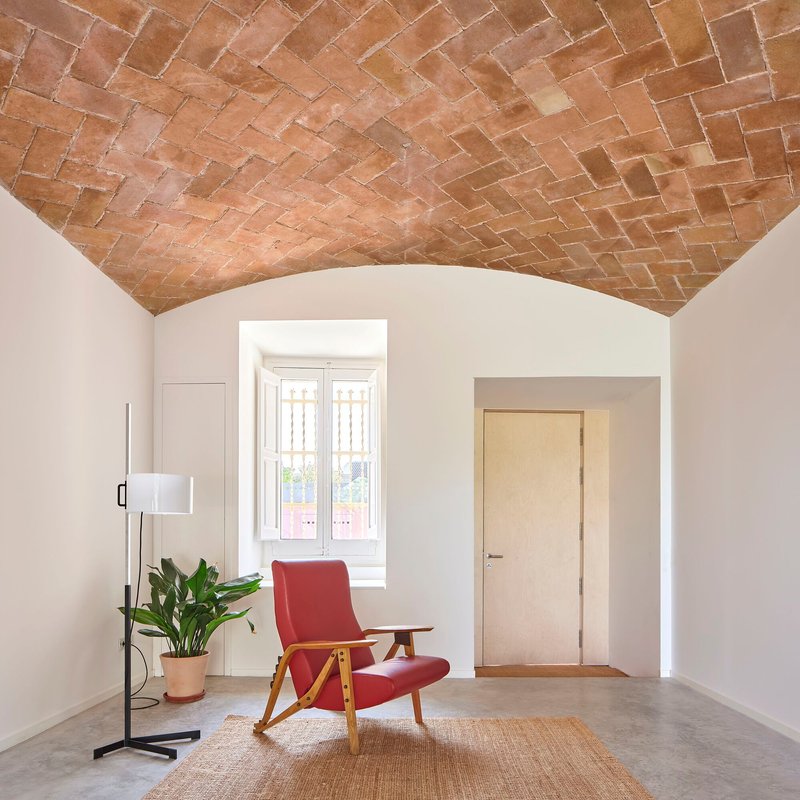
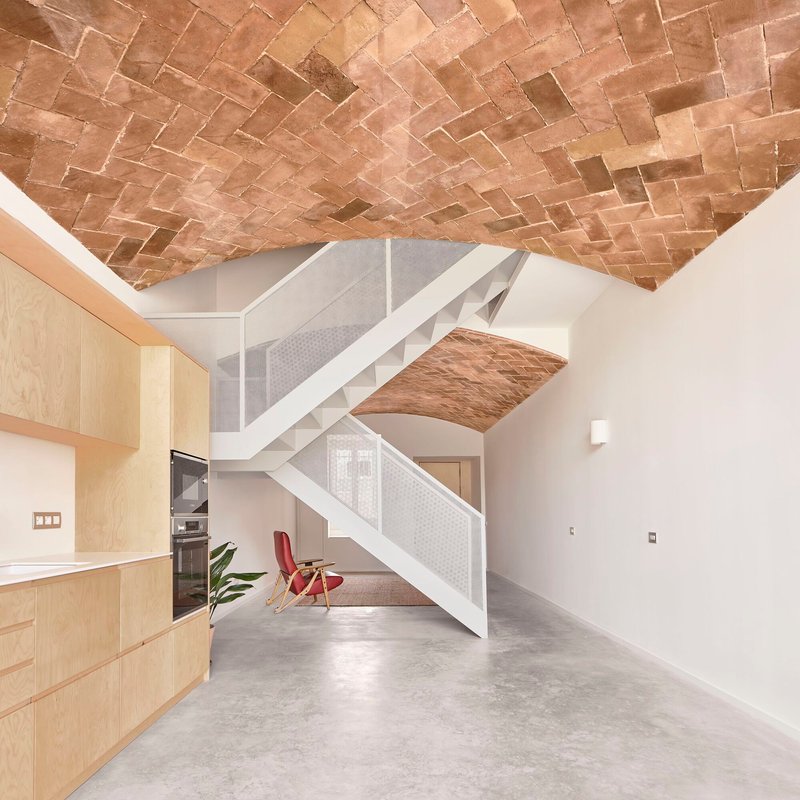
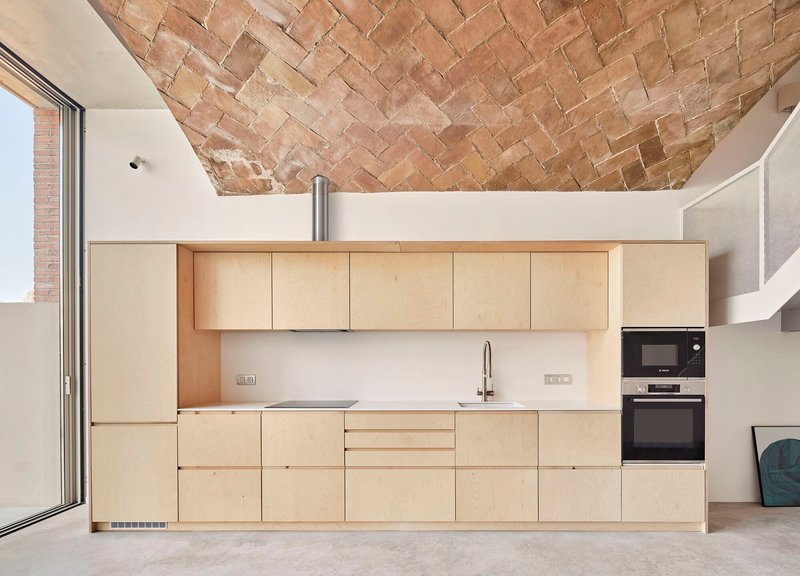
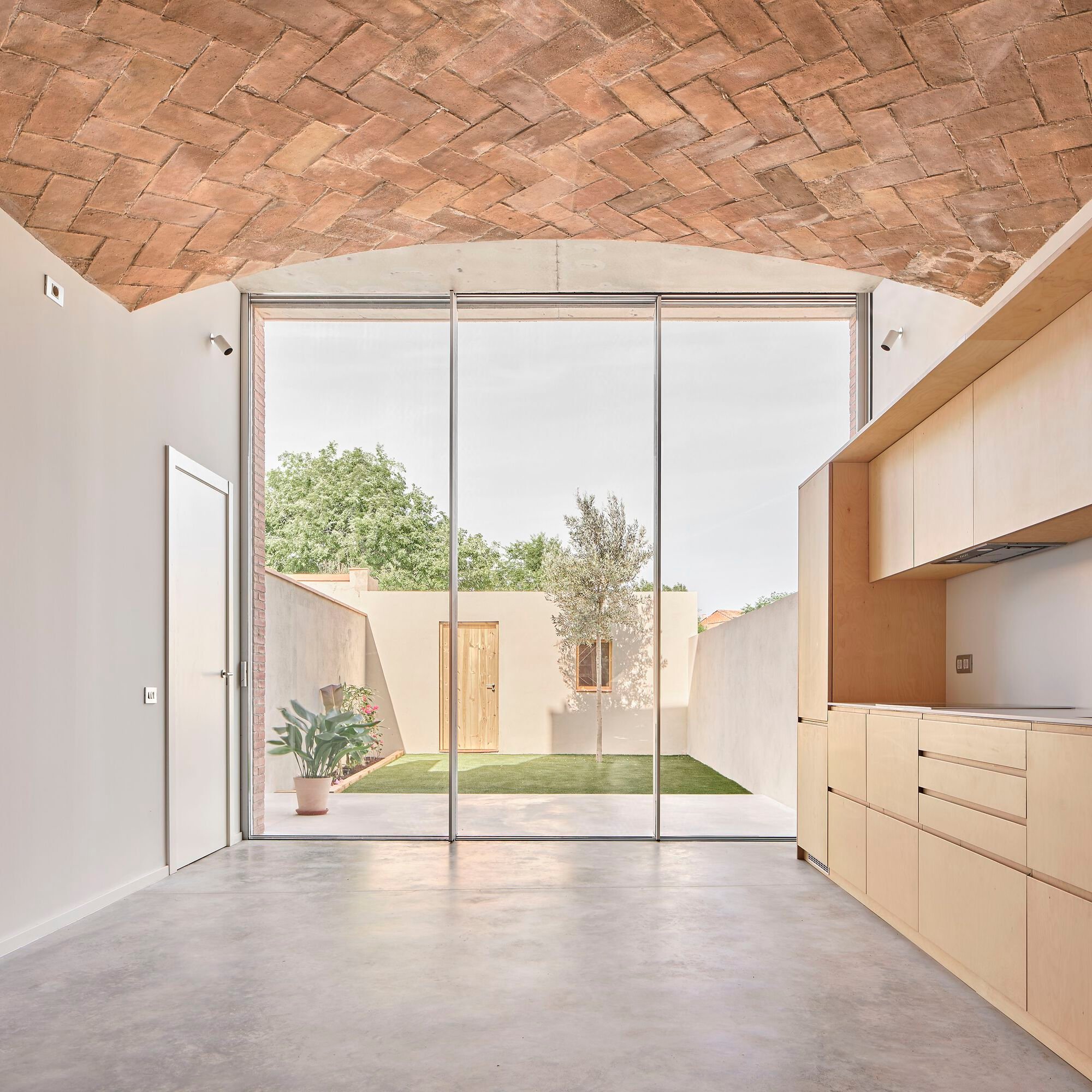
On the ground floor the herringbone brick vault is the protagonist. Rather than concealing it behind plasterboard or painting it white, the architects stripped it back to its original terracotta and let it set the tonal temperature of the entire level. The vault's warm ochre pulls against the cooler palette of light plywood cabinetry, polished concrete underfoot, and a steel flue pipe that rises through the kitchen like a single vertical line drawn in charcoal.
The ground floor is described as "completely diaphanous," and it earns the word. Arched doorways frame sightlines from the street entrance through to the courtyard, and the vault's curvature lifts the ceiling just enough to make the narrow plan feel generous. Furniture is sparse, almost monastic, which suits a house named after a convent.
Courtyard Recovery
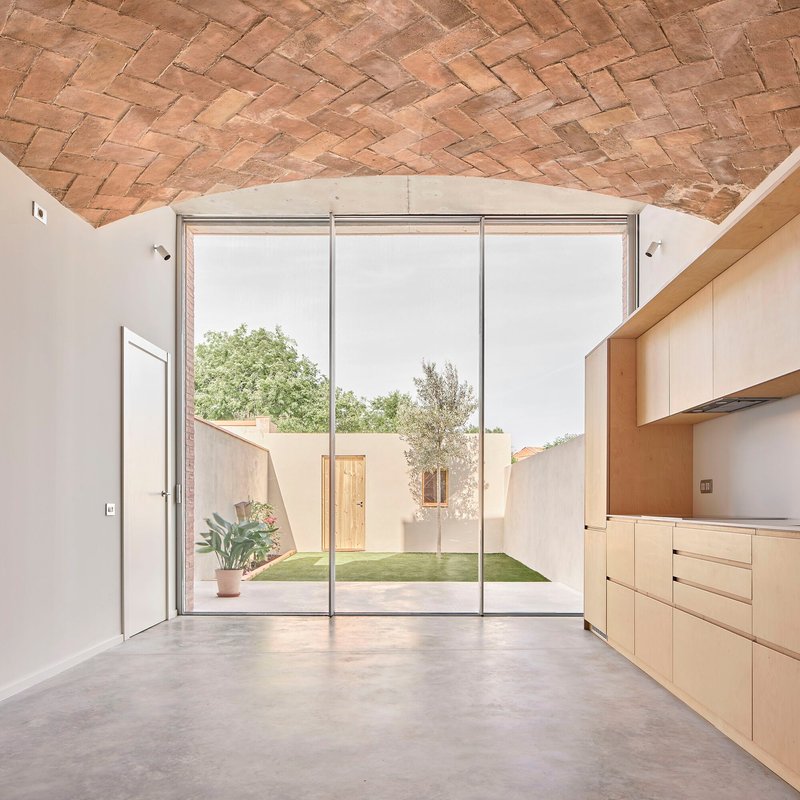
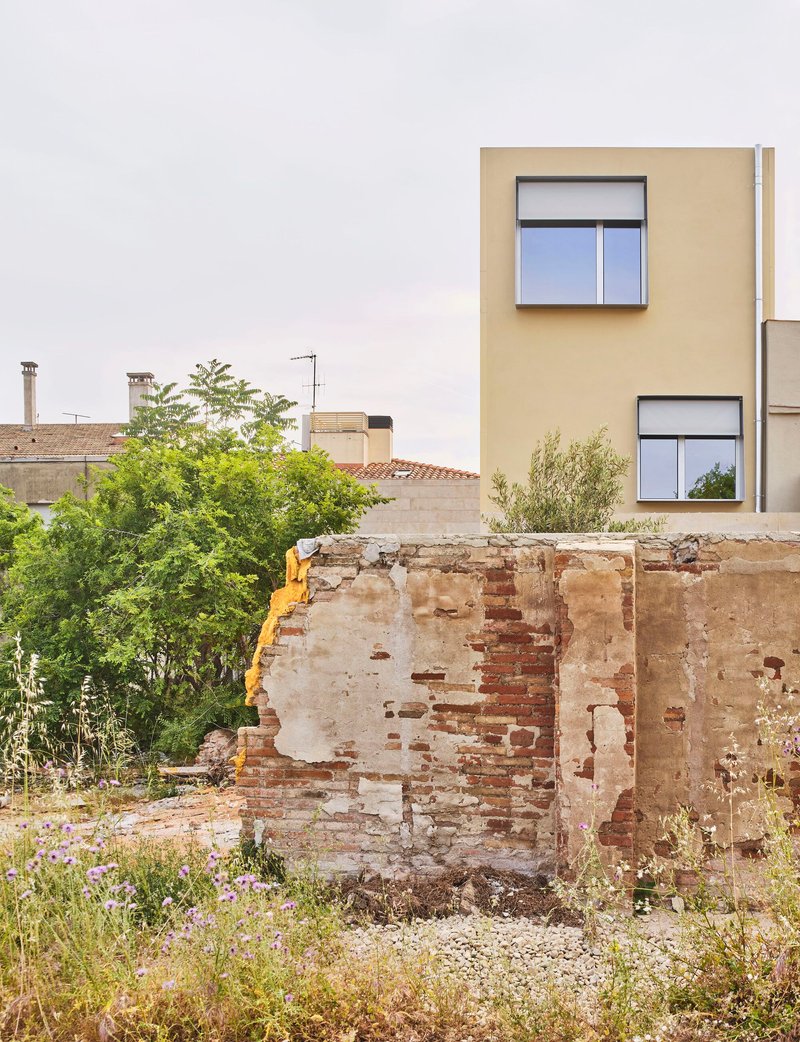
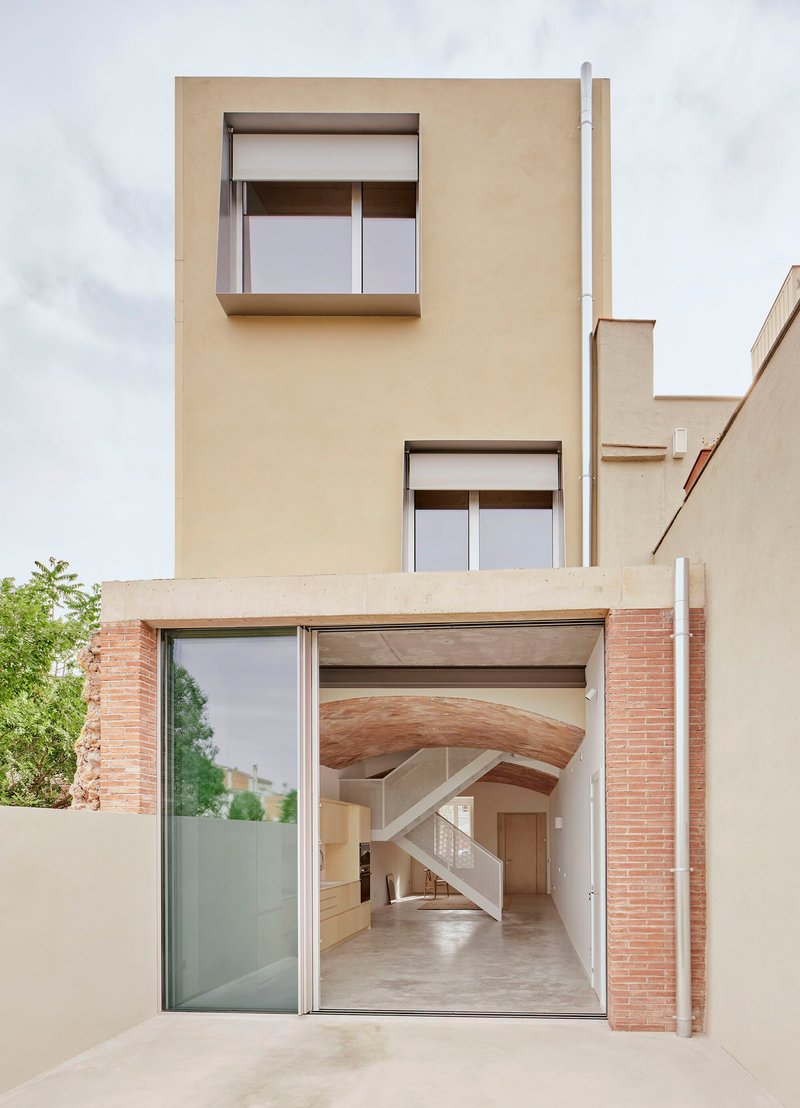
The freed courtyard is the project's real payoff. Full-height glazed doors slide open to dissolve the boundary between the vaulted interior and a small garden that now occupies the footprint of the demolished extensions. From outside, the remaining party wall still shows its weathered brick, with wild grasses growing at its base. It is a controlled ruin, left deliberately unfinished so the garden carries its own memory of what was removed.
Seen from the street through the transparent ground floor, the courtyard greenery registers as a bright slot at the end of a deep perspective. That visual pull, from pavement through vault through glass to garden, is the clearest spatial diagram of the entire project: depth achieved by subtraction.
The Perforated Stair as Translucent Spine
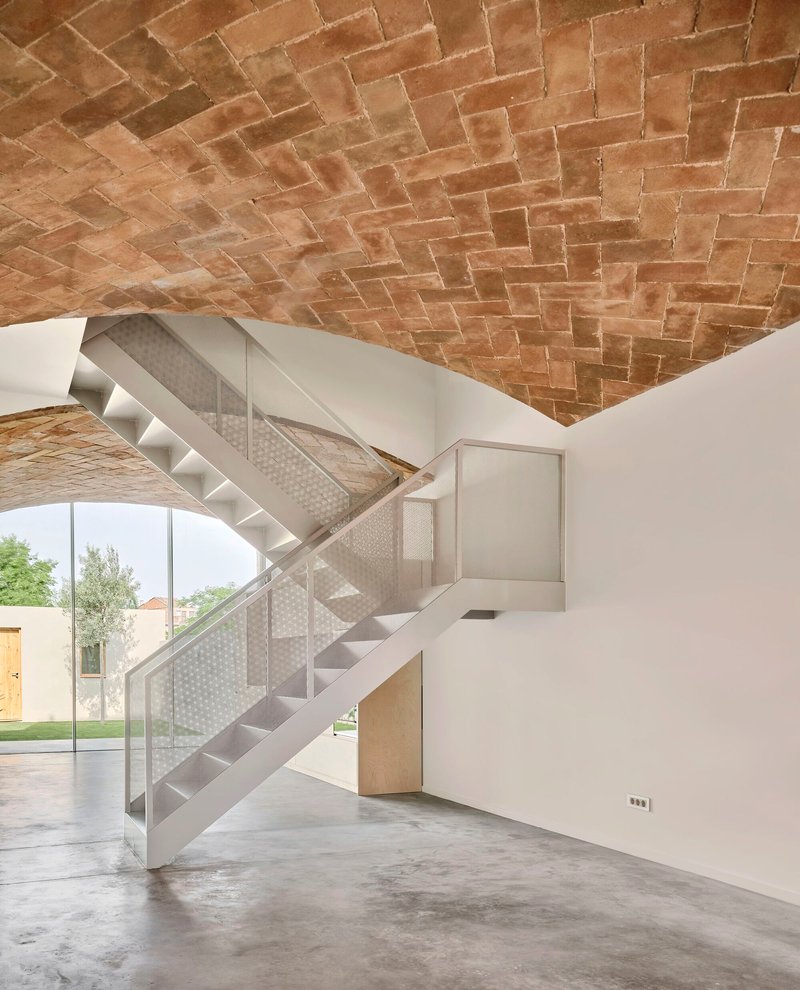
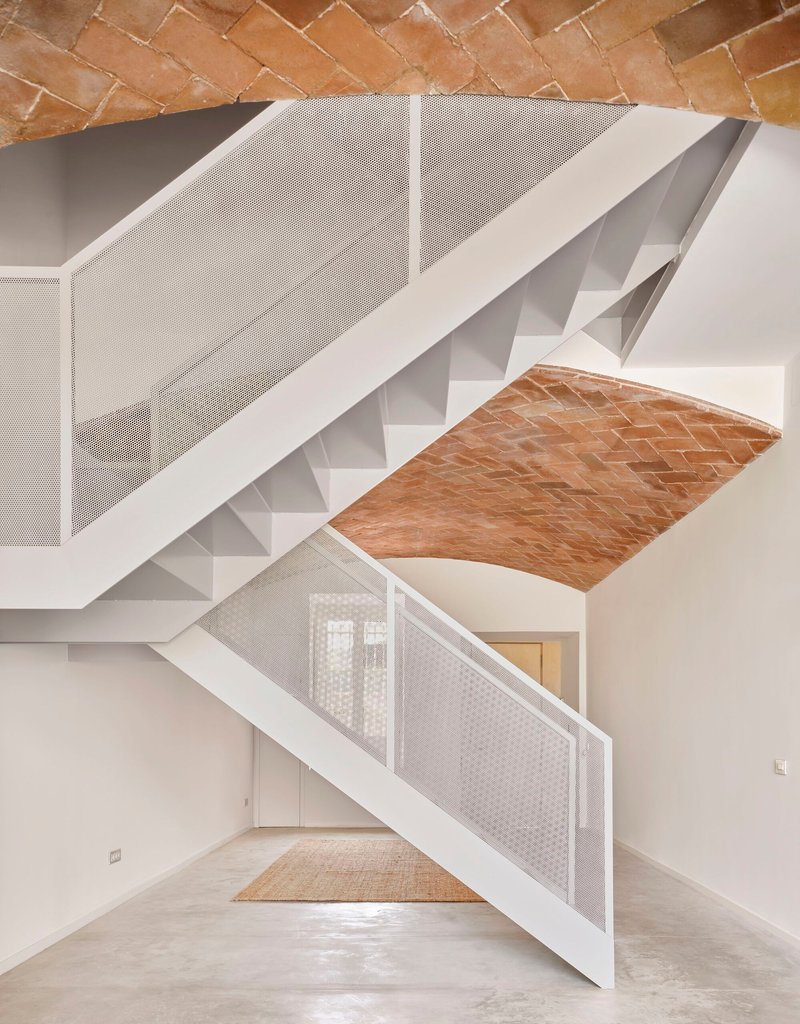
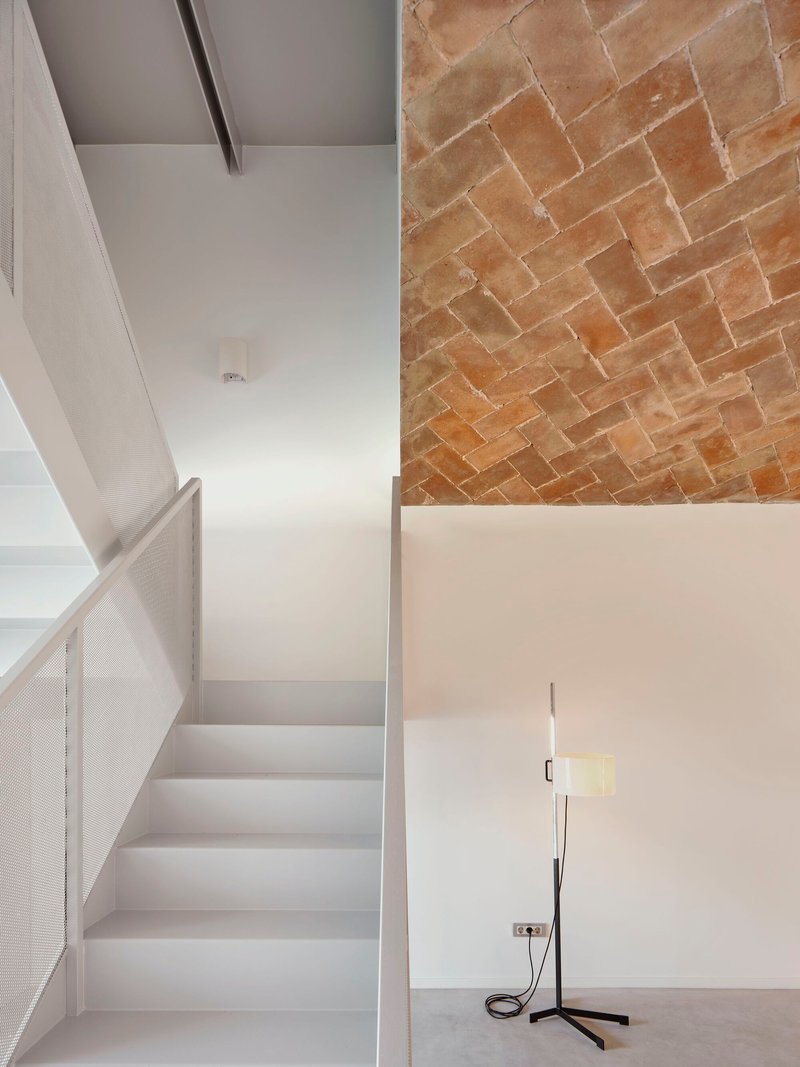
The staircase is the one new element that touches every floor, and it is deliberately lightweight. Fabricated from perforated metal sheet, its balustrades and treads filter light rather than block it. Standing at the base you can see the gable roof structure three storeys above; standing at the top you can look down through the perforations to the vault below. The stair functions less as circulation and more as a light well, a vertical slice of transparency punched through the dense masonry body of the house.
Where the white plaster of the new upper walls meets the terracotta vault, the junction is left visible. No trim, no shadow gap, no polite transition. The two materials simply stop. That bluntness reinforces the conceptual framework: new things look new, old things look old, and neither pretends to be the other.
Timber Ceilings and the Rooftop Room
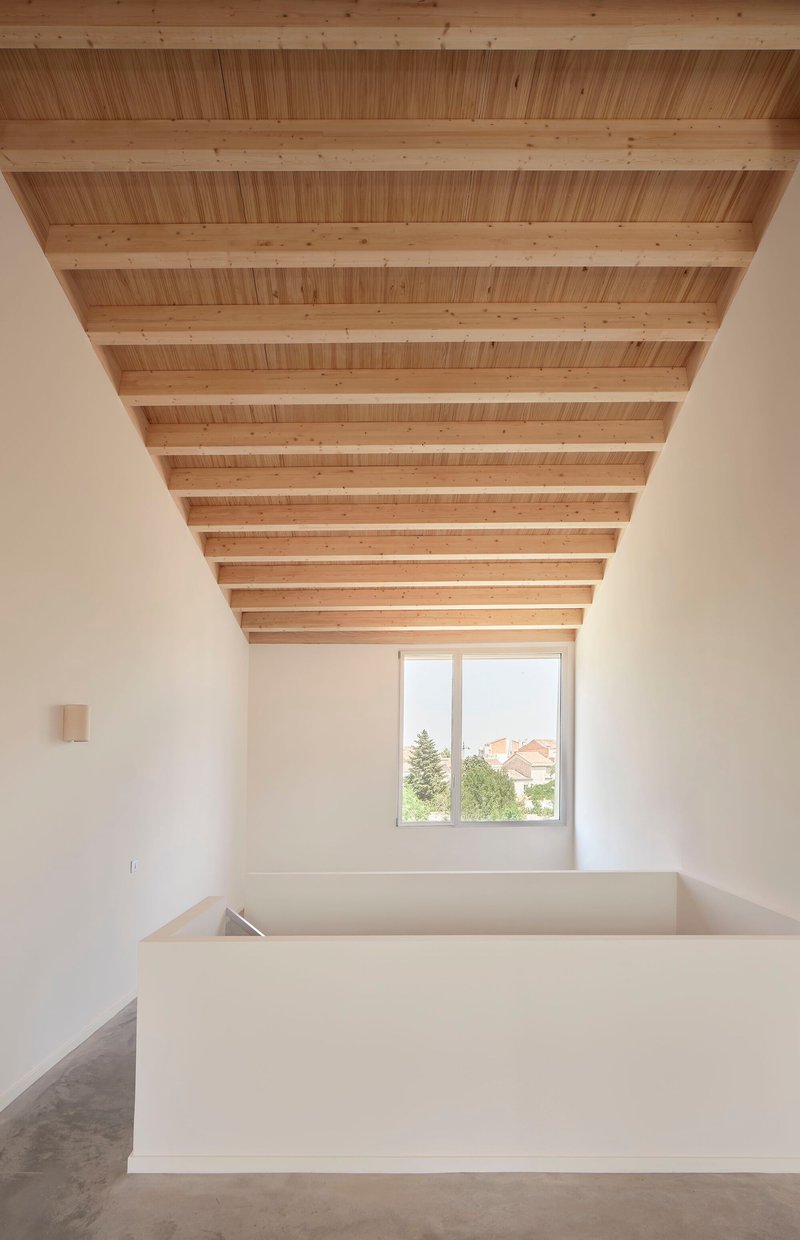
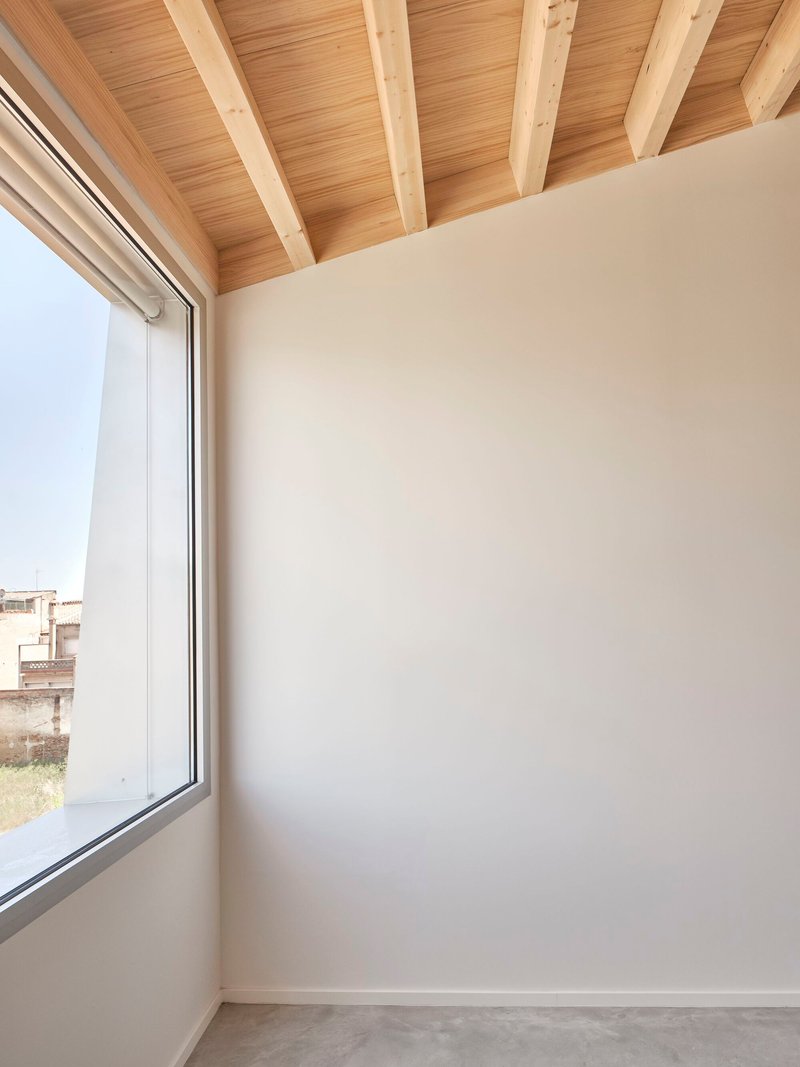
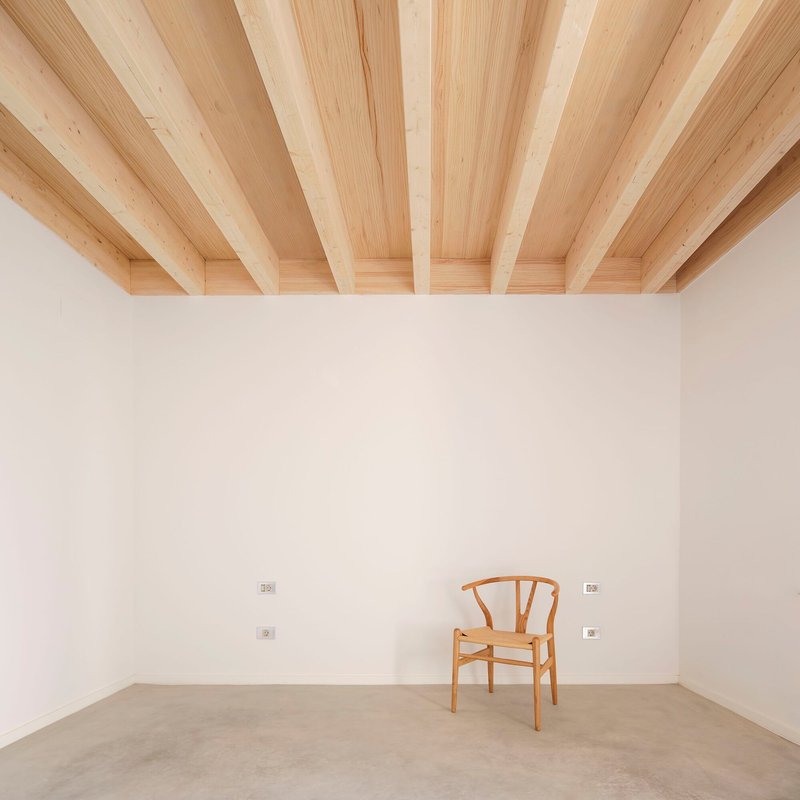
The new top floor sits under the existing gable roof, now exposed as a structure of timber joists and decking. Corner windows frame rooftop views of Sabadell under overcast Catalan skies, and the room is described as multi-purpose, a deliberate vagueness that suits its proportions. It could be a studio, a guest room, or simply a place to sit in a wooden chair and look out over the city.
The timber here is contemporary in its dimensioning and joinery but traditional in technique: wooden beamed slabs that reference the same construction logic as the Catalan vault one floor below. There is a disciplined consistency running through Convent House. Each floor uses a different structural system, yet all three are legible, exposed, and honest about how they carry load.
Plans and Drawings
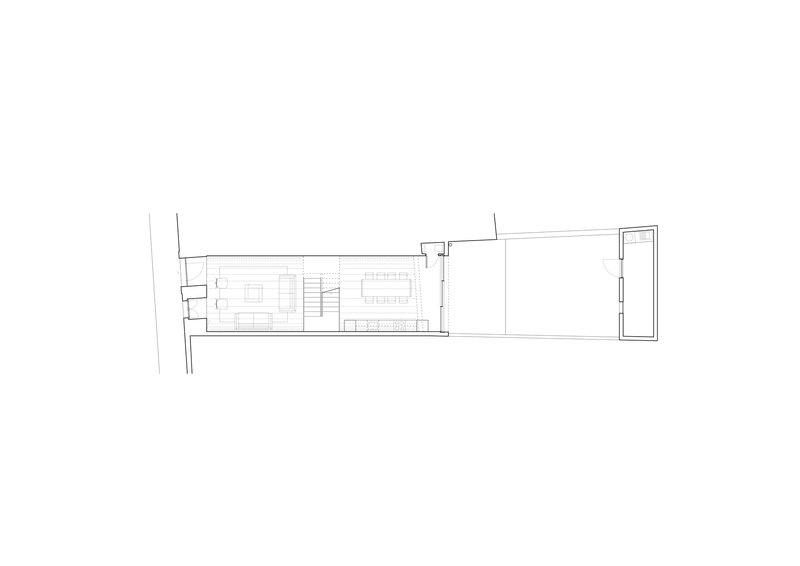
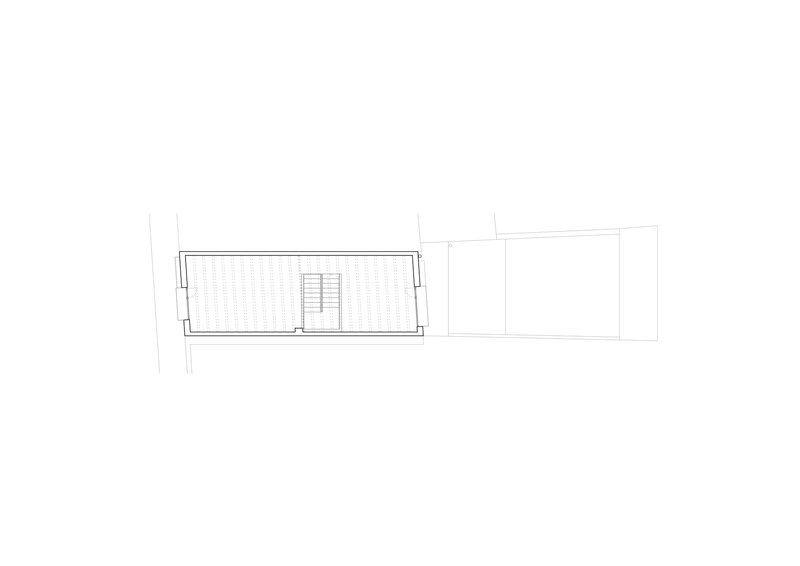
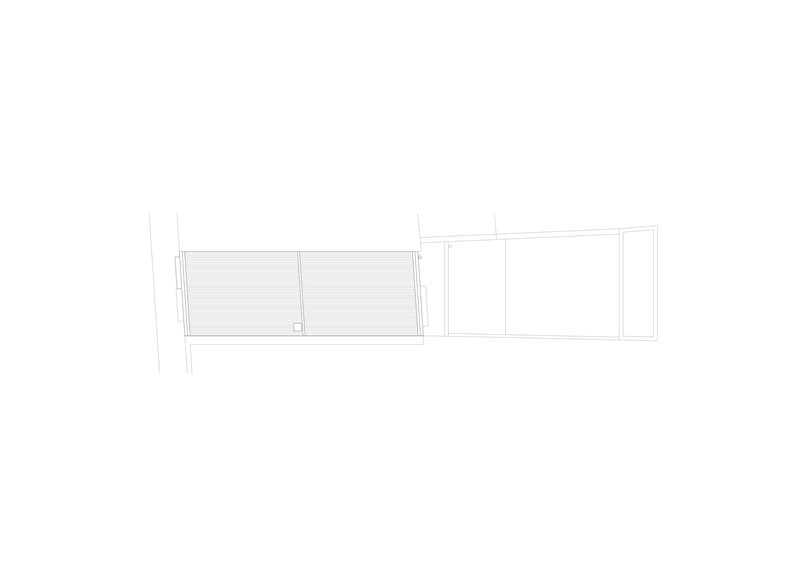
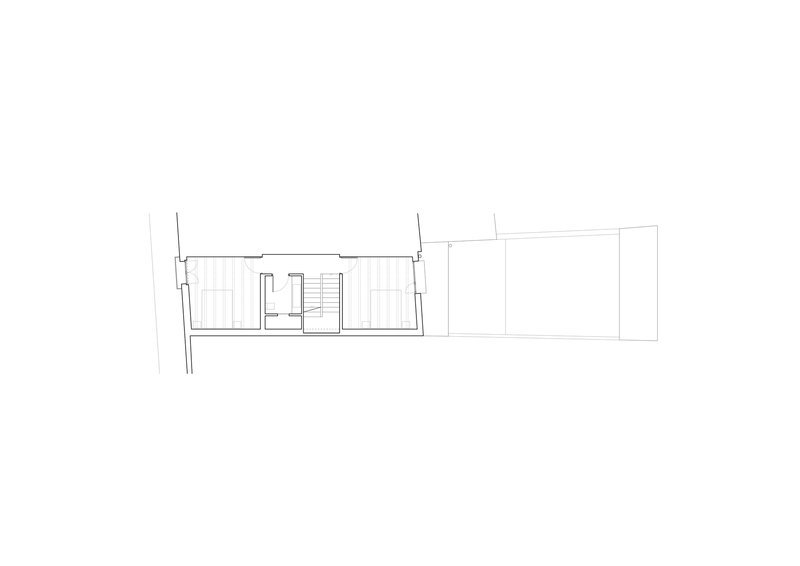
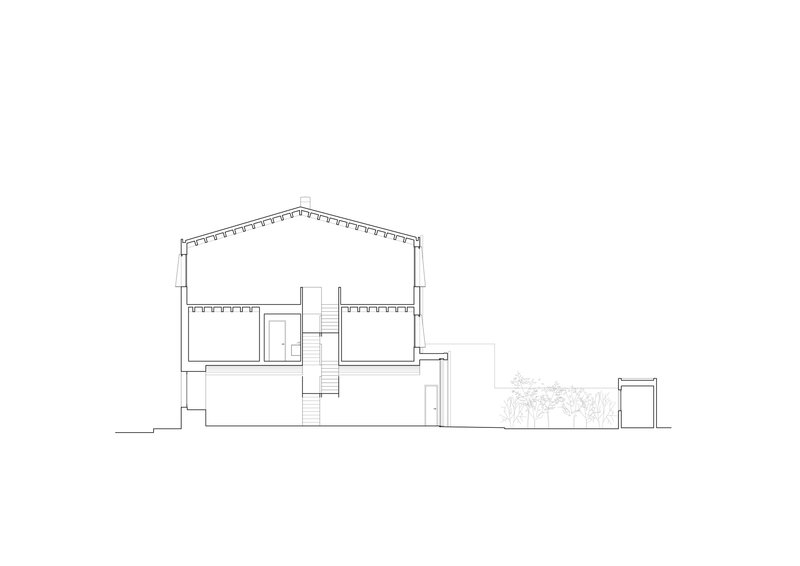
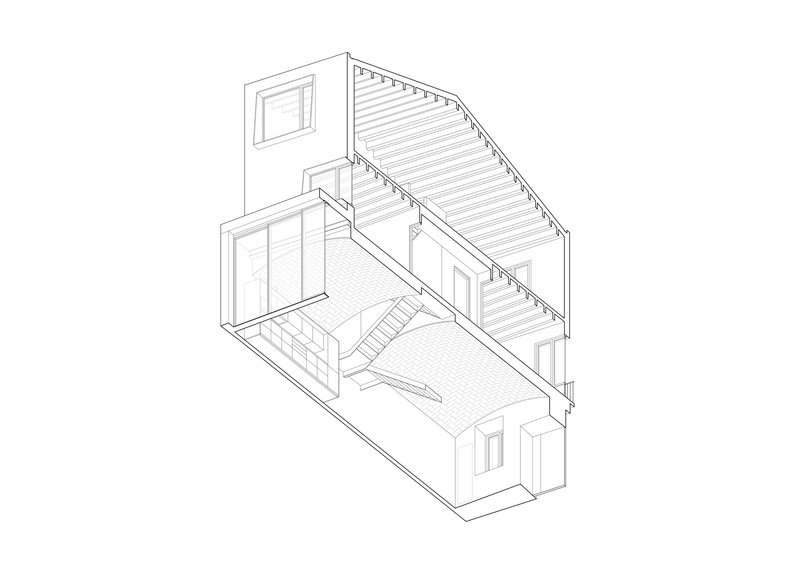
The floor plans confirm just how narrow the building is and how much of the original footprint was given back to the courtyard. The ground floor plan reads as a single open room with the stair as its only solid interruption, while the upper levels are more enclosed, with bedrooms organized around the central circulation core. The sections are the most revealing drawings: they show the Catalan vault, the timber-joist upper floor, and the pitched roof as three distinct structural episodes stacked within a single party-wall envelope.
The axonometric drawing makes the spatial strategy especially legible. The perforated staircase sits at the geometric center of the plan, threading through from courtyard level to roof. Around it, the volumes shift from open to enclosed as you ascend. It is a simple diagram executed with real material intelligence.
Why This Project Matters
Dense Mediterranean cities are full of party-wall houses whose courtyards were colonized decades ago by kitchens, bathrooms, and storage rooms that nobody planned but everybody needed. The default renovation instinct is to maximize interior square metres, seal the envelope, and install mechanical ventilation. Convent House argues for the opposite: give the courtyard back, grow vertically instead of horizontally, and trust that daylight and cross-ventilation will do more for livability than additional rooms ever could.
The project also offers a persuasive model for engaging with historical fabric. Pineda Monedero does not restore the house to a period condition, nor does the firm erase the old in favor of a clean contemporary insertion. Instead it stages a frank conversation between Catalan vaults and perforated steel, between hand-laid herringbone brick and factory-made window assemblies. The conversation is not always harmonious, but it is always clear, and clarity is the rarest quality in renovation architecture.
Convent House by Pineda Monedero, Sabadell, Spain. 180 m², completed 2022. Photography by José Hevia.
About the Studio
Share Your Own Work on uni.xyz
If projects like this are the kind of work you want to make, uni.xyz is a place to publish your own, find collaborators, and enter design competitions.




Popular Articles
Popular articles from the community

Foster + Partners Wraps a 200-Meter Shanghai Tower in Stainless Steel and Industrial Memory
The Suhe Centre Office Tower anchors a regenerated waterfront district in Shanghai with an all-steel structure that nods to local warehouse heritage.
gru.a Builds a 70 m² Timber Shelter That Opens Like a Farm Door in Brazil's Valley of the Vines
In the mountainous region near Rio de Janeiro, a compact retreat uses plywood panels and deep eaves to blur the line between inside and out.
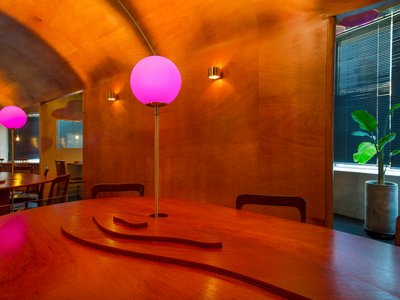
Indiesalon Carves a Plywood Cave into a Seoul Bistro's Second Floor
Munhwa Bistro's second Seongsu branch wraps diners in a laminated timber vault laced with colored light and mirror illusions.
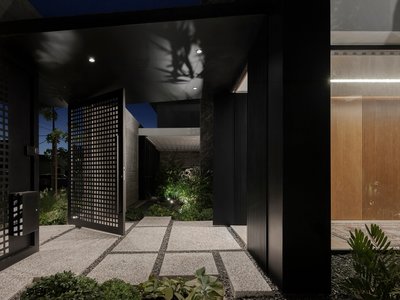
Constanti Architects Builds a Fortress of Privacy in Nicosia with House 345
A concrete and timber residence in Cyprus reinterprets the traditional introverted courtyard house for a new urban landscape.


Similar Reads
You might also enjoy these articles

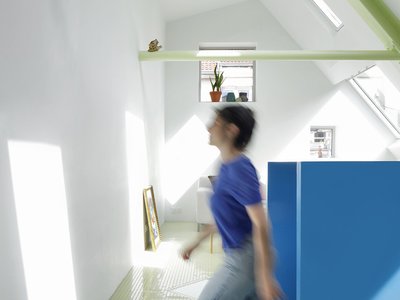
127af Flips a Tiny Bagnolet Rowhouse Upside Down with a Handcrafted Roof Extension
A 55-square-meter terraced house on the edge of Paris gains a luminous upper living floor through lightweight timber and steel.
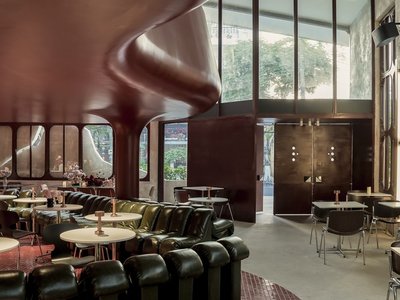
1.61 Design Workshop Wraps a 600-Square-Meter Café in Vietnam in Sculptural Burgundy Drama
Reden Café & Bistro pairs a helical staircase, mosaic floors, and deep red interiors to rethink Vietnamese hospitality space.

The Unbound Brain: A School Shaped by Cognitive Architecture
Cylindrical learning pods radiate like neurons from a central cortex, turning the floor plan into a spatial model of human thought.
Revival Vernacular Architecture: Rammed Earth Settlements for the Sahara
A modular desert community in Mauritania that fuses passive cooling techniques with earthen construction and local craftsmanship.

Explore Religious Building Competitions
Discover active competitions in this discipline




The Global Benchmark for Architecture Dissertation Awards


Design Challenge - Contemporary interpretation of a religious complex


Challenge to design mud housing for contemporary communities
Comments (0)
Please login or sign up to add comments
No comments yet. Be the first to comment!