
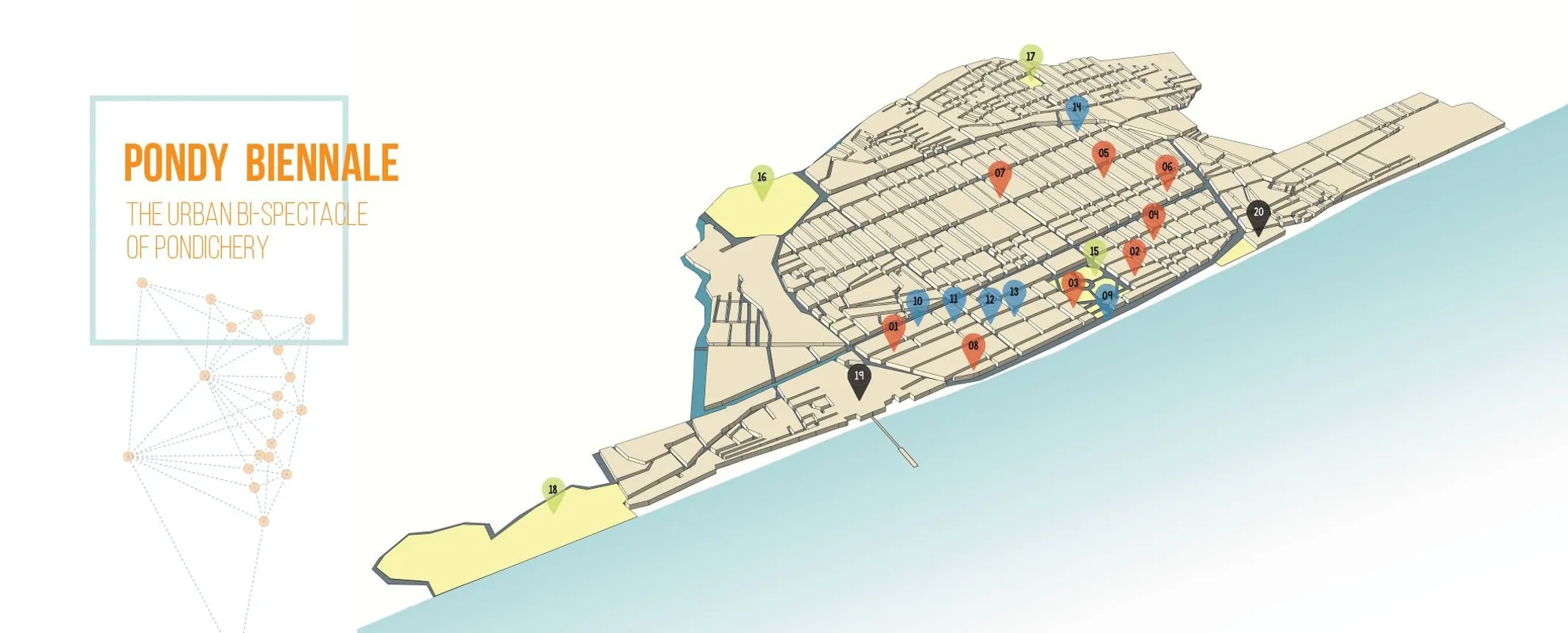
Pondy Biennale: A Cultural Architecture Vision for an Urban Art Precinct in Pondicherry
Reimagining Pondicherry as a global cultural architecture hub through urban design, public art, and experiential biennale spaces.


The Pondy Biennale by Srinidhi Ravishankar is an ambitious cultural architecture thesis that envisions transforming Pondicherry into a globally recognized Biennale precinct. Rooted in urban design strategy and spatial innovation, the project leverages the city’s layered heritage, coastal identity, and cultural depth to create an integrated art and performance district.
This urban design project proposes more than a series of buildings — it establishes a cultural ecosystem. By combining exhibition spaces, a performing arts centre, and a biennale library within a cohesive master plan, the proposal positions Pondicherry as an international cultural destination.
Why Pondicherry? Context and Cultural Potential
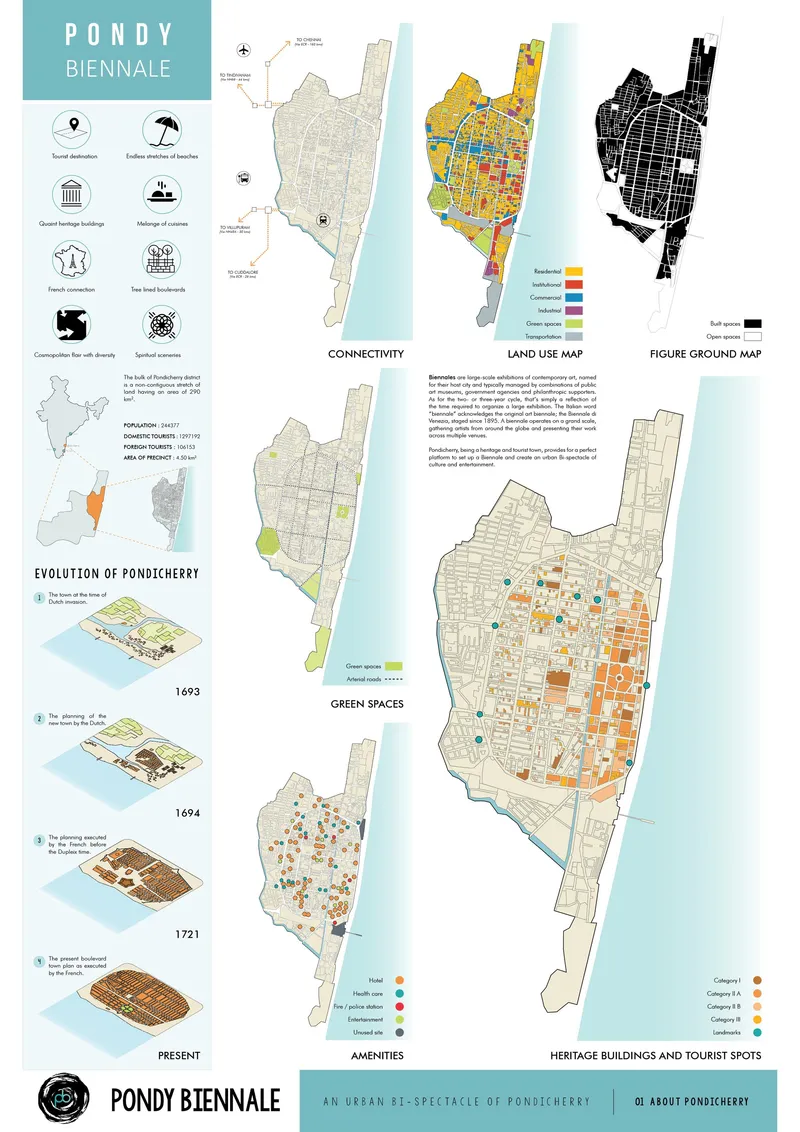
Pondicherry (Puducherry) is uniquely positioned as a historic coastal city with:
- Strong French colonial urban fabric
- Tree-lined boulevards and heritage precincts
- Spiritual and cosmopolitan character
- Vibrant tourism economy
- Dense urban connectivity
The thesis studies connectivity, land use, figure-ground relationships, green spaces, and amenities to understand the city’s morphology. Through this analytical groundwork, the proposal identifies opportunities for cultural architecture to act as an urban catalyst.
By situating the Biennale along the coastal edge, the project enhances public engagement with the Bay of Bengal while reinforcing pedestrian movement and public accessibility.
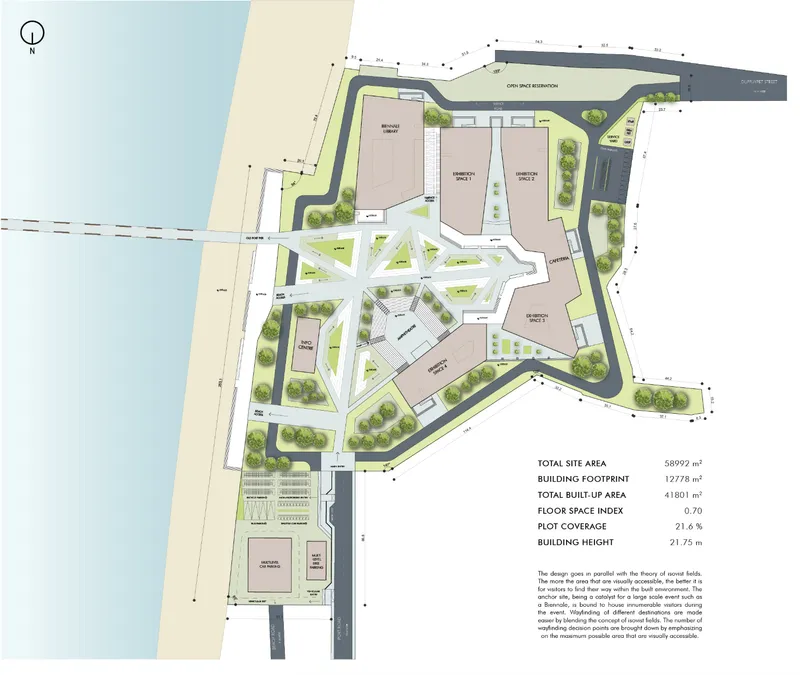
Master Plan Strategy: An Urban Biennale Precinct
The design proposes a carefully structured precinct that integrates:
- Biennale Library
- Exhibition Centre
- Performing Arts Centre
- Public plazas and green landscapes
- Cultural amenities and visitor infrastructure
The total site area of approximately 58,992 sqm accommodates a built footprint of 12,778 sqm while maintaining a balanced floor space index. Open spaces and plazas are intentionally preserved to encourage gathering, interaction, and art installations.
At the heart of the precinct lies a central plaza shaped by isovist-driven geometry, ensuring maximum visibility and wayfinding clarity. This plaza becomes the experiential core of the Biennale — a space where art, performance, and people intersect.
Isovist-Based Architectural Design: Visibility as Experience
One of the most innovative aspects of this cultural architecture proposal is the use of isovist analysis in shaping the building forms.
By analyzing three-dimensional visibility fields, the project optimizes:
- Visual connectivity between spaces
- Spatial hierarchy
- Public engagement
- Navigational clarity
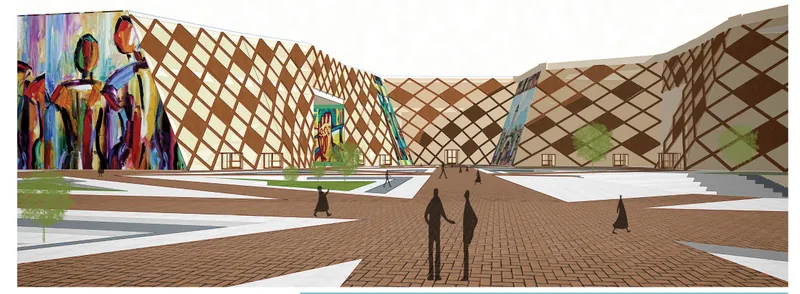
Different wall configurations — right-angled, outward-angled, and inward-angled — were tested to maximize isovist volumes. The final geometry strategically enhances visual permeability from the central plaza to exhibition and performance zones.
This methodology transforms architecture into an experiential instrument rather than a static container.
The Biennale Library: Knowledge Along the Coast
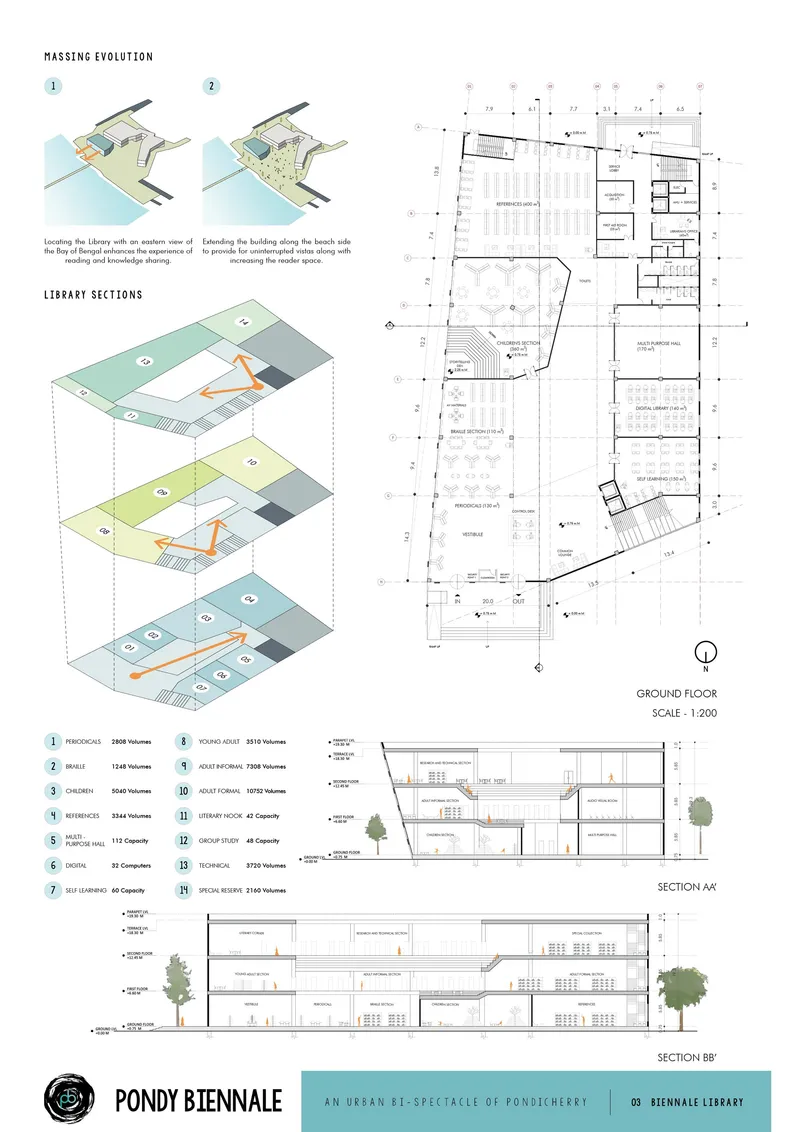
The Biennale Library is positioned to capture eastern views of the Bay of Bengal. Extending along the beach edge, it offers uninterrupted vistas while increasing reading capacity and spatial fluidity.
The program includes:
- Periodicals section
- Braille section
- Children’s section
- References collection
- Digital learning areas
- Self-learning spaces
- Group study rooms
- Special reserve archives
- Multipurpose hall
Vertical sectional organization enhances spatial connectivity, while terraced internal volumes encourage exploration. The library becomes both a knowledge hub and a contemplative retreat within the cultural architecture framework.
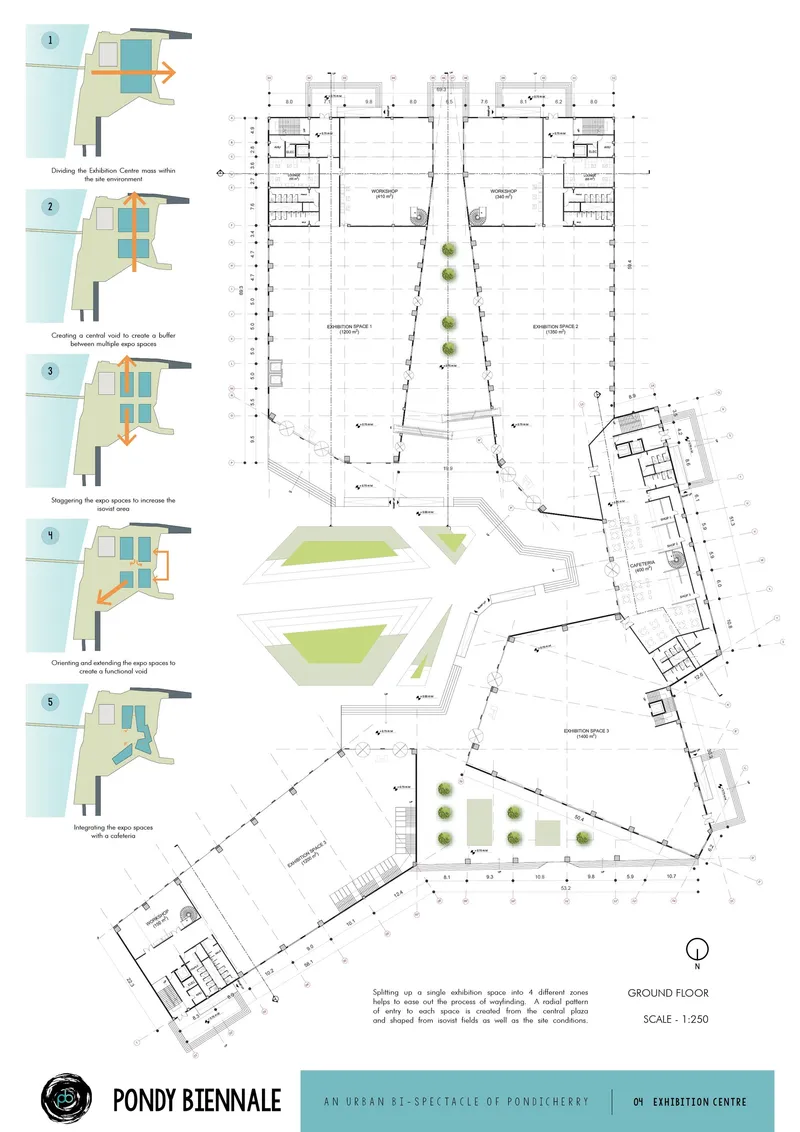
Exhibition Centre: Flexibility and Spatial Narratives
The Exhibition Centre is designed for adaptability — a crucial requirement for any contemporary biennale architecture.
The space can function as:
- Room-by-room exhibition
- One-way curated route
- Spatial hierarchy format
- Room-in-room installation
- Labyrinth exploration
A radial pattern of entry from the central plaza organizes circulation. Exhibition halls are staggered to increase isovist coverage and maintain dynamic spatial engagement.
The design emphasizes flexibility, ensuring that each biennale edition can reinterpret the space differently.
Performing Arts Centre: Angled Geometry and Dynamic Viewing
The Performing Arts Centre rises at a 70-degree incline from the ground floor exhibition base. The inward angular wall configuration maximizes isovist volume from the central plaza, reinforcing visual drama and spatial dynamism.
Key features include:
- Theatre with raked seating
- Performance studios
- Administrative zones
- Public foyer
- Integrated service circulation
The architectural language is bold yet contextually responsive, using geometry to create both enclosure and openness.
Public Realm and Landscape Integration
The project prioritizes open space reservation and landscaped areas. Tree clusters, triangular green courts, and plaza geometries soften the built mass and provide resting points for visitors.
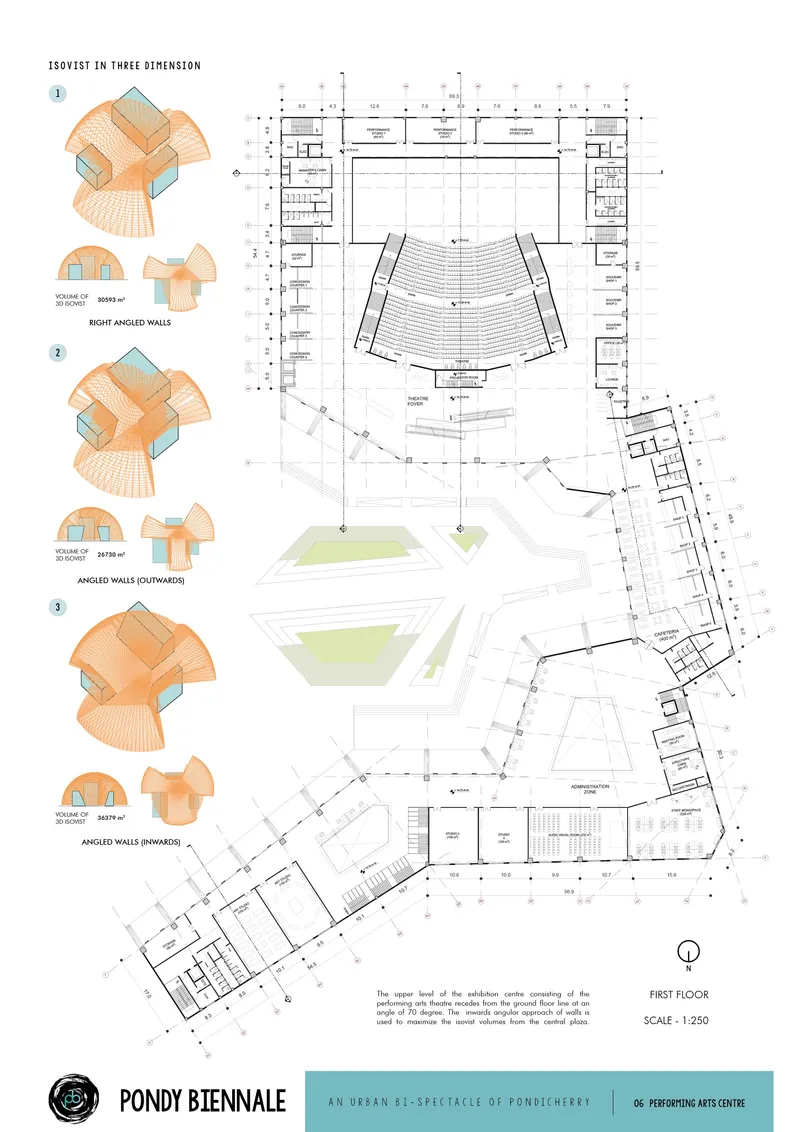
Cultural architecture here is not limited to buildings — it extends into the public domain. The plaza operates as an urban stage, accommodating installations, performances, and spontaneous gatherings.
Cultural Impact and Youth Engagement
Beyond spatial design, the Pondy Biennale proposes an institutional and social framework. By establishing a biennale ecosystem, the project enables:
- Global cultural exchange
- Professional exposure for young artists
- Skill development opportunities
- Creative industry growth
- International collaboration
The precinct becomes a learning ground for students and emerging professionals working with a large-scale art organization.
Architectural Identity: A Contemporary Cultural Landmark
The façade language combines rhythmic patterns and angular surfaces, creating a recognizable architectural identity. The final visualization suggests a woven surface expression, referencing cultural interconnection and artistic layering.
The design establishes Pondicherry not just as a tourist city, but as a global cultural architecture landmark.
Redefining Urban Design Through Cultural Architecture
The Pondy Biennale by Srinidhi Ravishankar demonstrates how cultural architecture can act as an engine of urban regeneration. Through analytical mapping, isovist-driven massing, flexible exhibition planning, and public space integration, the project transforms Pondicherry into a dynamic biennale precinct.
By merging urban design strategy with experiential architecture, the proposal reimagines the city as an international platform for art, performance, and knowledge exchange.
The project stands as a compelling model for how cultural infrastructure can reshape identity, economy, and community in contemporary cities.




Popular Articles
Popular articles from the community


Riyadh For All: Intergenerational Urban Design for Active Aging in Rabat
Riyadh For All reimagines urban design in Rabat with intergenerational co-living, adaptive courtyards, and Moroccan cultural exchange today.

The Earth Pod: 3D Printed Homes for Resilient Refugee Communities
The Earth Pod reimagines refugee housing through 3D printed homes made from clay, combining resilience, self-sufficiency, and rapid shelter.

Lunar Spiral: Space Architecture Shaped by the Mathematics of the Universe
Lunar Spiral reimagines space architecture through Fibonacci geometry, lunar regolith, levitating habitats, and self-sustaining Moon living.

Conexión: Biophilic Design Reimagines High-Rise Living in Hong Kong
Conexión reimagines high-rise living in Hong Kong through biophilic design, green facades, shared spaces, daylight, water and nature within.


Similar Reads
You might also enjoy these articles

Eco Chapel: A Green Architecture Pavilion Designed in Symbiosis with the Forest
Eco Chapel uses green architecture to weave prayer, learning and reuse into a forest pavilion shaped by modular hexagonal canopies for life.
Kaffeebühnen: Coffee Shop Architecture Designed as a Civic Stage Between Vienna’s City and Park
Kaffeebühnen turns coffee shop architecture into a civic stage, linking Vienna’s park edge, urban life, warm timber yards, and coffee craft.
Healing Façade: Sustainable Architecture for Reforestation, Community, and Sacred Ecology in Ethiopia
Healing Façade reimagines sustainable architecture as a living wall that restores soil, catches water and renews Ethiopia's forest churches.


Urban Forest: A Vertical Ecosystem for 5,000 Workers in Singapore's Changi Business Park
Radially stacked pods and layered green decks turn a 7-acre plot into 47 acres of ecological workspace projected for 2040.
Comments (0)
Please login or sign up to add comments
No comments yet. Be the first to comment!