
Post Office House by Cidade Branco Arquitectos: A Historic Rehabilitation in Portugal
A historic post office transformed into a modern home by Cidade Branco Arquitectos, blending heritage preservation with contemporary sustainable design.


A Heritage Revival in Luso
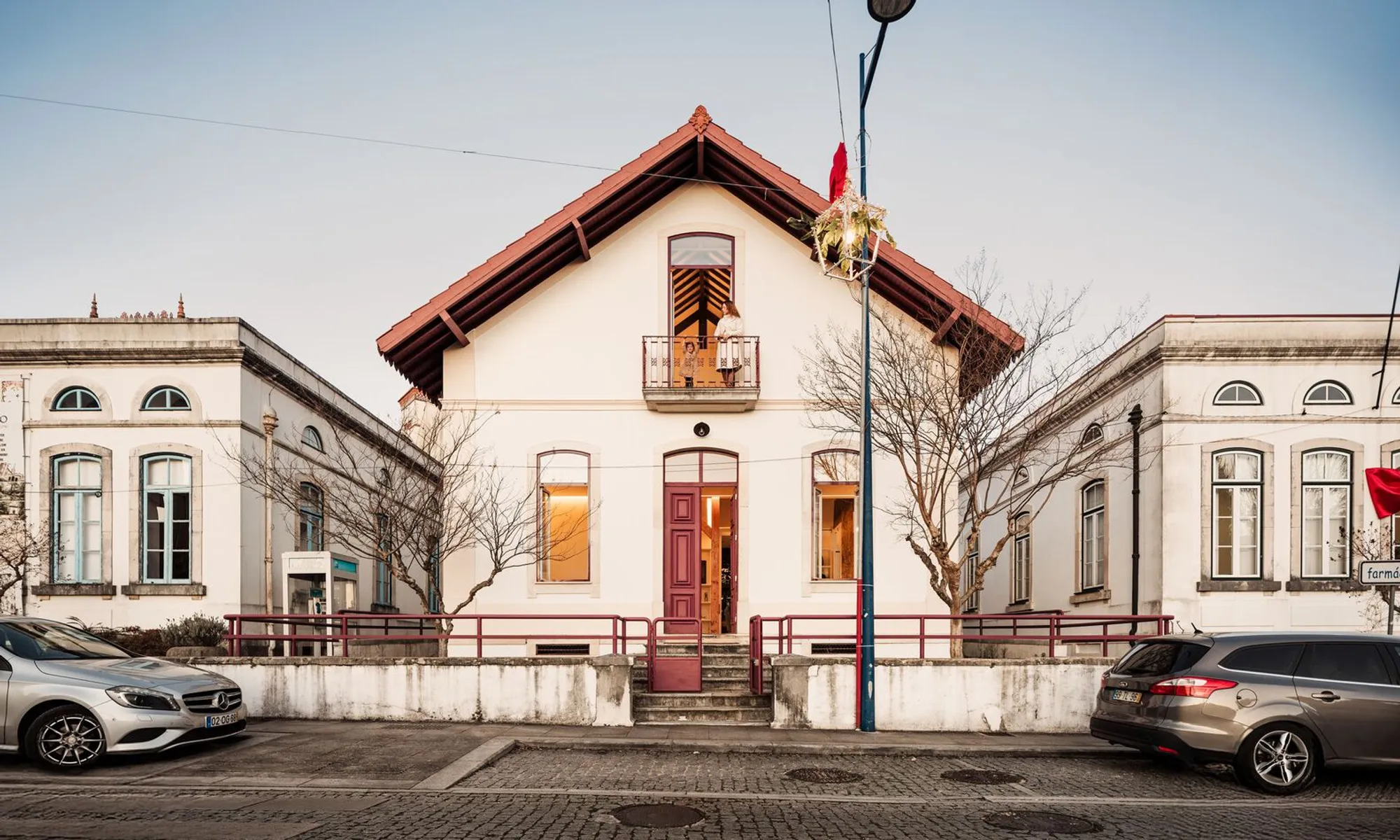
The Post Office House, designed by Cidade Branco Arquitectos, is a remarkable transformation of a 19th-century post office into a contemporary yet historically respectful residence. Located in Luso, Portugal, this 240 m² rehabilitation project preserves the architectural integrity of the original structure while integrating modern design principles.


Architectural Context and Exterior Preservation
Originally serving as a postal service hub and residence for the local director of CTT (Portuguese Postal Services), the building was distinguished by timber frame construction and exquisite carpentry details. One of its key structural features was an air gap designed to protect against humidity, effectively preserving the original wooden elements over time.
The façade retains its traditional aesthetic, harmonizing with the village’s urban fabric by maintaining symmetry with nearby public buildings, including the Parish Council and Tourist Office. To preserve the building’s historical character, the architects designed a custom gate that seamlessly blends with the original entrance, ensuring continuity in the streetscape.

Interior Transformation: A Modern Spatial Reinterpretation
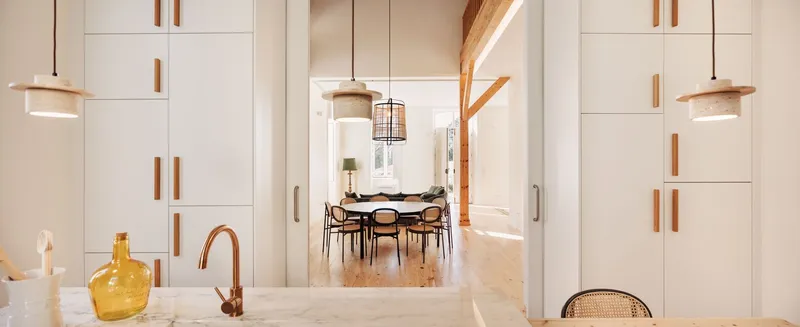
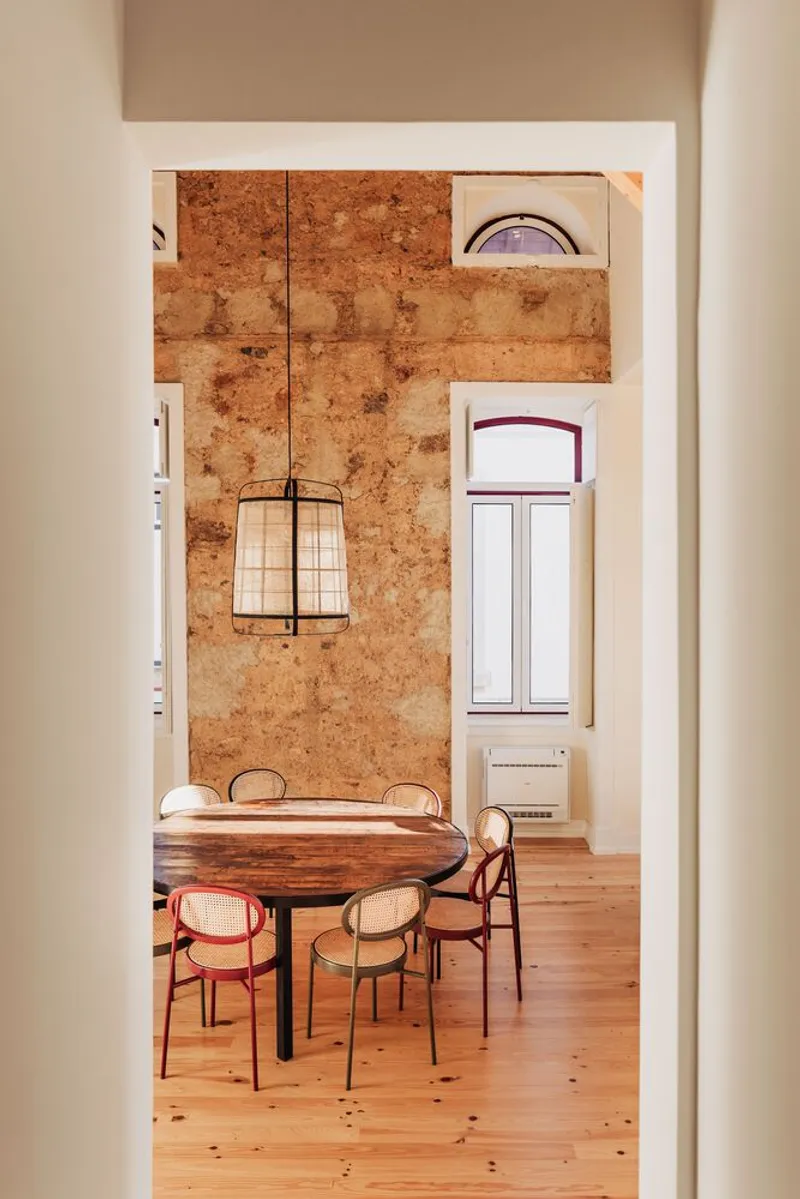
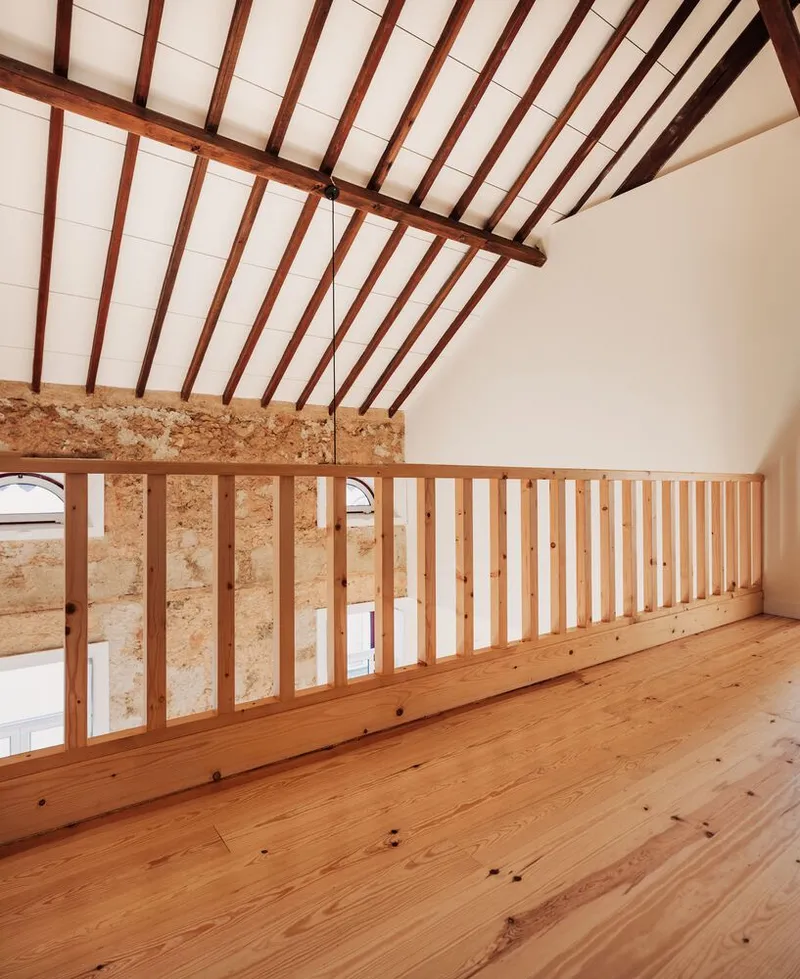
While the exterior underwent minimal intervention, the interior was reimagined with a striking architectural gesture—a central void spanning two floors. This double-height space fosters visual and spatial connectivity while unveiling the original wooden trusses, previously concealed by a suspended ceiling.
The introduction of this void enhances natural ventilation through the chimney effect, optimizing both cooling and heating efficiency. This sustainable design strategy reduces the need for artificial HVAC systems, improving thermal comfort throughout the home.


Programmatic Organization: Blending Functionality with Aesthetic Sensibility
The ground floor is conceived as an open social hub, comprising a living room, reading area, dining space, and kitchen, along with a barrier-free bedroom for accessibility. The first floor is symmetrically divided into two private suites, each featuring an integrated bathroom entrance concealed within the closet doors, ensuring a seamless aesthetic.
A thoughtfully designed open office space overlooks the double-height void, enhancing the sense of openness while fostering natural light penetration across both levels.
Material Palette: A Dialogue Between Tradition and Modernity
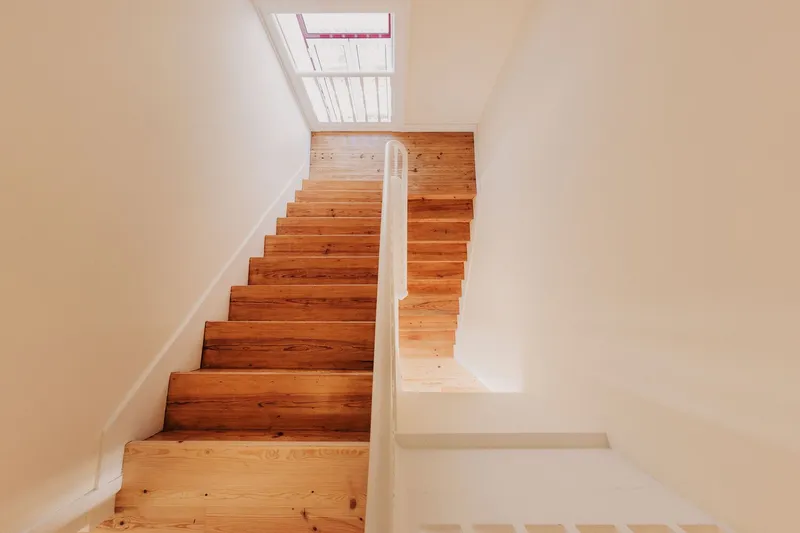
Meticulous wood restoration plays a pivotal role in this project, particularly in the skirting boards, shutters, and stair railings. The interplay of natural wooden tones with white-linen colored walls creates a serene, timeless ambiance.
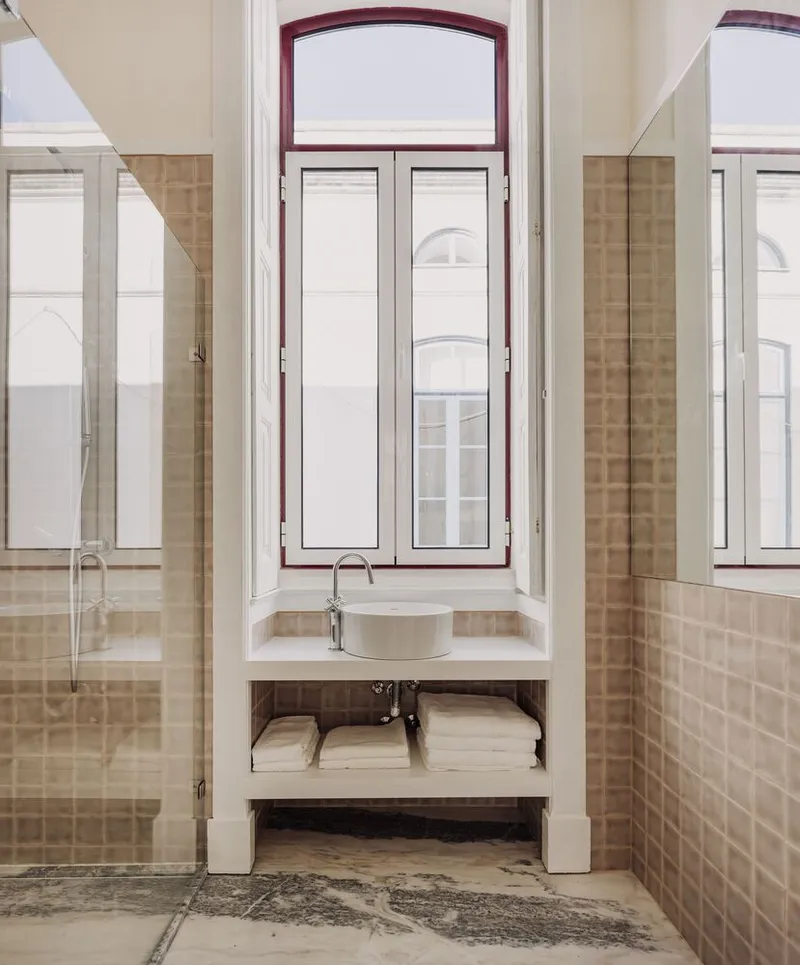
A bold contrast emerges in the kitchen, where dark green tiles infuse depth and vibrancy, while “Estremoz” marble stone is employed for the kitchen island and bathroom countertops, adding a refined elegance.

A Testament to Architectural Sensitivity
The Post Office House stands as a sensitive architectural intervention, prioritizing heritage conservation while embracing contemporary sustainability principles. By enhancing natural light, ventilation, and spatial fluidity, Cidade Branco Arquitectos has successfully revitalized a piece of Portuguese architectural history, ensuring its continued relevance for modern living
All Photographs are works of David Pereira



Popular Articles
Popular articles from the community


Conexión: Biophilic Design Reimagines High-Rise Living in Hong Kong
Conexión reimagines high-rise living in Hong Kong through biophilic design, green facades, shared spaces, daylight, water and nature within.

AL-JANNAH: Sustainable Architecture and Permaculture for Afghan Widows
AL-JANNAH uses sustainable architecture and permaculture to create resilient oasis of housing, learning, work and renewal for Afghan widows.

Co-Life: Senior Housing Design That Reconnects Older Adults With the City
Co-Life reimagines senior housing design through healing gardens, shared streets, workshops, and a sustainable community across generations.

The Ocean Hive: Sustainable Architecture for a Self-Sufficient Civilization at Sea
The Ocean Hive imagines sustainable architecture at sea, where modular habitats, algae, wave power and ocean waste sustain a growing colony.

Similar Reads
You might also enjoy these articles


Hodi-Mandai Geram
Project Function: Preservation and revitalization of the Intangible heritage and socio-spatial identity of the Hodi by Housing, Cultural Memory Center, Sacred Grove, landscape, local tourism economy


Olio Towers: A Mid-Rise for Performers That Fuses Housing, Rehearsal, and Stage
Located blocks from Houston's Theater District, this modular tower stacks living units around a central performance atrium.

Oasis: Modular Green Housing Carved into Dhaka's Urban Fabric
A shortlisted Plugin Housing entry reclaims unauthorized settlements in Dhaka with stepped concrete volumes, green roofs, and ventilation-driven design.

Black Hole: A Floating Megastructure for the Post-Physical Era
Emiliano Mazzarotto envisions a spherical, self-scaling arena where e-sports, digital hotels, and holographic stadiums replace traditional public space.


Explore Architecture Competitions
Discover active competitions in this discipline



Challenge to reimagine the Iron Throne


Photograph architecture without architects


Illustrate the lost glory of Angkor Wat - Render Challenge


Design challenge to reuse E-waste
Comments (0)
Please login or sign up to add comments
No comments yet. Be the first to comment!