
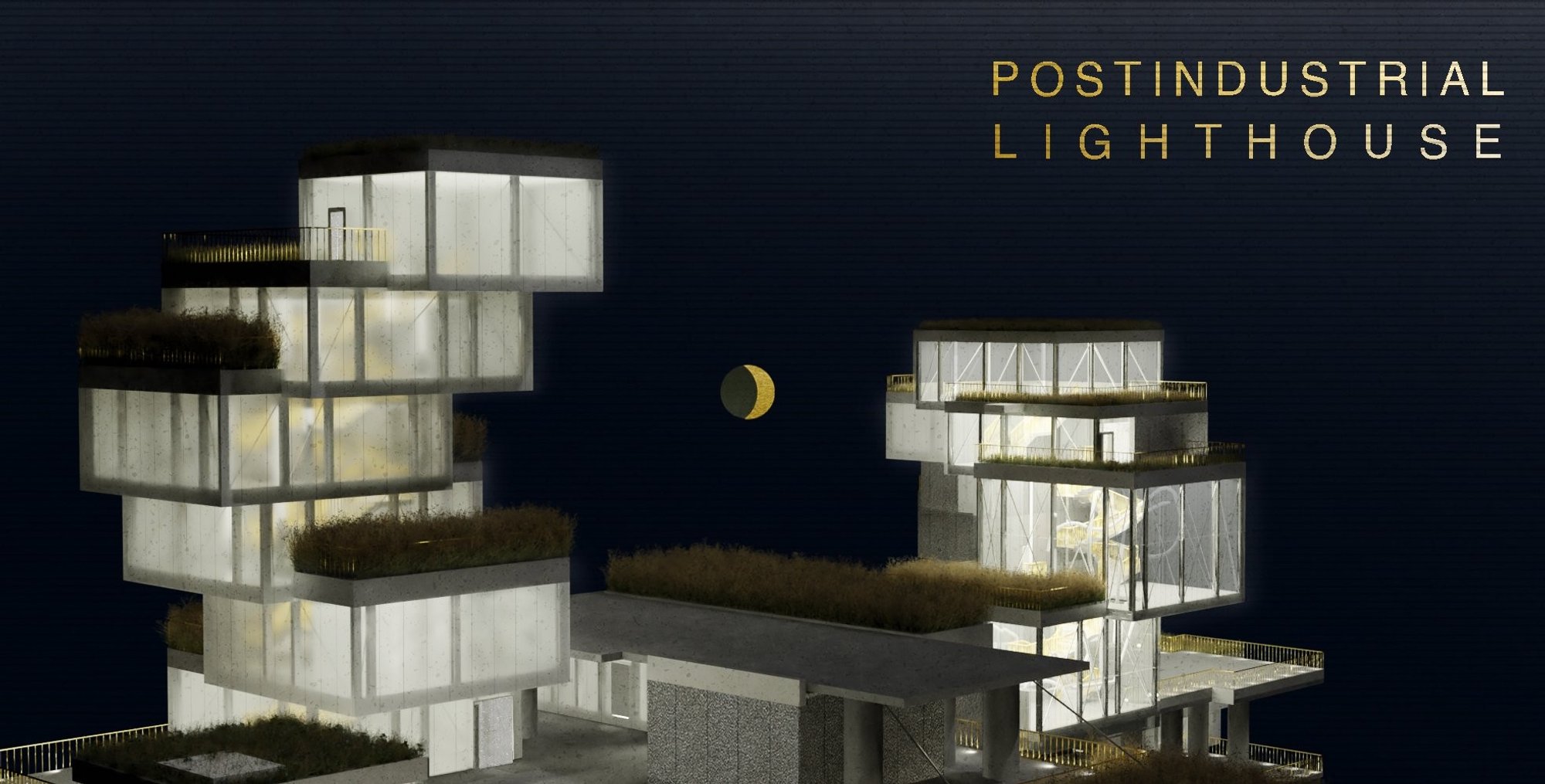
Postindustrial Lighthouse: Adaptive Reuse Architecture Transforming Offshore Oil Rigs into Cultural Landmarks
Transforming abandoned oil rigs into adaptive reuse architecture that blends art, tourism, research, and sustainable ocean living.

As the global conversation around sustainability continues to evolve, architects are increasingly exploring innovative ways to repurpose obsolete industrial infrastructure. Postindustrial Lighthouse, a visionary project by Katarzyna Chłodek and a Shortlisted Entry of Proximity Island 2019, demonstrates how adaptive reuse architecture can transform abandoned offshore oil platforms into vibrant cultural destinations.
Inspired by the movement of air and water and the rugged industrial character of offshore structures, the proposal redefines the future of decommissioned oil rigs. Instead of viewing these platforms as environmental liabilities, the project envisions them as catalysts for tourism, education, artistic expression, and environmental awareness.
The Challenge of Offshore Industrial Structures
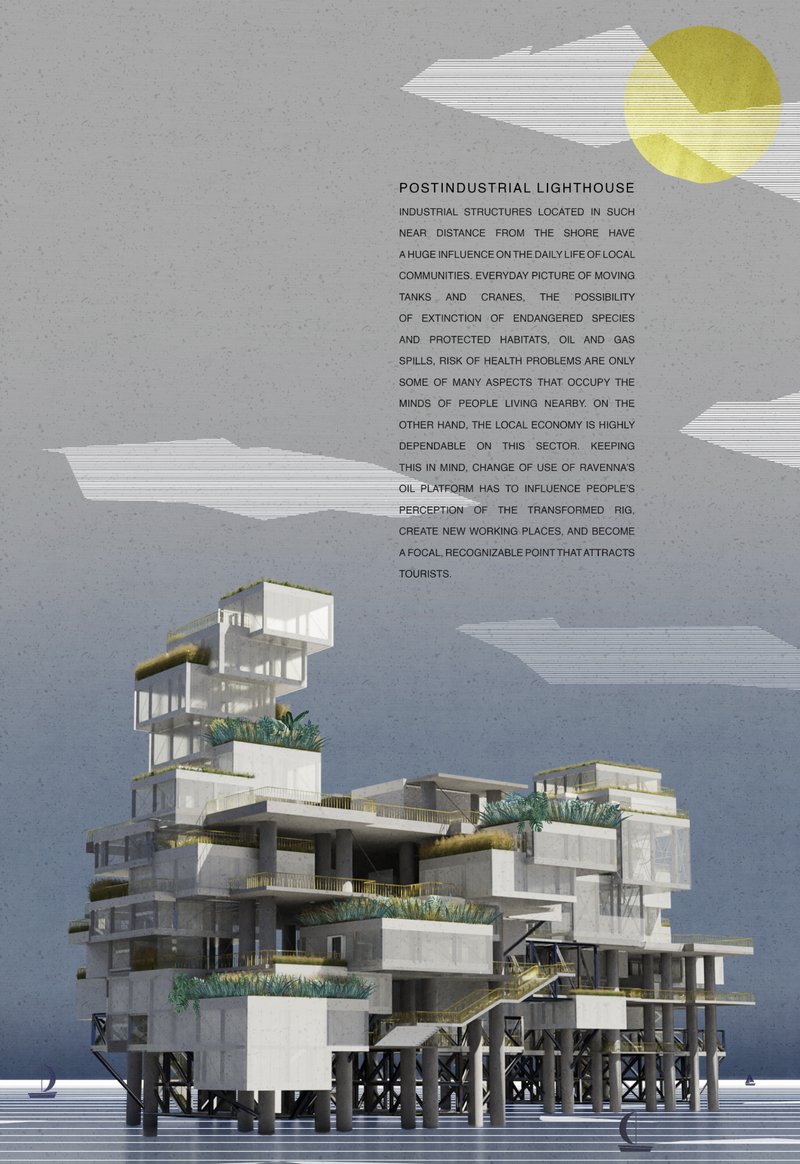
Oil platforms located near coastal communities have long shaped both local economies and public perception of the sea. While they provide employment and economic stability, they are also associated with environmental degradation, habitat disruption, oil spills, and industrial pollution.
Postindustrial Lighthouse responds directly to this complex relationship. Rather than erasing the presence of offshore infrastructure, the project transforms it into a recognizable landmark capable of generating new economic opportunities while changing public attitudes toward industrial heritage.
By introducing contemporary cultural functions, the design creates a destination that encourages visitors to reconnect with the sea through art, research, and reflection.
A Lighthouse for the Postindustrial Era
Unlike traditional lighthouses that guide ships, the Postindustrial Lighthouse serves as a symbolic beacon guiding society toward a more sustainable future.
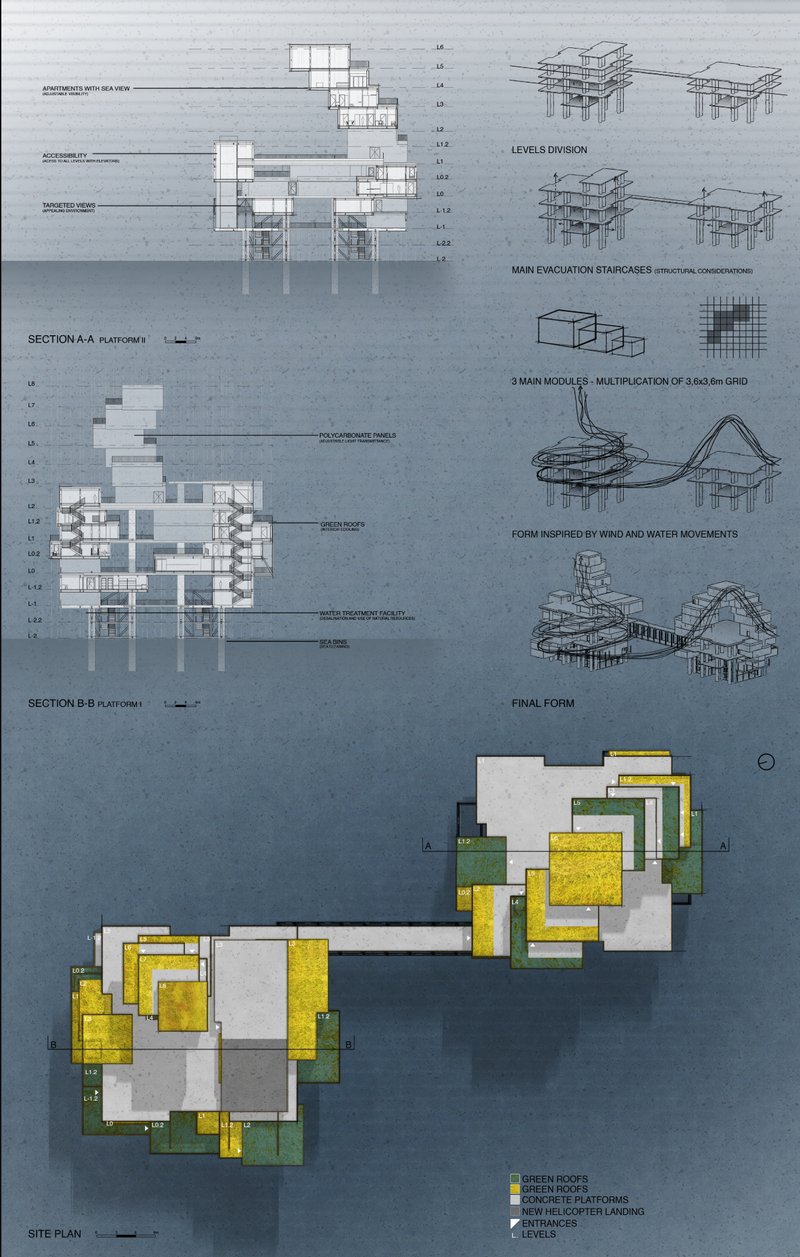
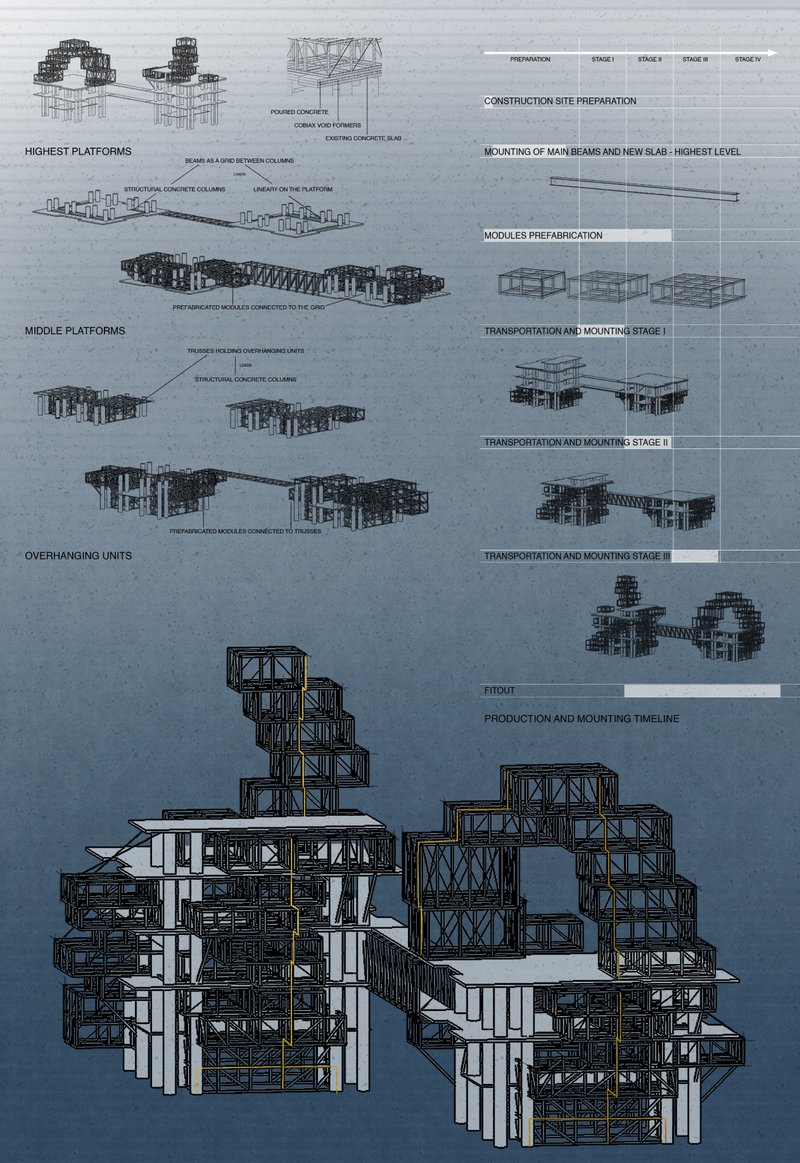
The design is conceived as a floating cultural ecosystem composed of two interconnected platforms. These structures host a diverse mix of public, educational, scientific, and residential functions while preserving the industrial identity of the original rig.
The project embraces the existing offshore framework while introducing a new architectural language defined by modularity, transparency, flexibility, and environmental responsiveness.
Architecture Inspired by Wind and Water
The project's formal expression emerges from careful observation of natural forces.
Wind currents and ocean movement become generators of architectural form, shaping the arrangement of modular volumes across the platforms. The resulting composition appears dynamic and fluid, echoing the ever-changing relationship between sea and sky.
Rather than creating a singular monolithic structure, the design utilizes protruding and stacked volumes that create visual movement and multiple viewing perspectives.
This approach generates an architecture that feels simultaneously industrial and organic, blending seamlessly with its maritime setting.
Modular Design Strategy
At the heart of the project lies a highly adaptable modular construction system.
Prefabricated volumes of varying dimensions are strategically combined and multiplied to create a diverse spatial experience. These modules extend beyond conventional grid arrangements, forming dramatic cantilevers, elevated terraces, observation points, and interconnected pathways.
The modular strategy offers several advantages:
Flexible Program Distribution
Different functions can be accommodated within standardized units while maintaining architectural cohesion.
Efficient Construction
Prefabricated components simplify transportation and assembly in challenging offshore environments.
Future Adaptability
The system allows spaces to evolve over time as community needs and program requirements change.
Sustainable Development
Modular construction reduces material waste and minimizes environmental impact during installation.
A Destination for Art, Science, and Community
Postindustrial Lighthouse is more than an architectural intervention. It is a multidisciplinary destination designed to attract a broad range of visitors.
Contemporary Art and Exhibition Spaces
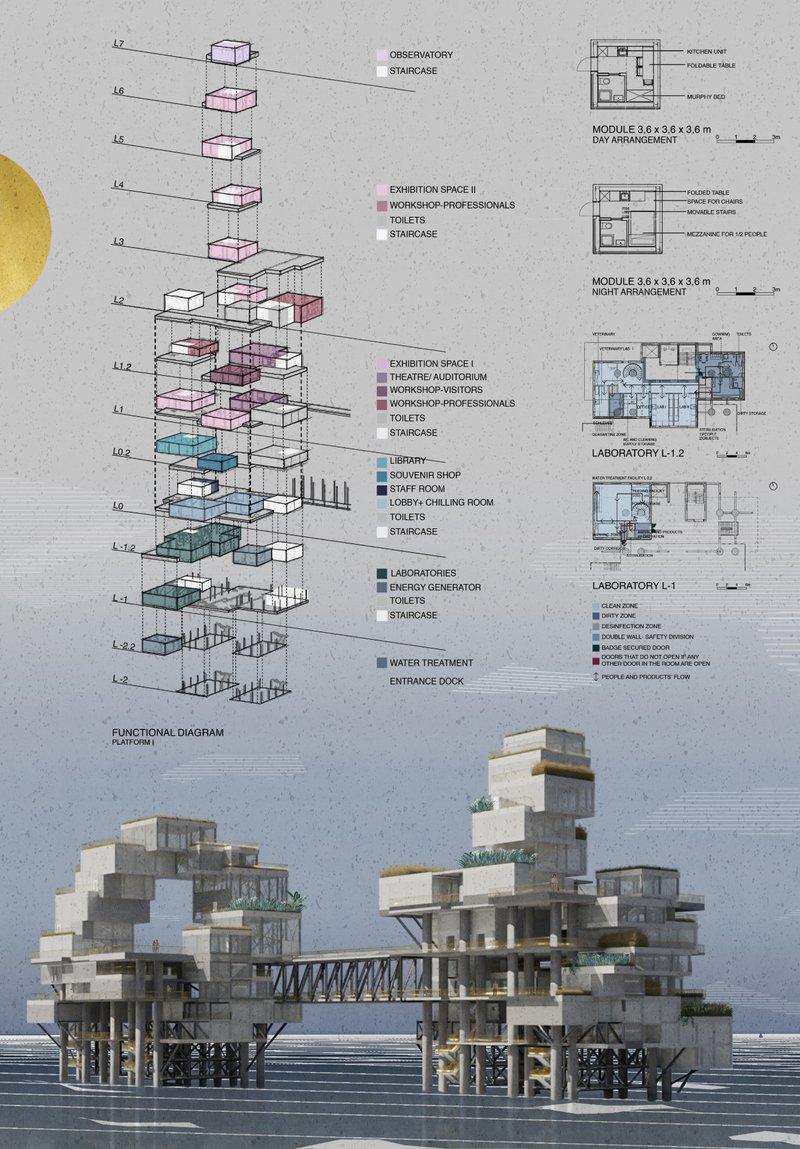
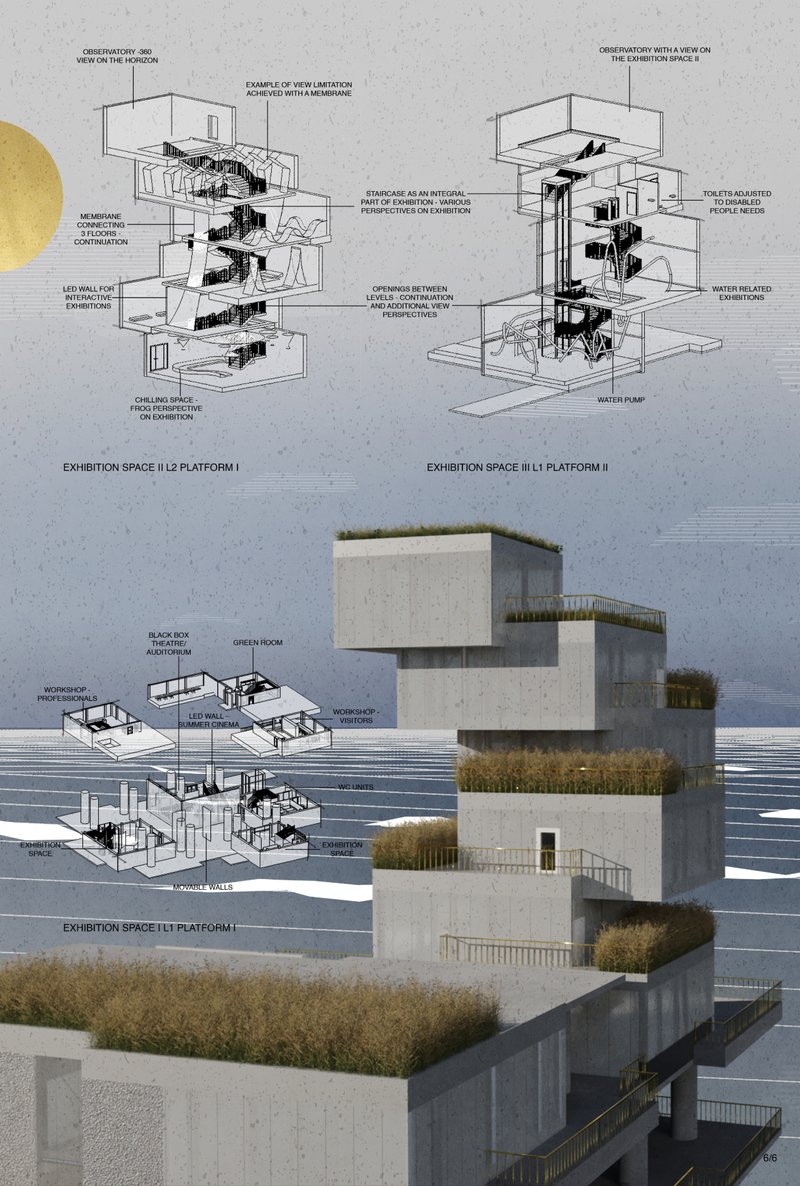
Three dedicated exhibition areas form the cultural core of the project. These galleries provide space for rotating installations, artistic experimentation, and immersive experiences that engage visitors with the surrounding marine environment.
Professional workshops connected to each exhibition area allow artists to develop projects directly on site.
Theatre and Auditorium
A black-box theatre and auditorium create opportunities for performances, lectures, screenings, and public discussions.
These spaces encourage cultural exchange and transform the isolated offshore setting into a platform for collective learning and creativity.
Visitor Workshops
Interactive workshops invite guests to participate in artistic creation, making the experience educational rather than purely observational.
Visitors can learn directly from professionals while engaging with contemporary artistic practices.
Marine Research and Environmental Education
The project also functions as a center for scientific investigation.
Dedicated laboratories provide marine biologists with facilities to conduct environmental research and monitor offshore ecosystems. These spaces support collaboration between researchers, educators, and visitors.
By integrating science into the visitor experience, the architecture promotes awareness of marine conservation and environmental stewardship.
Hospitality and Residential Facilities
The second platform introduces hospitality-oriented functions designed to support longer stays.
Sea View Apartments
Modular apartments provide visitors with immersive accommodation experiences overlooking the open sea.
Flexible layouts allow units to transition between daytime and nighttime configurations, maximizing spatial efficiency.
Restaurant and Community Kitchen
Dining facilities encourage social interaction among visitors, artists, researchers, and local communities.
A communal kitchen supports collaborative cooking experiences while strengthening social connections within the offshore environment.
Library and Reading Spaces
A library overlooking the sea offers a quieter experience focused on reflection, learning, and contemplation.
These spaces create opportunities for intellectual engagement within an extraordinary setting.
Greenhouses and Rooftop Landscapes
One of the most striking aspects of the proposal is the integration of vegetation throughout the structure.
Green roofs and elevated terraces soften the industrial appearance of the rig while improving environmental performance. These planted areas help regulate temperature, enhance biodiversity, and create welcoming outdoor environments.
The greenhouse program extends this strategy by supporting educational workshops focused on planting, environmental care, and sustainable living practices.
Yoga sessions and wellness activities further encourage visitors to develop a deeper connection with the surrounding landscape.
Material Strategy and Atmospheric Experience
The architectural character of Postindustrial Lighthouse emerges from a carefully selected palette of industrial and contemporary materials.
Polycarbonate Panels
Adjustable translucent polycarbonate façades allow occupants to control light levels throughout the day.
The material creates glowing interiors that shift in appearance according to changing weather conditions and sunlight intensity.
Aluminum Foam Panels
Where transparency is not required, aluminum foam panels provide durability while maintaining the project's industrial aesthetic.
Green Roof Systems
Vegetated surfaces introduce texture, color, and environmental performance, balancing the hard industrial materials.
Together, these elements create an atmosphere that feels simultaneously rugged, contemporary, and inviting.
Adaptive Reuse Architecture as a Model for Coastal Regeneration
The significance of Postindustrial Lighthouse extends beyond its specific site.
The project presents a compelling model for adaptive reuse architecture capable of addressing the growing number of decommissioned offshore structures worldwide. Rather than demolishing these industrial relics, architects can transform them into valuable cultural and environmental assets.
By combining art, research, hospitality, education, and sustainability within a single framework, the proposal demonstrates how obsolete infrastructure can generate new forms of public value.
A New Future for Offshore Heritage
Postindustrial Lighthouse challenges conventional assumptions about industrial abandonment. Instead of viewing offshore oil platforms as symbols of environmental exploitation, the project reimagines them as platforms for cultural production, ecological awareness, and social engagement.
Through modular design, sustainable strategies, and a strong connection to the forces of wind and water, Katarzyna Chłodek creates a visionary example of adaptive reuse architecture that transforms industrial heritage into a meaningful destination for future generations.
As a Shortlisted Entry of Proximity Island 2019, the project offers a powerful glimpse into how architecture can reshape perceptions, revitalize forgotten infrastructure, and create new opportunities at the intersection of culture, ecology, and innovation.




Popular Articles
Popular articles from the community

Kaffeebühnen: Coffee Shop Architecture Designed as a Civic Stage Between Vienna’s City and Park
Kaffeebühnen turns coffee shop architecture into a civic stage, linking Vienna’s park edge, urban life, warm timber yards, and coffee craft.

The Faith: Modular Architecture for Play, Learning, and Hope in Kutupalong Refugee Camp
A modular playground architecture project in Bangladesh where play, learning, safety, and hope rebuild childhood inside a refugee camp anew.
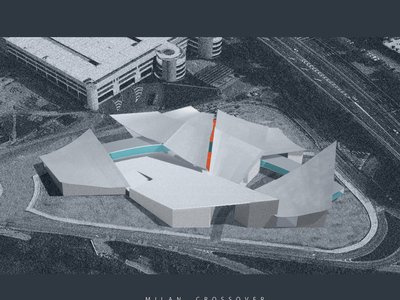
Milan Crossover: Sustainable Architecture for a New Fashion Culture in Milan
Milan Crossover transforms fashion culture through sustainable architecture, linking material libraries, remake studios, and public runways.
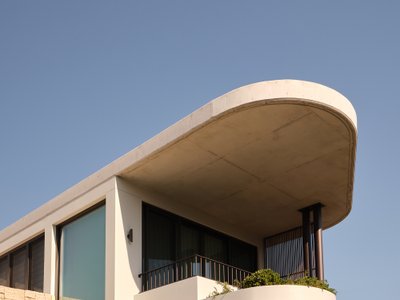
Stanton Architects Sculpts a Curving Family Home into Sydney's Inner West Fabric
Five Dock House uses cantilevers, curved concrete, and layered courtyards to carve out privacy on a tight suburban lot in Sydney.


Similar Reads
You might also enjoy these articles
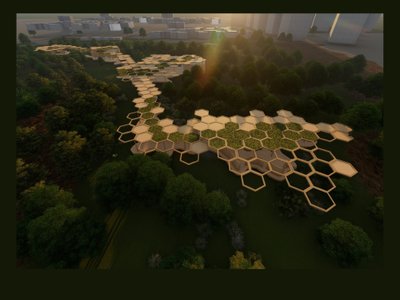
Eco Chapel: A Green Architecture Pavilion Designed in Symbiosis with the Forest
Eco Chapel uses green architecture to weave prayer, learning and reuse into a forest pavilion shaped by modular hexagonal canopies for life.
Kaffeebühnen: Coffee Shop Architecture Designed as a Civic Stage Between Vienna’s City and Park
Kaffeebühnen turns coffee shop architecture into a civic stage, linking Vienna’s park edge, urban life, warm timber yards, and coffee craft.
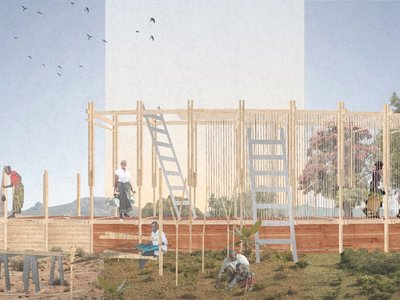
Healing Façade: Sustainable Architecture for Reforestation, Community, and Sacred Ecology in Ethiopia
Healing Façade reimagines sustainable architecture as a living wall that restores soil, catches water and renews Ethiopia's forest churches.


Urban Forest: A Vertical Ecosystem for 5,000 Workers in Singapore's Changi Business Park
Radially stacked pods and layered green decks turn a 7-acre plot into 47 acres of ecological workspace projected for 2040.

Explore Sustainable Design Competitions
Discover active competitions in this discipline




The Global Benchmark for Architecture Dissertation Awards

Challenge to design a portable theatre

Challenge to design a portable music platform

Challenge to design an open learning module for the elderly
Comments (0)
Please login or sign up to add comments
No comments yet. Be the first to comment!