

Prat-Valdés House by Raimundo Gutierrez Frías
Elevated timber house in Matanzas with panoramic sea views, modular design, and sustainable materials blending into the coastal forest landscape.


Elevated Coastal Living: A House Designed to Frame the Sea
The Prat-Valdés House, designed by Raimundo Gutierrez Frías, redefines the relationship between architecture and landscape along the dramatic coast of Matanzas, Chile. Situated on a plot positioned slightly inland from the shoreline, the house was conceived to preserve expansive ocean views while treading lightly on the sloped terrain.
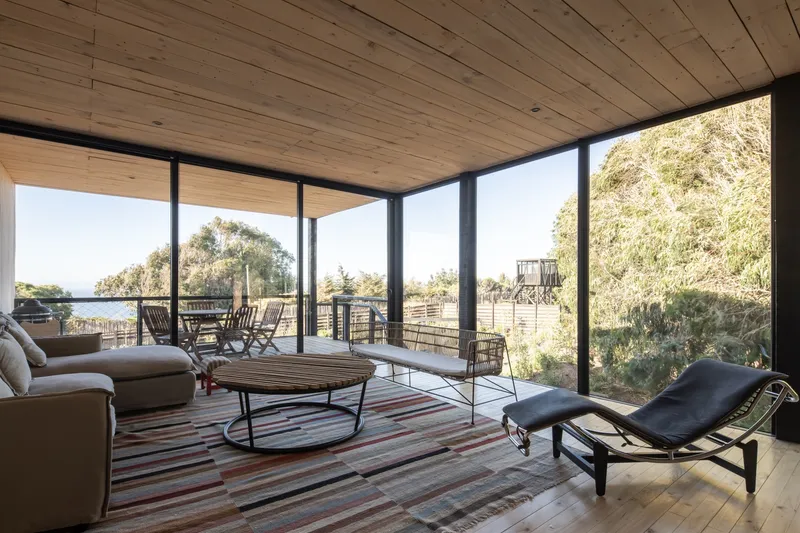
Floating Over the Landscape
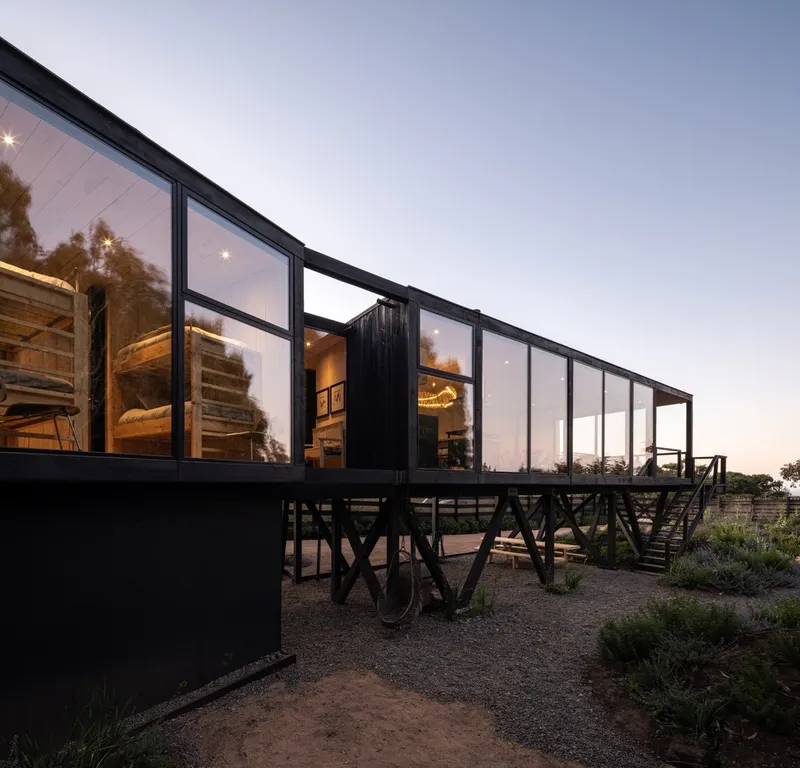
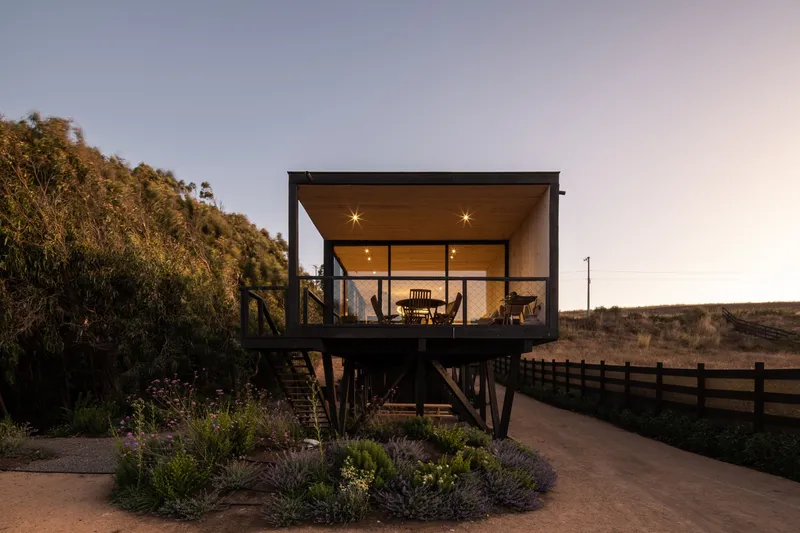
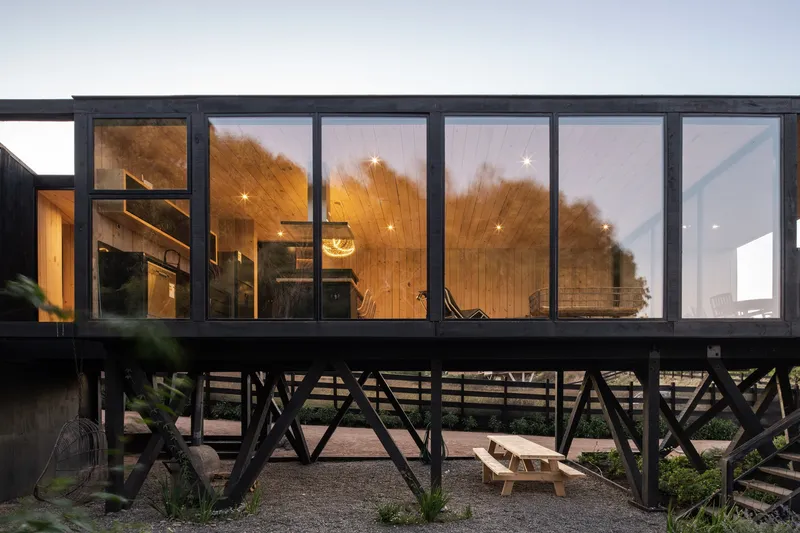
In response to the site's natural topography and the client’s desire for uninterrupted views of the Pacific Ocean, the house is elevated above ground level on a structural framework of wooden pillars and diagonal supports. This strategy not only minimizes environmental impact but also amplifies visual connectivity to the sea from every communal space.
A suspended design allows the residence to appear as though it floats above the terrain. Below the main living volume, a versatile and partially enclosed area was left open for future expansions, including a laundry room, storage module, and an outdoor kitchen with bathroom facilities—emphasizing phased, adaptable living.
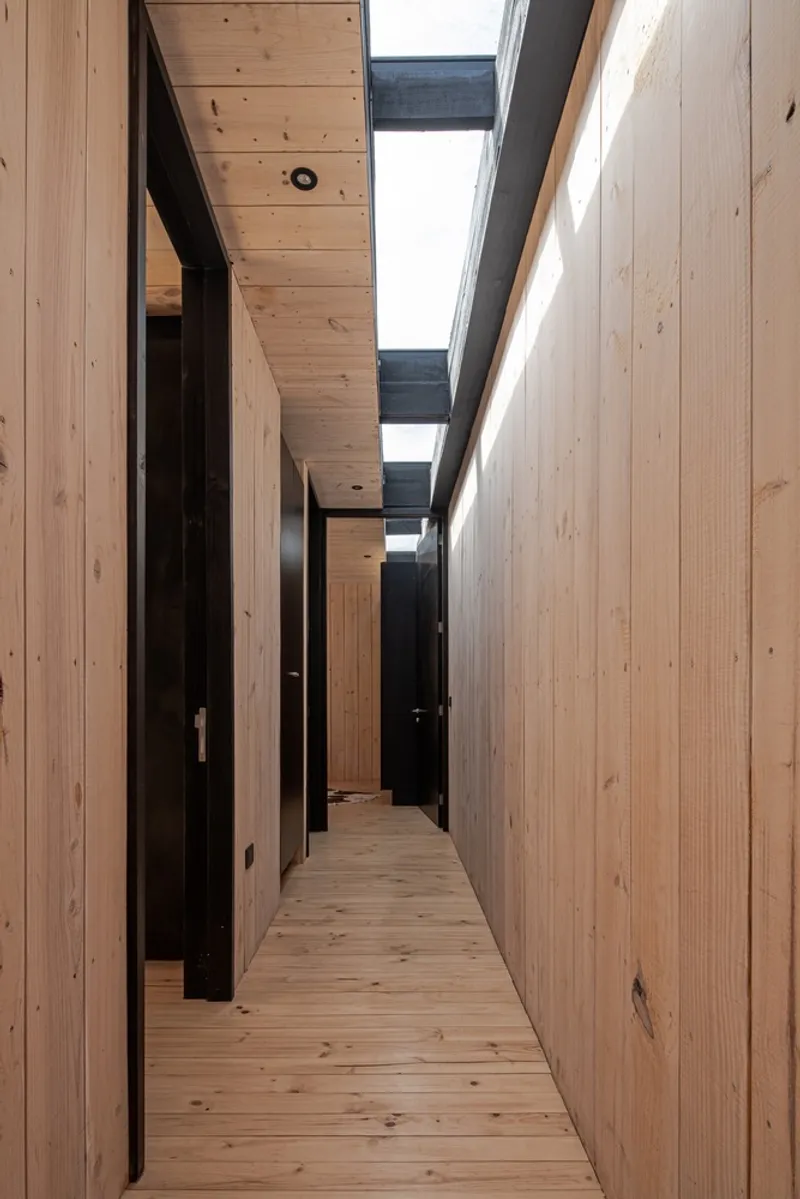
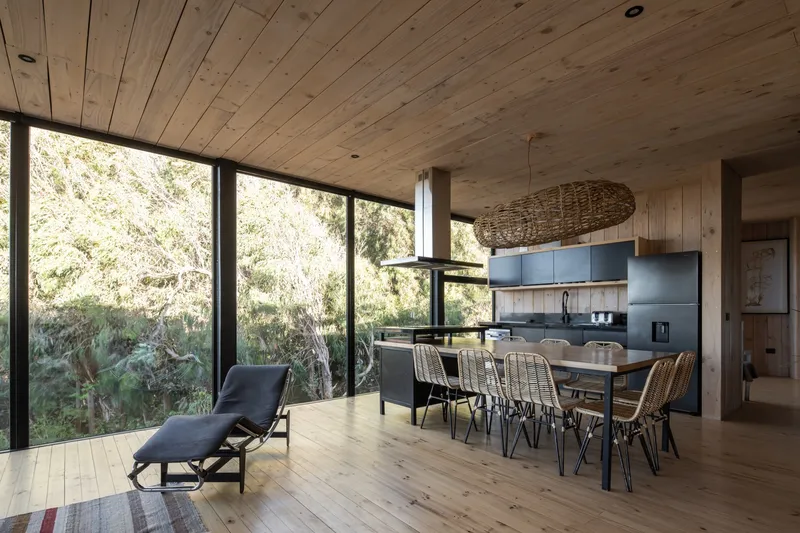
Strategic Orientation and Site Integration
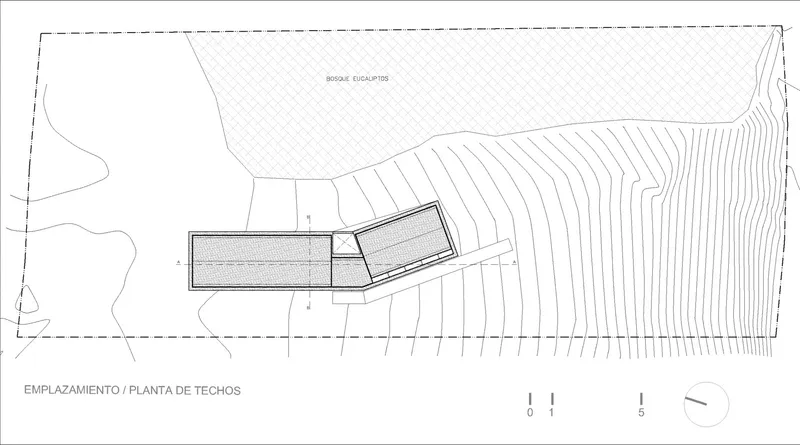
Set approximately four meters from the western boundary, the home follows the topographic contours of the land, maximizing sunlight exposure and passive climatic comfort. The orientation intentionally aligns the common areas—living room, dining, kitchen, and terrace—toward the ocean, creating a panoramic experience while shielding private areas behind a more solid façade.
The plan encourages circulation around and beneath the structure, allowing unobstructed access to outdoor spaces and preserving natural ground cover.
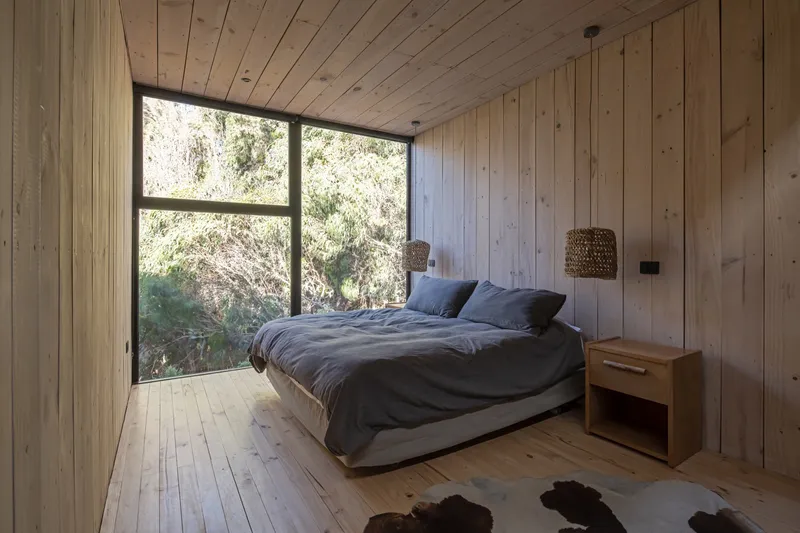
Light, Wind, and Privacy Considerations
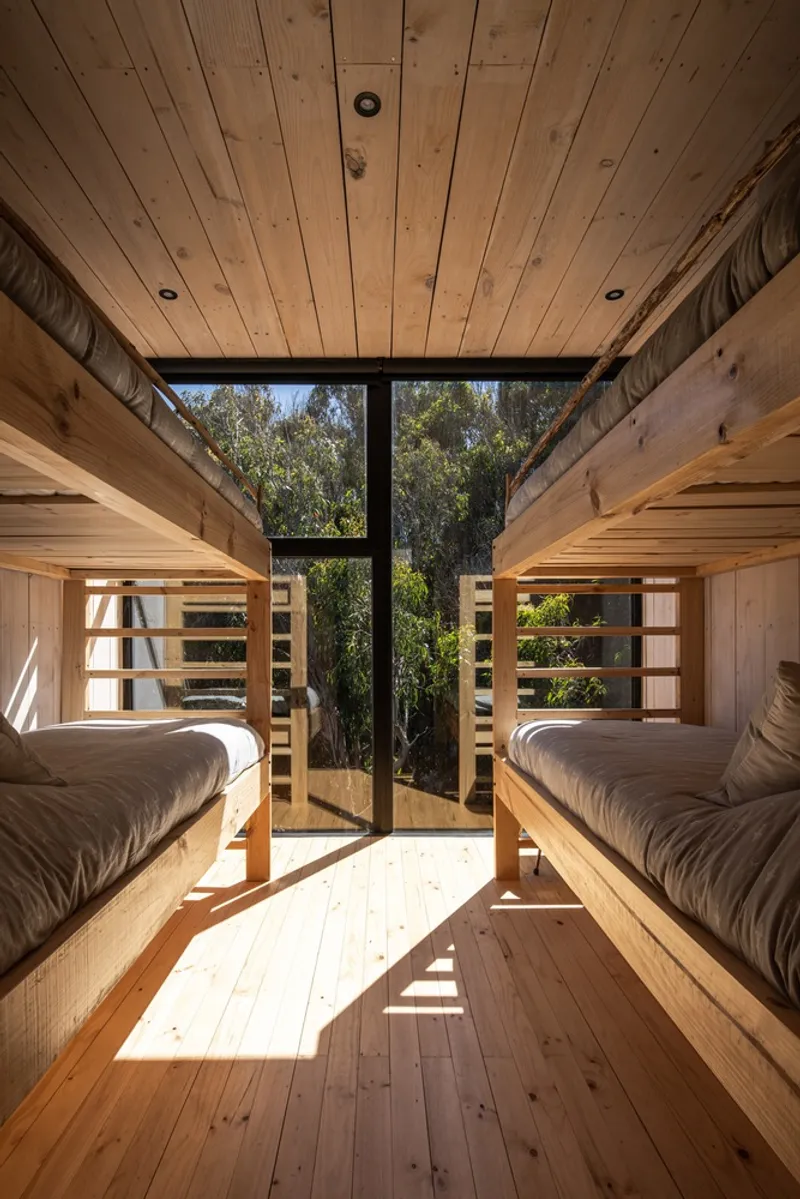
To manage strong western coastal winds and provide privacy from neighboring plots, the house features a hermetic south façade, punctuated only by a narrow entrance walkway. In contrast, the north and east elevations are fully glazed, offering abundant natural light, solar gain during colder months, and captivating views of the Pacific Ocean to the north and a dense eucalyptus forest to the east.
This juxtaposition of openness and enclosure enables a balanced spatial atmosphere, where privacy and exposure are carefully negotiated through architectural form.
Functional Layout and Modularity
Internally, the house is functionally divided by a central entrance hall, which separates public and private zones. On the north side, the kitchen, dining, and living areas flow seamlessly into an expansive terrace, blurring the boundary between interior and exterior. Meanwhile, the southern wing accommodates two bedrooms and a bathroom, forming a quiet retreat insulated from the wind and neighbors.
Sustainable Structure and Materiality
The home’s primary structure is composed of a steel frame, supporting wide spans without intermediate columns, while an interior pine framework ensures modular construction efficiency. Designed in 3.20-meter segments—the standard industrial length of pine—the modular grid minimizes material waste and streamlines assembly.
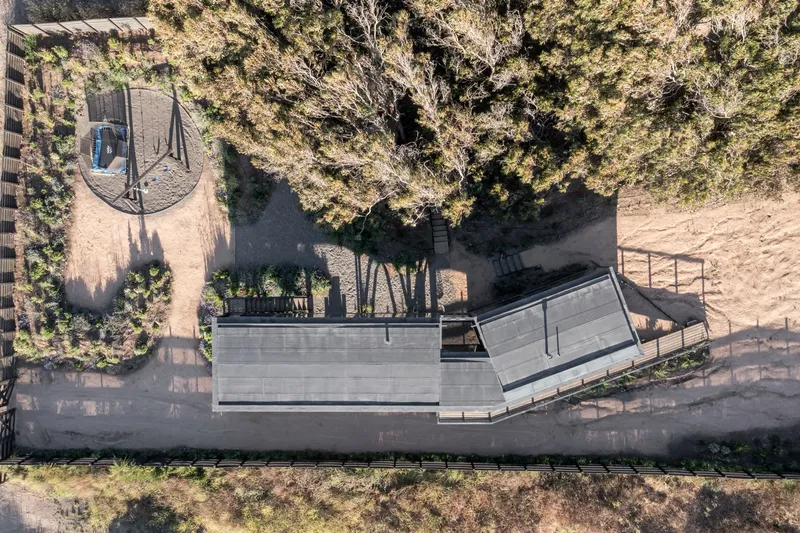
Material finishes reflect a thoughtful dialogue between light and shadow, warmth and boldness. The interiors and terraces feature light-stained pine cladding, evoking serenity and warmth. In contrast, the exterior is clad in black-painted pine, helping the home recede visually into its forested backdrop and withstand the coastal climate.
A Minimal Footprint with Maximum Connection
The Prat-Valdés House is a celebration of site-responsive design, modular construction, and coastal living. With its elevated stance, minimal land disturbance, and immersive views, it offers a refined and respectful approach to building in nature—balancing architecture and landscape in perfect harmony.
All Photographs are works of Nico Saieh


Popular Articles
Popular articles from the community


longwave studio Reorganizes a 112 m² Tainan Apartment Around the Daily Routines of a Family and Two Cats
In Tainan, Taiwan, birch plywood, rust-red furniture and a freestanding plaster wall link arrival, storage, work and family life in one apartment.

GROUP A Strips a 1969 Rotterdam Harbor Headquarters to Its Frame and Wraps It in Timber Louvers
In Rotterdam's M4H harbor district, Ferro Offices reuses a 1969 frame, adds one timber storey and reaches BREEAM-NL Outstanding.

Jaramillo Van Sluys Arquitectura and Urbanismo Turn a Demolished Registry Lot in Quito into an Orchard Plaza
In Quito's Centro Histórico, a 2,800 m² plaza exposes the San Agustín convent wall and redraws its lost Augustinian orchard in volcanic stone.

David Macias Steps a Doorless Stone and Plaster House Down a Tropical Colombian Hillside
In the humid hills of Colombia, Threshold House replaces the front door with an open void and terraces its 850 m² down the slope instead of fighting it.

Similar Reads
You might also enjoy these articles


Hodi-Mandai Geram
Project Function: Preservation and revitalization of the Intangible heritage and socio-spatial identity of the Hodi by Housing, Cultural Memory Center, Sacred Grove, landscape, local tourism economy


Olio Towers: A Mid-Rise for Performers That Fuses Housing, Rehearsal, and Stage
Located blocks from Houston's Theater District, this modular tower stacks living units around a central performance atrium.

Oasis: Modular Green Housing Carved into Dhaka's Urban Fabric
A shortlisted Plugin Housing entry reclaims unauthorized settlements in Dhaka with stepped concrete volumes, green roofs, and ventilation-driven design.

Black Hole: A Floating Megastructure for the Post-Physical Era
Emiliano Mazzarotto envisions a spherical, self-scaling arena where e-sports, digital hotels, and holographic stadiums replace traditional public space.

Explore Architecture Competitions
Discover active competitions in this discipline

Challenge to reimagine the Iron Throne

Photograph architecture without architects

Illustrate the lost glory of Angkor Wat - Render Challenge

Design challenge to reuse E-waste
Comments (0)
Please login or sign up to add comments
No comments yet. Be the first to comment!