
Proximity Island: Adaptive Reuse Architecture Reimagines an Oil Rig into a Marine Sanctuary
An adaptive reuse architecture project transforming a former oil rig into a sustainable marine research hub and immersive Adriatic Sea destination.

Proximity Island by Lynnette Freidin and Natalie Freidin
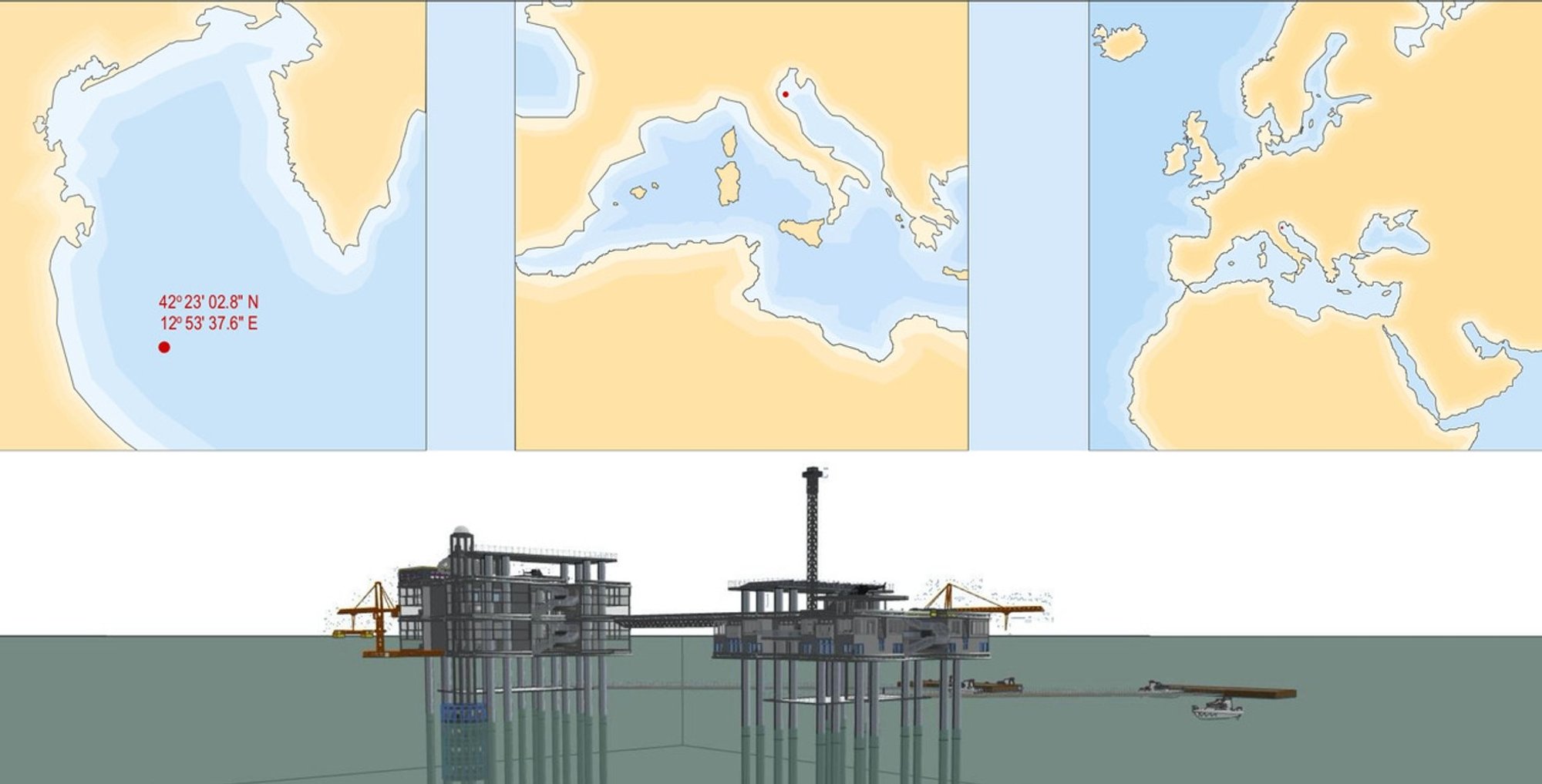
As climate-conscious design reshapes the future of architecture, adaptive reuse architecture has emerged as one of the most powerful strategies for sustainable transformation. Proximity Island, designed by Lynnette Freidin and Natalie Freidin, explores this vision through the radical conversion of a decommissioned oil rig into a thriving marine sanctuary, research center, and cultural destination in the Adriatic Sea.
Rather than demolishing obsolete offshore infrastructure, the project proposes a new relationship between industry, ecology, and human occupation. Positioned within the vast openness of the Adriatic Basin, the former oil platform becomes an artificial island where architecture, marine ecosystems, scientific exploration, and tourism coexist within a carefully balanced environmental framework.
The proposal reimagines industrial remnants not as environmental scars, but as opportunities for regeneration. Through sustainable architectural interventions and minimal-impact construction methods, Proximity Island transforms an isolated oil rig into a dynamic marine habitat that reconnects people with the sea.
Adaptive Reuse Architecture in the Adriatic Sea
The project is situated deep within the Adriatic Sea, far from conventional urban centers and coastal developments. This isolation becomes one of the project’s greatest architectural strengths. Visitors arriving by ferry encounter a monumental industrial structure emerging from the horizon, suspended between sea and sky.
Unlike traditional tourist destinations, Proximity Island offers an experience centered on immersion, observation, and environmental awareness. The architecture embraces the dramatic conditions of the open sea while preserving the industrial identity of the original structure.
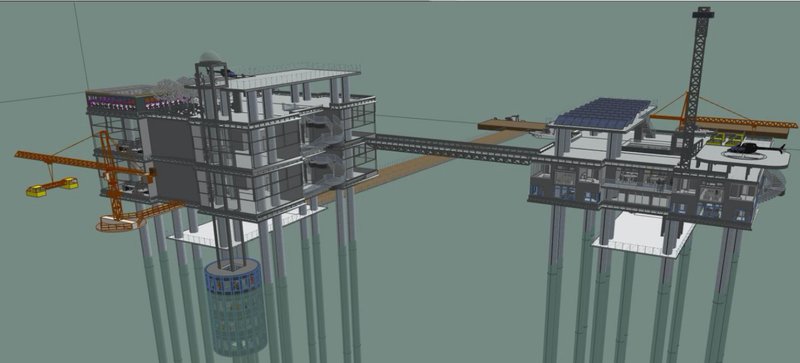
Instead of concealing the oil rig’s mechanical past, the proposal integrates cranes, steel frameworks, docks, and elevated circulation systems into the new spatial narrative. Existing infrastructure becomes the foundation for museums, laboratories, housing units, public gathering spaces, and underwater viewing platforms.
This approach aligns closely with contemporary adaptive reuse architecture principles, where sustainability extends beyond energy performance into material conservation and embodied carbon reduction.
Museum of Open Waters
At the heart of the project lies the Museum of Open Waters, a public cultural institution dedicated to marine ecology, oceanic exploration, and environmental education.
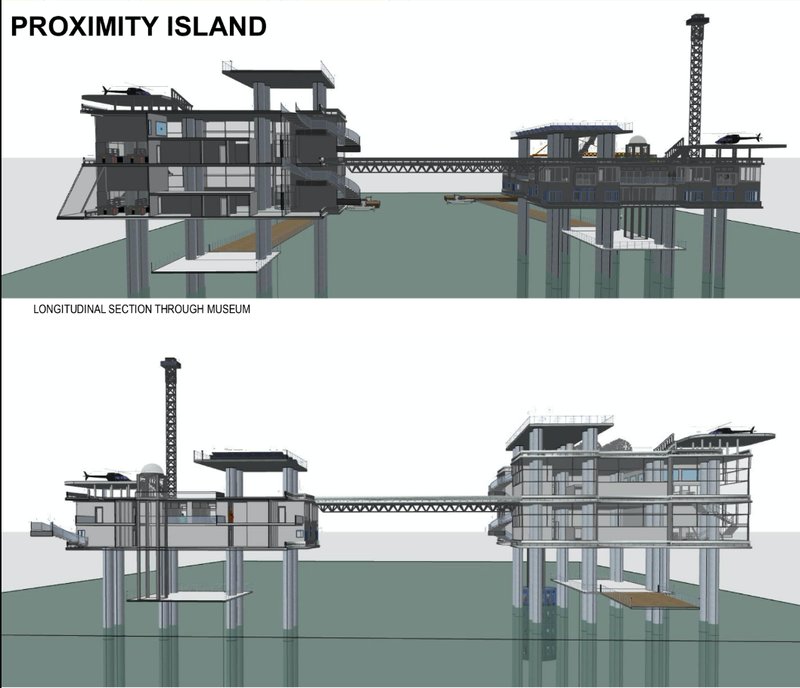
The museum occupies one of the repurposed platforms and creates a layered journey through different relationships with the Adriatic Sea. Visitors move vertically through exhibition spaces, laboratories, observation decks, rooftop gardens, and submerged viewing chambers.
The architecture choreographs changing perceptions of the sea across multiple levels:
- Above the water, expansive terraces and stargazing platforms frame uninterrupted views of the horizon.
- At sea level, exhibition spaces and research labs connect visitors with marine science.
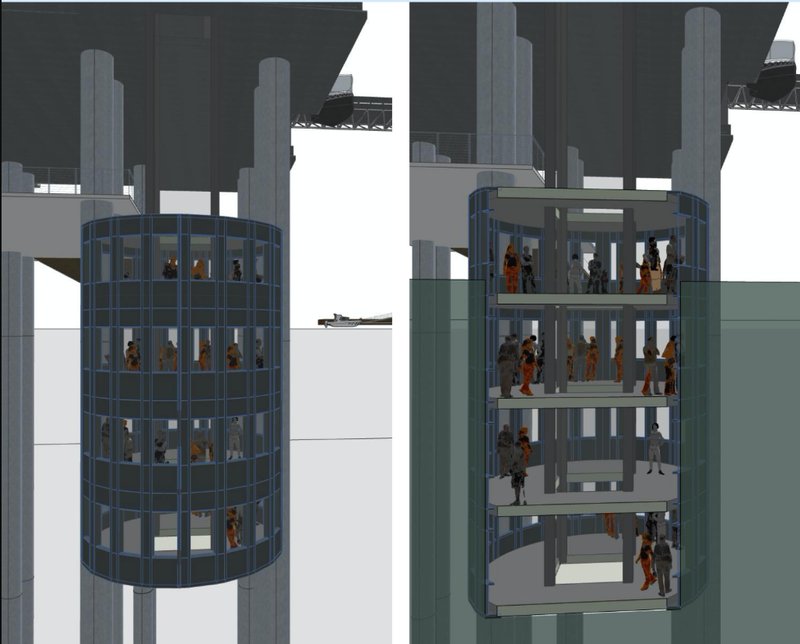
- Below the surface, underwater observatories immerse occupants within the ecosystem itself.
The museum transforms the oil rig from a structure of extraction into a platform for learning and ecological awareness.
Large electrochromatic glass facades regulate interior environmental conditions while preserving panoramic ocean views. During warm weather, operable openings allow sea breezes to naturally ventilate the interiors, reducing dependence on mechanical systems.
The building’s spatial organization encourages slow exploration. Stairways spiral around observation towers, rooftop gardens soften the industrial environment, and viewing platforms frame moments of solitude above the endless sea.
A Marine Research and Ecotourism Hub
Beyond its cultural role, Proximity Island functions as an active marine research facility.
The project recognizes that abandoned offshore structures often evolve into artificial reefs that support dense marine ecosystems. Rather than disrupting this ecological process, the design strengthens it through environmental stewardship and scientific infrastructure.
Marine laboratories integrated within the museum support underwater exploration using unmanned underwater vehicles (UUVs). Scientists and visiting researchers document marine biodiversity surrounding the structure, while live feeds from underwater expeditions are broadcast into public viewing galleries.
This blending of public education and scientific research creates an architecture of participation. Visitors do not merely observe the sea from afar; they engage with ongoing ecological investigations happening beneath them.
The underwater observation chamber, described as a “reverse aquarium,” becomes one of the project’s defining spatial experiences. Instead of marine life being confined behind glass, humans descend into the ocean environment itself, becoming temporary observers within an active ecosystem.
The proposal challenges traditional boundaries between architecture and landscape, suggesting that the ocean itself becomes part of the building.
Sustainable Living Above the Sea
A second platform houses residential units for students, researchers, staff, and long-term visitors.
The living quarters prioritize shared amenities, social interaction, and efficient use of space while maintaining privacy for residents. Communal gathering spaces encourage collaboration among researchers and guests, creating a temporary floating community within the Adriatic Sea.
The residential platform remains visually and physically connected to the museum through elevated sky bridges while preserving a distinct sense of domesticity. Shared lounges, recreation areas, workspaces, and rooftop gardens soften the harsh industrial character of the original structure.
Solar farms integrated into the rooftops provide renewable energy, while greenhouse spaces contribute to local food production and environmental comfort.
This strategy reflects broader architectural conversations around resilient offshore living, floating infrastructure, and climate-responsive habitation.
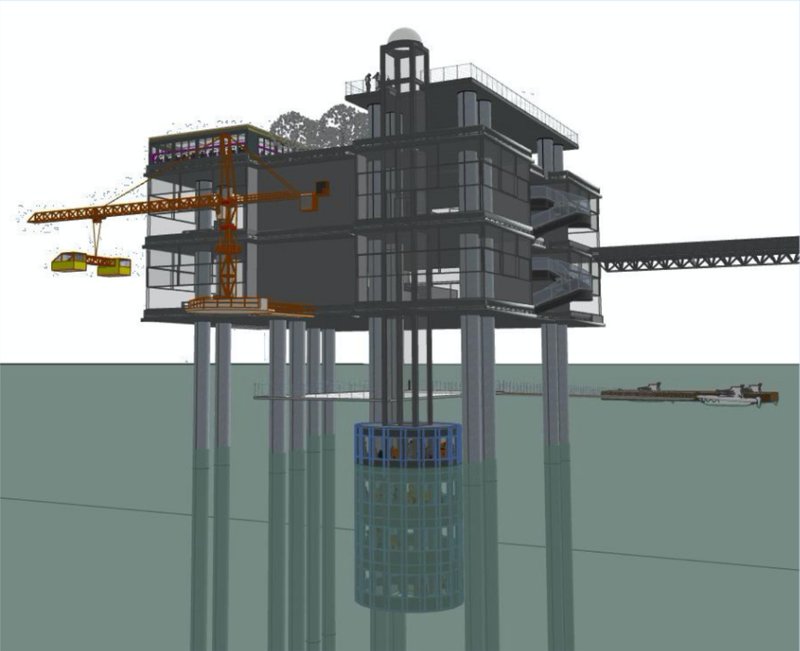
Architecture Between Sky and Sea
One of the project’s strongest qualities is its atmospheric experience.
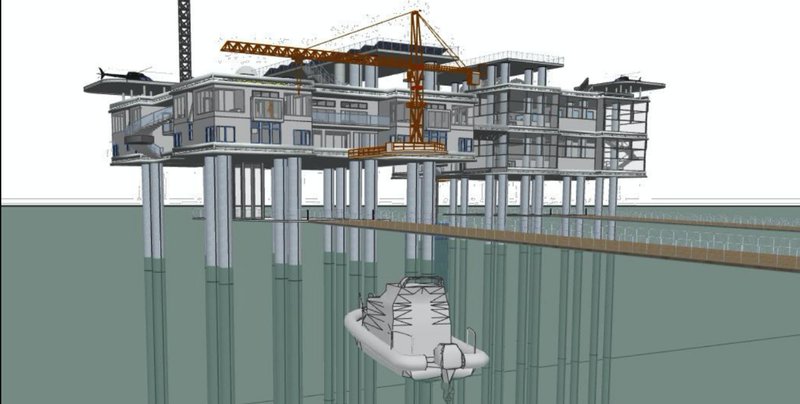
The architecture continuously negotiates between exposure and enclosure, openness and intimacy. Visitors encounter shifting perspectives of the Adriatic Sea through layered circulation routes, suspended walkways, elevated observation decks, and underwater chambers.
At the uppermost level, a stargazing platform creates a direct connection between oceanic and celestial landscapes. Free from urban light pollution, the platform allows visitors to experience the night sky in extraordinary clarity.
This relationship between sea and sky becomes central to the project’s identity. The architecture does not dominate its surroundings but instead frames and amplifies natural phenomena.
Even the industrial remnants contribute to this narrative. Cranes become sculptural landmarks against the horizon, while the oil rig’s vertical structure acts as a viewing device for observing changing environmental conditions.
Minimal Intervention, Maximum Transformation
The proposal demonstrates how adaptive reuse architecture can extend the lifespan of obsolete infrastructure while reducing environmental impact.
Rather than replacing the oil rig entirely, the project works within its existing structural framework. This strategy minimizes waste, preserves embodied energy, and reduces large-scale marine construction.
The project also acknowledges the ecological role that offshore structures can unintentionally develop over time. Marine species colonize submerged foundations, creating artificial reefs that support complex underwater ecosystems.
Through careful intervention, Proximity Island preserves and strengthens these habitats instead of destroying them.
This ecological sensitivity positions the project within emerging architectural discussions surrounding regenerative infrastructure and ocean-based sustainability.
Reimagining Offshore Infrastructure
Historically, oil rigs have symbolized extraction, environmental exploitation, and industrial expansion. Proximity Island reframes this narrative entirely.
The project proposes a future where obsolete industrial infrastructure can evolve into spaces of ecological restoration, scientific discovery, and cultural engagement.
By combining adaptive reuse architecture with marine conservation, renewable energy systems, ecotourism, and research facilities, the proposal demonstrates how architecture can actively participate in environmental healing.
Rather than existing as isolated industrial artifacts, former oil rigs become catalysts for new ecological and social relationships.
A Vision for Future Ocean Architecture
As rising sea levels, resource depletion, and climate instability continue to challenge conventional urban development, architects are increasingly exploring offshore environments as sites for experimentation and resilience.
Proximity Island contributes to this conversation through a compelling vision of architecture that is immersive, regenerative, and environmentally responsive.
The project imagines a future where architecture no longer exists in opposition to nature, but instead operates as an extension of ecological systems.
Through adaptive reuse architecture, Lynnette Freidin and Natalie Freidin transform a former oil rig into a living marine sanctuary that bridges industry, science, tourism, and environmental stewardship within the vast landscape of the Adriatic Sea.



Popular Articles
Popular articles from the community

Kerry Kounnapis Packs 800 Daily Coffees into a 43-Square-Metre Melbourne Laneway Bar
Palace Coffee channels Pellegrini's and European standing bars through oxide-red steel and spotted gum timber in a Ridgway Place sliver.

IKC de Geluksvogel: Sustainable School Architecture Designed for Free Movement and Digital Learning
IKC de Geluksvogel turns sustainable school architecture into a flexible Maastricht campus for digital learning, nature, and free movement.
The Faith: Modular Architecture for Play, Learning, and Hope in Kutupalong Refugee Camp
A modular playground architecture project in Bangladesh where play, learning, safety, and hope rebuild childhood inside a refugee camp anew.
Reincarnation Weaves a Three-Story Retreat into the Green Landscape of Rural Bangladesh
Ara Manor in Narsingdi dissolves the line between domestic architecture and its lush surroundings through screens, courtyards, and planted rooftops.


Similar Reads
You might also enjoy these articles
Eco Chapel: A Green Architecture Pavilion Designed in Symbiosis with the Forest
Eco Chapel uses green architecture to weave prayer, learning and reuse into a forest pavilion shaped by modular hexagonal canopies for life.
Kaffeebühnen: Coffee Shop Architecture Designed as a Civic Stage Between Vienna’s City and Park
Kaffeebühnen turns coffee shop architecture into a civic stage, linking Vienna’s park edge, urban life, warm timber yards, and coffee craft.
Healing Façade: Sustainable Architecture for Reforestation, Community, and Sacred Ecology in Ethiopia
Healing Façade reimagines sustainable architecture as a living wall that restores soil, catches water and renews Ethiopia's forest churches.


Urban Forest: A Vertical Ecosystem for 5,000 Workers in Singapore's Changi Business Park
Radially stacked pods and layered green decks turn a 7-acre plot into 47 acres of ecological workspace projected for 2040.


Explore Sustainable Design Competitions
Discover active competitions in this discipline




The Global Benchmark for Architecture Dissertation Awards

Design challenge to reuse E-waste
Comments (0)
Please login or sign up to add comments
No comments yet. Be the first to comment!