

Public Swimming Pool & Spa Renovation in Brittany by RAUM: A Modern Revival of Community Architecture
A sustainable renovation blending old and new, this public pool in Brittany reconnects architecture with nature, community, and contemporary design.


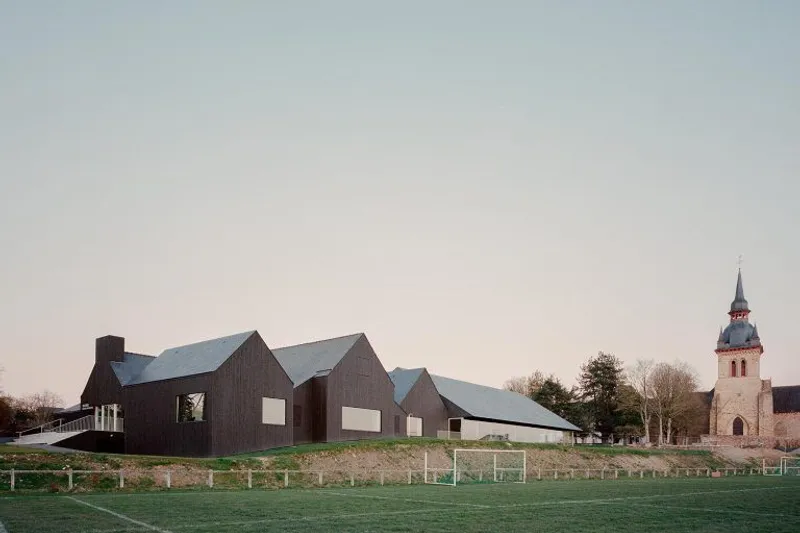
Located in the picturesque town of Saint-Méen-le-Grand, France, the Public Swimming Pool & Spa underwent a remarkable transformation by French architectural firm RAUM. This 2022 renovation project reimagines the aging community pool into a modern, energy-efficient, and inclusive public space that responds to contemporary needs while preserving the original character of the site.
A Dual-Purpose Project: Renovation and Expansion
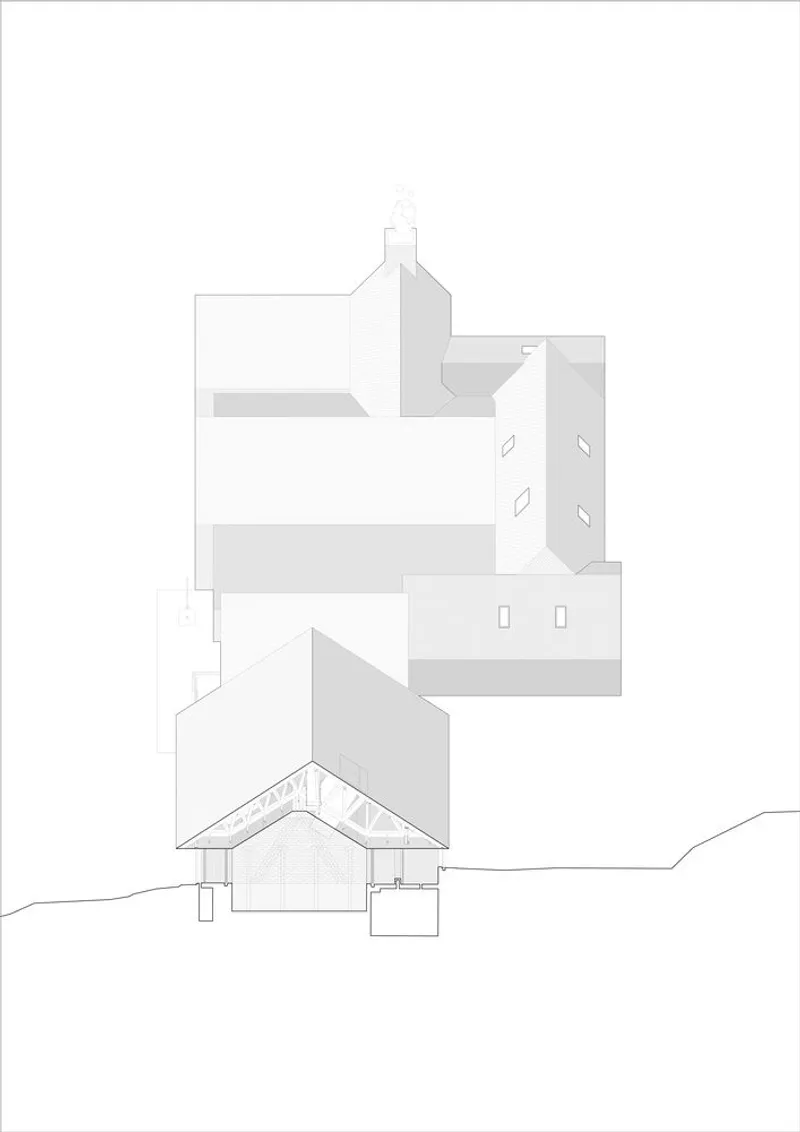
The brief for RAUM was twofold: to comprehensively renovate the existing facility, including structural frames, mechanical systems, and insulation, and to extend the complex by adding a new pool that complements the original architecture and landscape. The result is a facility that balances preservation, sustainability, and innovation.

Key Design Principles
RAUM approached the project with an emphasis on resource-conscious design, aligning with modern ecological responsibilities. The architectural strategy was guided by three foundational principles:
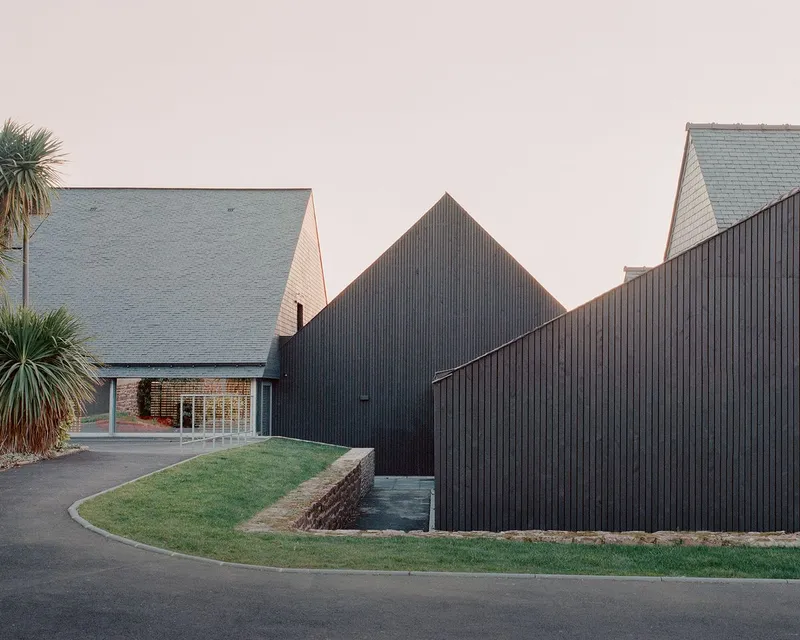
- Contemporary IntegrationA sensitive contemporary approach merges the new and old volumes, creating a harmonious dialogue between architectural heritage and modernity.
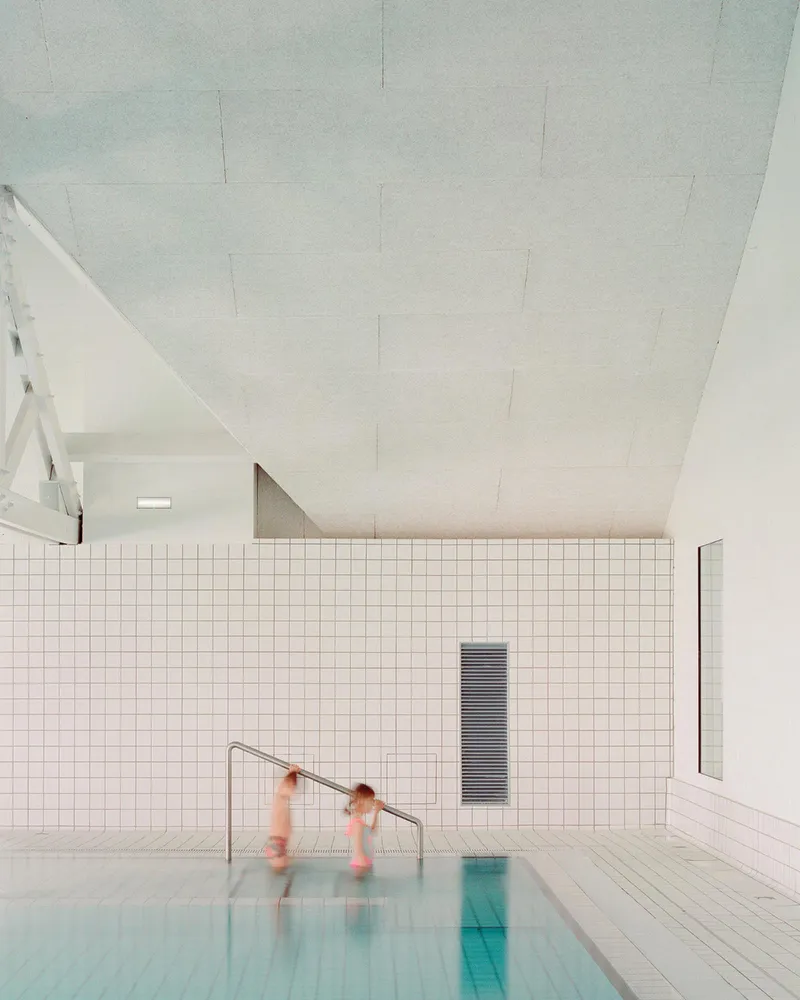
- Structural & Thermal PerformanceThe renovation enhances insulation and waterproofing, ensuring long-term durability and energy efficiency. The new envelope reinforces the building's performance without compromising aesthetics.
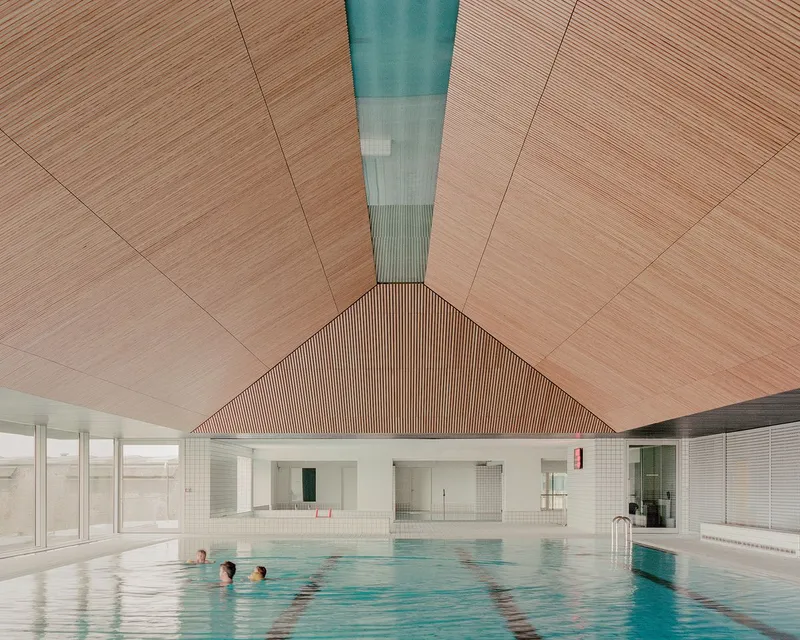
- Landscape ConnectionThrough refined topographical engagement, the pool now offers expansive views toward the rural Breton landscape, enhancing the visitor’s experience.
Architecture Rooted in Simplicity and Cohesion
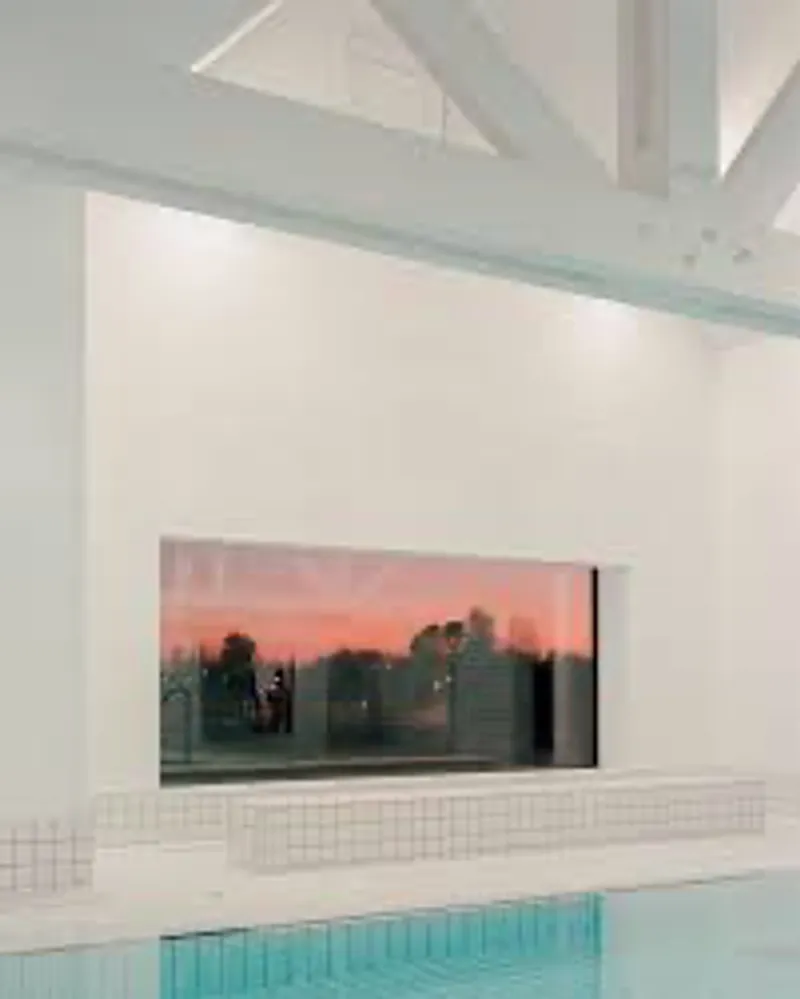
The extension is designed as an abstract, slate-clad volume, maintaining a minimalist profile that emphasizes openness to the surrounding nature. Black timber cladding is used across the entire project to create visual unity, while carefully placed openings reconnect the interiors with the cityscape.
Inside, RAUM embraced a minimal color palette, unifying diverse structural elements while preserving visible layers of the original construction. This balance between restoration and revelation adds character to the space, celebrating the building’s history.
Public Impact and Community Revitalization
Beyond its architectural significance, the renovation of this 1,338 m² facility repositions the pool as a central community asset. It offers a reinvigorated setting for recreation, wellness, and social gathering—fostering civic pride in a rural context.
RAUM's intervention is a model for sustainable architecture, demonstrating how existing public infrastructure can be reimagined for future generations while honoring its legacy.
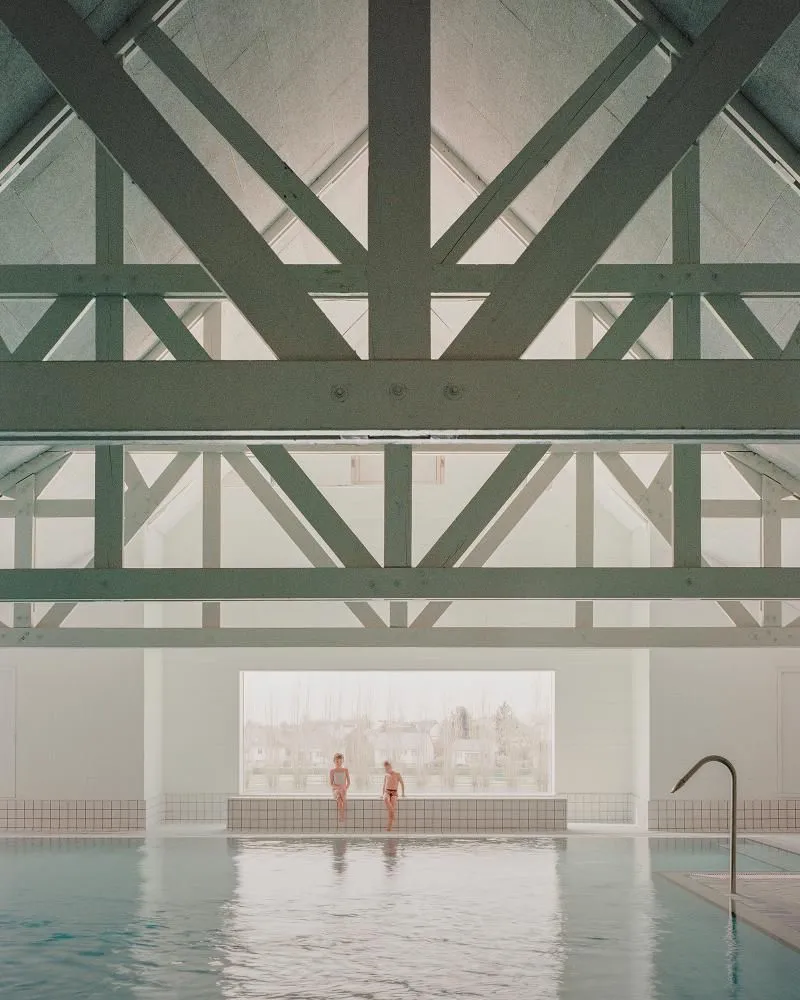
All the photographs are works of Charles Bouchaïb


Popular Articles
Popular articles from the community


LT2A and OPEN Architectes Thread a Brick and Glass High School Through a Wooded Belgian Campus
In Braine-l'Alleud, a 3,000 m² wing for Collège Cardinal Mercier pairs pale brick with a glazed colonnade, deferring to a small chapel and a dense wood.

Architekt Andreas Gruber Scatters 23 Dark Timber Chalets Across a South Tyrolean Forest Edge
In Molini di Tures, Amonti Chalets breaks a resort into a hamlet of gabled timber houses, with parking, storage and services pushed into the slope.

Jaramillo Van Sluys Arquitectura and Urbanismo Turn a Demolished Registry Lot in Quito into an Orchard Plaza
In Quito's Centro Histórico, a 2,800 m² plaza exposes the San Agustín convent wall and redraws its lost Augustinian orchard in volcanic stone.

David Macias Steps a Doorless Stone and Plaster House Down a Tropical Colombian Hillside
In the humid hills of Colombia, Threshold House replaces the front door with an open void and terraces its 850 m² down the slope instead of fighting it.

Similar Reads
You might also enjoy these articles


Hodi-Mandai Geram
Project Function: Preservation and revitalization of the Intangible heritage and socio-spatial identity of the Hodi by Housing, Cultural Memory Center, Sacred Grove, landscape, local tourism economy


Olio Towers: A Mid-Rise for Performers That Fuses Housing, Rehearsal, and Stage
Located blocks from Houston's Theater District, this modular tower stacks living units around a central performance atrium.

Oasis: Modular Green Housing Carved into Dhaka's Urban Fabric
A shortlisted Plugin Housing entry reclaims unauthorized settlements in Dhaka with stepped concrete volumes, green roofs, and ventilation-driven design.

Black Hole: A Floating Megastructure for the Post-Physical Era
Emiliano Mazzarotto envisions a spherical, self-scaling arena where e-sports, digital hotels, and holographic stadiums replace traditional public space.

Explore Swimming Pool Competitions
Discover active competitions in this discipline

Challenge to reimagine the Iron Throne

Photograph architecture without architects

Illustrate the lost glory of Angkor Wat - Render Challenge

Design challenge to reuse E-waste
Comments (0)
Please login or sign up to add comments
No comments yet. Be the first to comment!