
PULSE OF THE PLANET - Economize Competition
Restoring balance of nature and people in Puntarenas, Costa Rica

Macro-scale:
Puntarenas' unique location acts as an epi-center for diverse environments and climate conditions, specifically the mangroves north of the site. The mangroves harbor a unique ecosystem, with a wide variety of diverse species of both animals, fish, birds, and vegetation. The mangroves protect the shoreline from erosion, dulling the waves of the ocean, and dimming the strength of the winds. The roots house miniscule fish species such as clams and shrimps, a hearty meal for birds and animals alike. However, with an increase in population comes an increase in material demands, leading to illegal deforestation of the mangroves along the shore and canals, and overfishing of rapidly diminishing population of fish (due to climate change). This causes the canals of the mangroves to dry out, changing the ecosystem as we know it.
In order to combat this, the community must be educated on the consequences of their actions - both short and long term - as well as ways to reduce the impacts of deforestation and overfishing; nursery for fish, replanting mangrove tress. This isn't as simple as it would seem, and a conservation team that had inspired this direction I am taking with my concept is SINAC - the mouth (estuary) of both seco and Aranjuez river (Puntarenas) face the problem of sedimentation and climate change, reducing water flow to the mangroves. Restoring the mangroves is not the same as restoring highland forests; the entire system must be
“fixed” for the mangrove trees and ecosystem to cohabitate and regrow.
SINAC dedicated their time learning the structure of the rivers and estuaries - knowledge of the tides’ movement and levels, and how it enters to the mangroves. By understanding, they will be able to restore water flow from the estuaries without damaging the existing mangroves forest in need of restoration. Their main goal is to rehabilitate environmental conditions of the area so the mangroves can gradually reintroduce itself and recover the ecosystem. 32km of canals were built to rehabilitate and salinize the areas affected, 9.5km of which were dug by the hands of the community members - women in particular. They’d
Walk up to 2km with heavy boots and equipment to the site to dig - all for the long-term benefits of the environment and in turn the community. Senac consulted the community on the
Importance of the mangroves, and the community advises SINAC on the old Routes of the canals, and providing feedback. The community is now the first Voice of alert for any positive or negative news.
COMMUNITY INTEGRATION GUARANTEES SUSTAINABILITY - core of the community center design
Medium-scale:
With the overarching theme of community integration to cultivate conservation, I launch my strategy to integrate the three main actors and stakeholders in this design: tourism, community, and ecology, and how all three are interwoven into this fabric of life in Puntarenas.
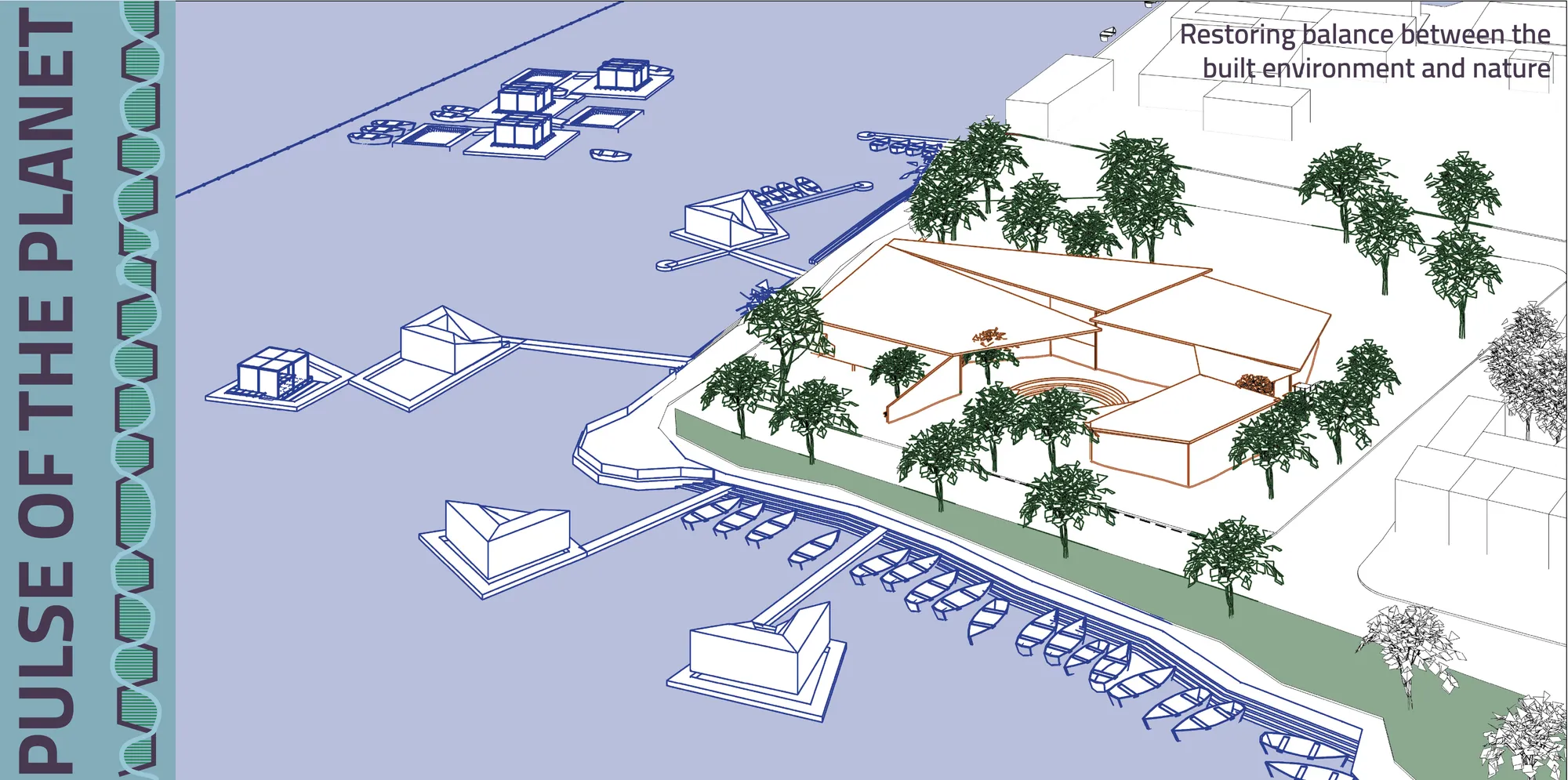
Firstly, the ecological aspects of the site and area must be protected by placing a floating barrier to reduce access to the mangroves, with highlighted harbors that can be utilized for waterfront activities and circulation, hence the floating design structure.
Secondly, the tourism in Puntarenas is on the lower-end of the spectrum due to it acting as a ferry stop or cruise stop before visiting a picturesque and beachy island nearby. Therefore, the community center can act as a new touristic attraction and an educational center for those interested in conservation efforts and those who seek to explore the diverse ecosystems of Costa Rica. Increasing the tourism in Puntarenas will therefore increase job opportunities and customers that are willing to spend on hostels, hotels, restaurants, etc.
As for the community, the center will foster their collaborative efforts in increasing their standard of living through market events being held, research center offering jobs and workshops, and even a space to interact and welcome tourists.
The design:
The floating design allows to reconnect both the locals and the tourists with the water as the area is known to be a fishing port. The floating design also contains nurseries for schools of fish to repopulate, turning back the consequence of overfishing. The access points are guided by the design, with each function in the programmed corresponding to the floating design structure.
They built design is inspired by the vernacular architecture, with use of local materials such as palm, wood, porcelain, and aluminum roofing as a way to improve bioclimatic conditions indoors. The lines of the design are formed by the urban plan of the city as a way to juxtapose the colonial past of Puntarenas. The form allows adequate sun and wind to properly ventilate and light the interior spaces without excess use of electrical interventions. The overhangs of the roofs shade the public spaces, with its material reflecting high sunrays off, reducing heat transfer.
This project has been a life-changing experience. It started as a university course design project to broaden my horizons and challenge myself to think critically about design and space, and how it would affect the users in their daily life. The title is reminiscent of Costa Rica’s diverse nature and its importance in the world. Calling it the pulse of the planet connects to the amazon forest, dubbed the lungs of the earth, connecting human to earth by its main functions that is needed to live.

Popular Articles
Popular articles from the community


The Ocean Hive: Sustainable Architecture for a Self-Sufficient Civilization at Sea
The Ocean Hive imagines sustainable architecture at sea, where modular habitats, algae, wave power and ocean waste sustain a growing colony.

The Earth Pod: 3D Printed Homes for Resilient Refugee Communities
The Earth Pod reimagines refugee housing through 3D printed homes made from clay, combining resilience, self-sufficiency, and rapid shelter.

Hill & Cross Opera: Sculptural Opera House Architecture Shaped by Tallinn’s Landscape and Identity
Hill & Cross Opera reimagines opera house architecture in Tallinn through its sculptural hill, civic plaza, glass wave and a luminous cross.

Co-Life: Senior Housing Design That Reconnects Older Adults With the City
Co-Life reimagines senior housing design through healing gardens, shared streets, workshops, and a sustainable community across generations.

Similar Reads
You might also enjoy these articles
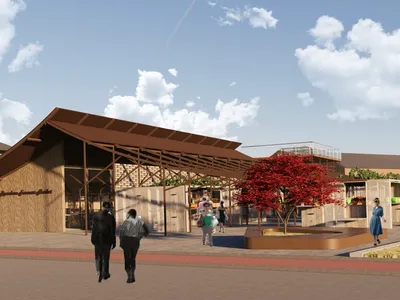
The Rhythm of Seasons
A Farmers' Market Connecting Nature and the City
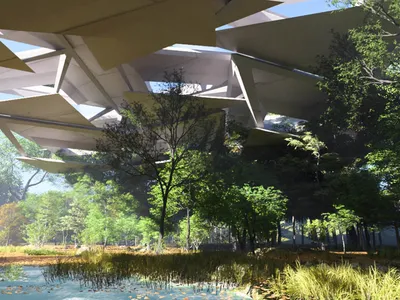

More Than a Building-Designing a Living System
More Than a Building-Designing a Living System
Base Beyond
DESERT COMPOUND ARID: TOURISM OF ABSENCE AND ABUNDANCE

Explore Mangrove Forest Competitions
Discover active competitions in this discipline




Challenge to reimagine the Iron Throne


Photograph architecture without architects


Illustrate the lost glory of Angkor Wat - Render Challenge


Design challenge to reuse E-waste
Comments (0)
Please login or sign up to add comments
No comments yet. Be the first to comment!