

Pyshield Tower: A 480-Meter Vertical City Rooted in South African Heritage
In Johannesburg, a mixed-use skyscraper fuses Zulu, Venda, and Xhosa symbolism with vertical farming, renewable energy, and self-sufficient urban living.


What happens when a skyscraper stops being a glass monument to capital and starts functioning as a self-contained city? The Pyshield Tower, a 480-meter mixed-use structure proposed for central Johannesburg, attempts to answer that question by stacking housing, offices, agriculture, waste processing, and public gathering spaces into a single vertical system. With a 6,250 m² footprint, it consolidates the sprawl of an entire urban district into one building, complete with its own food production, water recovery, and renewable energy generation. It is, in essence, an argument that density and sustainability are not opposing forces but complementary ones.
Designed by Maurice Samen and Fritz Djoumaleu, the project was recognized as a People's Choice entry in the CityScraper competition. What elevates the proposal beyond technical ambition is its deliberate engagement with South African identity. The tower's form, skin, and color palette draw directly from Zulu, Venda, and Xhosa cultural traditions, grounding a futuristic structure in the specific heritage of its context. Johannesburg, a city marked by both economic dynamism and deep urban disparity, becomes the testing ground for architecture that aspires to be simultaneously ecological, cultural, and socially inclusive.
A Shield, a Python, and Red Ochre: Cultural Form as Structural Logic
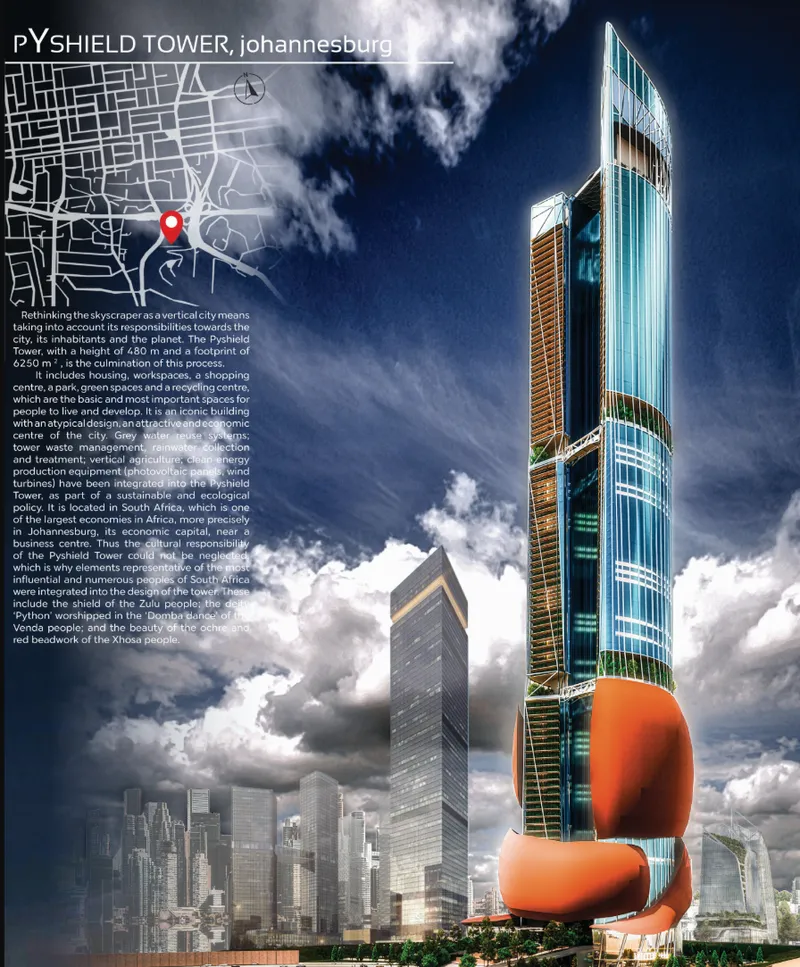
The tower's most immediately striking feature is its curved, orange-hued base, visible here against a dramatic Johannesburg sky. This is not decorative whimsy. The elevated garden platform takes its protective geometry from the Zulu shield, creating a broad, sheltering form that houses cultural gathering spaces. Wrapping the upper volume, a double-skin facade draws on the python motif central to Venda folklore, functioning simultaneously as sunshade and symbolic protector. The red ochre tone embedded across facade elements references Xhosa identity, turning the building's exterior into a layered cultural text. These references do more than ornament the surface; they give residents and the city an emotional stake in the architecture.
Interior Atrium as Vertical Village Square
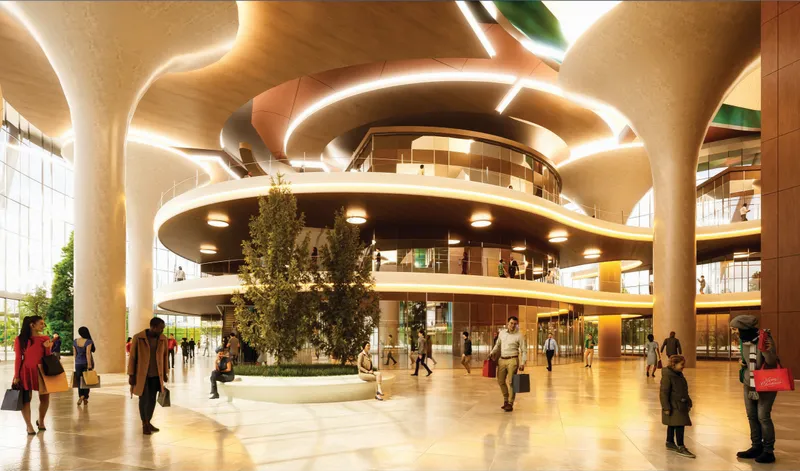
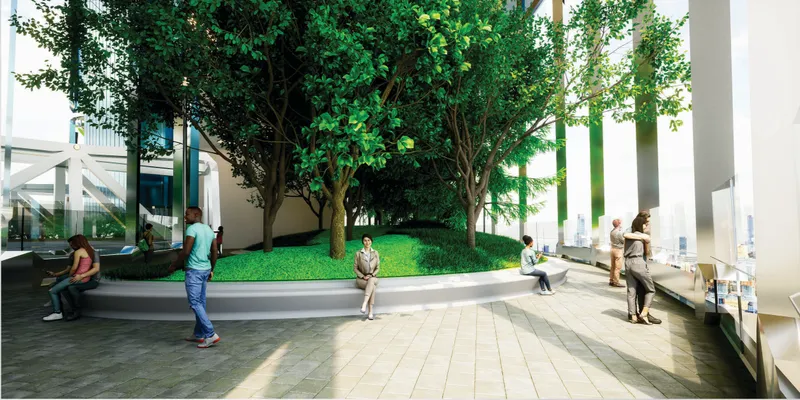
Inside, the tower's atrium reveals a spatial strategy that prioritizes communal life over corridor efficiency. Spiraling balconies ring a soaring central void where organic, tree-like columns rise from ground level, and a mature tree anchors the composition. Pedestrians move through the space at ground level, but the stacked balconies suggest a constant visual and social connection between floors. It is the kind of space that turns vertical living from an exercise in isolation into something closer to a hillside village, where neighbors observe and engage with one another across levels.
The courtyard spaces reinforce this communal intention. Raised planter beds hold mature trees, and informal seating ledges invite lingering. In a city known for stark socioeconomic divides, these inclusive, unprogrammed zones are quietly radical. They offer a counter-model to the privatized lobbies and gated amenity decks typical of luxury high-rises, proposing instead that shared green space within a tower can function as genuine public infrastructure.
Ground Plane: Public Interface at Dusk
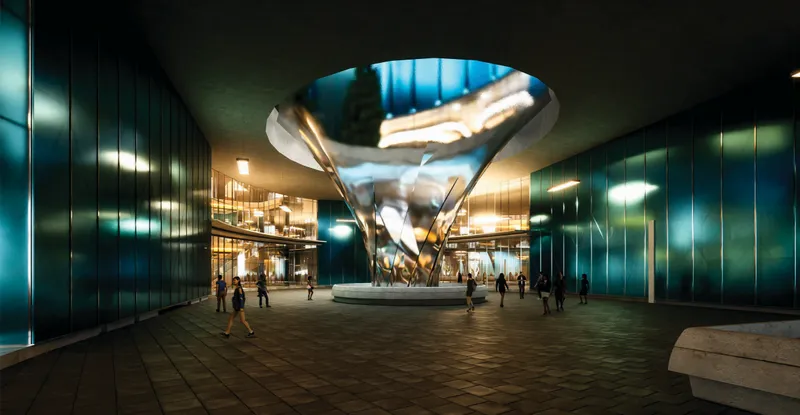
At street level, the tower meets Johannesburg with a reflective green metal facade and an illuminated conical skylight that pulls natural light deep into the lower floors. The plaza depicted here is activated at dusk, suggesting the designers understand that a building's relationship to its city is not only about daytime office traffic but about evening culture, leisure, and social life. The ground plane reads as genuinely porous, a quality that matters enormously in a city where many towers turn blank walls and security barriers toward the sidewalk. If the Pyshield Tower is to function as a vertical city, this ground-level permeability is its most critical threshold.
Stacking Sustainability: From Rooftop Turbines to Basement Composting
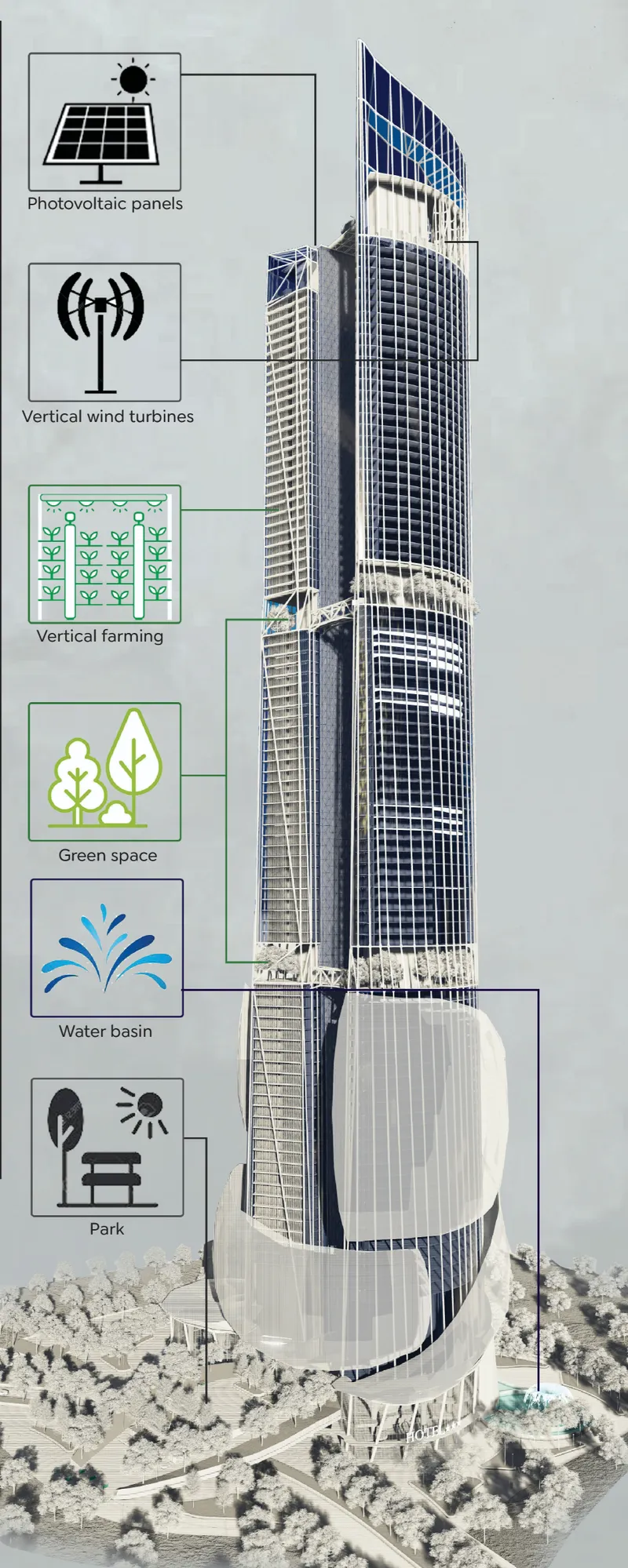
The annotated rendering lays bare the full environmental apparatus embedded within the tower. Rooftop photovoltaic panels and wind turbines handle renewable energy generation. Greywater recovery systems and rainwater collection tanks address water scarcity. Vertical farming beds at the base and crown cultivate vegetables, herbs, and mushrooms using reclaimed water and organic compost, feeding on-site restaurants and even supplying nearby markets to form a micro food economy. On-site waste management sorts plastic, metal, and glass for external processing, while organic matter is composted or converted to biogas.
What makes this inventory more than a sustainability checklist is the integration. Each system feeds another: compost from waste processing nourishes the farming beds, reclaimed water irrigates crops, and the double-skin facade reduces cooling loads that would otherwise demand more energy. The tower is conceived not as a collection of green features but as a closed-loop metabolism. Whether all of these systems could realistically coexist at this scale is a fair engineering question, but as a conceptual proposition, the interconnection is genuinely compelling.
Why This Project Matters
The Pyshield Tower's strength lies in the refusal to separate cultural meaning from environmental performance. Too many sustainable skyscraper proposals present a generic, context-free vision of green towers that could be dropped into any city on earth. Samen and Djoumaleu insist that their tower belongs to Johannesburg, drawing on the specific cultural heritage of the communities it would serve. The Zulu shield, the Venda python, the Xhosa ochre are not applied graphics; they are generative ideas that shape the building's massing, skin, and spatial character.
As a competition entry, the project necessarily operates in the realm of the propositional. A 480-meter self-sufficient tower is an extraordinary engineering and financial challenge. But the value of a project like this is in the questions it forces: Can density be culturally specific? Can a skyscraper produce food, process waste, and generate energy at meaningful scales? Can vertical living foster community rather than atomize it? Samen and Djoumaleu have built a persuasive argument that the answer to all three is yes, and that argument alone makes the Pyshield Tower worth serious attention.
View the Full Project
About the Designers
Designers: Maurice Samen, Fritz Djoumaleu
Enter a Design Competition on uni.xyz
uni.xyz runs architecture and design competitions year-round that reward proposals with spatial conviction and real site intelligence.
Project credits: The Pyshield Tower by Maurice Samen, Fritz Djoumaleu CityScraper (uni.xyz).



Popular Articles
Popular articles from the community

EW PARK: Sustainable Architecture Reimagines the Future of Urban Parking
EW PARK reimagines city parking as a modular wooden tower combining automation, solar energy, electric mobility, and adaptable urban design.

The Earth Pod: 3D Printed Homes for Resilient Refugee Communities
The Earth Pod reimagines refugee housing through 3D printed homes made from clay, combining resilience, self-sufficiency, and rapid shelter.

The Ocean Hive: Sustainable Architecture for a Self-Sufficient Civilization at Sea
The Ocean Hive imagines sustainable architecture at sea, where modular habitats, algae, wave power and ocean waste sustain a growing colony.
AL-JANNAH: Sustainable Architecture and Permaculture for Afghan Widows
AL-JANNAH uses sustainable architecture and permaculture to create resilient oasis of housing, learning, work and renewal for Afghan widows.


Similar Reads
You might also enjoy these articles

Day and Night Park: A Time-Based Urban Newsstand in Beijing
A temporary urban newsstand in Beijing blending travel, light, and reading through poetic colors, compact form, and community-focused design.

Modernist Patio Renovation in El Masnou, Barcelona by Oliver Segura Arquitectura + Cebrià Arquitectura
Modernist patio renovation blending tradition and innovation with a movable pool, leveled floors, and Catalan materials in El Masnou.

Alto Residencial Coop: Cooperative Housing Development in Santiago de Compostela by Carbajo Barrios Arquitectos
A linear cooperative housing complex blending white volumes and perforated metal façades, enhancing community living, natural light, privacy, and urban integration.
Vil Genis School by BPA ARCHITECTURE – Massy, France
Vil Genis School in Massy, France, features sustainable design, south-facing classrooms, community integration, accessible spaces, and modern educational architecture.

Comments (0)
Please login or sign up to add comments
No comments yet. Be the first to comment!