
Qingxi Culture and History Museum by UAD: A Harmonious Fusion of Architecture and Nature
Qingxi Culture and History Museum by UAD seamlessly integrates nature, vernacular architecture, and sustainability, creating a cultural landmark in Zhejiang.


A Cultural Landmark in Ningbo, China
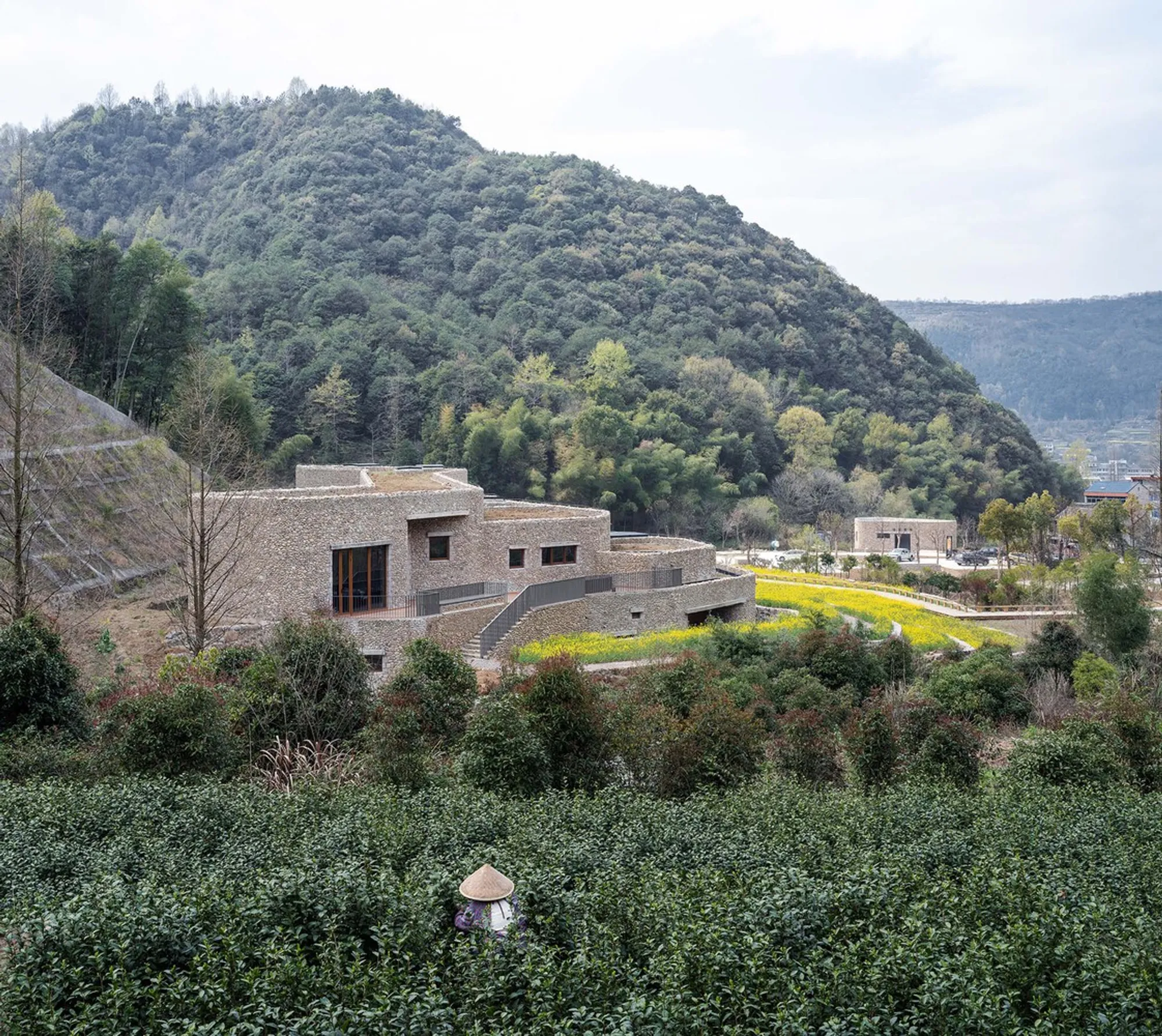
The Qingxi Culture and History Museum, designed by UAD (The Architectural Design & Research Institute of Zhejiang University), stands as a remarkable architectural expression of local heritage and environmental harmony. Situated in Nanshangang, Sangzhou Town, Ninghai County, Zhejiang, this 1,691-square-meter museum is more than just a cultural space—it serves as a tourist center and a gateway to the region’s rich history.
Nestled amid the serene rural landscape, the museum is strategically positioned to offer visitors an immersive experience away from urban distractions. A single country road connects the site to nearby villages, where local farmers continue their traditional agricultural practices. The natural topography, featuring recessed terraces that rise from north to south, provides breathtaking panoramic views of the surrounding mountains and terraced fields.


Blending Architecture with Nature
At the heart of the design philosophy lies a deep respect for sustainable architecture and integration with nature. The museum’s form follows the contours of the terraced terrain, allowing the building to merge seamlessly with the environment. The green rooftops, planted with local crops, echo the agricultural character of the site, reinforcing the connection between built and natural landscapes.
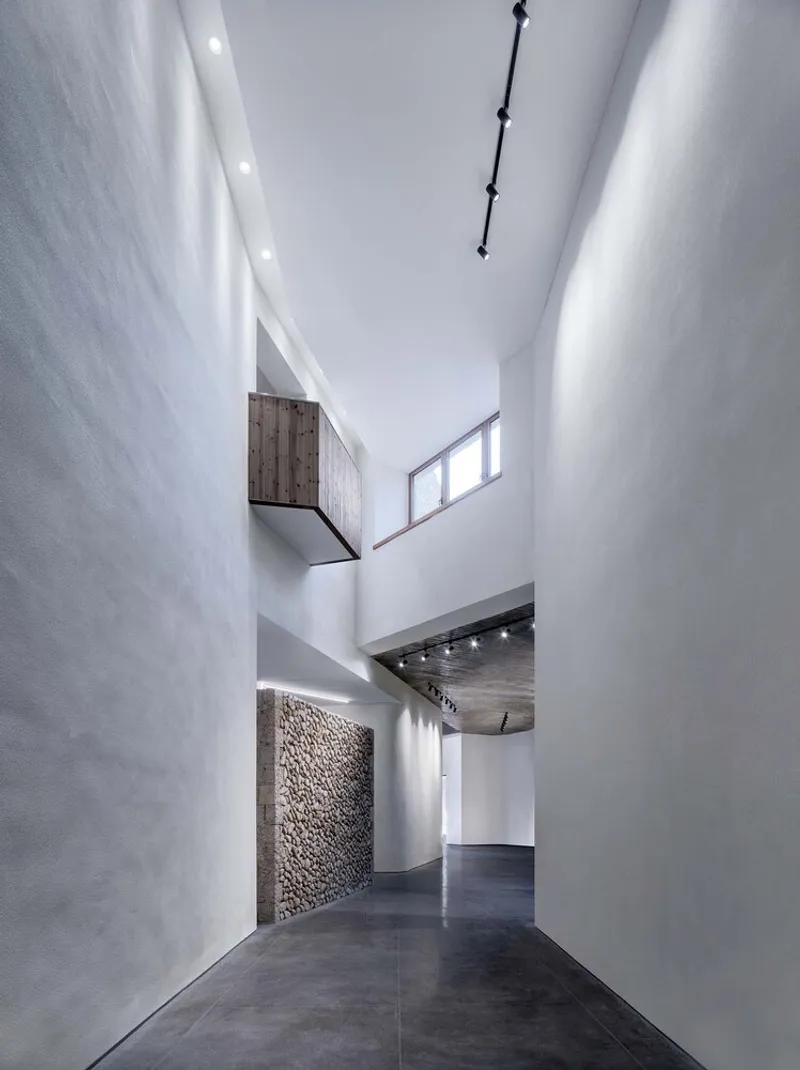
The architectural composition is defined by irregular walls, staggered roofs, and carefully placed windows and skylights that invite natural light into the interiors. These design elements create a dynamic interplay of light and shadow, enhancing the sensory experience of the space. Inspired by the organic pathways of the countryside, the museum’s layout encourages exploration, making each corner a unique spatial encounter.

Vernacular Construction Techniques and Materials
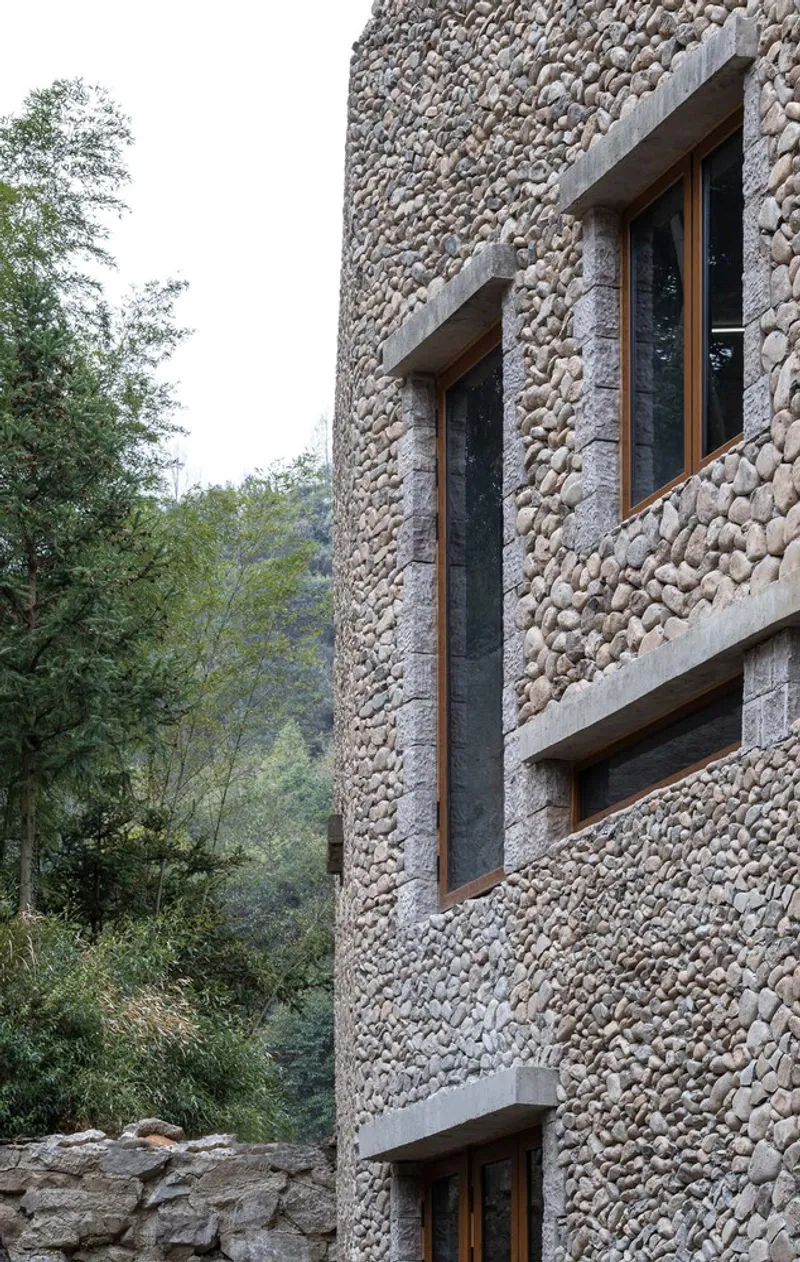
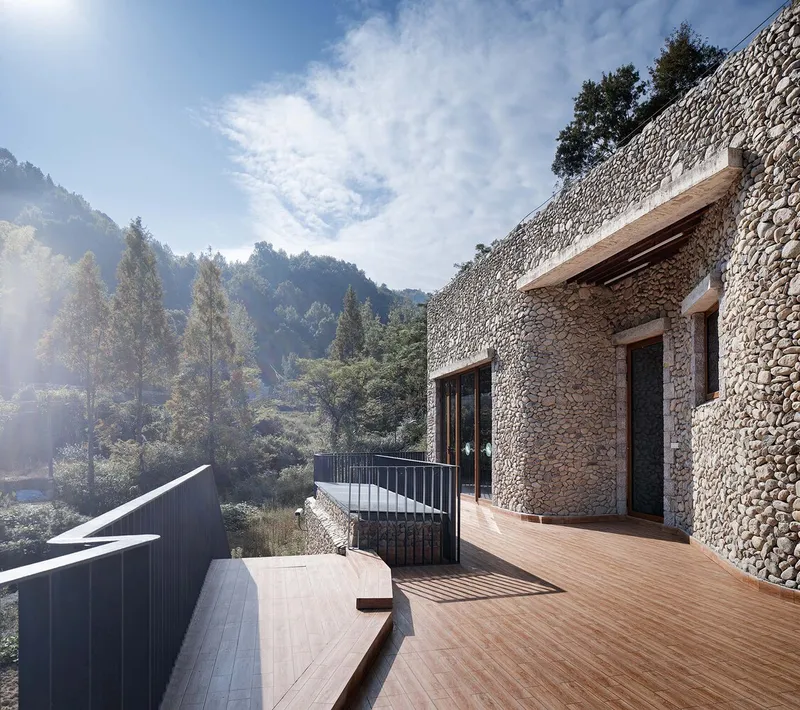
Emphasizing regional architecture and craftsmanship, the museum employs local materials and traditional building techniques. Skilled stonemasons constructed the structure using locally sourced natural stone, ensuring that the building reflects the essence of the historic terraced fields.
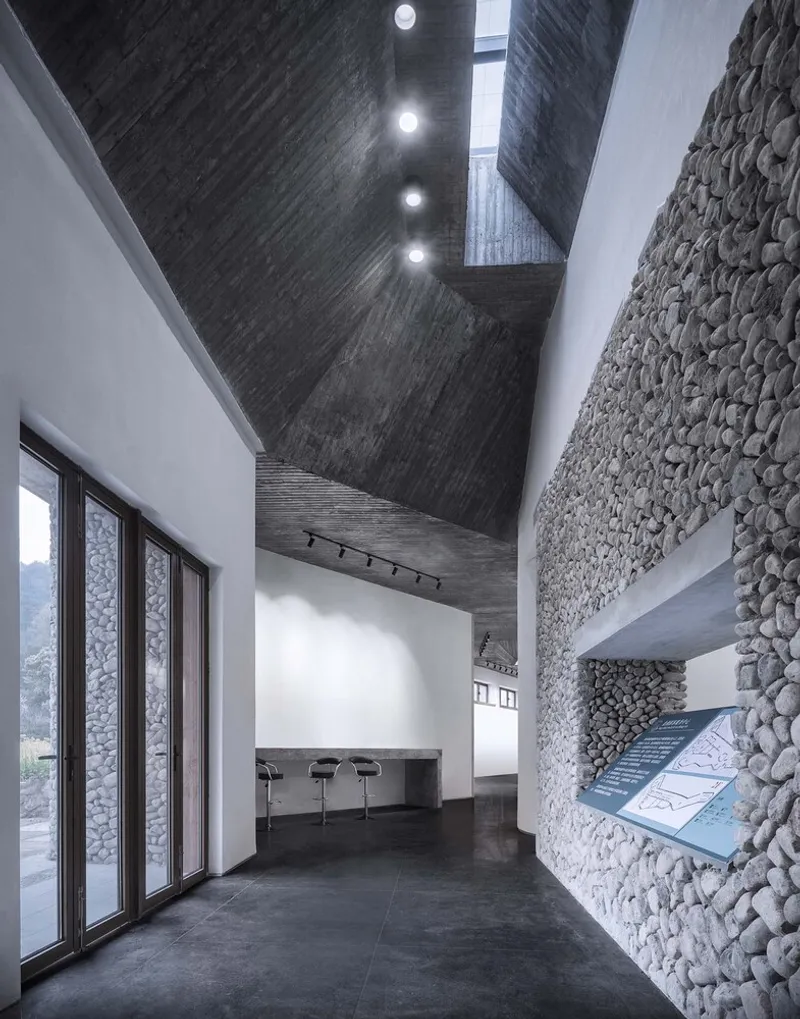
The interiors embrace a raw and authentic material palette, featuring fair-faced concrete ceilings, white diatom mud walls, and wooden-framed doors and windows. These elements celebrate the vernacular aesthetics of rural China while fostering a warm and tactile atmosphere. Intricate details such as stone window frames and handcrafted drip edges showcase the artisans’ expertise and highlight the fusion of past and present construction techniques.

A Space of Cultural and Environmental Recognition
Set against the backdrop of rolling mountains and flowing streams, the Qingxi Culture and History Museum is more than an architectural achievement—it is a cultural statement. The structure dissolves into its surroundings, maintaining a delicate balance between built and natural environments. By integrating architectural, social, and technical elements, the museum reflects the region’s deep-rooted traditions, cultural narratives, and ecological consciousness.
Visitors approach the museum by crossing a bridge over a tranquil stream, gradually unveiling the building’s organic form nestled against the mountains. This journey enhances the spatial experience, offering moments of discovery at every turn. The museum’s vernacular form and modest presence allow it to act as both an educational space and a living tribute to local heritage.
A New Cultural Destination in Zhejiang
The Qingxi Culture and History Museum by UAD stands as a testament to context-sensitive design, sustainable architecture, and cultural preservation. Through its thoughtful materiality, eco-conscious construction, and deep respect for the local environment, the museum serves as a model for future architectural projects that seek harmony between tradition and modernity.
All Photographs are works of Junhao Ding, ZYStudio, Qiang Zhao




Popular Articles
Popular articles from the community


The Ocean Hive: Sustainable Architecture for a Self-Sufficient Civilization at Sea
The Ocean Hive imagines sustainable architecture at sea, where modular habitats, algae, wave power and ocean waste sustain a growing colony.

The Musturak Paradise: Senior Living Architecture for a Connected Future in Temara, Morocco
The Musturak Paradise reimagines senior living architecture in Temara via private homes, social spaces, culture, community, and shared care.

Riyadh For All: Intergenerational Urban Design for Active Aging in Rabat
Riyadh For All reimagines urban design in Rabat with intergenerational co-living, adaptive courtyards, and Moroccan cultural exchange today.
EW PARK: Sustainable Architecture Reimagines the Future of Urban Parking
EW PARK reimagines city parking as a modular wooden tower combining automation, solar energy, electric mobility, and adaptable urban design.


Similar Reads
You might also enjoy these articles


Hodi-Mandai Geram
Project Function: Preservation and revitalization of the Intangible heritage and socio-spatial identity of the Hodi by Housing, Cultural Memory Center, Sacred Grove, landscape, local tourism economy


Olio Towers: A Mid-Rise for Performers That Fuses Housing, Rehearsal, and Stage
Located blocks from Houston's Theater District, this modular tower stacks living units around a central performance atrium.

Oasis: Modular Green Housing Carved into Dhaka's Urban Fabric
A shortlisted Plugin Housing entry reclaims unauthorized settlements in Dhaka with stepped concrete volumes, green roofs, and ventilation-driven design.

Black Hole: A Floating Megastructure for the Post-Physical Era
Emiliano Mazzarotto envisions a spherical, self-scaling arena where e-sports, digital hotels, and holographic stadiums replace traditional public space.


Explore Cultural Architecture Competitions
Discover active competitions in this discipline



Challenge to reimagine the Iron Throne


Photograph architecture without architects


Illustrate the lost glory of Angkor Wat - Render Challenge


Bring back Drive In's
Comments (0)
Please login or sign up to add comments
No comments yet. Be the first to comment!