
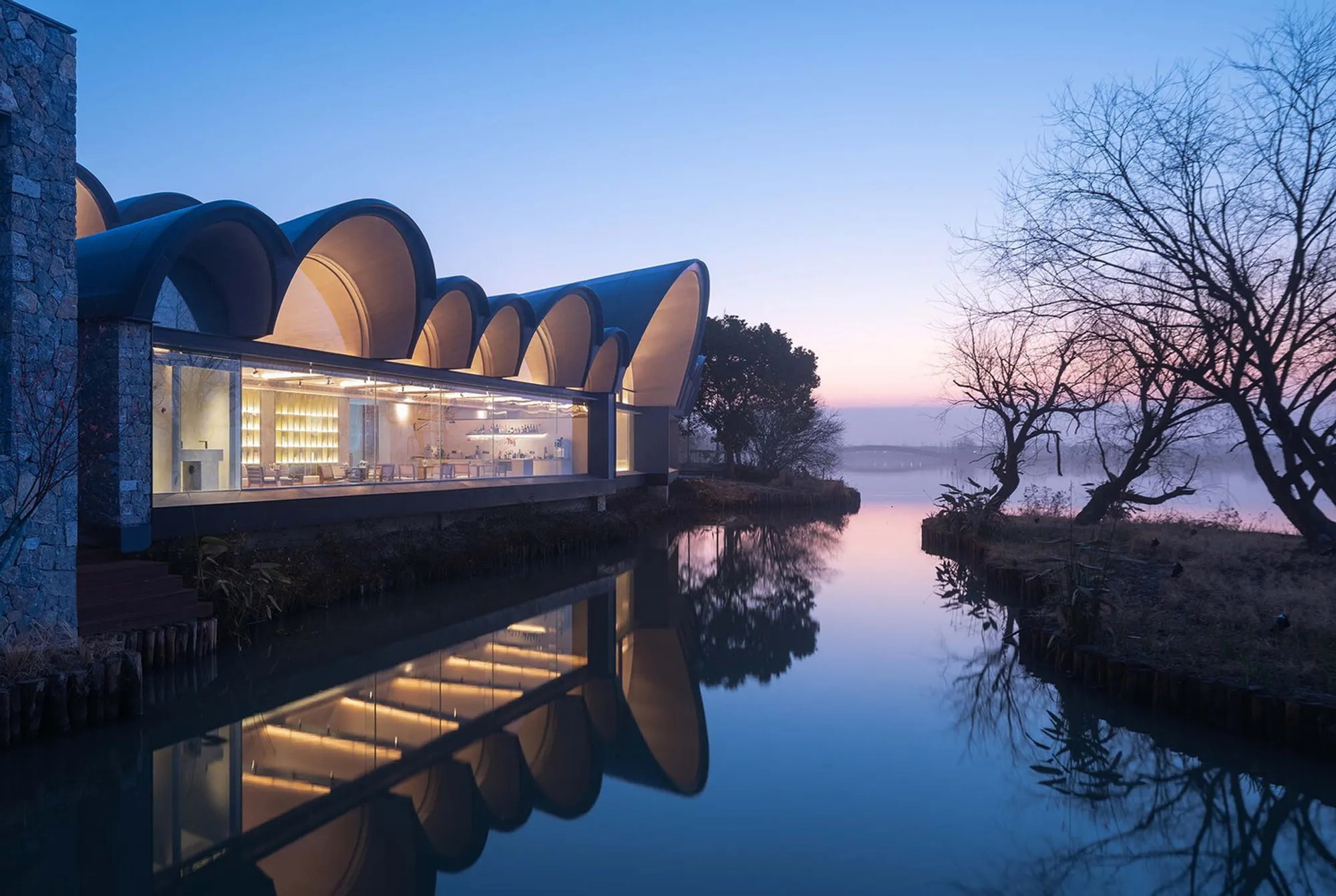
Qushui Shanwan Boatyard Hotel by GOA – A Modern Retreat Inspired by Jiangnan Water Towns
Qushui Shanwan Boatyard Hotel by GOA blends Jiangnan water town heritage, ecological design, and modern hospitality into a poetic waterfront retreat.


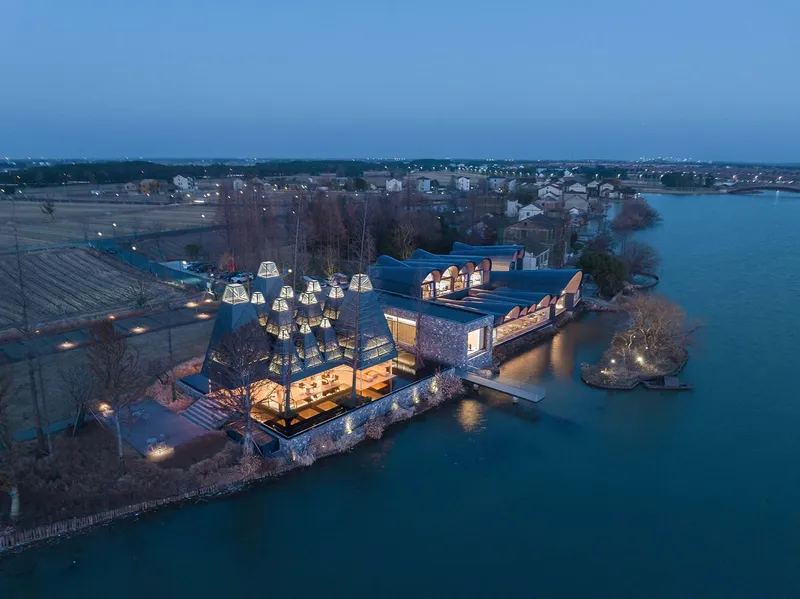
The Qushui Shanwan Boatyard Hotel, designed by GOA (Group of Architects), is a striking example of how contemporary architecture can harmonize with the cultural and ecological landscapes of rural China. Located in Shanwan Village, within the Wujiang District of Suzhou, this hotel sits at the heart of the region’s Green and Integrated Ecological Development plan for the Yangtze River Delta. Completed in 2022, the 900 m² project blends cultural heritage, natural beauty, and modern hospitality into a single immersive destination.
Rural Revitalization Through Architecture
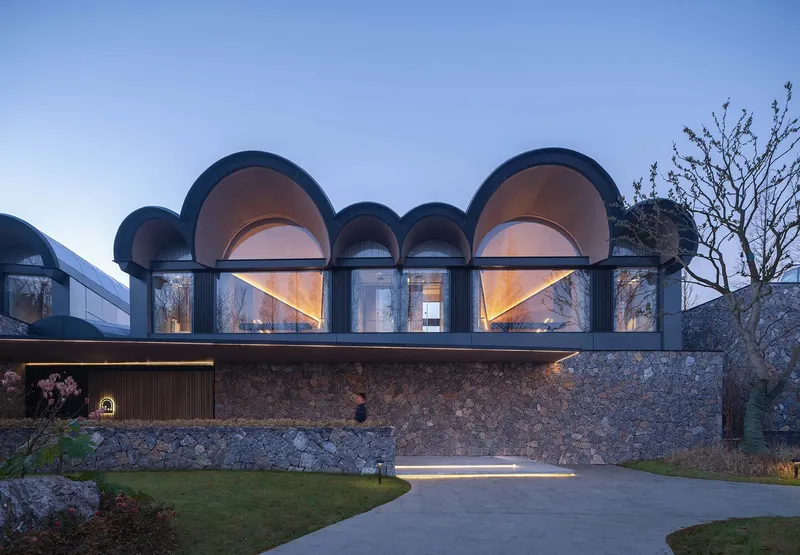
The Boatyard Hotel is part of a larger rural revitalization initiative that aims to integrate agriculture, tourism, and cultural identity. Together with the nearby Restaurant of Metasequoia Grove, the hotel forms a demonstration zone that acts as both a tourist gateway and a community hub for locals. More than just a hospitality project, it stands as a symbol of ecological tourism and cultural renewal in Suzhou.
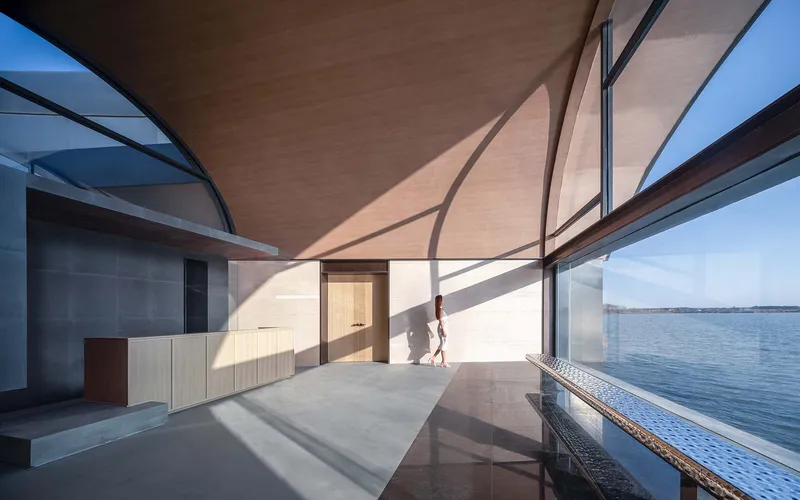
Architectural Inspiration – The Image of Awnings
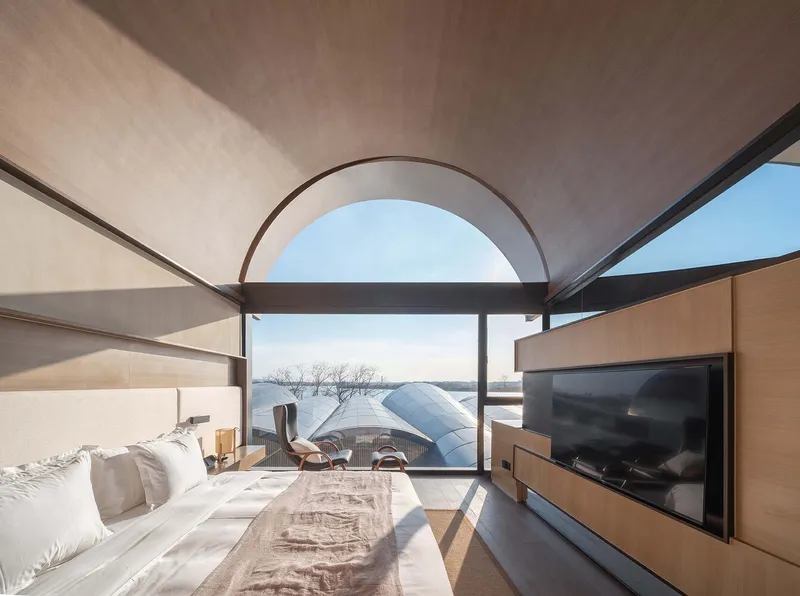
GOA drew inspiration from the traditional awning boats of Jiangnan’s water towns, known for their curved canopies and poetic charm. The hotel’s undulating arched roofline evokes the image of clustered awnings floating along calm rivers, creating a folk-inspired silhouette against the rural skyline. This architectural language captures the essence of Jiangnan culture, immersing visitors in a space where architecture becomes both a visual memory and a poetic experience.
Anchoring the Experience
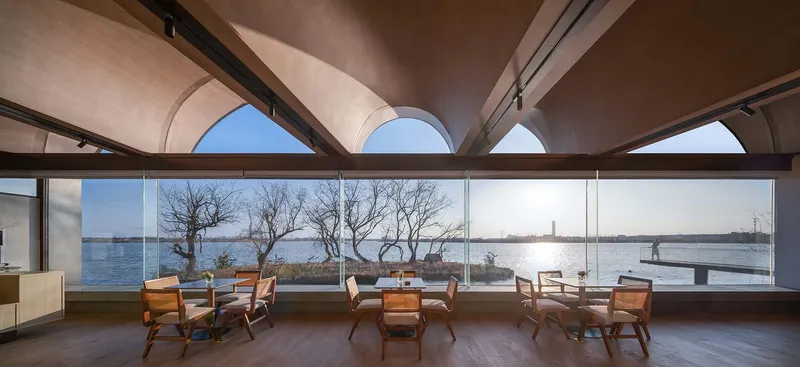
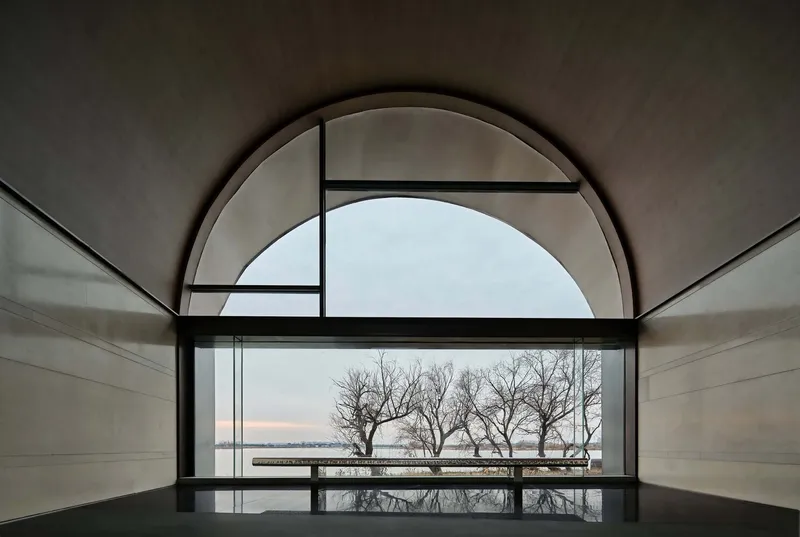
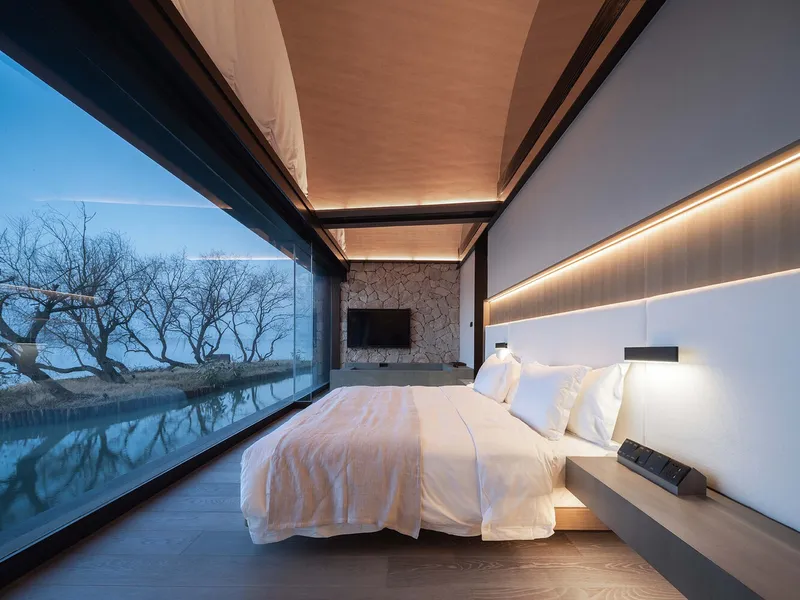
Just like a boat finding a safe harbor, the Boatyard Hotel offers travelers a moment of pause. Its dining area, positioned at water level and sunk slightly below the lake’s surface, places guests in a space that feels like a boat cabin on the water. The design blurs the boundary between land and water, allowing visitors to experience the intimate connection with Suzhou’s river culture while enjoying serene lakeside views.
Spatial Composition – Fading into the Landscape
The hotel is organized into three main zones:
- Reception and Entrance Hall – marked by a grand arched gateway that frames the journey toward the lake.
- Café and Bar – intimate gathering spaces that merge indoor comfort with outdoor scenery.
- Guest Rooms – aligned with the arched roofs, each room enjoys a harmonious rhythm with the landscape beyond.
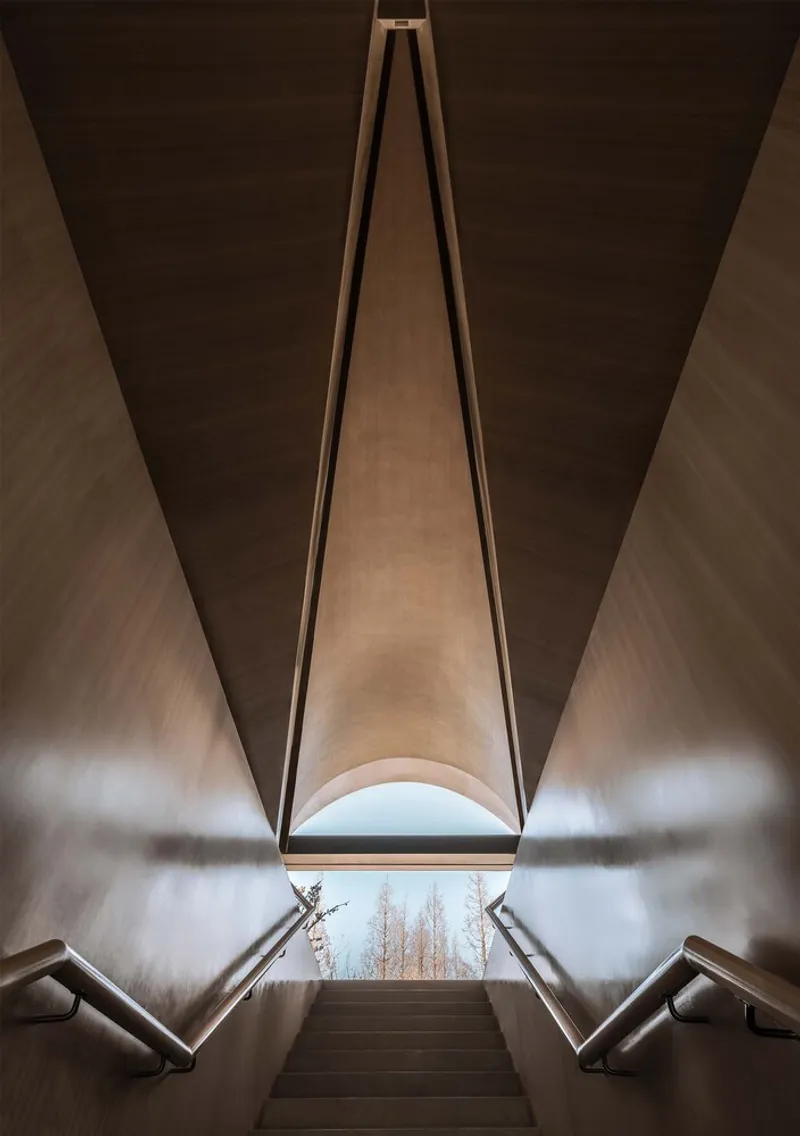
The design uses courtyards, multi-arched roofs, and ascending pathways to create a spatial crescendo, leading guests from intimate enclosures to expansive views of the wetlands. This rhythm of compression and release mirrors the natural flow of the surrounding landscape.
A Poetic Retreat in Suzhou
By weaving together traditional imagery, ecological sensitivity, and contemporary design, the Qushui Shanwan Boatyard Hotel becomes more than a place to stay—it is an immersive cultural and natural retreat. Guests experience both the authentic spirit of Jiangnan and the modern comforts of architectural innovation, making it a destination where nature, culture, and community coexist.
All Photographs are works of Xi Zhang




Popular Articles
Popular articles from the community


Lunar Spiral: Space Architecture Shaped by the Mathematics of the Universe
Lunar Spiral reimagines space architecture through Fibonacci geometry, lunar regolith, levitating habitats, and self-sustaining Moon living.

Riyadh For All: Intergenerational Urban Design for Active Aging in Rabat
Riyadh For All reimagines urban design in Rabat with intergenerational co-living, adaptive courtyards, and Moroccan cultural exchange today.

The Musturak Paradise: Senior Living Architecture for a Connected Future in Temara, Morocco
The Musturak Paradise reimagines senior living architecture in Temara via private homes, social spaces, culture, community, and shared care.

Co-Life: Senior Housing Design That Reconnects Older Adults With the City
Co-Life reimagines senior housing design through healing gardens, shared streets, workshops, and a sustainable community across generations.

Similar Reads
You might also enjoy these articles


Hodi-Mandai Geram
Project Function: Preservation and revitalization of the Intangible heritage and socio-spatial identity of the Hodi by Housing, Cultural Memory Center, Sacred Grove, landscape, local tourism economy


Olio Towers: A Mid-Rise for Performers That Fuses Housing, Rehearsal, and Stage
Located blocks from Houston's Theater District, this modular tower stacks living units around a central performance atrium.

Oasis: Modular Green Housing Carved into Dhaka's Urban Fabric
A shortlisted Plugin Housing entry reclaims unauthorized settlements in Dhaka with stepped concrete volumes, green roofs, and ventilation-driven design.

Black Hole: A Floating Megastructure for the Post-Physical Era
Emiliano Mazzarotto envisions a spherical, self-scaling arena where e-sports, digital hotels, and holographic stadiums replace traditional public space.


Explore Hospitality Building Competitions
Discover active competitions in this discipline



Challenge to reimagine the Iron Throne


Photograph architecture without architects


Illustrate the lost glory of Angkor Wat - Render Challenge


Design challenge to reuse E-waste
Comments (0)
Please login or sign up to add comments
No comments yet. Be the first to comment!