

RA! Weaves a Boutique Hotel into the Pedestrian Streets of San José del Cabo
Laiva Plaza Hotel uses interwoven walls, Conkal red stucco, and a vertical courtyard to dissolve the threshold between town and hospitality.


Most boutique hotels in resort towns treat the street as a nuisance to be screened off. Laiva Plaza Hotel, designed by RA! and completed in 2026, does the opposite. Set back from its property line in the historic center of San José del Cabo, the 1,557 m² building offers up a public atrium that is neither fully interior nor fully exterior, a cooling threshold where the breeze moves freely and the pedestrian district simply continues into the building. The result is a hotel that earns its place in the town rather than borrowing it.
What makes the project genuinely interesting is the structural conceit that holds it all together. A system of interwoven concrete walls generates intersecting triangular geometries, which in turn produce a network of connected patios, terraces, and corridors. The massing steps back progressively as it rises, deferring to the low-slung scale of the surrounding colonial center while packing a rooftop pool, a pergola dining terrace, and planted beds into three compact levels. Led by Santiago Sierra, Pedro Ramírez de Aguilar, and Cristóbal Ramírez de Aguilar, RA! has produced a building that is simultaneously bold in form and deeply embedded in its context.
A Facade That Recalls Papel Picado
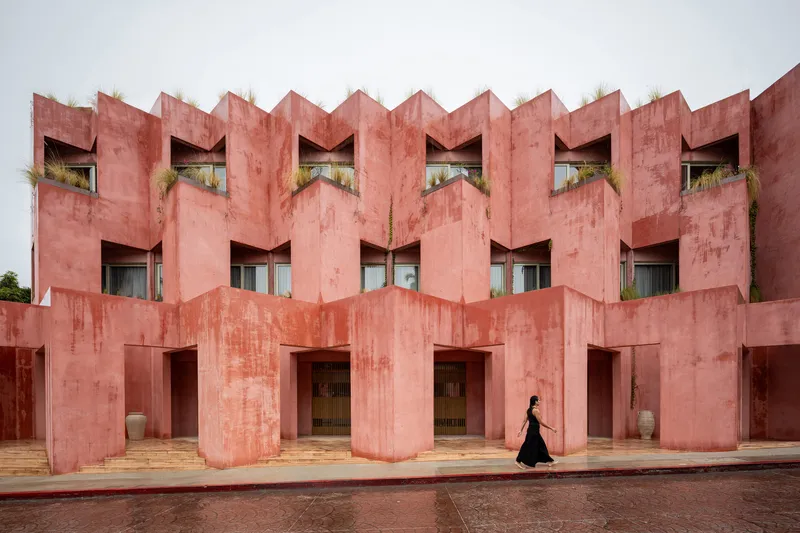
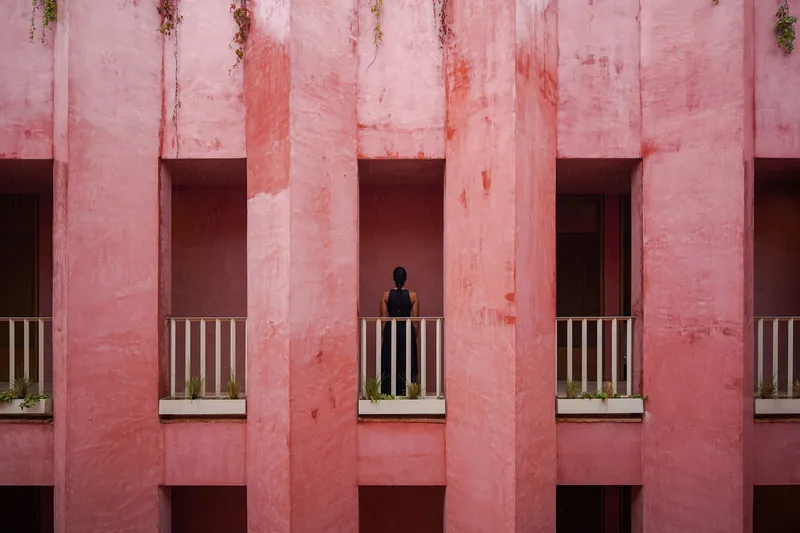
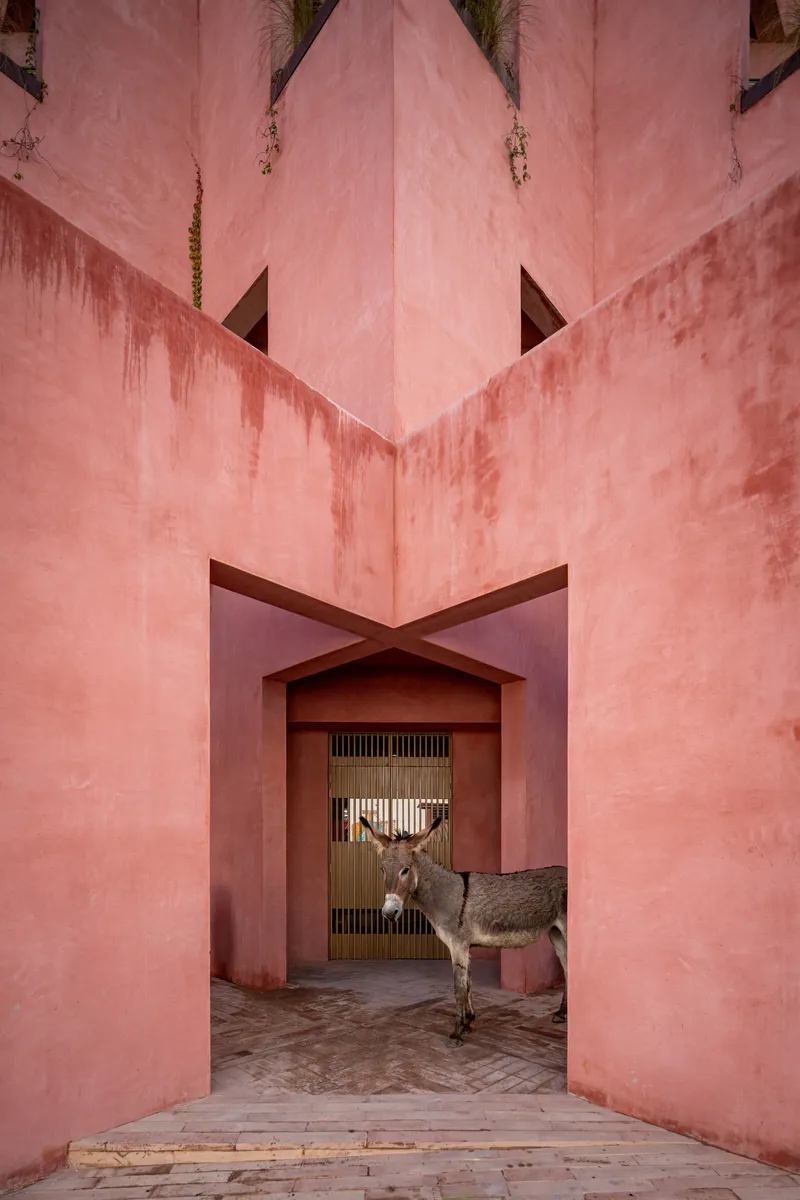
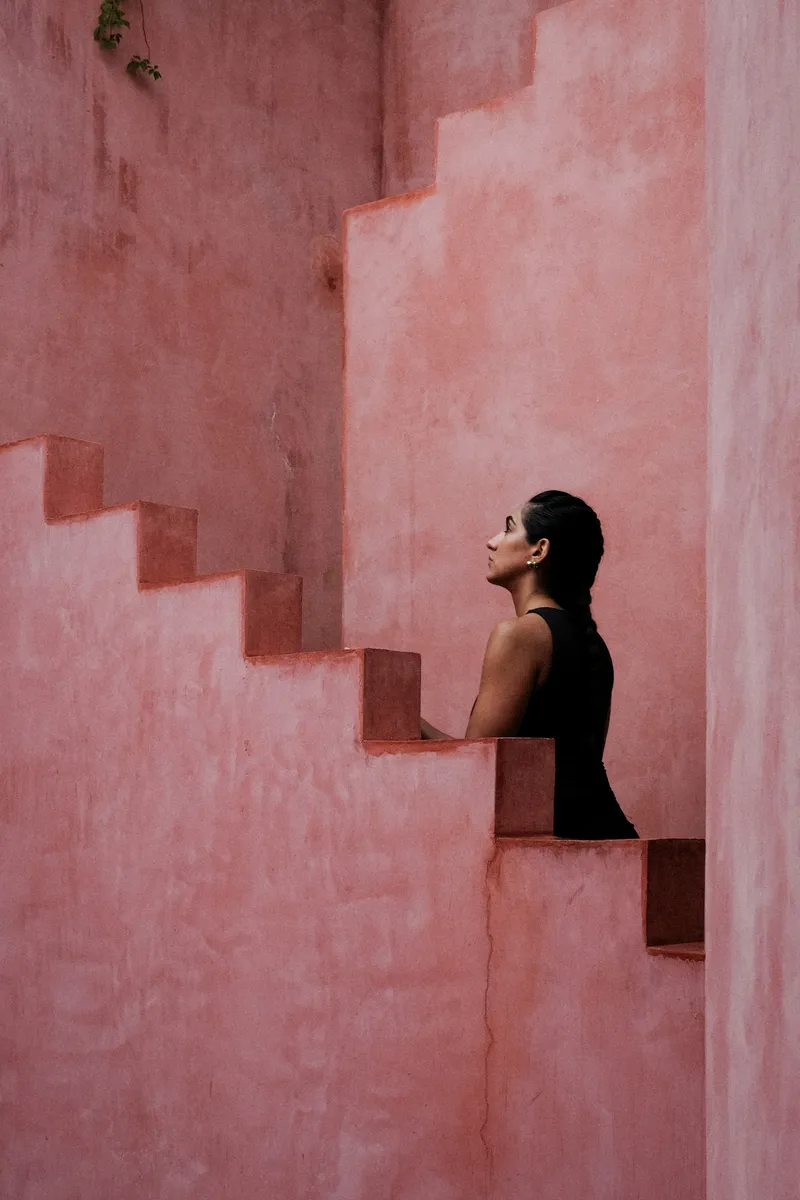
The exterior reads as a series of zigzagging fins and deep recesses rendered in handcrafted Conkal red stucco, a warm, earthy pink that grounds the project in the chromatic identity of San José del Cabo without mimicking any specific building. The rhythmic repetition of these vertical elements is deliberate: RA! likens the pattern to the papel picado, the cut paper flags strung across the town's streets during celebrations. It is a reference that works precisely because it operates at the level of rhythm and light, not literal ornament.
Balconies with striped railings punctuate the facade at irregular intervals, giving each guest room a distinct relationship with the street below. Pointed corners and arched portals further break the volume into legible parts, so the building never presents a single monolithic face to passersby. A deer sculpture standing in one ground-level threshold hints at the playful curation that continues inside.
Stepped Massing and the Scale of the Center
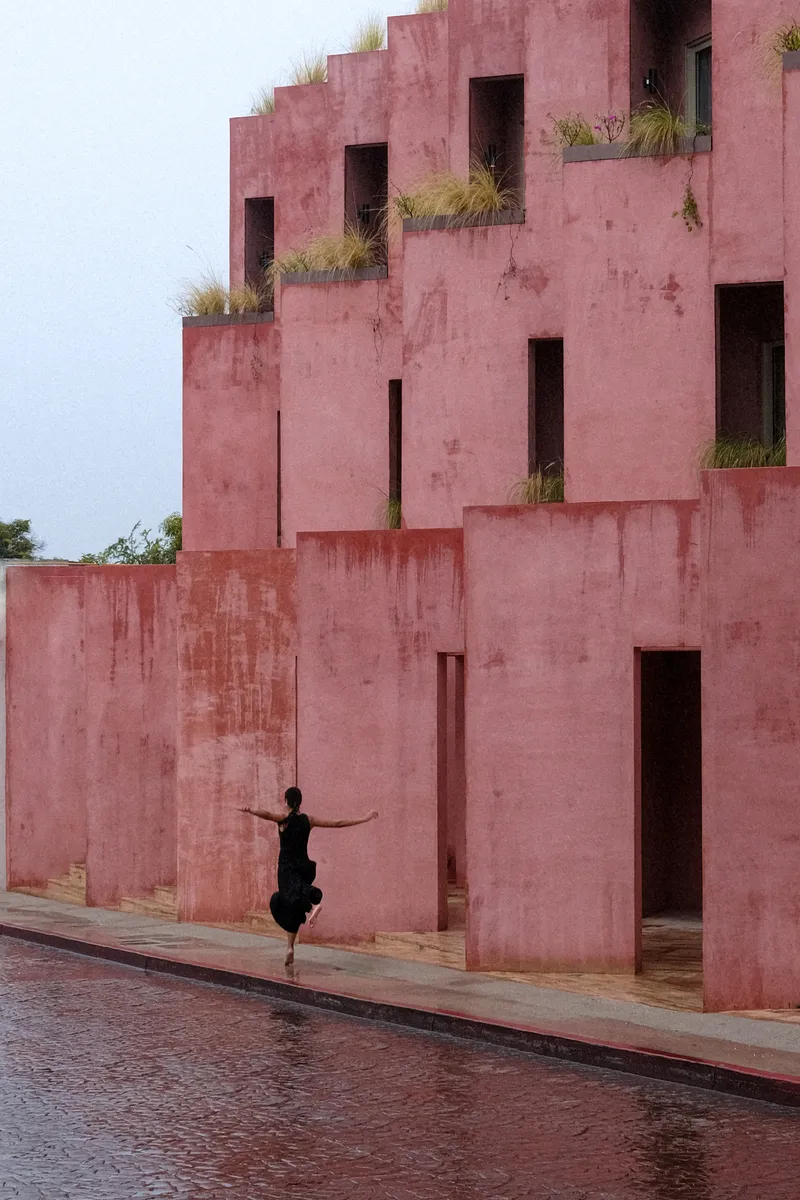
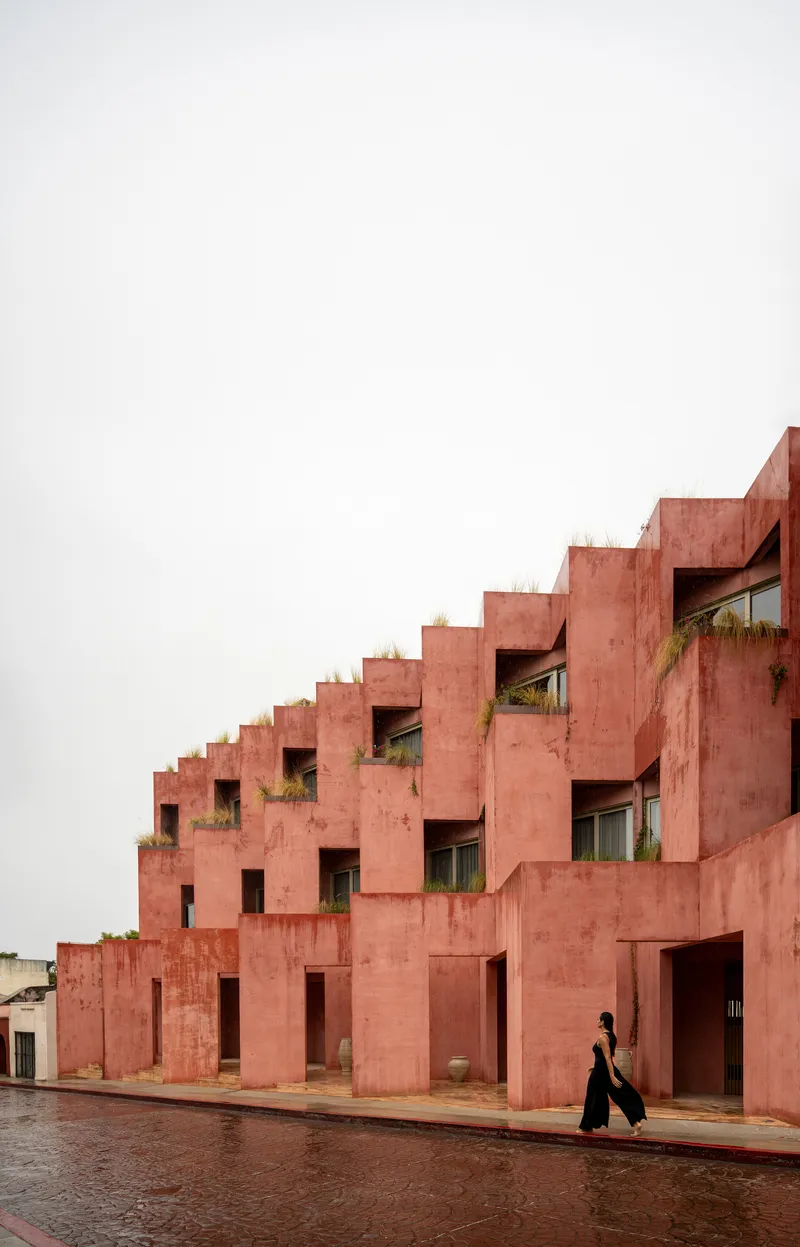
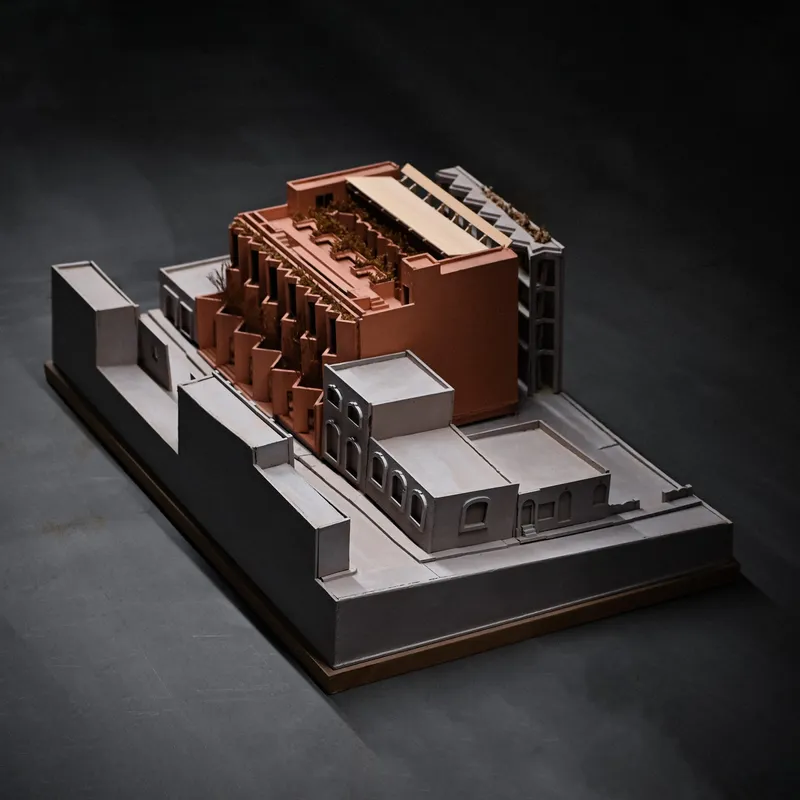
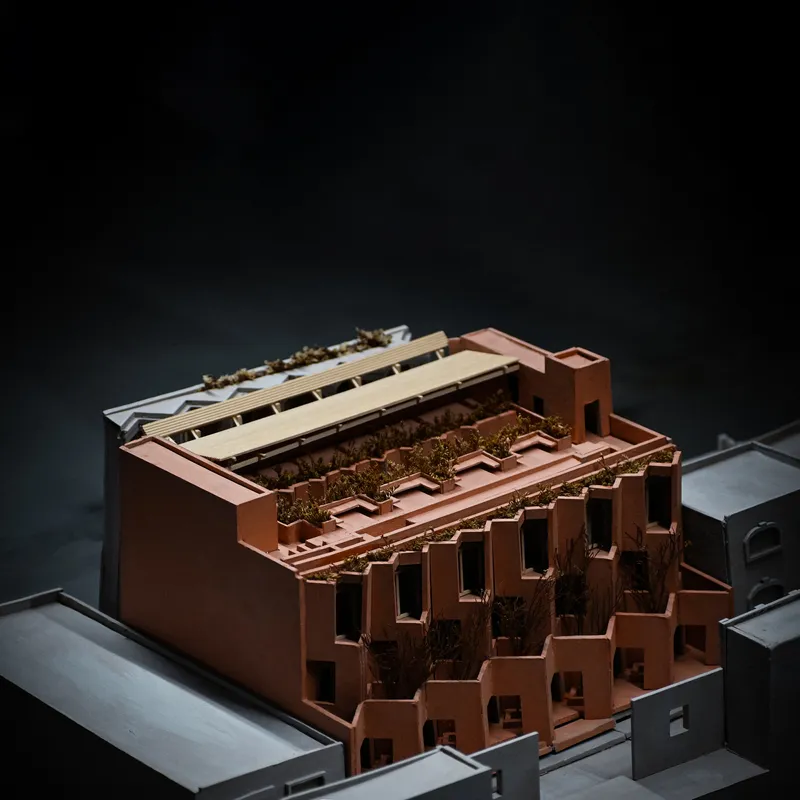
Seen from across the wet pavement on a rainy afternoon, the hotel's tiered volumes with planted openings look almost geological, a series of eroded terraces rather than floors. The progressive setback is not just an aesthetic gesture. It is a strategy for maintaining the low-rise character of a historic center located just blocks from Plaza Mijares, at the southern tip of the Baja California peninsula. The building rises to three stories but never feels like it towers over its single-story neighbors.
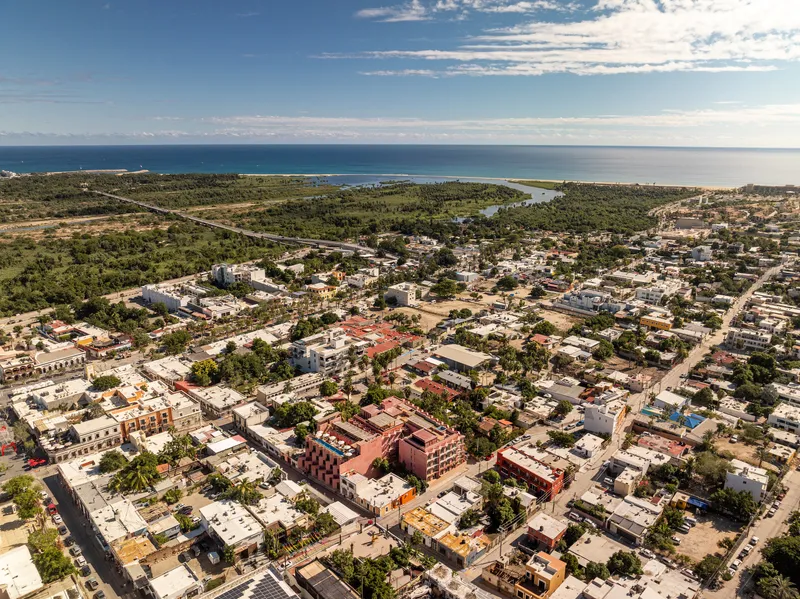
An aerial view confirms how modestly the project sits within the coastal town, its sawtooth roof and planted terraces reading as a continuation of the streetscape rather than an interruption. The red-pink tone, which shifts dramatically with the weather, helps the hotel register as part of a family of colored facades rather than an alien interjection.
The Vertical Courtyard as Climatic Engine
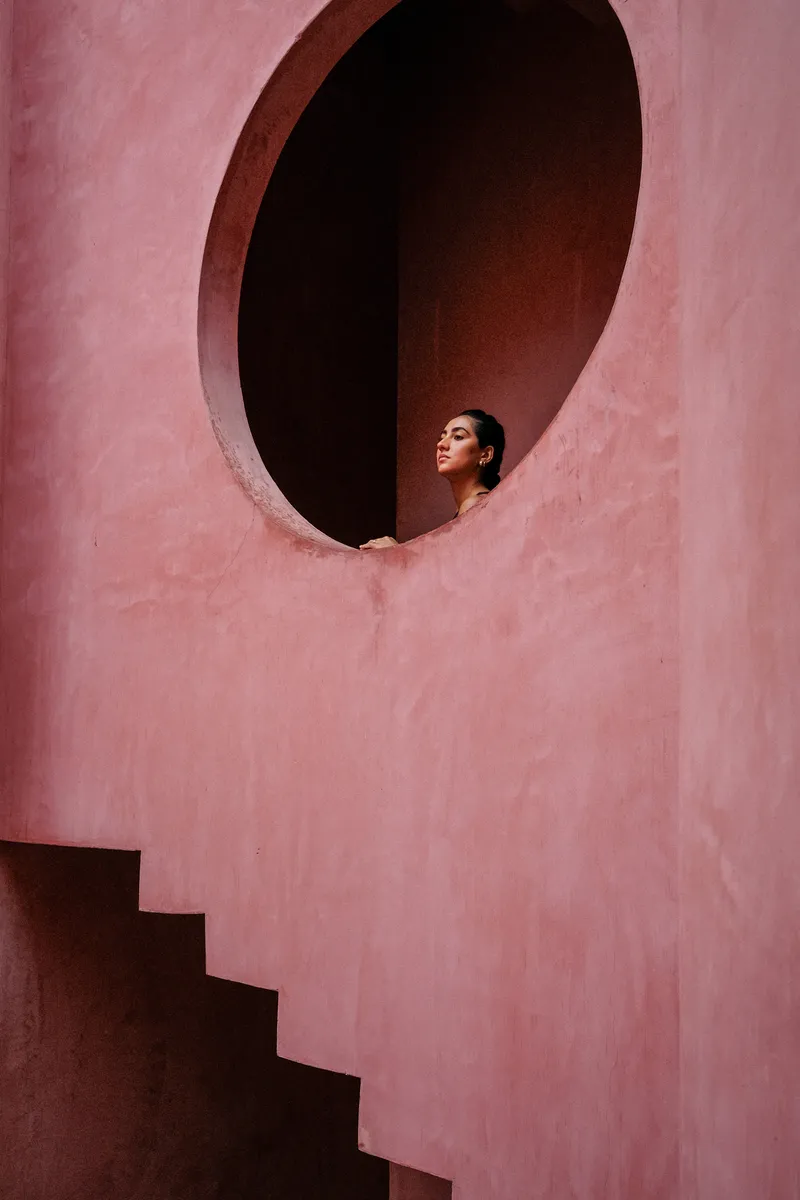
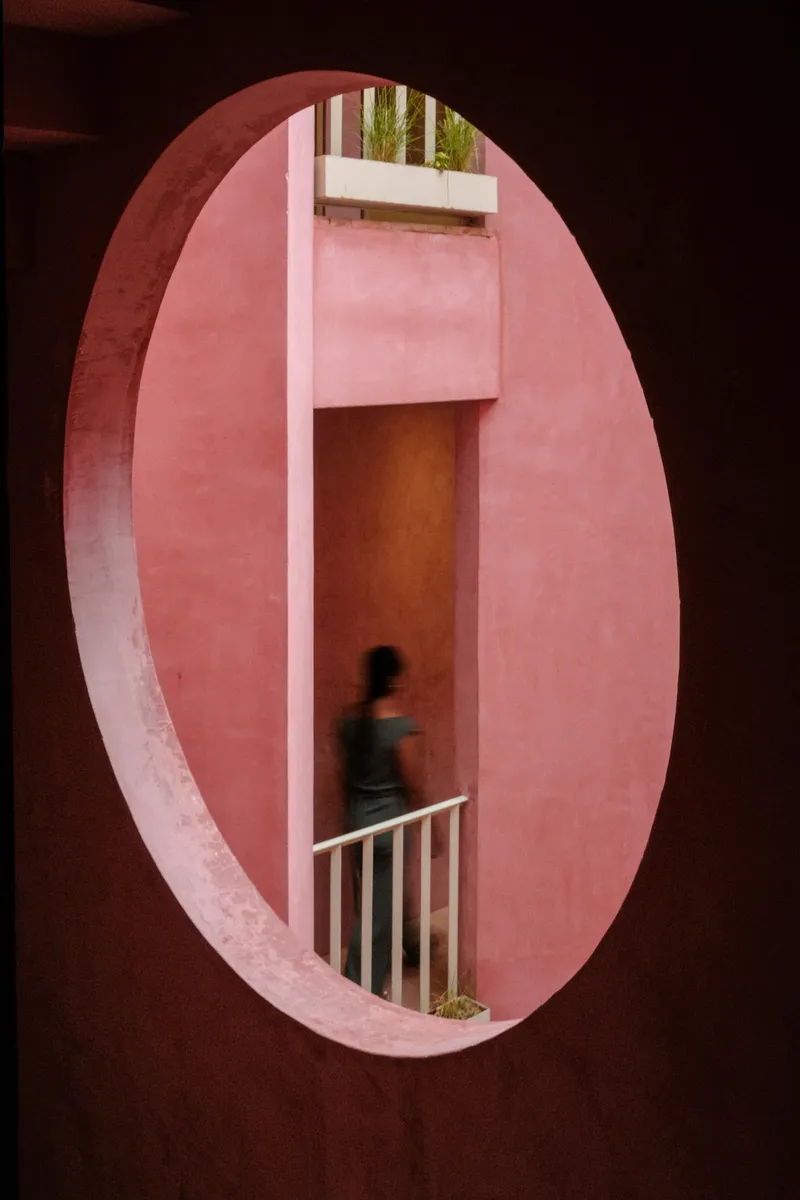
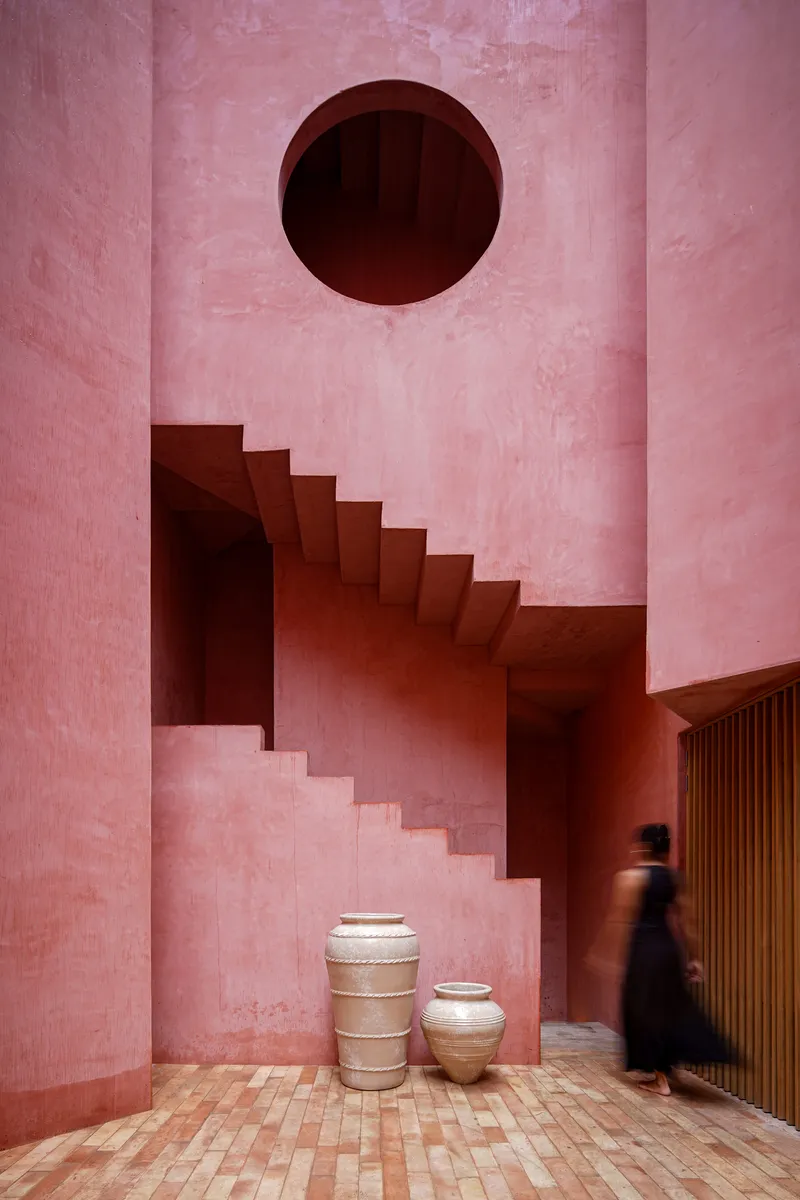
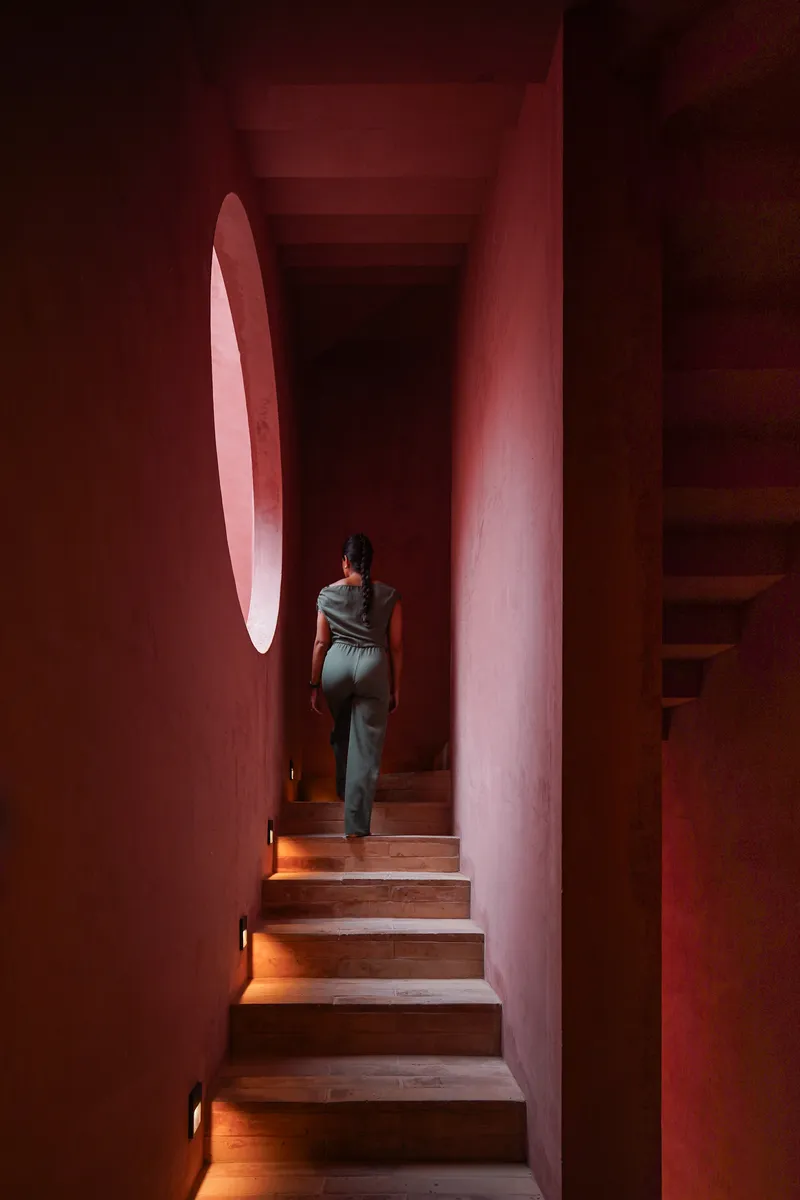
The central courtyard is the spatial and environmental heart of the building. Rising vertically through all three levels, it introduces natural light to corridors and stairwells while acting as a chimney that draws warm air up and promotes cross ventilation through the guest rooms. The oval apertures punched through its walls frame unexpected views between floors, turning a functional shaft into a piece of theatre. A figure leaning out of one such opening, a staircase spiraling past another: the courtyard is never passive.
Circular openings in the stairwell walls let occupants visually engage with the courtyard as they move between levels. At the base of one staircase, ceramic vessels sit on a polished floor, a quiet signal that the building values craft at every altitude. The effect is a hotel in which circulation never feels like dead space; every passage is also a room.
Corridors, Arches, and the Long View
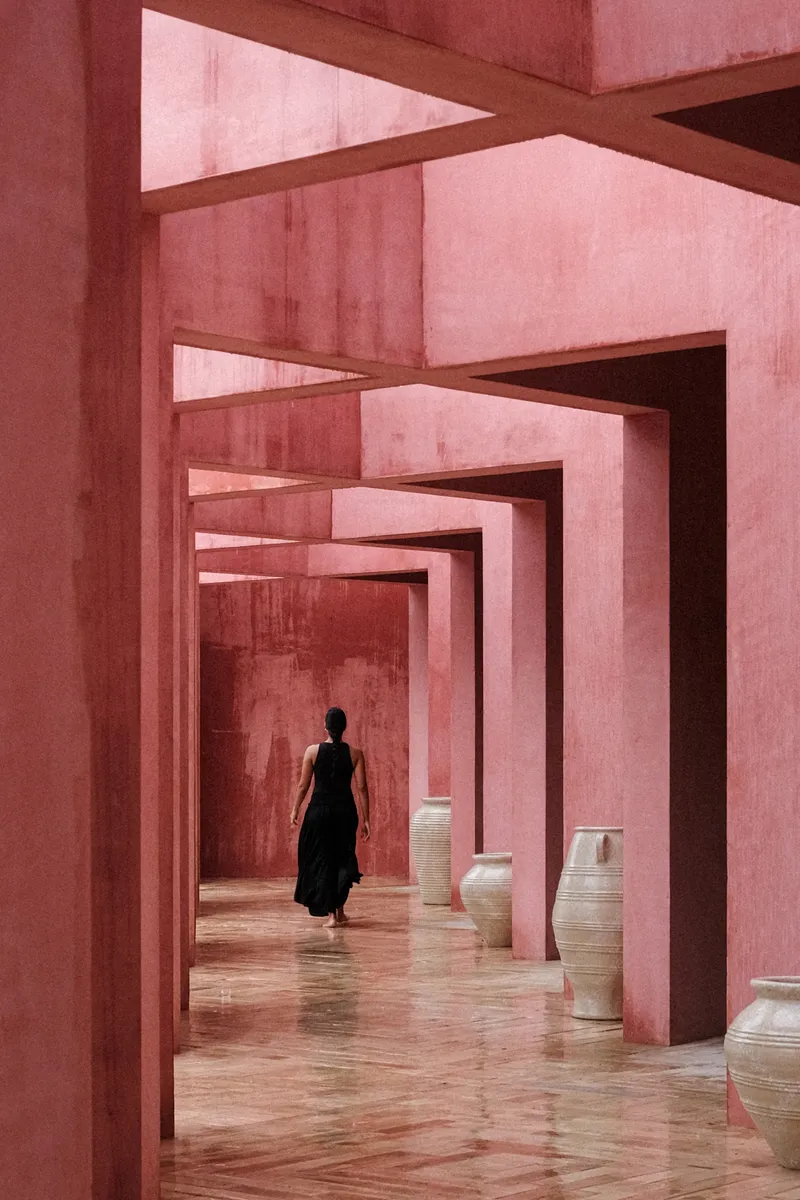
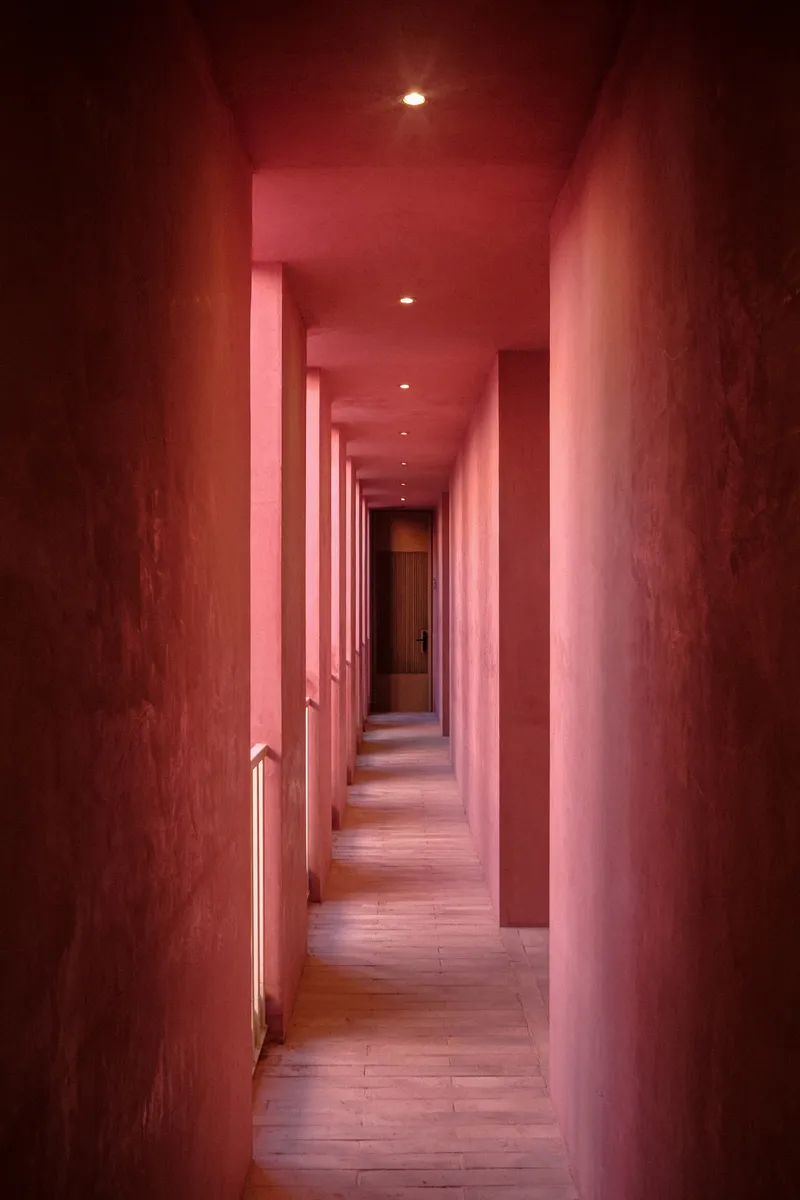
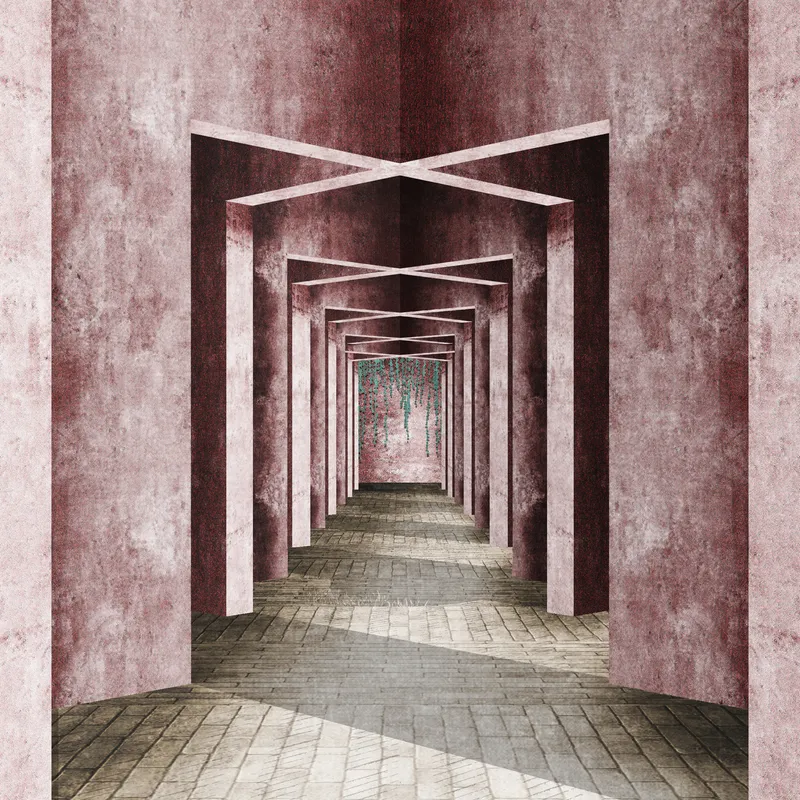
RA! exploits enfilade, that oldest of architectural tricks, with real confidence here. Nested doorways recede through pink plaster walls, each one framing the next and pulling the eye toward a vanishing point that feels impossibly deep for a building of this size. The corridors are lined in the same Conkal stucco as the exterior, so the material language remains continuous from street to guest room. There is no moment where you cross from "public" finish to "private" finish; the hotel simply folds the city inward.
An arcaded passage with repeating pink arches and crossed timber beams over a brick-paved floor evokes the colonnaded walkways of Mexican colonial towns. The material palette here is restrained: concrete, handcrafted stucco, clay tile, Veracruz travertine. Every surface is tactile, meant to be touched and weathered rather than preserved behind glass.
Rooftop as Destination
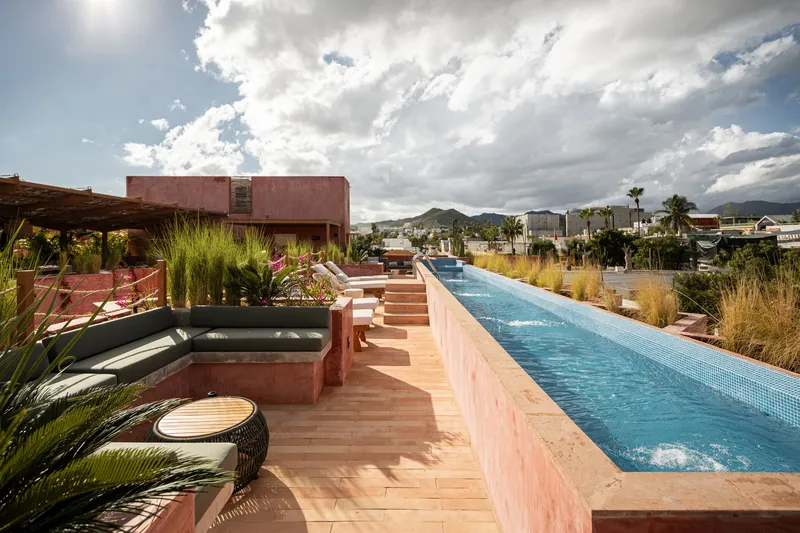
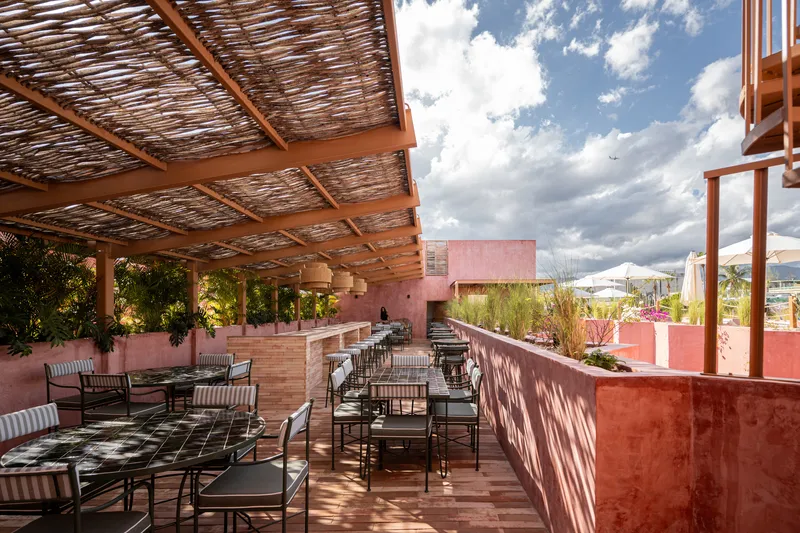
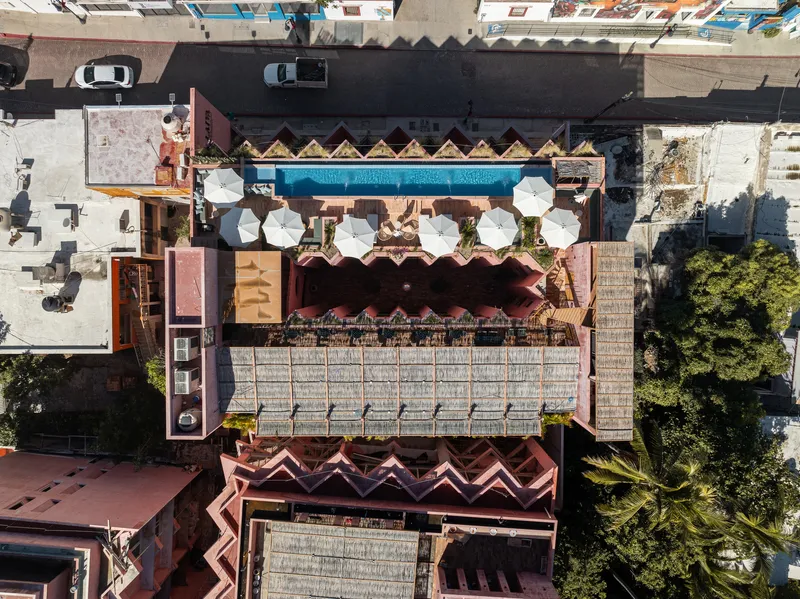
The roof garden condenses the hotel's ambitions into one level. A lap pool runs along one edge with planted beds and timber decking, oriented toward the Sierra de la Laguna mountains visible under cloudy skies. On the opposite side, a woven timber pergola shelters dining tables, its shadow pattern recalling the layered openings of the floors below. White umbrellas visible in the drone view dot the terrace like punctuation marks.
What elevates the rooftop above the standard hotel amenity deck is its relationship with the surrounding urban context. The sawtooth roofline, visible from the adjacent street, means the rooftop is not hidden. It participates in the town's skyline, contributing greenery and activity to a view that is otherwise defined by flat concrete roofs and water tanks. The hotel gives back to the town even at its highest point.
Guest Rooms and Material Intimacy
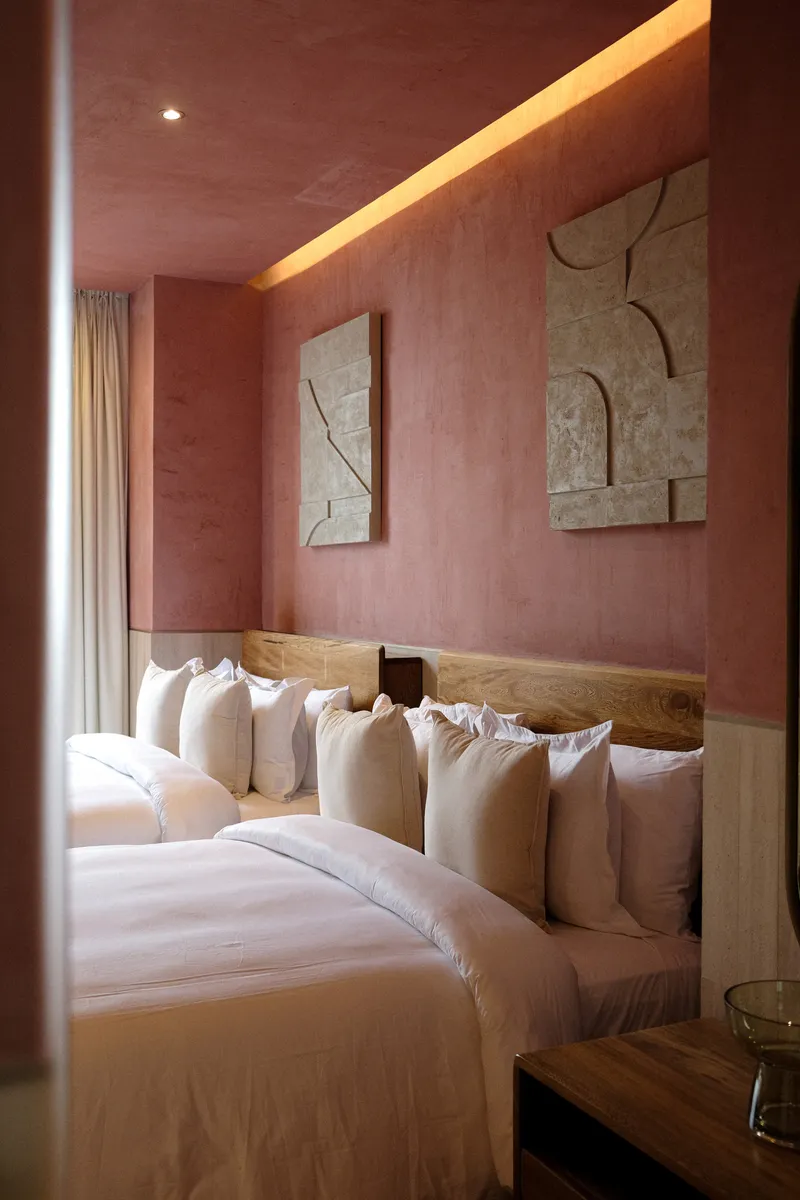
The guest rooms distill the project's material language into an intimate register. Pink plaster walls wrap a timber headboard, white linens, and stone relief panels lit by warm cove lighting. There is no surface in the room that feels generic or imported wholesale from a hospitality supplier catalog. The clay tile floors, the travertine accents, the aluminum window frames: each element has been selected for its resonance with the local building tradition rather than for mere luxury signaling.
Narrow staircases with oval wall openings and recessed step lighting create moments of compression that make the rooms feel more generous by contrast. Cantilevered pink steps emerging from corner walls add sculptural drama to what would otherwise be purely functional transitions. The hotel's interiors reward slow movement and close looking, qualities that align with the pedestrian pace of the town outside.
Plans and Drawings
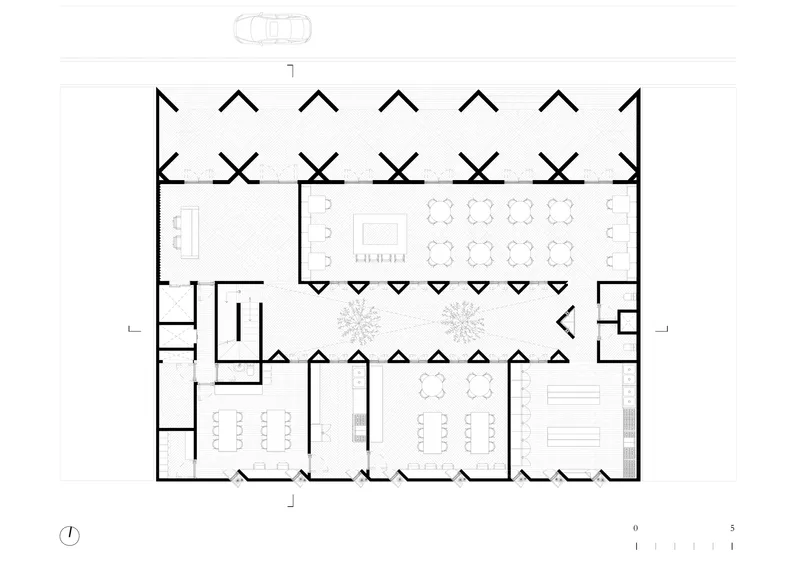
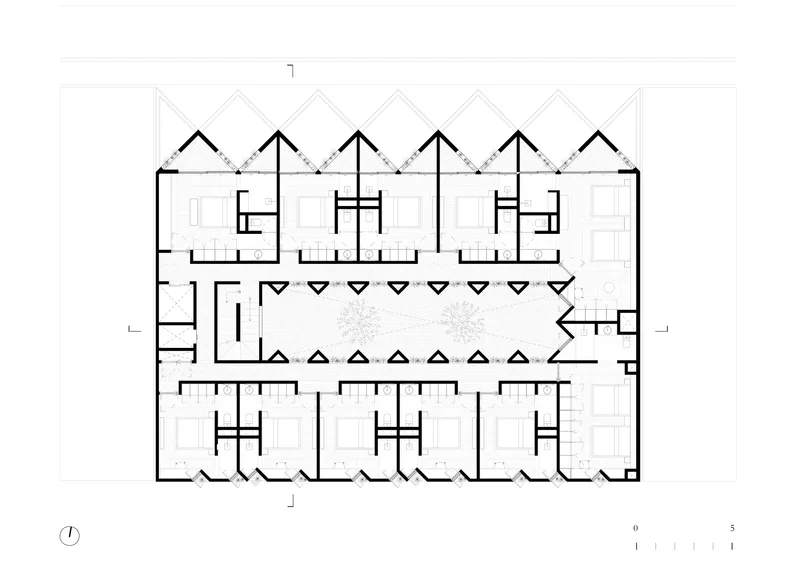
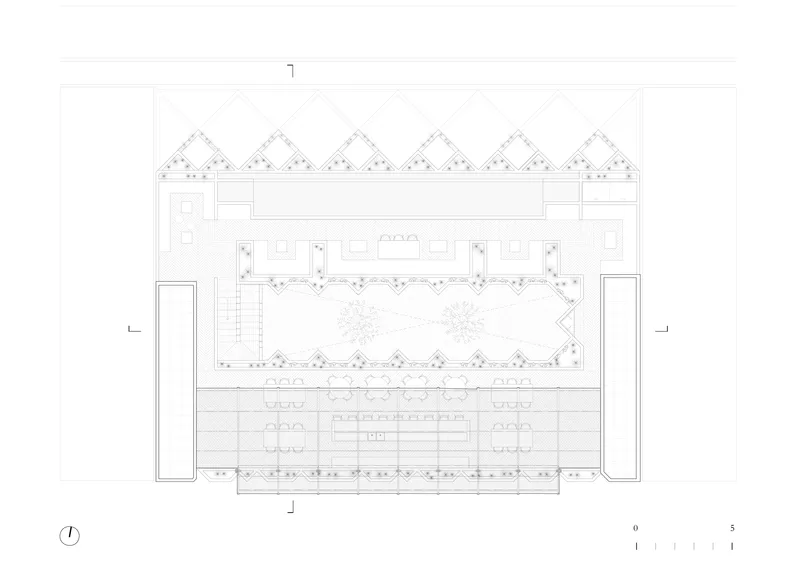
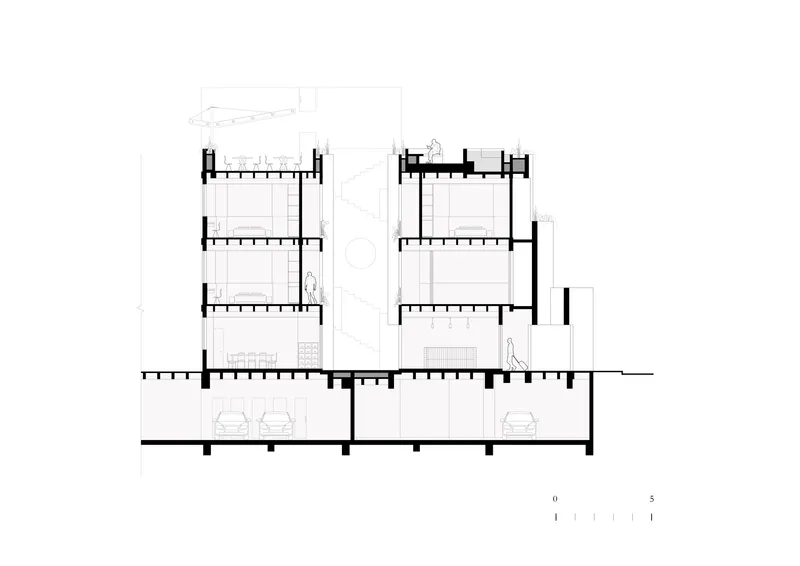
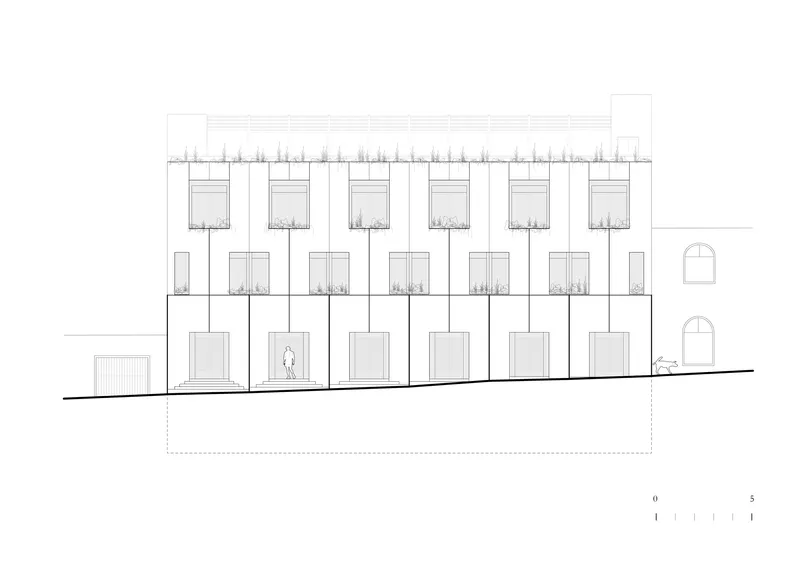
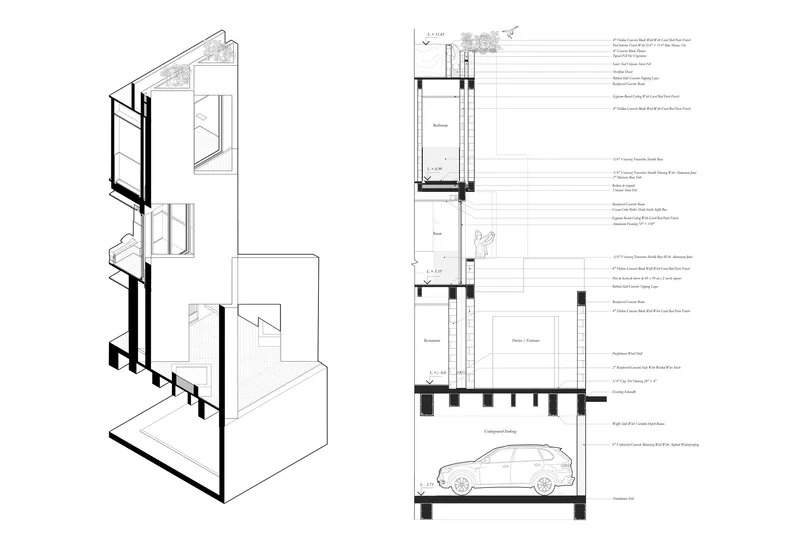
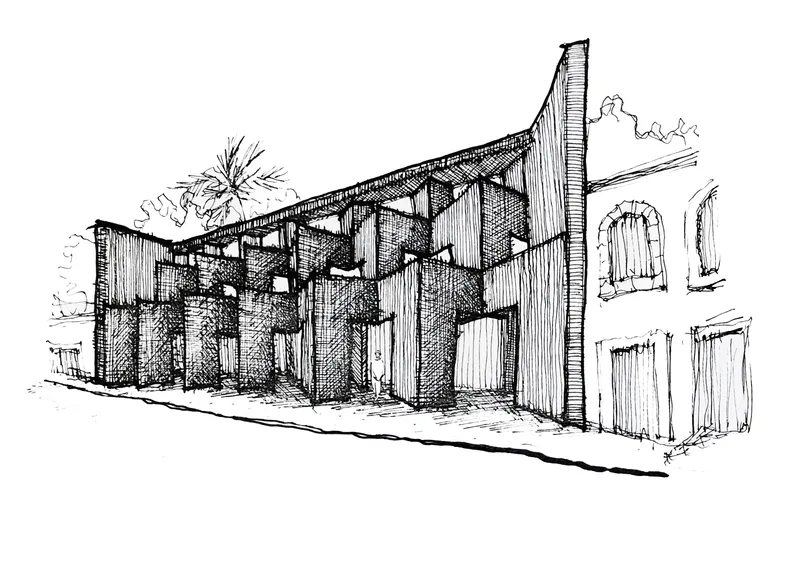
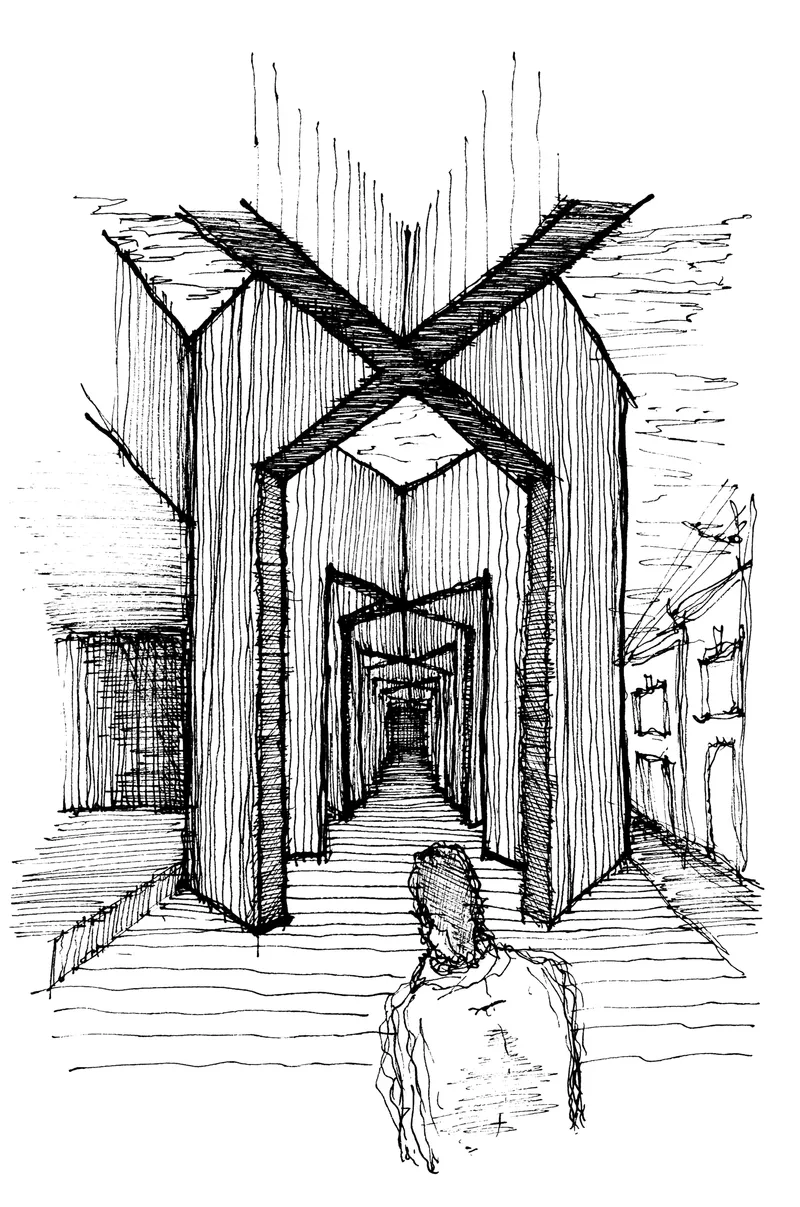
The floor plans reveal how the sawtooth roofline is not merely decorative but a direct consequence of the interwoven wall system. Two interior courtyards organize the plan on each level, flanked by service zones and a circulation corridor that doubles as a gallery. The section drawing clarifies the vertical stacking: guest rooms sit above a ground-level parking garage, with the rooftop garden crowning the composition. A longitudinal section and axonometric together expose the material layers, concrete structure, hollow block infill, stucco finish, and show how the triangular wall geometries generate the building's distinctive silhouette.
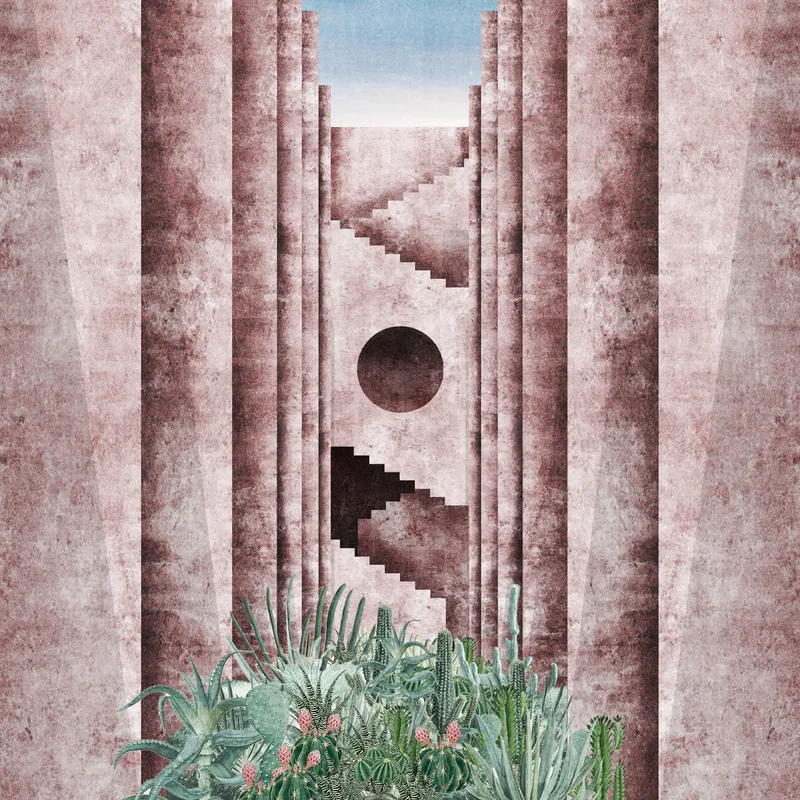
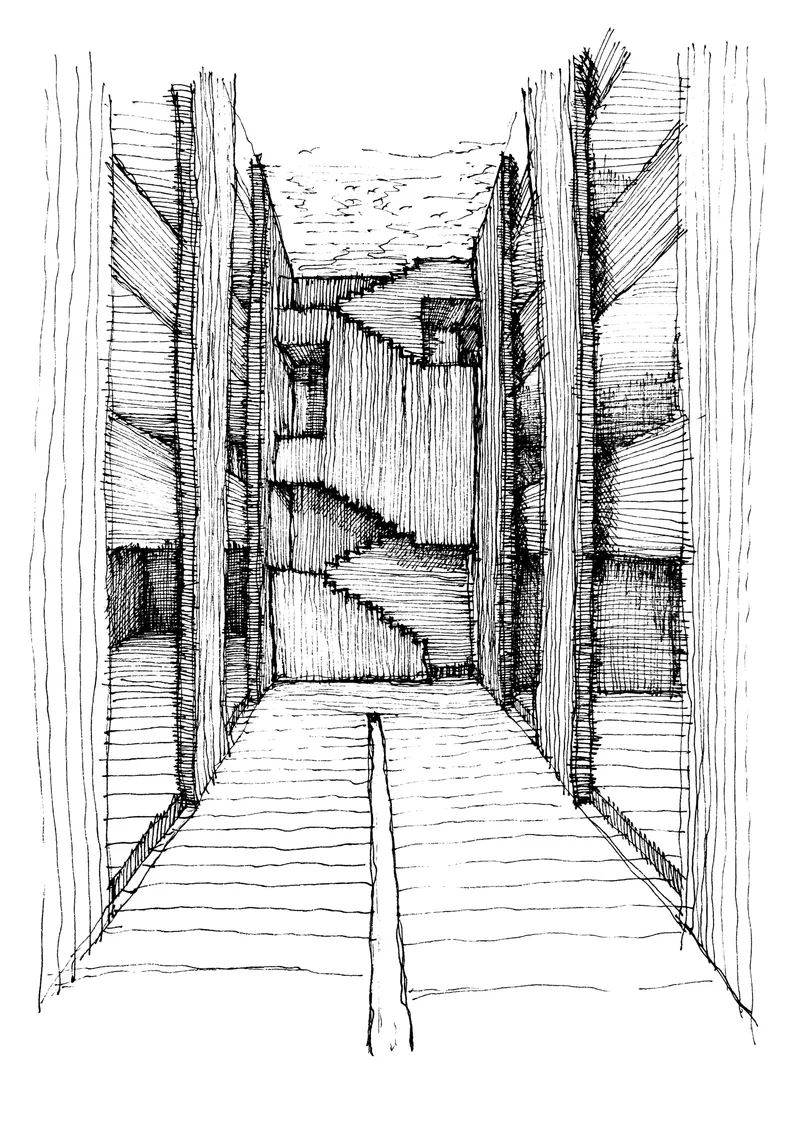
The physical models, rendered in white and copper tones, reveal the terraced massing strategy with striking clarity under dramatic lighting. Concept sketches in pencil and ink show a timber-clad portal and narrow passageway that appear to have evolved into the arched entries of the built project. The progression from sketch to model to finished building demonstrates a design process in which the street-level experience was the controlling idea from the very beginning.
Why This Project Matters
Laiva Plaza Hotel matters because it proposes a credible alternative to the gated resort model that dominates hospitality architecture in the Baja California peninsula. By setting the building back from the street, stepping its mass down to meet the historic center, and running the same material palette from sidewalk to rooftop, RA! produces a hotel that strengthens the public realm rather than withdrawing from it. The central courtyard is not a scenic feature for Instagram; it is a functioning climatic device that reduces the need for mechanical cooling. The facade is not decorative pattern for its own sake; its rhythm comes from a structural system of interwoven walls.
In a moment when many Mexican resort towns are losing their character to homogeneous development, Laiva Plaza insists that specificity, in material, in color, in urban strategy, is not a constraint but a resource. The handcrafted Conkal stucco, the Veracruz travertine, the clay tile floors: these are not luxury upgrades but arguments for a building culture rooted in place. RA! has delivered a project that is simultaneously a good hotel and a good neighbor, and that combination is rarer than it should be.
Laiva Plaza Hotel by RA! (Santiago Sierra, Pedro Ramírez de Aguilar, Cristóbal Ramírez de Aguilar). San José del Cabo, Mexico. 1,557 m². Completed 2026. Photography by Oscar Hernández.
About the Studio
Share Your Own Work on uni.xyz
If projects like this are the kind of work you want to make, uni.xyz is a place to publish your own, find collaborators, and enter design competitions.


Popular Articles
Popular articles from the community

Temporary Home for Dogs: A Reversed Zoo Rethinks Animal Shelter Architecture
In Bucharest, a sinuous corridor and freed landscape flip the logic of containment, designing a shelter that works to make itself unnecessary.

The Amber Palace Opera: A Geological Fiction Surfaces on Tallinn's Baltic Waterfront
Pierre Brillard reimagines a Baltic legend as a public landscape, opera house, and waterfront promenade rooted in Tallinn's coastal identity.

Opera on the Sea: Driftwood Logic Shapes a Timber Opera House on Estonia's Coast
Trevor Orgill's opera house translates the entangled drift of floating timber into a civic building where wood, water, and music converge.

Faces of the Soviet Avant-Garde: Turning Moscow's Street Names into an Open-Air Museum
A network of sculptural installations across a Moscow residential district transforms forgotten architect names into spatial encounters with cultural memor

Similar Reads
You might also enjoy these articles

Pixel Gardens: One Repeated Module Stacked Into a Terraced Social Housing Tower for Famagusta
Salem Bader's shortlisted housing tower builds a vertical neighbourhood from one repeated module, offsetting units to carve terraces, light and air.

Bao Huynh Watercolor Atelier: A Serene Art Retreat in Hội An
Bao Huynh Watercolor Atelier in Hội An blends multifunctional art spaces, sustainable design, local materials, and family-friendly living in a serene environment.

Atelier Macri Concept Store Interior Design by CASE-REAL
Atelier Macri store features a "ko" counter, walnut wood details, cork displays, blending retail, gallery, and seamless customer experiences.

Manuel Vargas Izquierdo Stadium and High-Performance Sports Center: Architectural Excellence in Jalpa de Méndez
The Manuel Vargas Izquierdo Stadium blends sustainable design, inclusive sports facilities, and cultural-inspired architecture, revitalizing Jalpa de Méndez’s public spaces.

Comments (0)
Please login or sign up to add comments
No comments yet. Be the first to comment!