
Rahyaft Office by NOIR Office: An Innovative Office Architecture Design that Fosters Interaction and Flexibility
An interactive office building in Tehran redefines workspaces through innovative design, collective zones, vertical atriums, and flexible spatial planning.


Reimagining the Traditional Workspace in Tehran
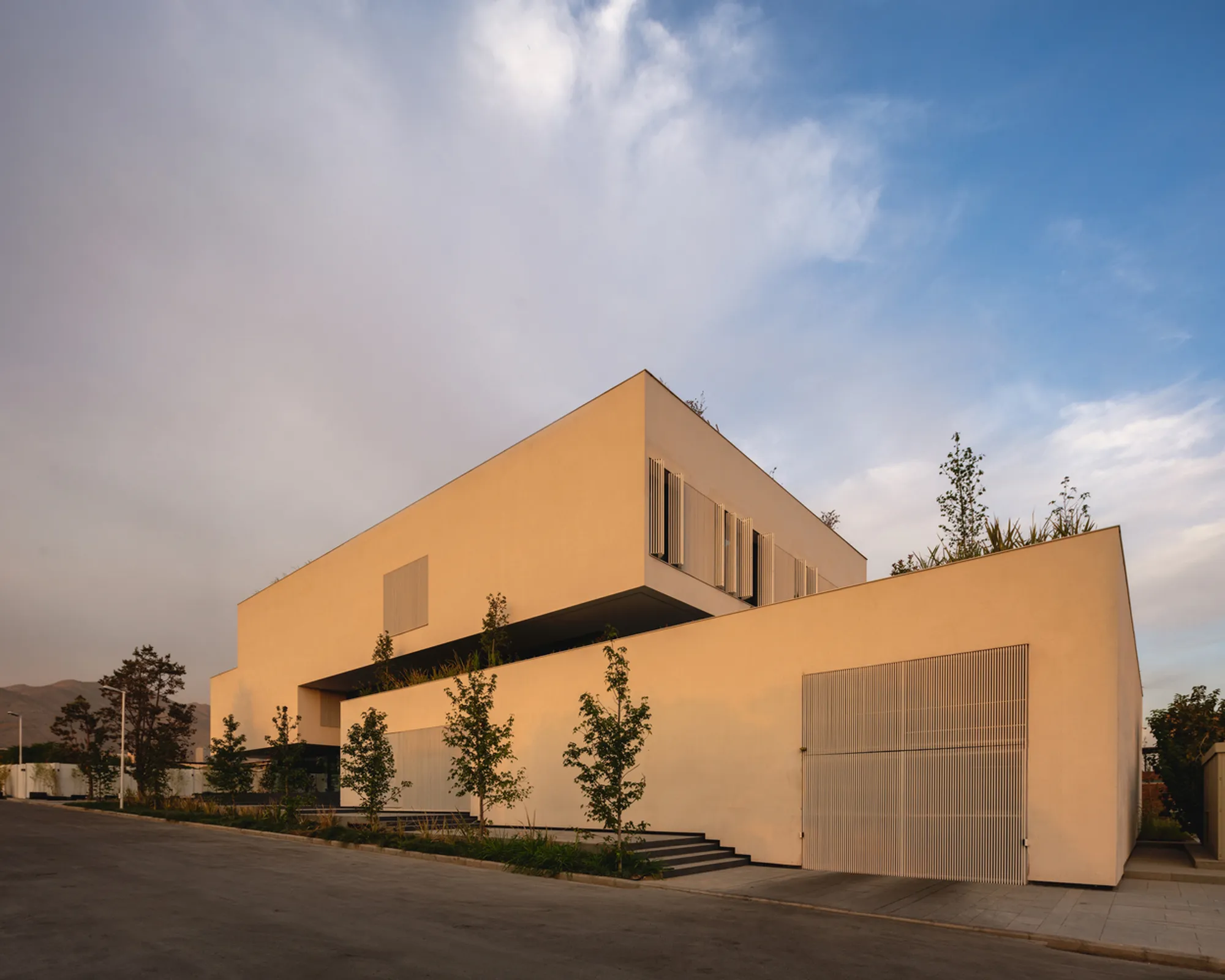
Located in Tehran, Iran, the Rahyaft Central Office by NOIR Office redefines the conventional boundaries of workplace design through an innovative architectural language. Completed in 2024 and spanning 7,500 square meters, this office building merges architectural experimentation with programmatic fluidity, transforming how occupants engage with their environment. At the heart of the concept is the idea of challenging typical office typologies, proposing a more dynamic, interactive, and human-centered space for work, collaboration, and leisure.
Stacked Massing and Responsive Volume Shifts
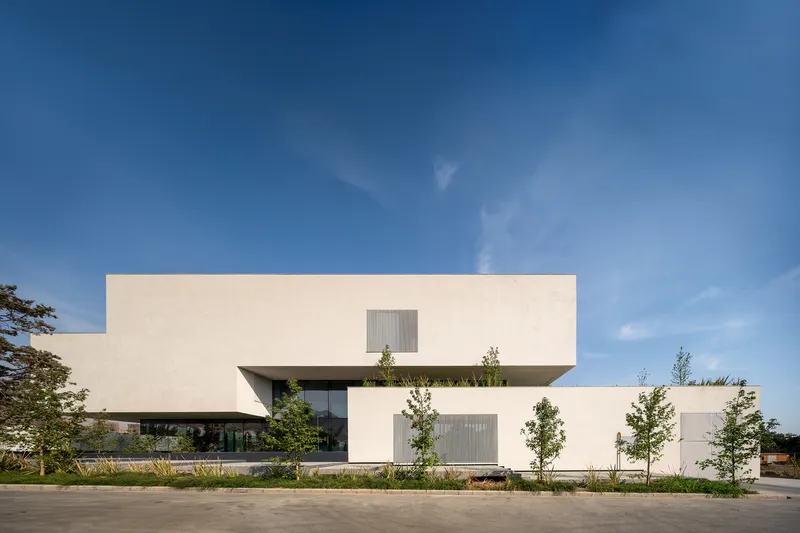
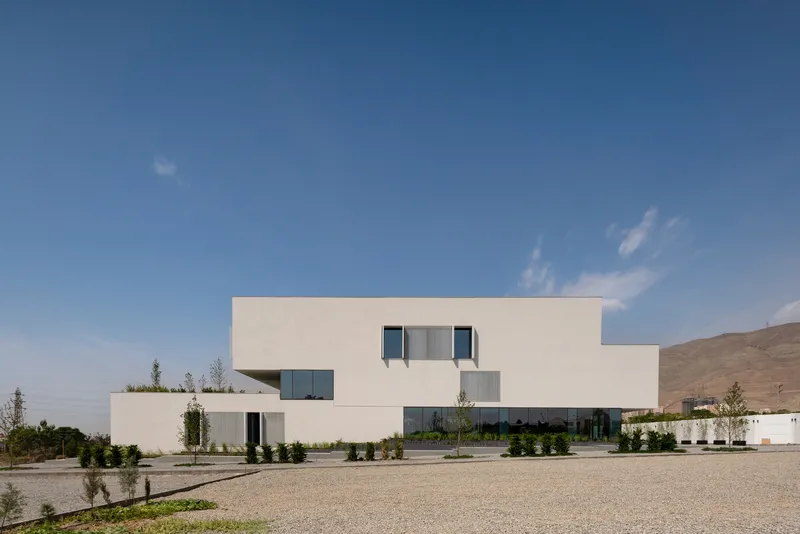
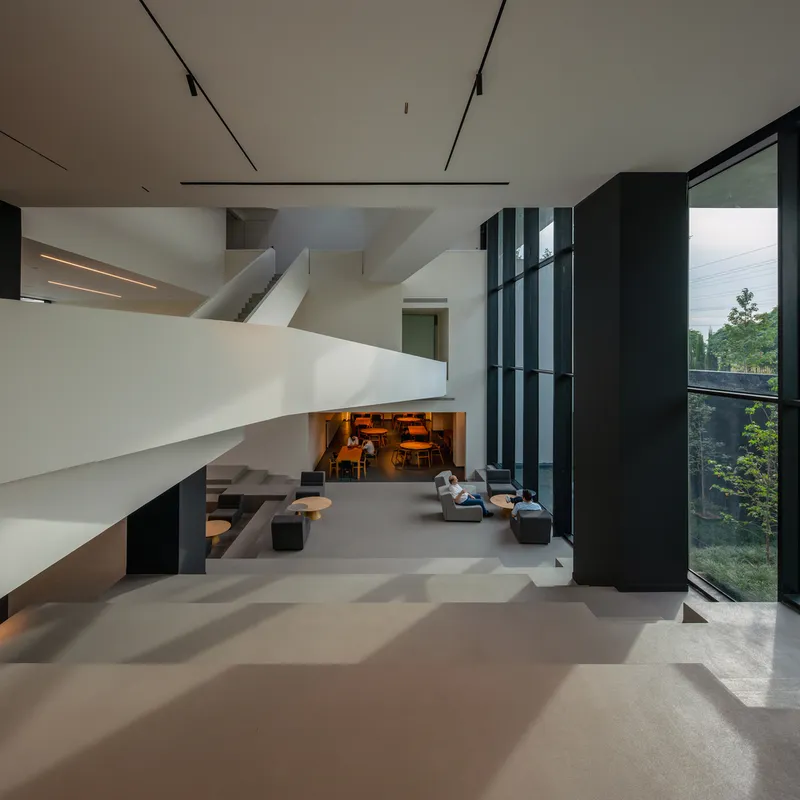
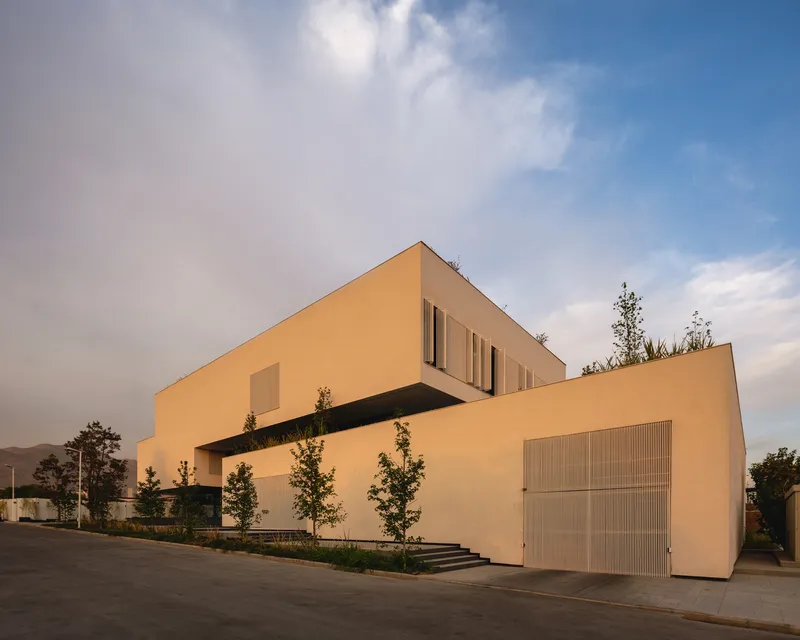
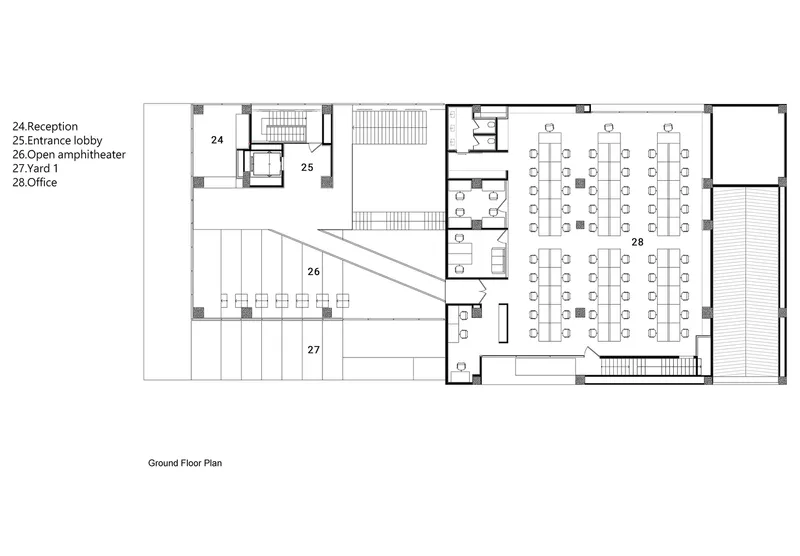
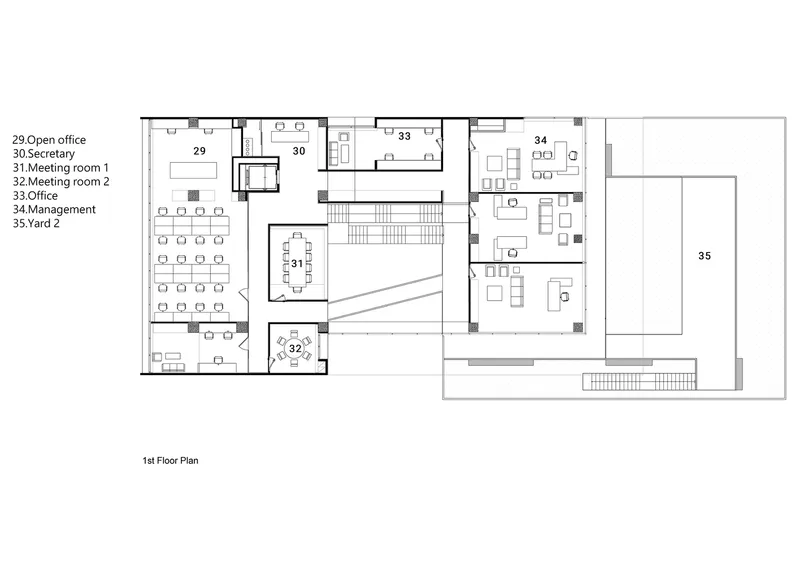
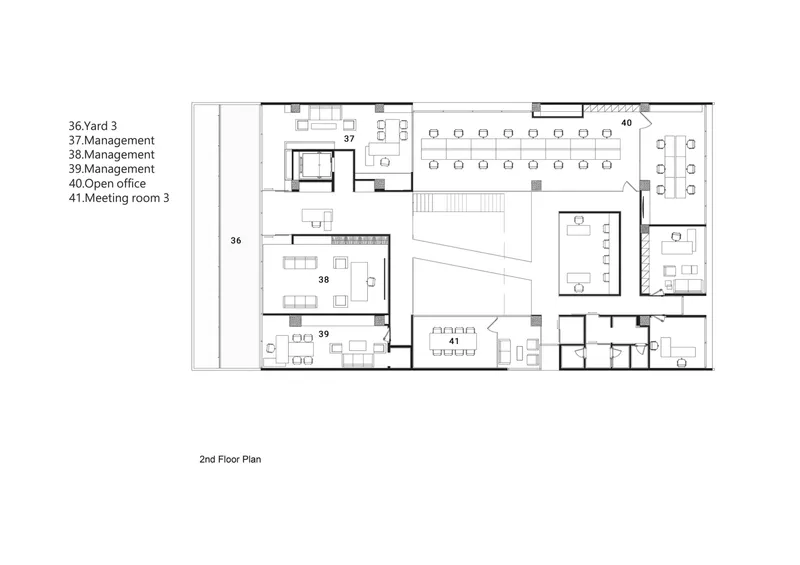
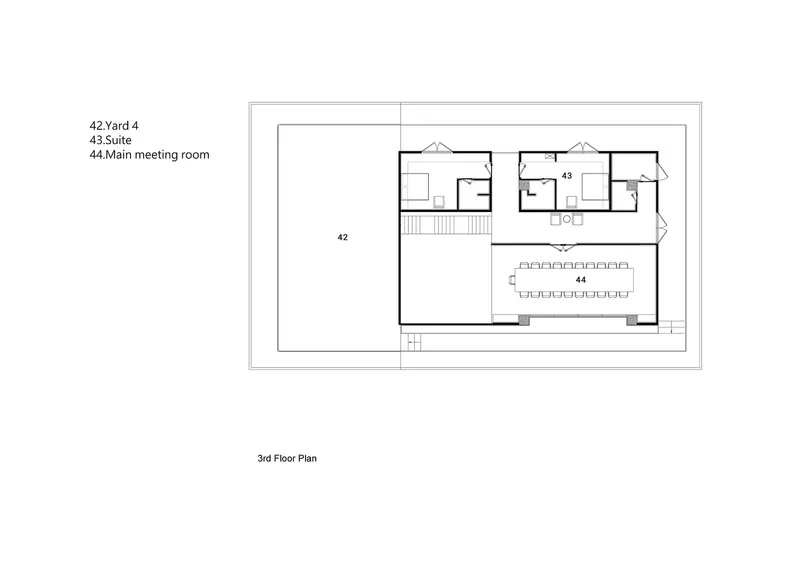
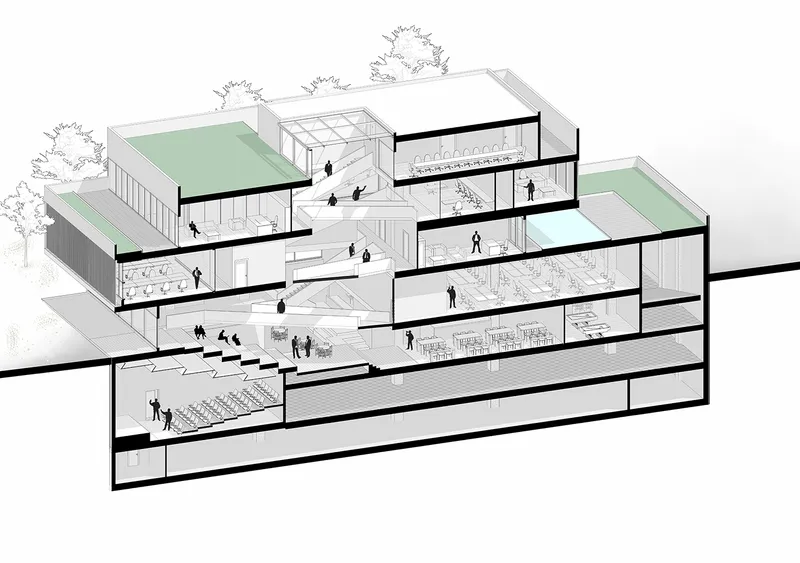
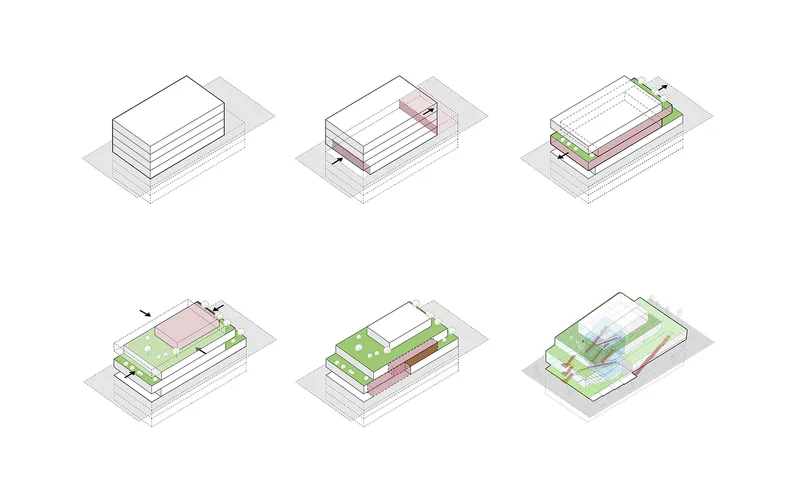
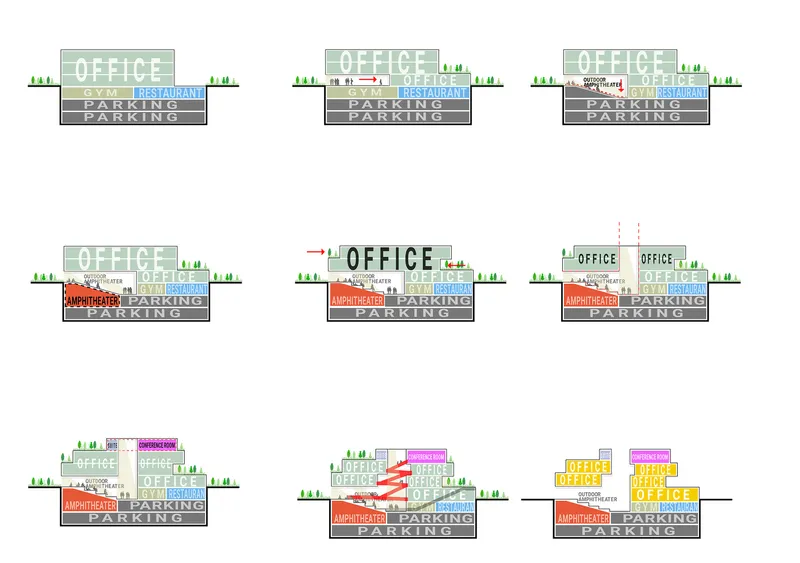
The design originates from a simple mass occupying half of the site footprint, shaped into three stacked rectangular volumes that rise up to three stories. These volumes are strategically shifted along the north-south axis to create cascading terraces and semi-open spaces. The resulting design moves away from a monolithic block and instead produces a tiered configuration that introduces visual permeability and spatial openness. These terraces function as outdoor rooms, collective zones, and breathing spaces that blur the line between work and relaxation.
A Vertical Void That Connects and Activates
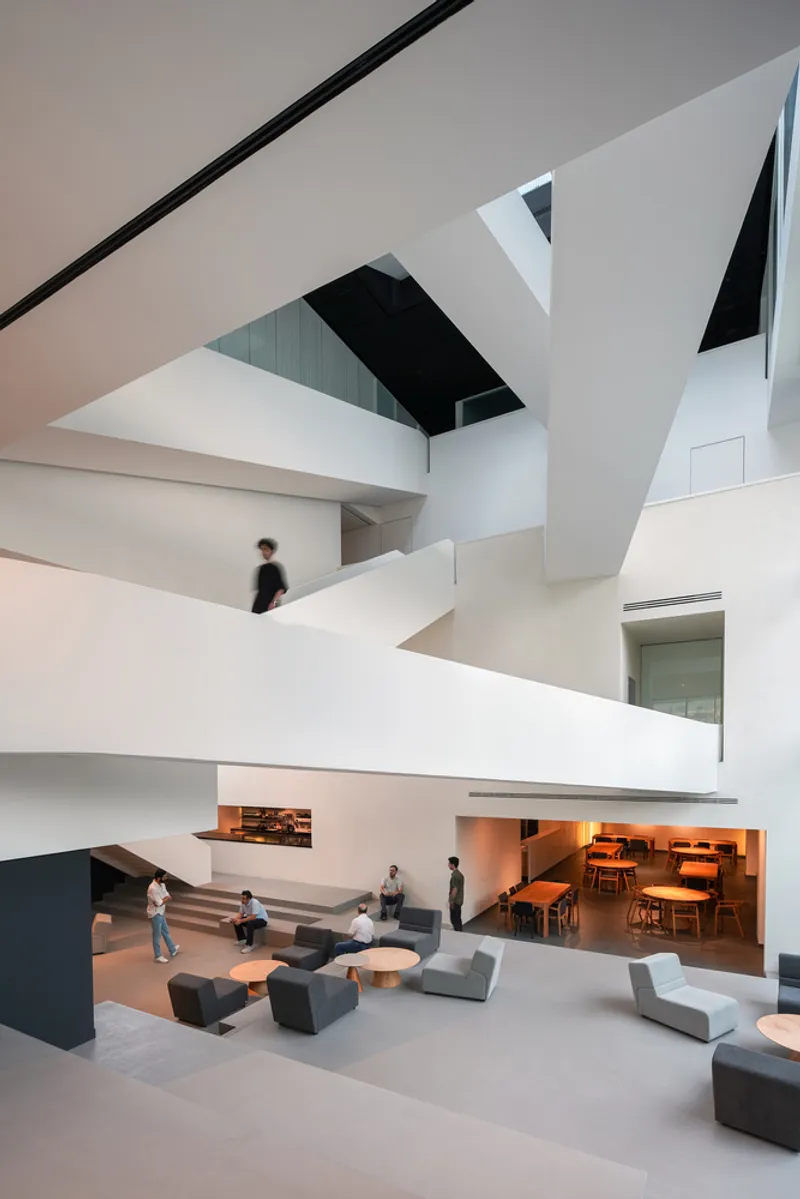
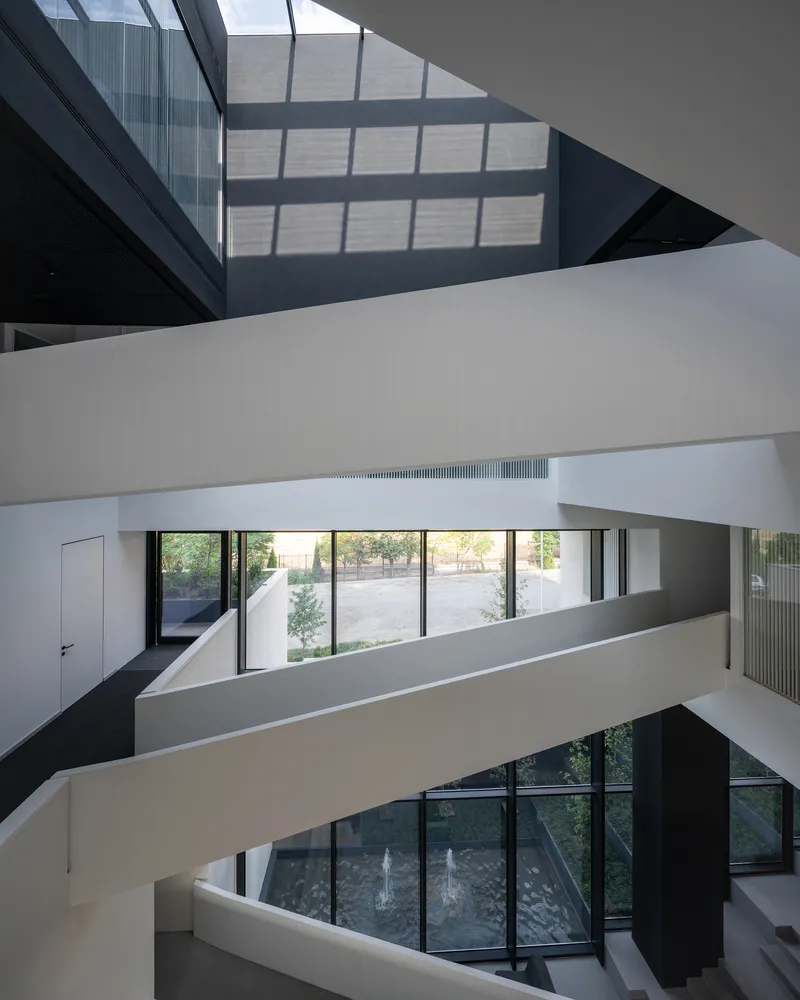
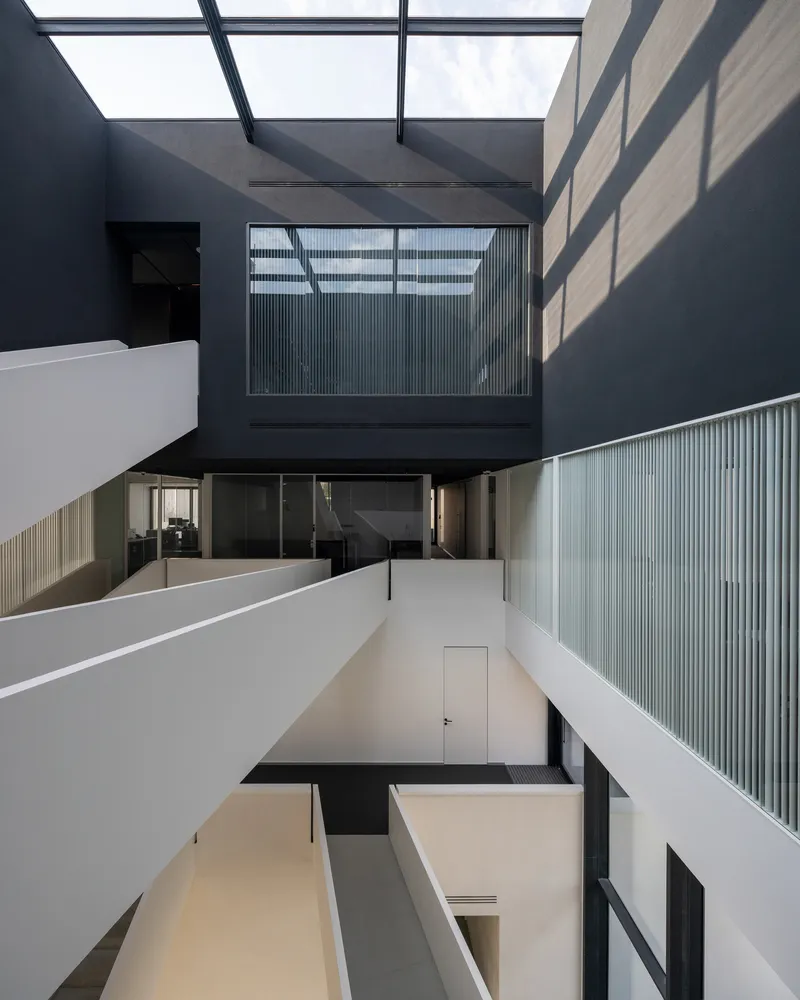
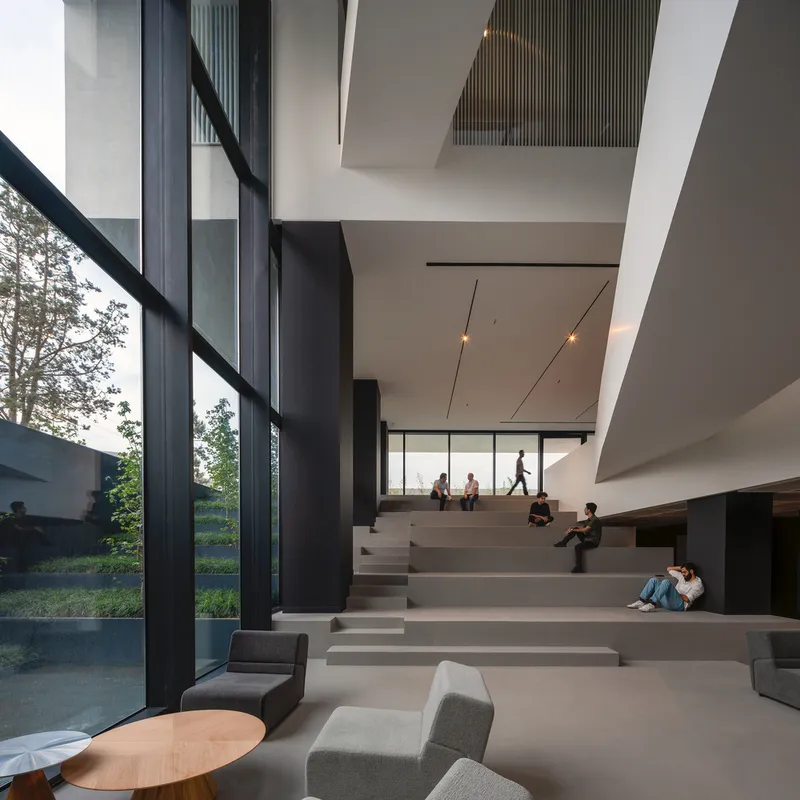
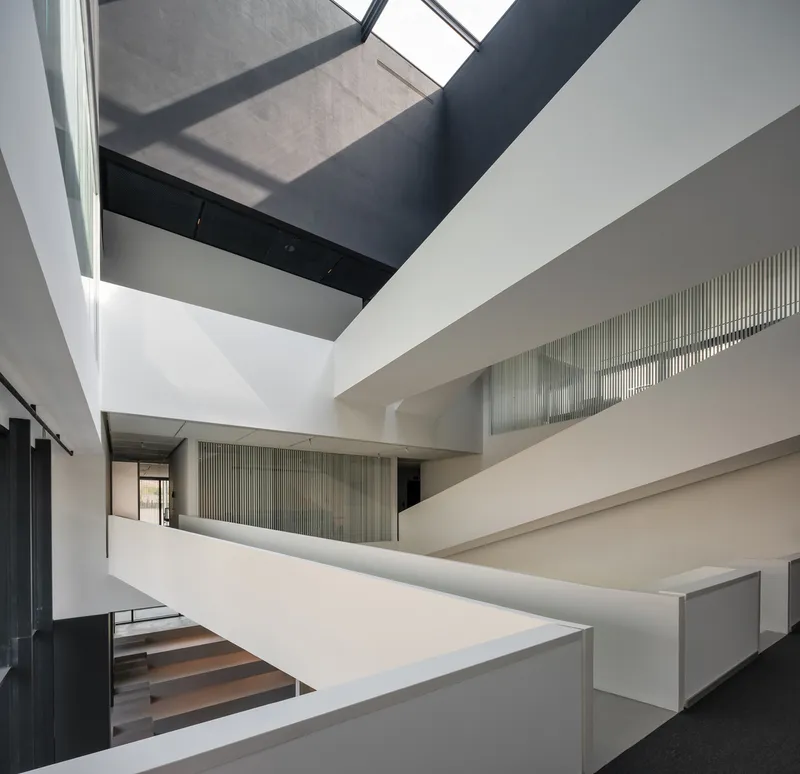
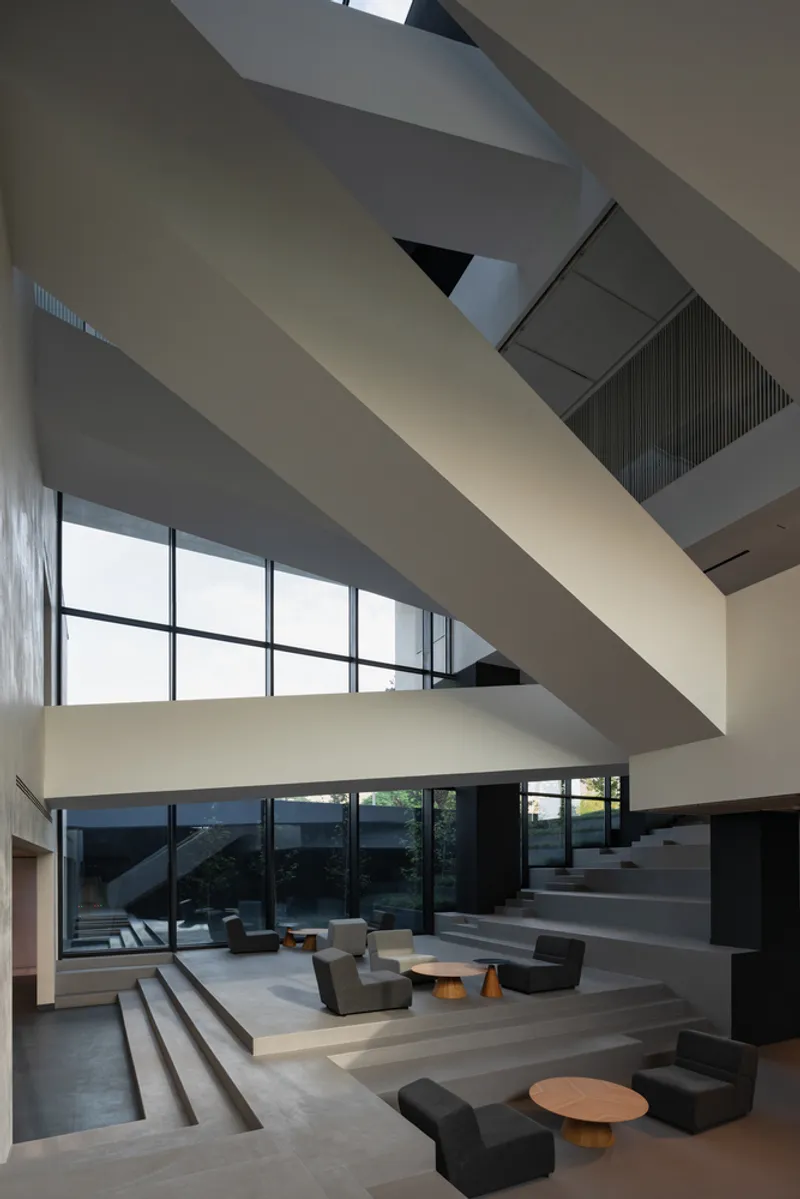
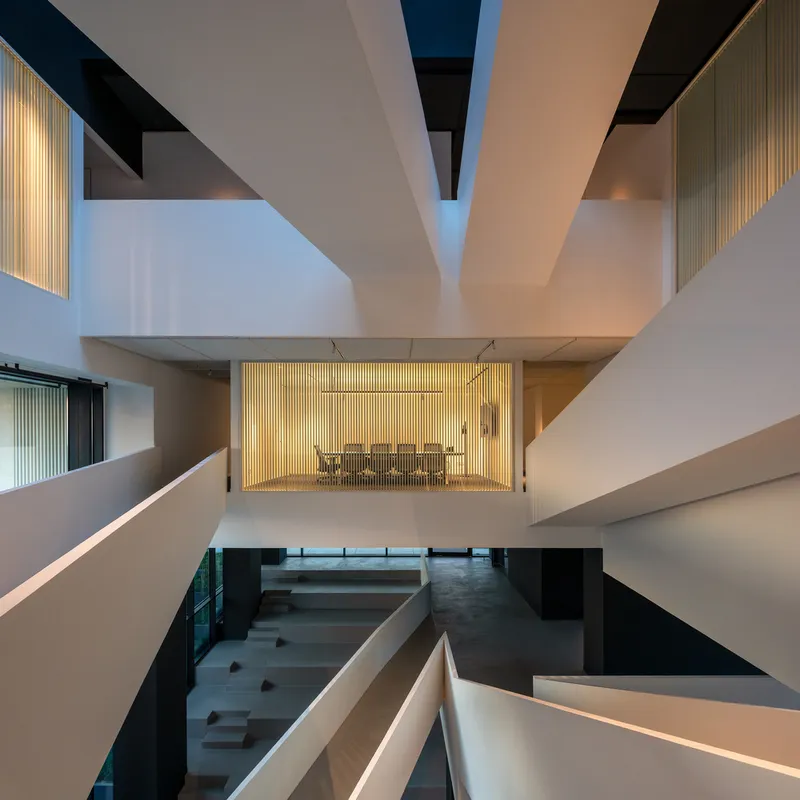
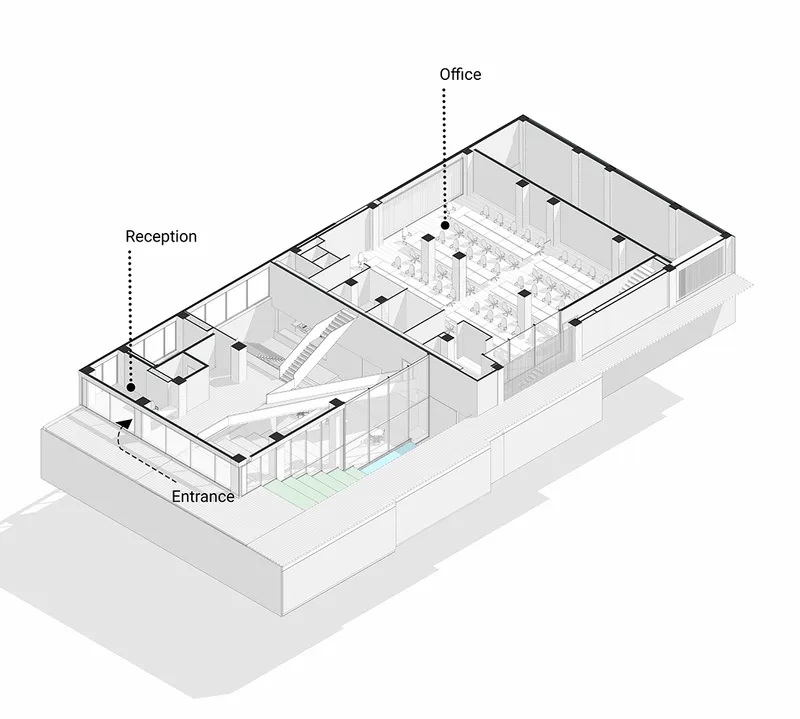
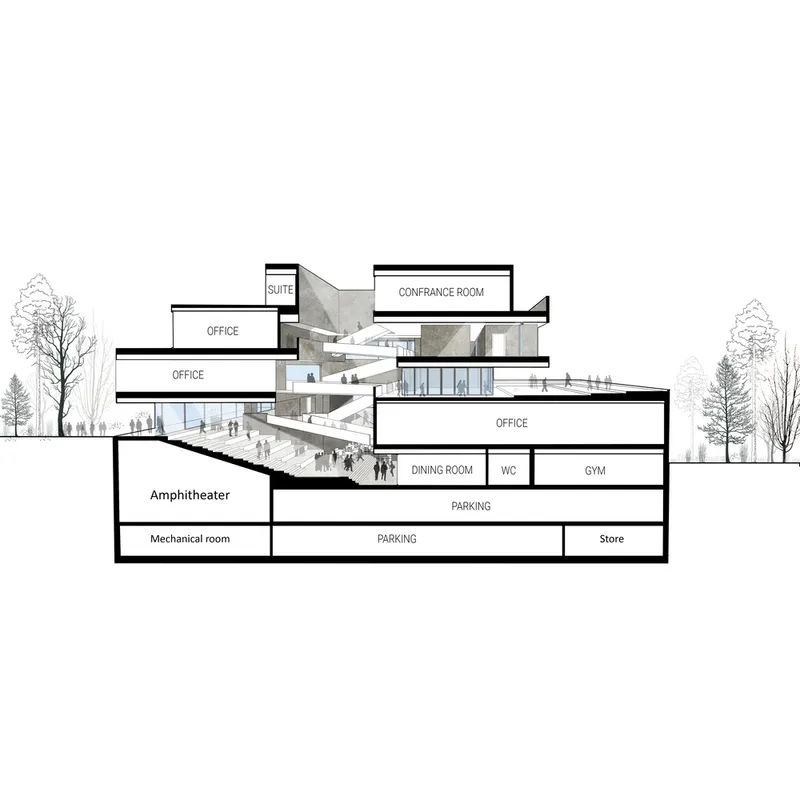
Carved through the core of the stacked forms is a dramatic vertical void, which becomes a central atrium running throughout the height of the building. This void divides the structure into administrative and communal zones while integrating visual connections and transparent circulation routes via bridges and staircases. These elements establish a vertical rhythm and enhance interaction between floors. More than a lightwell, this atrium serves as a spatial heart—inviting users to pause, connect, and observe activity within the building ecosystem.
An Active Ground Plane and Underground Integration
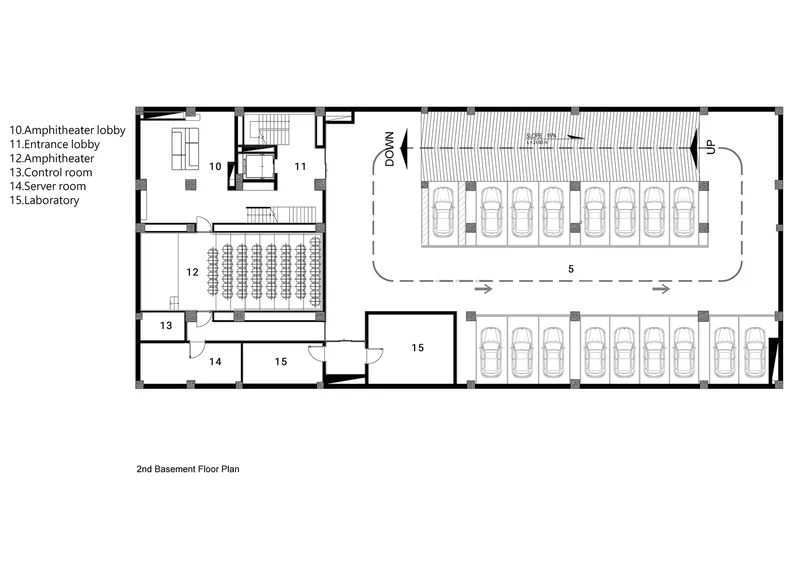
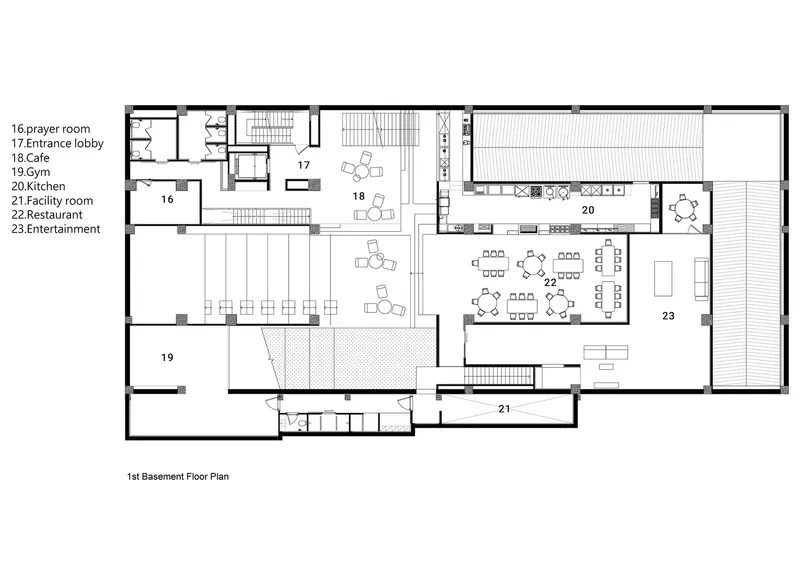
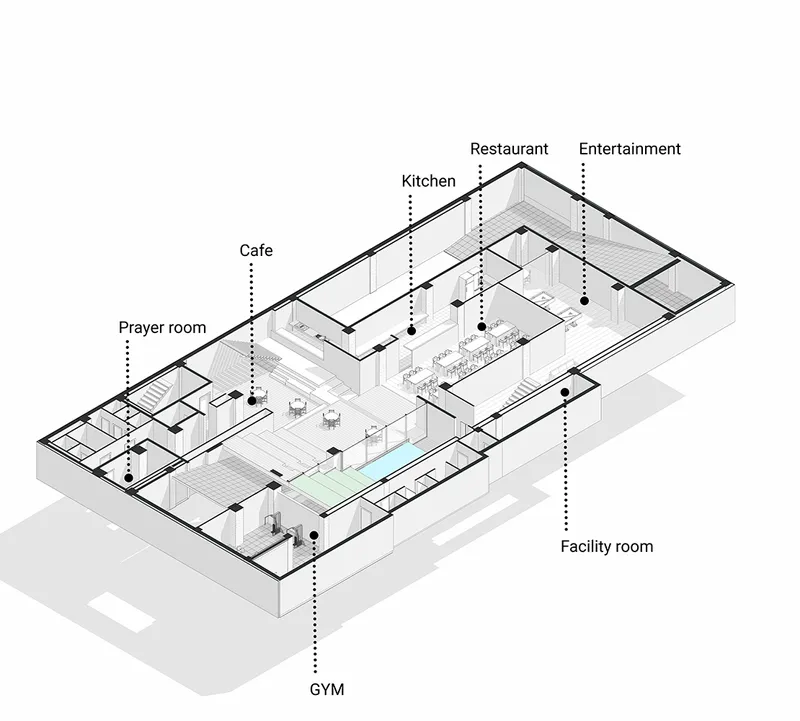
The ground floor extends the project's ethos of engagement through a covered platform envisioned as an “active stage.” This open area, visible from all upper levels, supports public events and informal gatherings. Flanking this zone are amenities such as a cafeteria, a recreational gaming area, and indoor sports facilities, anchoring the building in social activity. Beneath this level lies an amphitheater, woven seamlessly into the circulation loop. This subterranean space supports presentations and performances, enhancing the experiential narrative of the building.
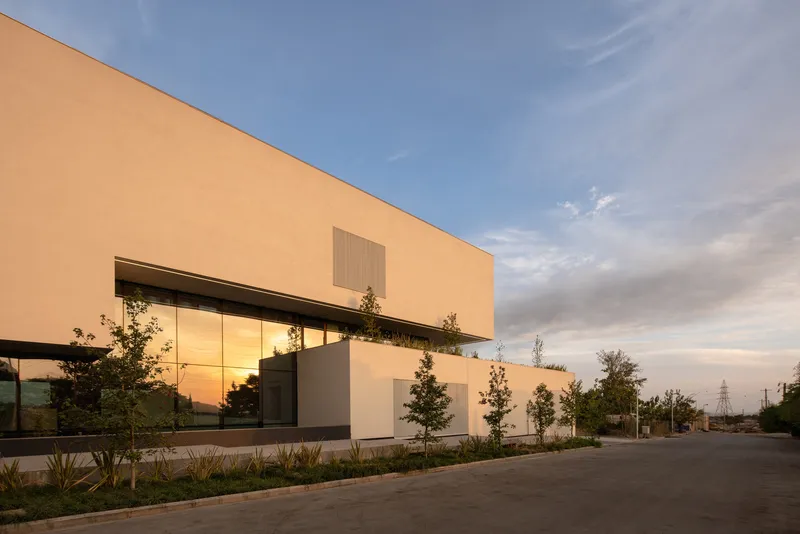
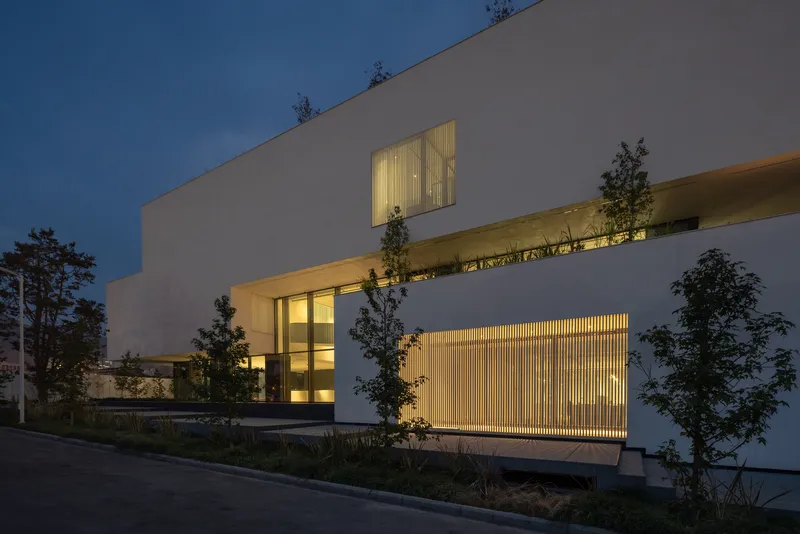
Transparency, Circulation, and Unscripted Encounters
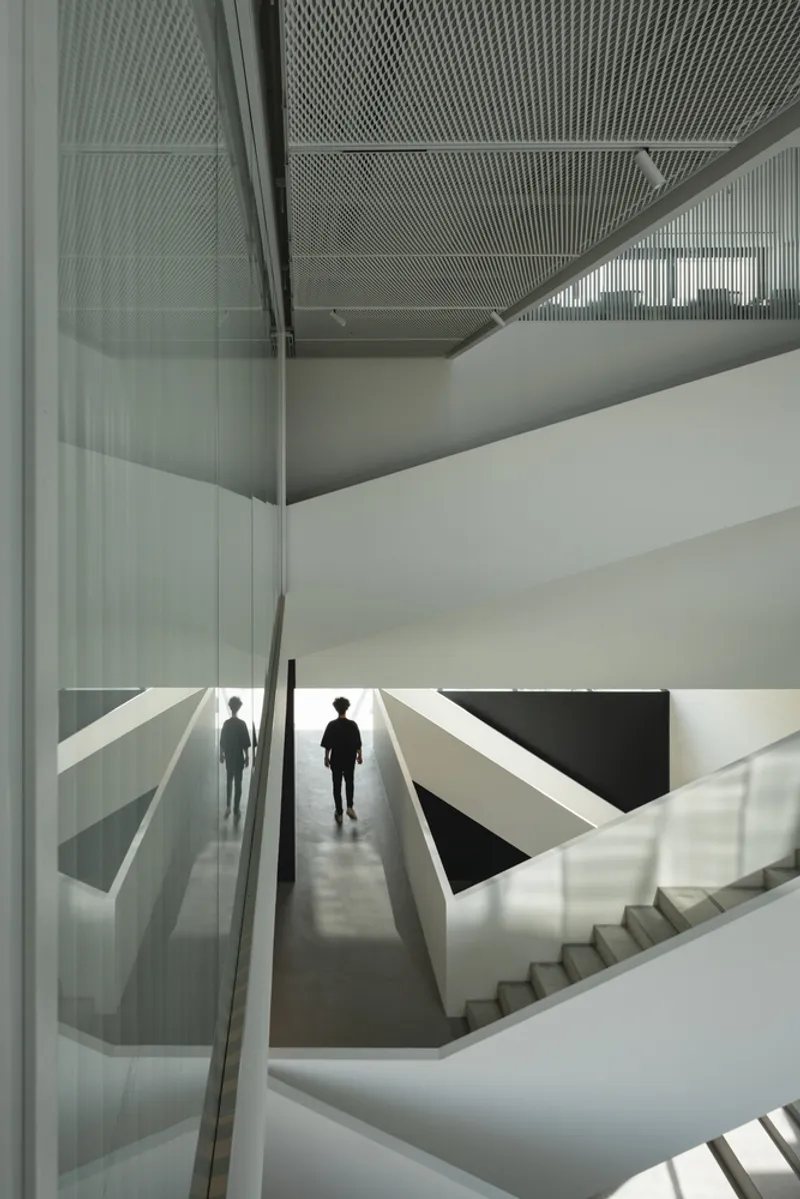
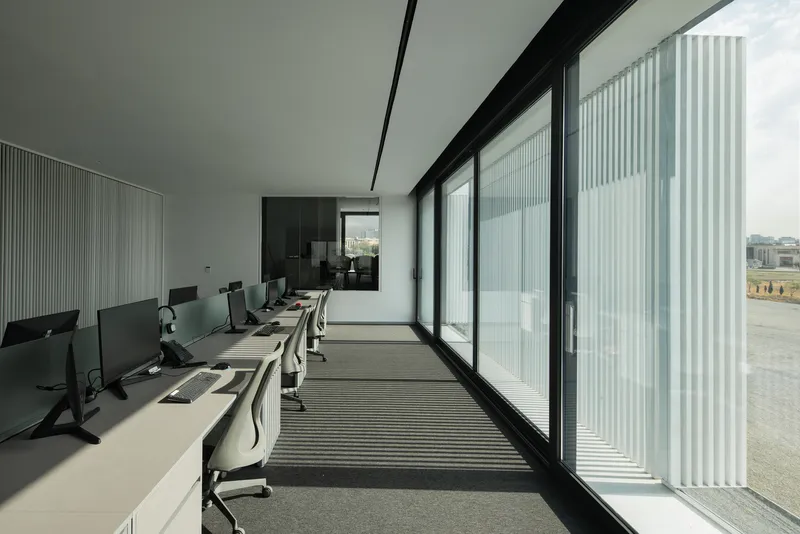
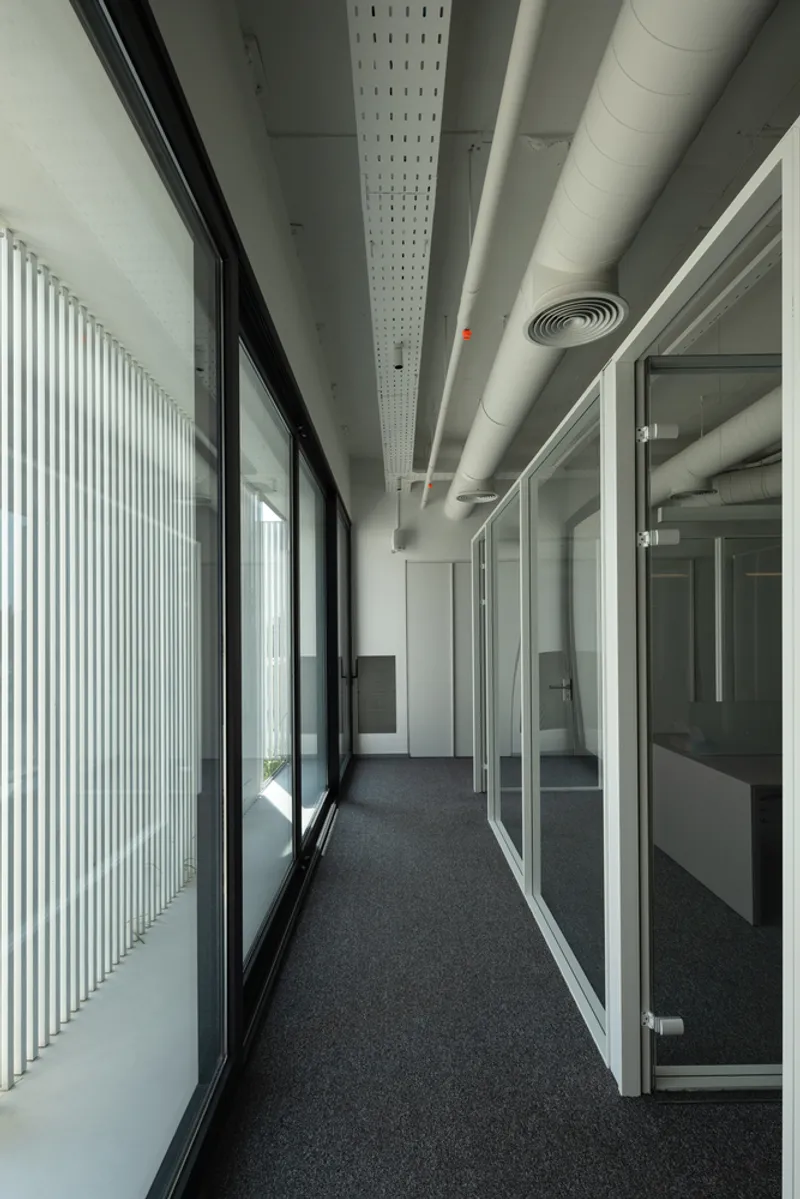
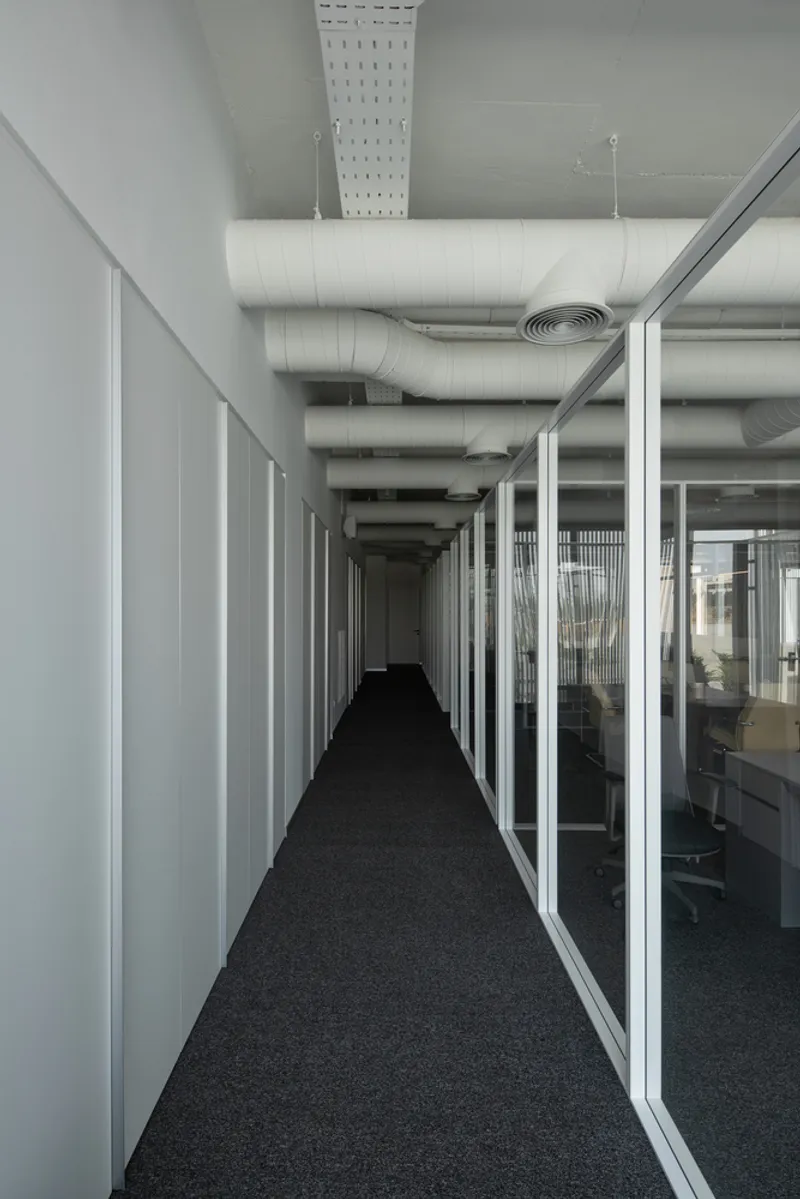
Transparency is a key driver in the architectural expression of Rahyaft Office. Glass partitions, open walkways, and transparent bridges encourage passive visibility and spontaneous encounters. Rather than compartmentalizing programs into isolated silos, NOIR Office allows the functions to breathe into one another—offering users glimpses into adjacent areas as they navigate the space. This openness not only supports team collaboration but also invites moments of cross-disciplinary exchange, reinforcing the building’s role as a collective, rather than individualistic, workplace.
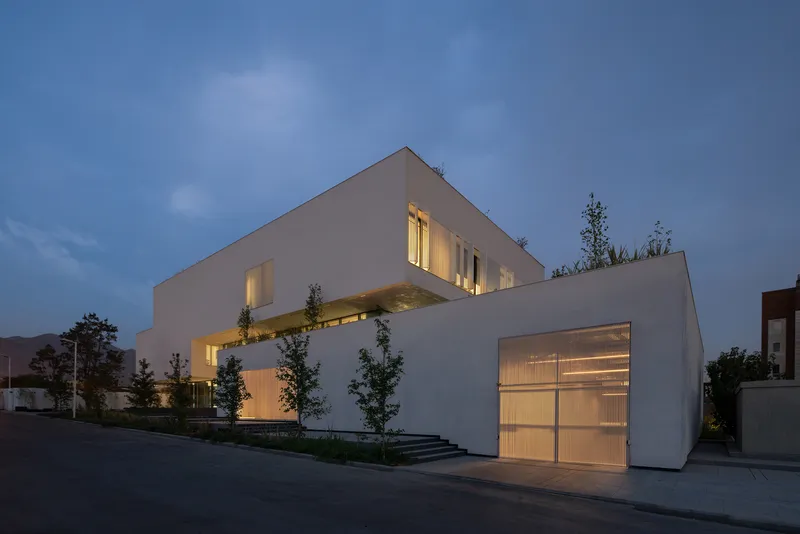
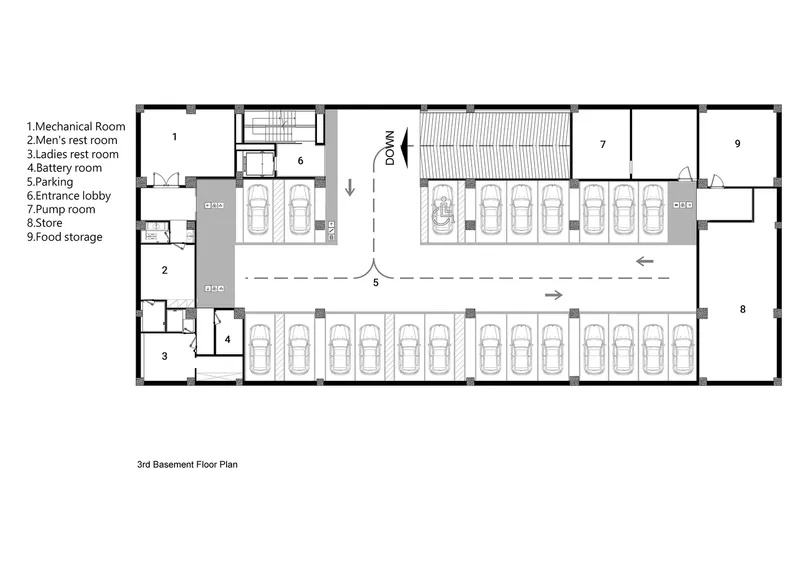
An Architecture of Movement and Engagement
The overall architectural composition of Rahyaft Office is not static—it is choreographed to encourage movement and engagement. From stepped terraces to interactive atrium paths, and from underground amphitheaters to elevated gathering points, the design invites users to experience space as a dynamic journey. It supports both productivity and socialization, proposing an architecture that adapts to human rhythms rather than forcing users into rigid routines.
All Photographs are works of Deed Studio



Popular Articles
Popular articles from the community


Co-life: Sustainable Architecture for Age-Friendly Community Living
Co-life reimagines sustainable architecture for seniors through courtyards, rammed earth, shared gardens, and spaces designed for belonging.

The Ocean Hive: Sustainable Architecture for a Self-Sufficient Civilization at Sea
The Ocean Hive imagines sustainable architecture at sea, where modular habitats, algae, wave power and ocean waste sustain a growing colony.

Co-Life: Senior Housing Design That Reconnects Older Adults With the City
Co-Life reimagines senior housing design through healing gardens, shared streets, workshops, and a sustainable community across generations.

Lunar Spiral: Space Architecture Shaped by the Mathematics of the Universe
Lunar Spiral reimagines space architecture through Fibonacci geometry, lunar regolith, levitating habitats, and self-sustaining Moon living.

Similar Reads
You might also enjoy these articles


FAMM Arquitectura Organizes Ten Villas Around Courtyards and Jungle in Nosara, Costa Rica
El Molino pairs two elongated volumes with deep overhangs and timber louvers to build a compact coastal community five minutes from the beach.

Oscar Niemeyer's Ibirapuera Park Pavilions Define São Paulo's Cultural Identity in Concrete and Curve
A constellation of modernist volumes set within São Paulo's most important urban park, conceived for the city's 400th anniversary in 1954.
How Henri Picq's 1889 Paris Pavilion Traveled 11,000 Kilometers to Become Santiago's Artequín Museum
A prefabricated iron and glass pavilion built for the Paris Universal Exposition found a second life as a children's art museum in Chile.

Sanjay Puri Architects Wraps a Jaipur Office Tower in Capsule-Shaped Green Buffers
A nine-level climate-responsive workplace near Jaipur Airport uses stacked planter terraces and aluminium screens to fight 40°C heat.


Explore Office De Architects Competitions
Discover active competitions in this discipline



Challenge to reimagine the Iron Throne


Photograph architecture without architects


Illustrate the lost glory of Angkor Wat - Render Challenge


Design challenge to reuse E-waste
Comments (0)
Please login or sign up to add comments
No comments yet. Be the first to comment!