
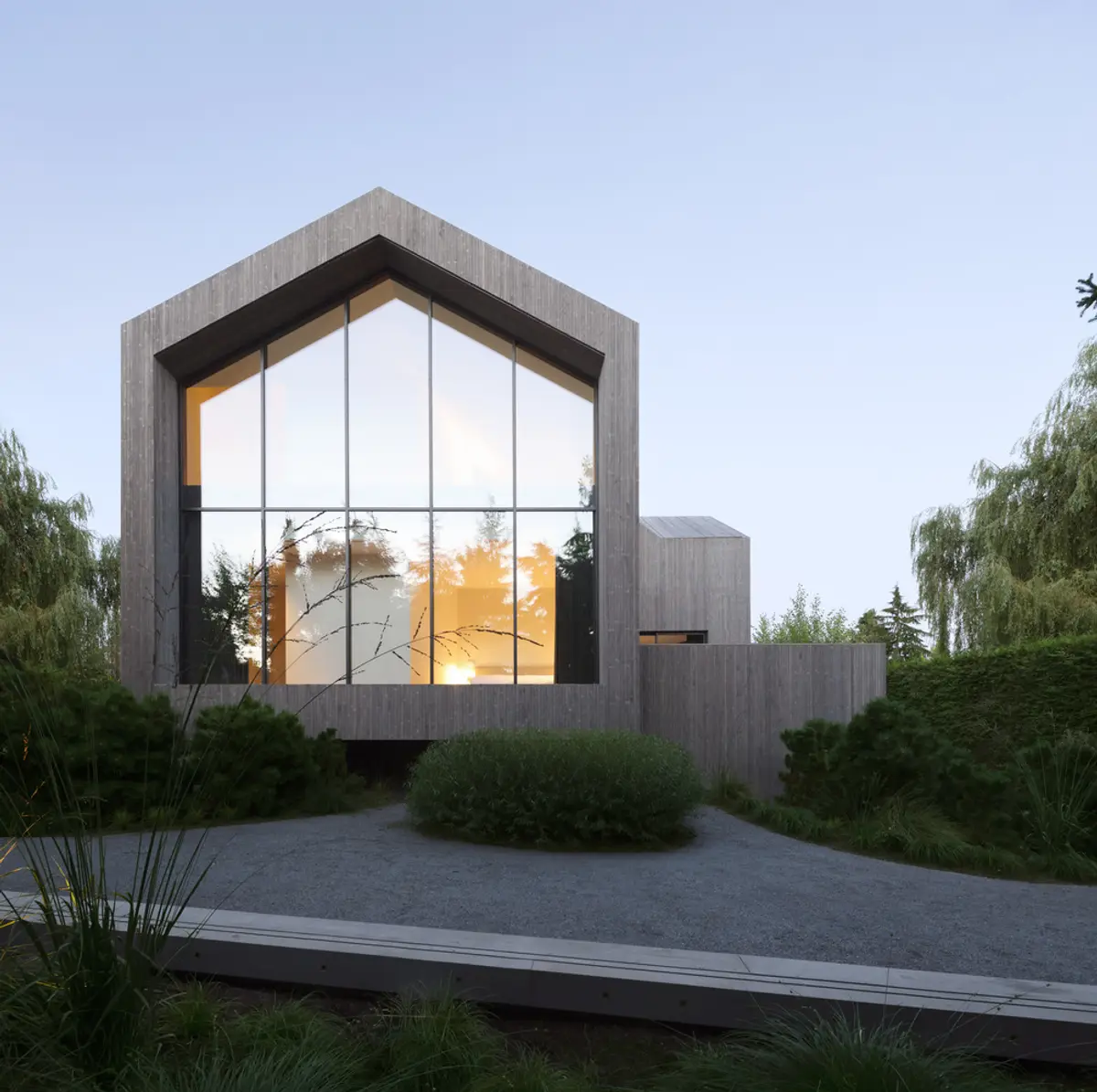
Re-Folded House: Flood Resilient House Design by Mcleod Bovell Modern Houses
Vancouver’s Re-Folded House reimagines flood resilient house design with folded geometries, Accoya cladding, and landscape layers tuned to river risk.


Re-Folded House by Mcleod Bovell Modern Houses is a 470 square meter exploration of flood resilient house design set in Vancouver’s Fraser River delta. Reconceived mid-construction at the request of a new, younger client, the project reframes standard residential programming through folded geometries, cinematic circulation, and material strategies calibrated to a vulnerable floodplain landscape. Angled planes, hovering slabs, and mutable thresholds dissolve conventional room boundaries, while a rigorously selected exterior envelope of Accoya wood and flood-tolerant construction methods ground the home in its hydrologic context.
A Client-Led Reconceptualization Mid-Construction
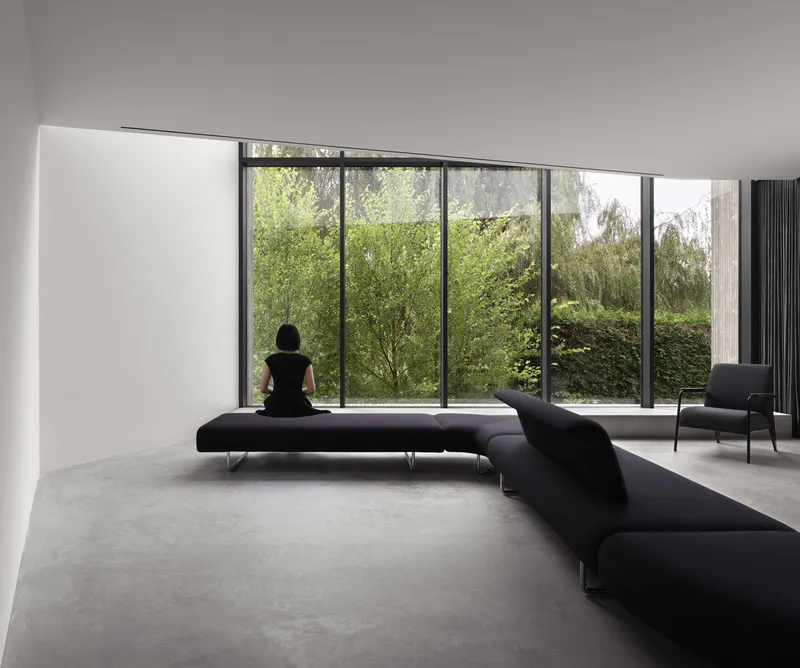
The commission took an unusual turn when the client assumed control of the in-progress project from her parents and asked the architects to question every inherited assumption. Rather than simply finish what had begun, the design team used this pivot to re-map relationships among living, gathering, retreat, and movement, stripping away expected signifiers like discrete corridors and door-dominated thresholds. The resulting spatial language privileges flow, framed glimpses, and shifting readings over fixed, program-labeled rooms.
Folding As Spatial Generator
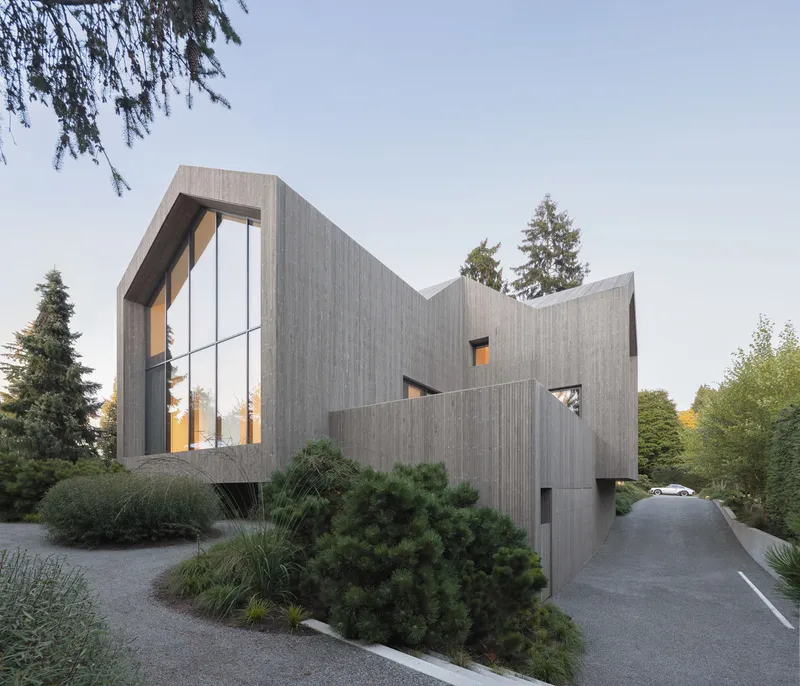
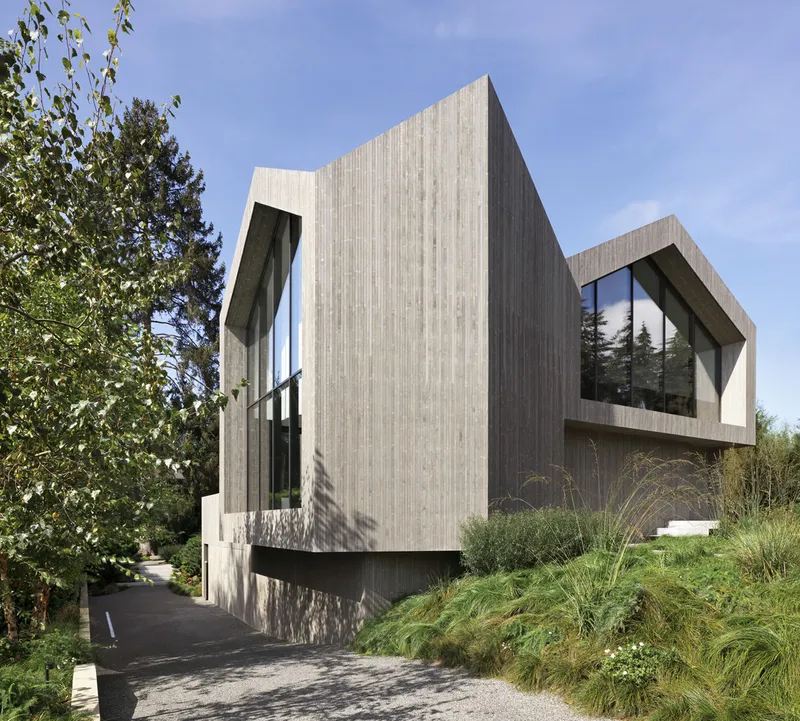
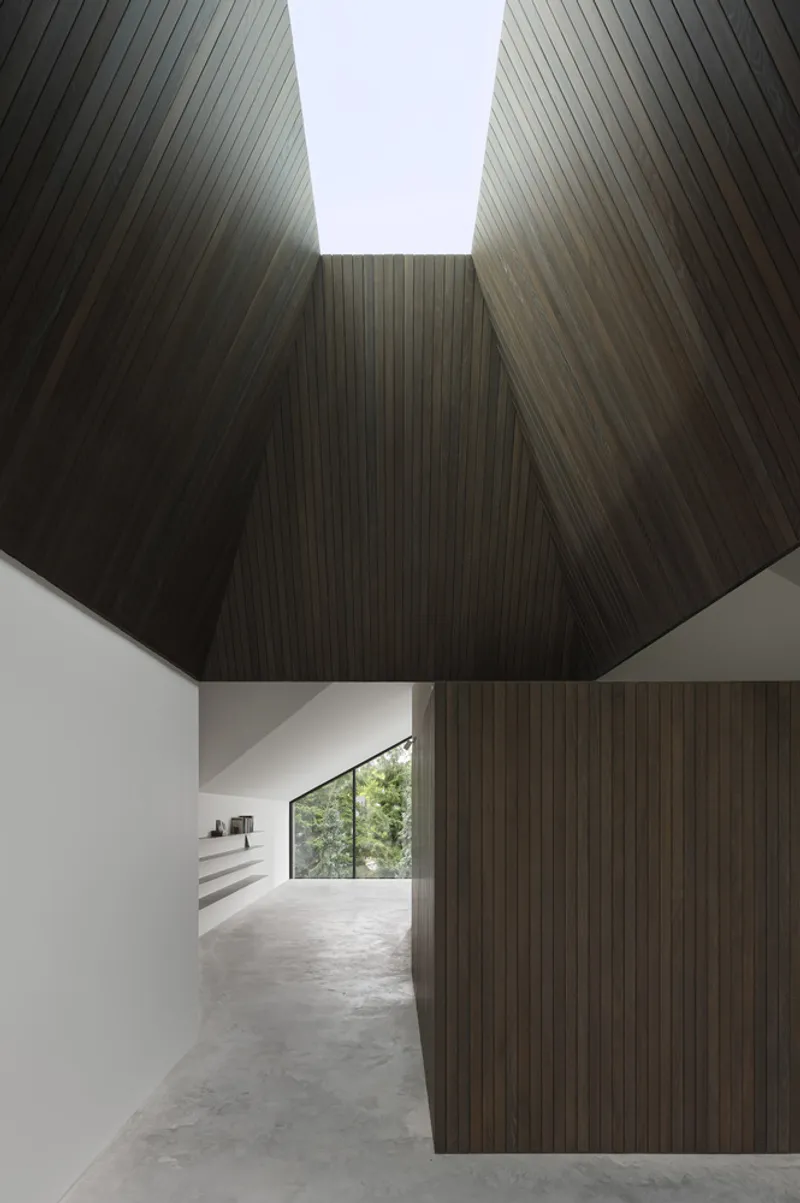
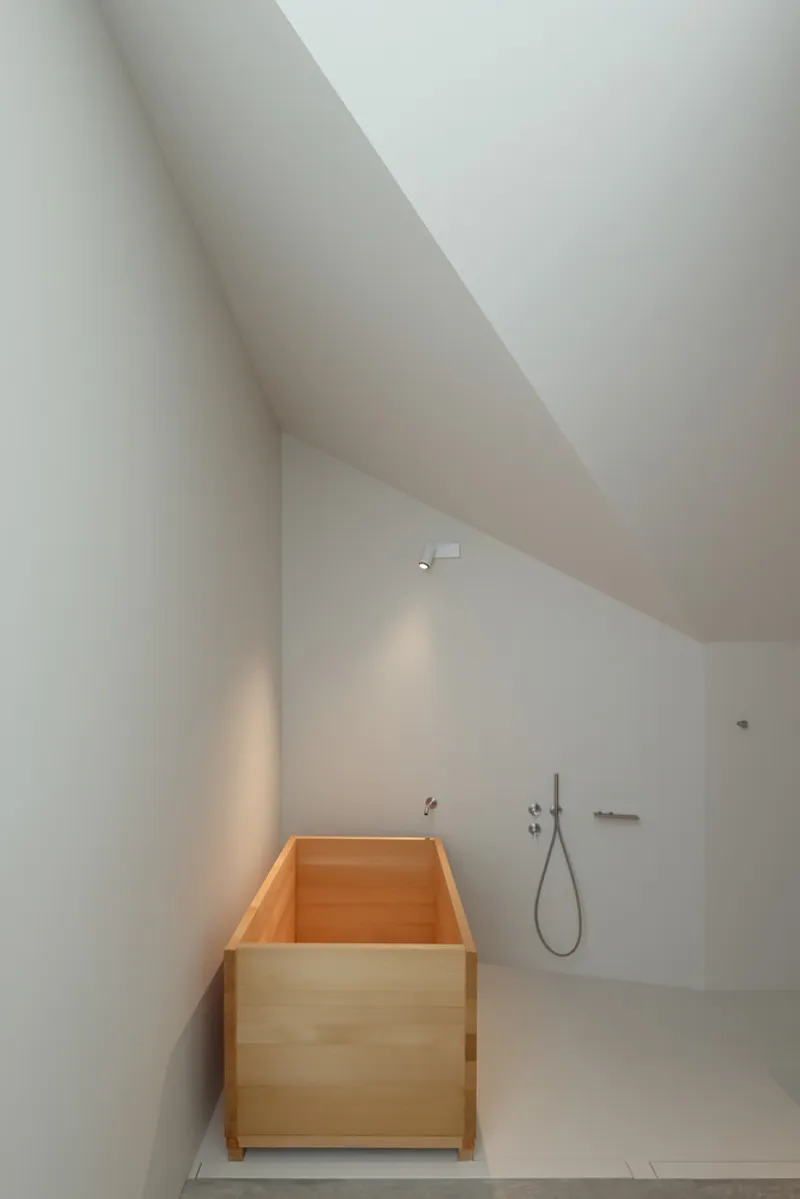
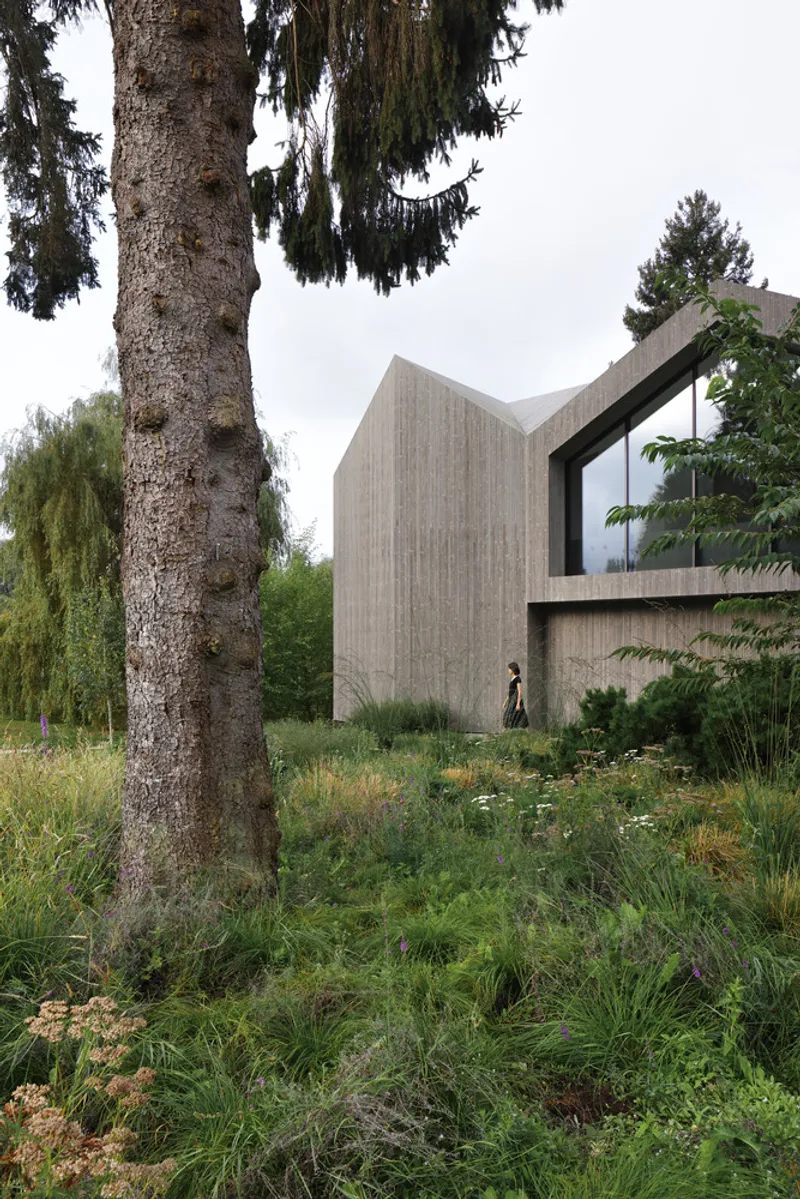
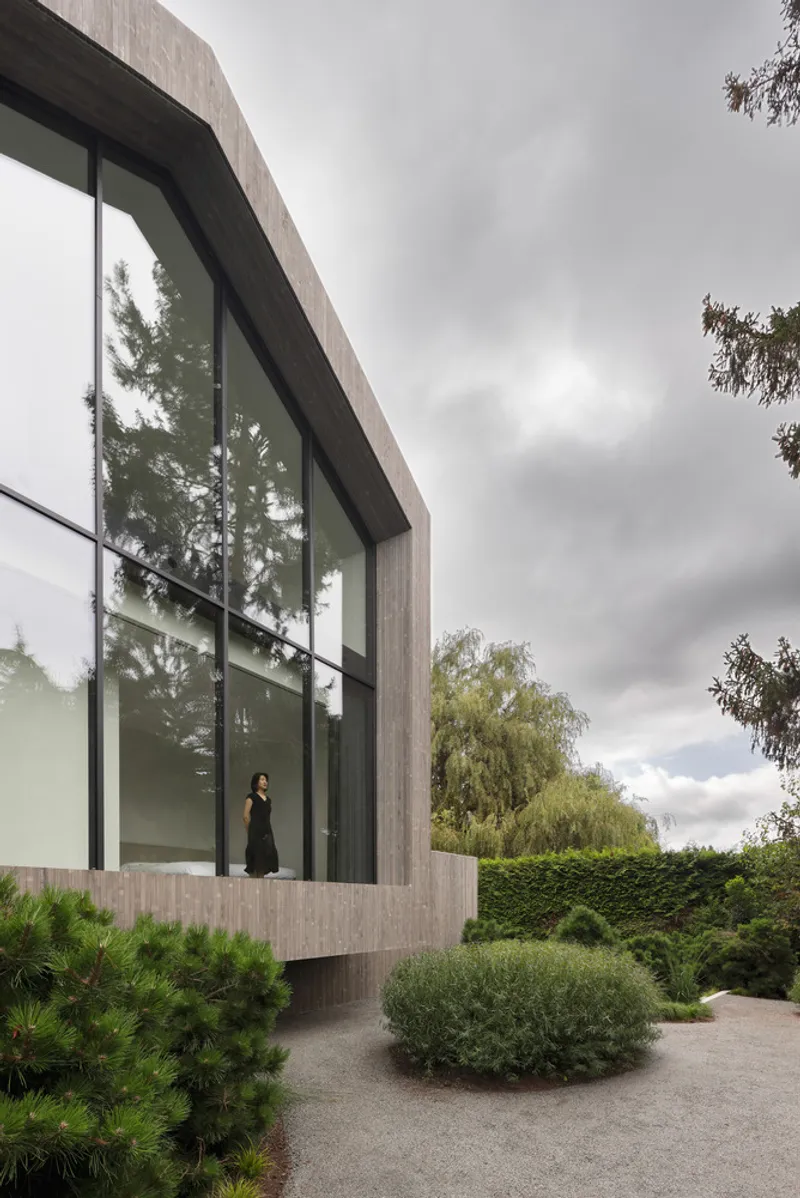
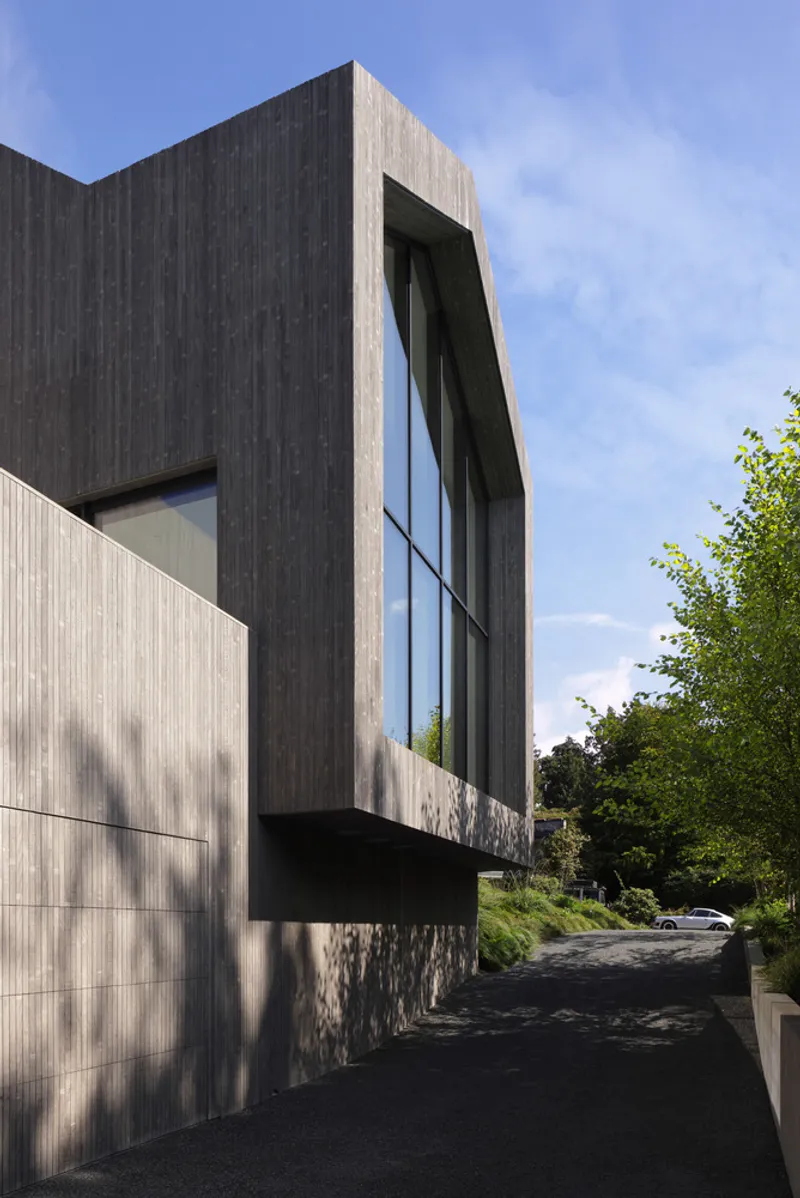
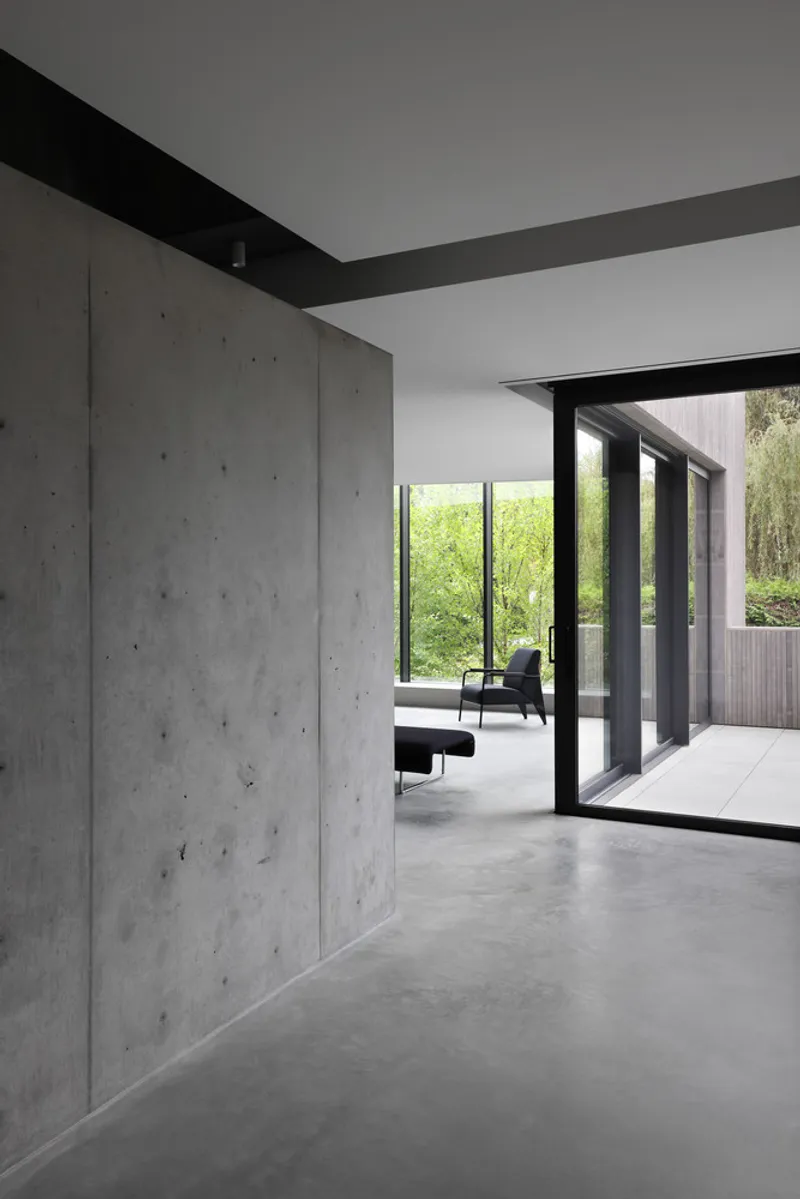
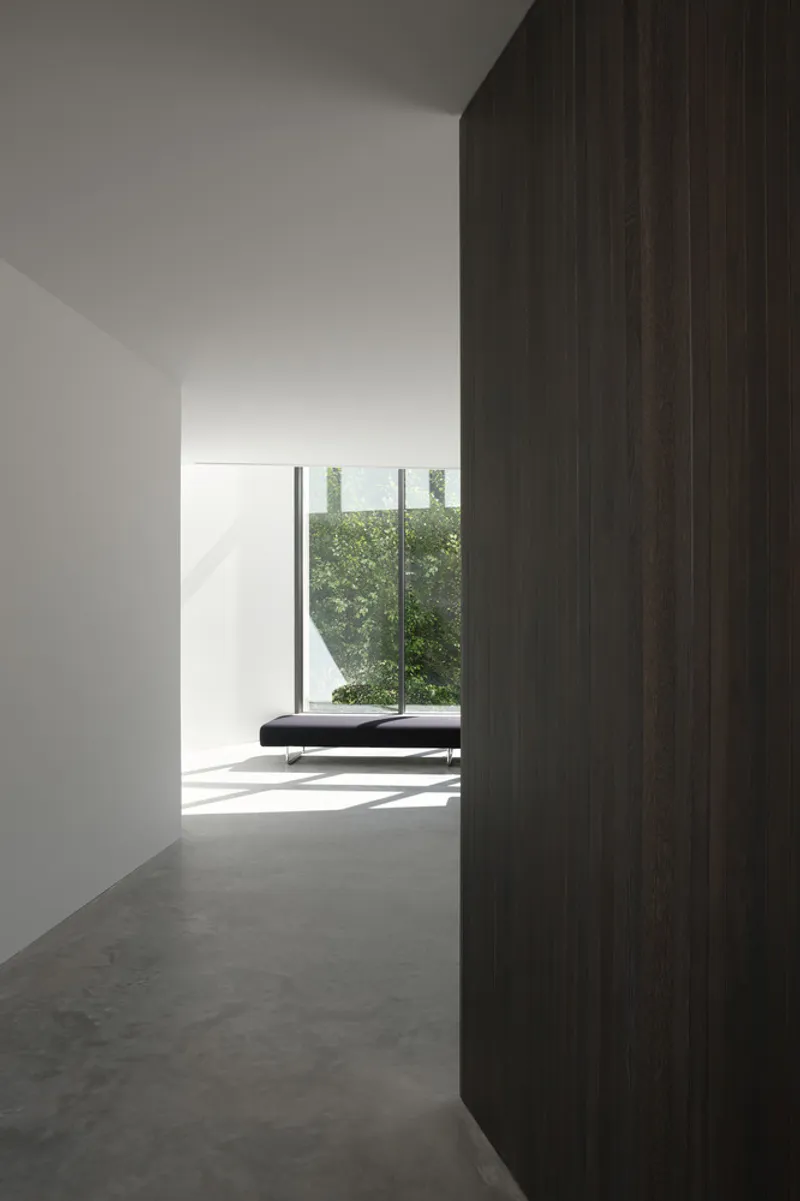
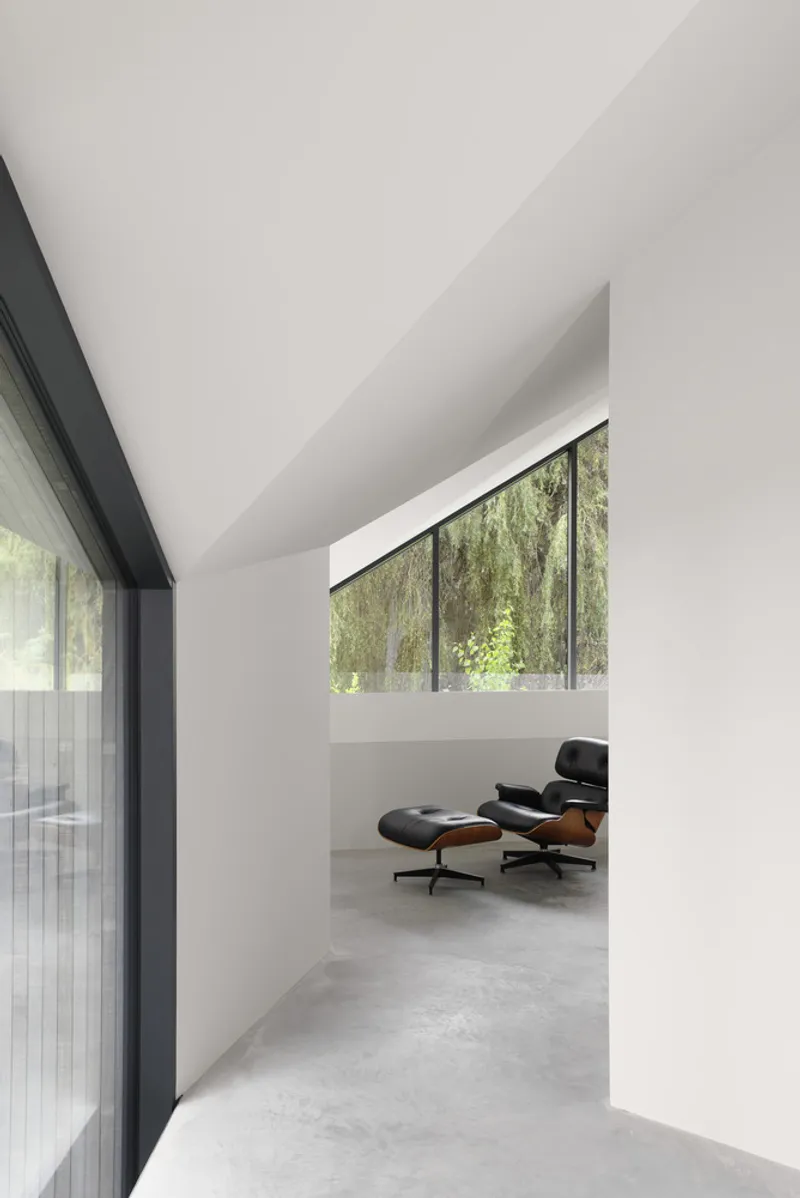
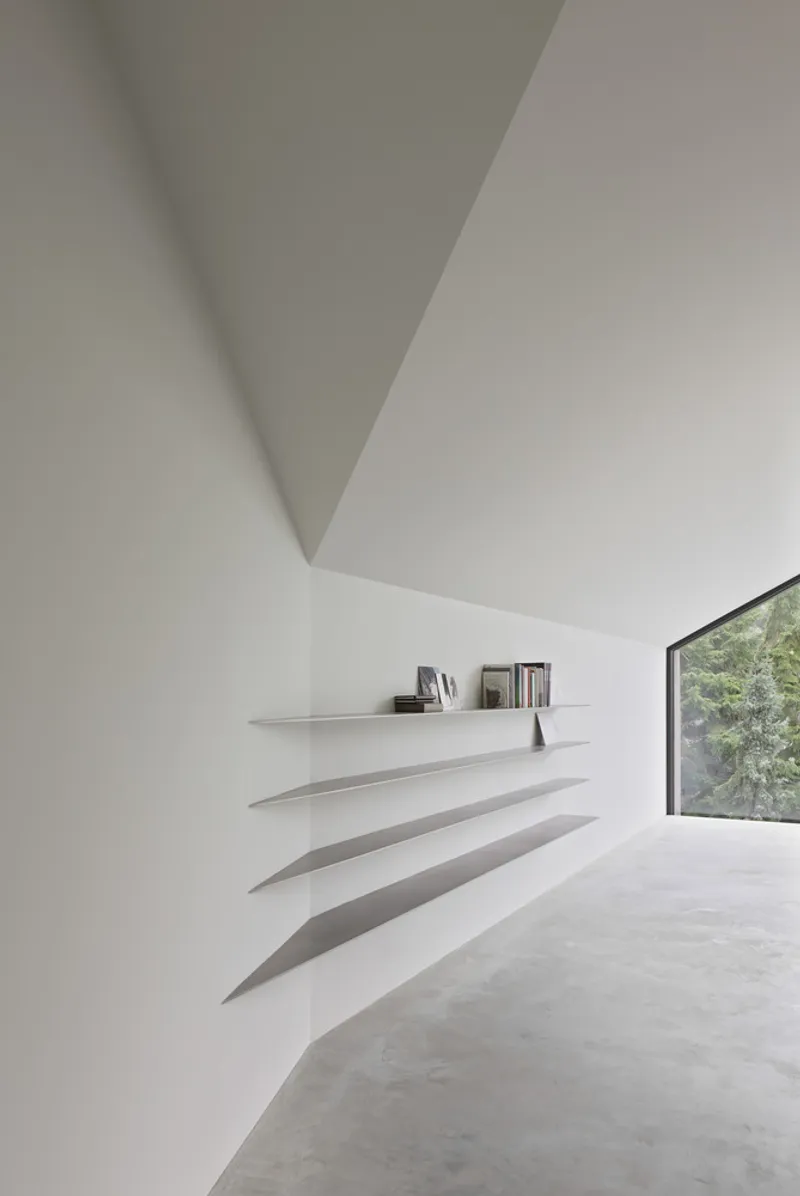
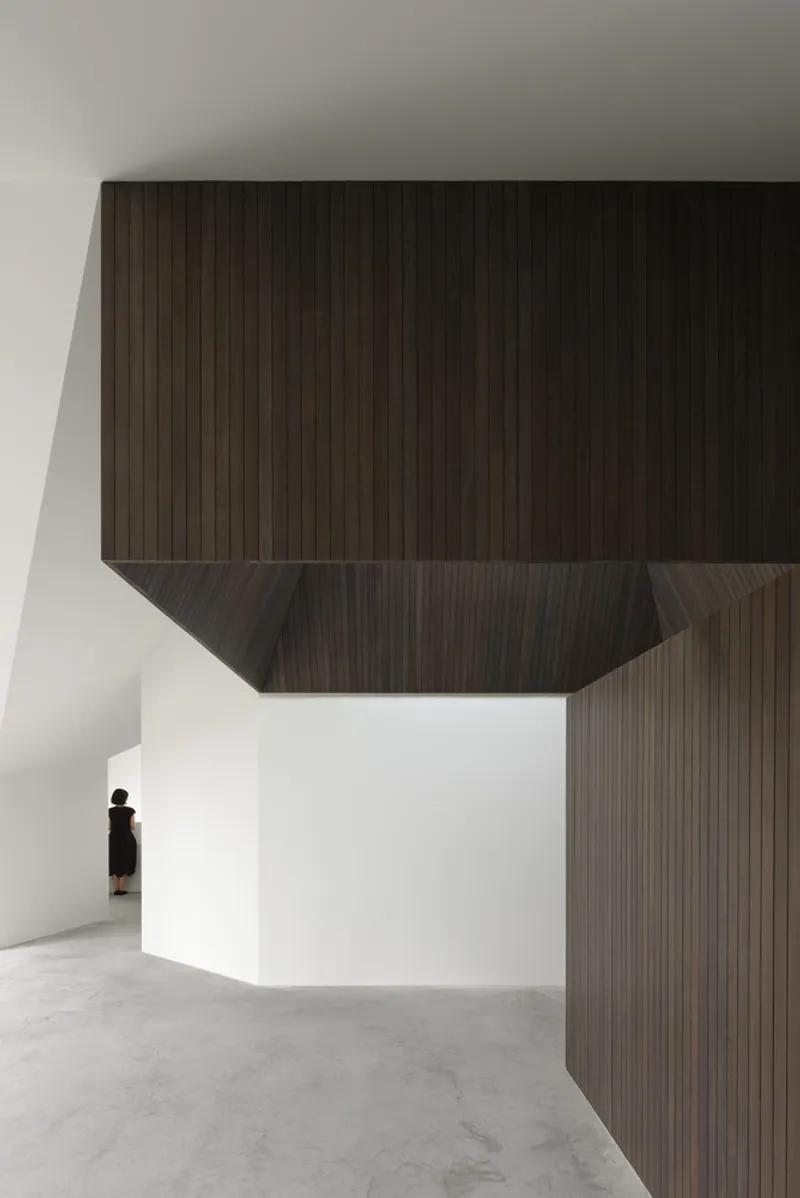
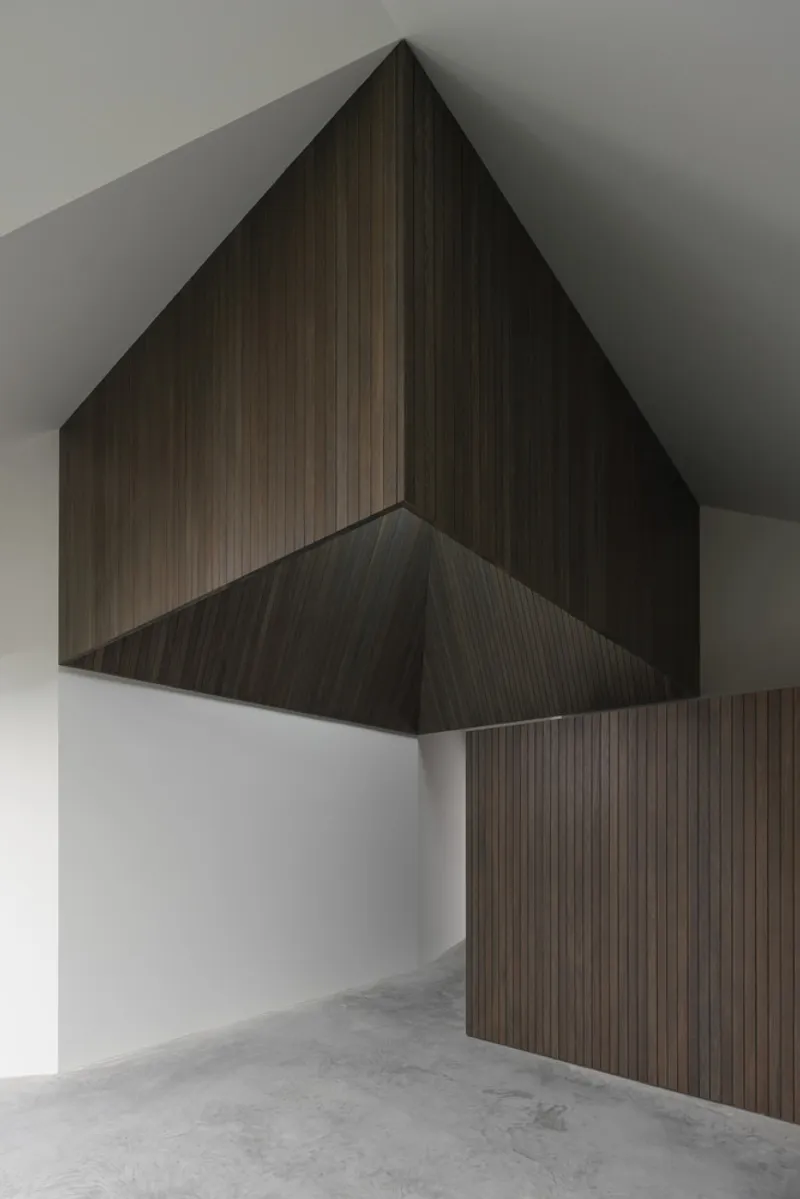
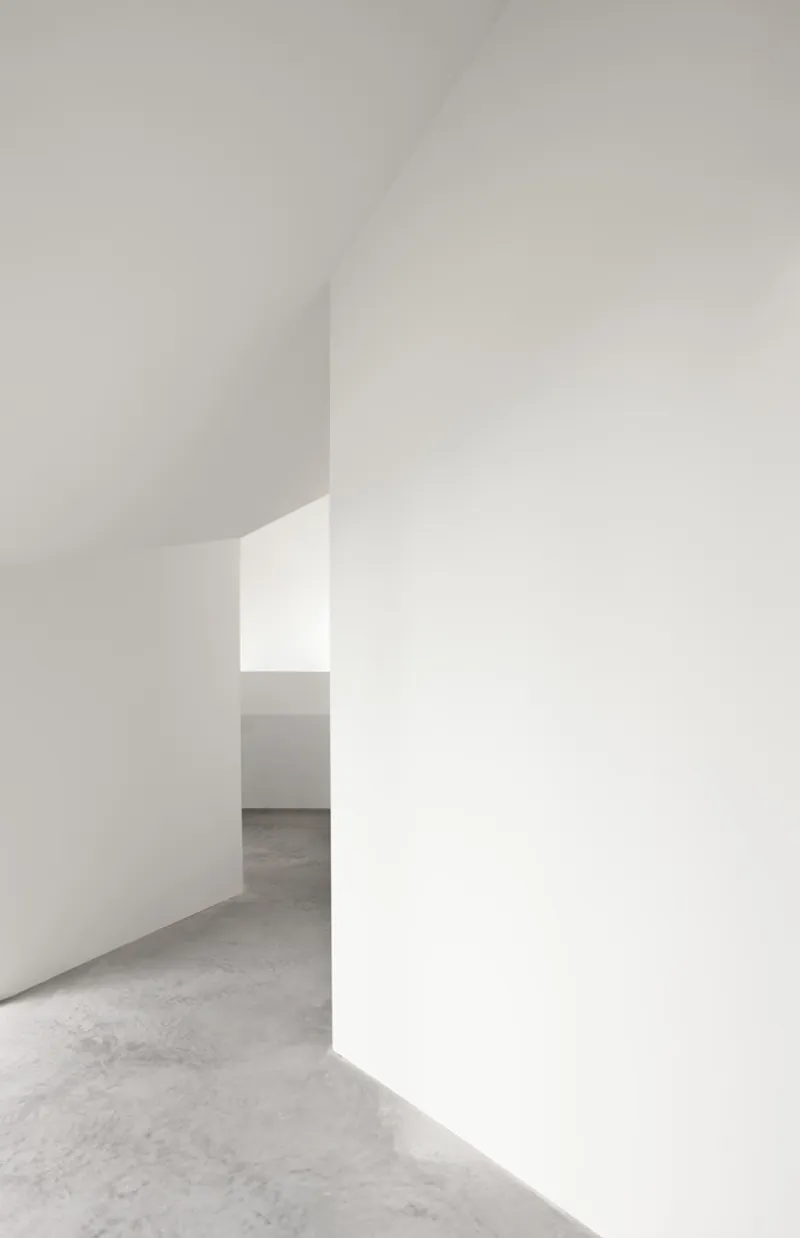
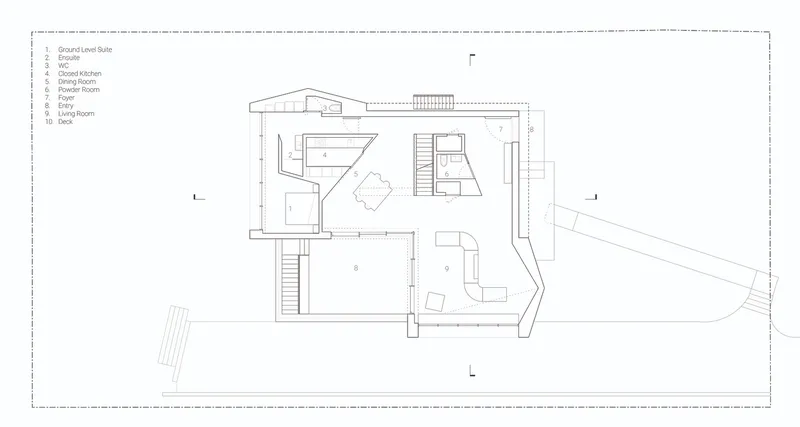
Folded walls and ceilings extend across the interior and exterior, setting up irregular prosceniums that choreograph how the body moves and how views unfurl. Hovering floor plates are visually separated from perimeter surfaces, creating shadow reveals that heighten perception of depth and directional pull. Angled partitions gently deflect circulation, so occupants experience the house as a sequence of edited shots—light, landscape, and interior volumes revealed incrementally, almost cinematically, around each bend.
Blurring Program To Encourage Flexible Living
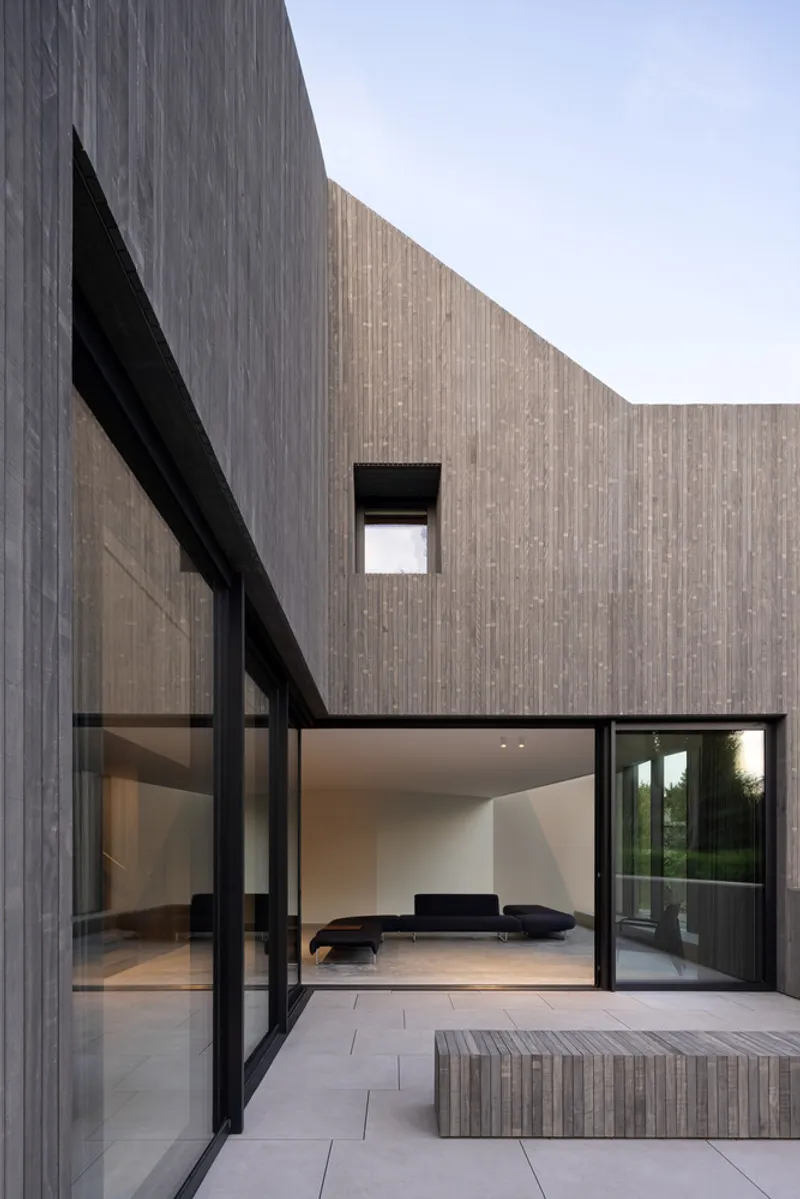
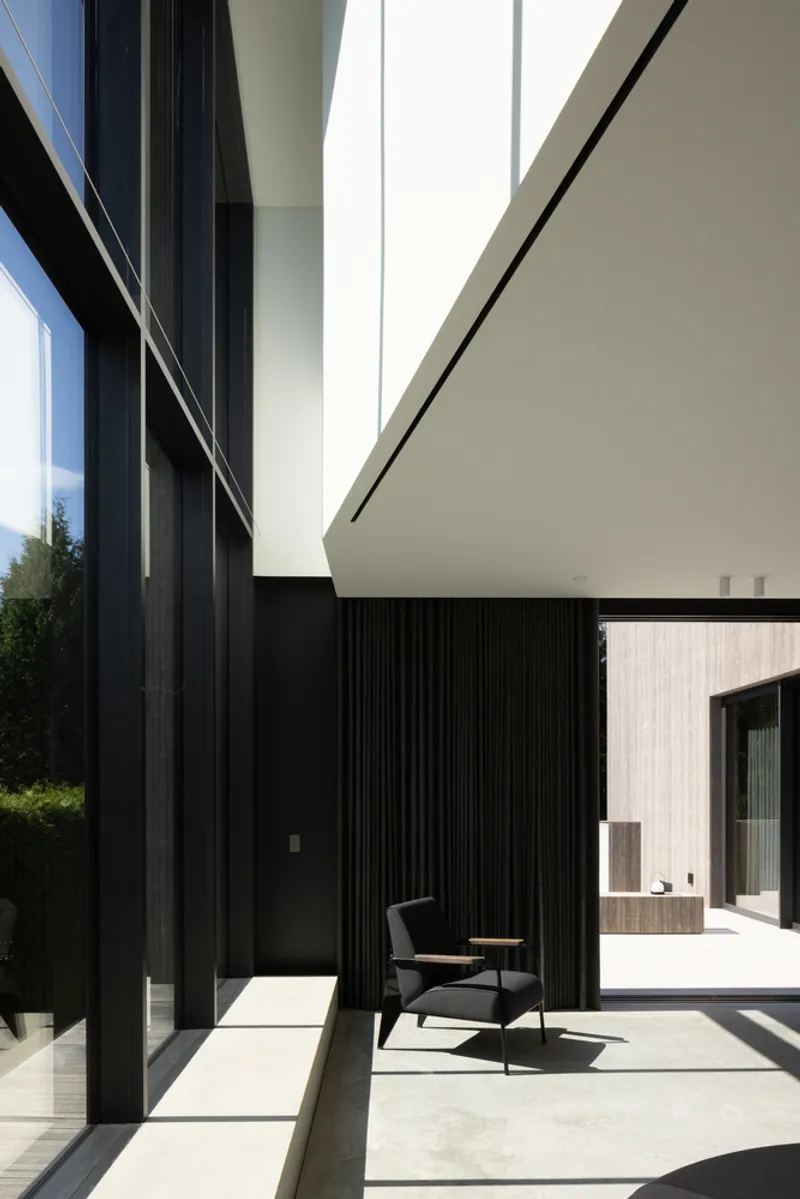
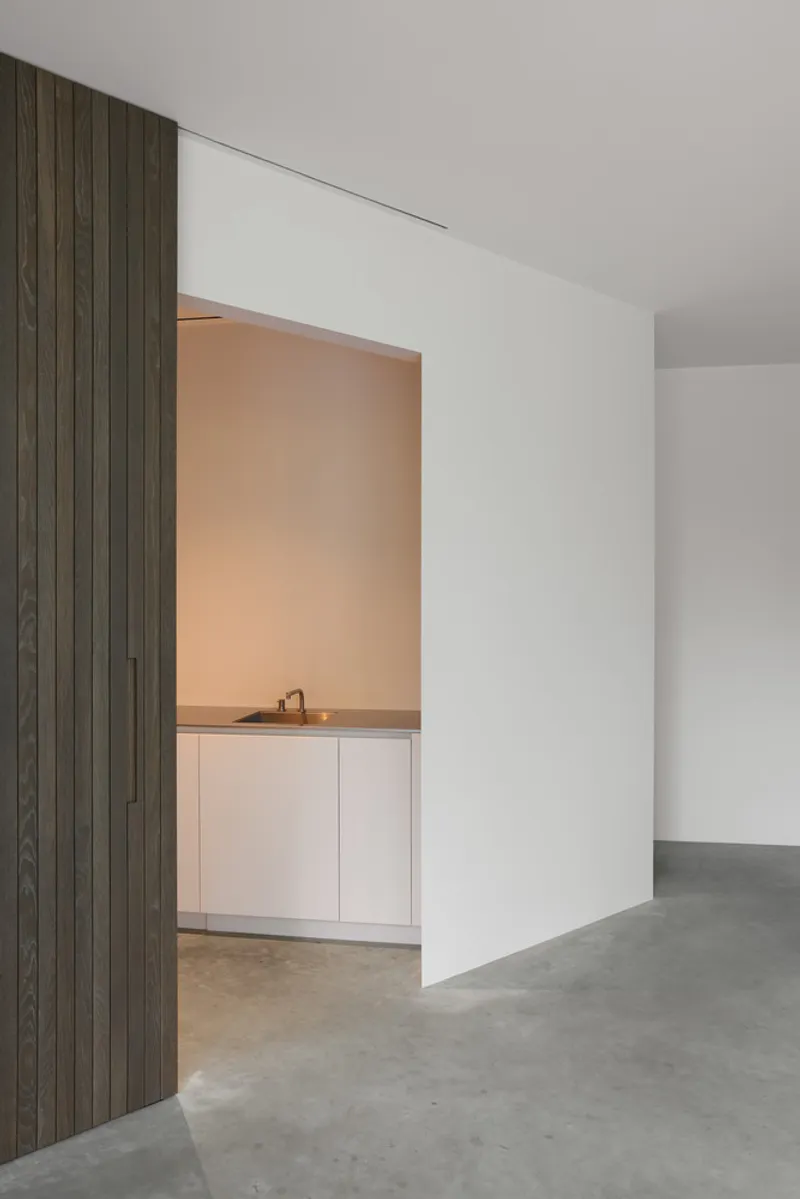
Because many spaces were designed for multifunctional use over time, overt program markers were intentionally minimized. Transitions widen or taper rather than close; furniture remains sparse, sculptural, and suggestive rather than prescriptive; and long sightlines link areas that might traditionally be divided. This indeterminacy supports evolving patterns of domestic life, visiting family, or future adaptation without major renovation.
Floodplain Context And Environmental Risk
The site lies on sedimentary land shaped by the meandering Fraser River, the longest undammed river in North America. Periodic flooding—especially when heavy rain aligns with high tides—posed a central design challenge. The architects responded by treating the landscape, envelope, and lowest building level as an integrated flood-mitigation system. Materials, detailing, and service placement all assume episodic water exposure and rapid recovery as baseline conditions rather than exceptional events.
Durable Envelope In Accoya Wood
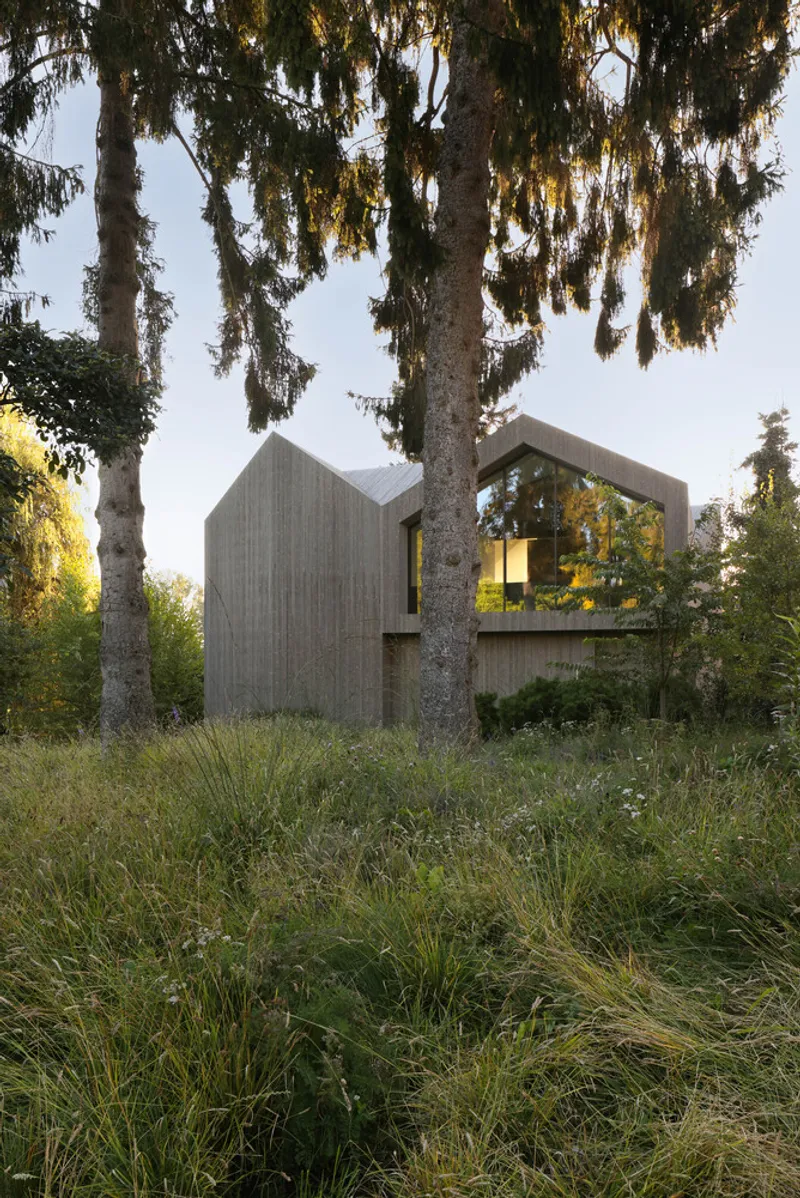
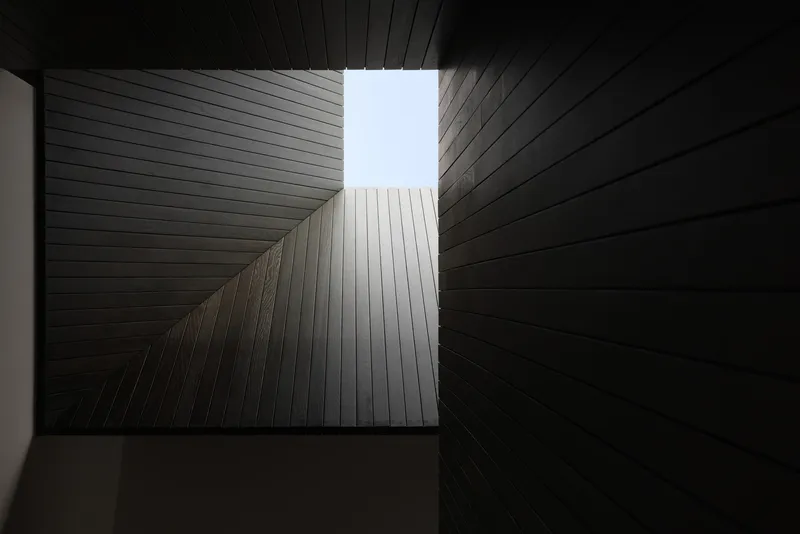
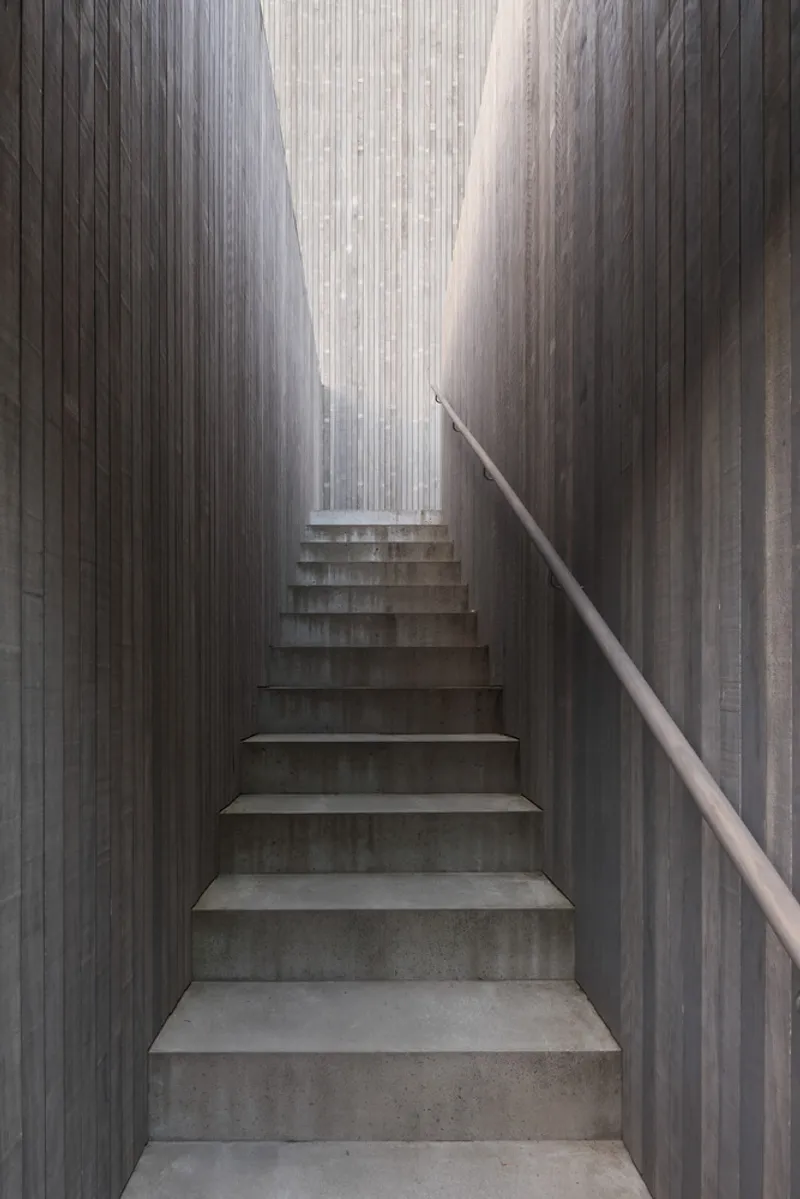
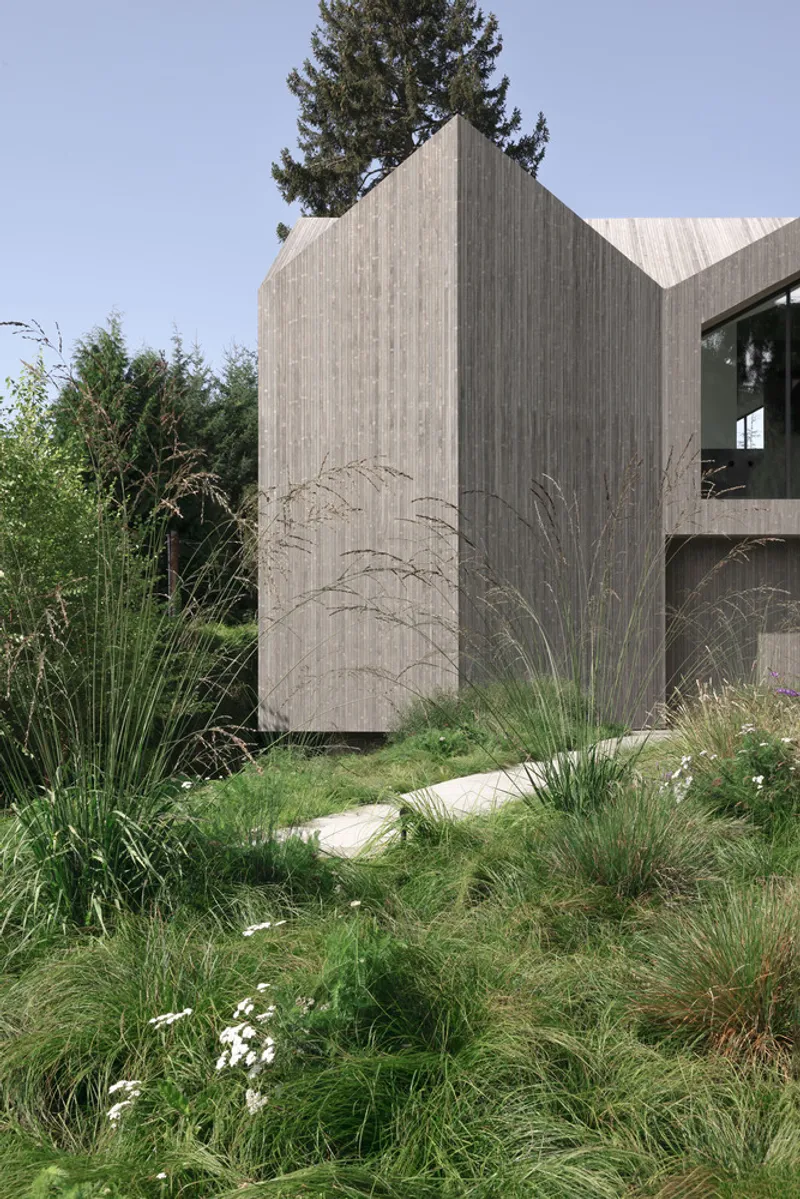
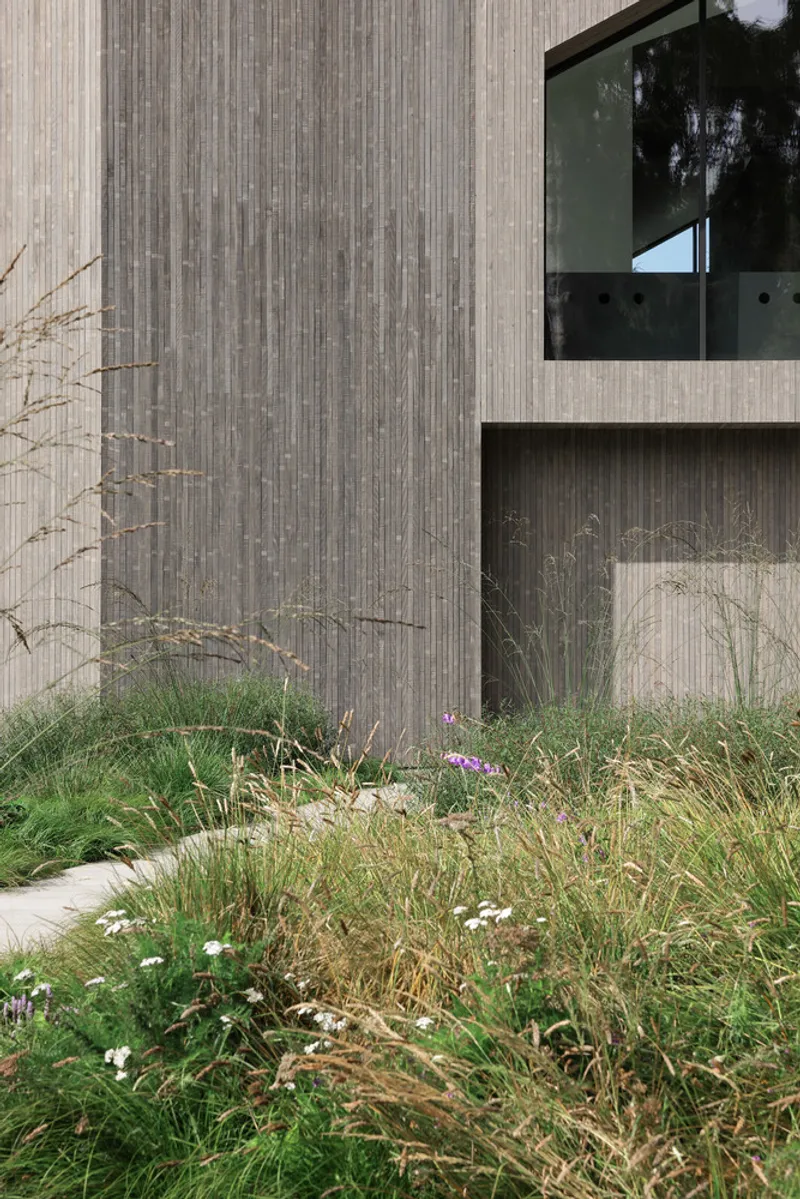
Accoya, an acetylated pine engineered in the Netherlands for durability in wet environments such as canal linings, clads major exterior planes. Its dimensional stability and decay resistance make it ideal for fluctuating moisture loads. Industrial “sticker” marks—imprints from the treatment process—were left visible as a subtle record of manufacture and transformation, lending graphic texture while narrating the wood’s enhanced performance. Allowed to weather naturally, the Accoya drifts toward silvery grey tones that echo the hemlock trees retained on site, visually knitting built form to local ecology.
Flood-Ready Lower Level Construction
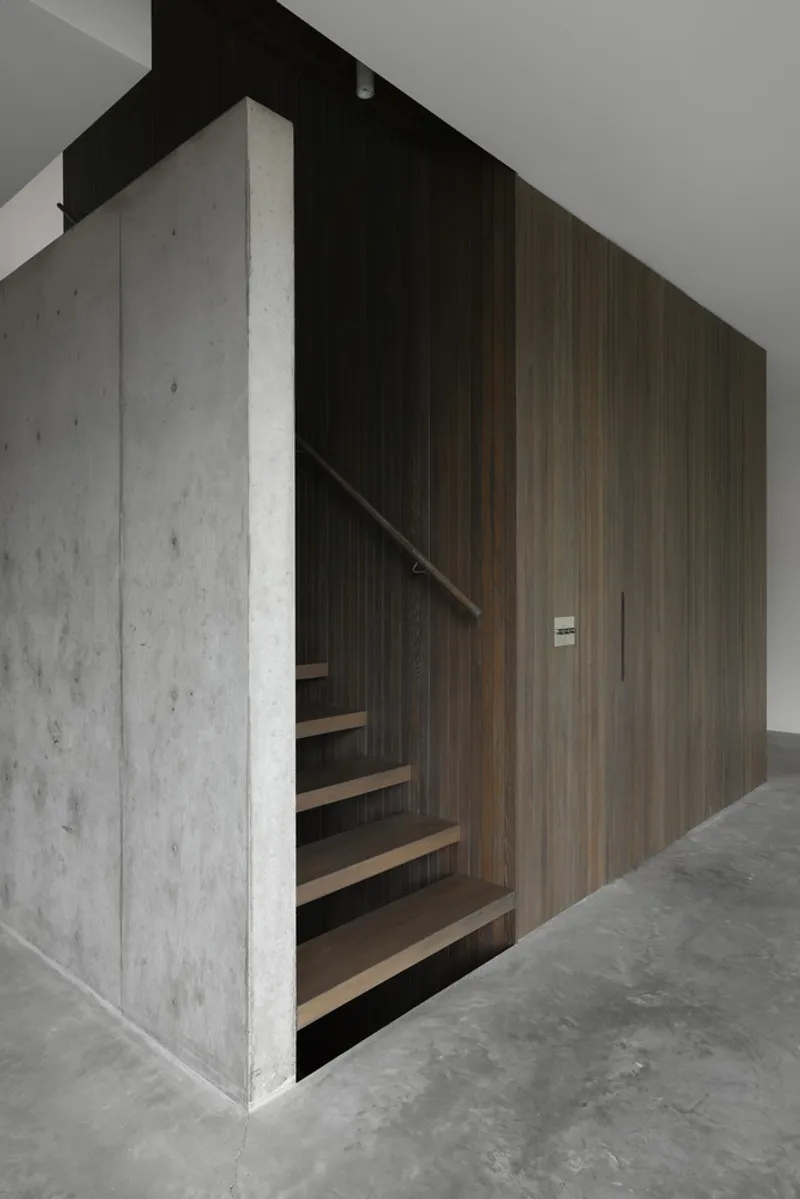
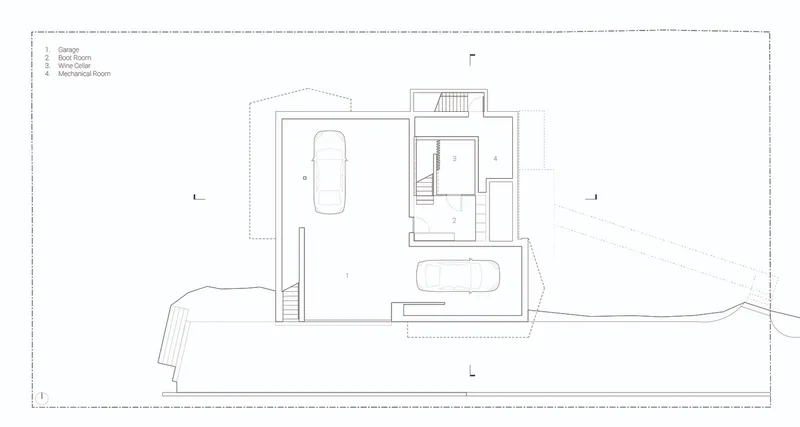
Given the likelihood of inundation, the lowest floor is built to endure water events. Conventional finishes prone to damage—drywall, batt insulation, vulnerable floor assemblies—are omitted or minimized. Mechanical equipment and critical systems are isolated within a waterproof bunker raised above anticipated water lines. This pragmatic resilience strategy reduces post-flood downtime, maintenance cost, and material waste while preserving the home’s long-term habitability.
Landscape As Layered Flood Memory
Site design interprets the delta’s stratified geology and wetland ecologies as folded landscape layers. A base stratum of sedimentary surfaces forms the driveway, on-grade steps, and functional hardscape, reading as deposited ground. Above this, a resilient carpet of sedges interwoven with native and selected non-native species transitions into shrubs and conifers, echoing wetland succession toward higher banks. A third, elevated layer introduces constructed walkways, boardwalks, and benches that appear to float—built analogues to drift or debris lines left by receding floodwaters. Landscape and architecture together narrate seasonal water movement.
Material Clarification From Outside In
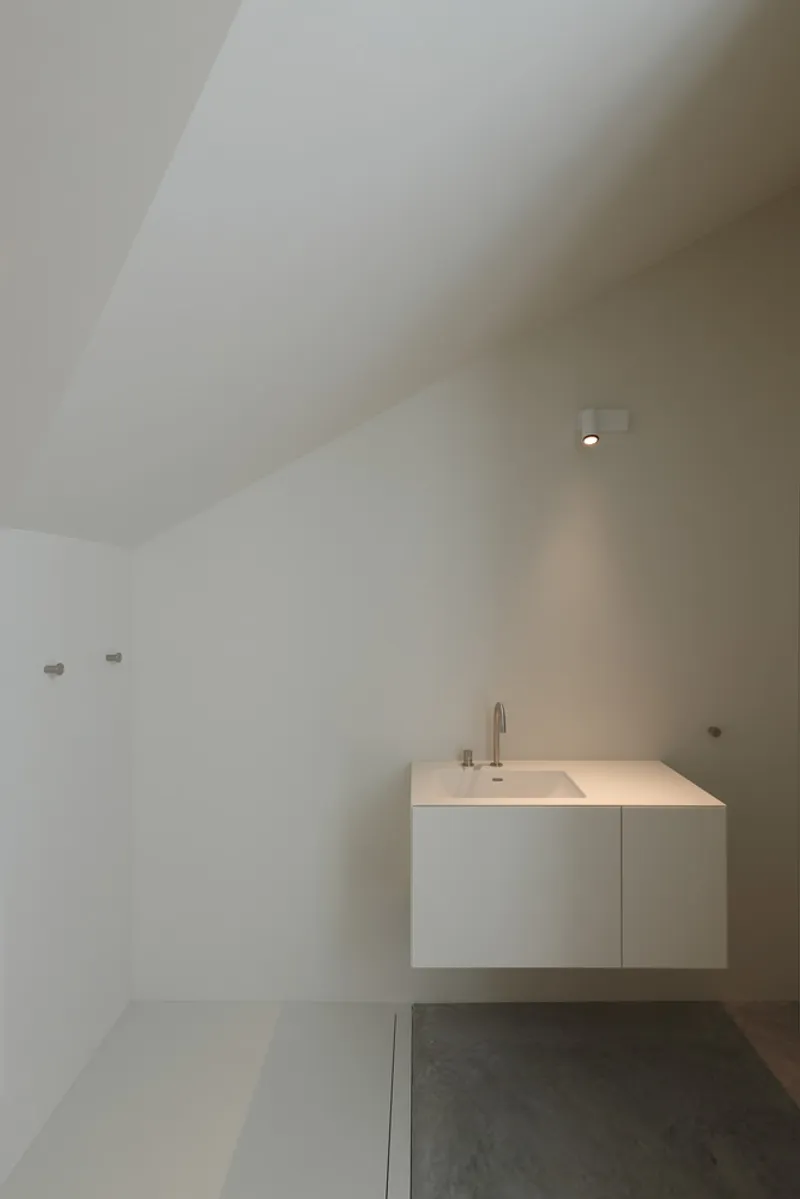
The fold-driven exterior geometry is mirrored inside through disciplined material restraint. Planes that break, hinge, or slide past one another register shifts in orientation and use without resorting to ornate detailing. Consistent surface languages reinforce the reading of the house as a continuous folded object placed within a mutable environment. Where walls meet ceilings, careful reveals preserve the sense of panels bending rather than merely intersecting, reinforcing the conceptual fold that gave the house its name.
Cinematic Circulation And Light
Angled surfaces create controlled sightlines that capture fleeting glimpses of river plain, wetland planting, and sky. As daylight tracks, planes alternately glow and recede, animating movement and supporting the client’s desire for an experiential, rather than purely functional, domestic environment. Because there are few abrupt closures, acoustic and visual connections persist across levels, promoting social overlap while still allowing zones of retreat in deeper folds of the plan.
Living With Water: Adaptation As Luxury
Re-Folded House proposes that true contemporary luxury in flood-prone regions lies in preparedness and adaptability as much as finish quality. Resilient materials, sacrificial zones, elevated utilities, and landscape absorption strategies replace denial with design intelligence. The home does not wall itself off from hydrologic risk; it acknowledges, accommodates, and even aestheticizes that reality, setting a precedent for climate-aware residential architecture in vulnerable geographies.
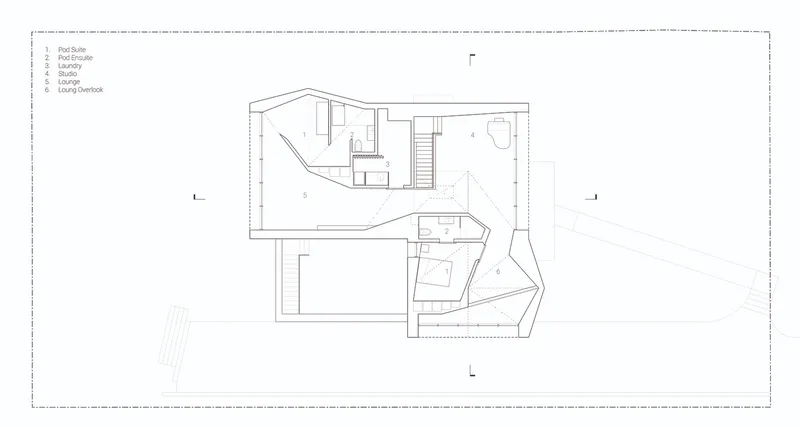
By coupling geometric experimentation with environmental pragmatism, Re-Folded House advances the conversation on flood resilient house design. Mcleod Bovell Modern Houses turn a midstream design reboot into an opportunity: to fold land, light, material, and risk into an integrated living environment that remains agile in the face of climate uncertainty. What began as a reconsideration of program ends as a meditation on place, change, and resilient dwelling.
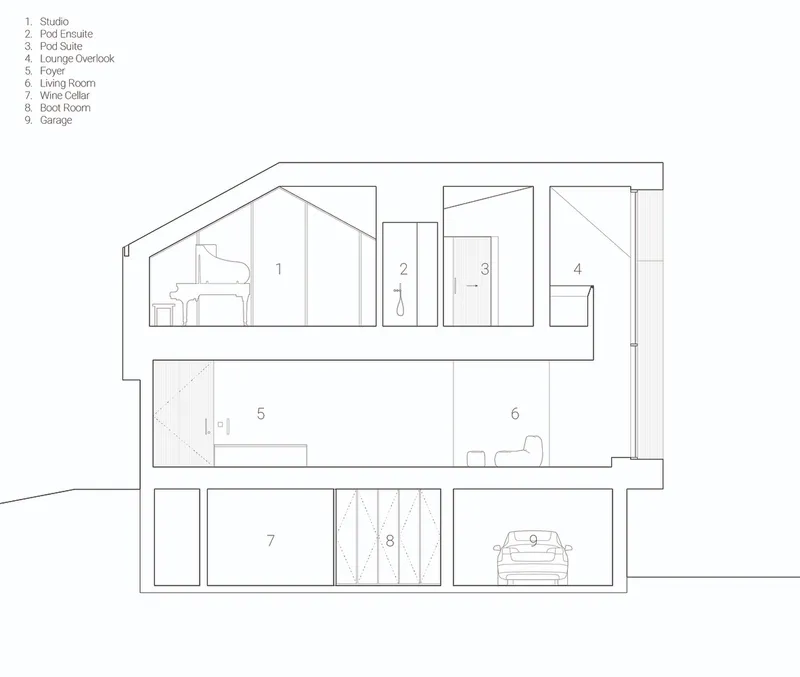
All the photographs are works of Ema Peter


Popular Articles
Popular articles from the community


Aquadapt: An Underwater Habitat That Rewrites Its Rooms by the Hour
Curved modules ring the seabed while one shell shifts from breakfast room to cinema, farm and football pitch as residents' needs change.


graciastudio Turns a Viewless Tijuana Lot Inward Around a Courtyard of Concrete, Timber and Trees
In Tijuana, Jorge Gracia's GA2 House stacks a timber-clad private floor over exposed concrete and replaces a missing view with a planted interior patio.

The Amber Palace Opera: A Geological Fiction Surfaces on Tallinn's Baltic Waterfront
Pierre Brillard reimagines a Baltic legend as a public landscape, opera house, and waterfront promenade rooted in Tallinn's coastal identity.

Cube Design Draws an Ecological Corridor Between Two Shenzhen Hills with the Nankai Building
Beside Shenzhen's container docks, the Nankai Building pairs stacked balconies with a climbing green screen to connect two hillsides across its height.

Similar Reads
You might also enjoy these articles
Cube Design Draws an Ecological Corridor Between Two Shenzhen Hills with the Nankai Building
Beside Shenzhen's container docks, the Nankai Building pairs stacked balconies with a climbing green screen to connect two hillsides across its height.

Praksis A and Studio Sted Bend a Red Timber Cabin Across the Granite of Norway's Southern Coast
On the southern Norwegian coast, a 105 m² cabin follows the rock on slender posts, pairing red cladding outside with pine, brick and plywood within.

David Ortega Stacks a Two-Story Mexico City Penthouse Around a Steel Stair and a Pergola-Shaded Roof Terrace
In Colonia Roma, a 300 m² penthouse uses oak joinery, a planted steel stair and a slatted roof pergola to make a new-build apartment feel like a house.

PARALELA and LB2 Thread a Public Walkway Through the Base of a Las Condes Residential Tower
In Las Condes, Santiago, the Hamlet Building gives its fenceless ground floor to a 70-metre wooded passage linking two streets and the metro.

Explore Flood Risk Competitions
Discover active competitions in this discipline

Challenge to reimagine the Iron Throne

Photograph architecture without architects

Illustrate the lost glory of Angkor Wat - Render Challenge

Design challenge to reuse E-waste
Comments (0)
Please login or sign up to add comments
No comments yet. Be the first to comment!