
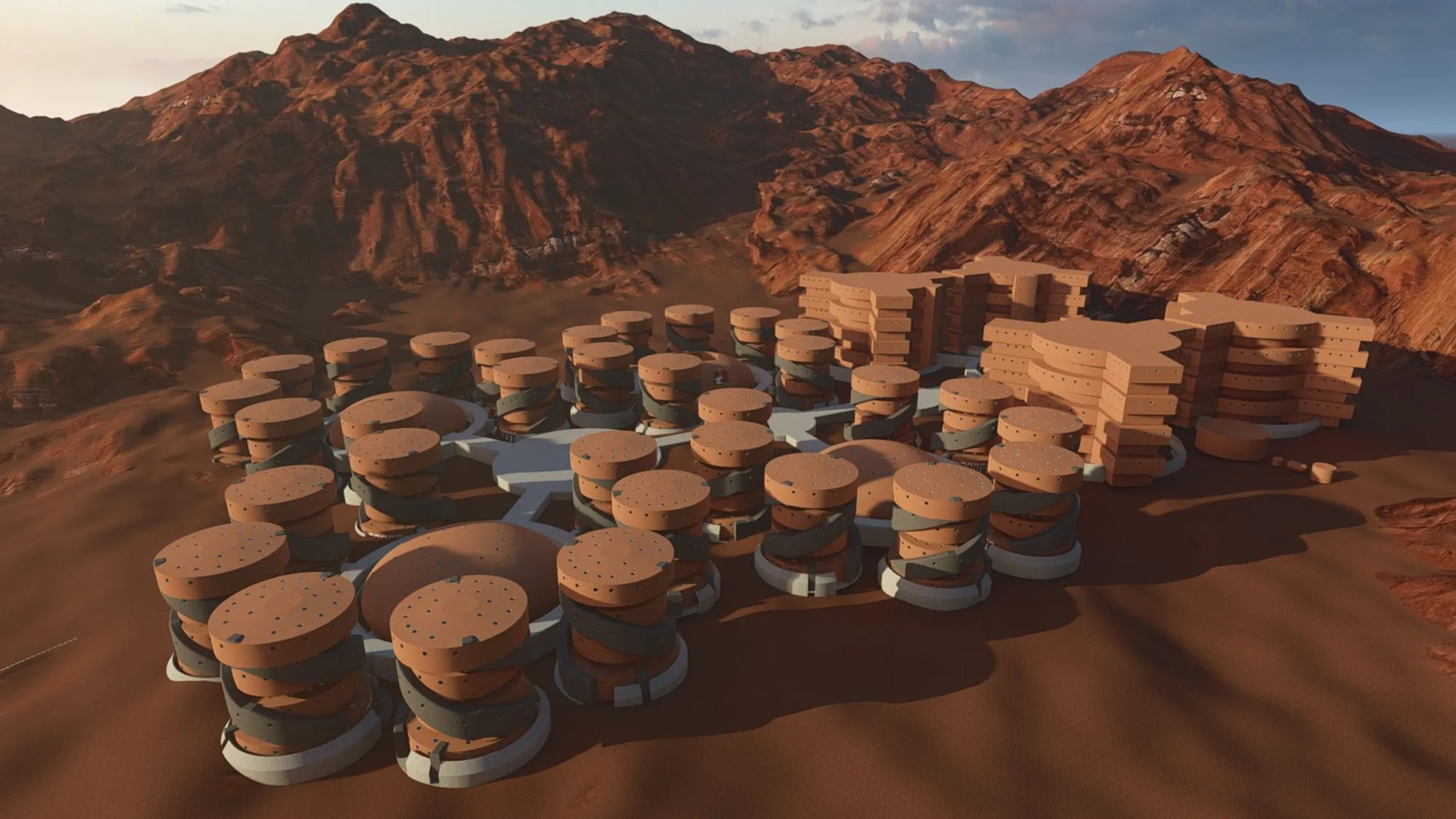
Red Planet Renaissance: A Leap in Sustainable Architecture for Mars
Explore Red Planet Renaissance, a visionary project in sustainable architecture, redefining human-centric, eco-friendly habitats for life on Mars with advanced technology


The "Red Planet Renaissance" project pushes the boundaries of sustainable architecture, offering a vision of human habitation on Mars. Through innovative materials, futuristic design concepts, and advanced construction methods, this project addresses both environmental and human needs, creating habitats that redefine extraterrestrial sustainability.
Project Overview
Winner entry by RamBharat N in the competition Red Planet Renaissance, this thesis integrates space science, environmental psychology, and engineering to propose a self-sustaining Martian community. From strategic site selection to construction processes, every aspect reflects the project's commitment to adaptability, resilience, and sustainability.
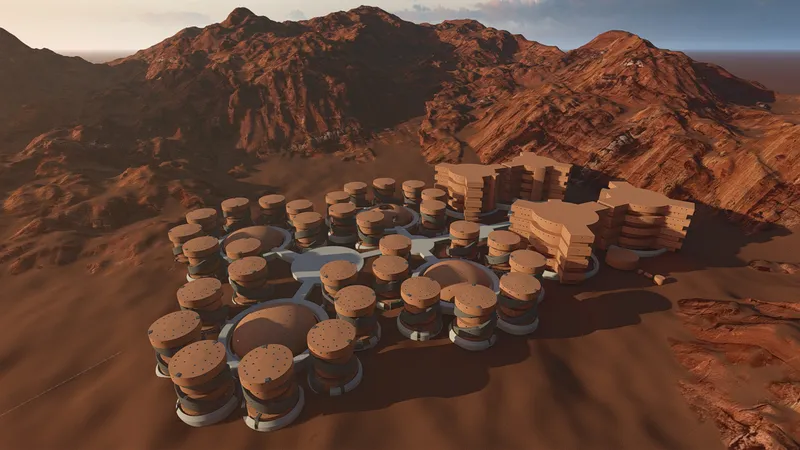
Conceptual Framework
1. Tensegrity Structures
- What: A balance of tension and compression to create adaptable, lightweight structures.
- Features: High stiffness-to-mass ratio, flexibility, and resilience to harsh Martian conditions.
- Technology: Smart materials and 3D printing for rapid assembly.
2. Golden Ratio Shells
- What: Geometrically inspired by the golden ratio, emphasizing harmony and efficiency.
- Features: Aesthetic finesse combined with structural robustness.
- Technology: Robotic 3D printing using Martian regolith to create durable shells.
3. Luban Lock System
- What: Modular, interlocking design for rapid assembly and adaptability.
- Features: Efficient use of Martian soil, ergonomic spaces, and reconfigurability.
- Technology: In-situ resource utilization (ISRU) to minimize logistical challenges.
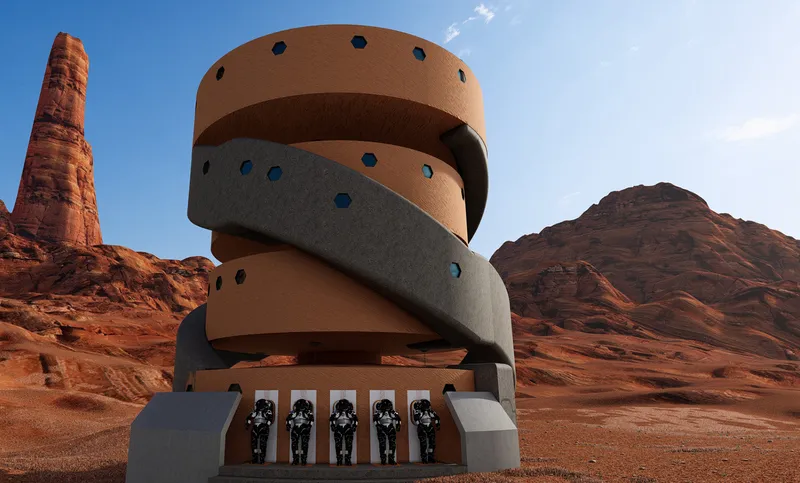
Design Elements
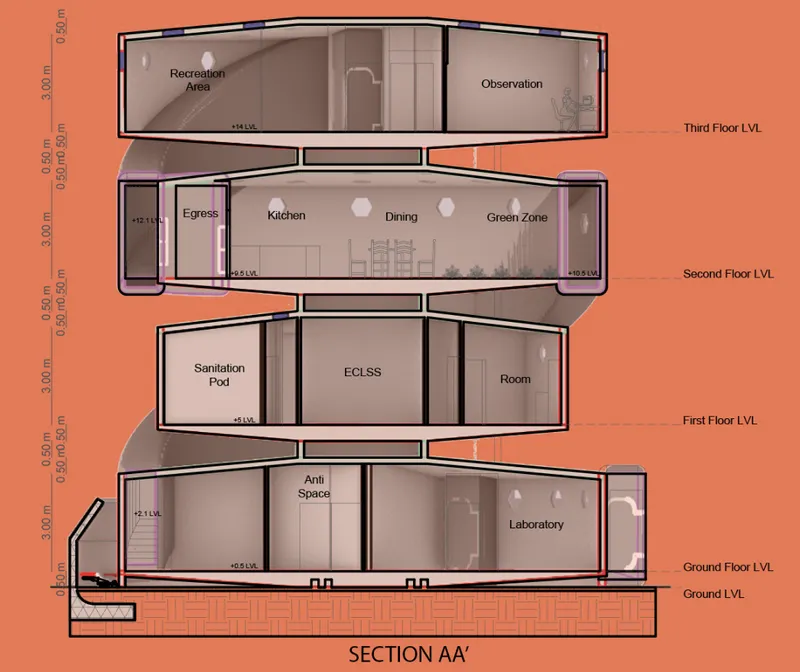
Residential Units
- Five-Member Unit: Cylindrical modular structures designed for small families, featuring study/recreation areas, bedrooms, and observation decks.
- Apartments: Multi-level buildings with functional layouts, walk-in wardrobes, and shared spaces to foster a sense of community.
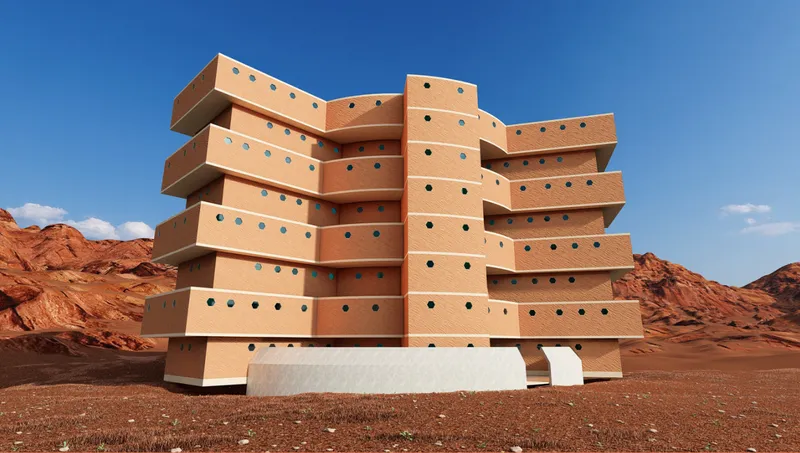
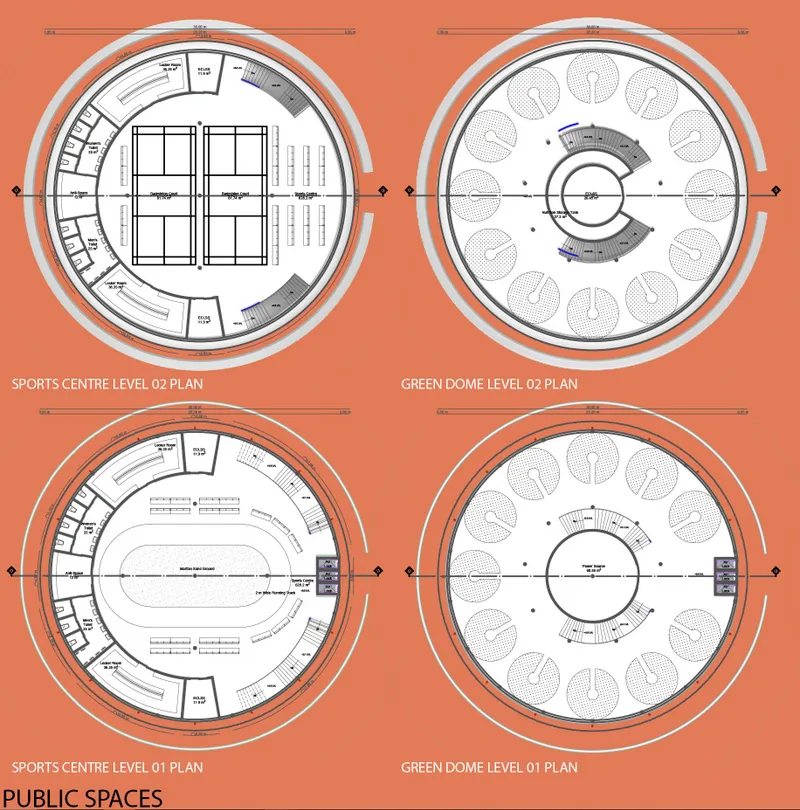
Public Spaces
- Sports Centre: Indoor courts and fitness zones for physical well-being.
- Green Dome: Indoor farming areas to support food sustainability and psychological health.
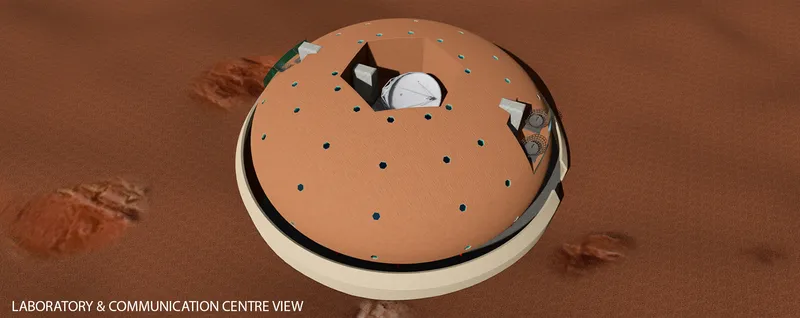
- Laboratory & Communication Centre: Spaces for research, communication, and resource management, essential for long-term survival.
Strategic Site Selection
- Hellas Planitia:Pros: Large impact crater, potential for terraforming.Cons: Resource scarcity and logistical challenges.
- Elysium Planitia:Pros: Strategic water access and geological richness.Cons: Limited atmospheric conditions.
- Arcadia Planitia:
Key Features
- Material Science Innovation:Lightweight, durable materials for 3D printing with Martian soil.
- Minimalist Design Philosophy:Focus on functional and sustainable living spaces.
- Human-Centric Approach:
The "Red Planet Renaissance" project exemplifies the potential of sustainable architecture to expand human frontiers. Combining innovative design principles with advanced technologies, it sets the stage for creating a thriving, resilient Martian civilization. As the winner of this visionary competition, RamBharat N inspires a new generation of architects to think beyond Earth, making sustainability a cornerstone of interplanetary exploration.




Popular Articles
Popular articles from the community


The Earth Pod: 3D Printed Homes for Resilient Refugee Communities
The Earth Pod reimagines refugee housing through 3D printed homes made from clay, combining resilience, self-sufficiency, and rapid shelter.

The Musturak Paradise: Senior Living Architecture for a Connected Future in Temara, Morocco
The Musturak Paradise reimagines senior living architecture in Temara via private homes, social spaces, culture, community, and shared care.

Co-Life: Senior Housing Design That Reconnects Older Adults With the City
Co-Life reimagines senior housing design through healing gardens, shared streets, workshops, and a sustainable community across generations.

Co-life: Sustainable Architecture for Age-Friendly Community Living
Co-life reimagines sustainable architecture for seniors through courtyards, rammed earth, shared gardens, and spaces designed for belonging.

Similar Reads
You might also enjoy these articles

Day and Night Park: A Time-Based Urban Newsstand in Beijing
A temporary urban newsstand in Beijing blending travel, light, and reading through poetic colors, compact form, and community-focused design.

Modernist Patio Renovation in El Masnou, Barcelona by Oliver Segura Arquitectura + Cebrià Arquitectura
Modernist patio renovation blending tradition and innovation with a movable pool, leveled floors, and Catalan materials in El Masnou.

Alto Residencial Coop: Cooperative Housing Development in Santiago de Compostela by Carbajo Barrios Arquitectos
A linear cooperative housing complex blending white volumes and perforated metal façades, enhancing community living, natural light, privacy, and urban integration.
Vil Genis School by BPA ARCHITECTURE – Massy, France
Vil Genis School in Massy, France, features sustainable design, south-facing classrooms, community integration, accessible spaces, and modern educational architecture.
Comments (0)
Please login or sign up to add comments
No comments yet. Be the first to comment!