

Régis Roudil Wraps 46 Timber-Framed Social Housing Units into a Curved Courtyard Near Toulouse
A circular residence built from unfired earth brick and wood wool insulation anchors a new ecodistrict in Cornebarrieu, France.


Social housing rarely gets to be the defining gesture of a new neighborhood, but in Cornebarrieu, ten kilometers northwest of Toulouse, Atelier Régis Roudil Architectes has delivered a building that does exactly that. Sited at the southern gateway of the ZAC Monges-Croix du Sud ecodistrict, this 3,101 square meter residence curls 46 units around a central courtyard, using its own plan to stitch preserved countryside into a newly densifying urban fabric. The project was inaugurated in May 2026.
What makes the project genuinely interesting is the tension between its ambitions and its constraints. The construction budget was held to roughly 2,500 euros per square meter, yet Roudil's team managed to specify a timber frame structure, unfired earth brick, wood wool insulation, and solid wood panel dividers between units. The circular plan is not a formal flourish; it is a strategy for generating density without the feeling of density, calibrating scale through the relationship between each apartment and its window onto the landscape or the courtyard.
A Curve That Defines Territory
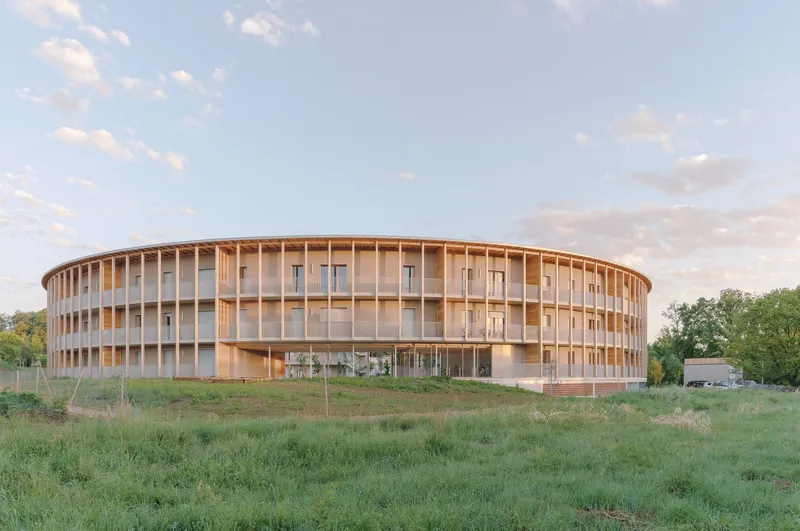
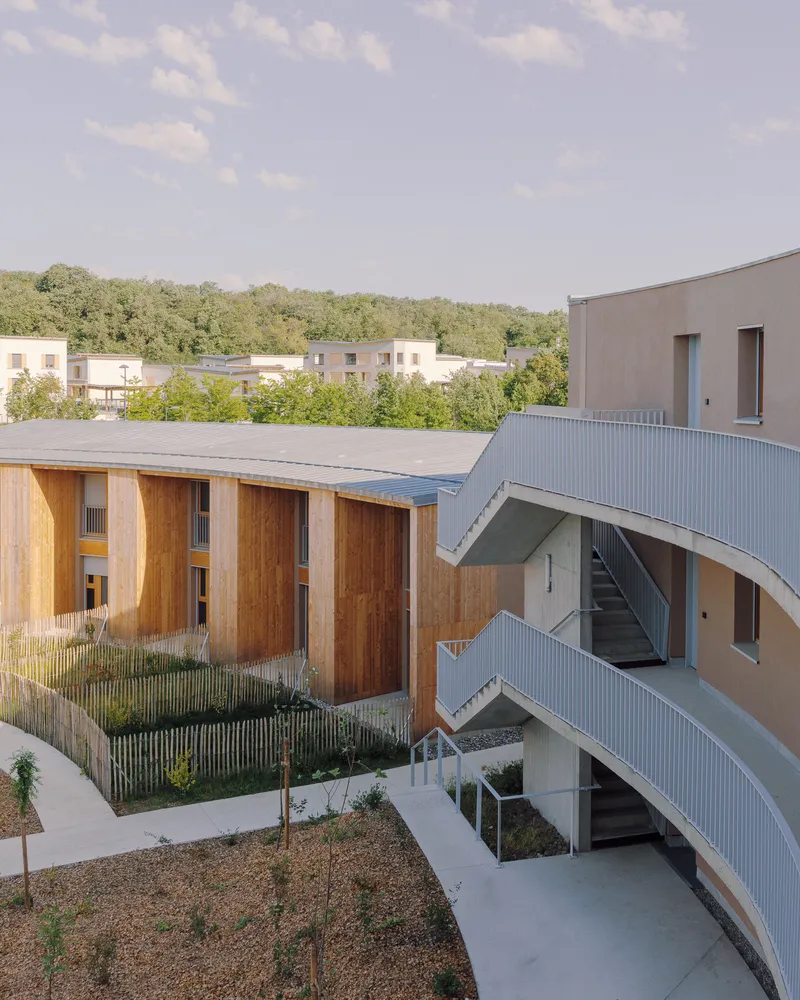
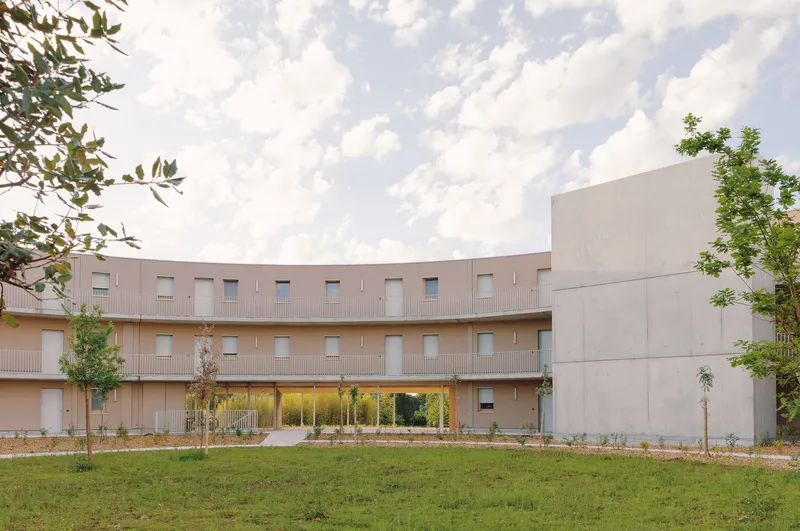
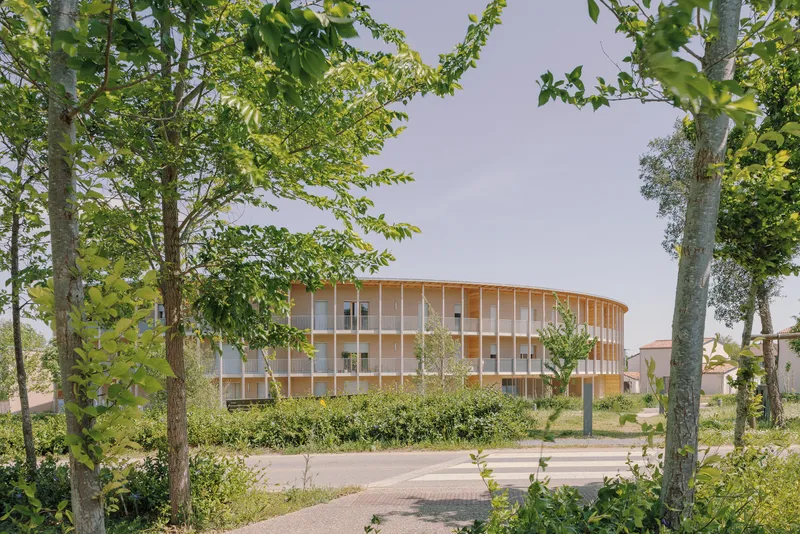
From the air, the building reads as a bent bar that encloses a generous planted courtyard on a triangular site. The curve is not a perfect circle; it opens and closes to negotiate the edges of the lot, preserving large areas of full earth for useful gardens and landscape beds. Atelier Saut de Loup handled the landscape architecture, threading birch groves and gravel planting beds through the ground plane so the residence feels embedded rather than placed.
At dusk the timber louvres and glass enclosures glow from within, and the building's low horizontal profile sits comfortably against the open field that still separates it from the countryside beyond. The ZAC aims to triple the average densification of the Toulouse metropolitan area, which makes Roudil's ability to keep the building feeling expansive all the more critical.
Timber Skin, Layered Depth
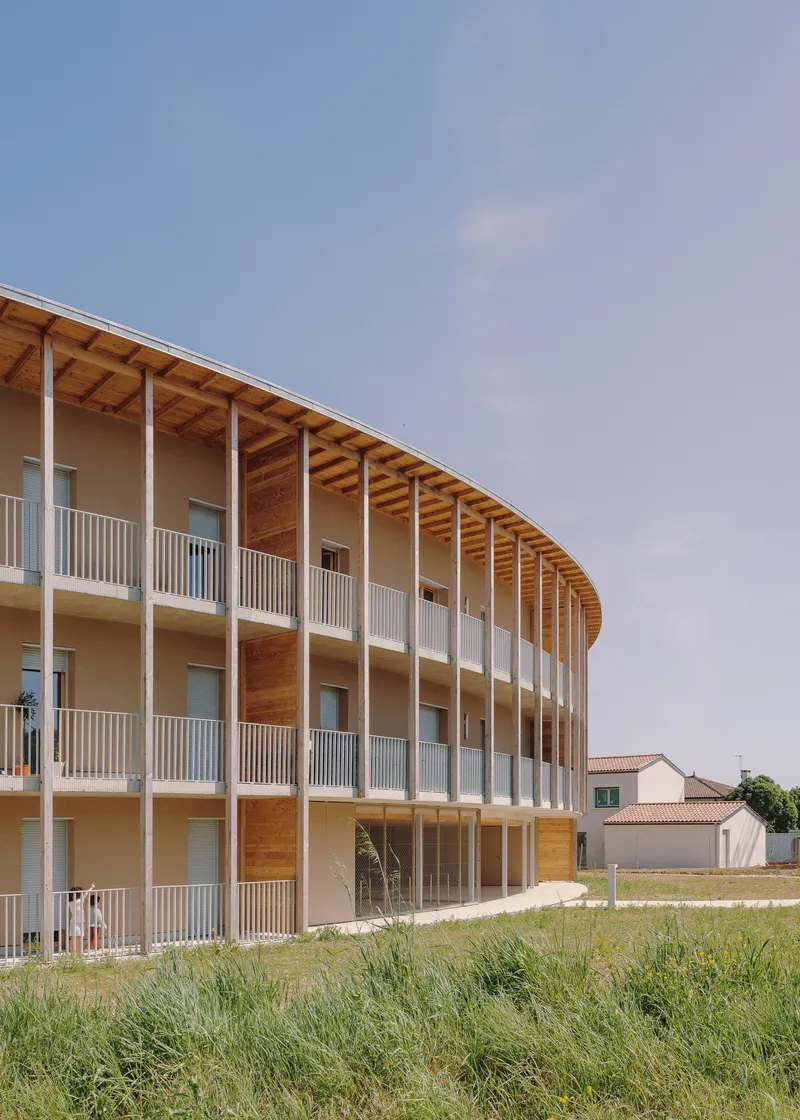
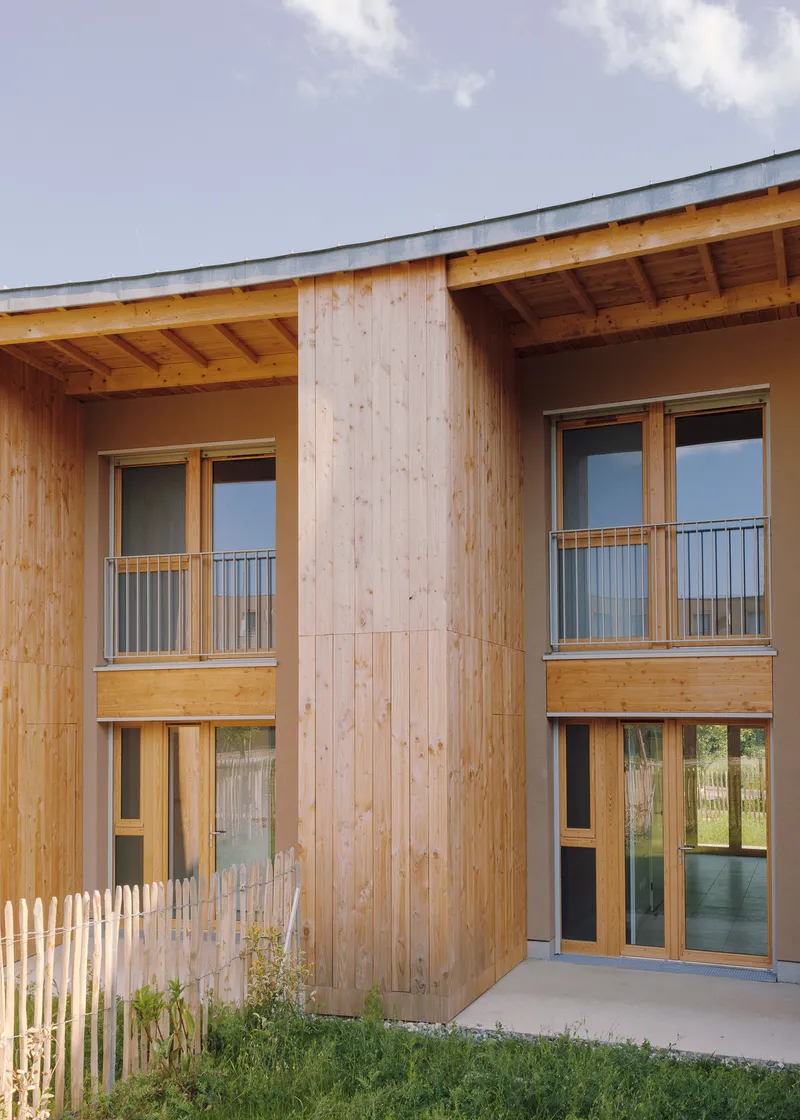
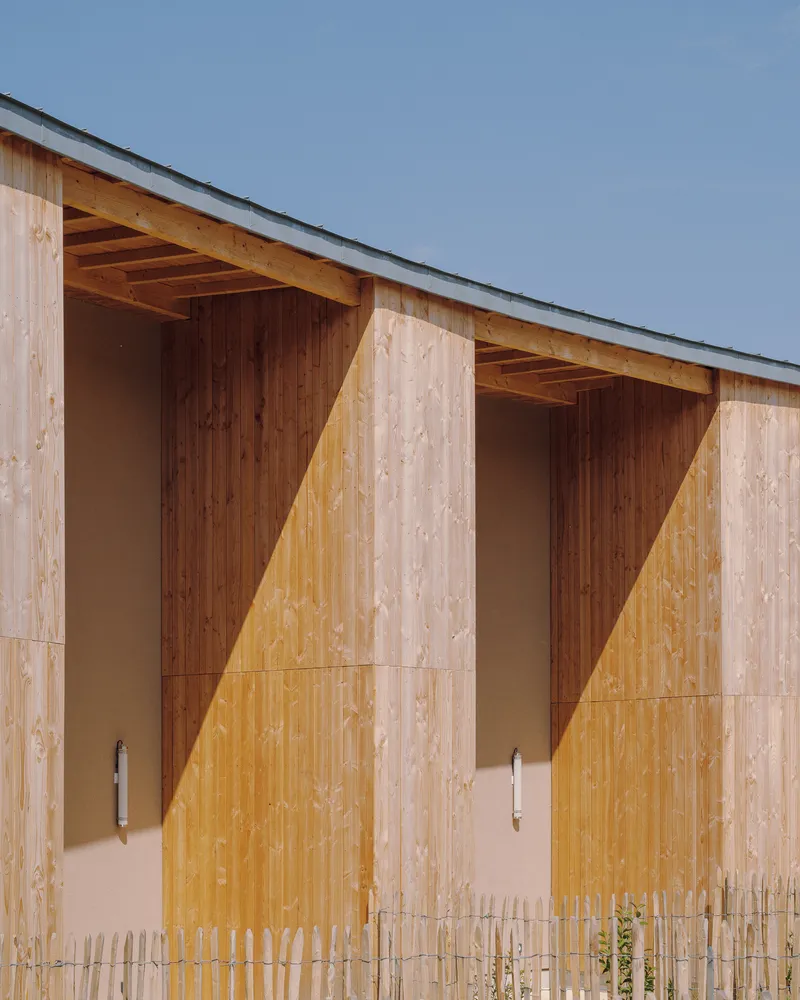
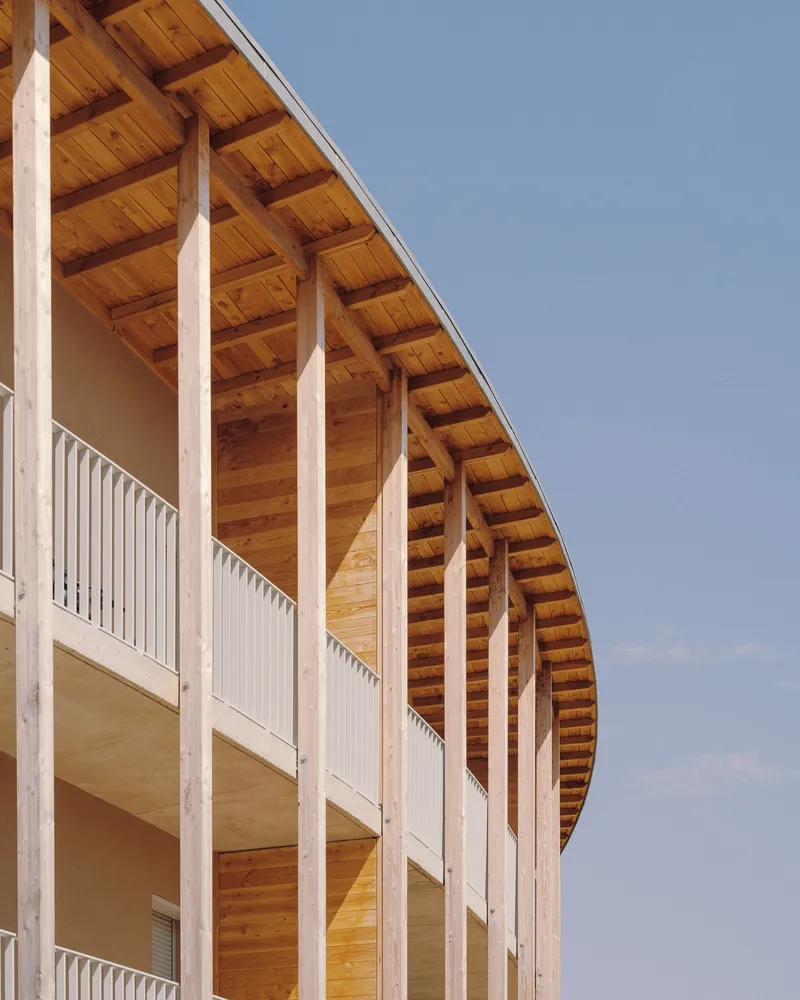
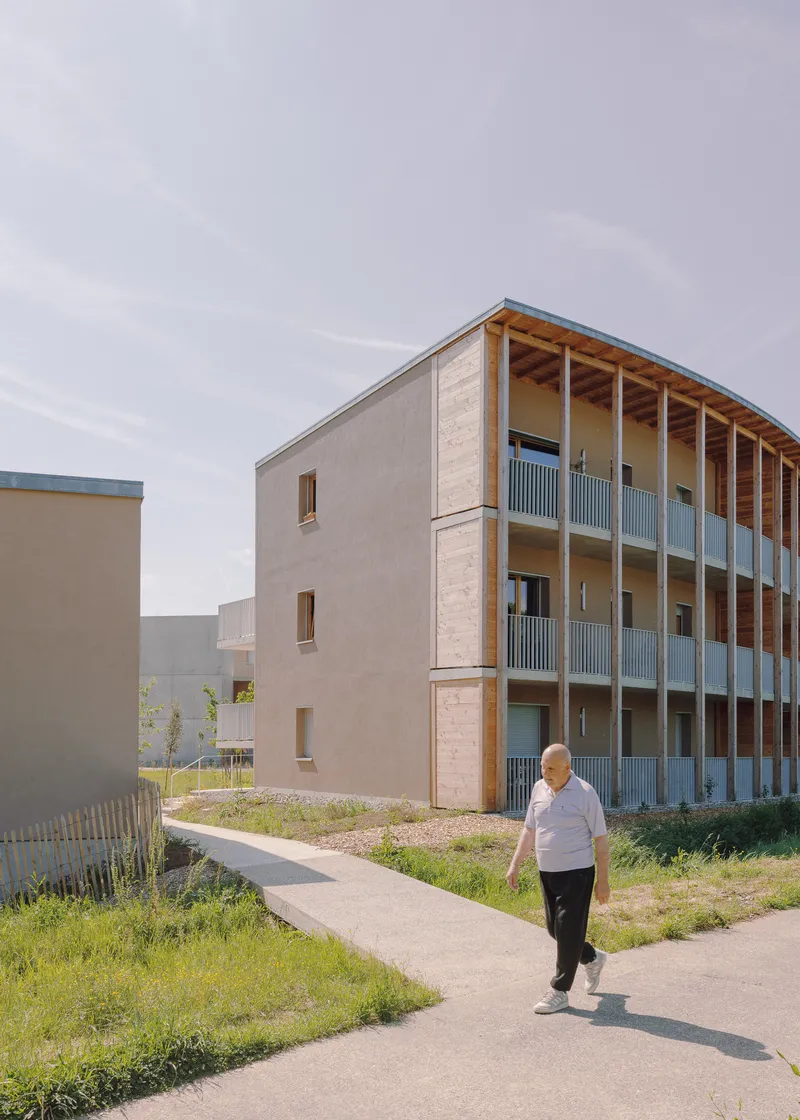
The exterior envelope is a lesson in doing a lot with one material family. Vertical timber cladding, chamfered pilasters, exposed rafter tails, and wood slat screens layer over one another to create a facade with real depth. The rafters cantilever past the building edge, casting triangular shadow patterns that shift through the day. Juliet balconies at upper levels sit flush with the timber plane, maintaining a clean silhouette while still giving residents a threshold to the outside air.
The curved roofline accentuates the effect: each rafter follows the building's radius, fanning outward so the soffit widens as you look along the facade. It is a simple geometric consequence that Roudil turns into an expressive move without adding cost.
Courtyard and Arcade
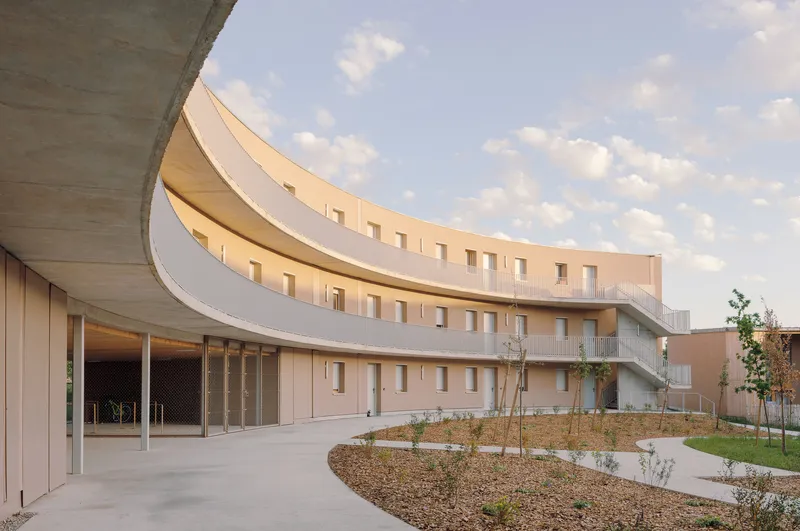
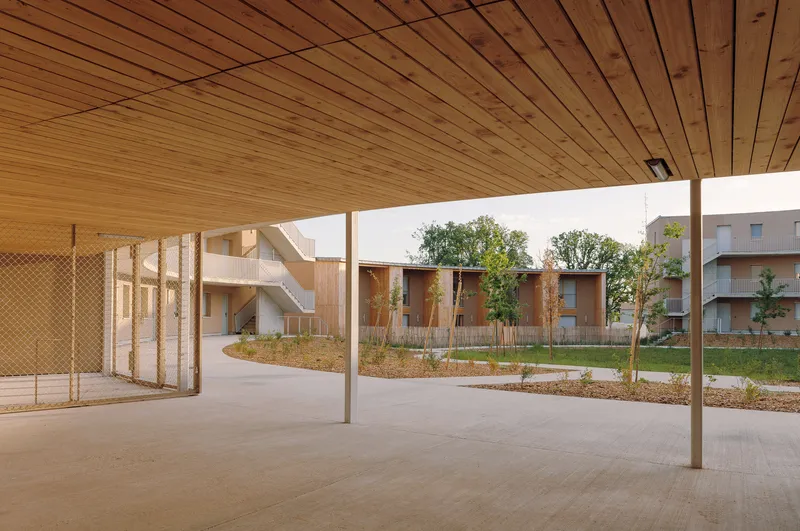
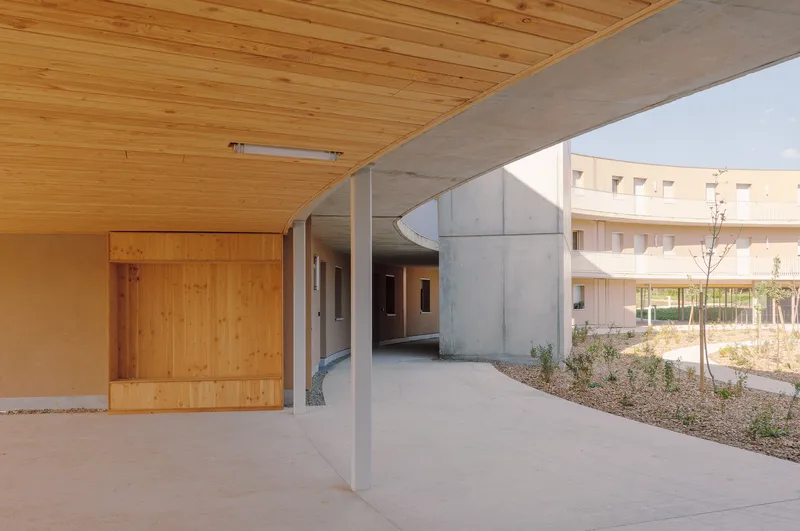
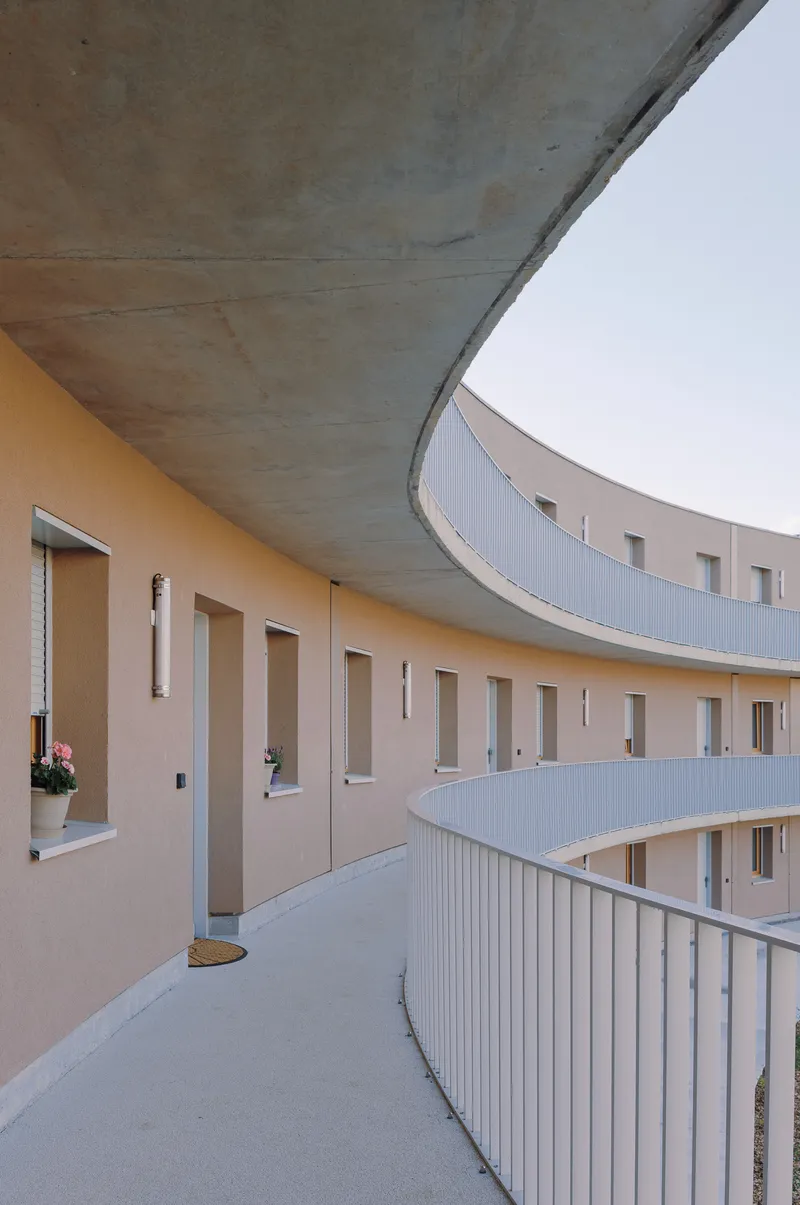
The inner face of the building shifts material palette. Pale stucco replaces timber, and a ground floor arcade runs beneath the curving wings, giving residents a covered threshold between their front doors and the courtyard. The change in materiality is practical: stucco bounces daylight into the courtyard and contrasts with the warmer timber of the outer skin, helping residents orient themselves instinctively.
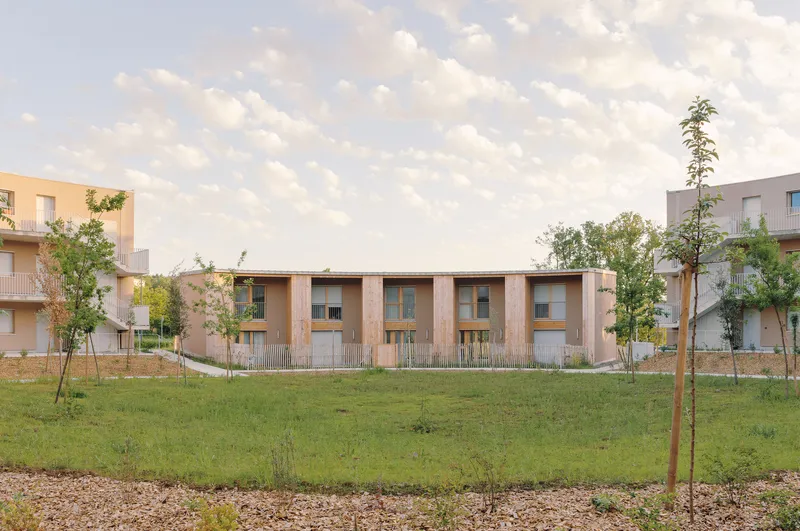
Timber columns and a wood slat ceiling define a porch condition that feels genuinely communal. Gravel beds with young trees break up the courtyard floor, and the planting strategy appears designed to mature into a leafy enclosure over the next decade. At dusk, the arcade becomes a threshold of compressed shadow that frames the lit courtyard beyond, giving the building a civic presence that most social housing simply does not attempt.
Materiality at Close Range
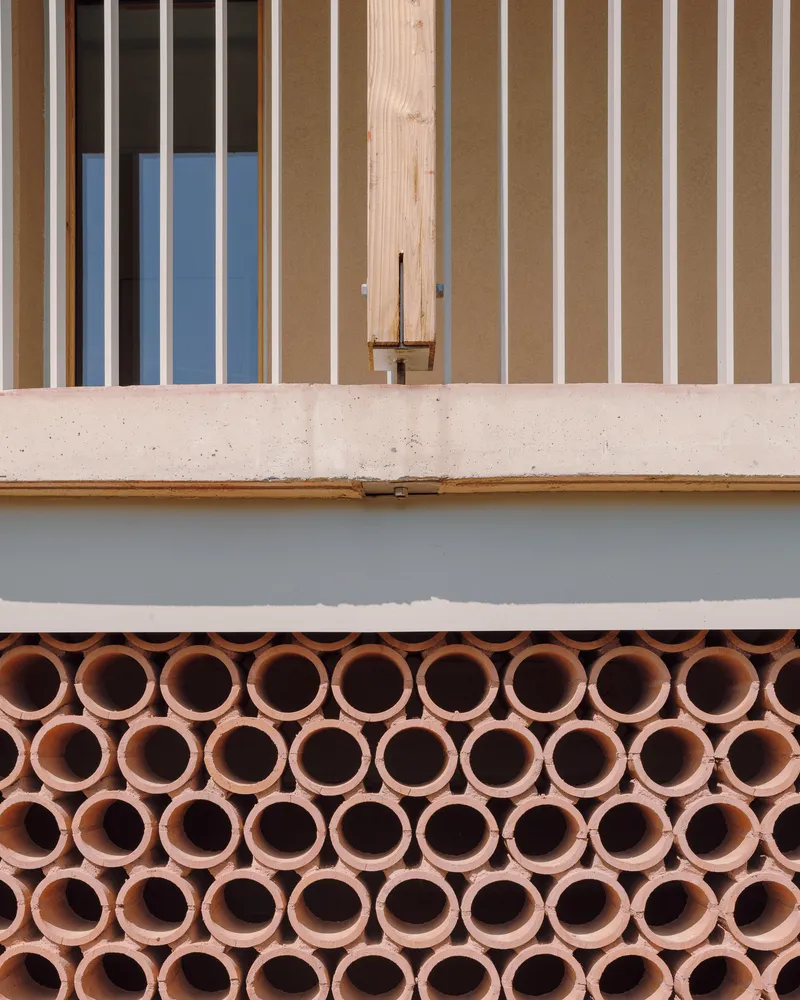
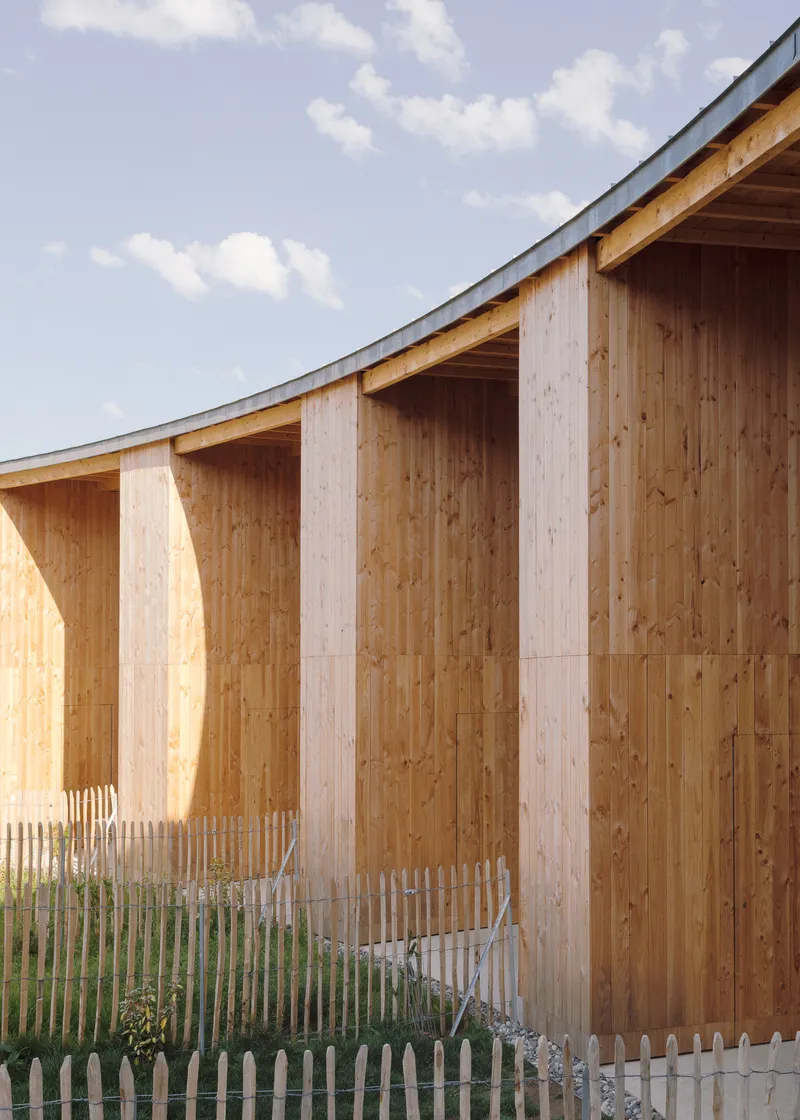
One detail tells the whole story of the project's material logic. At the base of the facade, terracotta tube screens sit below a concrete beam, with vertical timber slats picking up above. The terracotta tubes are almost certainly unfired earth brick, the bio-sourced material specified in the competition brief. They provide ventilation and visual screening while connecting the building to the clay soils of the Toulouse region. Above, the timber frame does the structural work, and plaxed wood joinery frames the windows.
Solid wood panels separate units from one another, and wood wool insulation fills the cavities. The combination means the building breathes well, insulates efficiently, and stores carbon rather than emitting it. At 2,500 euros per square meter, these are not luxury specifications; they are smart substitutions that align environmental performance with tight budgets.
Circulation and Threshold
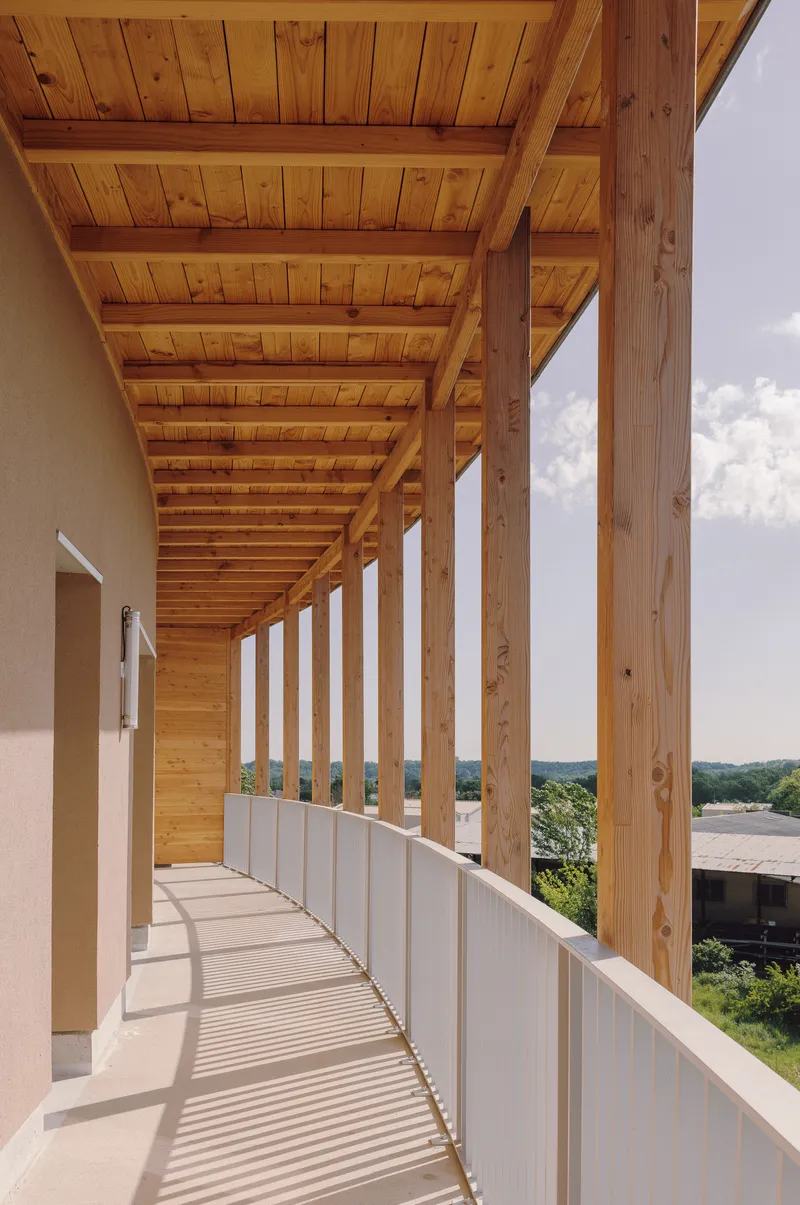
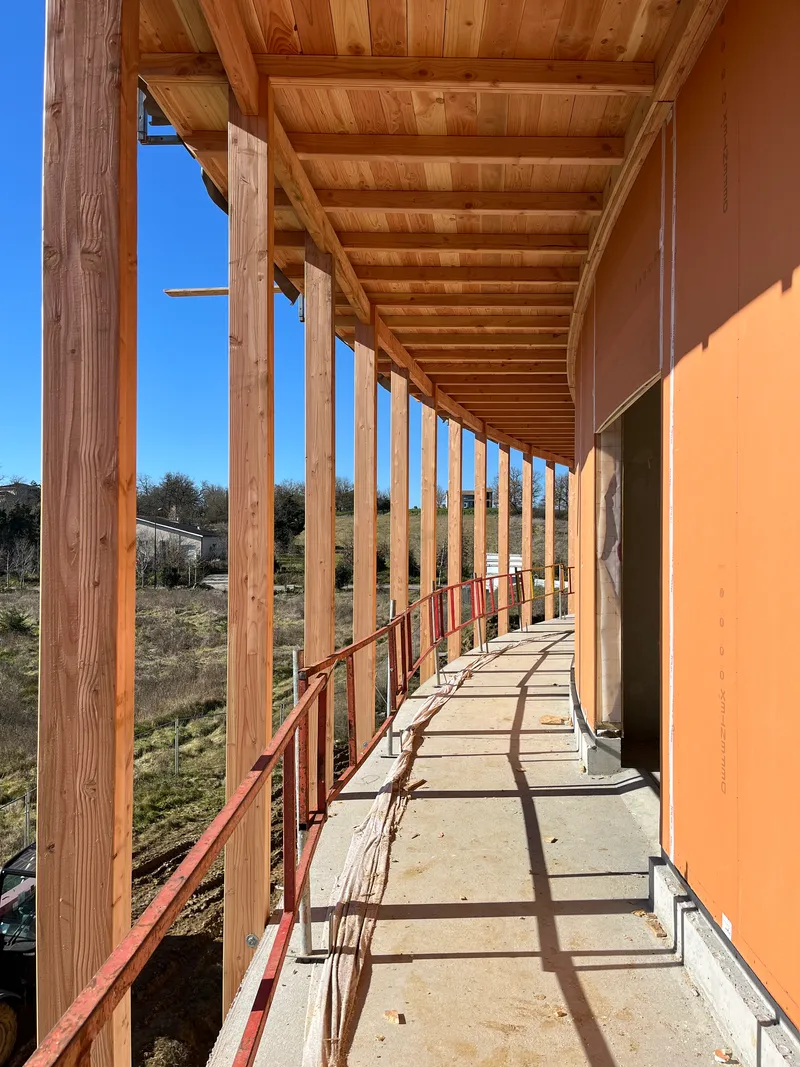
The covered walkways along the outer edge of the building are generous. Exposed timber beams, white or red metal railings, and concrete floors create corridors that feel more like loggias. Vertical slats cast parallel shadow lines that animate the path as you walk, and the curved plan means your sightline constantly shifts. These are not corridors to rush through; they are places to pause.
On the courtyard side, a curved exterior corridor with concrete soffit and cream stucco walls offers a quieter, more enclosed version of the same idea. Vertical slit windows punctuate the wall, framing slices of the landscape and pulling natural light into the circulation spine. The duality between outer and inner walkways gives each unit two distinct relationships with the outside.
Inside the Units
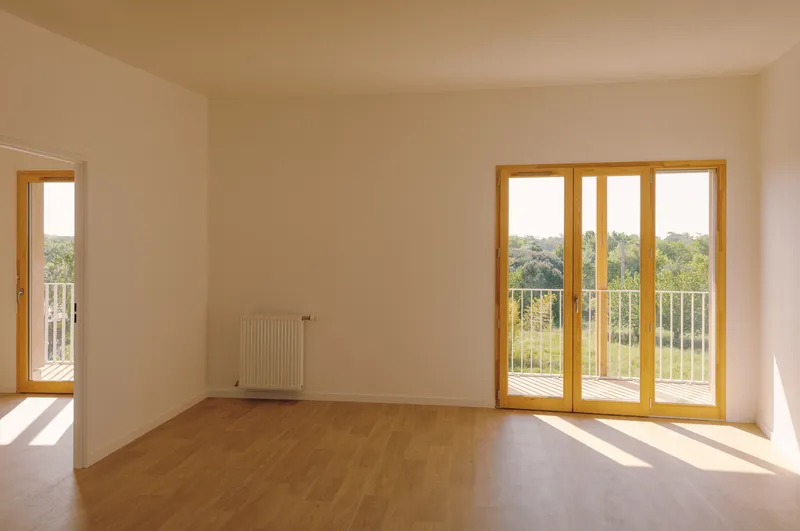
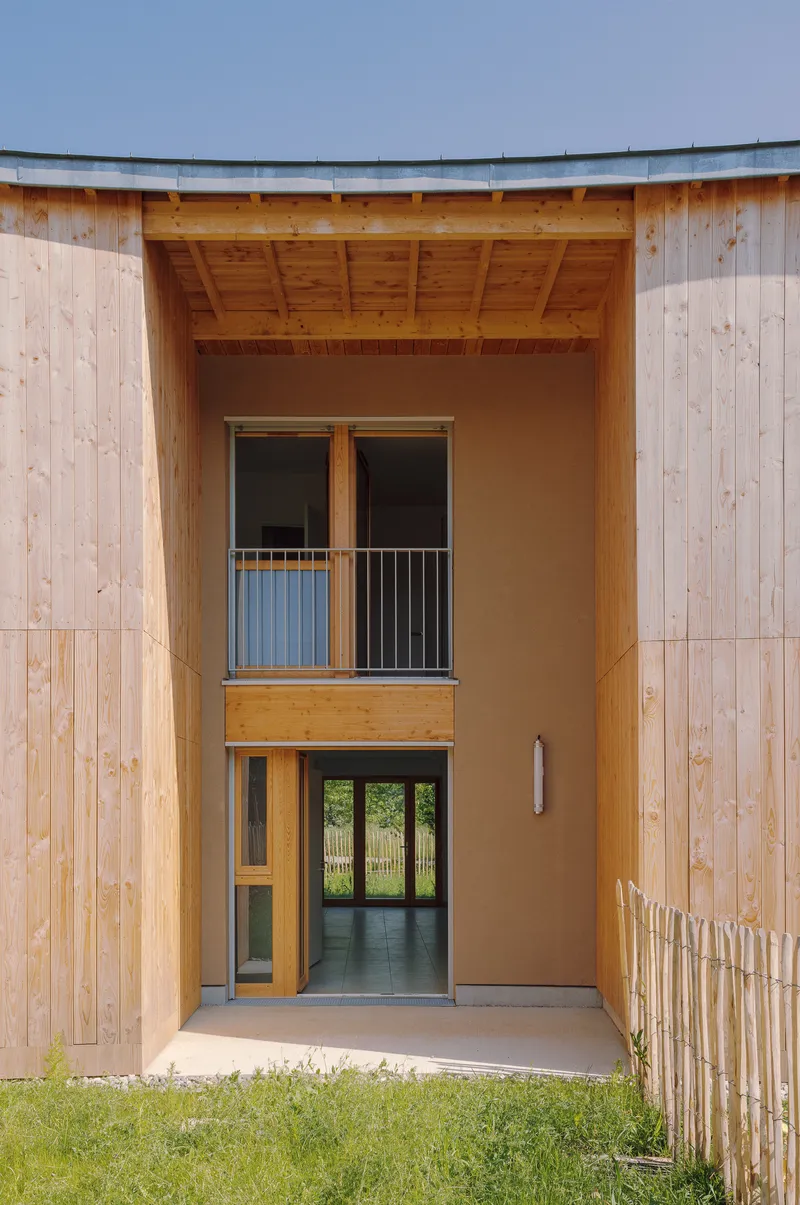
The interiors are restrained: light wood flooring, white walls, timber-framed glass doors opening to balconies. Forty-one of the 46 units are crossing apartments, meaning they have openings on both the courtyard and landscape sides. That is a high percentage for a social housing project and a direct consequence of the curved plan, which keeps the building's depth shallow enough for natural cross ventilation and dual aspect daylight.
The unit mix covers T2, T3, and T4 typologies, with five units designated for social home ownership. Double-height entrance recesses with stacked glass doors and a balcony above mark the individual houses at ground level, giving them a distinct identity within the collective form.
Construction Logic
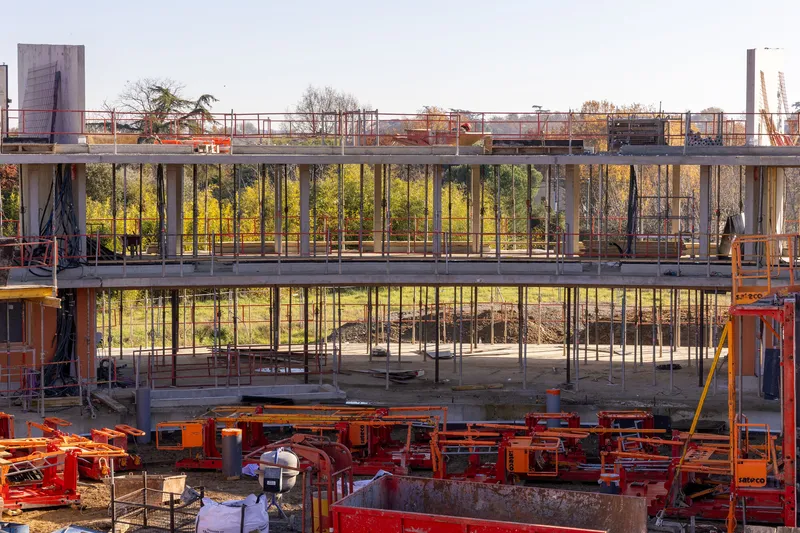
A construction photograph reveals the hybrid structure clearly: concrete floor slabs on steel columns, with the timber frame arriving afterward to enclose the volume. The concrete provides the acoustic separation and fire resistance that French housing codes demand, while the timber frame carries the building's thermal and aesthetic identity. It is a pragmatic split, and the exposed steel columns visible during construction disappear entirely behind the finished cladding.
The newly planted landscape is still raw, with saplings staked along the paved path and birch trees lining the approach. In a decade, the relationship between building and planting will have shifted dramatically. Roudil and Atelier Saut de Loup seem to have designed for that maturation, keeping the facade grid regular enough to hold its own against an increasingly dense tree canopy.
Plans and Drawings
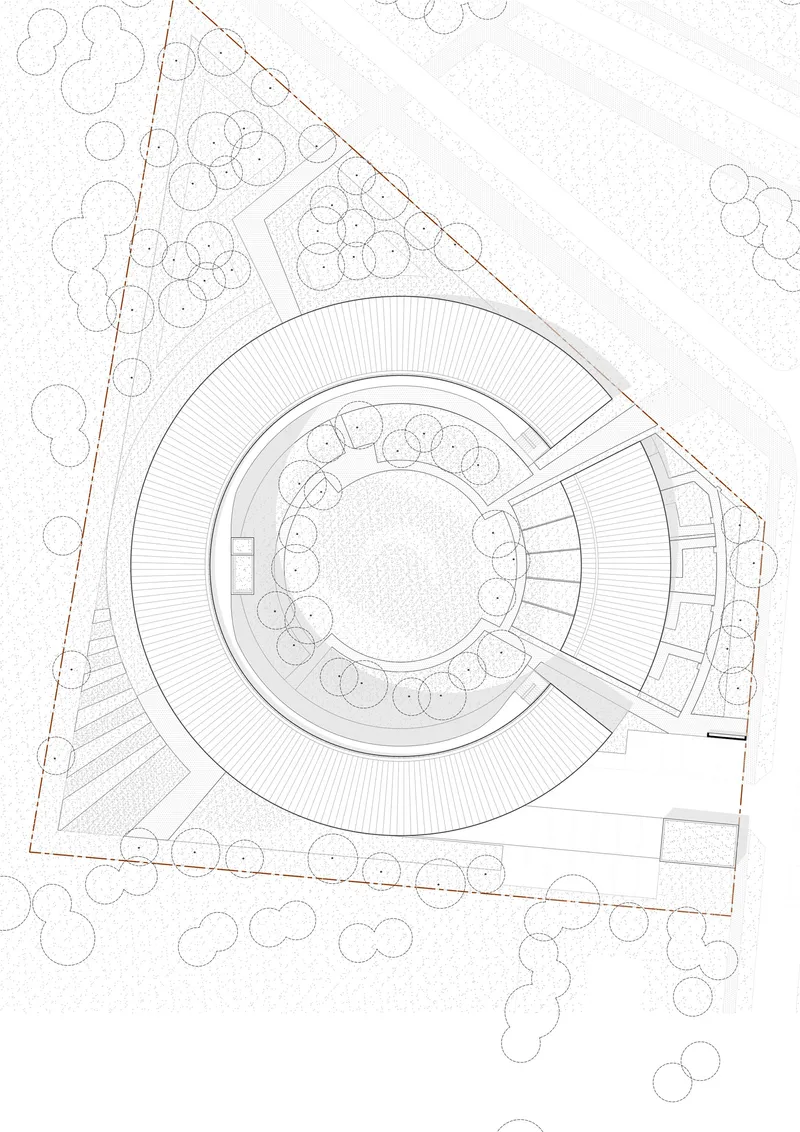
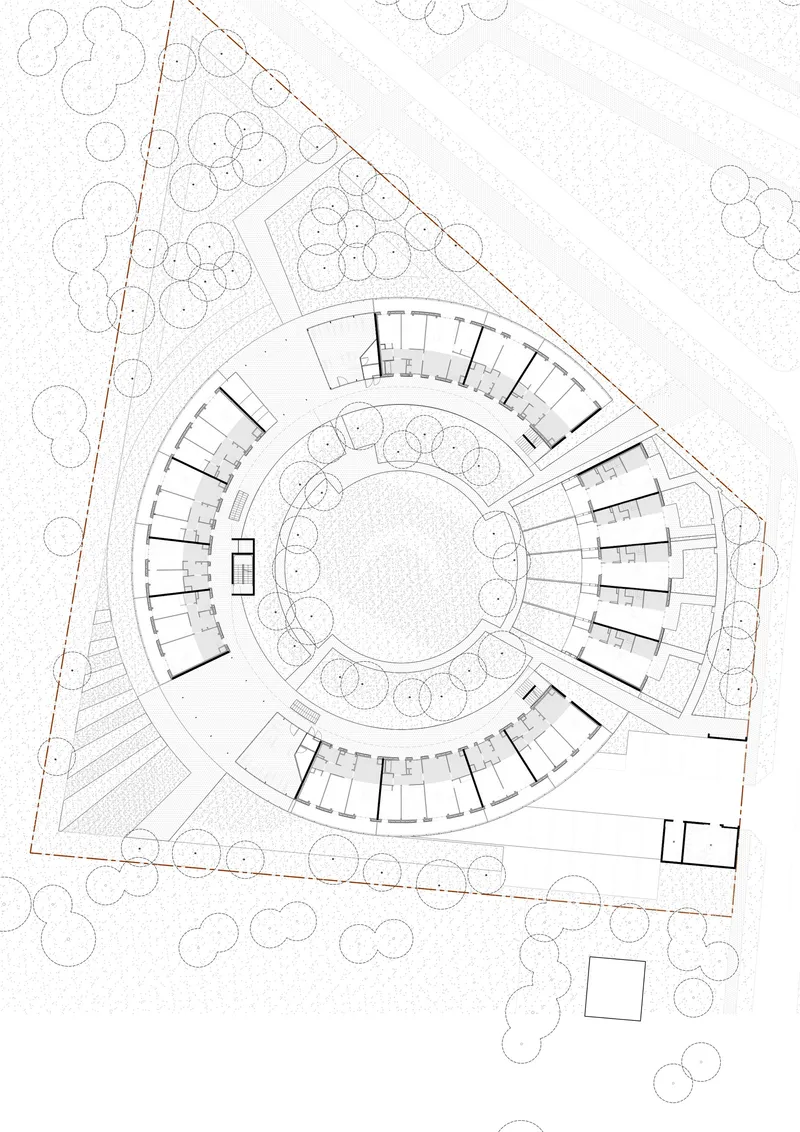
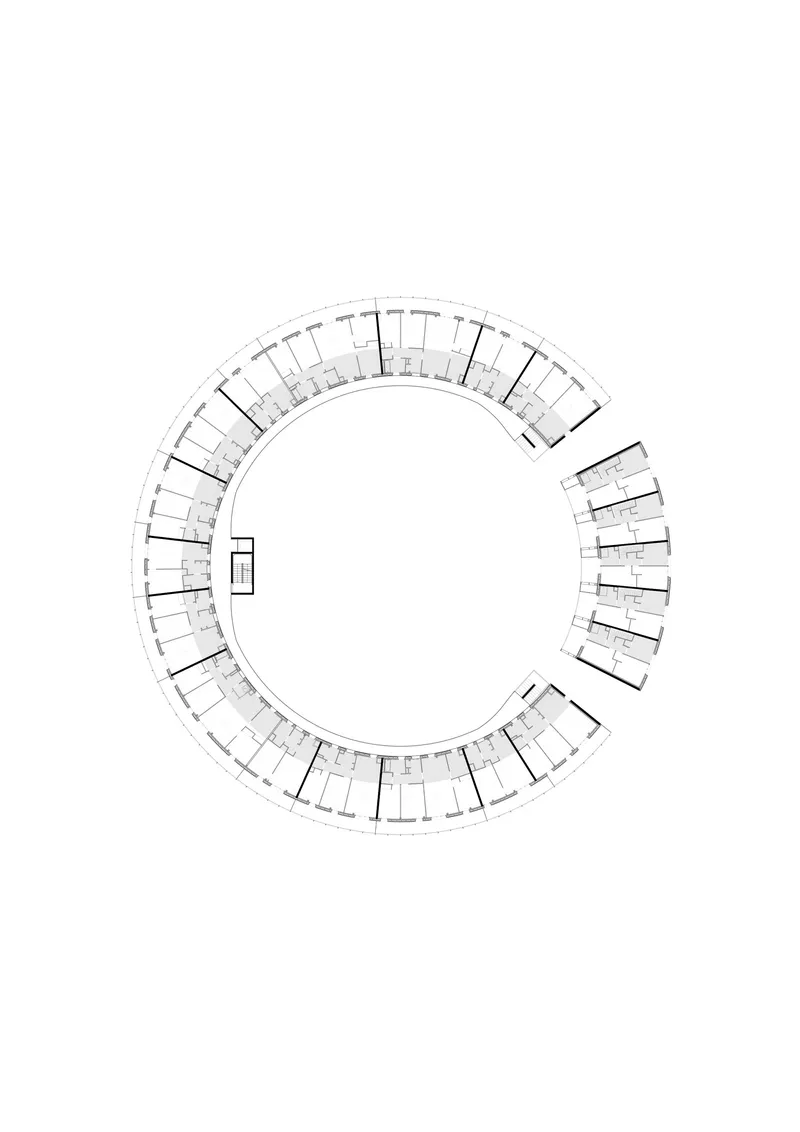
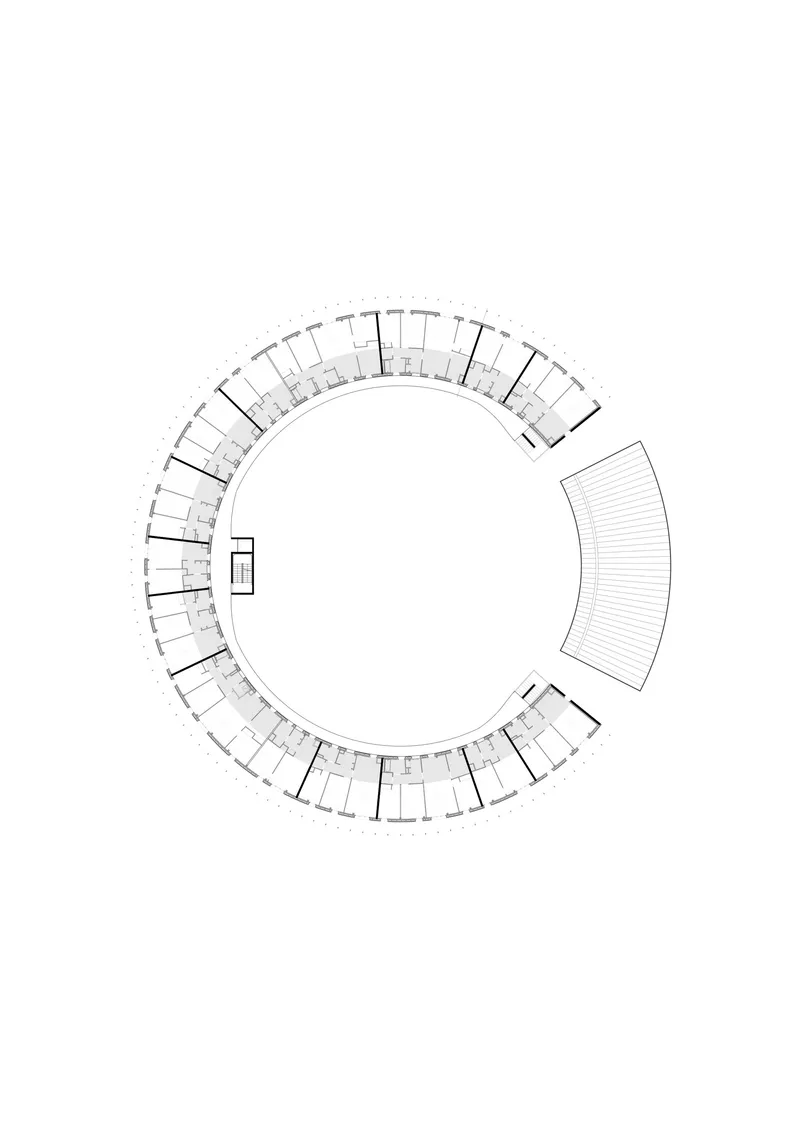
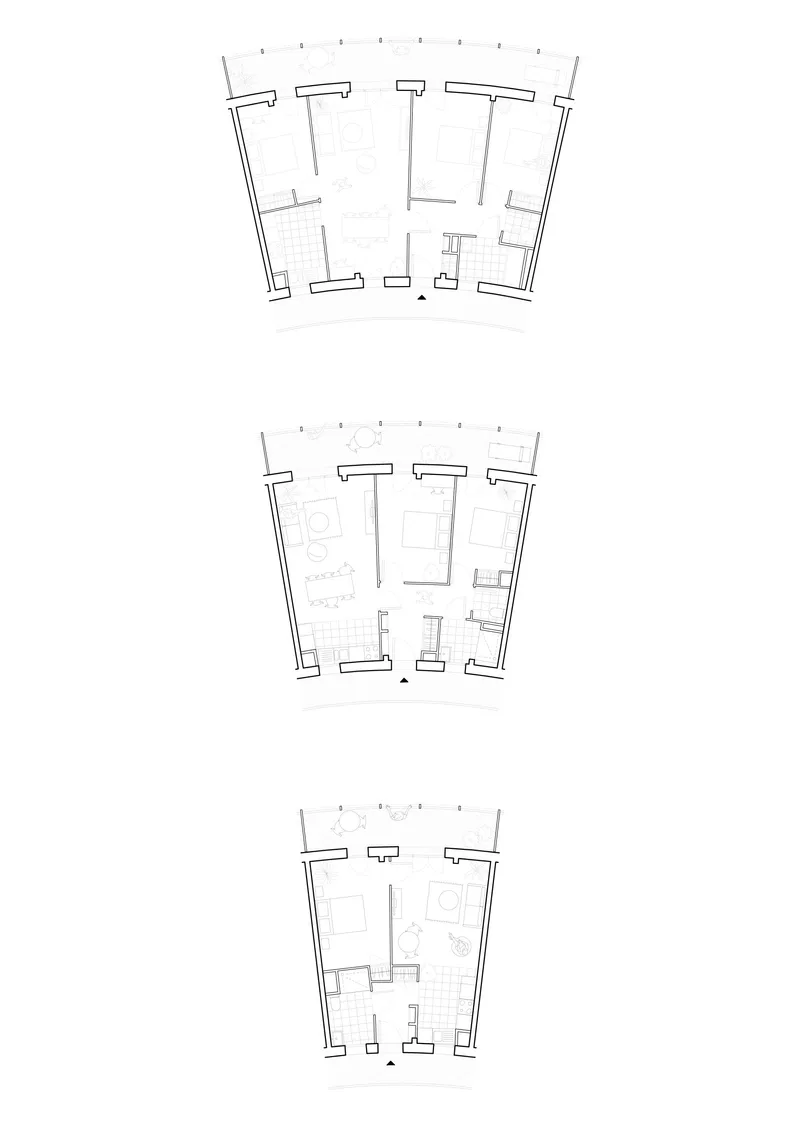
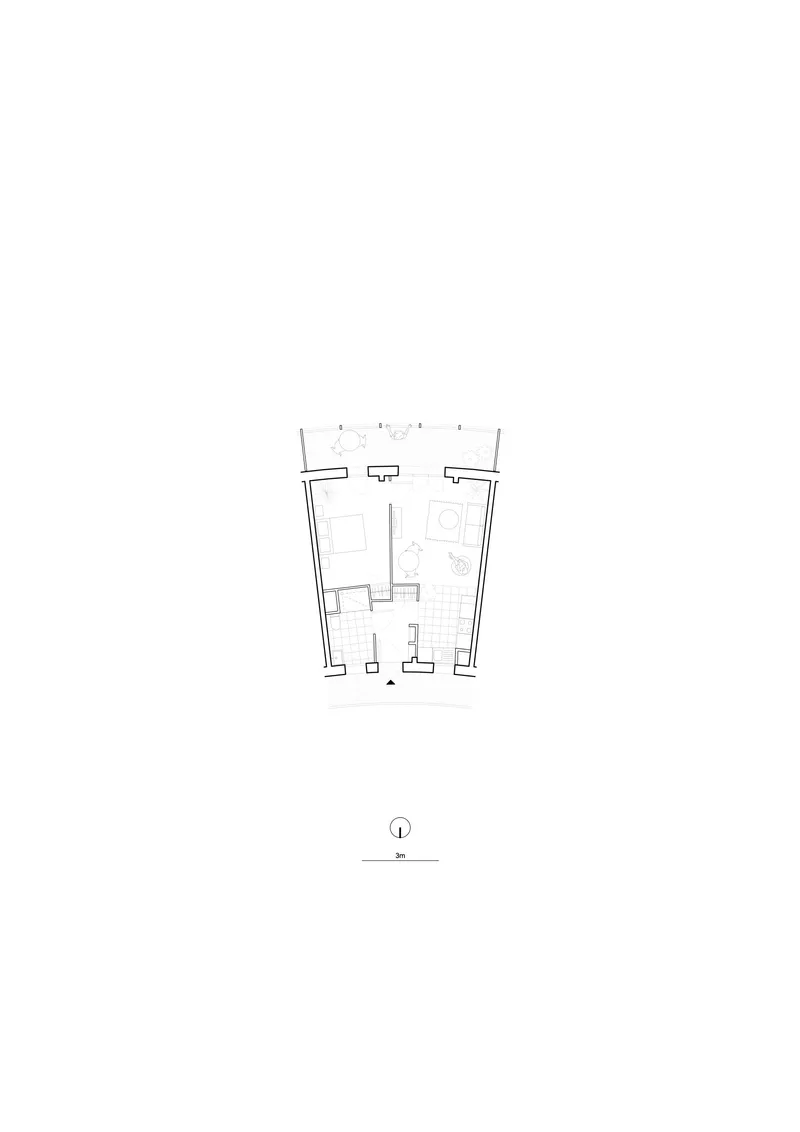
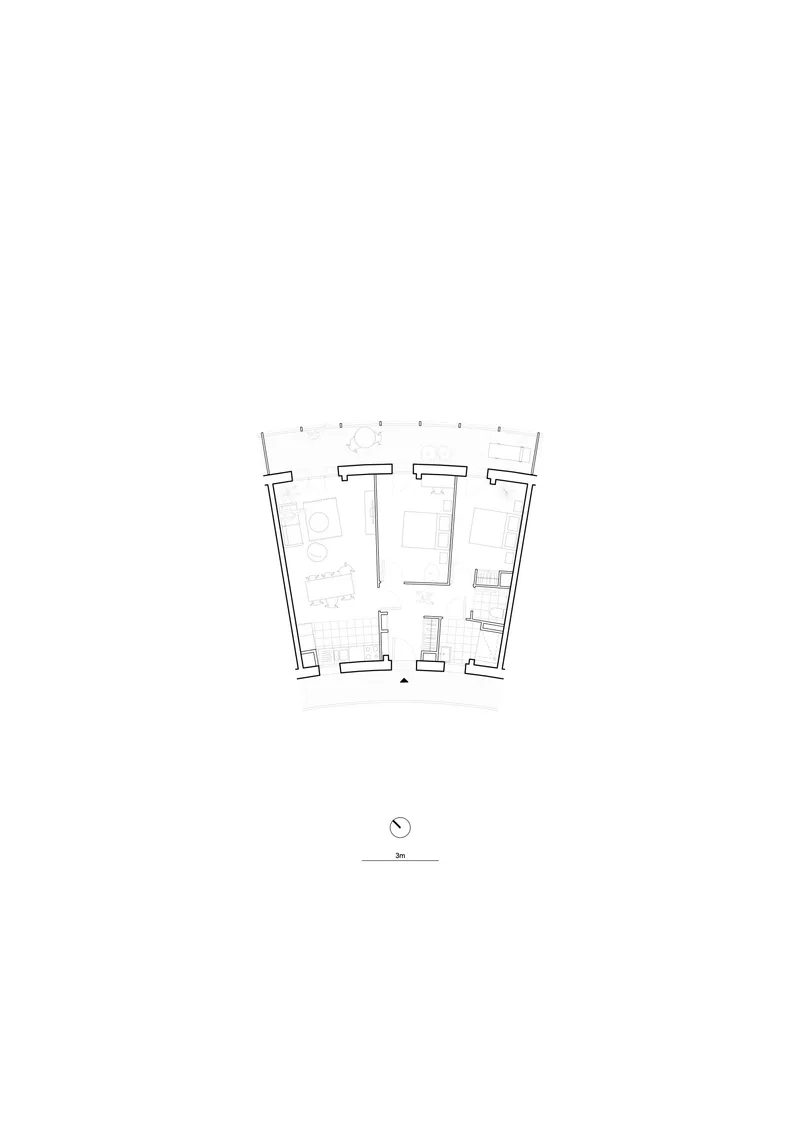
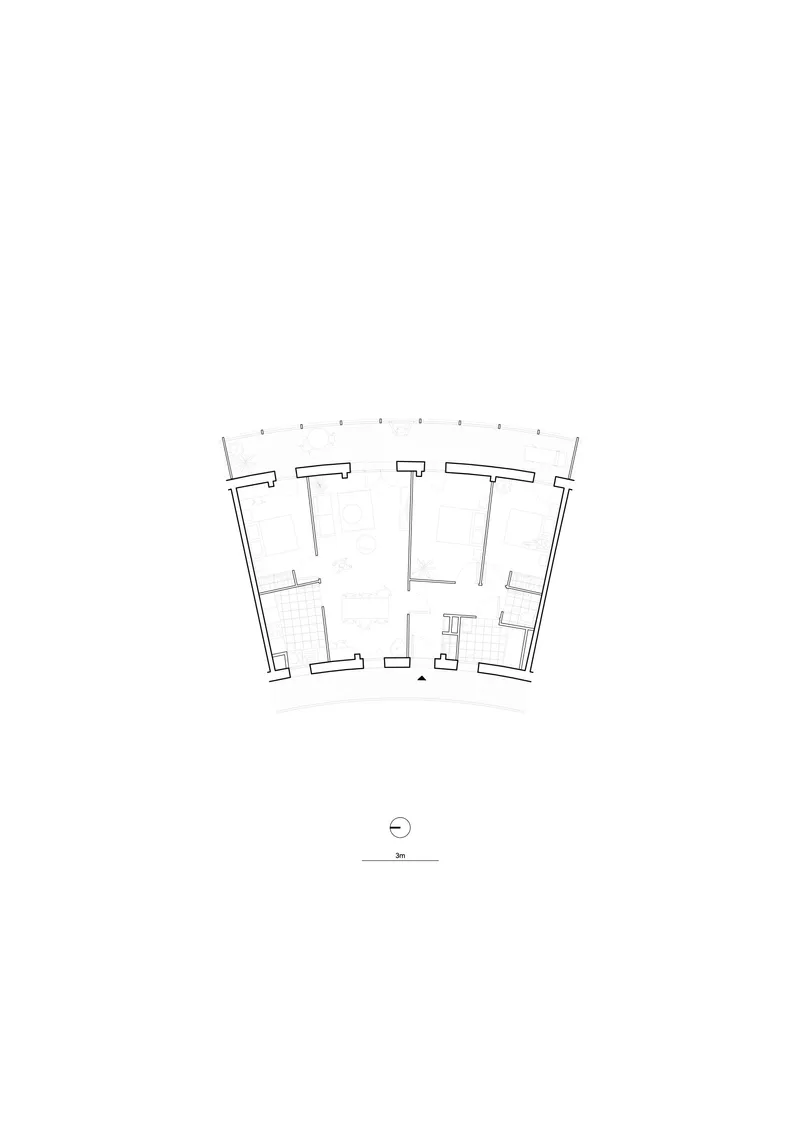
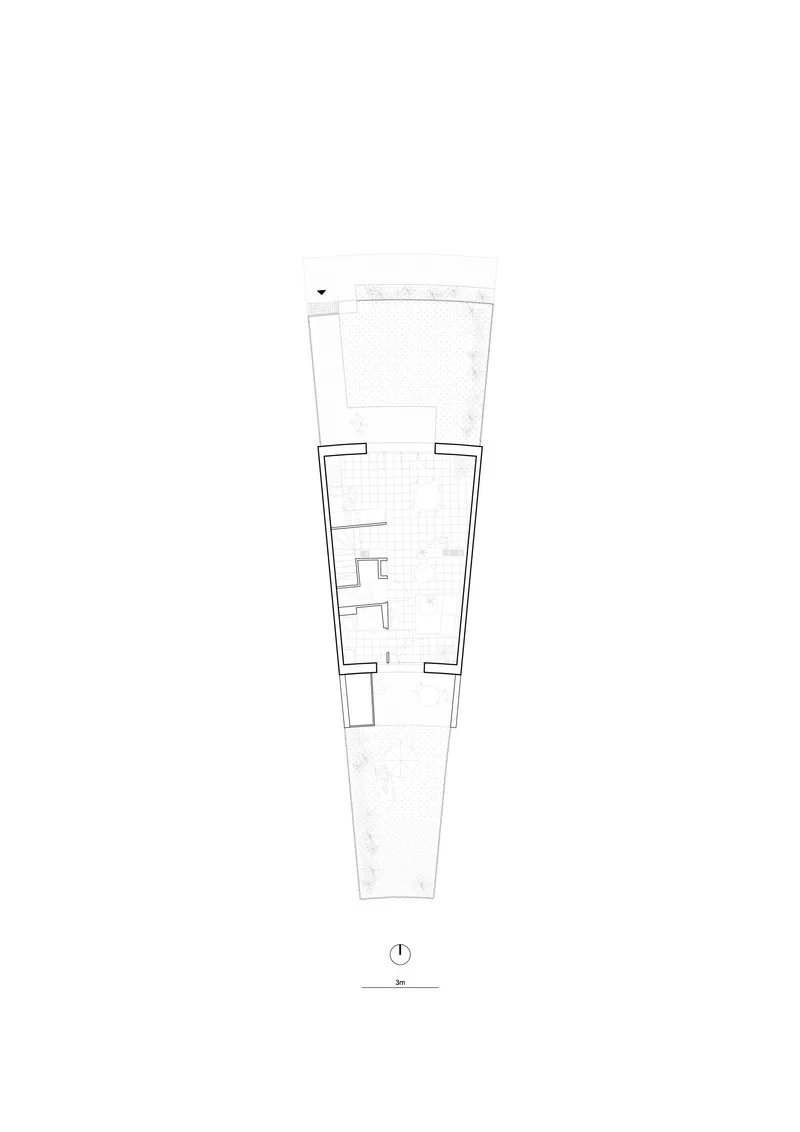
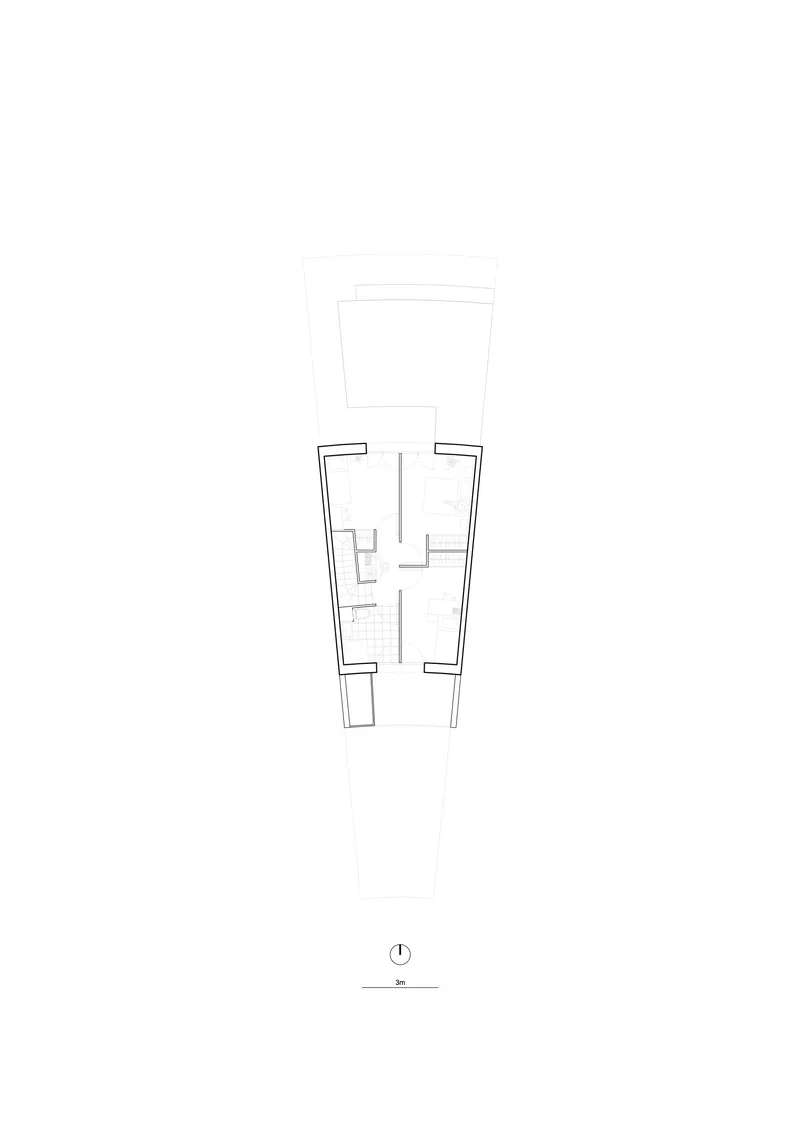
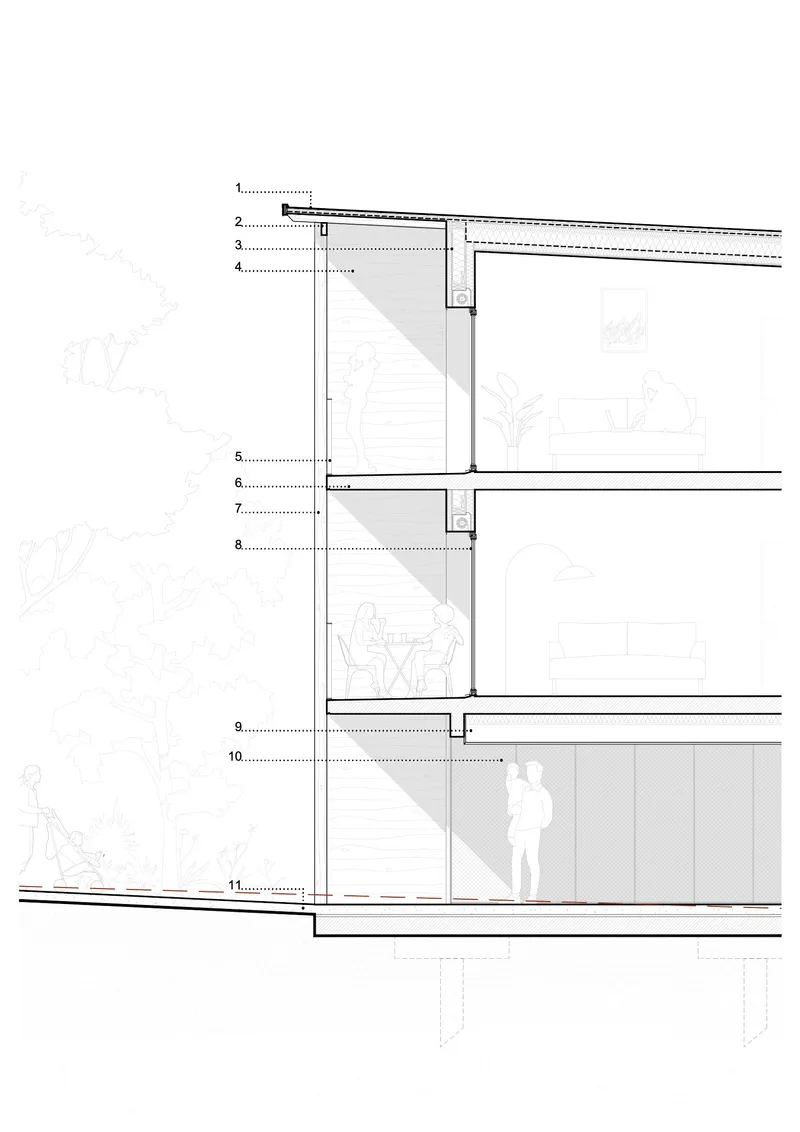
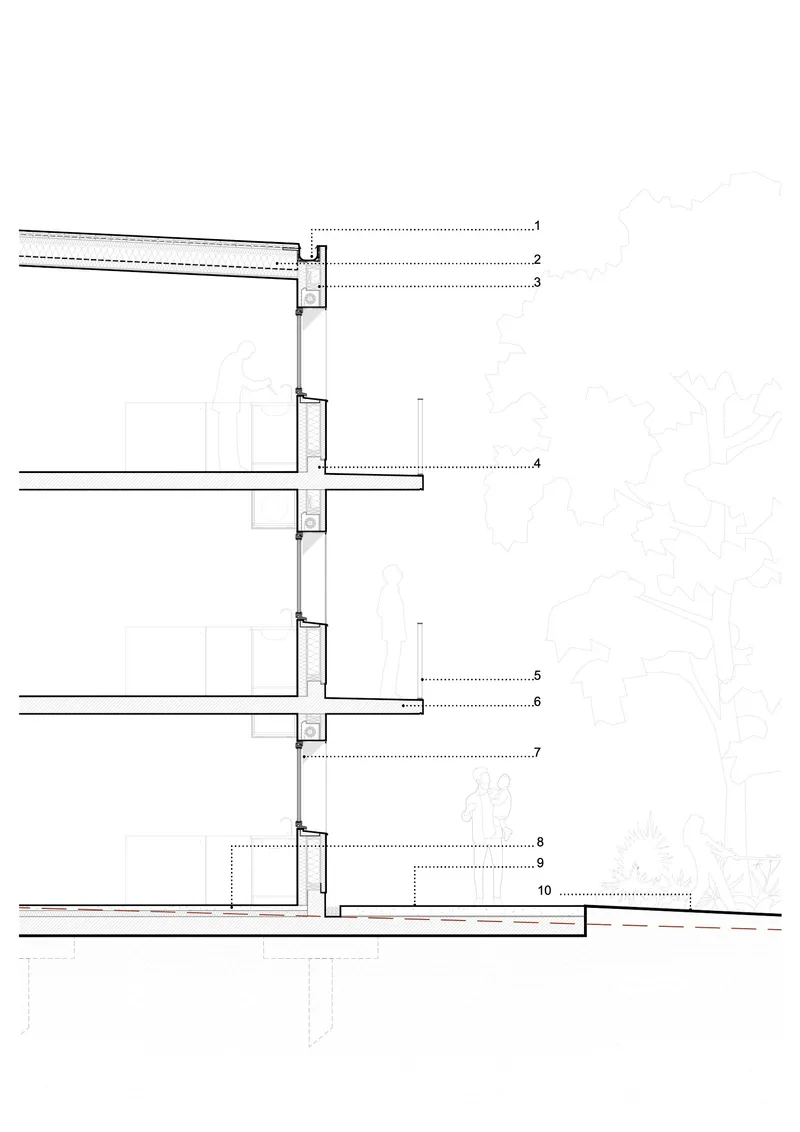
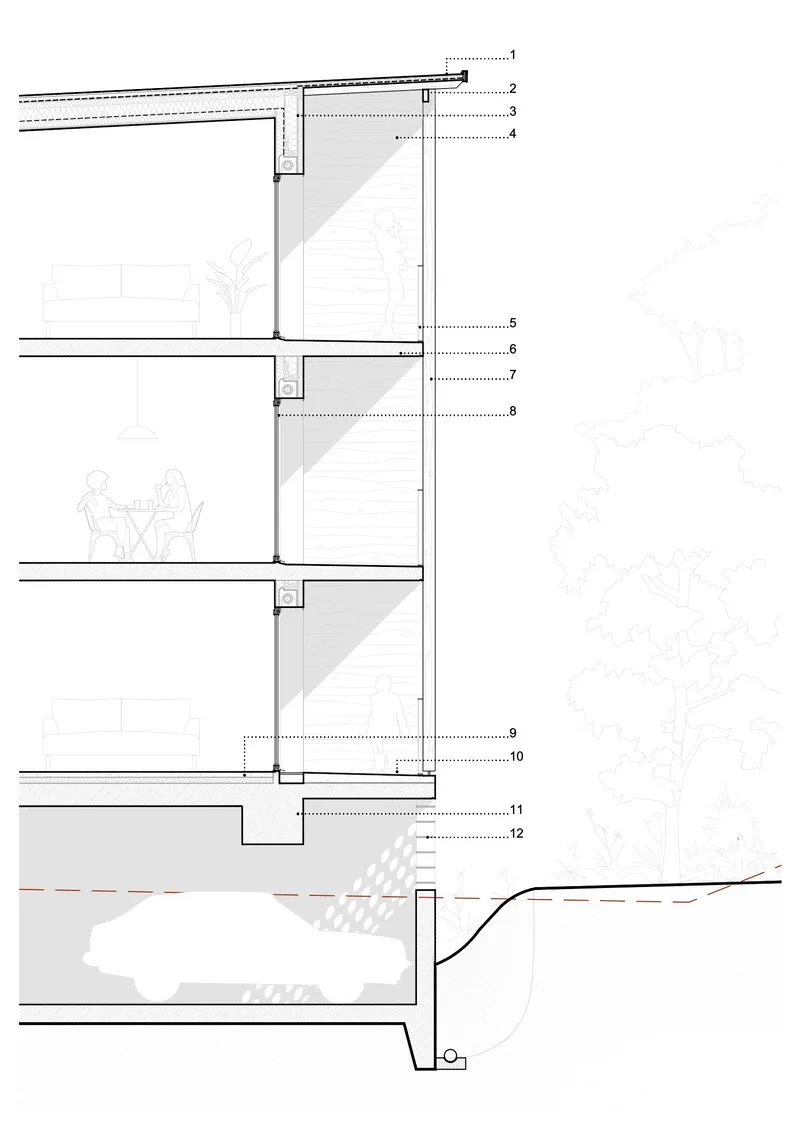
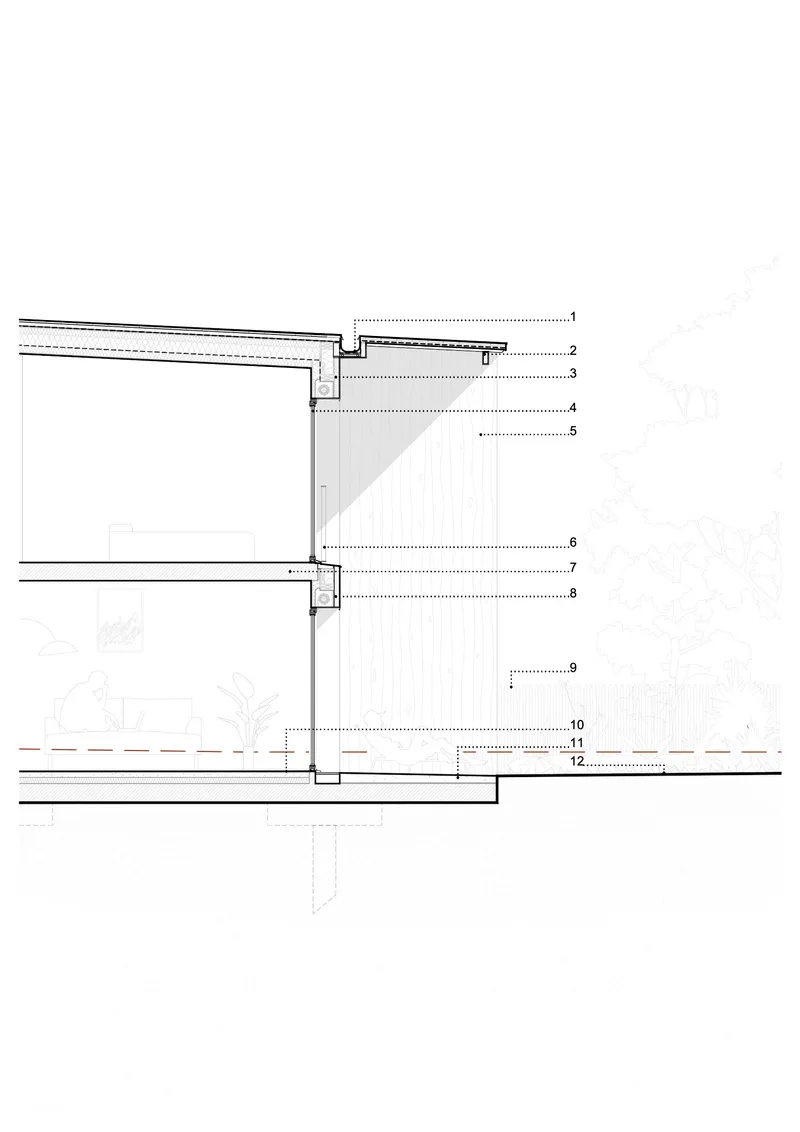
The site plan confirms the building's arc, which sweeps across the triangular lot and leaves the eastern and southern edges open for landscape. Floor plans at each level show how the radial geometry produces units with splayed perimeter walls: wider at the facade, narrower toward the courtyard core. The section drawings reveal a clean three-story stack with balcony overhangs on both sides, and a roof assembly whose exposed rafters extend to shade the upper level walkways.
Individual unit plans are worth studying. The fanning walls mean no two rooms are perfectly rectangular, but Roudil's team has managed to keep the kitchens, bathrooms, and storage zones tight against the courtyard side, freeing the wider facade edge for living spaces with generous glazing. The terraces at both ends of some units deliver on the competition requirement for useful outdoor space, and the north orientation marker on several drawings shows how the curve was tuned to optimize solar exposure across the unit mix.
Why This Project Matters
Cornebarrieu Social Housing matters because it demonstrates that bio-sourced construction, careful spatial planning, and tight budgets are not mutually exclusive in publicly funded housing. Régis Roudil has produced a building that would hold its own in any discussion about contemporary timber architecture, and it is social housing for a public client at a cost that most French developers would consider lean. The circular plan is not whimsy; it is the generator of crossing apartments, courtyard life, and a legible urban threshold for a district that did not yet have one.
The project also offers a quiet rebuttal to the notion that ecodistricts produce bland, performance-driven architecture. The layered timber facades, the terracotta screens, the dusk glow of the courtyard arcade: these are specific, sensory qualities that emerge from the material choices rather than being applied on top of them. As the ZAC Monges-Croix du Sud fills in around it, this building will likely set the standard that its neighbors have to answer to.
Cornebarrieu Social Housing by Atelier Régis Roudil Architectes. Cornebarrieu, France. 3,101 m². Completed 2026. Landscape architect: Atelier Saut de Loup. Client: CDC Habitat Social. Photography by Bastien Treille.
About the Studio
Share Your Own Work on uni.xyz
If projects like this are the kind of work you want to make, uni.xyz is a place to publish your own, find collaborators, and enter design competitions.


Popular Articles
Popular articles from the community


Tsunami Convergenics: Turning Catastrophic Ocean Forces into Underwater Housing Infrastructure
A speculative underwater settlement off the coast of Onagawa, Japan, treats tsunamis and typhoons as energy sources rather than threats.

Singing Woman: An Opera House That Performs Before the Curtain Rises
Ovidiu Cristian Pavel's conceptual opera house translates Estonia's choral identity into a sculpted waterfront landmark facing the Baltic Sea.

Faces of the Soviet Avant-Garde: Turning Moscow's Street Names into an Open-Air Museum
A network of sculptural installations across a Moscow residential district transforms forgotten architect names into spatial encounters with cultural memor

The Amber Palace Opera: A Geological Fiction Surfaces on Tallinn's Baltic Waterfront
Pierre Brillard reimagines a Baltic legend as a public landscape, opera house, and waterfront promenade rooted in Tallinn's coastal identity.

Similar Reads
You might also enjoy these articles

Pixel Gardens: One Repeated Module Stacked Into a Terraced Social Housing Tower for Famagusta
Salem Bader's shortlisted housing tower builds a vertical neighbourhood from one repeated module, offsetting units to carve terraces, light and air.

Bao Huynh Watercolor Atelier: A Serene Art Retreat in Hội An
Bao Huynh Watercolor Atelier in Hội An blends multifunctional art spaces, sustainable design, local materials, and family-friendly living in a serene environment.

Atelier Macri Concept Store Interior Design by CASE-REAL
Atelier Macri store features a "ko" counter, walnut wood details, cork displays, blending retail, gallery, and seamless customer experiences.

Manuel Vargas Izquierdo Stadium and High-Performance Sports Center: Architectural Excellence in Jalpa de Méndez
The Manuel Vargas Izquierdo Stadium blends sustainable design, inclusive sports facilities, and cultural-inspired architecture, revitalizing Jalpa de Méndez’s public spaces.

Comments (0)
Please login or sign up to add comments
No comments yet. Be the first to comment!