
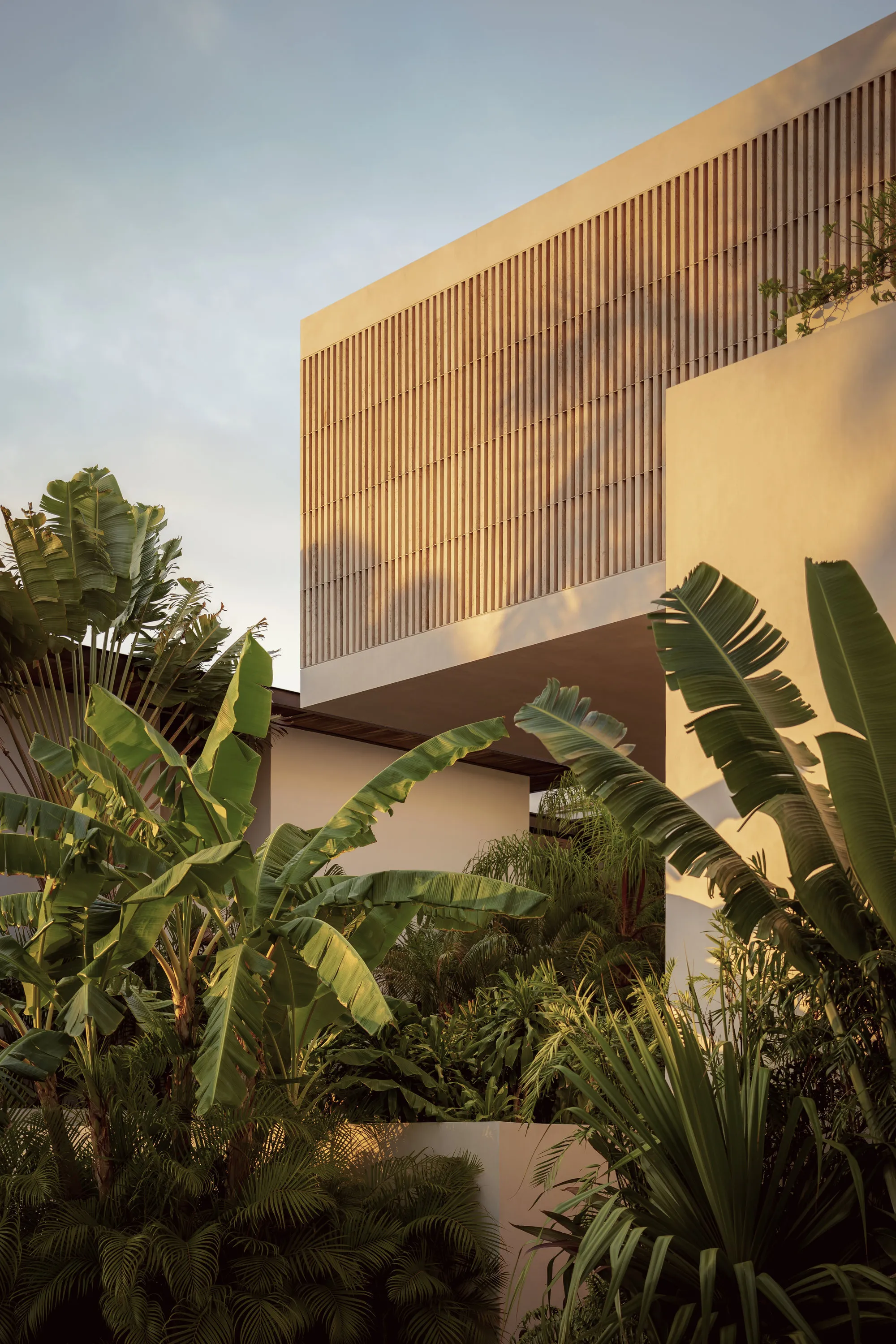
REIMS 502 Wraps a Cancún Family Home in Timber Screens and Interior Courtyards
The PUKKUN Residence uses layered louvers, planted voids, and cascading greenery to temper Mexico's Caribbean heat across 1,100 m².


Cancún's architectural identity is overwhelmingly defined by two things: resort hotels and suburban gated developments. Neither tends to produce buildings that take the climate seriously as a design driver. The PUKKUN Residence, a 1,100 m² family home designed by REIMS 502 and completed in 2023, is a corrective. Lead architects Eduardo Reims Hernández and Andrea Maldonado Verduzco treated Cancún's punishing humidity, elevated temperatures, and relentless solar incidence not as problems to be sealed behind glass and air conditioning but as forces that could shape the building's entire morphology.
The result is a house organized around planted courtyards and wrapped in timber louver screens that graduate light and airflow through every room. From the street, the upper volume reads as an elevated timber lattice hovering above tropical plantings, more botanical installation than suburban villa. Step inside and the logic extends inward: voids, skylights, and interior gardens pull the landscape through the section, blurring the line between conditioned space and open air. It is a generous house, but it earns that generosity through its willingness to let the outside in.
A Street Presence Built from Timber and Foliage
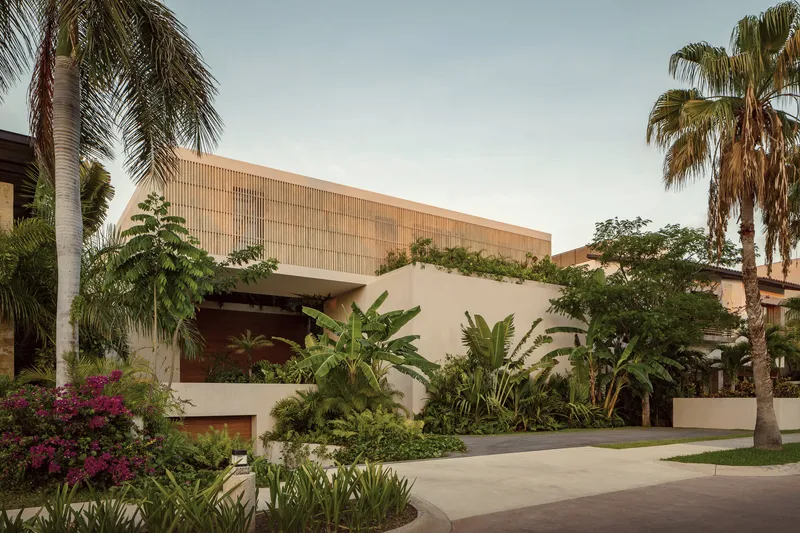
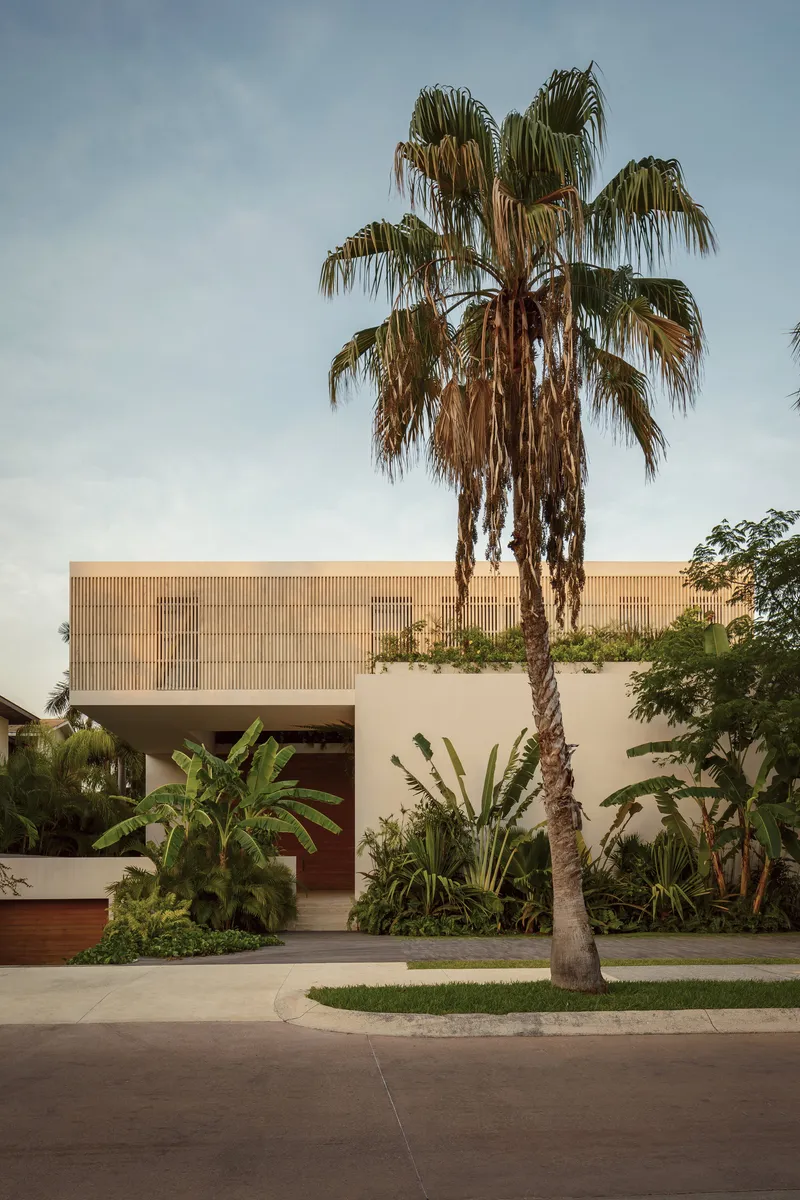
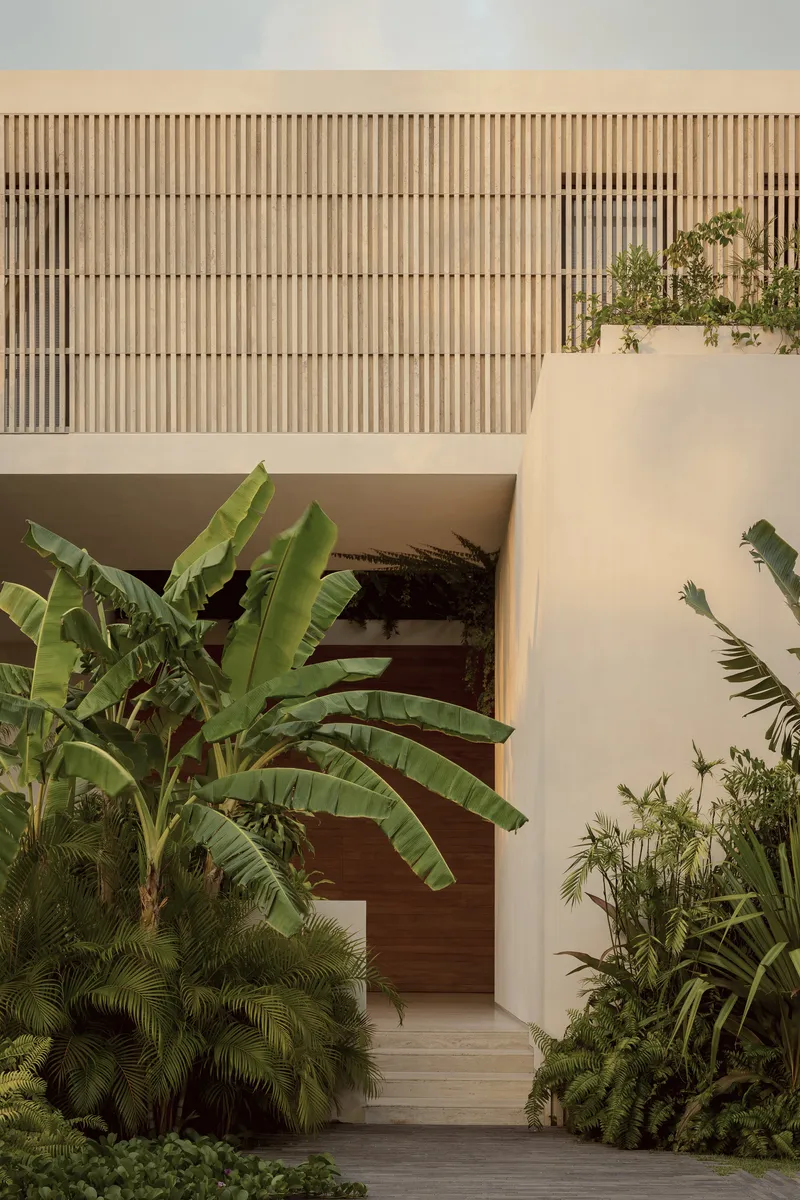
The house meets its suburban context with a restrained but unmistakable move: a slatted timber upper volume cantilevered over a white stucco base and a densely planted forecourt of palms, banana leaves, and bougainvillea. The timber screen is not decorative cladding; it is the primary solar control device for the upper floors, filtering direct Caribbean sun into bands of soft light while allowing cross-ventilation to pass through. From the street, the house appears to float above its own garden.
What saves this from feeling like another tropical modernism pastiche is the relationship between the screen and the planting. The landscaping is not set dressing around a finished object. It is integral to the thermal strategy, shading the lower walls and providing evaporative cooling at grade. Mature palms frame the entry sequence and establish a depth of field that makes the building seem to recede behind vegetation rather than dominate its lot.
The Courtyard as Climate Machine
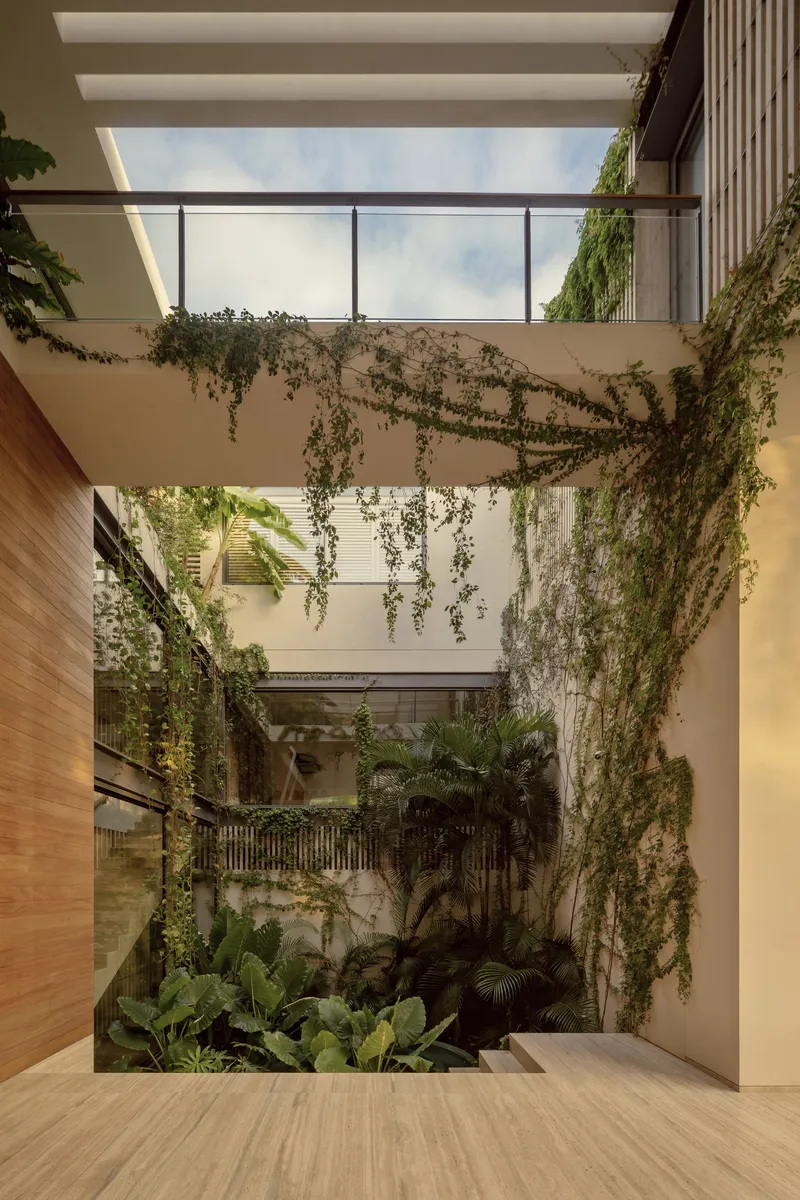
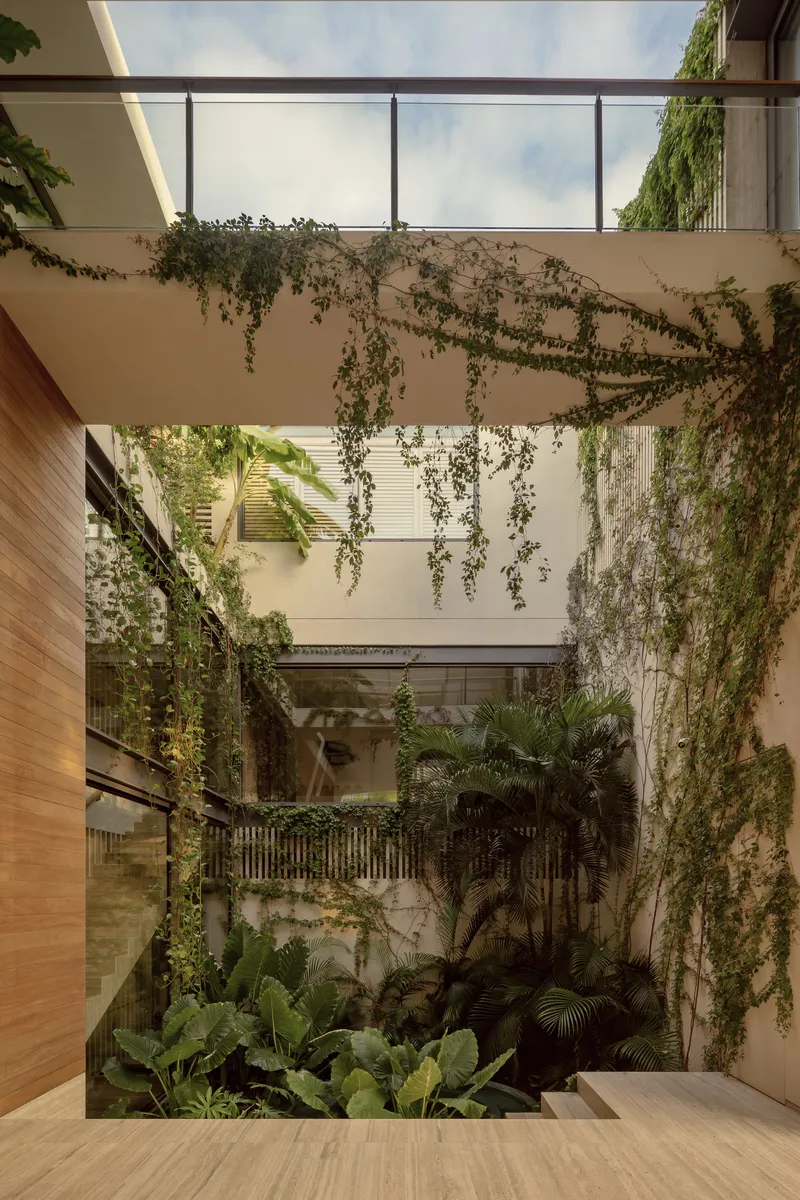
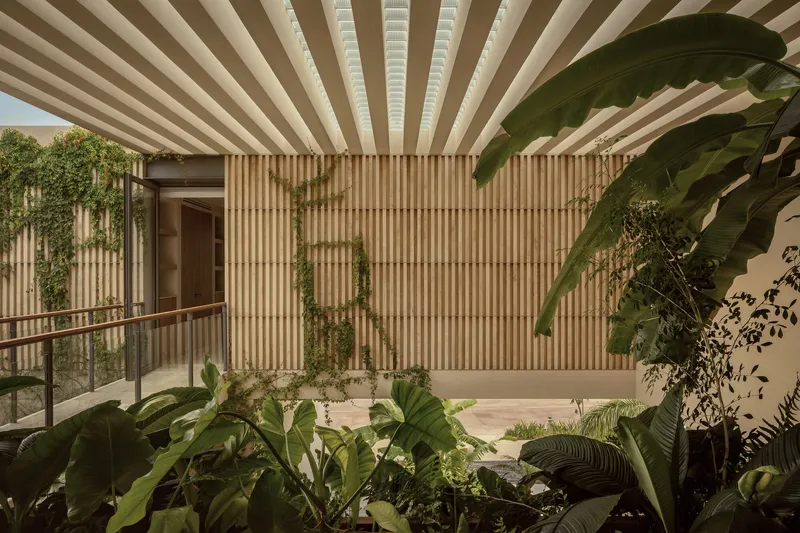
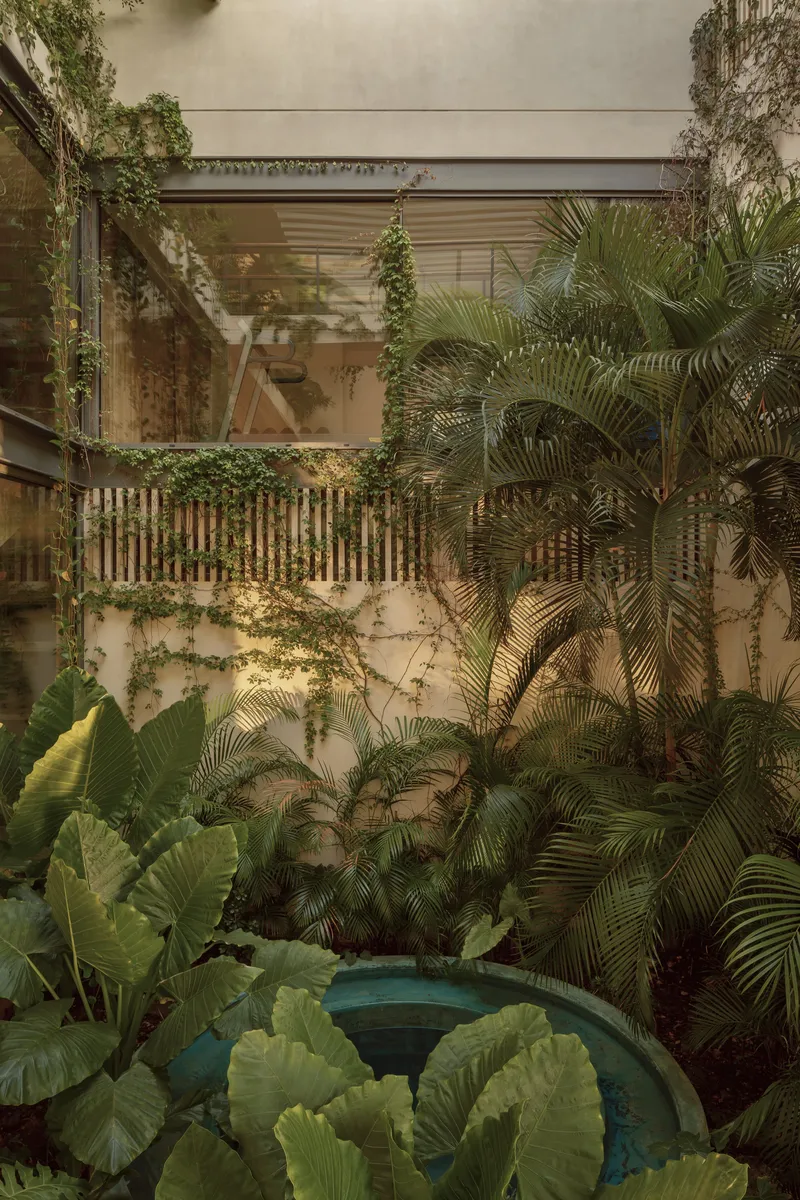
The section of the house is organized around planted courtyards that function as thermal chimneys and light wells simultaneously. Climbing greenery descends from upper levels, white walls reflect indirect daylight deep into adjacent rooms, and open floors with timber decking connect living spaces to planted beds at their feet. One courtyard is framed by a vertical timber slat screen beneath a slatted canopy, creating a space that is technically indoors but thermally functions as an outdoor room.
In a climate where the ambient temperature rarely drops below 25°C, the courtyard is not a luxury but a necessity. These voids create pressure differentials that drive air movement through the house without mechanical systems, and their planted surfaces introduce moisture and shade into what would otherwise be a heat sink. REIMS 502 has placed these voids centrally, which means nearly every room in the house has a visual and physical connection to greenery. The effect is a plan that breathes.
Living Spaces Open to the Full Section
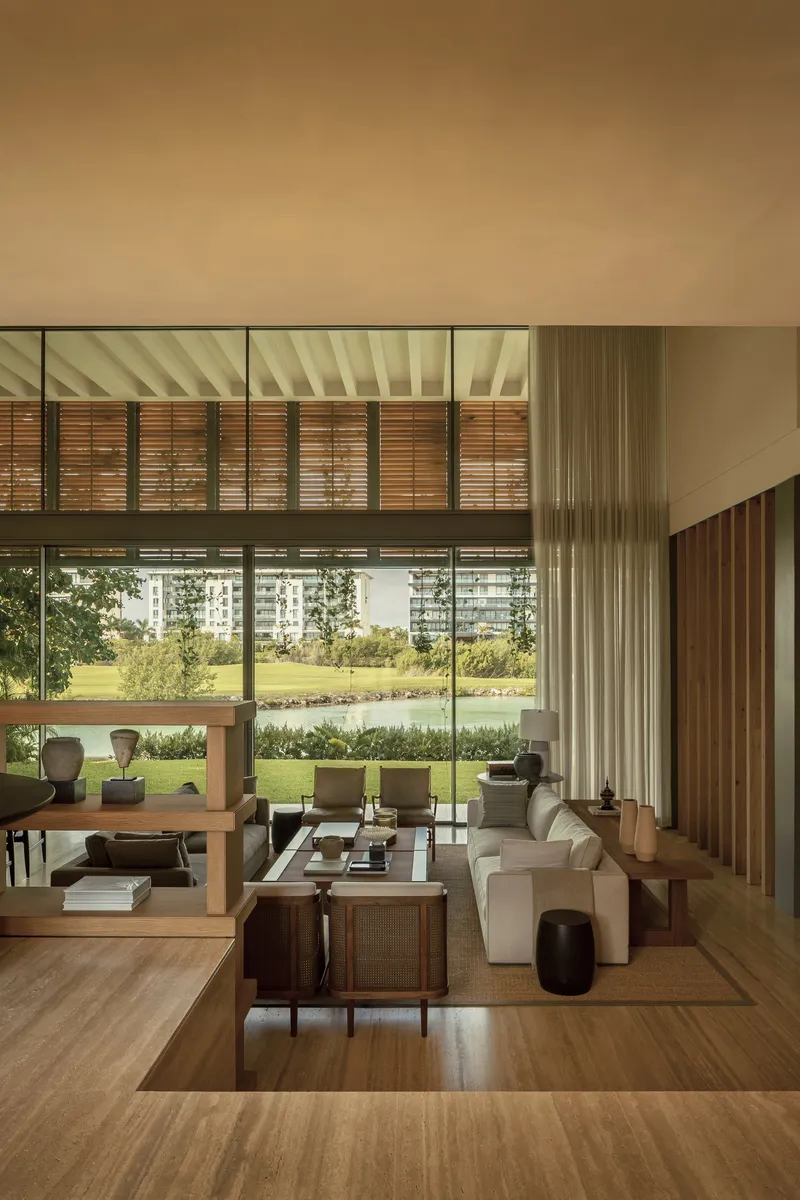
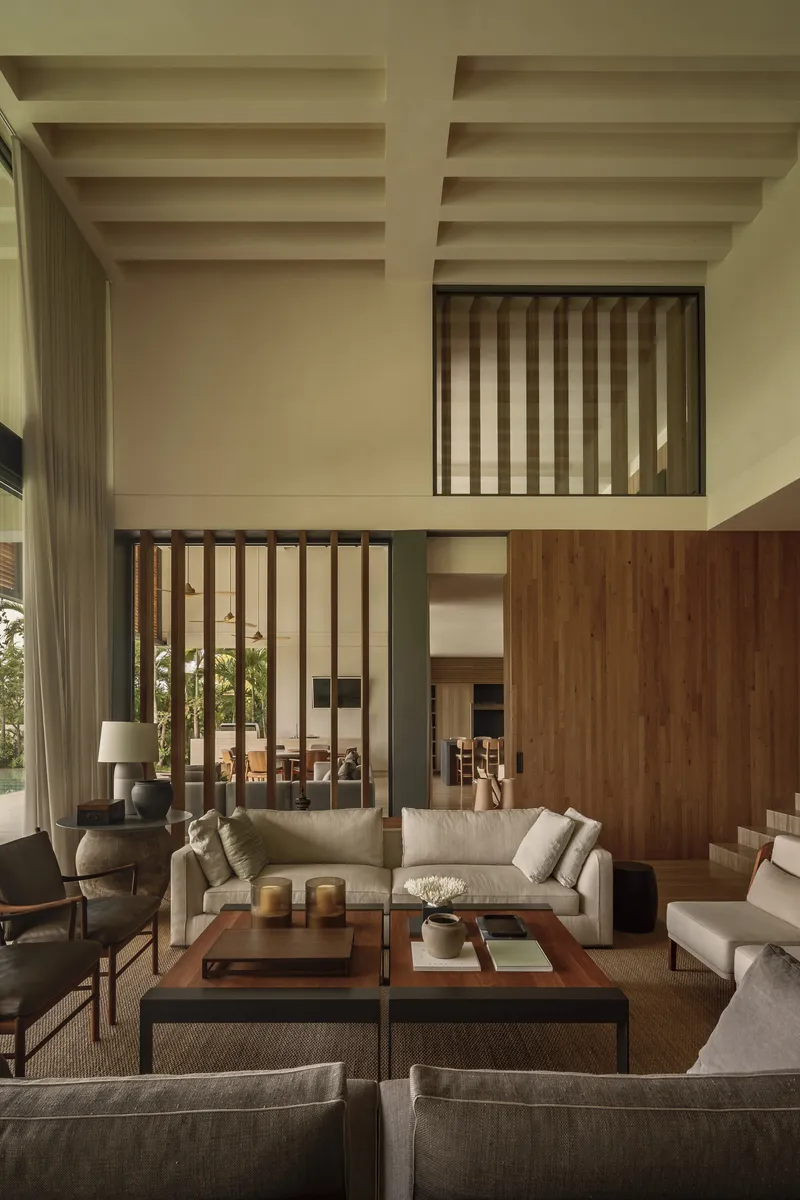
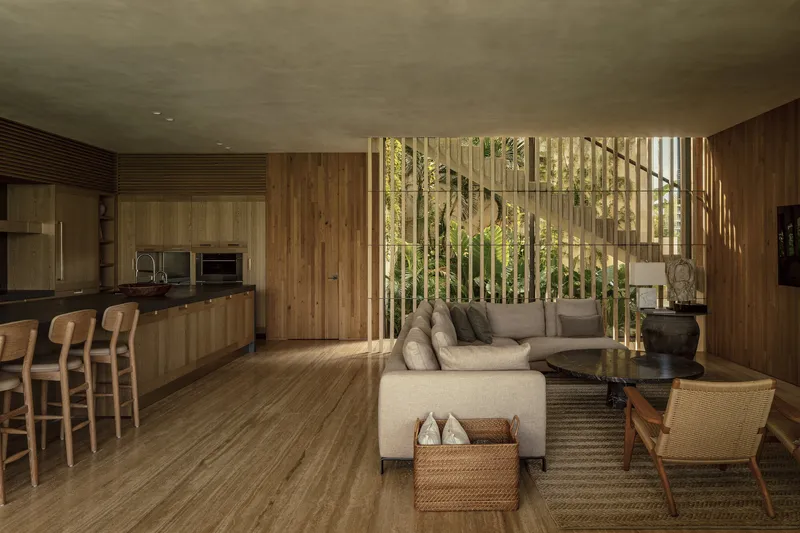
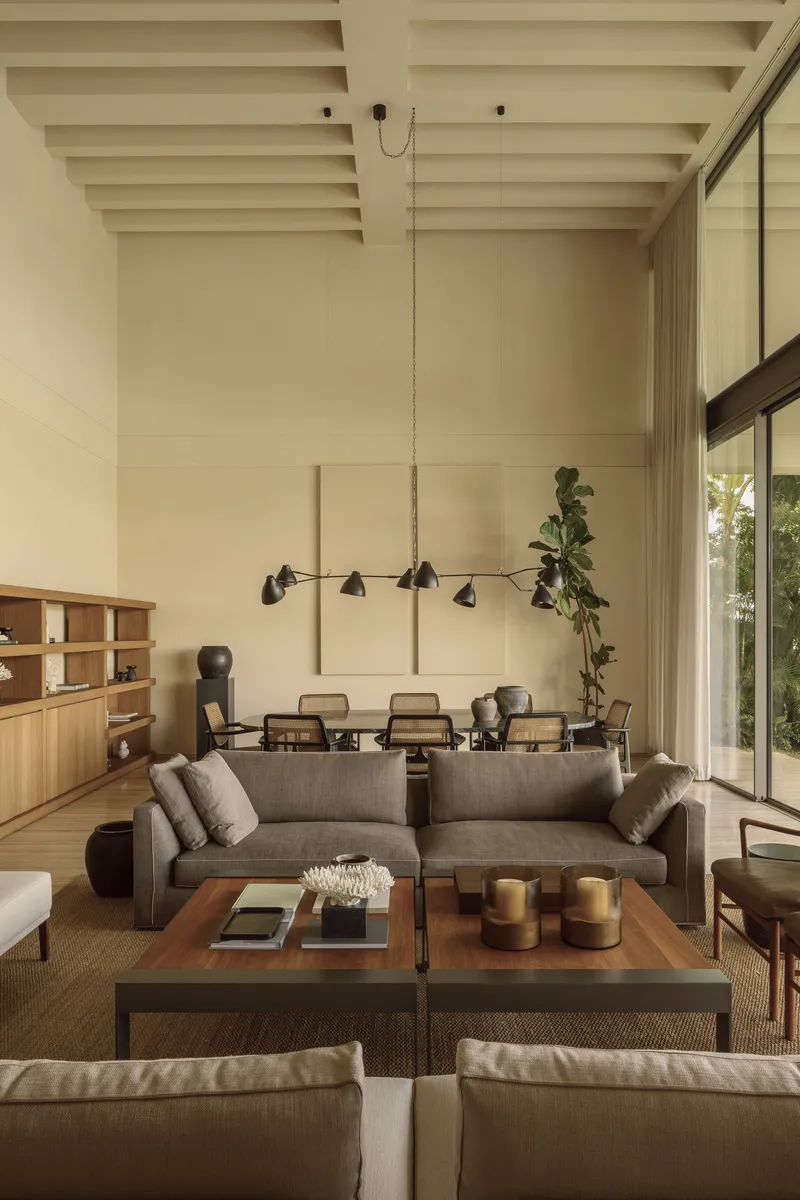
The primary living areas are double-height volumes with exposed timber beam ceilings, a structural gesture that does more work than it might appear. The beams give the ceiling visual weight and rhythm, breaking up the scale of rooms that could otherwise feel cavernous. Timber slat screens at mezzanine levels above allow borrowed light and ventilation to move between floors, while framing views down into the social spaces from private bedrooms. The relationship between the two levels is permeable, not panoptic: you sense the life of the house without being surveilled.
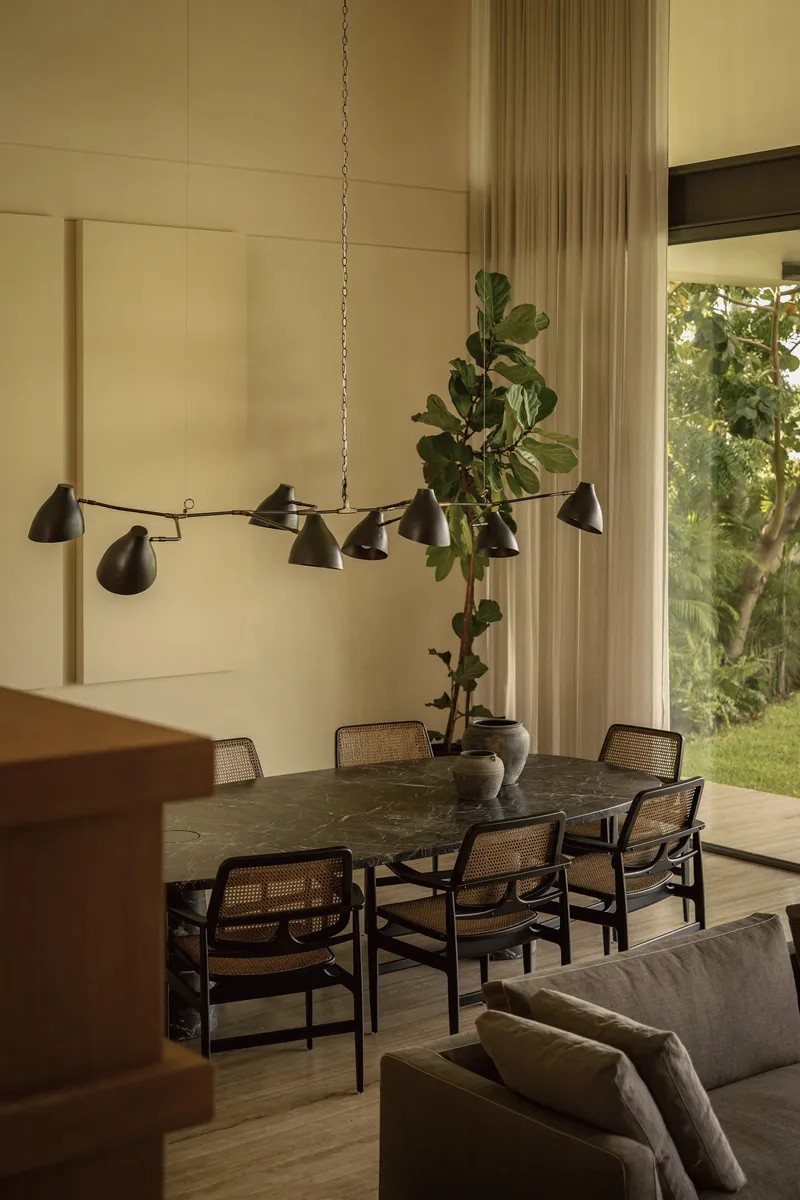
At ground level, the living and kitchen zones flow toward the garden through large glazed openings filtered by vertical wood screens. Furniture is set low and warm toned, walnut shelving lines one wall, and pendant lighting hangs from the exposed beams. The material palette is disciplined: timber, white plaster, concrete, and stone, repeated in every room to achieve a coherence that lets the changing quality of daylight do the heavy lifting.
The Garden Facade and the Pool Terrace
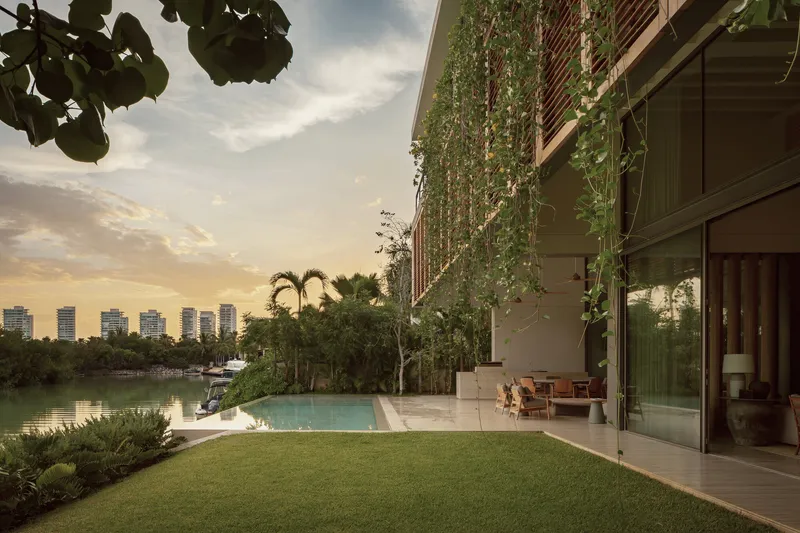
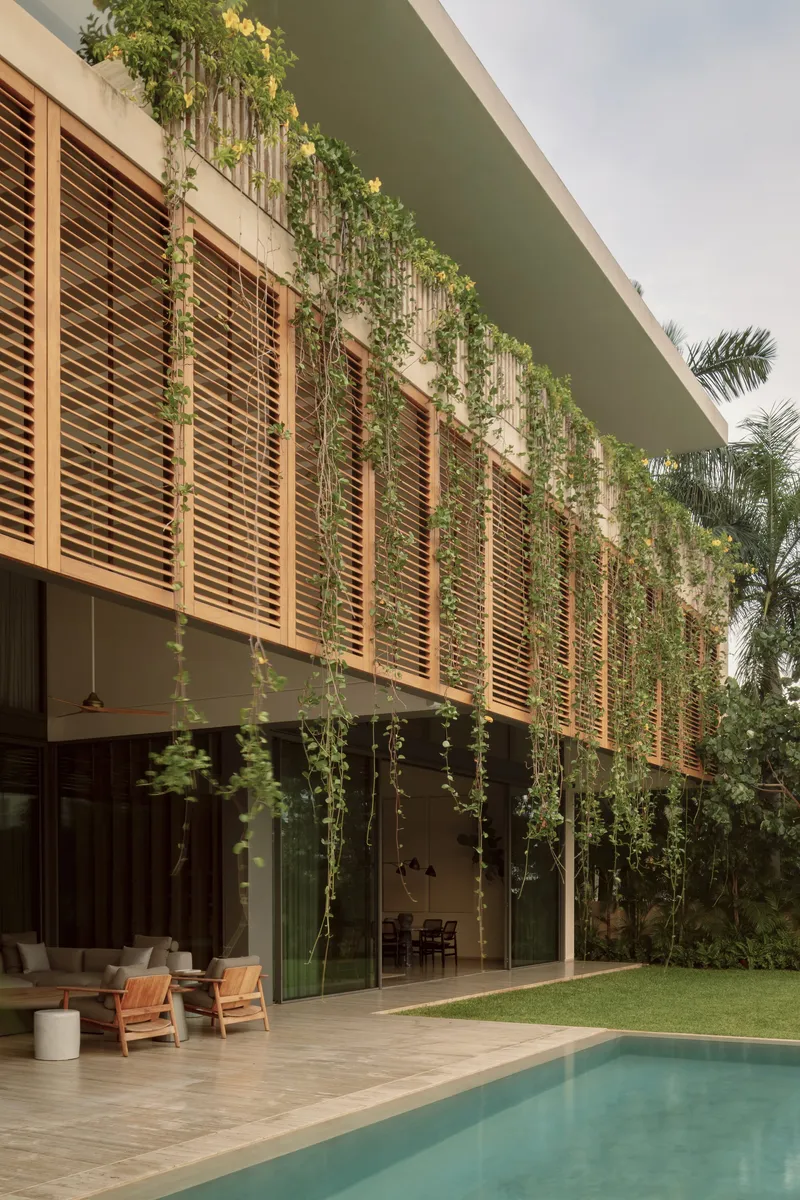
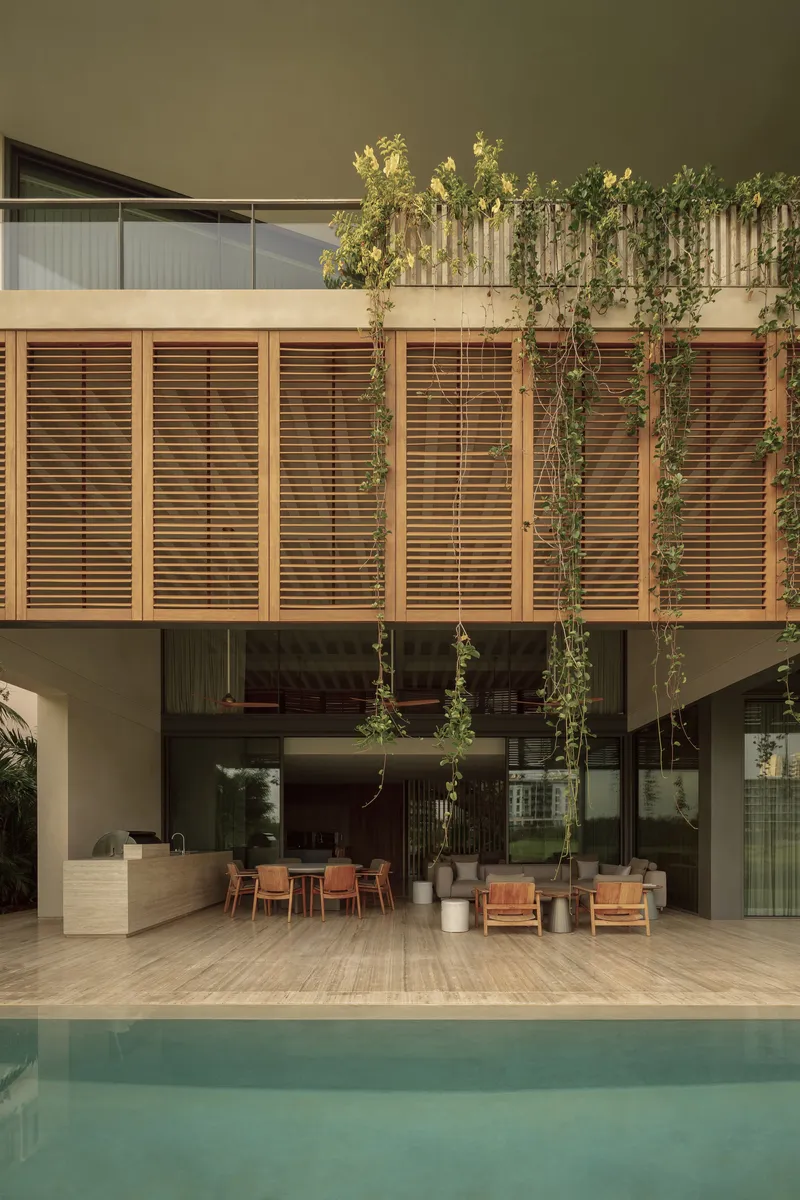
The rear of the house opens onto a lawn, an infinity pool, and a vertical garden that climbs the back facade, a composition that is at its most striking at dusk when artificial light washes the greenery from below. The covered poolside terrace uses horizontal timber louvers overhead, with cascading vines threading through the structure and softening what could be a hard edge between built form and landscape. It is a resolved outdoor room: shaded, ventilated, and framed by vegetation on three sides.
The infinity pool and its relationship to the vertical garden wall create a focal axis that draws the eye from the interior living spaces all the way through to the planted rear boundary. The decision to run green infrastructure up the facade rather than across the ground is strategic: it maximizes the garden at grade while putting evaporative cooling exactly where the building envelope absorbs the most solar radiation.
Upper Levels and the Timber Screen at Sunset
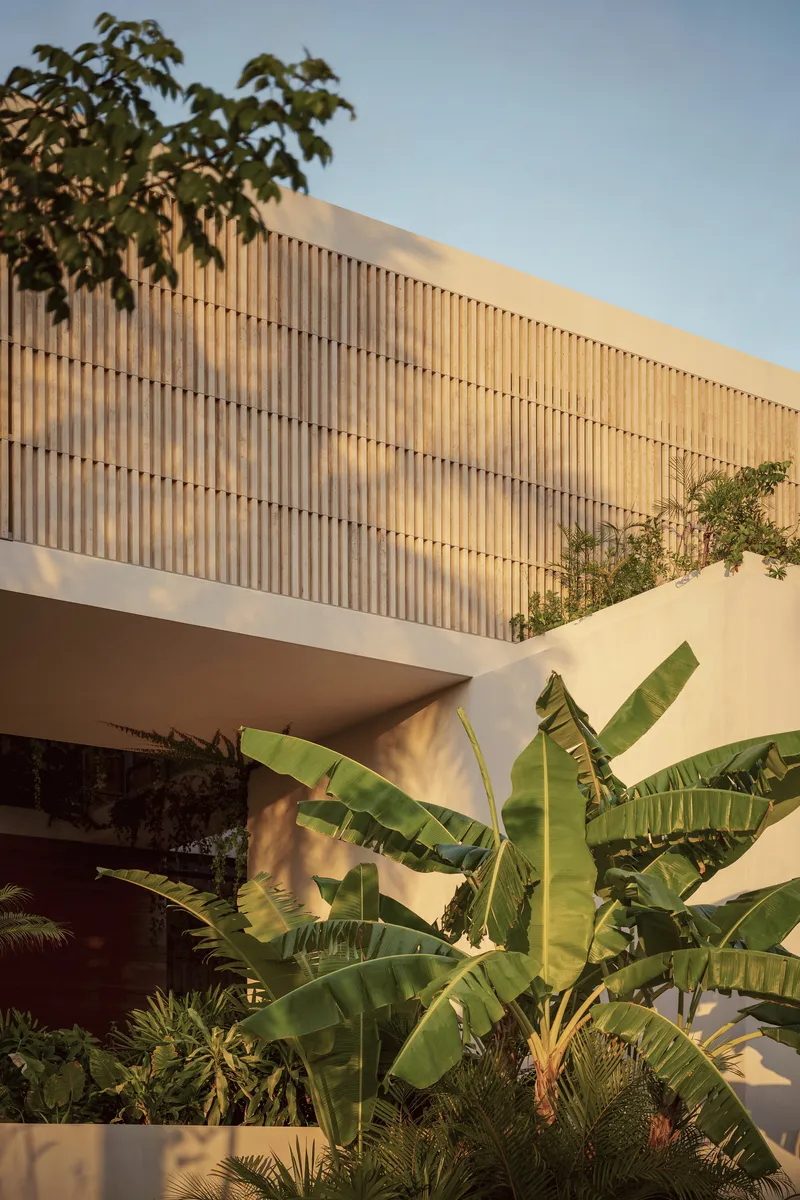
From outside, the upper volume catches evening light in a way that transforms the timber screen into a lantern, warm bands of illumination radiating through the louvers into the surrounding banana palms and foliage. The effect is photogenic, certainly, but it also reveals the screen's depth: these are not thin slats applied to a flat wall but a substantial second skin with an air gap behind it, creating a buffer zone that slows heat transfer and diffuses wind pressure.
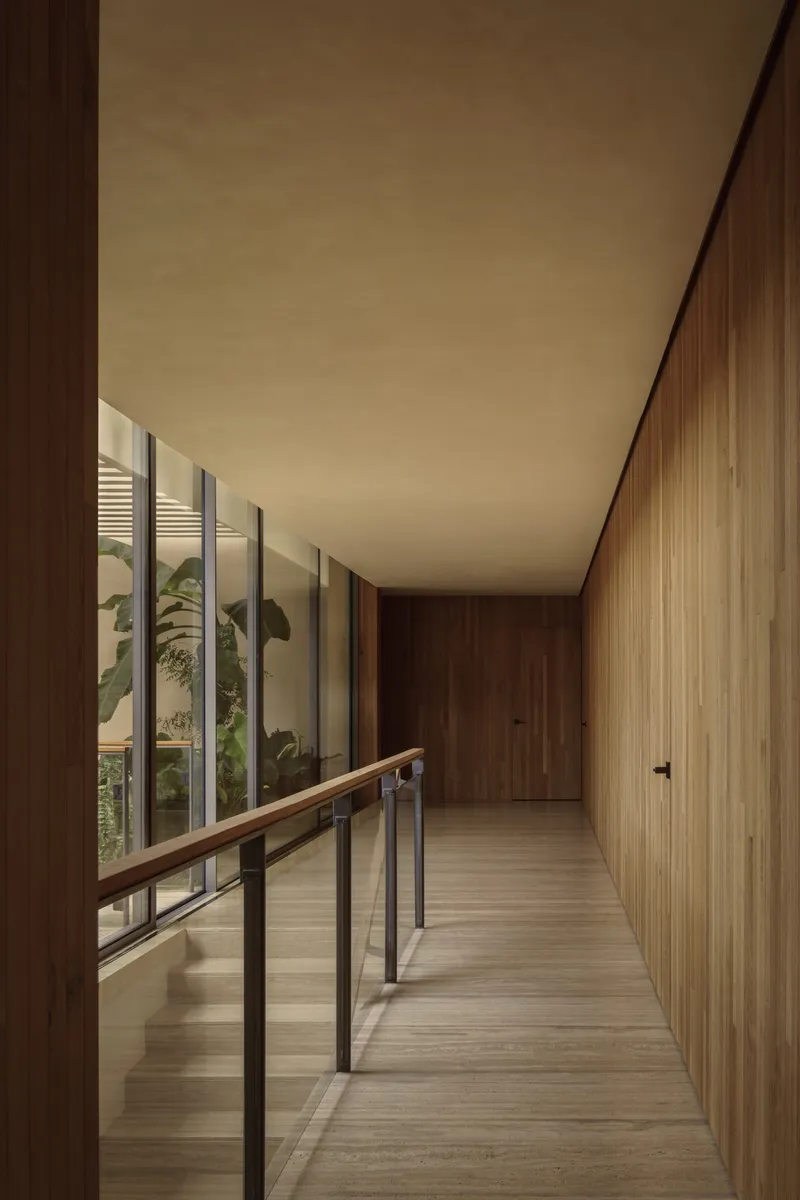
Inside, the upper-level hallway overlooks the central courtyard through steel handrails, with timber walls providing acoustic insulation between bedroom suites. A planted courtyard at the upper level features a teal plunge pool surrounded by palms and banana trees, an unexpected private oasis that serves the master suite. The architects have stacked amenities vertically without making the house feel crowded, a direct consequence of the courtyard strategy that keeps every floor open to sky and air.
Circulation and Material Detail
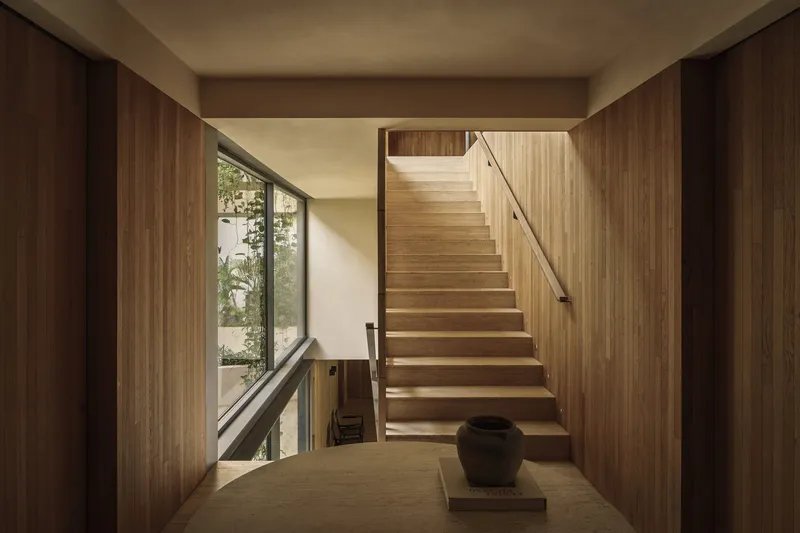
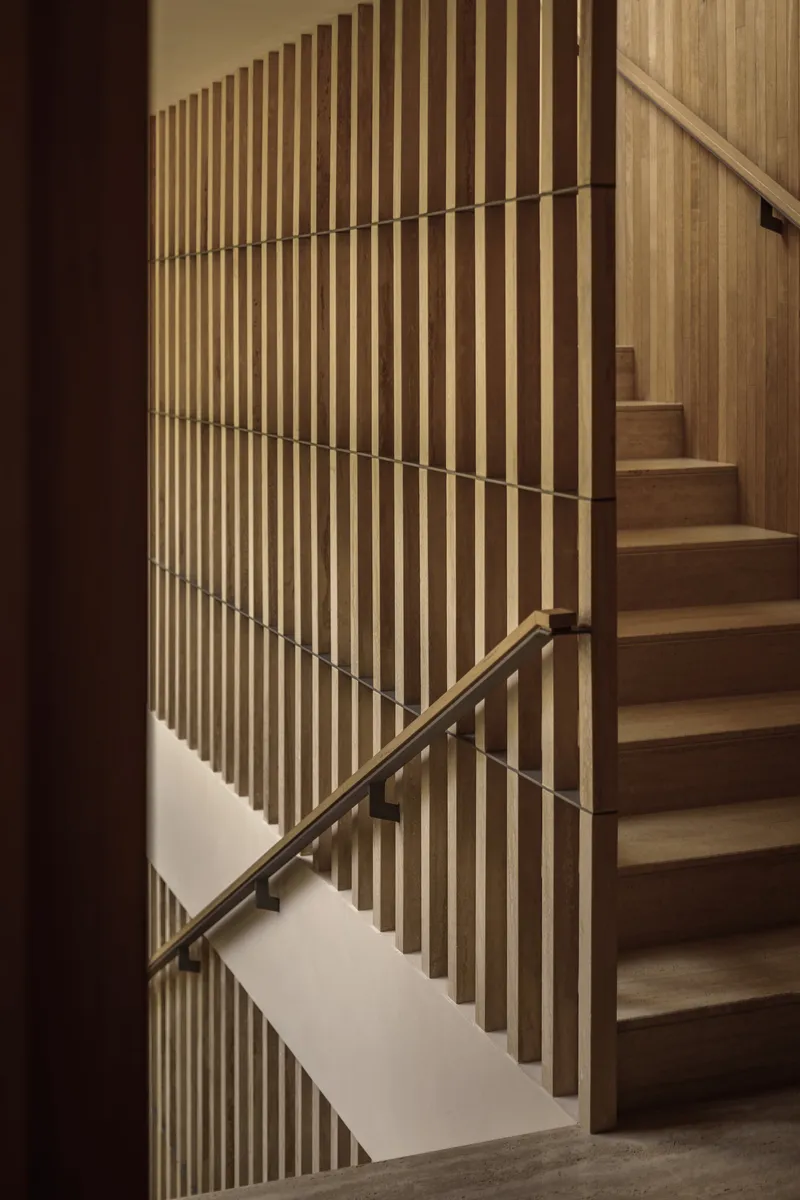
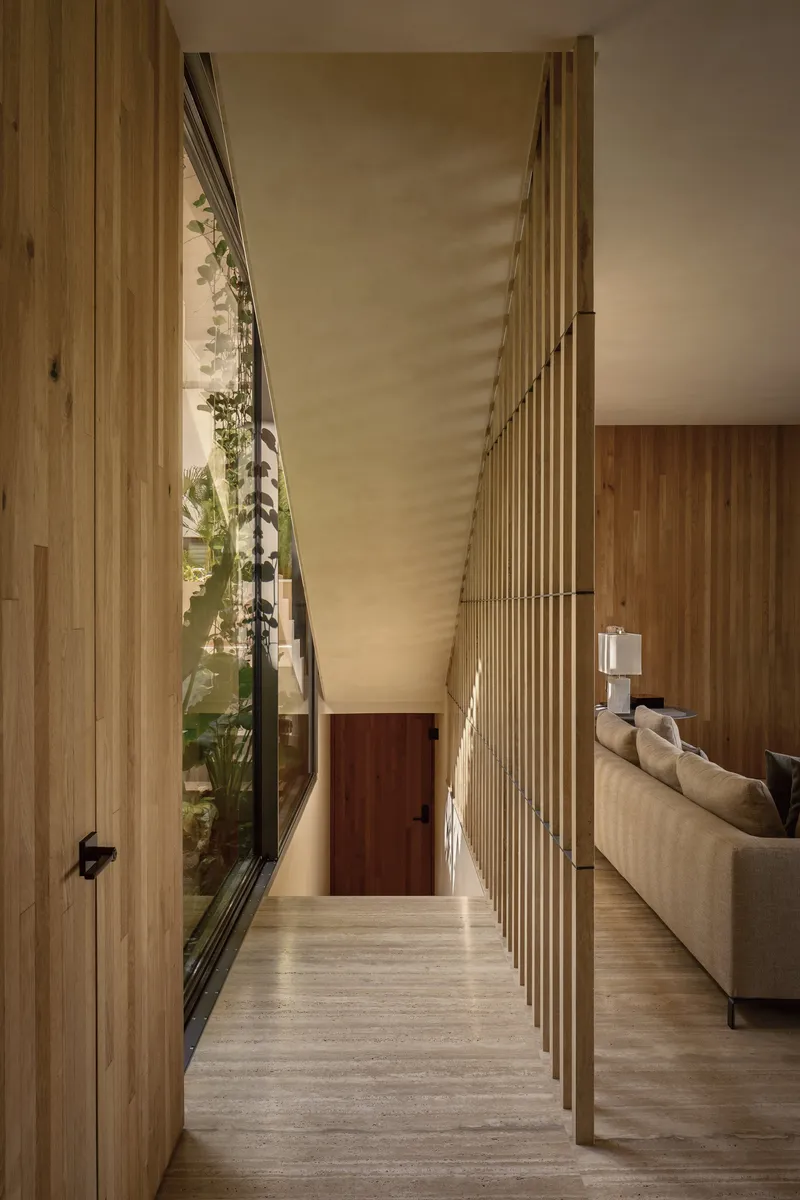
The staircases are among the house's most refined elements. Timber treads with integrated handrails rise alongside slanted windows that frame greenery outside, turning vertical circulation into a sequence of controlled views. A bronze handrail runs alongside vertical slat balustrades, a detail that signals the project's attention to haptic experience. In a house where so much effort goes into managing light and air, it is telling that the architects lavished equal care on the thing you touch with your hand as you move between floors.
Corridors are narrow and deliberately compressed, lined with vertical wood batten screens and glazed walls that open to planted courtyards. The contrast between these tight passageways and the double-height volumes they feed is one of the house's best spatial moves: you are squeezed and then released, with greenery appearing at each transition to mark the threshold.
Interior Finish and Private Rooms
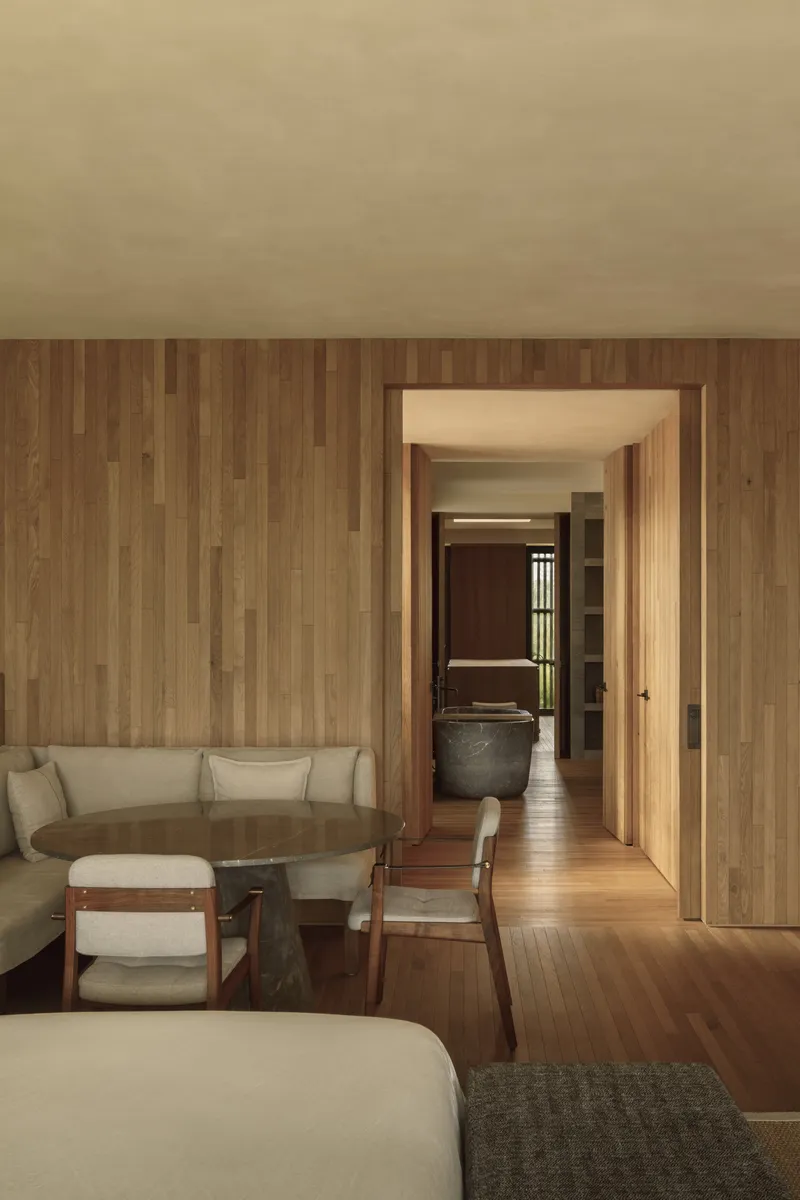
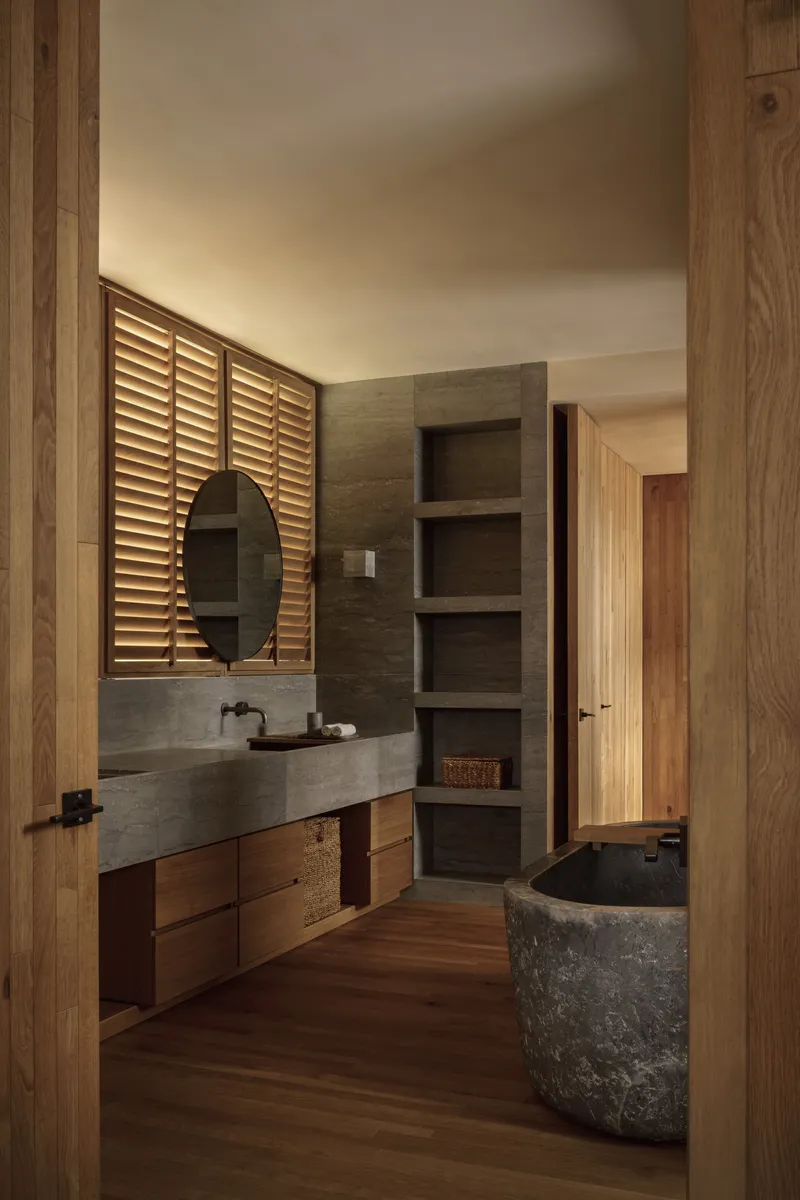
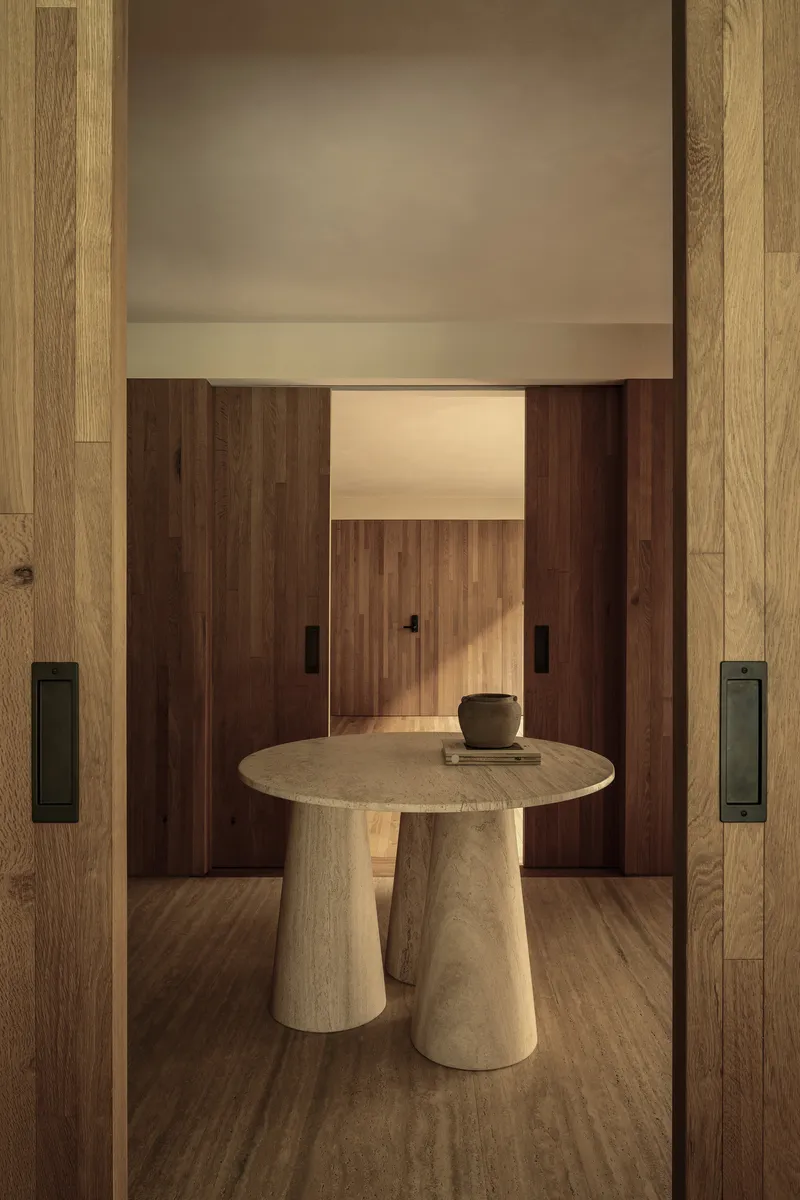
Bedrooms are timber-clad and understated, with the material warmth of the walls doing the work that decorative finishes might handle in a lesser project. Views through doorways reveal layered sequences of corridor, bath, and courtyard beyond, a telescoping depth that makes even the private quarters feel connected to the larger spatial logic of the house. The bathroom combines a concrete vanity, a louvered timber screen for ventilation, and a stone soaking tub set into a wooden floor, a material collision that works because each surface is doing a different environmental job.
A vestibule accessed through sliding oak doors features a stone pedestal table under warm lighting, a moment of compression and ceremony that slows the pace of movement through the house. These thresholds matter. They are what distinguish a large house from a merely big one.
Plans and Drawings
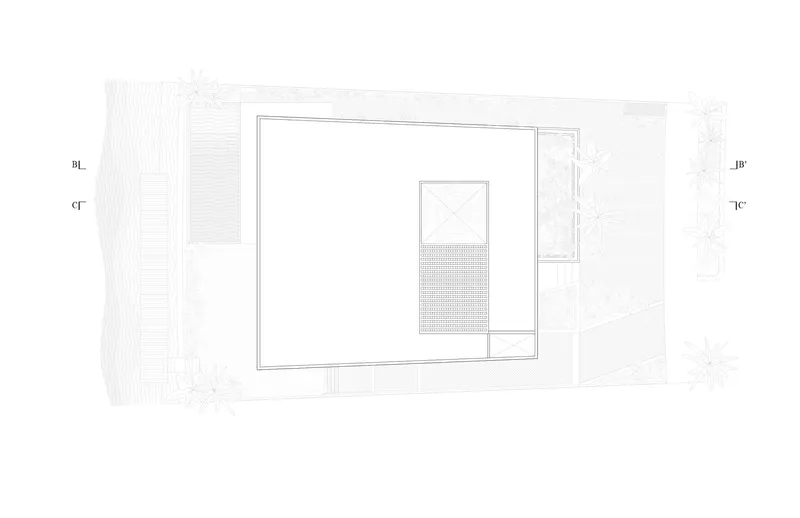
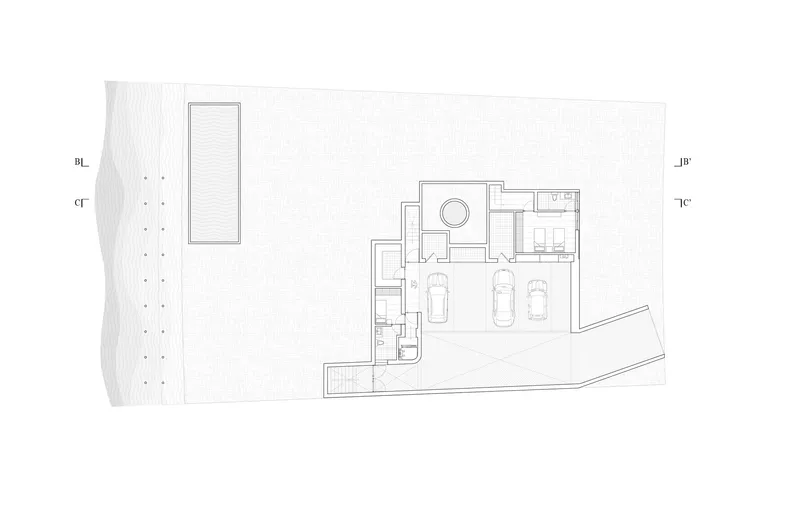
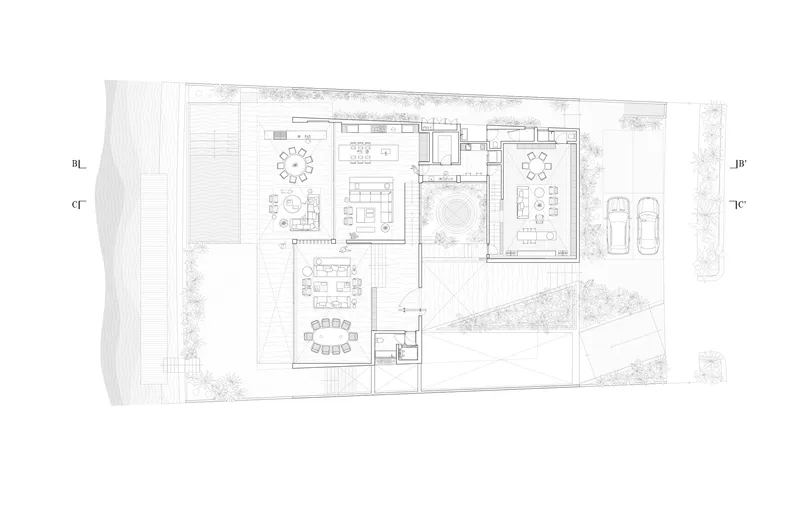
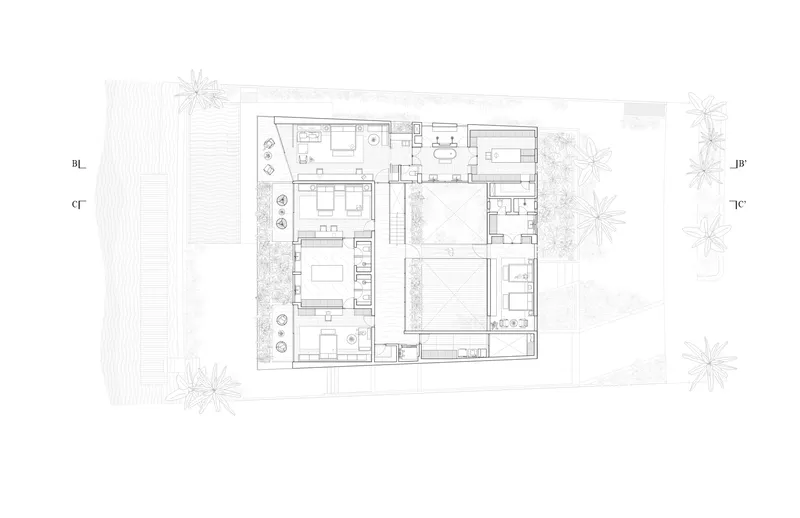
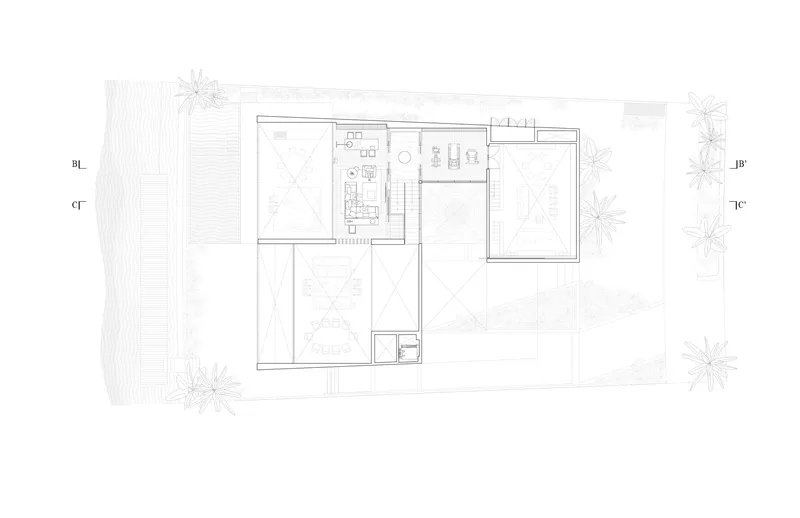
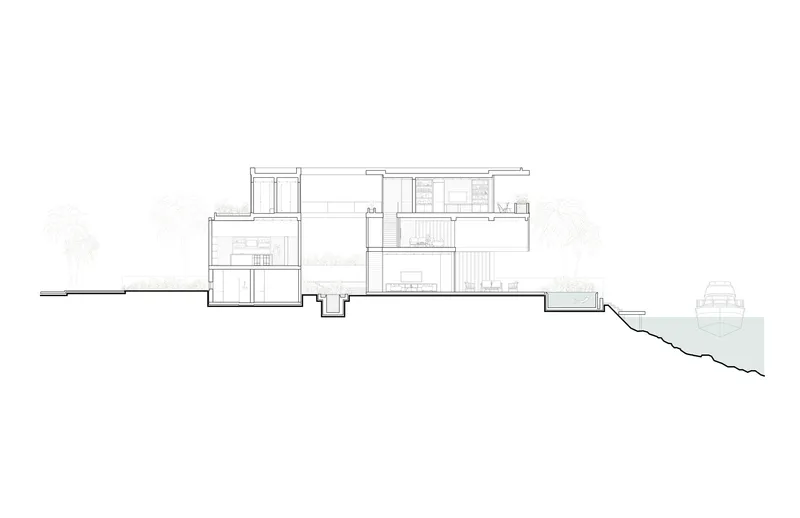
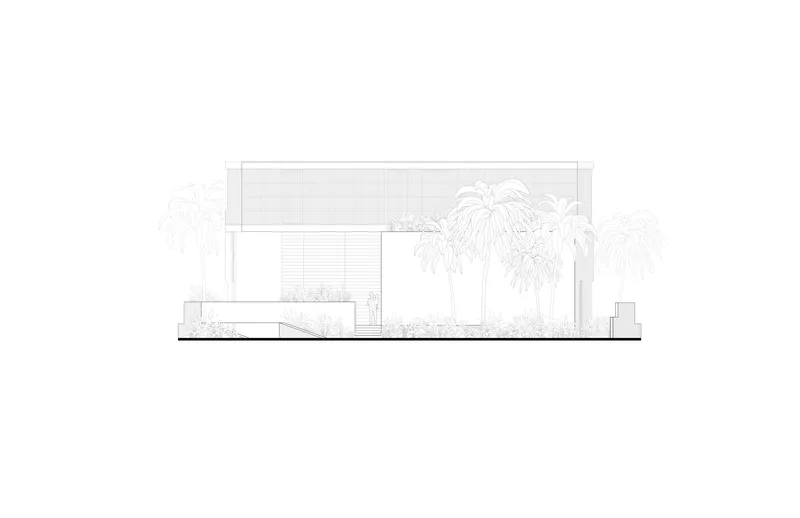
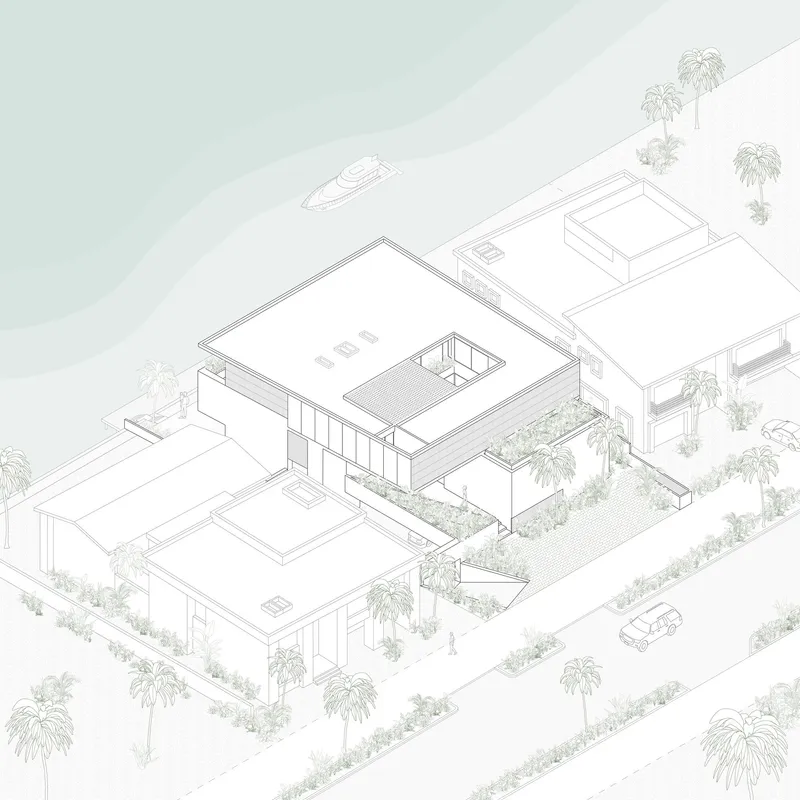
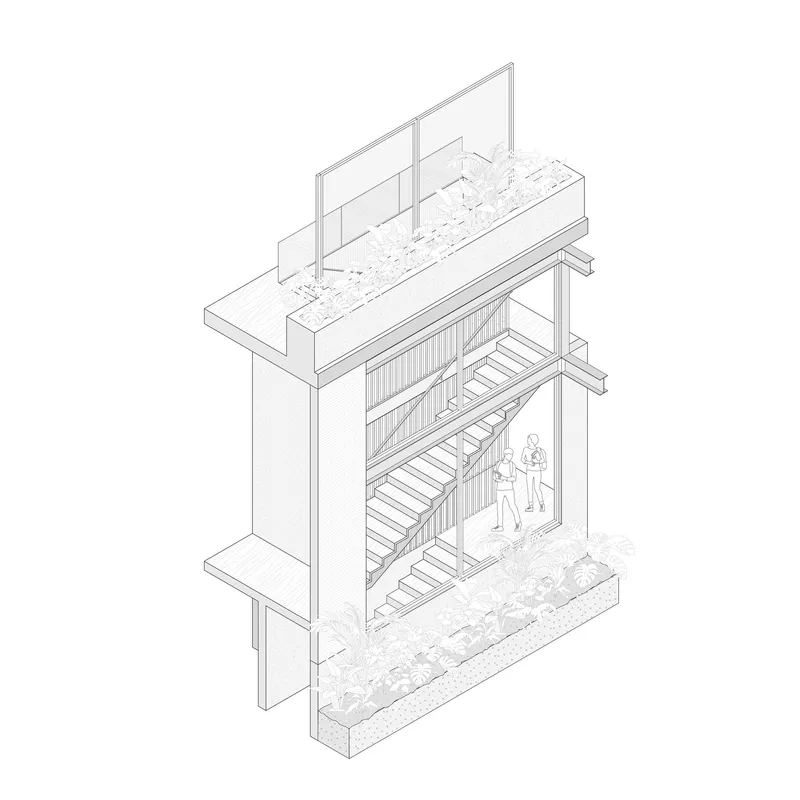
The site plan confirms the courtyard-centric organization: a rectangular volume with a central void sits within a lot defined by an angled property boundary, with textured paving and trees surrounding the footprint. Ground, first, and upper floor plans reveal how living and dining areas cluster around a circular courtyard on the first level, while bedroom suites on the upper floor ring the central void. The roof plan shows terrace spaces and open voids punctuated by tree canopies, indicating that the planted strategy extends to every level.
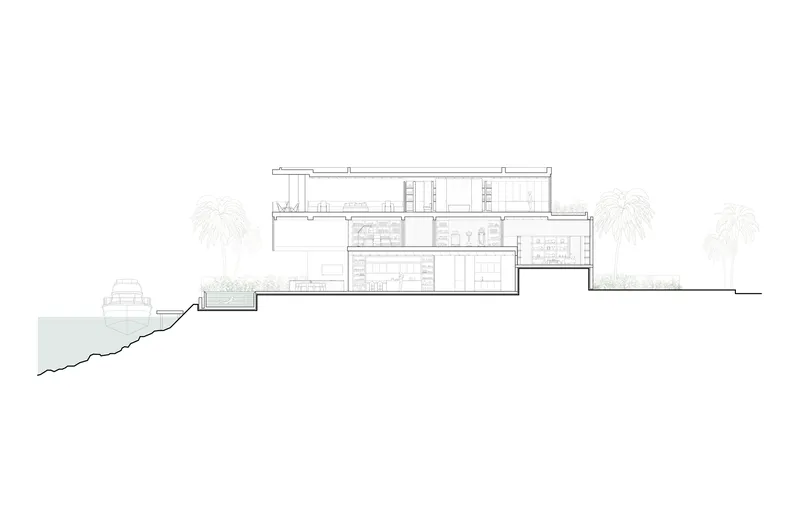
The sections are revealing: the house steps down a sloped site, with terraced levels responding to grade changes and palm trees marking transitions between interior and exterior. The axonometric drawing shows the relationship between flat-roofed volumes, the courtyard, and what appears to be a boat dock, a reminder that this is a Cancún property where waterfront access is part of the program. The isometric cutaway isolates the timber staircase and its planted beds at multiple levels, demonstrating how vertical circulation and greenery are integrated into a single system.
Why This Project Matters
The PUKKUN Residence matters because it demonstrates that a large suburban house in a tropical climate can be more than an air-conditioned box with decorative landscaping. REIMS 502 has built an argument in timber, concrete, and vegetation: that the courtyard, the louver screen, and the planted void are not nostalgic references to vernacular architecture but active environmental systems capable of making a 1,100 m² house livable without brute-force mechanical cooling. Every design decision, from the depth of the timber screen to the placement of interior gardens, serves a climatic purpose.
It also matters as a model for what suburban development in Cancún and comparable Caribbean cities could become. The expanding fabric of these cities tends toward sealed, inward-facing compounds that treat the climate as hostile. This house does the opposite: it opens itself to the heat, the humidity, and the light, and uses architecture rather than engineering to make those conditions comfortable. That is a more difficult and more interesting design problem, and REIMS 502 has solved it with evident skill.
PUKKUN Residence by REIMS 502 (Eduardo Reims Hernández, Andrea Maldonado Verduzco). Cancún, Mexico. 1,100 m². Completed 2023. Photography by César Béjar.
About the Studio
Share Your Own Work on uni.xyz
If projects like this are the kind of work you want to make, uni.xyz is a place to publish your own, find collaborators, and enter design competitions.



Popular Articles
Popular articles from the community


Riyadh For All: Intergenerational Urban Design for Active Aging in Rabat
Riyadh For All reimagines urban design in Rabat with intergenerational co-living, adaptive courtyards, and Moroccan cultural exchange today.

Co-life: Sustainable Architecture for Age-Friendly Community Living
Co-life reimagines sustainable architecture for seniors through courtyards, rammed earth, shared gardens, and spaces designed for belonging.

The Earth Pod: 3D Printed Homes for Resilient Refugee Communities
The Earth Pod reimagines refugee housing through 3D printed homes made from clay, combining resilience, self-sufficiency, and rapid shelter.

Conexión: Biophilic Design Reimagines High-Rise Living in Hong Kong
Conexión reimagines high-rise living in Hong Kong through biophilic design, green facades, shared spaces, daylight, water and nature within.


Similar Reads
You might also enjoy these articles

Bao Huynh Watercolor Atelier: A Serene Art Retreat in Hội An
Bao Huynh Watercolor Atelier in Hội An blends multifunctional art spaces, sustainable design, local materials, and family-friendly living in a serene environment.

Atelier Macri Concept Store Interior Design by CASE-REAL
Atelier Macri store features a "ko" counter, walnut wood details, cork displays, blending retail, gallery, and seamless customer experiences.

Manuel Vargas Izquierdo Stadium and High-Performance Sports Center: Architectural Excellence in Jalpa de Méndez
The Manuel Vargas Izquierdo Stadium blends sustainable design, inclusive sports facilities, and cultural-inspired architecture, revitalizing Jalpa de Méndez’s public spaces.

KAKR Buluh Awar Hall: Revitalizing Community and Ecology Through Bamboo Architecture
Community built bamboo hall revitalizes Buluh Awar village, empowering youth, restoring ecology, celebrating vernacular craftsmanship through sustainable architecture and culture.

Explore Residence Competitions
Discover active competitions in this discipline



Challenge to design a portable theatre


Challenge to design a portable music platform

Challenge to design an open learning module for the elderly
Comments (0)
Please login or sign up to add comments
No comments yet. Be the first to comment!