
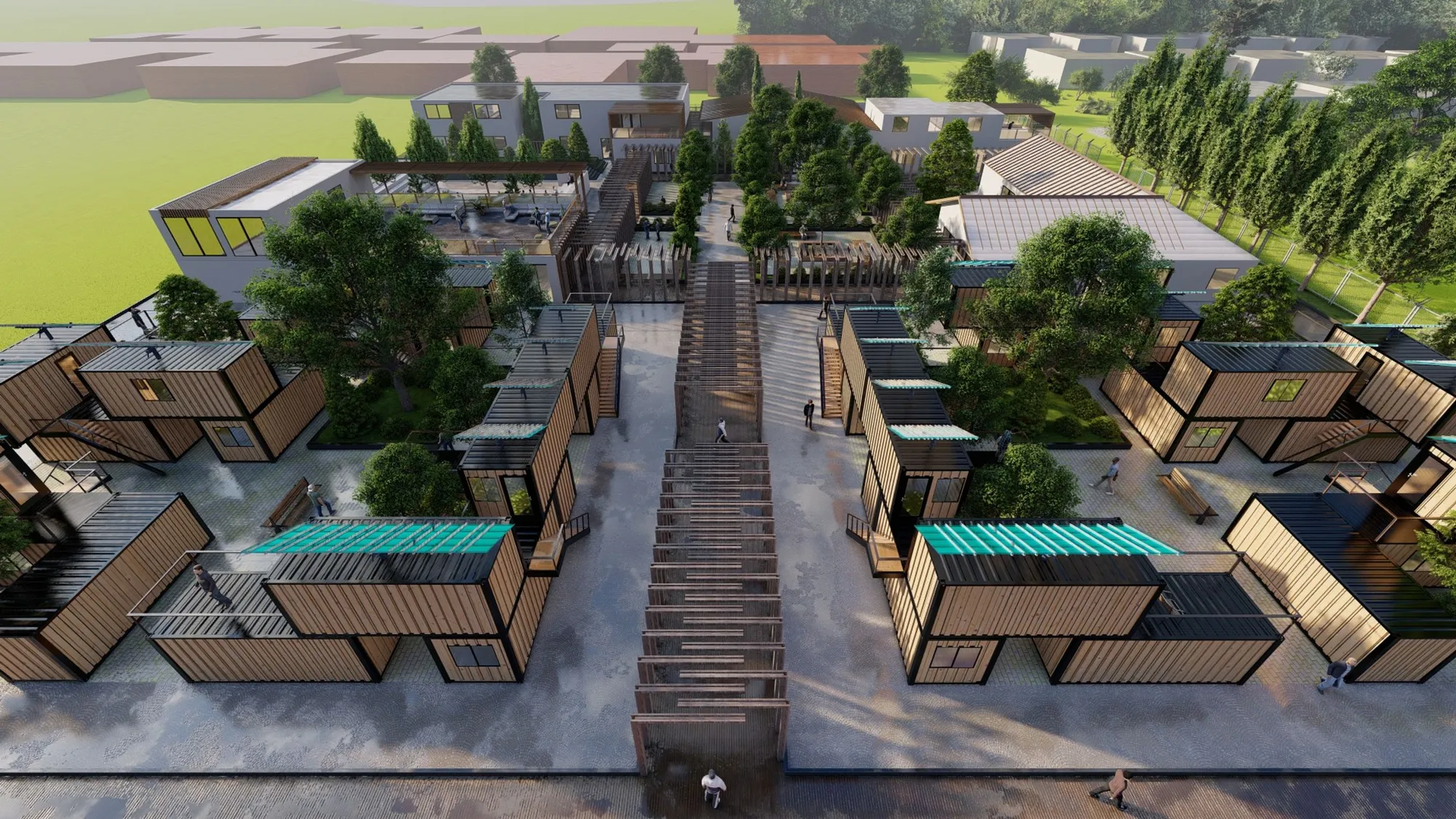
Reinstate for Homeless in Oklahoma: A Sustainable Solution Using Modular Container Architecture
Exploring sustainable, modular container architecture solutions for homeless housing in Oklahoma City


Reinstate for Homeless in Oklahoma is a visionary project designed by Javad Aboufazeli, focusing on providing sustainable, modular housing solutions for homeless individuals in Oklahoma City. The project stands out in the Reinstate competition, securing the People's Choice Award for its innovative approach and thoughtful design. This article delves into the architectural ingenuity behind the project, exploring its use of container modules, sustainable practices, and the overall impact on the community.
Design Philosophy
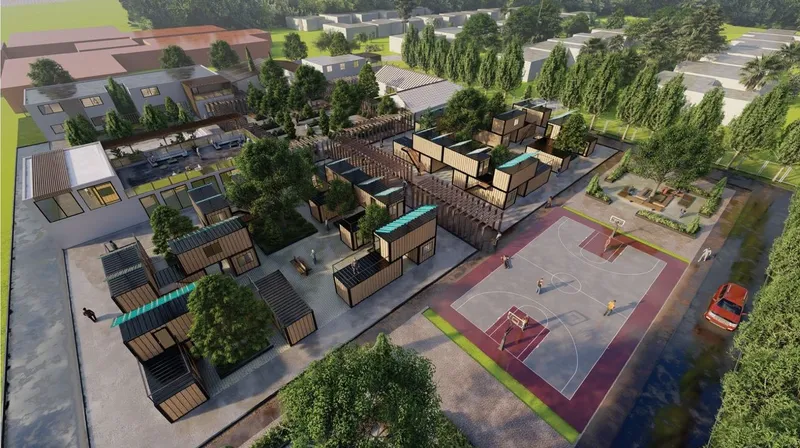
The core concept behind Reinstate for Homeless is to create a space that not only provides shelter but also facilitates training and rehabilitation for homeless individuals. The design prioritizes modularity and mobility for residential spaces, ensuring they can be easily assembled and relocated as needed. In contrast, service spaces are fixed and durable, providing stability and permanence.
To minimize environmental impact and enhance sustainability, the project incorporates used container modules for the residential areas. These containers are cost-effective, environmentally friendly, and quick to set up, making them an ideal choice for addressing urgent housing needs.
Site Layout and Functional Zones
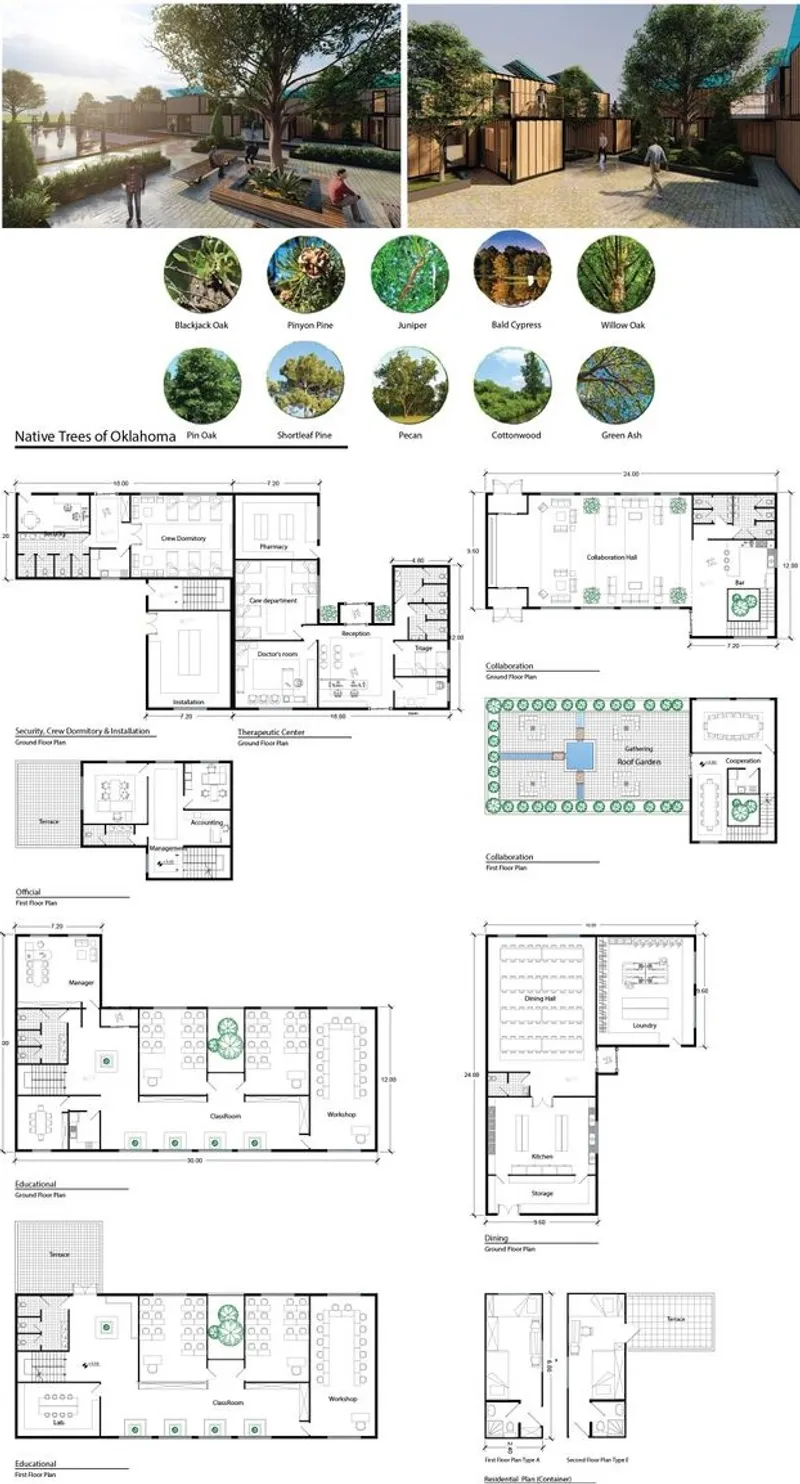
The site is strategically divided into distinct zones to optimize functionality and comfort:
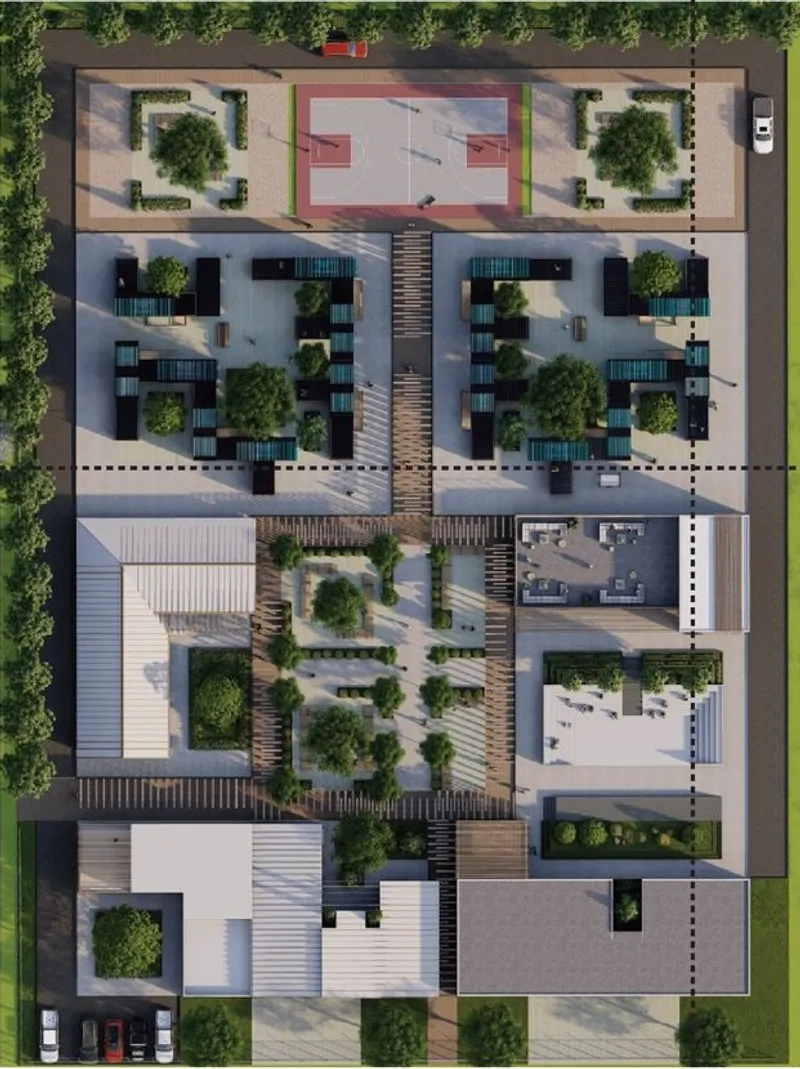
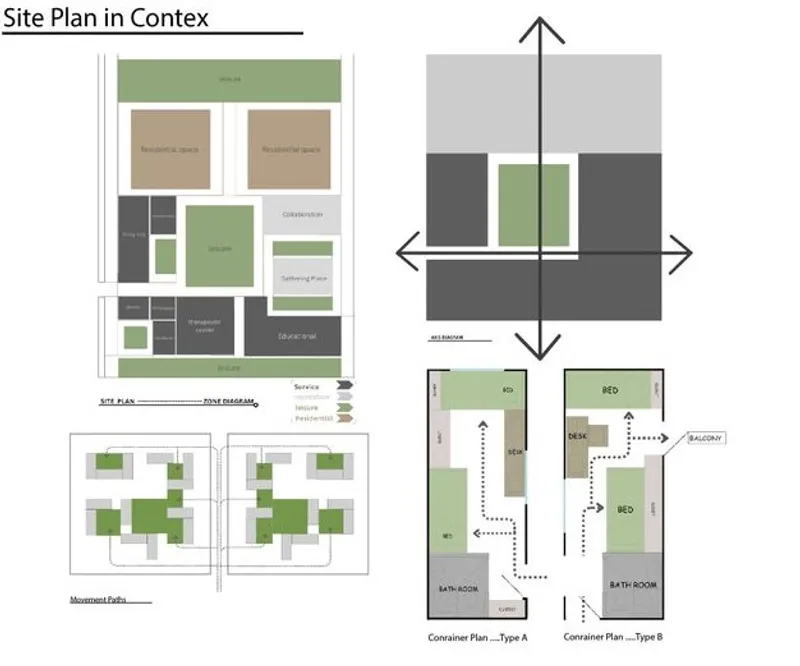
Residential Areas: Located in the northern part of the site, these areas use container modules in various combinations. This placement ensures minimal noise disturbance to the adjacent school in the southern neighborhood.
Service Spaces: Centrally located, these spaces include essential services, collaboration areas, leisure zones, and green spaces designed to be climate-friendly and promote a sense of community.
Accessibility: Two units designed to meet disabled standards are integrated into the residential area, ensuring inclusivity and accessibility. Basic amenities are placed on the ground floor for ease of access, and a riding path is provided near the disabled units.
Sustainability and Climate Considerations
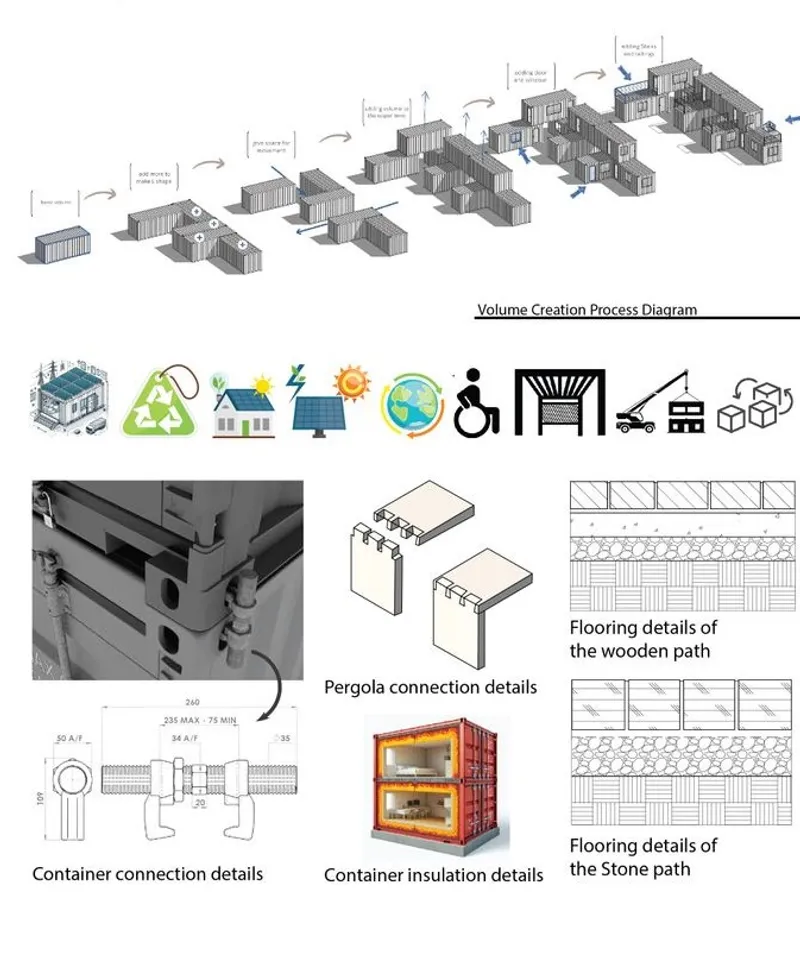
Sustainability is a cornerstone of the project, with several key features designed to minimize environmental impact:
Material Use: The project primarily uses local materials such as wood, alongside recyclable materials like used containers and metal. This approach reduces waste and aligns with the regional architectural context.
Energy Efficiency: Solar cells are installed on top of the containers, making the units self-sufficient in terms of electricity. Additionally, thermal insulation within the containers minimizes energy loss.
Landscape Design: Climate-friendly plants and environmentally friendly flooring materials are used throughout the site, enhancing the ecological footprint of the project.
Design Process and Iterations
The design process involved extensive structural analysis and exploration of various container combinations. The final design balances open and semi-open spaces, ensuring optimal light and ventilation from both northern and southern directions. This iterative process allowed the team to refine the design, achieving a harmonious blend of functionality and aesthetics.
Future Expansion and Adaptability
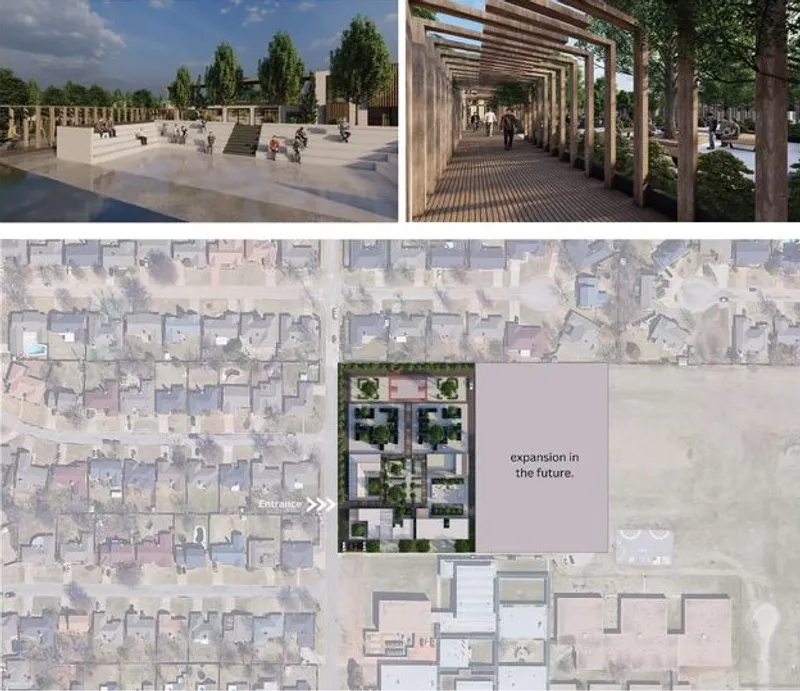
The western part of the site is designated for future development, with plans to expand in alignment with the main axes of the western region. The modular nature of the containers allows for easy addition or removal of units as the number of users changes. A vehicle movement path around the site facilitates these changes, ensuring the project can adapt to evolving needs over time.
Proportions and Spatial Planning
The design of different parts of the site is based on the proportions of the container module (2.4m x 6m). This modular approach informs the layout of residential areas, service spaces, movement paths, and landscape design, ensuring a cohesive and well-organized spatial arrangement.
Reinstate for Homeless in Oklahoma exemplifies the potential of modular container architecture to address pressing social issues like homelessness. By combining innovative design, sustainability, and community-focused planning, Javad Aboufazeli's project offers a practical and adaptable solution that can be replicated in other regions facing similar challenges. This project not only provides immediate shelter but also fosters a supportive environment for rehabilitation and reintegration, embodying the true spirit of architectural innovation and social responsibility.



Popular Articles
Popular articles from the community


Hill & Cross Opera: Sculptural Opera House Architecture Shaped by Tallinn’s Landscape and Identity
Hill & Cross Opera reimagines opera house architecture in Tallinn through its sculptural hill, civic plaza, glass wave and a luminous cross.

Co-Life: Senior Housing Design That Reconnects Older Adults With the City
Co-Life reimagines senior housing design through healing gardens, shared streets, workshops, and a sustainable community across generations.

The Musturak Paradise: Senior Living Architecture for a Connected Future in Temara, Morocco
The Musturak Paradise reimagines senior living architecture in Temara via private homes, social spaces, culture, community, and shared care.

Co-life: Sustainable Architecture for Age-Friendly Community Living
Co-life reimagines sustainable architecture for seniors through courtyards, rammed earth, shared gardens, and spaces designed for belonging.


Similar Reads
You might also enjoy these articles

Day and Night Park: A Time-Based Urban Newsstand in Beijing
A temporary urban newsstand in Beijing blending travel, light, and reading through poetic colors, compact form, and community-focused design.

Modernist Patio Renovation in El Masnou, Barcelona by Oliver Segura Arquitectura + Cebrià Arquitectura
Modernist patio renovation blending tradition and innovation with a movable pool, leveled floors, and Catalan materials in El Masnou.

Alto Residencial Coop: Cooperative Housing Development in Santiago de Compostela by Carbajo Barrios Arquitectos
A linear cooperative housing complex blending white volumes and perforated metal façades, enhancing community living, natural light, privacy, and urban integration.
Vil Genis School by BPA ARCHITECTURE – Massy, France
Vil Genis School in Massy, France, features sustainable design, south-facing classrooms, community integration, accessible spaces, and modern educational architecture.


Explore Sustainable Design Competitions
Discover active competitions in this discipline



Challenge to reimagine the Iron Throne


Photograph architecture without architects


Illustrate the lost glory of Angkor Wat - Render Challenge


Design challenge to reuse E-waste
Comments (0)
Please login or sign up to add comments
No comments yet. Be the first to comment!