

Renovation of Birongwan Kindergarten by Studio NOR in Shenzhen
Studio NOR transformed Birongwan Kindergarten with a banyan-inspired façade, vaulted hall, shared corridors, and improved daylight, safety, and flexibility.


The Renovation of Birongwan Kindergarten in Shenzhen redefines educational architecture through adaptive reuse, façade transformation, and child-centered spatial innovation. Designed by Studio NOR in 2022 as part of Nanshan District’s “100 Campus Renewal Plan,” the 3,000-square-meter project was completed within just 40 days during summer break, an impressive feat under strict building codes and pandemic-related remote coordination.
This kindergarten renovation project demonstrates how strategic architectural intervention can resolve structural deficiencies, improve safety standards, and create inspiring learning environments without full demolition.

Flexible Design Strategy Under Tight Constraints
Educational renovation projects demand precision, especially when timelines are compressed and site surveys are limited. Working remotely due to pandemic restrictions, Studio NOR relied on incomplete drawings, photographs, and videos to develop a predictive and flexible design strategy.
Instead of addressing each spatial issue separately, ranging from outdated MEP systems to poor daylighting, the architects adopted a macro-level intervention approach. By rethinking the façade as an integrating device, multiple interior and exterior challenges were resolved simultaneously. This reduced communication costs, accelerated approvals, and streamlined construction.

Key challenges included:
Outdated infrastructure and safety risks An unsafe second-floor glass canopy Illegal mezzanine reducing the multi-function hall’s height Poor daylight access in classrooms Underutilized corridors separated by solid partitions
Through strategic façade redesign and interior restructuring, the project evolved into a cohesive educational environment.
Rebuilding the Elevation: Façade as Identity and Infrastructure
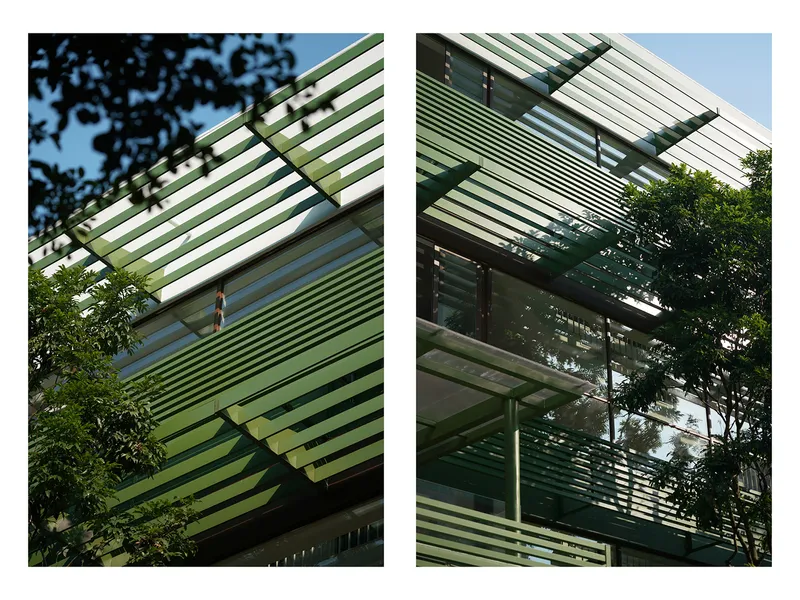
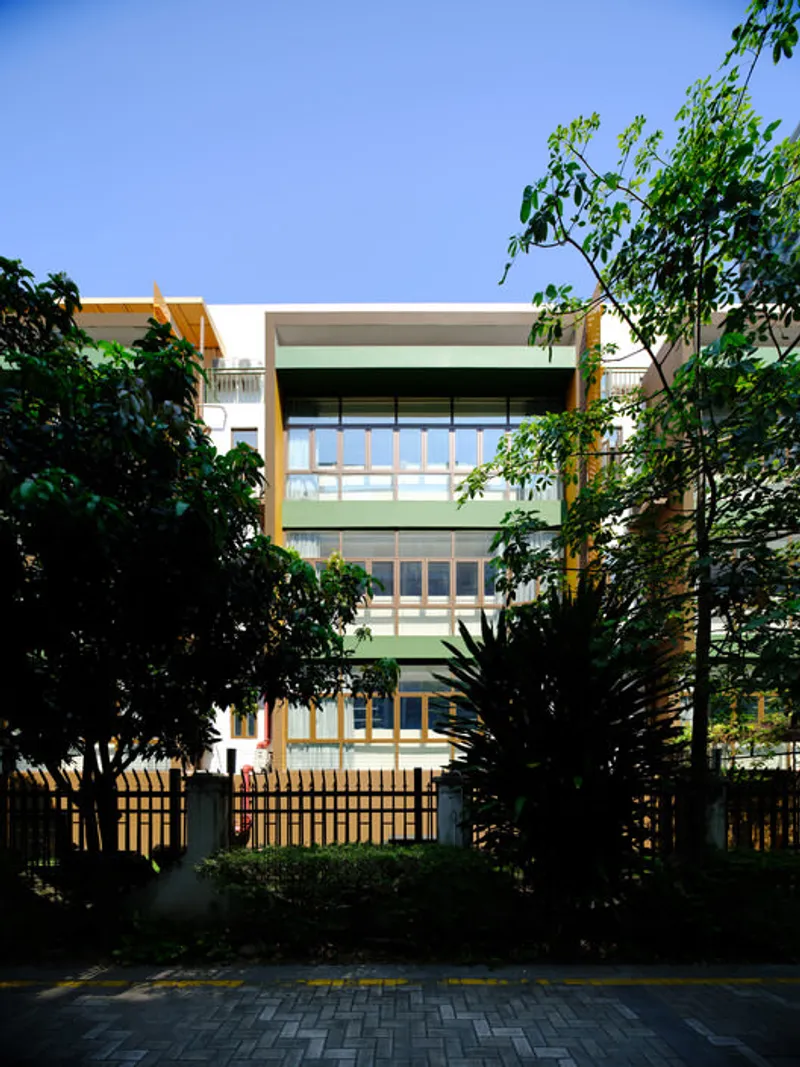
The original façade suffered from chaotic window arrangements, random additions, and exposed mechanical units. However, its symbolic color palette inspired reinterpretation rather than erasure.
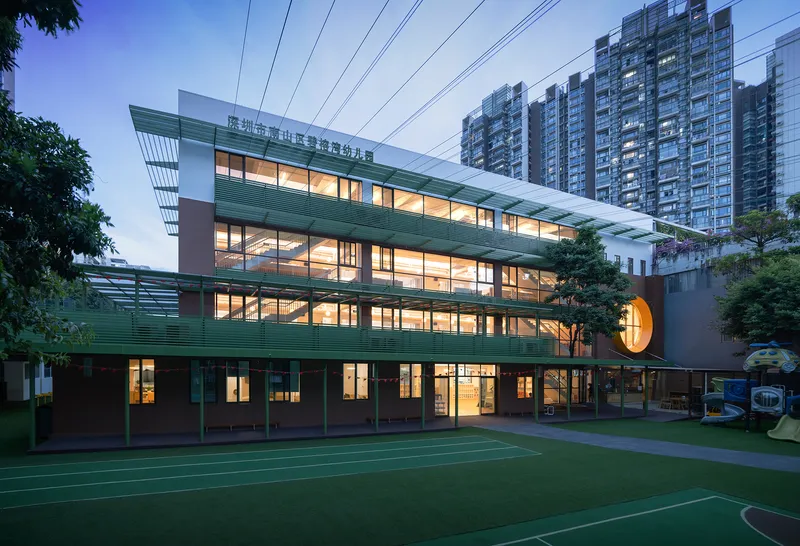
Since the banyan tree represents the kindergarten’s cultural identity, Studio NOR developed a façade concept rooted in this symbolism. Dark brown and dark green tones evoke tree trunks and foliage, while orange accents symbolize sunlight filtering through leaves.
Architectural upgrades included:
Large round and arched classroom windows replacing narrow openings Reflective panels enhancing indoor daylight performance Expanded corridor windows to maximize cross-lighting Horizontal louvers, AC hoods, and verandas forming “cascading green lines” An iconic circular orange-framed window for the multi-function hall
The second-floor platform was reconstructed using a lightweight steel structure and polycarbonate roofing. This solution filters sunlight, enhances safety, and minimizes falling-object risks. Soft yellow EPDM flooring improves child safety while diffusing warm reflected light into adjacent corridors.
Replacing solid platform walls with floor-to-ceiling glazing strengthens indoor-outdoor connectivity, encouraging spontaneous play and exploration.

The Vaulted “Warm Sun Hall”: Spatial Psychology and Performance
4
After removing an illegal mezzanine, the multi-function hall achieved a 5-meter ceiling height, suitable for indoor basketball but psychologically overwhelming for children.
To balance scale and comfort, Studio NOR introduced a large vaulted ceiling. The vault maintains athletic clearance while creating a protective, enveloping spatial feeling. Hidden within its shoulders are ventilation ducts and technical systems, maintaining visual clarity.
Circular perforations in the vault serve multiple purposes:
Acoustic optimization by channeling sound toward orange absorption panels Integrated air-conditioning outlets Visual symbolism referencing basketballs and the sun
Wood flooring folds upward into wainscoting and niches, reinforcing spatial intimacy. With abundant daylight from both ends, the space resembles a “tree hollow,” earning the affectionate name “Warm Sun Hall.”
Layered lighting: pendants, floodlights, and track spots: ensures adaptability for performances, meetings, music, and sports.

Shared Corridor Concept and “Time-Shared Space”
Inspired by the “time-shared space” theory developed by Jure Kotnik, the renovation redefines circulation areas as active learning environments.
Traditional solid classroom partitions were removed and replaced with 5-meter-wide folding glass doors. This intervention:
Enhances natural lighting penetration Expands children’s movement areas Connects classrooms into a continuous learning landscape Activates previously underused corridors
Materials below 1.2 meters are finished in warm log tones, establishing a child-scaled tactile environment.
Given the tight construction window, practical low-tech solutions were employed:
Exposed conduit wiring to avoid wall cutting Cantilevered light troughs concealing existing cable trays Selective handrail height adjustments instead of full reconstruction
These efficient interventions demonstrate how thoughtful architectural design can achieve maximum transformation with minimal intervention.

Educational Architecture as an Active Participant
The Birongwan Kindergarten renovation highlights how adaptive reuse in educational architecture can move beyond cosmetic upgrades. By integrating façade redesign, daylight optimization, acoustic engineering, and spatial psychology, Studio NOR created an environment that actively supports children’s development.
The completed campus has been widely praised by parents and educators alike, proving that well-designed learning environments positively influence children’s cognitive, social, and emotional growth.
This project stands as a model for sustainable campus renewal, flexible design strategies, and child-centered architecture in urban China.

All photographs are works of
ACF




Popular Articles
Popular articles from the community


Riyadh For All: Intergenerational Urban Design for Active Aging in Rabat
Riyadh For All reimagines urban design in Rabat with intergenerational co-living, adaptive courtyards, and Moroccan cultural exchange today.

The Ocean Hive: Sustainable Architecture for a Self-Sufficient Civilization at Sea
The Ocean Hive imagines sustainable architecture at sea, where modular habitats, algae, wave power and ocean waste sustain a growing colony.
AL-JANNAH: Sustainable Architecture and Permaculture for Afghan Widows
AL-JANNAH uses sustainable architecture and permaculture to create resilient oasis of housing, learning, work and renewal for Afghan widows.

EW PARK: Sustainable Architecture Reimagines the Future of Urban Parking
EW PARK reimagines city parking as a modular wooden tower combining automation, solar energy, electric mobility, and adaptable urban design.


Similar Reads
You might also enjoy these articles

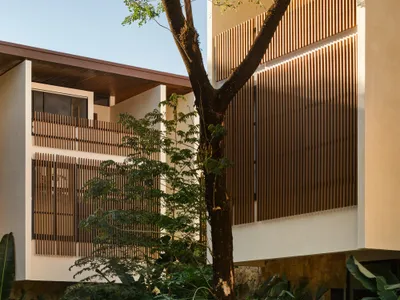
FAMM Arquitectura Organizes Ten Villas Around Courtyards and Jungle in Nosara, Costa Rica
El Molino pairs two elongated volumes with deep overhangs and timber louvers to build a compact coastal community five minutes from the beach.
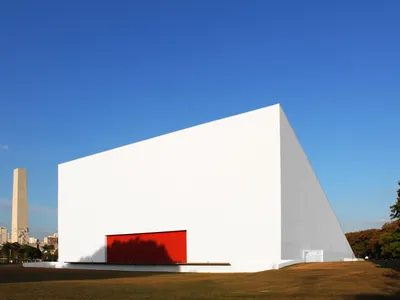
Oscar Niemeyer's Ibirapuera Park Pavilions Define São Paulo's Cultural Identity in Concrete and Curve
A constellation of modernist volumes set within São Paulo's most important urban park, conceived for the city's 400th anniversary in 1954.
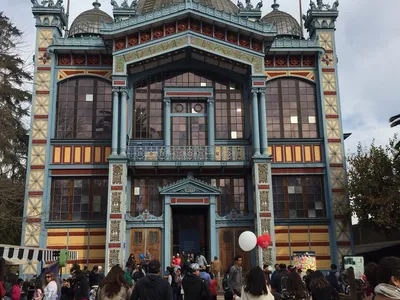
How Henri Picq's 1889 Paris Pavilion Traveled 11,000 Kilometers to Become Santiago's Artequín Museum
A prefabricated iron and glass pavilion built for the Paris Universal Exposition found a second life as a children's art museum in Chile.
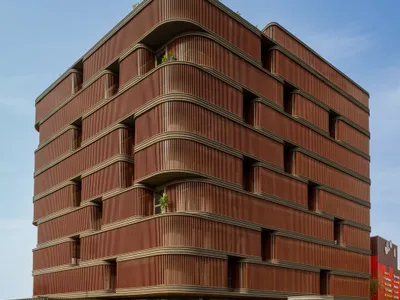
Sanjay Puri Architects Wraps a Jaipur Office Tower in Capsule-Shaped Green Buffers
A nine-level climate-responsive workplace near Jaipur Airport uses stacked planter terraces and aluminium screens to fight 40°C heat.


Explore Architecture Competitions
Discover active competitions in this discipline



Challenge to reimagine the Iron Throne


Photograph architecture without architects


Illustrate the lost glory of Angkor Wat - Render Challenge


Design challenge to reuse E-waste
Comments (0)
Please login or sign up to add comments
No comments yet. Be the first to comment!