
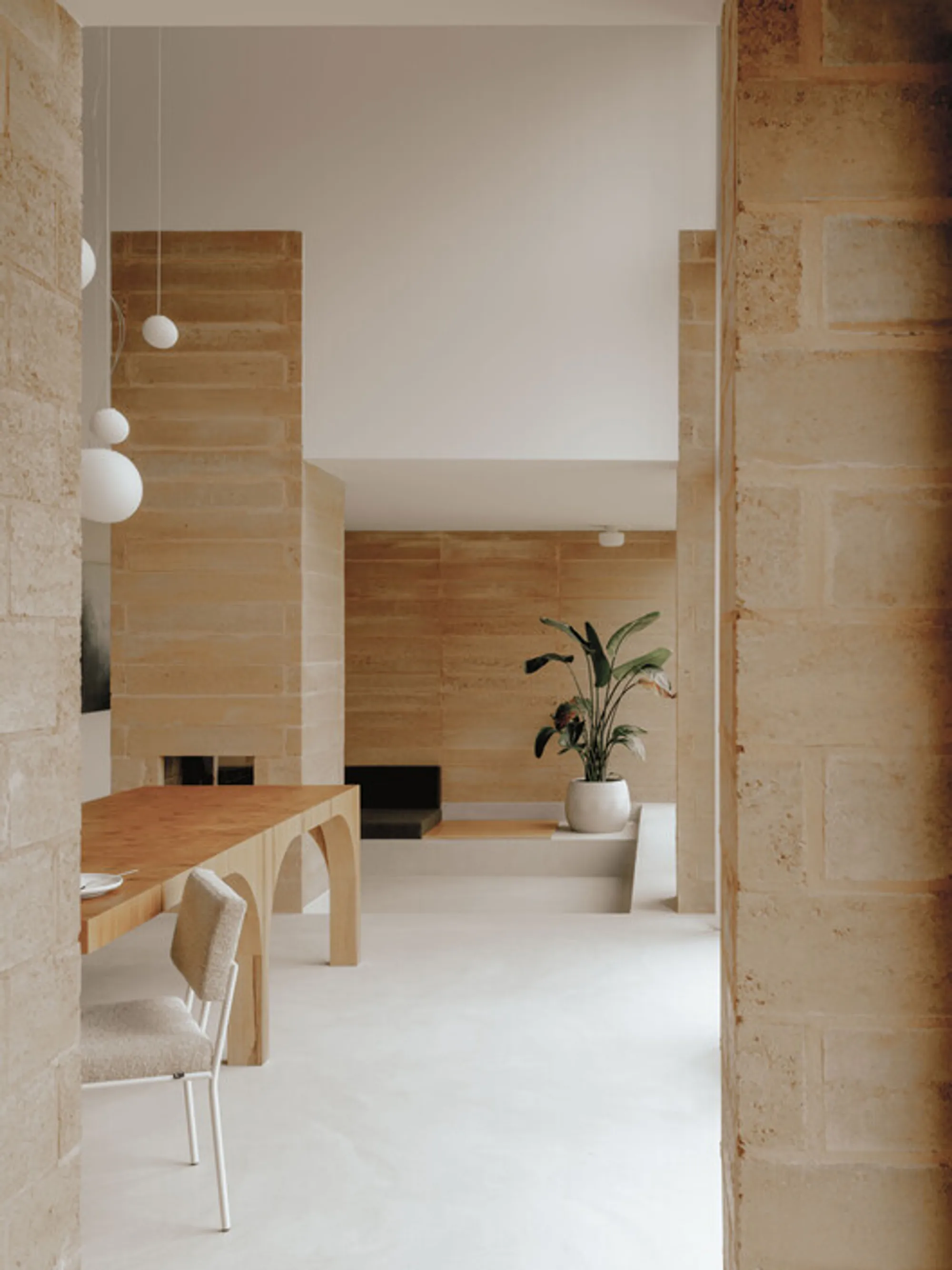
Residential House Weert By De Nieuwe Context: Harmonizing Modern Living with Dutch Countryside
Residential House Weert by De Nieuwe Context in the Netherlands blends sustainable materials, modern design, and expansive windows, connecting interiors with the countryside.


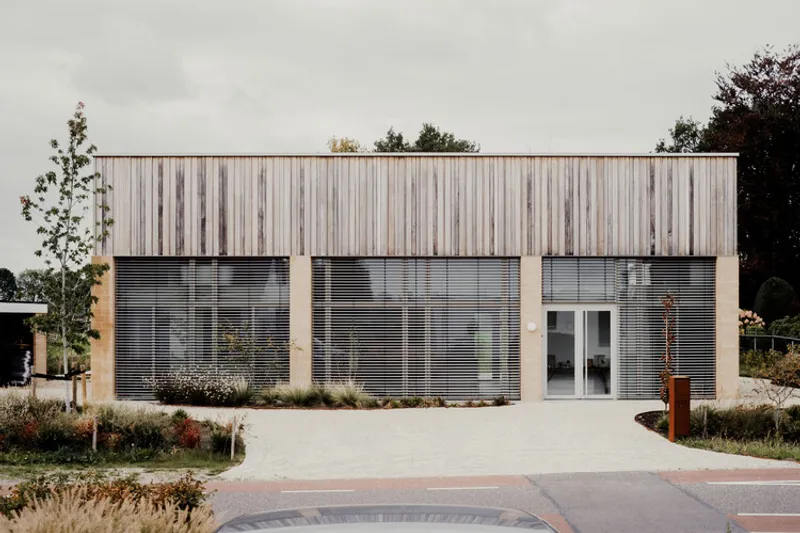
Residential House Weert, designed by De Nieuwe Context, is a contemporary family residence located in the serene, rural surroundings of Weert, The Netherlands. Completed in 2025 with a total area of 275 m², the home blends modern architectural design with the region’s historic vernacular, creating a dwelling that seamlessly integrates with its expansive farmland views and lush greenery.

Architectural Concept and Context
The design of Residential House Weert draws inspiration from the traditional langgevelboerderij, or long-facade farmhouse, historically prevalent in the Weert region. This typology is defined by its elongated shape and the integration of living and working spaces along a horizontal axis. De Nieuwe Context reinterprets this tradition through vertical layering and horizontal interior organization, establishing a balance between modern living and rural heritage.
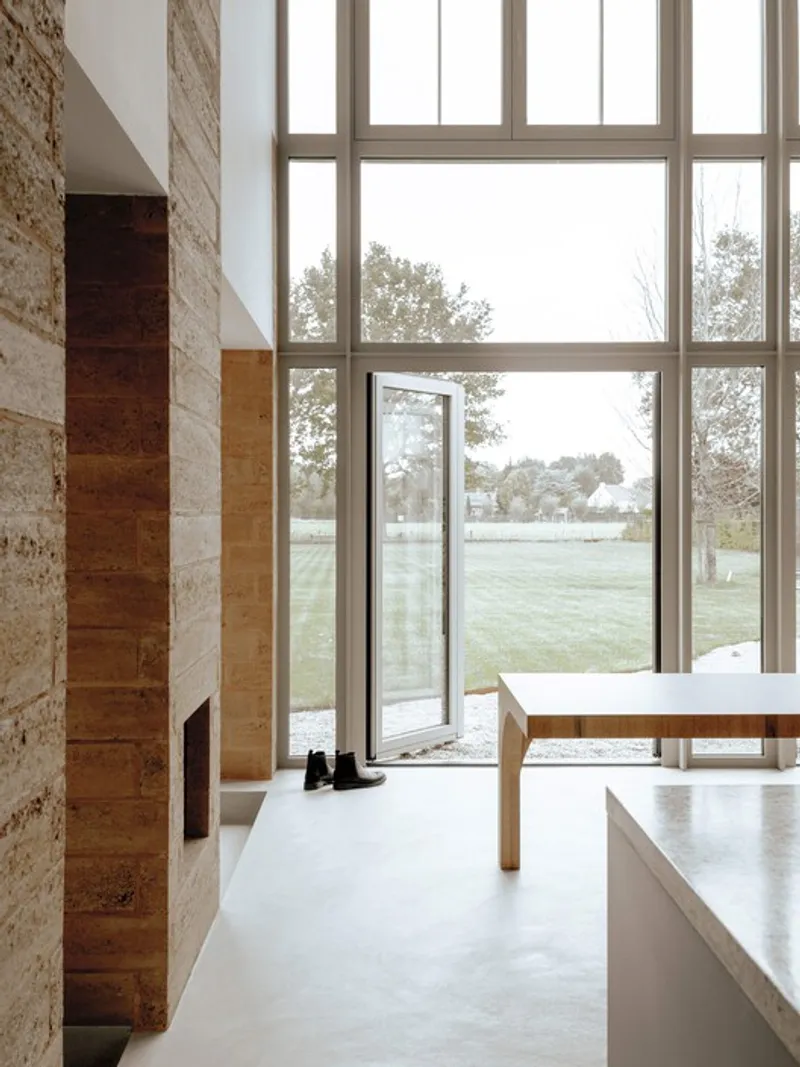
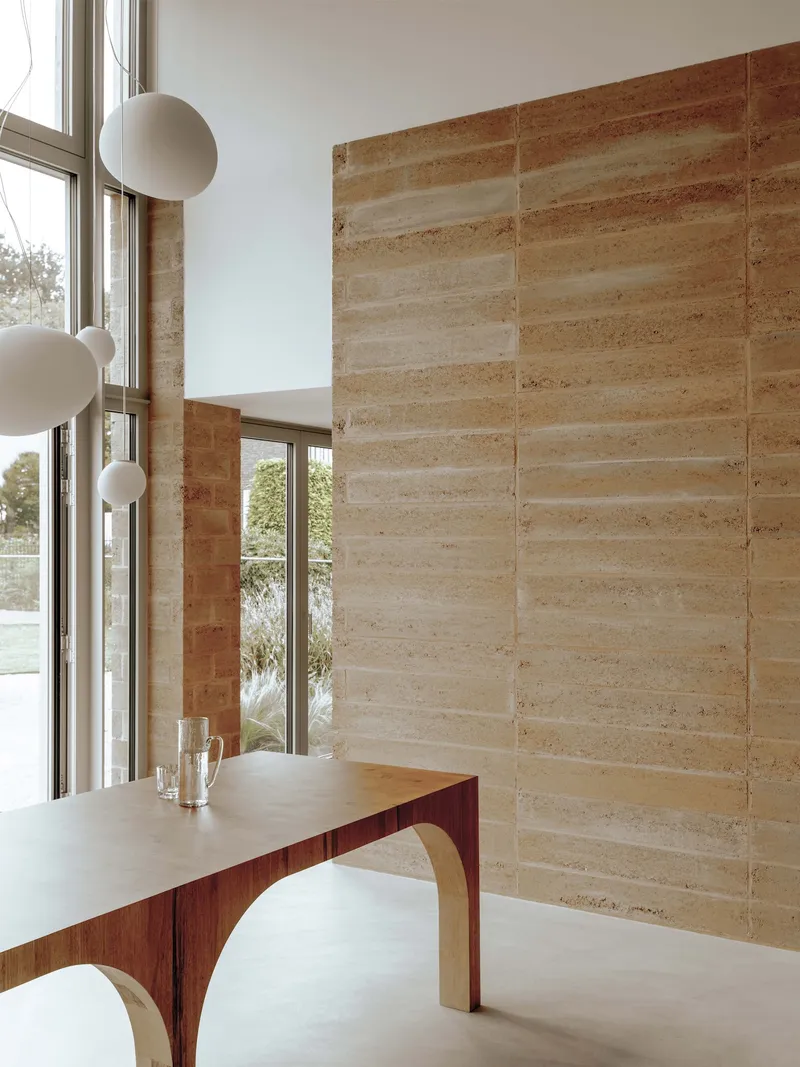
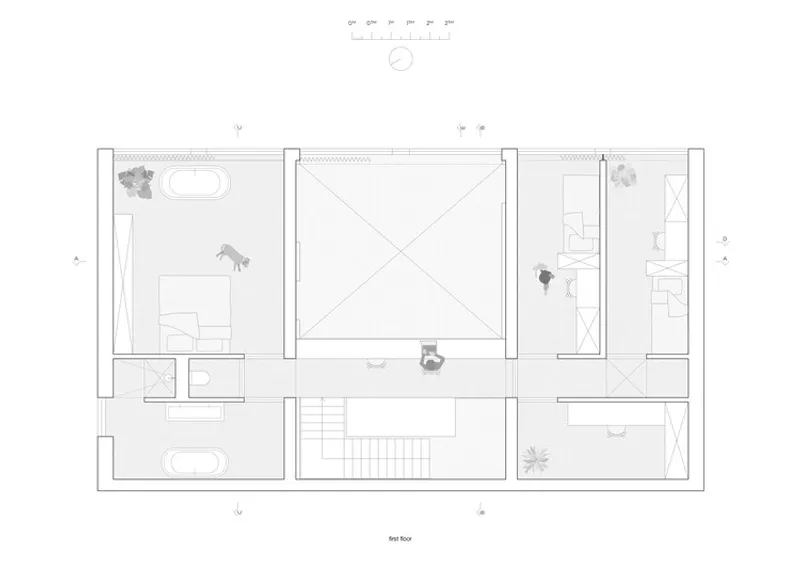
The home is strategically oriented to maximize its connection with the landscape, with large rear windows opening the interiors to the surrounding fields. Sunken seating areas and thoughtfully arranged communal spaces foster a sense of calm and continuity between the indoors and outdoors. This strong spatial relationship encourages a lifestyle in harmony with nature, where the countryside becomes an extension of the living space.

Materials and Sustainability
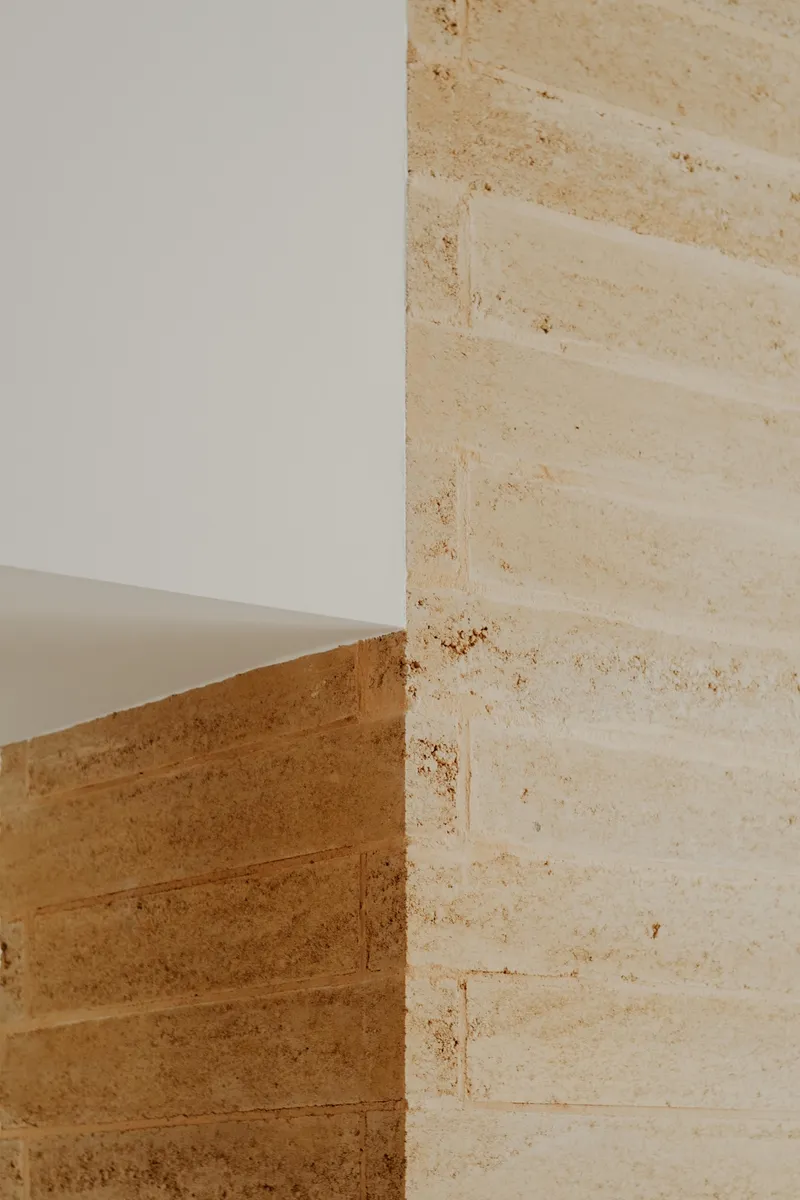
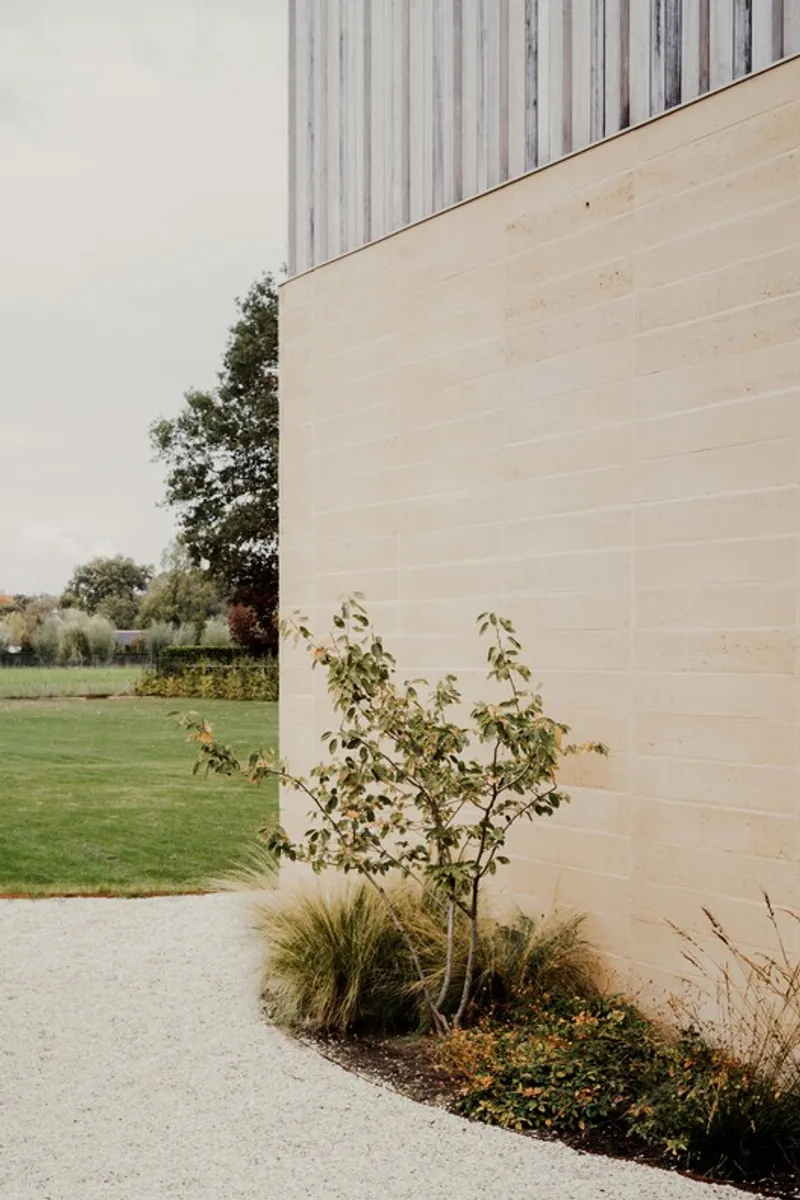
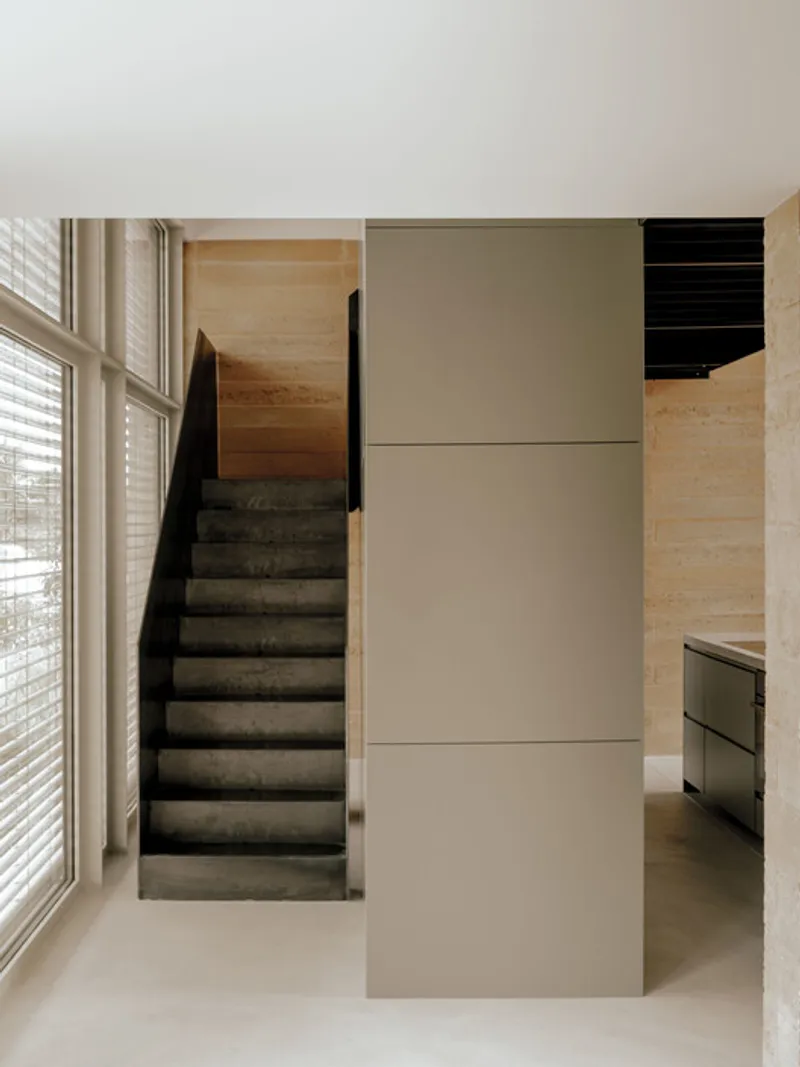
Sustainability plays a central role in the project. The exterior façade is clad in Fraké wood, a durable and naturally warm material, while clay blocks from the Spanish manufacturer Fetdeterra are used both internally and externally. These clay blocks contribute to the building’s thermal performance, provide natural texture and color, and exemplify circular construction principles, reducing CO₂ emissions and the environmental footprint of the project.
The combination of wood and clay ensures that the building harmonizes with its rural surroundings, while maintaining a modern, minimalist aesthetic. Natural materials are used not only for their durability and environmental benefits but also for their tactile quality, enhancing the home’s intimate and welcoming atmosphere.
Spatial Organization and Lifestyle
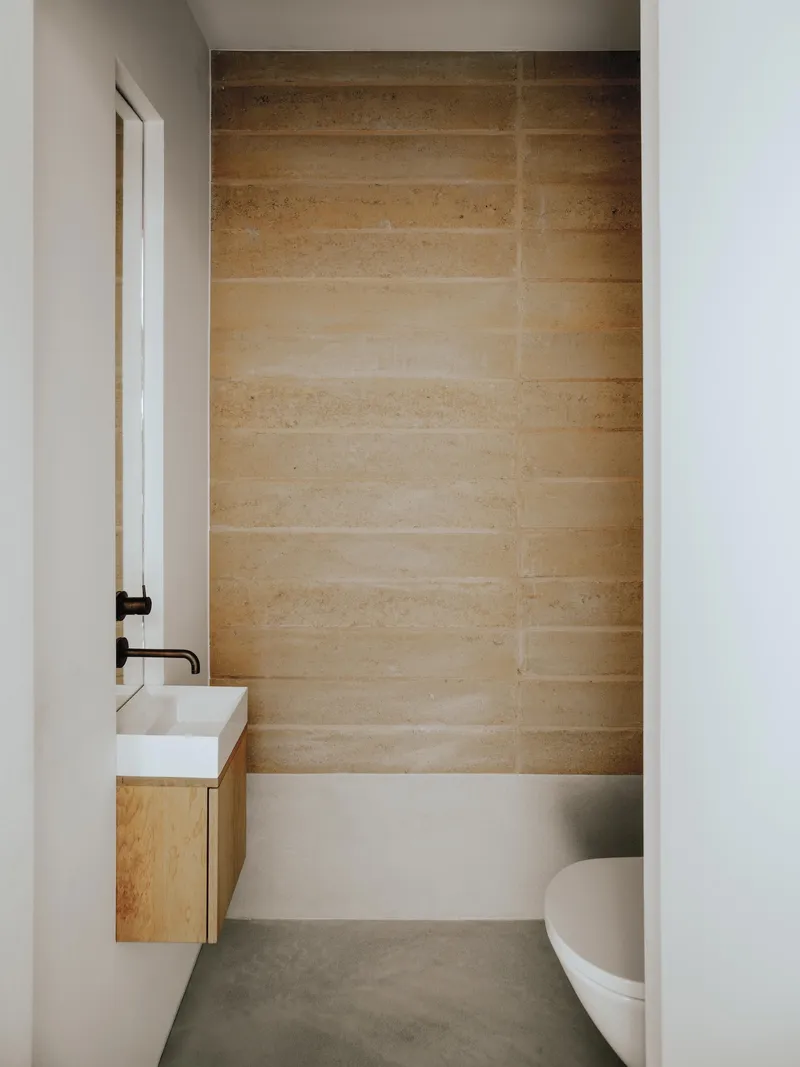
Residential House Weert is designed around the principle of openness and connection to the landscape. The living areas gradually transition from private to communal, with bedrooms and bathrooms positioned to the front and a large open living-dining-kitchen area opening toward the fields. This arrangement encourages family interaction while preserving privacy.
Key features of the interior include:
- Sunken living zones to enhance spatial experience and comfort.
- Expansive glazing that frames views of farmland and greenery.
- Natural light optimization through strategic window placement.
- Warm, tactile materials that provide a sense of continuity and coziness.
Design Philosophy
The project reflects a sensitive reinterpretation of regional architecture, combining modern living standards with a strong environmental and aesthetic connection to the Dutch countryside. The integration of natural, sustainable materials, open spatial planning, and attention to indoor-outdoor connectivity ensures a home that is both beautiful and ecologically responsible.
Residential House Weert stands as a model for sustainable, context-driven residential architecture, demonstrating how contemporary design can honor historical forms while responding to modern lifestyles.

All the photographs are works of Riccardo De Vecchi



Popular Articles
Popular articles from the community


The Musturak Paradise: Senior Living Architecture for a Connected Future in Temara, Morocco
The Musturak Paradise reimagines senior living architecture in Temara via private homes, social spaces, culture, community, and shared care.

EW PARK: Sustainable Architecture Reimagines the Future of Urban Parking
EW PARK reimagines city parking as a modular wooden tower combining automation, solar energy, electric mobility, and adaptable urban design.

The Earth Pod: 3D Printed Homes for Resilient Refugee Communities
The Earth Pod reimagines refugee housing through 3D printed homes made from clay, combining resilience, self-sufficiency, and rapid shelter.

The Ocean Hive: Sustainable Architecture for a Self-Sufficient Civilization at Sea
The Ocean Hive imagines sustainable architecture at sea, where modular habitats, algae, wave power and ocean waste sustain a growing colony.

Similar Reads
You might also enjoy these articles


Hodi-Mandai Geram
Project Function: Preservation and revitalization of the Intangible heritage and socio-spatial identity of the Hodi by Housing, Cultural Memory Center, Sacred Grove, landscape, local tourism economy


Olio Towers: A Mid-Rise for Performers That Fuses Housing, Rehearsal, and Stage
Located blocks from Houston's Theater District, this modular tower stacks living units around a central performance atrium.

Oasis: Modular Green Housing Carved into Dhaka's Urban Fabric
A shortlisted Plugin Housing entry reclaims unauthorized settlements in Dhaka with stepped concrete volumes, green roofs, and ventilation-driven design.

Black Hole: A Floating Megastructure for the Post-Physical Era
Emiliano Mazzarotto envisions a spherical, self-scaling arena where e-sports, digital hotels, and holographic stadiums replace traditional public space.
Explore Residential Building Competitions
Discover active competitions in this discipline


Challenge to design mud housing for contemporary communities


Challenge to reimagine the Iron Throne


Photograph architecture without architects


Illustrate the lost glory of Angkor Wat - Render Challenge
Comments (0)
Please login or sign up to add comments
No comments yet. Be the first to comment!