

Restaurant details often evoke tradition and craft
If you're looking for a restaurant that will take you back in time, be sure to check out Inside Out. You won't be disappointed.

 Nikolas Koenig
Project Name: Katsuya Manhattan West, New York
The Client: SBE Entertainment Group, a hospitality company headquartered in Los Angeles.
What were the guiding principles for this project?
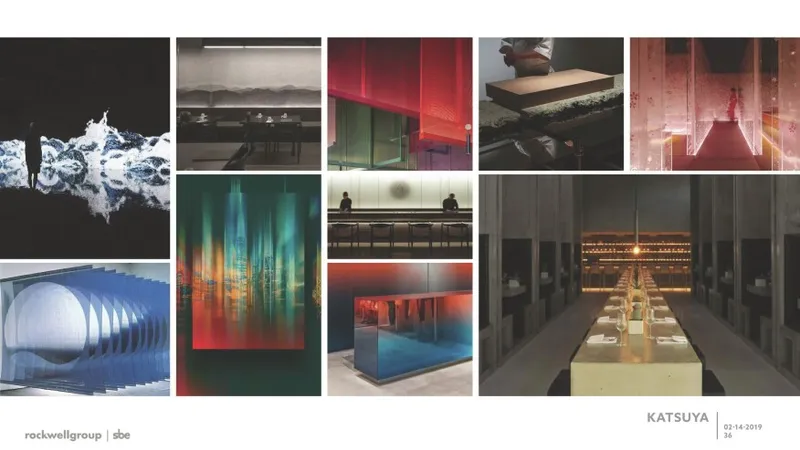
The design of Katsuya's Manhattan West location combines Japanese craft, architecture, and cultural references with contemporary Western restaurant design. Elements such as Kumiko wood joinery, urushi lacquer, shōji, wagara decorative patterns, kabuki theatre, torii and pagoda religious architecture, Sumi-e ink painting, and ukiyo-e "floating world" prints create a refined and theatrical atmosphere that honours both the past and present. Guests are invited to enter this immersive world upon entering the restaurant.
Design Firm Profile: Alex Gong, an associate at Rockwell Group, played a key role in the interior design of Katsuya as part of a team of six led by Greg Keffer, AIA. Rockwell Group is an international architecture and design company with offices in New York, Los Angeles, and Madrid. The firm, founded by David Rockwell, FAIA, is known for its innovative approach and commitment to excellence in every project. With a team of 300 professionals, Rockwell Group works to combine performance and design to create unique and memorable spaces around the world.
 Courtesy Rockwell Group
 Courtesy Rockwell Group
 Nikolas Koeing
Consider scale and divvy up your main dining room.
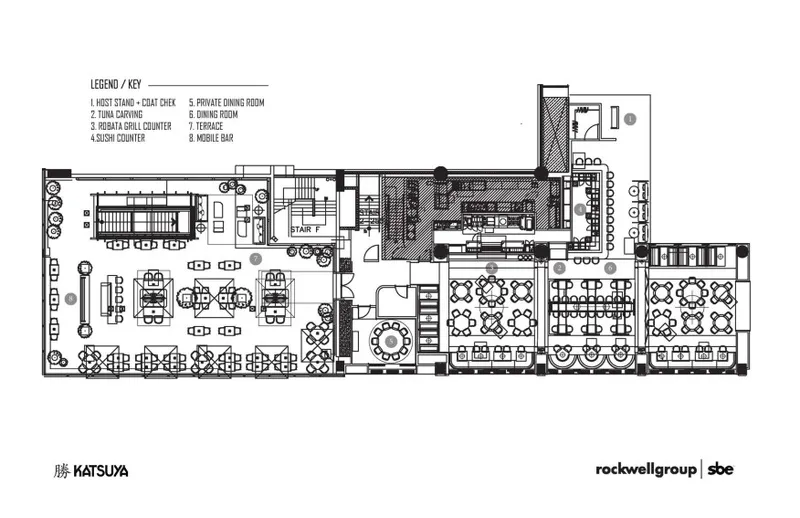
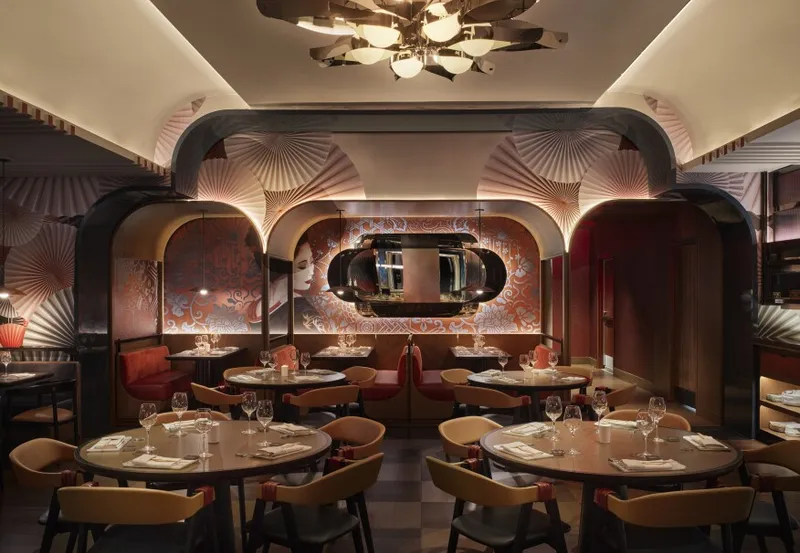
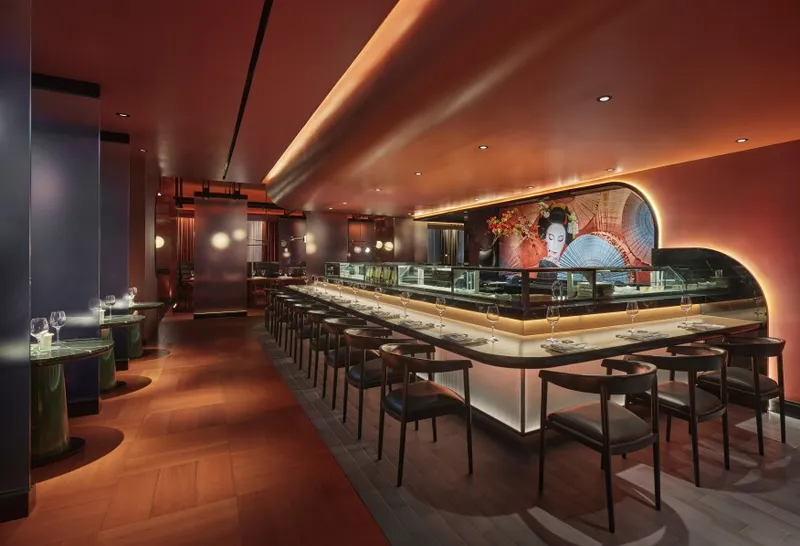
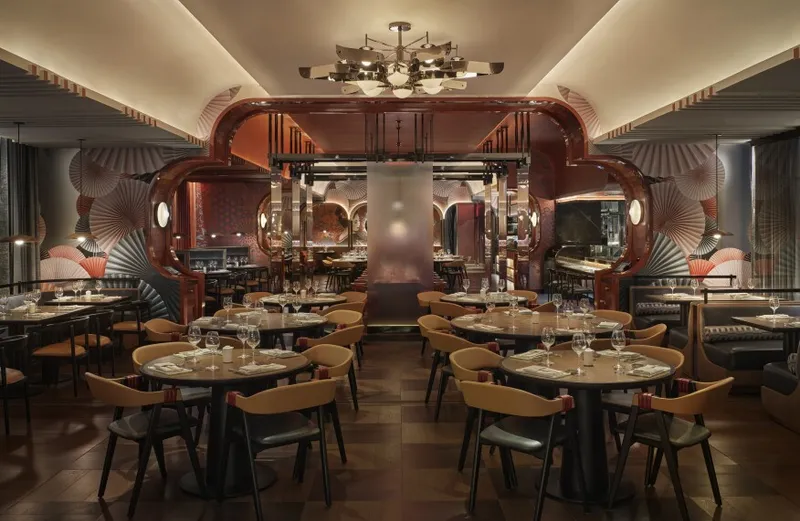
In the interior dining rooms, we incorporated a maximalist style inspired by Japanese aesthetics. To create a more intimate atmosphere, we divided the 207-seat restaurant into three smaller dining rooms separated by portals inspired by traditional Japanese cloud and plume passageway forms. These double arc portals are finished with a red lacquer frame and end-grain wooden blocks treated with a red stain. The oak floor features a checkerboard pattern as a tribute to 18th-century kabuki actor Sanogawa Ichimatsu, who was known for his checkerboard-patterned costume.
 Nikolas Koeing
Rely on materials to define a centre dining room.
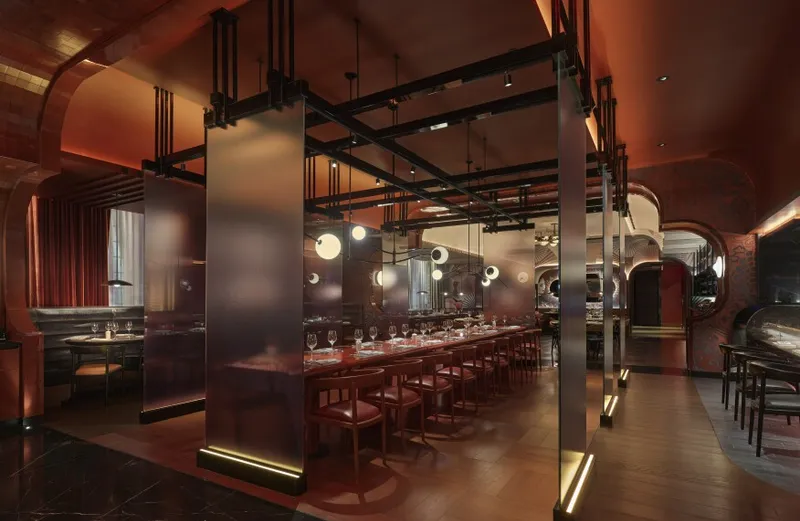
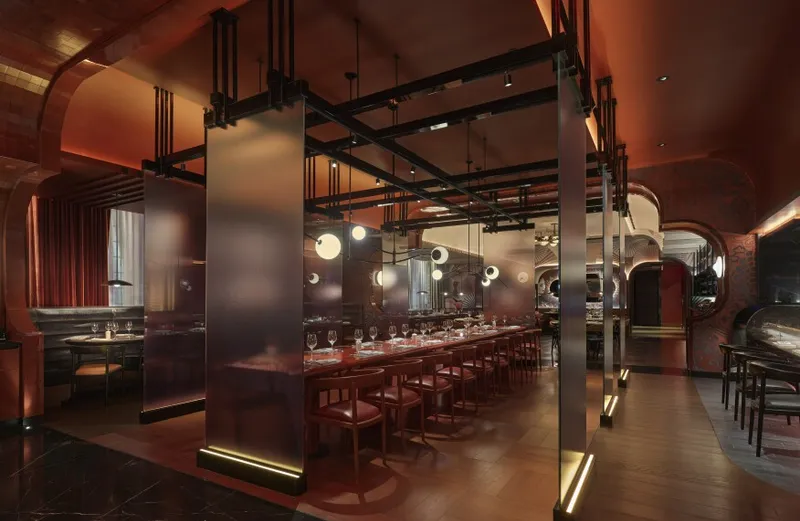
The main dining room features a communal table with ribbed glass screens that have a blue-to-red ombre effect, reminiscent of the translucence of shoji paper. These screens are hung from black powder-coated metal bracings inspired by Japanese joinery and help to define the area. The table itself is finished with a red lacquer-like finish and is illuminated by a custom chandelier with a fluid, wave-like form reminiscent of Sumi-e ink. Overall, the combination of modern materials and traditional Japanese influences creates a unique and visually striking space.
 Nikolas Koeing
Anchor spaces with key furniture or focal wallcoverings.
The north end of the dining room features Hollywood banquettes, which serve as the centrepiece of the space. The sushi bar's back wall features a custom wallcovering by Toronto-based Moss & Lam Studio, showcasing a kabuki theatre performer. The glass screen is etched on one side and has a reflective interior, adding to the intimate atmosphere of the restaurant.
 Nikolas Koeing
Use the form to define interior space.
The indoor dining room on the side of the restaurant is designed for small to medium-sized groups. The walls are painted a cosy cream colour and the room is adorned with linen curtains on either side, creating a spacious and open atmosphere. The room features tables that can seat two, four, six, and eight people, as well as a robata grill. The arch at the end of the room is divided into smaller arches, creating several private dining booths. Hidden linear lights enhance the arches and give the dining room a warm and inviting ambience.
 Nikolas Koeing
Create pockets of privacy.
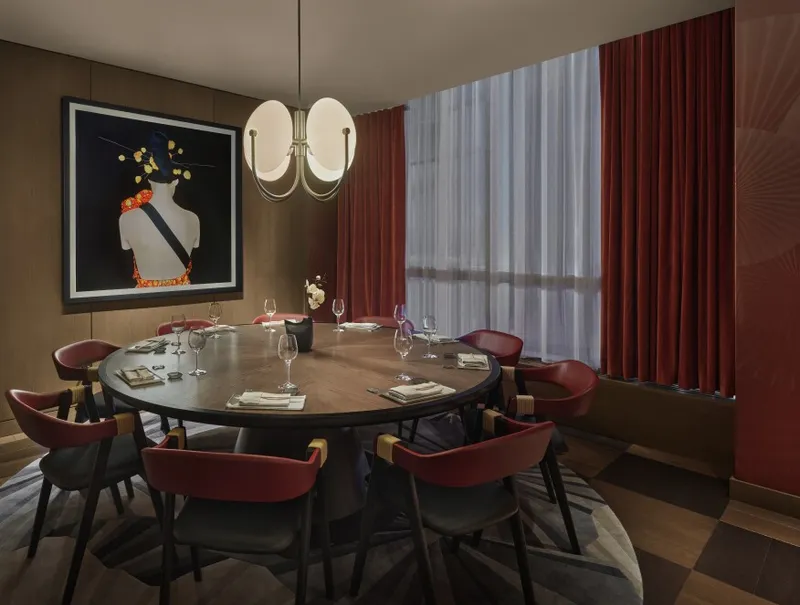
The private dining room is a small, intimate space that accommodates only 10 people. It is located between the main dining area and the terrace. The main attraction of the room is a photograph by Erik Madigan Heck called "Without a Face 13." The room also features a checkerboard wood floor, wood panelling, and a red, fan-patterned wallcovering which give the space a cosy atmosphere.
References (2)

Popular Articles
Popular articles from the community


Cloaked Colonization: A Mobile Underwater Habitat That Moves Like a Fish
Micah Abaya's shortlisted EHC Pacific entry reimagines ocean settlement as a dispersed network of self-sustaining architectural organisms.
Tsunami Convergenics: Turning Catastrophic Ocean Forces into Underwater Housing Infrastructure
A speculative underwater settlement off the coast of Onagawa, Japan, treats tsunamis and typhoons as energy sources rather than threats.
Opera by the Sea Estonia: Three Shells Dissolving Architecture into Tallinn's Coastline
A winning opera house proposal replaces monumental form with interconnected shells that blur the boundary between building, park and Baltic Sea.
Temporary Home for Dogs: A Reversed Zoo Rethinks Animal Shelter Architecture
In Bucharest, a sinuous corridor and freed landscape flip the logic of containment, designing a shelter that works to make itself unnecessary.

Similar Reads
You might also enjoy these articles
116 Rokeby Building, Collingwood
Sustainable Collingwood office building featuring double-skin façade, natural ventilation, rooftop amenities, and carbon-neutral design focused on wellbeing and longevity.
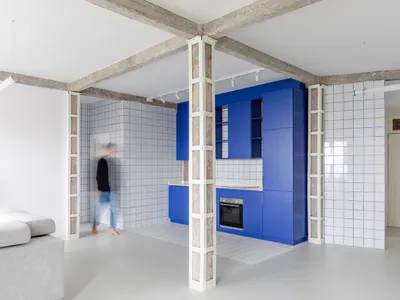
Contemporary Apartment Renovation in Spain: RV House by BIAN Opens Up to the Sea
A minimalist 1930s apartment in Santander is transformed into a flexible, sea-facing home through contemporary Spanish renovation.
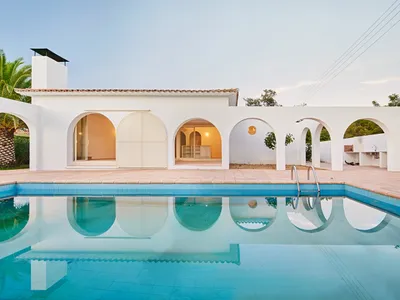
3 Marías House: A Contemporary Mediterranean Courtyard Retreat by Bajet Giramé + Burckhardt
Mediterranean courtyard home blending traditional architecture with modern design, terracotta flooring, flexible interiors, sustainable climate strategies, and garden integration.
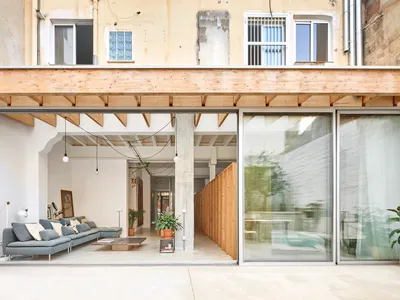
NZ10 Apartment by auba studio: Adaptive Reuse in Palma de Mallorca
Adaptive reuse apartment transforms bakery into light-filled home with patios, privacy layers, and wood interiors enhancing urban living experience.

Explore Interior Design Competitions
Discover active competitions in this discipline


Challenge to design luxury tourism on rails

Challenge to reimagine the Iron Throne

Photograph architecture without architects

VR headsets Storefront design competition
Comments (0)
Please login or sign up to add comments
No comments yet. Be the first to comment!