

Risk House 34 by RUUM ARQUITECTOS
A contemporary urban residence in Querétaro blending concrete and wood to create a calm, light-filled refuge connected to nature.


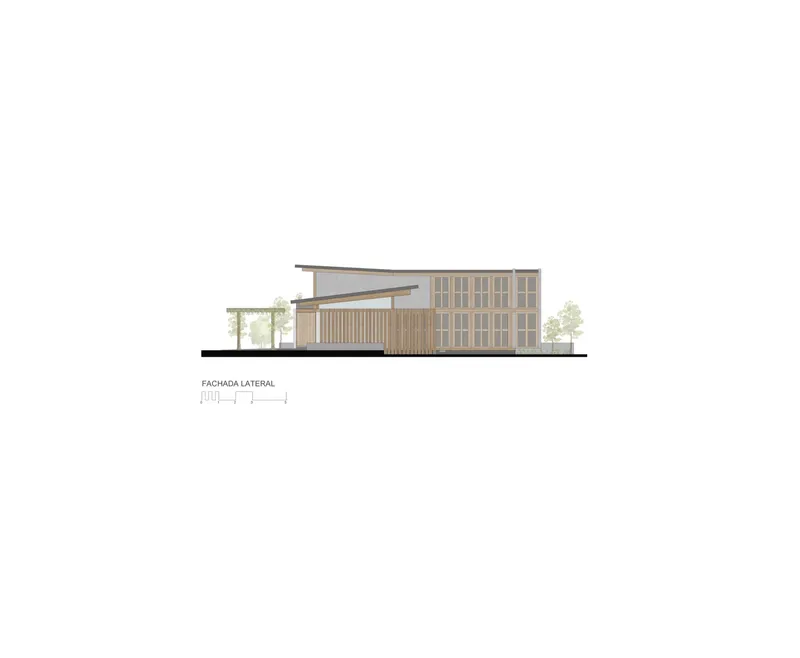
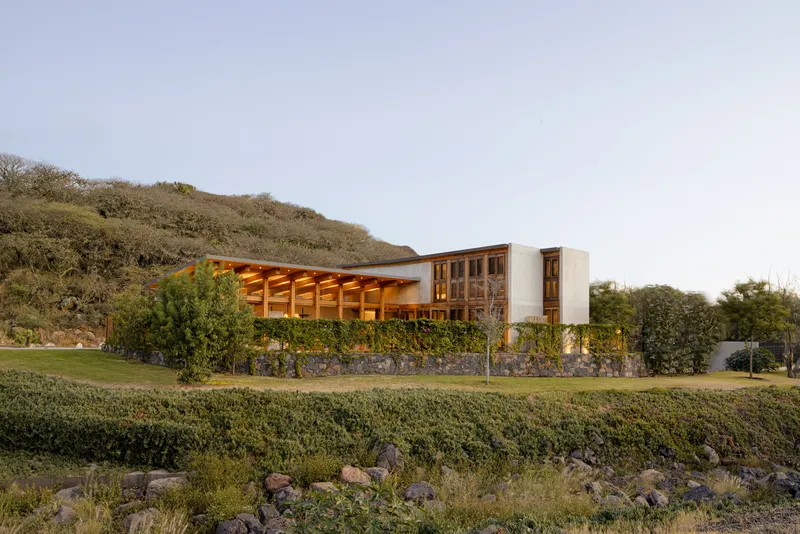
In the vibrant city of Querétaro, Mexico, Risk House 34 by RUUM ARQUITECTOS stands as a refined example of contemporary residential architecture that reconciles urban intensity with the quietude of a private retreat. Completed in 2024, the house occupies a 400 m² plot and unfolds across approximately 310 m² of living space, carefully composed to balance openness, privacy, and a deep connection to nature.
A Contemporary Urban Refuge Rooted in Material Warmth and Spatial Calm
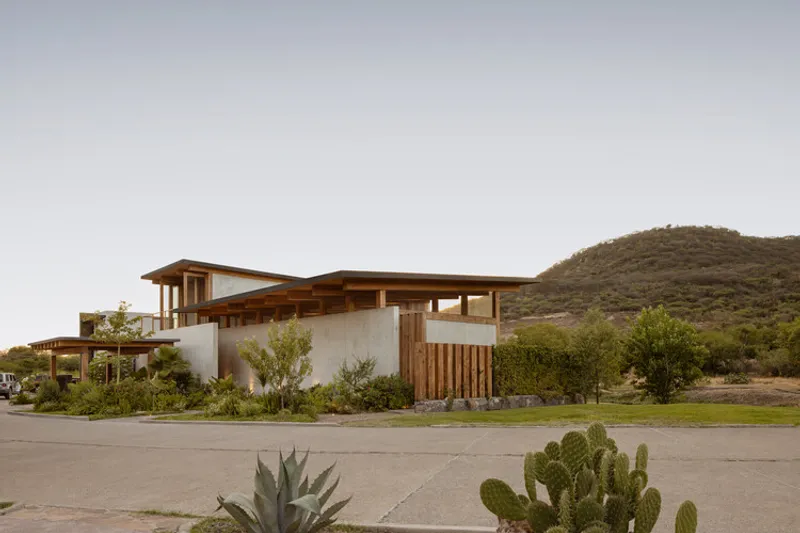
Rather than asserting itself as a statement object, Risk House 34 is conceived as a refuge within the city: a home where material honesty, light, and spatial continuity shape everyday life. Through the thoughtful use of concrete, wood, and landscaped voids, the project reinterprets modern domestic living while remaining grounded in local sensibilities.
Context: Living Between City and Nature
Querétaro is a city marked by strong contrasts: historic architecture and rapid urban growth, dense neighborhoods and pockets of greenery. Risk House 34 is situated within this dynamic context, on a lot that benefits from both urban proximity and access to green surroundings.
Rather than turning inward completely or fully exposing itself to the street, the house mediates between these conditions. Its architecture creates a buffered environment, allowing residents to remain connected to the city while enjoying a sense of calm and seclusion. Gardens and outdoor spaces are not treated as residual areas, but as integral components of the architectural experience, shaping views, light, and circulation.
Design Philosophy: Architecture as a Natural Refuge
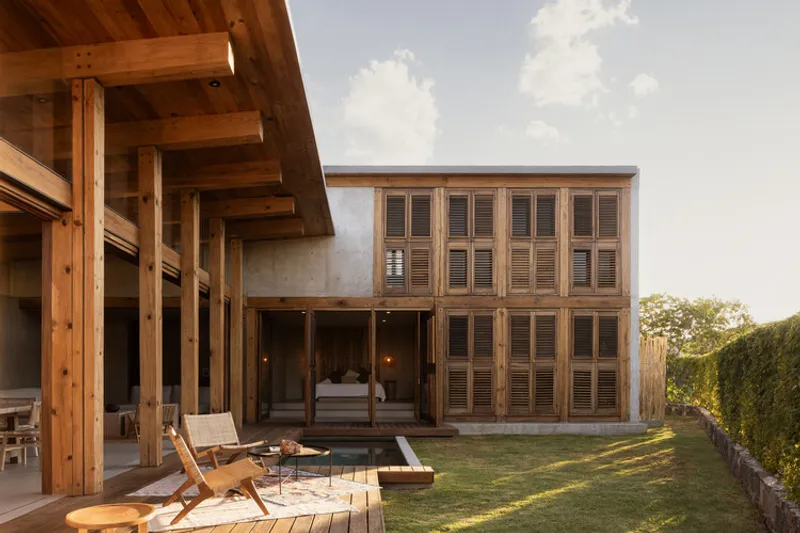
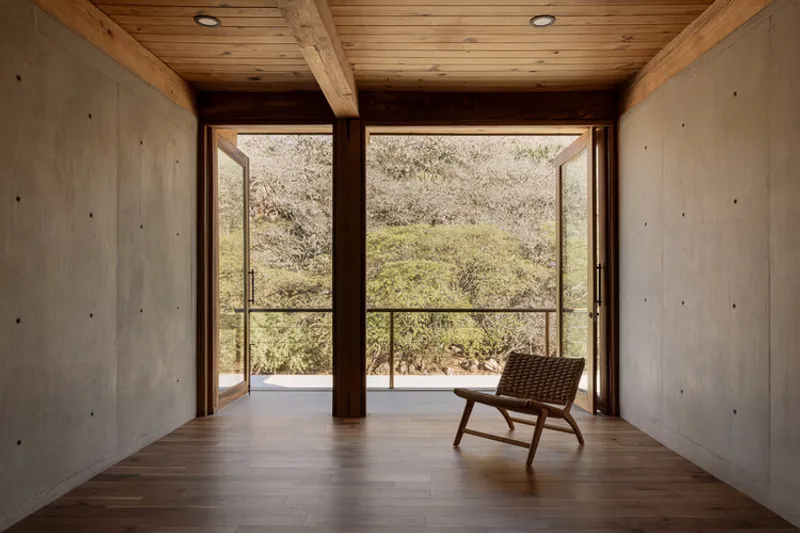
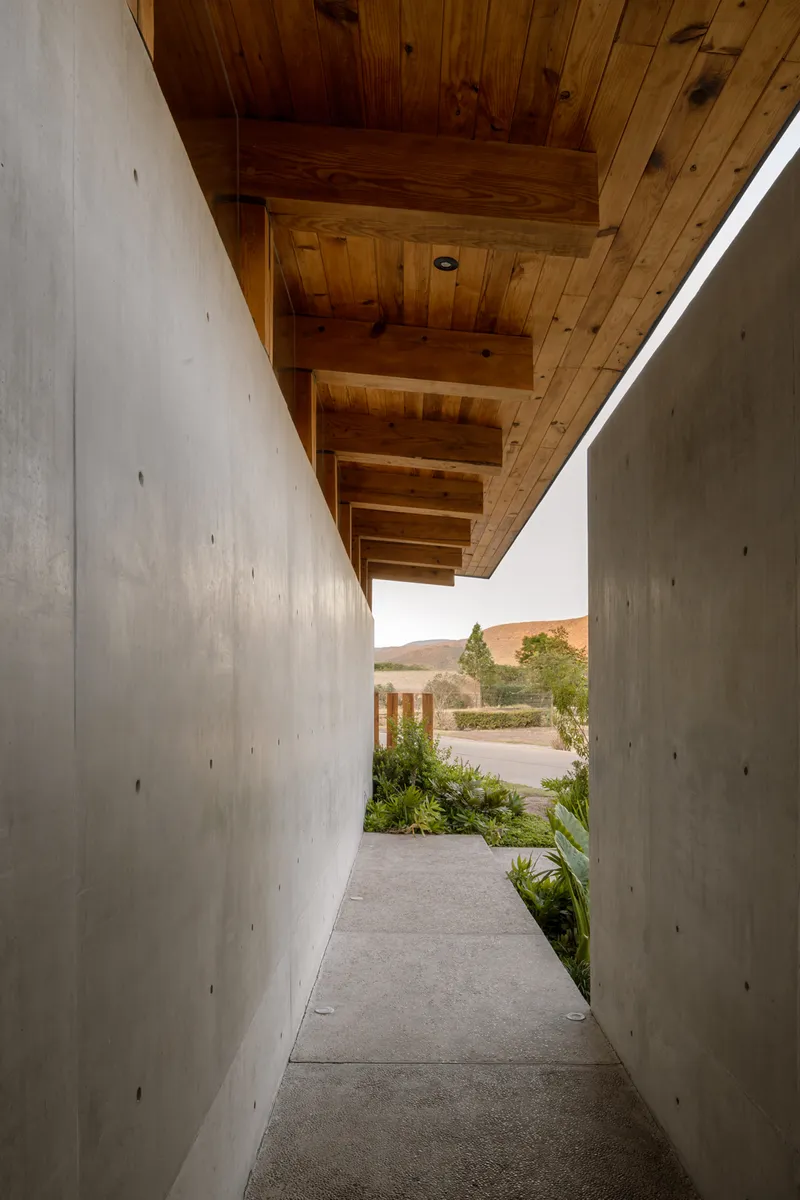
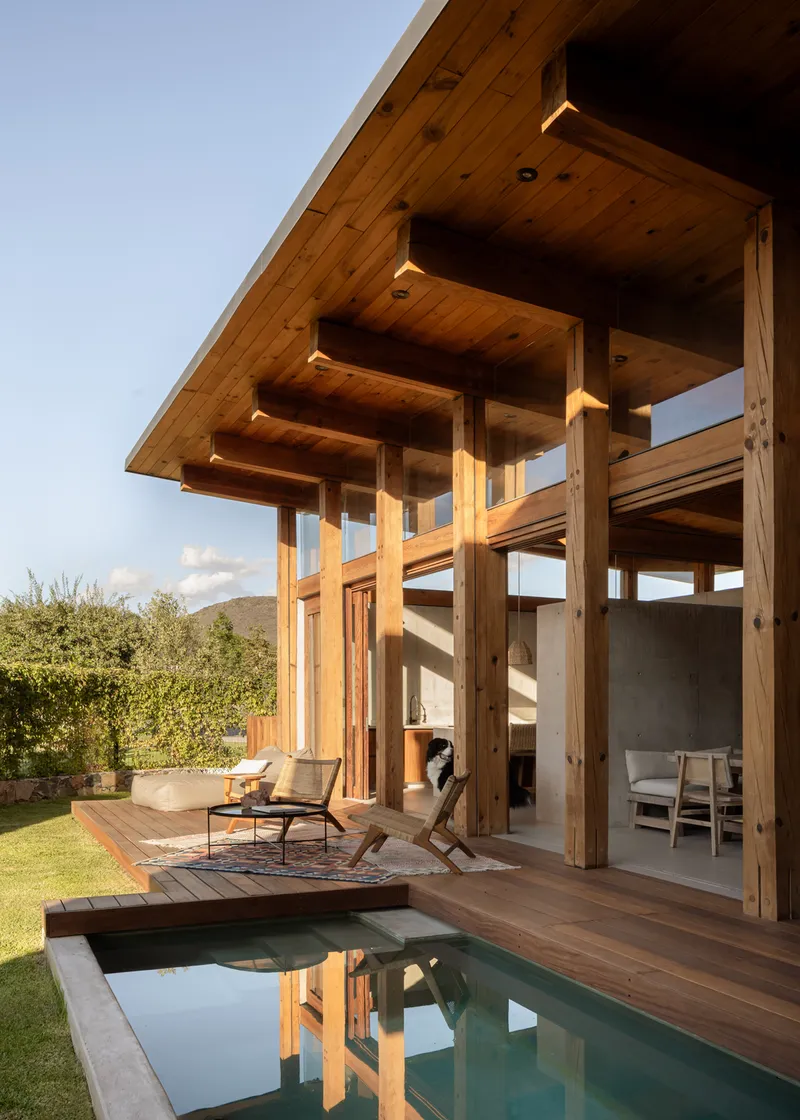
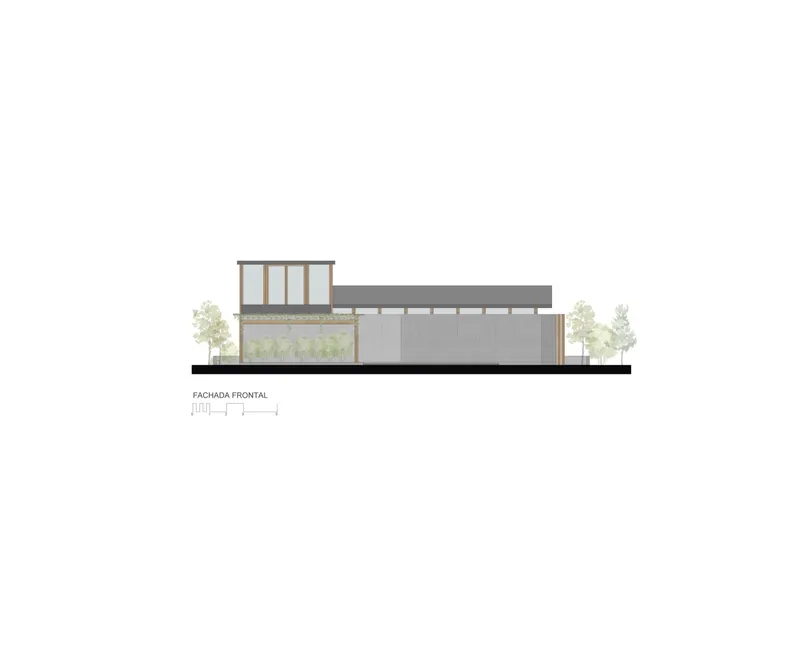
At the core of RUUM ARQUITECTOS’ approach is the idea of architecture as a natural refuge. Risk House 34 is designed to feel protective yet open, solid yet warm. This duality is expressed through its primary materials: robust concrete walls provide structural clarity and permanence, while a wooden structural system introduces warmth, texture, and human scale.
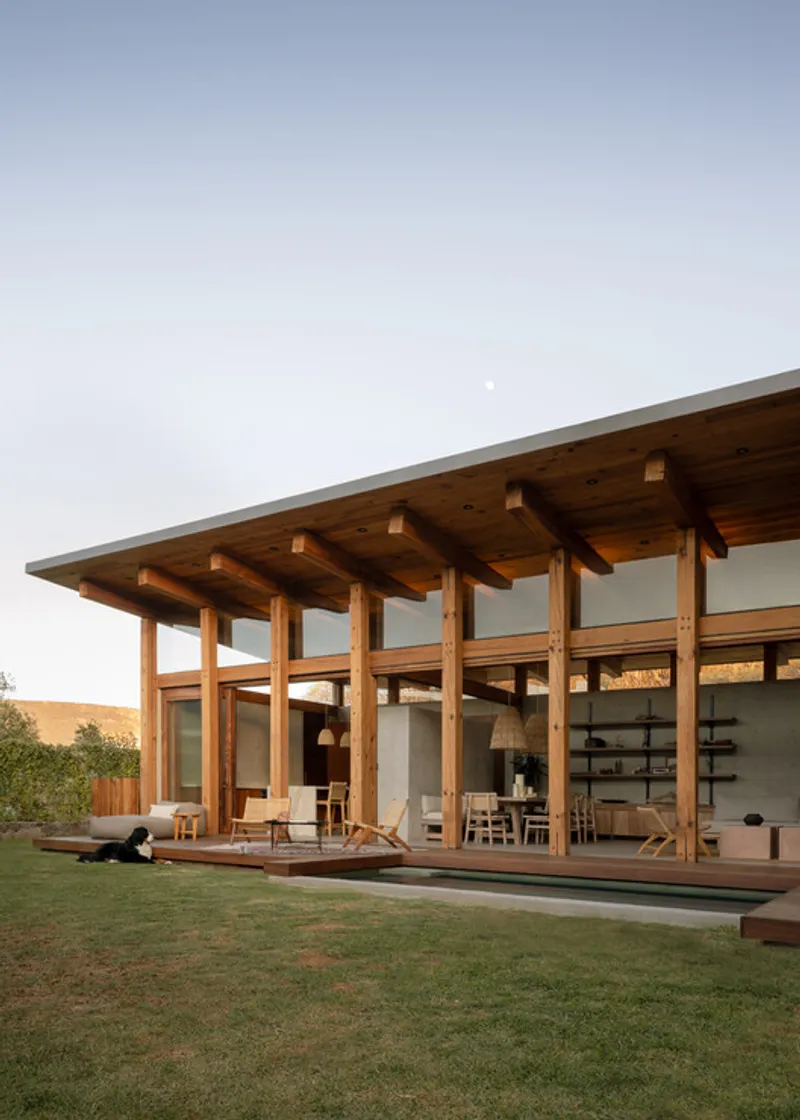

The material palette is deliberately restrained, allowing space, light, and proportion to take precedence. Rather than relying on decorative gestures, the house achieves richness through material authenticity and careful detailing. Each element contributes to a coherent whole, where aesthetics and functionality are inseparable.
Spatial Organization and Flow
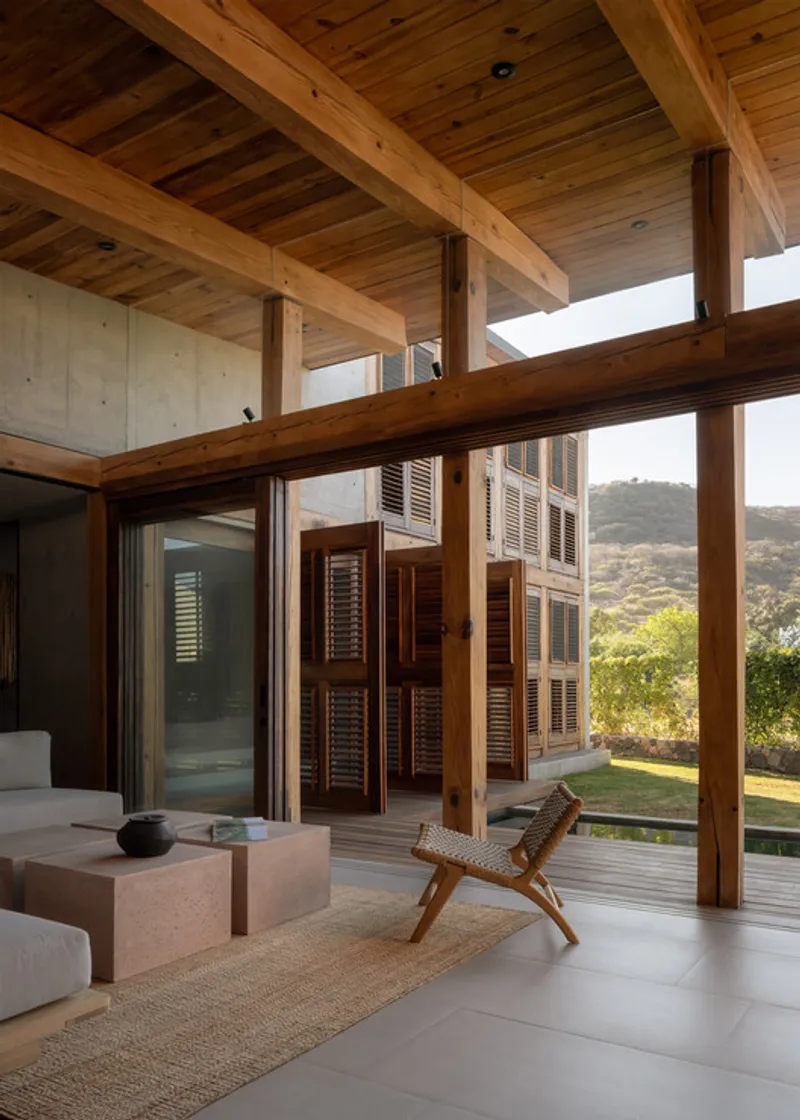
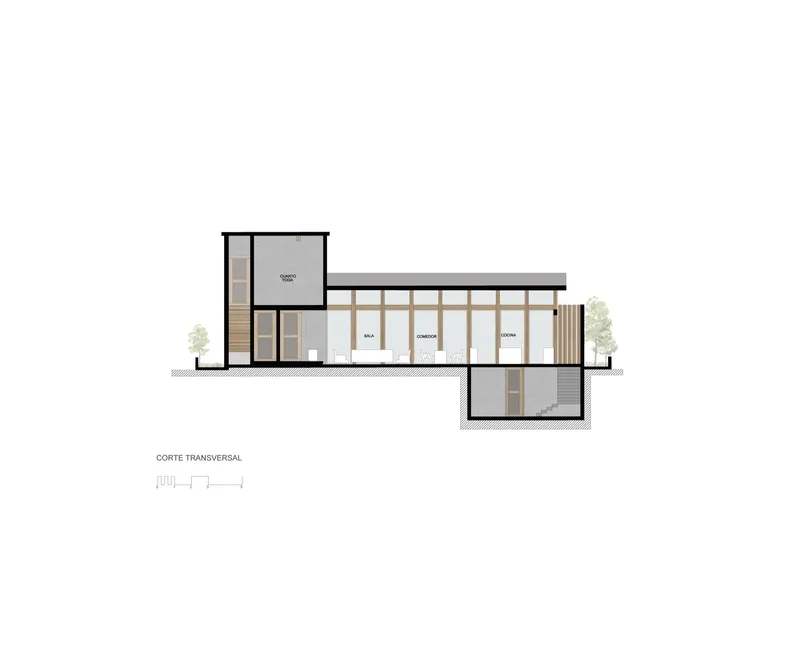
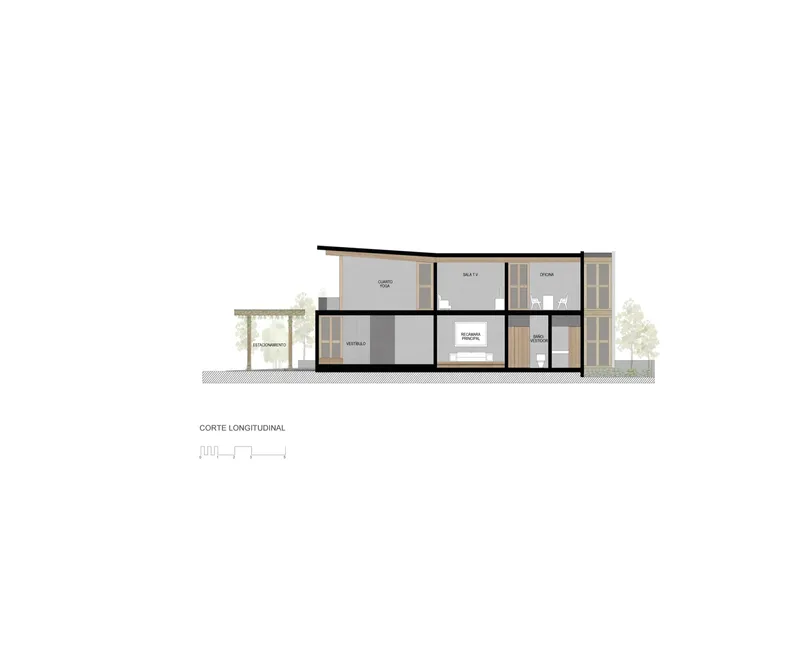
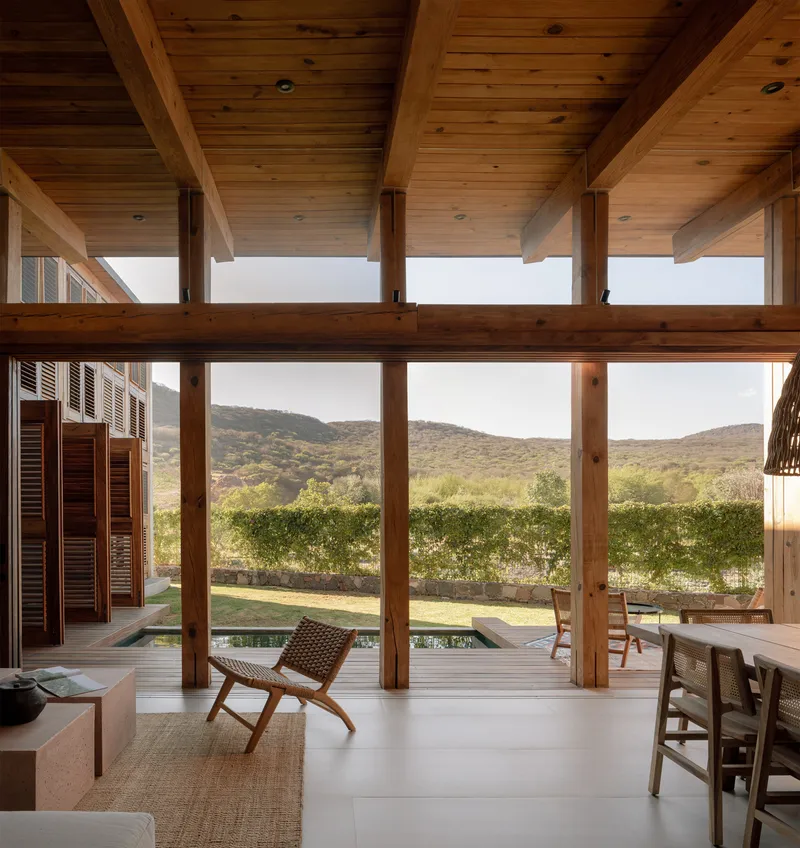
The house is organized to support both communal life and private retreat. Social areas are generously proportioned and arranged to encourage fluid movement between interior and exterior spaces. Floor-to-ceiling windows dissolve visual boundaries, allowing gardens and outdoor terraces to become extensions of the living spaces.
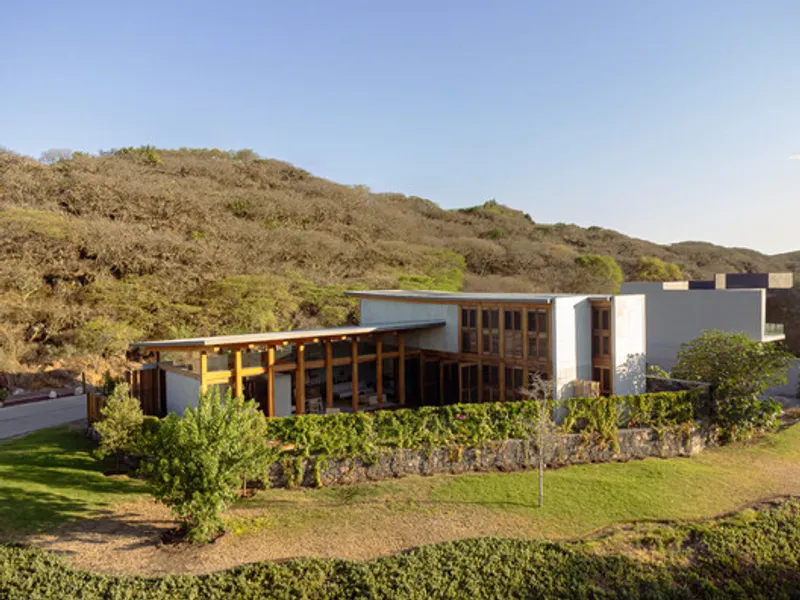
This spatial openness does not compromise comfort or intimacy. The layout is carefully calibrated so that each area maintains a sense of enclosure and purpose. Circulation flows naturally, guided by structural rhythms of beams and columns that subtly define zones without the need for excessive partitions.
Private areas are positioned to ensure tranquility, offering moments of retreat away from the more active social spaces. This balance allows the house to accommodate different rhythms of daily life, from quiet mornings to lively gatherings.
Light as a Generative Element
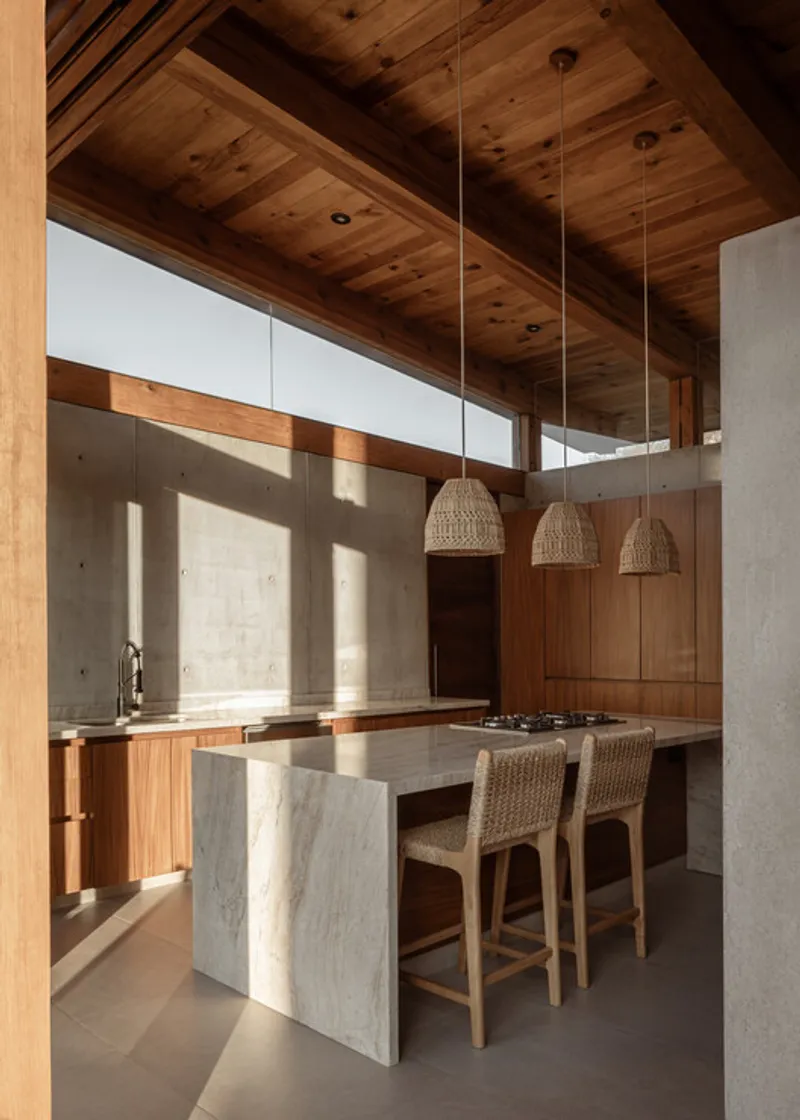
Natural light plays a central role in shaping the atmosphere of Risk House 34. Large openings and strategically placed windows allow sunlight to penetrate deep into the interior, animating surfaces throughout the day. Concrete walls absorb and soften light, while wooden elements reflect warmth and texture, creating a dynamic interplay of shadows and tones.
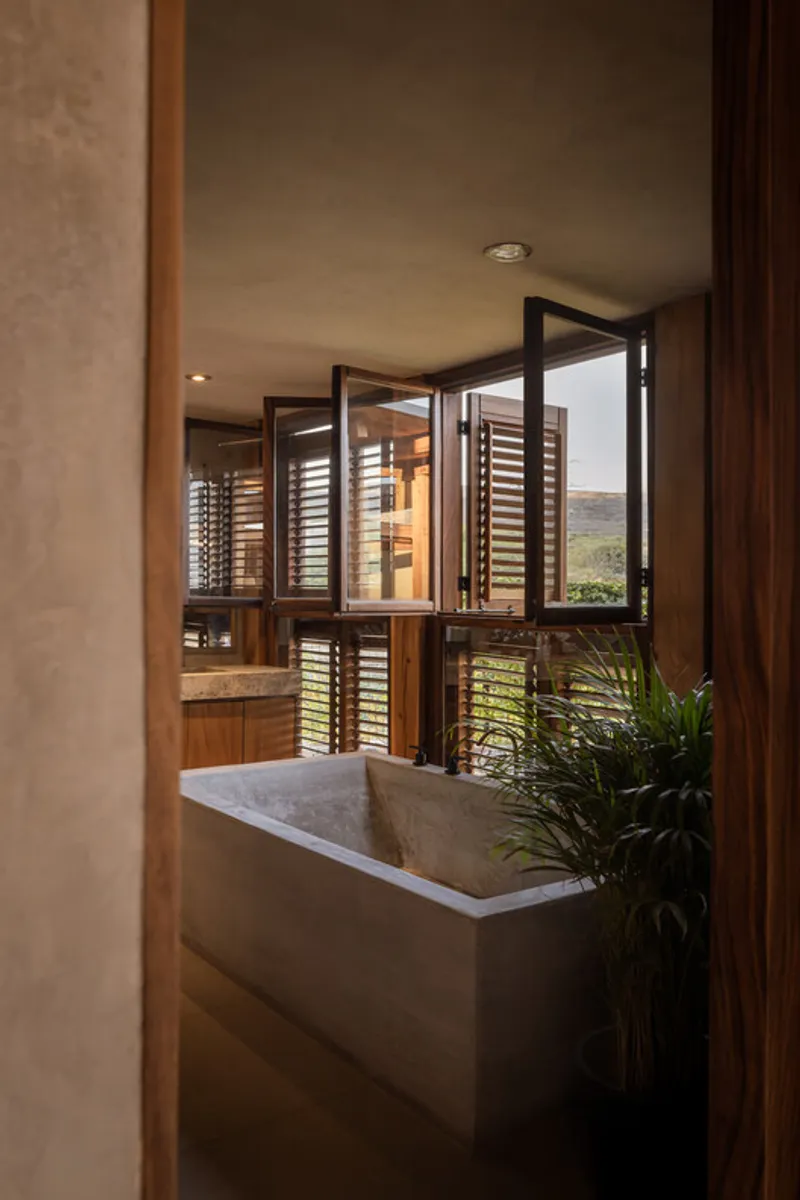
The changing quality of daylight reinforces the house’s connection to time and nature. Mornings feel calm and reflective, while afternoons become brighter and more expansive. At every moment, light enhances the material character of the architecture rather than overpowering it.
Interior Atmosphere: Warmth, Structure, and Calm
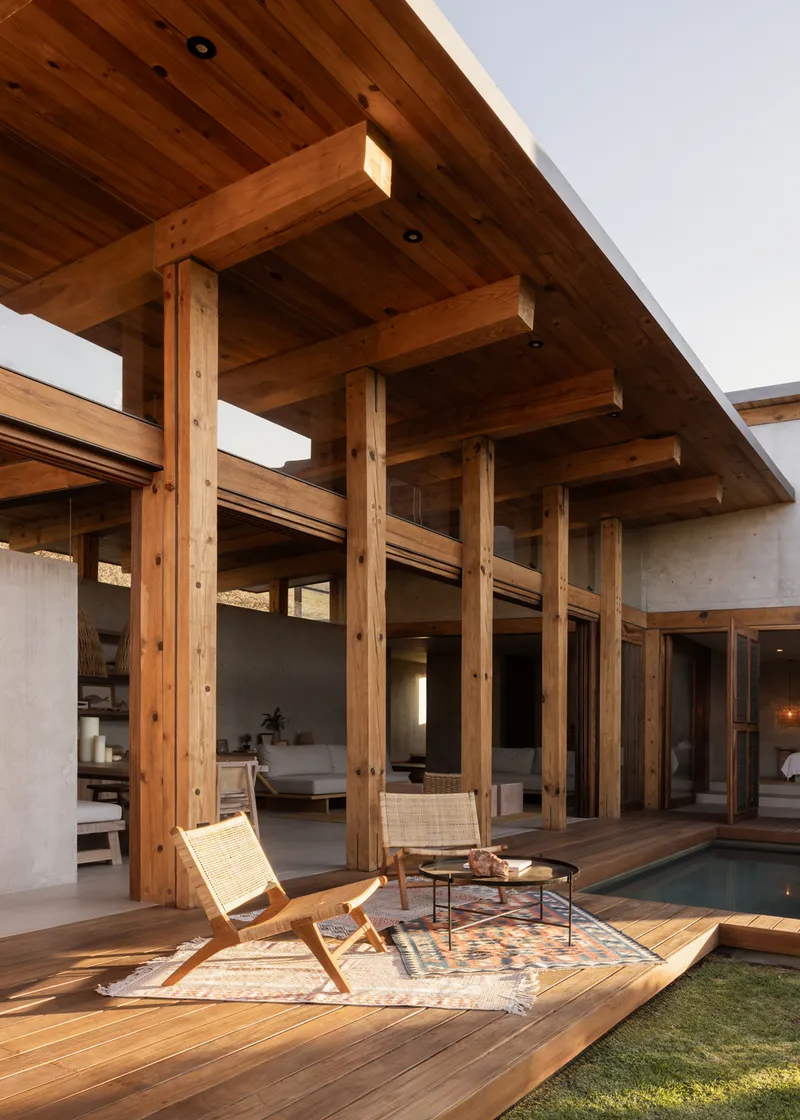
Inside, the house reveals an environment defined by structural clarity and material continuity. Exposed beams and columns articulate the architectural language, giving rhythm and scale to the interiors. Wood is used extensively, not as a decorative layer, but as a fundamental component of the structure, establishing a tactile and inviting atmosphere.
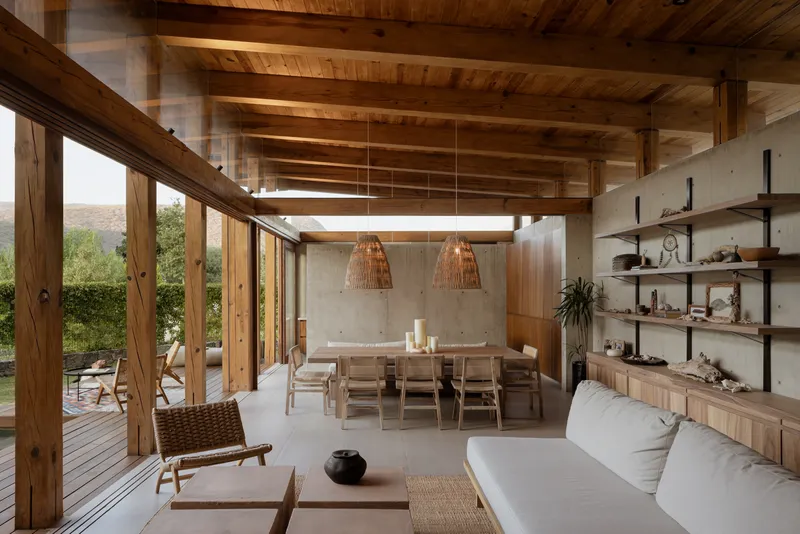

The interiors are intentionally understated. Furniture, finishes, and built-in elements align with the architectural logic, reinforcing a sense of cohesion. This restraint allows occupants to inhabit the space freely, without visual noise or distraction.
Despite the robust use of concrete, the interiors never feel cold. The dialogue between concrete and wood creates a balance between solidity and comfort, echoing the project’s broader ambition to fuse urban sophistication with natural serenity.
Gardens and Outdoor Living
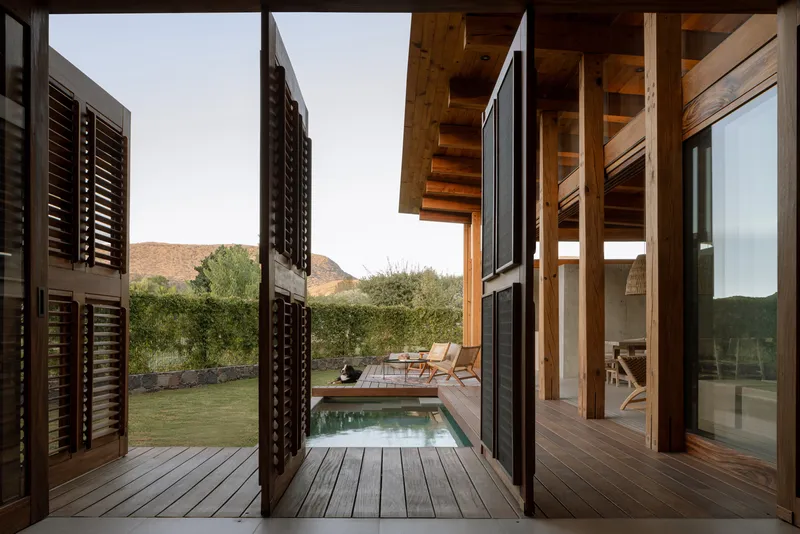
Outdoor spaces are essential to the experience of Risk House 34. Gardens are carefully designed to complement the architecture, framing views and introducing greenery into daily life. Rather than serving as ornamental backdrops, these spaces actively shape how the house is perceived and used.
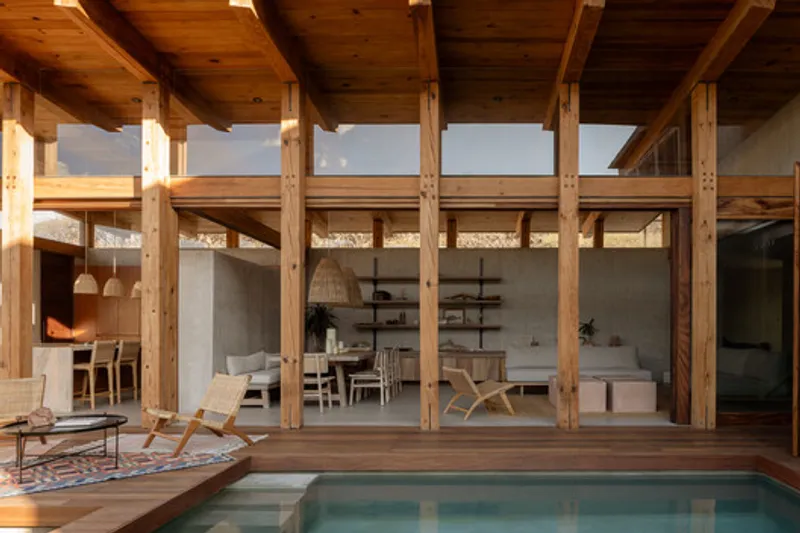
The seamless transition between interior and exterior encourages a lifestyle attuned to climate and environment. Sliding doors and large openings invite cross-ventilation and extend living spaces outward, blurring the distinction between inside and outside. Whether enjoyed during quiet mornings or social afternoons, the outdoor areas reinforce the house’s identity as a peaceful urban retreat.
A House Defined by Balance
Risk House 34 does not seek to redefine residential architecture through radical form. Instead, its strength lies in balance: between city and nature, solidity and openness, structure and warmth. RUUM ARQUITECTOS demonstrate that contemporary living can be both sophisticated and grounded, expressive yet restrained.
By focusing on essential architectural principles: material honesty, spatial clarity, and human comfort, the project achieves a timeless quality. It responds to its context without imitation, offering a way of living that feels deeply connected to place while remaining adaptable to modern urban life.

All the Photographs are works of Ariadna Polo


Popular Articles
Popular articles from the community


longwave studio Reorganizes a 112 m² Tainan Apartment Around the Daily Routines of a Family and Two Cats
In Tainan, Taiwan, birch plywood, rust-red furniture and a freestanding plaster wall link arrival, storage, work and family life in one apartment.

Cube Design Draws an Ecological Corridor Between Two Shenzhen Hills with the Nankai Building
Beside Shenzhen's container docks, the Nankai Building pairs stacked balconies with a climbing green screen to connect two hillsides across its height.

LT2A and OPEN Architectes Thread a Brick and Glass High School Through a Wooded Belgian Campus
In Braine-l'Alleud, a 3,000 m² wing for Collège Cardinal Mercier pairs pale brick with a glazed colonnade, deferring to a small chapel and a dense wood.

Jaramillo Van Sluys Arquitectura and Urbanismo Turn a Demolished Registry Lot in Quito into an Orchard Plaza
In Quito's Centro Histórico, a 2,800 m² plaza exposes the San Agustín convent wall and redraws its lost Augustinian orchard in volcanic stone.

Similar Reads
You might also enjoy these articles


Hodi-Mandai Geram
Project Function: Preservation and revitalization of the Intangible heritage and socio-spatial identity of the Hodi by Housing, Cultural Memory Center, Sacred Grove, landscape, local tourism economy


Olio Towers: A Mid-Rise for Performers That Fuses Housing, Rehearsal, and Stage
Located blocks from Houston's Theater District, this modular tower stacks living units around a central performance atrium.

Oasis: Modular Green Housing Carved into Dhaka's Urban Fabric
A shortlisted Plugin Housing entry reclaims unauthorized settlements in Dhaka with stepped concrete volumes, green roofs, and ventilation-driven design.

Black Hole: A Floating Megastructure for the Post-Physical Era
Emiliano Mazzarotto envisions a spherical, self-scaling arena where e-sports, digital hotels, and holographic stadiums replace traditional public space.

Explore Housing Competitions
Discover active competitions in this discipline

Challenge to reimagine the Iron Throne

Photograph architecture without architects

Illustrate the lost glory of Angkor Wat - Render Challenge

Design challenge to reuse E-waste
Comments (0)
Please login or sign up to add comments
No comments yet. Be the first to comment!