
ROOTSTUDIO Rebuilds a Juchitán Library from Earthquake Rubble and Ancestral Technique
An adobe library in Oaxaca's Isthmus of Tehuantepec rises again using heritage roof systems, reclaimed wood, and salvaged earth.


When the 2017 earthquake struck Juchitán de Zaragoza in Oaxaca's Isthmus of Tehuantepec, it shuttered roughly 90 percent of the town's cultural spaces. The Gabriel López Chiñas Library was among the casualties. ROOTSTUDIO, led by Joao Boto Caeiro, Moisés Cruz Jerónimo, and Iván Diaz Arellano, took on the reconstruction not as an exercise in novelty but as an act of recovery: recovering the building's adobe walls, recovering traditional construction methods catalogued as heritage by Mexico's National Institute of Anthropology and History (INAH), and recovering wood from the earthquake debris itself to make new doors and windows.
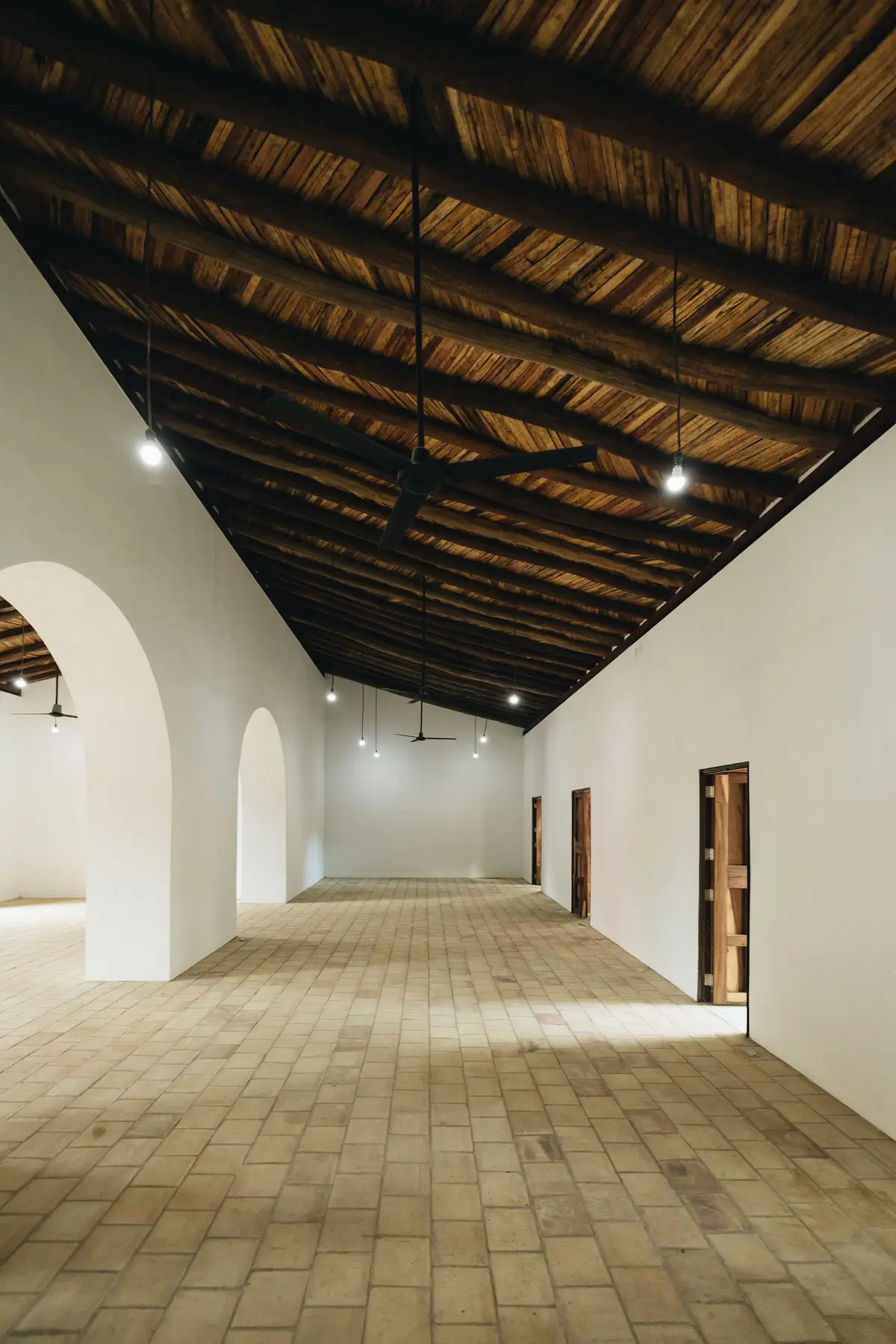
What makes the project genuinely compelling is its refusal to treat restoration and sustainability as separate agendas. The team stripped away recent additions that had been weakened beyond repair, consolidated the original vernacular layout, and rebuilt using endemic materials: ganacaxtle tropical wood, white lime paint, mud brick, and a traditional roof system of tropical wood logs and sticks known as morillos y biliguanas. The result is a 11,485 square foot civic building that reads as if it has always been there, because structurally and materially, most of it has.
A Street Facade Built from Its Own Foundations
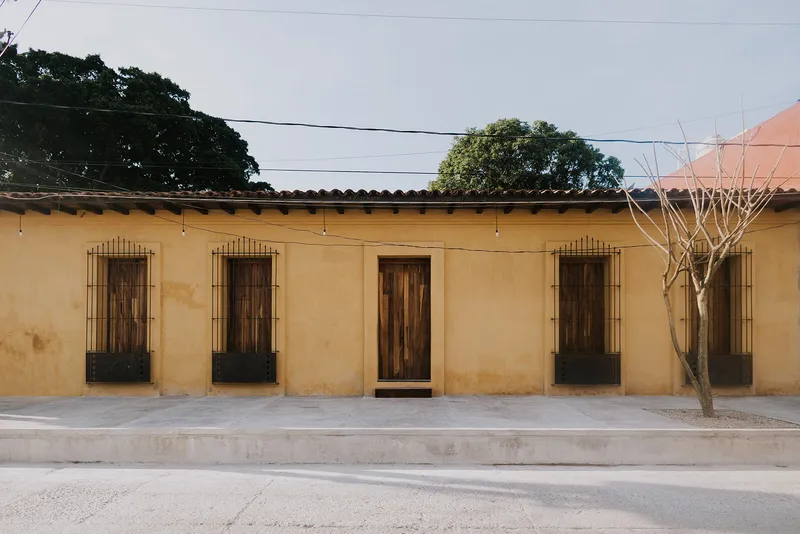
The ochre yellow of the street facade is not a paint color chosen from a swatch book. It is the earth excavated from the building's own foundations, applied as a finish to the stucco wall. Four ganacaxtle timber doors sit beneath a clay tile roof, presenting a calm, horizontal face to the street that could belong to any century. The detail is characteristically ROOTSTUDIO: the material logic of the building is also its aesthetic logic, and both are rooted in the specific ground beneath it.
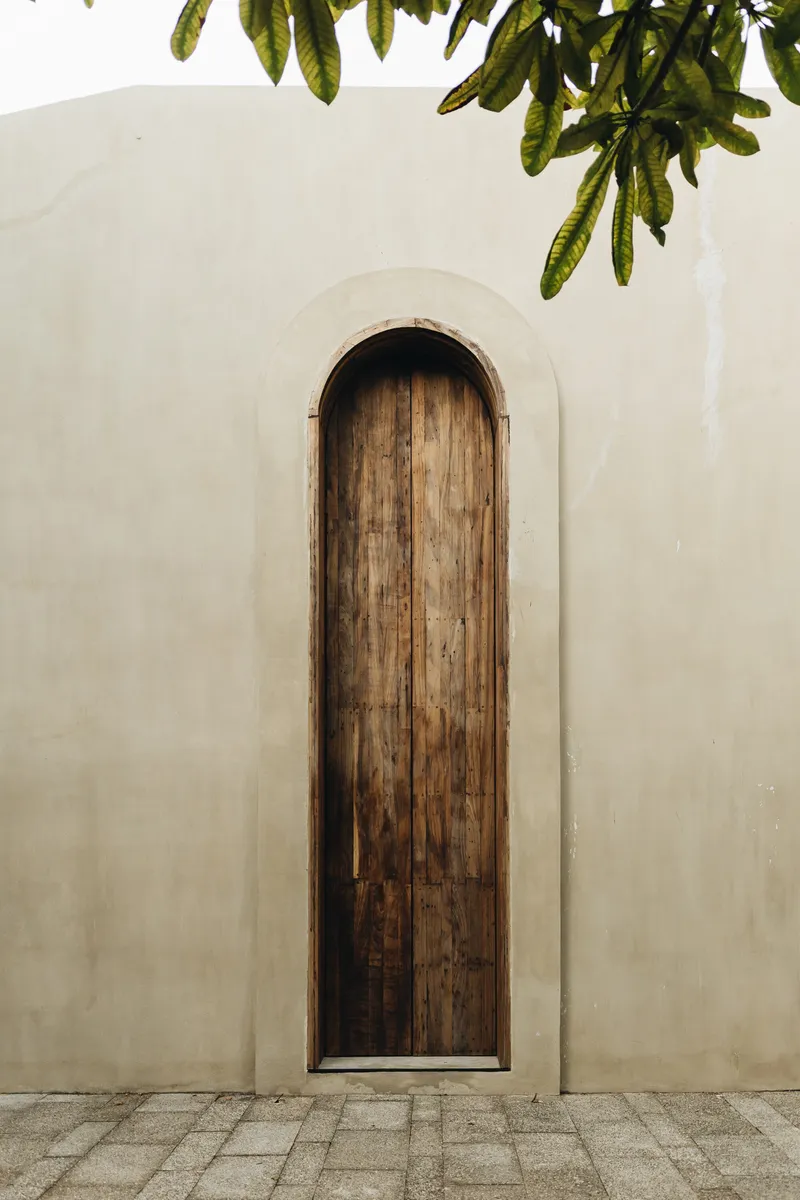
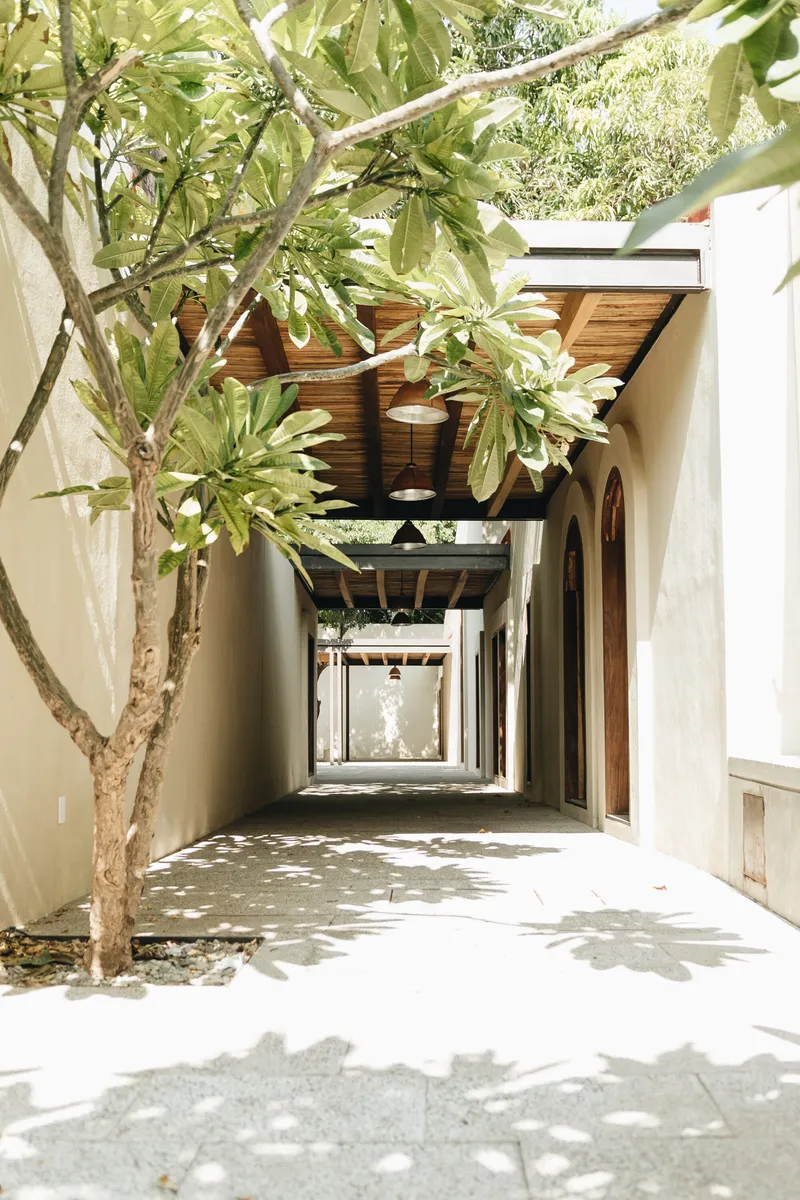
Side passages between the whitewashed walls reveal timber soffits and planted frangipani, creating shaded thresholds where the building negotiates between public street and interior courtyard. Arched timber doors set into plastered walls under overhanging foliage mark secondary entrances. Nothing announces itself. Everything invites.
The Corridor as Civic Spine
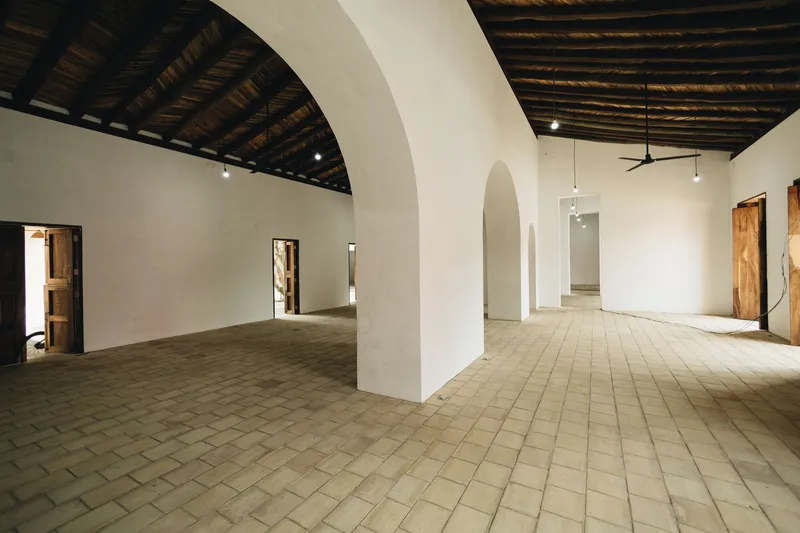
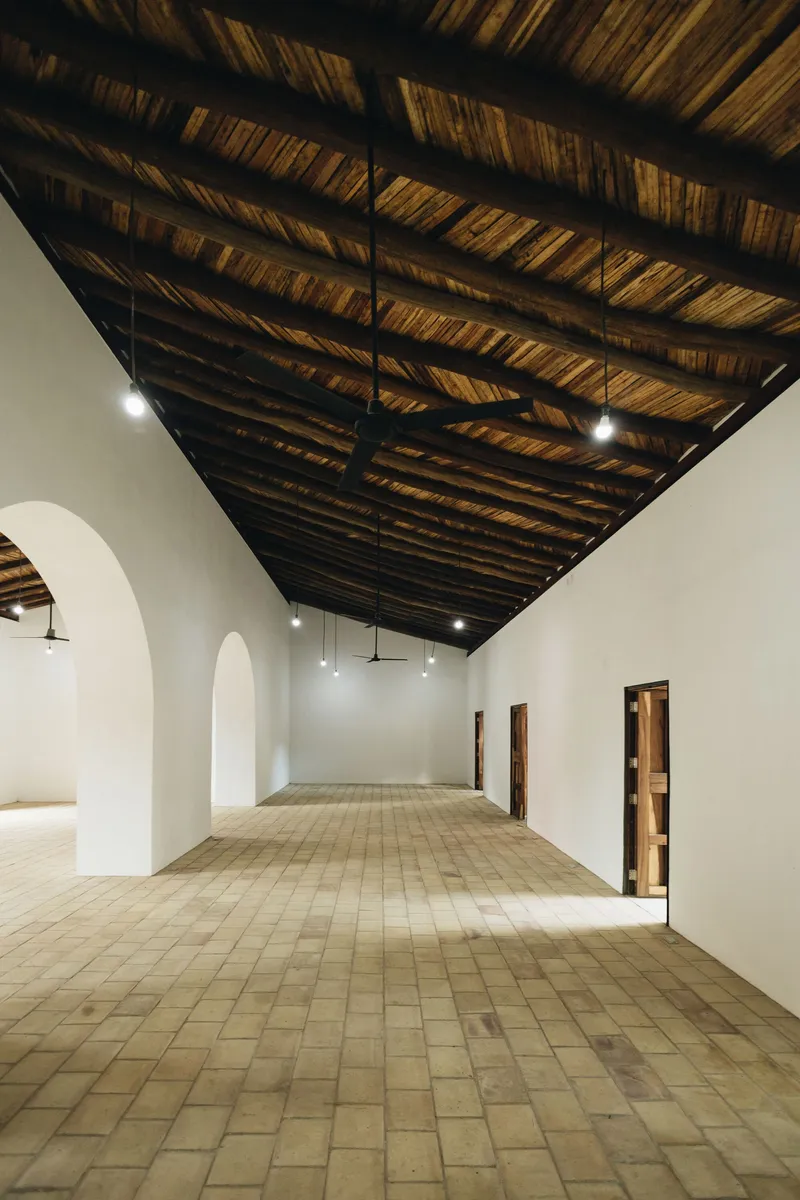
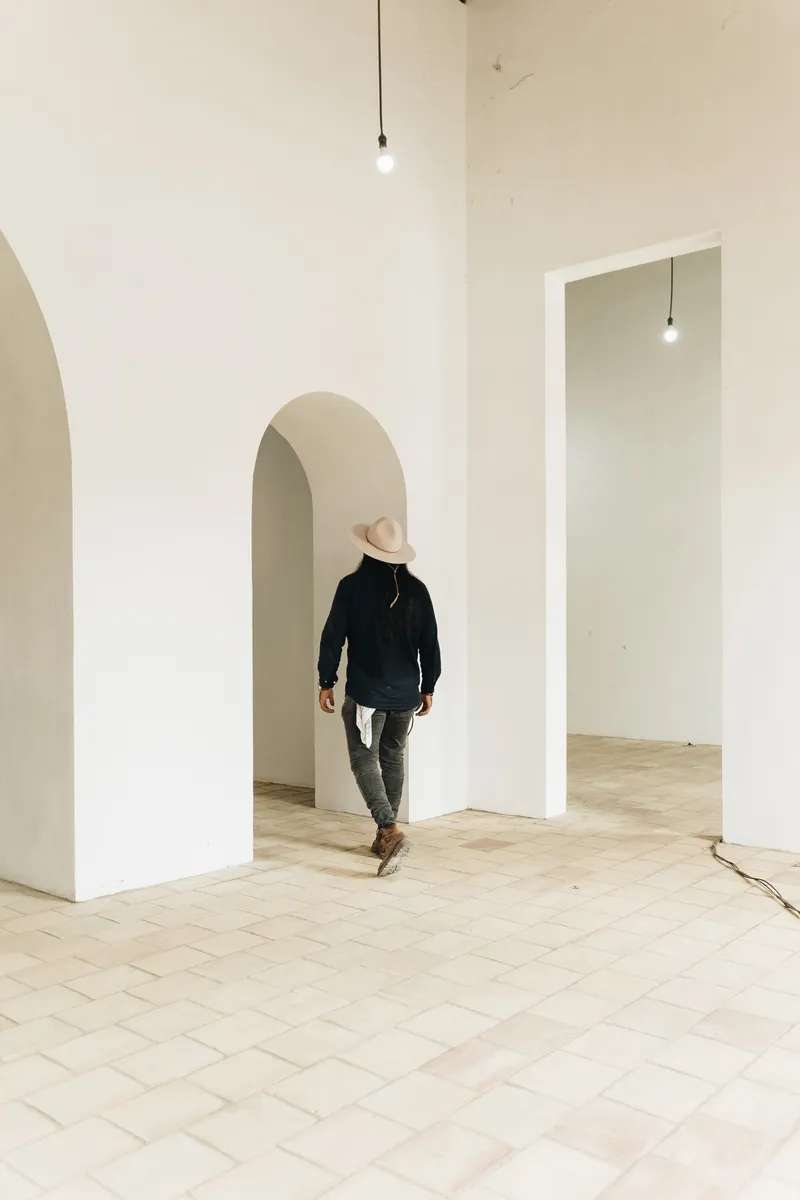
A wide corridor runs from the front of the building to the back, connecting the library and reading rooms at the street side to the auditorium, audiovisual rooms, and administrative offices at the rear. This is the organizational move that holds the entire program together. White arched openings punctuate the walls on either side, and the woven bamboo ceiling overhead filters light into a warm, diffused glow. Pendant bulbs hang at intervals, providing just enough artificial light to extend the building's usable hours without competing with the architecture.
The arches are load-bearing, not decorative. They work with the thick adobe walls to create a structural rhythm that also happens to frame views, modulate sound, and channel cross ventilation through aligned doors and windows. It is a reminder that in vernacular construction, ornament and performance were never really separate categories.
Arches, Enfilade, and the Deep Section
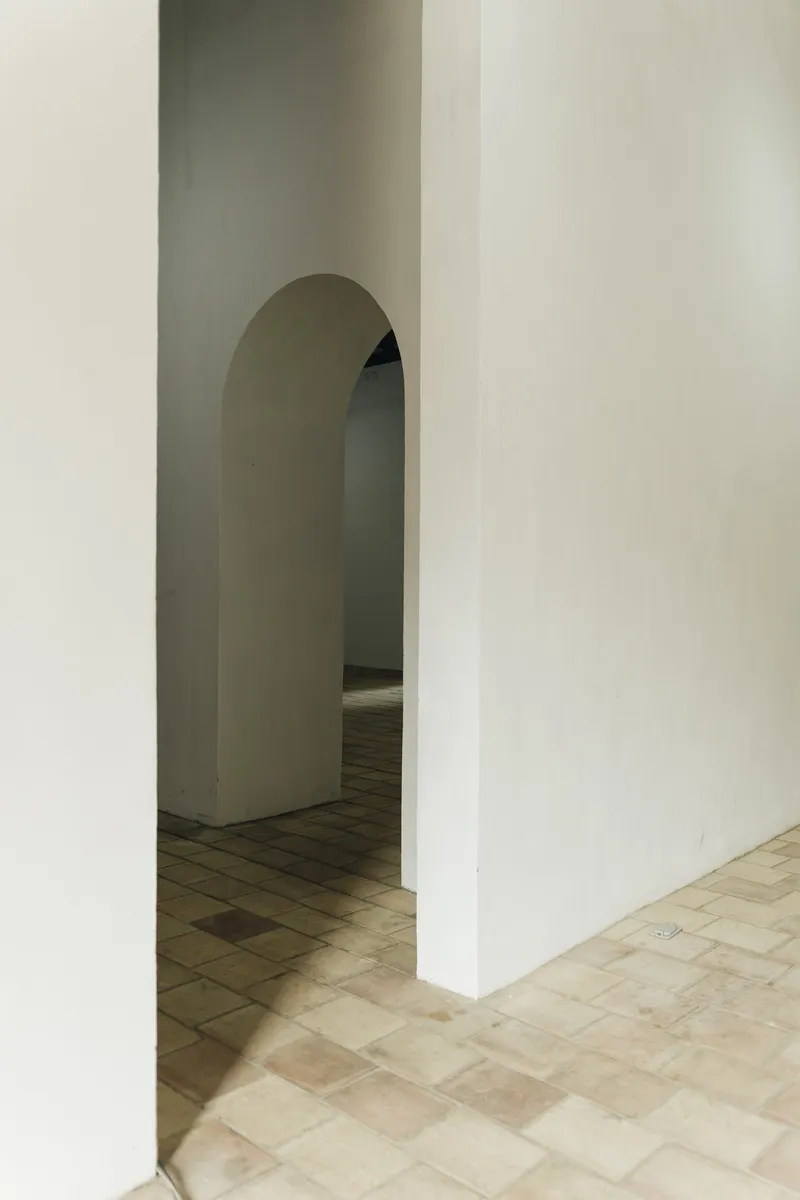
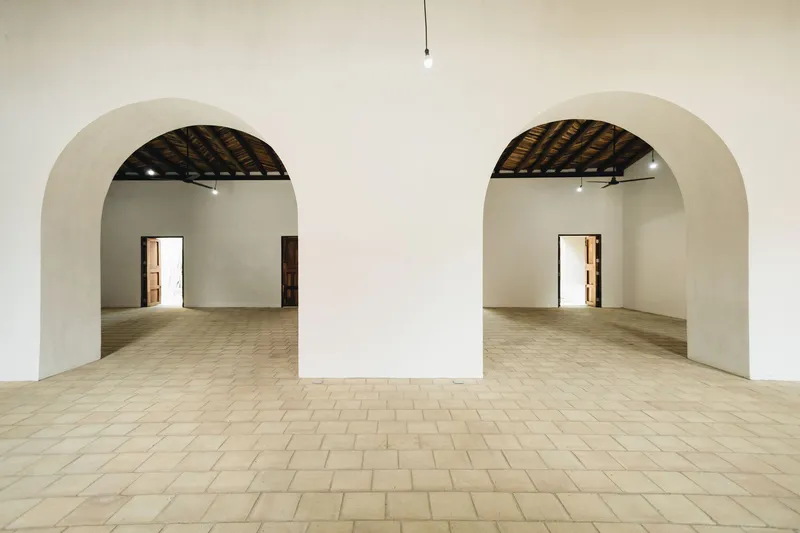
The sequence of arched doorways through white plastered walls creates a true enfilade, where each opening frames the next room and the room beyond that. Terracotta brick tile floors ground these spaces with warmth and acoustic softness, while the high ceilings keep the interior cool without mechanical intervention. The thick original walls function as thermal mass, absorbing heat during the day and releasing it slowly, a passive strategy that predates any LEED checklist by several hundred years.
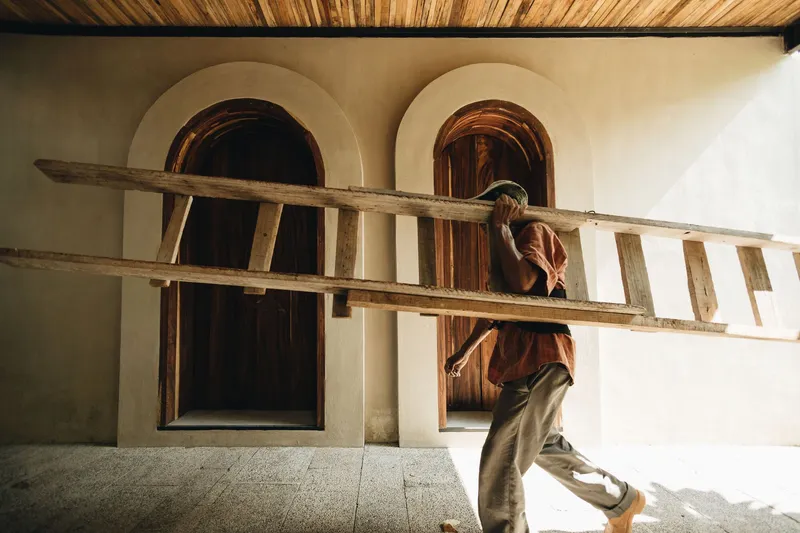
A figure carrying a timber ladder past the arched openings gives human scale to the proportions. These are generous rooms, tall enough to breathe but intimate enough to read in. The children's rooms and collection spaces at the front benefit from this same generosity, while the 100-person auditorium at the back uses polished concrete floors to differentiate its acoustic and programmatic identity.
Courtyards as Climate Machines
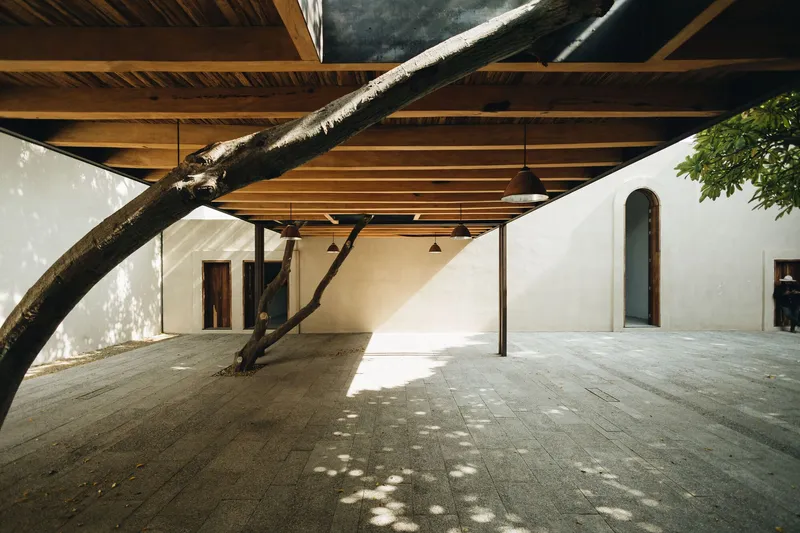
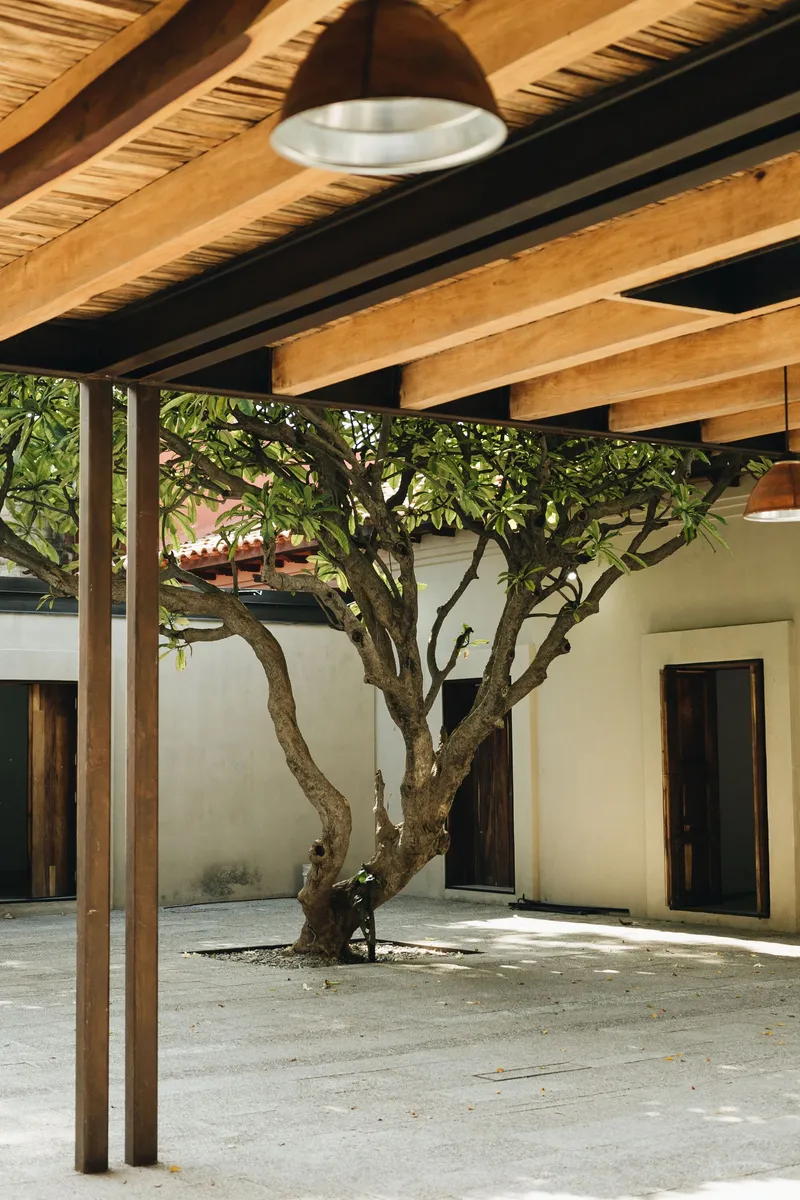
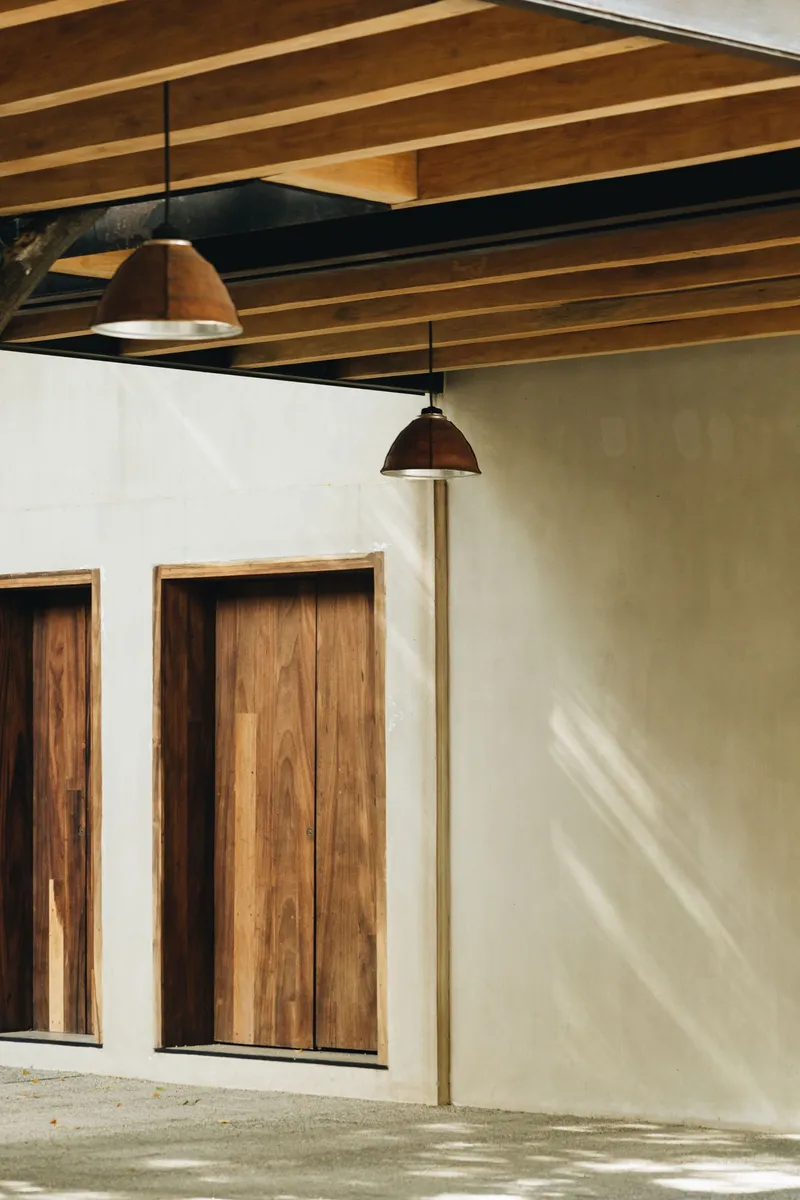
Two courtyards organize the section: a central one and a smaller one at the back. Both are covered by exposed timber beams that allow dappled sunlight through, and both incorporate trees growing directly through gravel floors. These are not decorative garden moments. They are the building's lungs. The courtyards draw cool air in and push warm air up and out, enabling the cross ventilation strategy that makes the entire building habitable in the Isthmus's formidable heat.
The preserved tree trunks penetrating through walls and roof structures tell a story of negotiation between building and site. Rather than clearing the landscape, ROOTSTUDIO designed around what was already growing. Pendant lights hang from the timber structure, turning the courtyards into usable evening spaces, extending the library's civic role beyond daylight hours.
Trees, Walls, and the Act of Growing Through
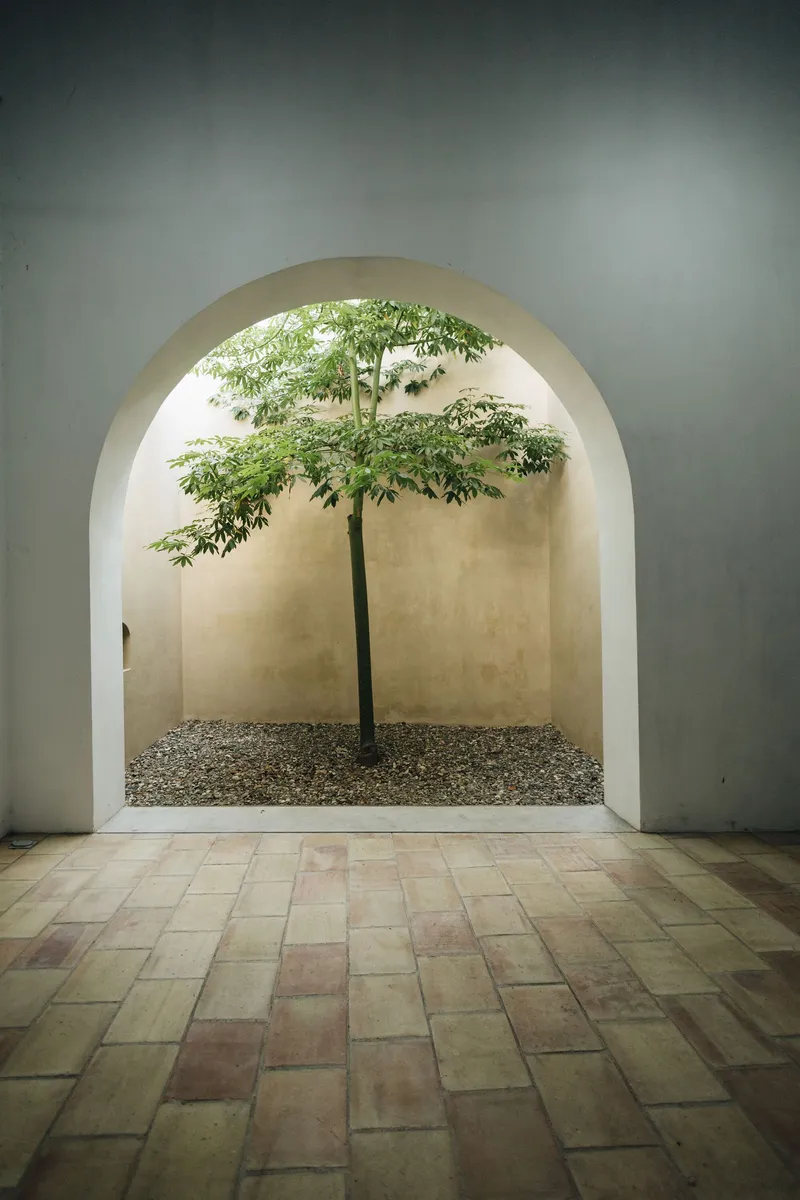
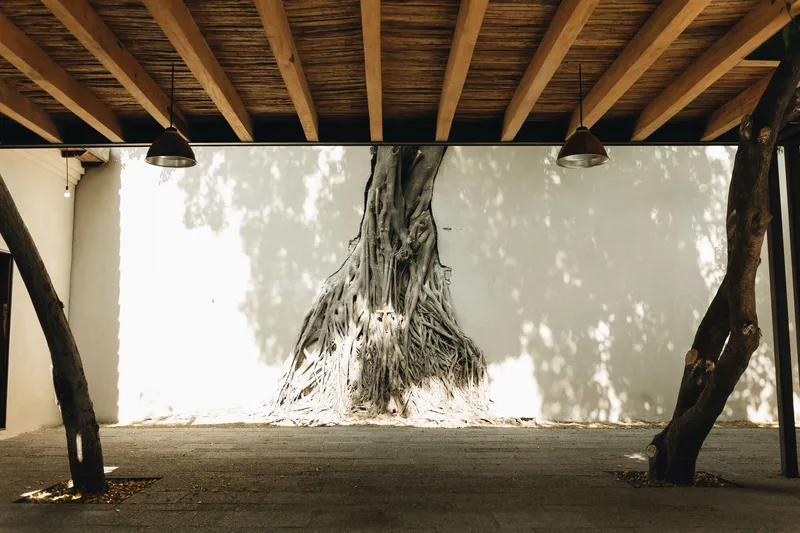
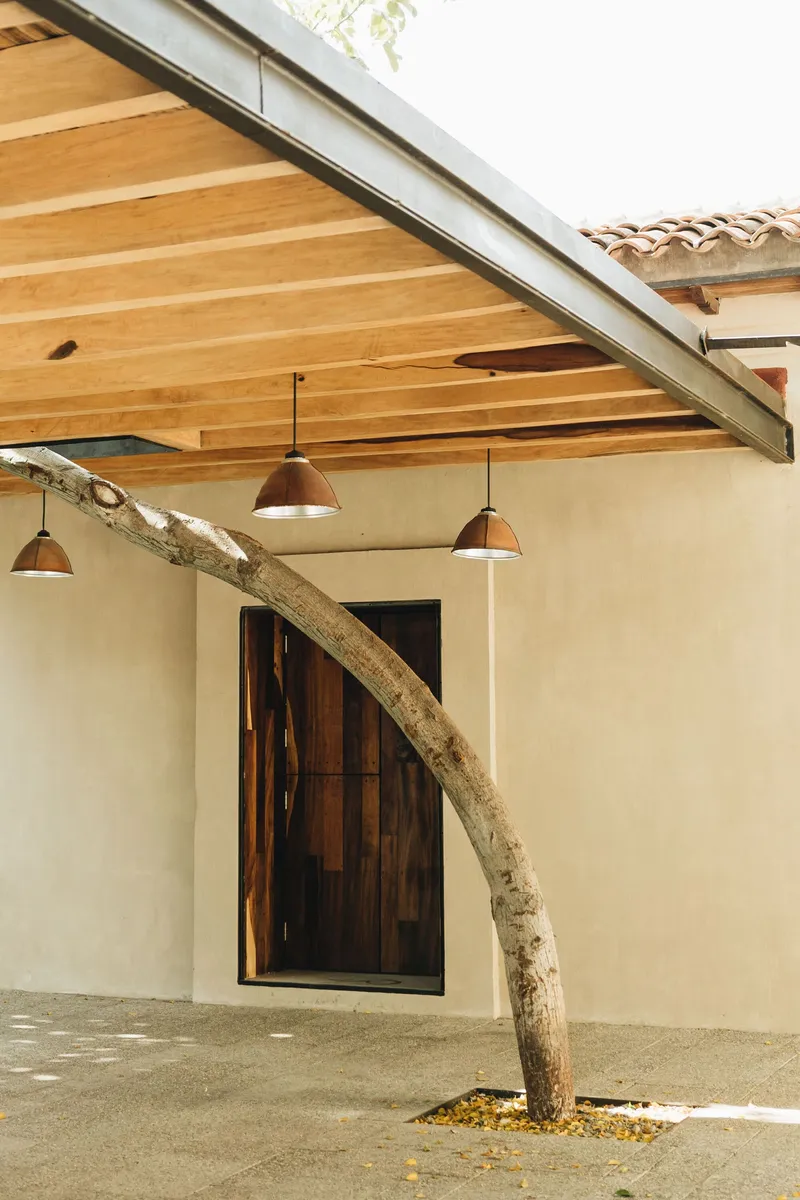
Several of the most striking images from the project show tree trunks pushing through white plastered walls and timber ceilings. One alcove frames a small tree in gravel within a courtyard niche, almost altar-like in its framing. Another captures a trunk penetrating a wall under timber beams, casting complex shadows across the lime-washed surface. These moments are not staged. They are the result of a design process that treated existing vegetation as non-negotiable structure.
The shadows cast by these trees onto the white walls create a kind of drawing that changes hourly, a temporal ornament that no rendering could predict. It is a quality that belongs exclusively to buildings that accept the messiness of real sites and real climates.
Reading Room and Furniture
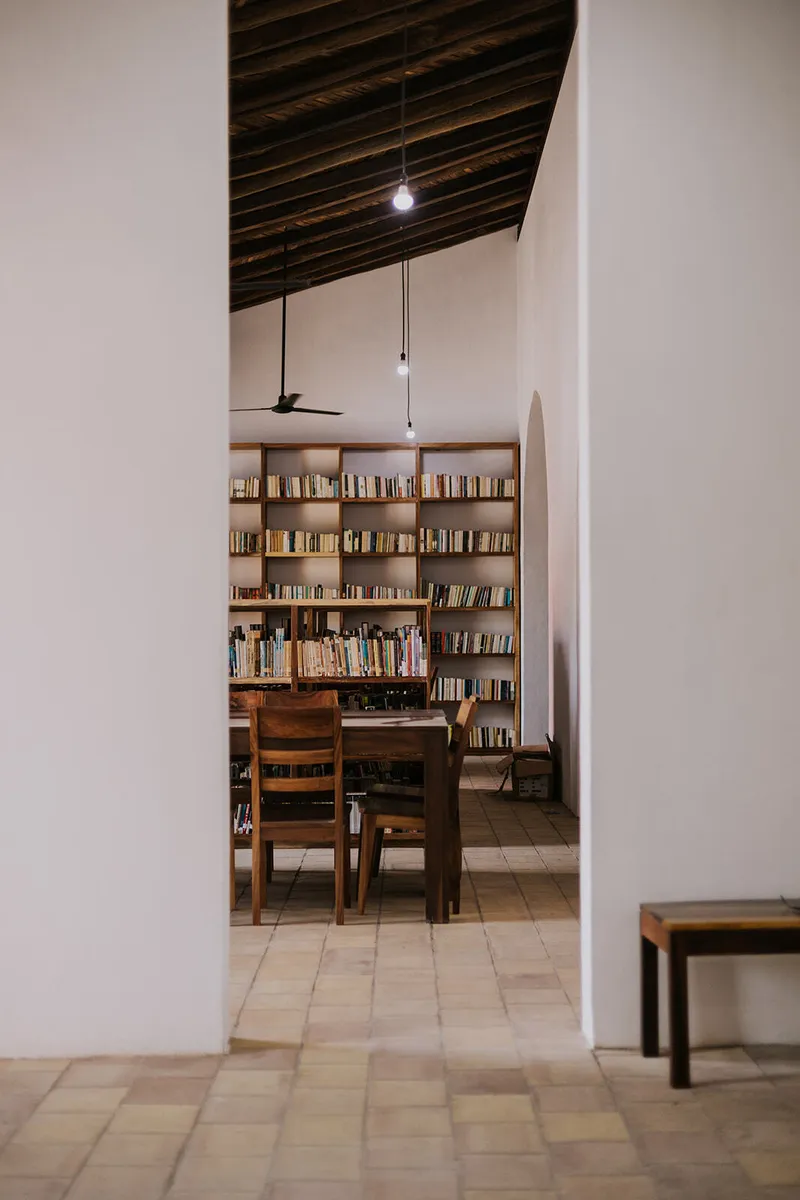
The reading room shows a timber dining table and chairs beside a bookshelf under exposed rafters. The furniture was designed using local wood, continuing the material economy of the entire project. There is no imported plywood, no off-the-shelf Scandinavian shelving. The wood grain of the table matches the ceiling beams above it because it comes from the same forest, possibly the same debris field. This kind of material continuity is rare in institutional buildings, where furniture budgets typically operate on a completely separate logic from construction budgets.
Plans and Drawings
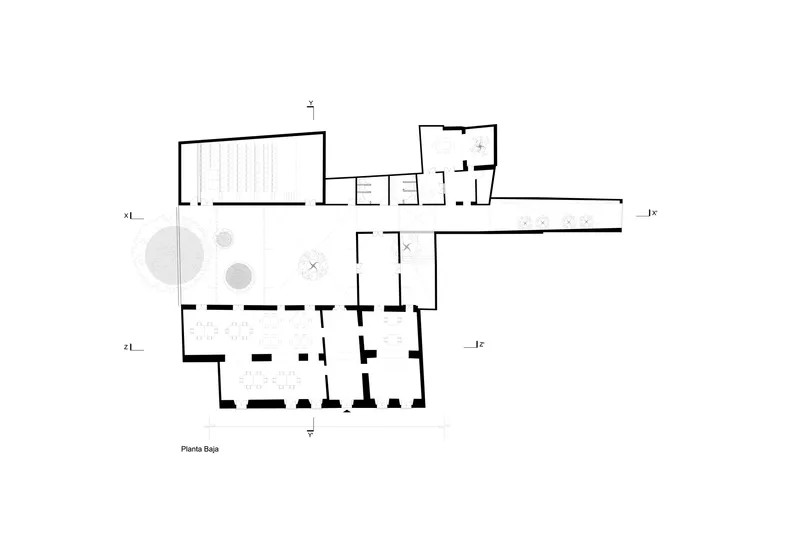
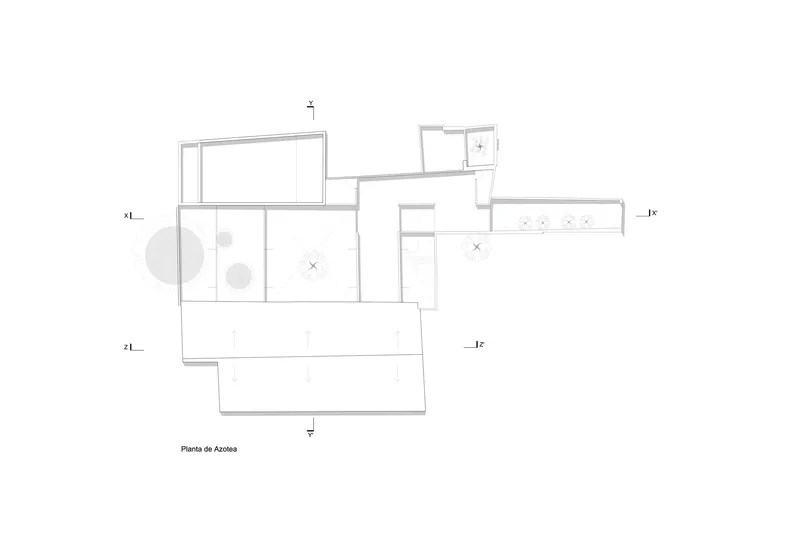
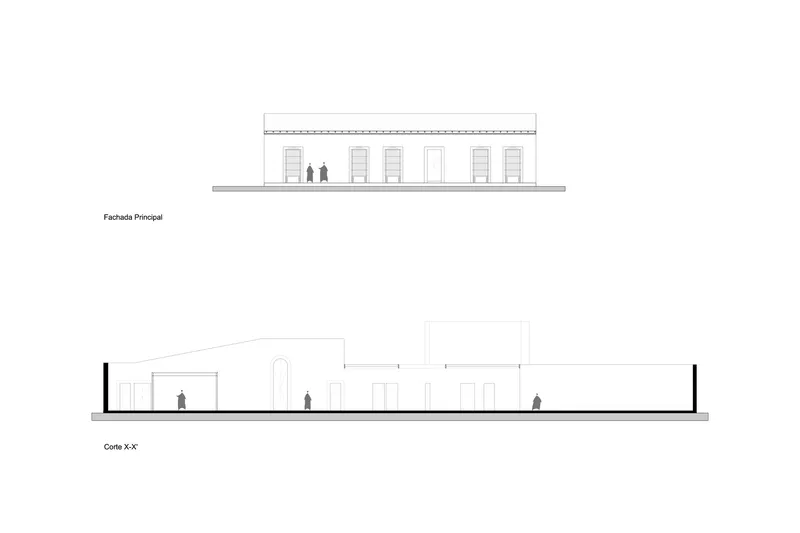
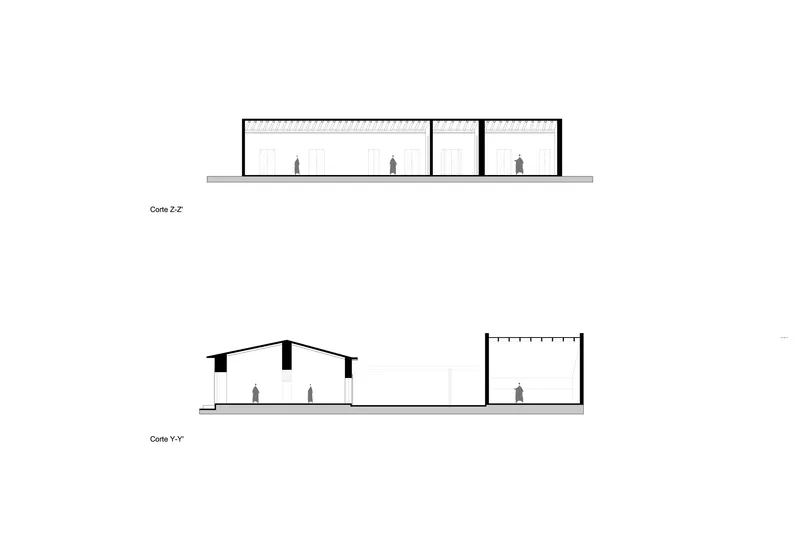
The ground floor plan reveals the clarity of the organizational strategy: existing rooms line the street edge, a wide corridor connects front to back, and the new courtyard extension with trees occupies the center. The roof plan shows how existing and new volumes interlock, with the courtyard acting as the hinge. Elevations and sections confirm the low, horizontal profile of the building and the generous ceiling heights that make the passive ventilation strategy viable. Human figures in the sections give scale to the pitched roof volumes and illustrate the spatial divisions between library, corridor, courtyard, and auditorium.
Why This Project Matters
The Gabriel López Chiñas Library is a case study in what reconstruction can be when it is driven by material intelligence rather than nostalgia or spectacle. ROOTSTUDIO did not freeze the building in amber or bolt a glass extension onto its side. They consolidated what survived, removed what was beyond saving, and rebuilt using the same techniques and materials that created the original structure. The morillos y biliguanas roof system, the adobe walls, the ganacaxtle doors, the yellow earth facade: every decision reinforced both the structural logic and the cultural identity of the building.
In a region where 90 percent of cultural spaces were destroyed by a single seismic event, the act of rebuilding a library is inherently political. It says that this community's access to books, to a 100-seat auditorium, to children's reading rooms is worth the effort of sourcing local wood, restoring heritage construction techniques, and designing furniture by hand. The building's quiet authority comes from the fact that it does not try to transcend its context. It is its context, rebuilt.
Gabriel López Chiñas Library, designed by ROOTSTUDIO (lead architects Joao Boto Caeiro, Moisés Cruz Jerónimo, Iván Diaz Arellano), located in Juchitán de Zaragoza, Oaxaca, Mexico. 11,485 sq ft. Completed 2022. Photography by Lizzete Ortiz.
About the Studio
Share Your Own Work on uni.xyz
If projects like this are the kind of work you want to make, uni.xyz is a place to publish your own, find collaborators, and enter design competitions.


Popular Articles
Popular articles from the community


Play: Fragments of Their World
Familiar architecture becomes modular playground design, creating safe spaces where displaced children can learn, connect, imagine and play.

The Musturak Paradise: Senior Living Architecture for a Connected Future in Temara, Morocco
The Musturak Paradise reimagines senior living architecture in Temara via private homes, social spaces, culture, community, and shared care.

Co-life: Sustainable Architecture for Age-Friendly Community Living
Co-life reimagines sustainable architecture for seniors through courtyards, rammed earth, shared gardens, and spaces designed for belonging.

Little Red Riding Hood: Architectural Design as a Journey Through Fear, Light, and Storytelling
Little Red Riding Hood reimagines the fairy tale through architectural design shaped by fear, light, scale, memory, uncertainty, and choice.

Similar Reads
You might also enjoy these articles

Bao Huynh Watercolor Atelier: A Serene Art Retreat in Hội An
Bao Huynh Watercolor Atelier in Hội An blends multifunctional art spaces, sustainable design, local materials, and family-friendly living in a serene environment.

Atelier Macri Concept Store Interior Design by CASE-REAL
Atelier Macri store features a "ko" counter, walnut wood details, cork displays, blending retail, gallery, and seamless customer experiences.

Manuel Vargas Izquierdo Stadium and High-Performance Sports Center: Architectural Excellence in Jalpa de Méndez
The Manuel Vargas Izquierdo Stadium blends sustainable design, inclusive sports facilities, and cultural-inspired architecture, revitalizing Jalpa de Méndez’s public spaces.

KAKR Buluh Awar Hall: Revitalizing Community and Ecology Through Bamboo Architecture
Community built bamboo hall revitalizes Buluh Awar village, empowering youth, restoring ecology, celebrating vernacular craftsmanship through sustainable architecture and culture.

Explore Post-Earthquake Reconstruction Competitions
Discover active competitions in this discipline

Challenge to design locus for the upliftment of human rights

Challenge to design public laboratory

Design challenge to reuse E-waste
Comments (0)
Please login or sign up to add comments
No comments yet. Be the first to comment!